
Five Underrated ’70s Gems to Put on Your Watchlist
You’ve seen “The Godfather” (1972). You’ve seen “Chinatown” (1974). But the ’70s were an extraordinarily fruitful decade for American cinema with tons of deeper cuts that are well worth exploring. Without further ado, here are some super underrated ’70s films that may have flown under your radar.
5. “The China Syndrome” (1979)
This is one of the most intense movies I’ve seen recently. Jack Lemmon knocks it out of the park as usual, but at its core, “The China Syndrome” (1979) is Jane Fonda’s movie. With the foreboding threat of nuclear apocalypse, the movie’s screenwriters craft a tantalizing narrative of Fonda’s journalist character, Kimberly Wells, and her journey to news stardom. She strives to prove to her misogynistic and oppressive crew that she’s intelligent, driven, and passionate enough to cover the latest mishaps at the local Ventana nuclear power plant.
The one flaw of the film, however, is Michael Douglas’ sloppily-written character, Richard Adams, who acts as Wells’ cameraman. His character takes up a lot of screen time, but his motivations aren’t explored as deeply as those of Wells or Lemmon’s character, the power plant operator the pair investigates. It’s a shame that his acting talents weren’t fully realized here, as a more fully-explored characterization could elevate this film to masterpiece status. That being said, “The China Syndrome” has gotta be up there with “All the President’s Men” (1976) as one of my favorite paranoid, post-Watergate thrillers of the ’70s. Definitely check this one out if you’re a fan of Fonda, new Hollywood thrillers, or if you have a profuse desire to increase your risk of cardiac arrest; yeah, this one gets nuts towards the end. Don’t say I didn’t warn you.
4. “The Yakuza” (1974)
Here’s a Sydney Pollack film wedged in between two of his most popular works, “Jeremiah Johnson” (1972) and “Three Days of the Condor” (1975). Pollack noted that all of his films are imbued with a certain melancholy, and “The Yakuza” (1974) is no exception. The story is somehow an epic and incendiary tale of vengeance and yet also a poignant story of a former American Marine stationed in Japan during the 1940s, rekindling his lost loves and past regrets as he journeys back to the country 30 years later.
3. “Night Moves” (1975)
When Arthur Penn’s “Night Moves” premiered in 1975, it was a massive flop, probably due to the fact that it came out around the same time as the blockbuster “Jaws” (1975), whose escapist narrative probably fared a lot better with doleful 1970s moviegoers post-Watergate than Penn’s downbeat, paranoid thriller. “Night Moves” follows former football player-turned-detective Harry Caul (played by a huffy, mustachioed Gene Hackman) as he tries to find a missing girl, Delly (played by Melanie Griffith in her first credited film appearance). Through his investigation, he ends up lost in a web of corruption, deceit, and unimaginable evil, uncovering more about himself than about the case he was assigned to.
2. “The Boys in the Band” (1970)
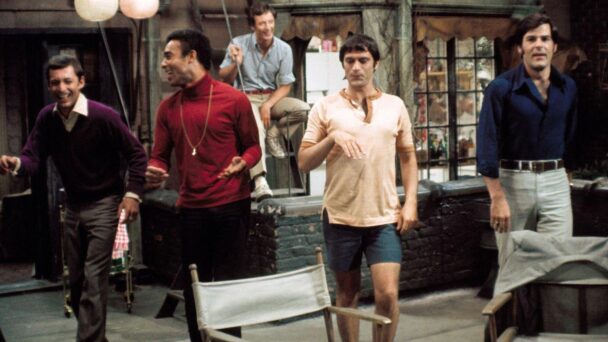
William Friedkin is generally considered one of the great auteurs of 1970s cinema, so it’s surprising that his 1970 film, “The Boys in the Band” (1970), based on the 1968 play of the same name by Mart Crowley is not as well regarded and known as some of his other films of that decade. Not only does the film tackle the then-controversial issue of homosexuality with maturity and deftness, but it also carries some of the best camerawork and cinematography for a film based on a play that I have personally seen.
1. “Klute” (1971)
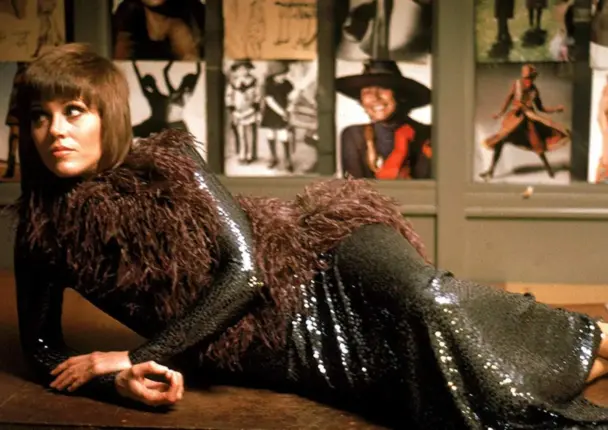
Alan J. Pakula is probably best known for his paranoid trilogy, which includes “Klute” (1971), “The Parallax View” (1974), and “All the President’s Men” (1976). I’ve seen all of these films, and “Klute” is my favorite of the three by a large margin. What makes “Klute” so interesting and entertaining is its two intertwined narratives. One follows John Klute (Donald Sutherland) trying to uncover the mysteries underlying the death of his friend in the grimy slums of early ’70s New York City—an evocative setting for the film and a huge culture shock for Sutherland’s country bumpkin everyman character. Through this investigation, Sutherland comes in contact with Bree Daniels (played by Jane Fonda in her first Oscar-winning performance), a call girl with connections to the alleged killer of Sutherland’s friend. The second narrative follows Bree’s personal life, including her struggles with autonomy and self-worth in this misogynistic, sleazy, exploitative world, as well as her emerging relationship with the Sutherland character, which represents her first foray into a romance in which she is viewed with more than an unadorned lacuna of lust.
Brendan Kelso can be reached at bkelso@wesleyan.edu.




Leave a Reply