
Curtains for Metro Movies 12: The Decline of a Shared Culture in an Era of Polarization
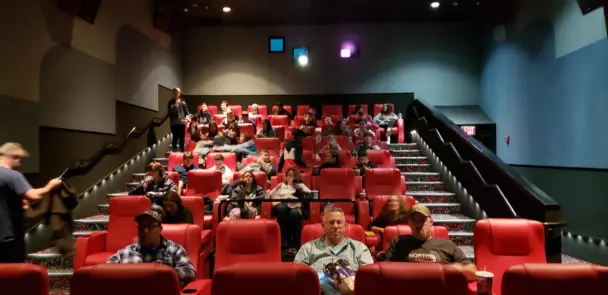
Middletown’s only movie theater, Metro Movies 12, closed last month after 27 years in business. Sadly, this is not a unique event, with thousands of movie theaters closing in the past decade. The decline of the movie theater is not just a sign of an industry in decline. It is also indicative of the increasingly divided nature of America.
In the pre-algorithmic age, we were united by common pieces of media. A total of 76 million Americans watched the finale of Seinfeld. “Jaws” introduced the phrase “you’re gonna need a bigger boat” into the national vocabulary. After “Rocky,” sprinting up flights of stairs and hoisting one’s fists into the air became symbols of athleticism and triumph.
But these forms of media and their roles in the national zeitgeist have been greatly deflated. It’s not that Americans are not watching media; they just consume an entirely different variety. TikTok and X algorithms reinforce our partisan views. Partisan political pundits push the notion that these views are part of our very identities. The result is a media landscape that looks more and more like our politics. Even streaming services are now divided by political ideology. One may subscribe to Netflix or Amazon, while others subscribe to partisan services like Daily Wire+ or Fox Nation, which now include their own fictional dramas and documentaries.
Rather than nearly every American gathering around the water cooler at work discussing the newest Steven Spielberg movie, individuals are now united by different stories and personalities. Nick Fuentes. Hasan Piker. Candace Owens. For many Americans, these individuals are their modern-day Spielbergs, who shape their cultural outlook. Yet a majority of Americans could pass these pundits on the street and have no clue who they are. Instead of a Spielberg or Martin Scorsese uniting society, each person seems to be united by a different individual or narrative.
Social media may seem to provide a source of commentary and connection for shows that stream. In some cases it might, such as when fans gather on X during the premiere of an episode to share their reactions with each other. However, social media often amplifies the loudest voices, which are often the most extreme, and this can present a distorted picture about how the average person is actually reacting to this media. Similarly, podcasts have skyrocketed recently, and with an abundance of options ranging from “The Joe Rogan Experience” to “Raging Moderates,” each American is absorbed into their own world.
There are still some signs of cultural lore uniting Americans, but they differ from years past. The NFL continues to post ratings that top the charts each year. Last season’s World Series posted monster ratings. All the while, the Oscars’ ratings are stagnating with just about 20 million people watching—down from more than 55 million in 1998.
When we lose movie theaters, we are not just losing another business like Blockbuster or Borders. Rather, we are losing a piece of our culture, which, no matter what other social or political differences may have existed, once united our nation.
Blake Fox is a member of the class of 2026 and can be reached at bfox@wesleyan.edu.





Leave a Reply