
Letter From the Editors: Reading the News, Holding Our Gaze
It’s the 1980s in Iran; a young Marjane Satrapi has more than one moment where she considers turning an eye to the changing world around her—or so we learn in her autobiographical graphic novel “Persepolis.” From the Iran-Iraq War to the execution of her activist uncle, she learns important national and personal news from the state newspaper and radio, coming of age in the aftermath of the 1979 Iranian Revolution.
Overwhelmed and desensitized, she is frustrated with state media and yet must rely on it: newspapers tallied up death counts daily, violence was only a turn of frequency modulation away.
A ways away, in Middletown, Conn., we have independent news sources aplenty, yet our own relationship with media consumption is not too different from Satrapi’s. As our fall semester wound down, Brown University’s students experienced a deadly mass shooting, soon followed by the Bondi Beach massacre in Australia. While we prepared for our first week of the spring semester, Iran’s government imposed a mass internet blackout as the death count of protestors remained terrifyingly obscure.
Closer to home, federal law enforcement escalated an immigration crackdown, killing civilians including but not limited to Renée Good and Alex Pretti, inciting nationwide counter-protests. Journalists, too, face assault by federal agents as they try to convey the gravity of these situations. Violence has become the norm here as well.
It is difficult to find it in ourselves to turn to the news in these times. But at The Wesleyan Argus, our reporters, editors, copy editors, and layout team are aware that we are continuing a mission of student journalism in a time of crisis; we are aware of the crossroads that forces us to either turn an eye or tune in.
As state media sources wane in their fidelity to publicize accurate information and neglect due diligence, local news’ role of keeping readers informed has become that much more important. Simultaneously, our role as media consumers has also become much more important.
We’ve found that there are still ways to consume news productively and hopefully, whether that’s by taking breaks, allotting a particular time of day to catch up on news, broadening one’s information sources, or prioritizing news feeds over social media’s sensationalized algorithms.
Thanks to our predecessors, Executive Editors Miles Pinsof-Berlowitz ’27 and Thomas Lyons ’26, we are proud to continue this mission with 55 members on our masthead this semester, our largest masthead in recent memory.
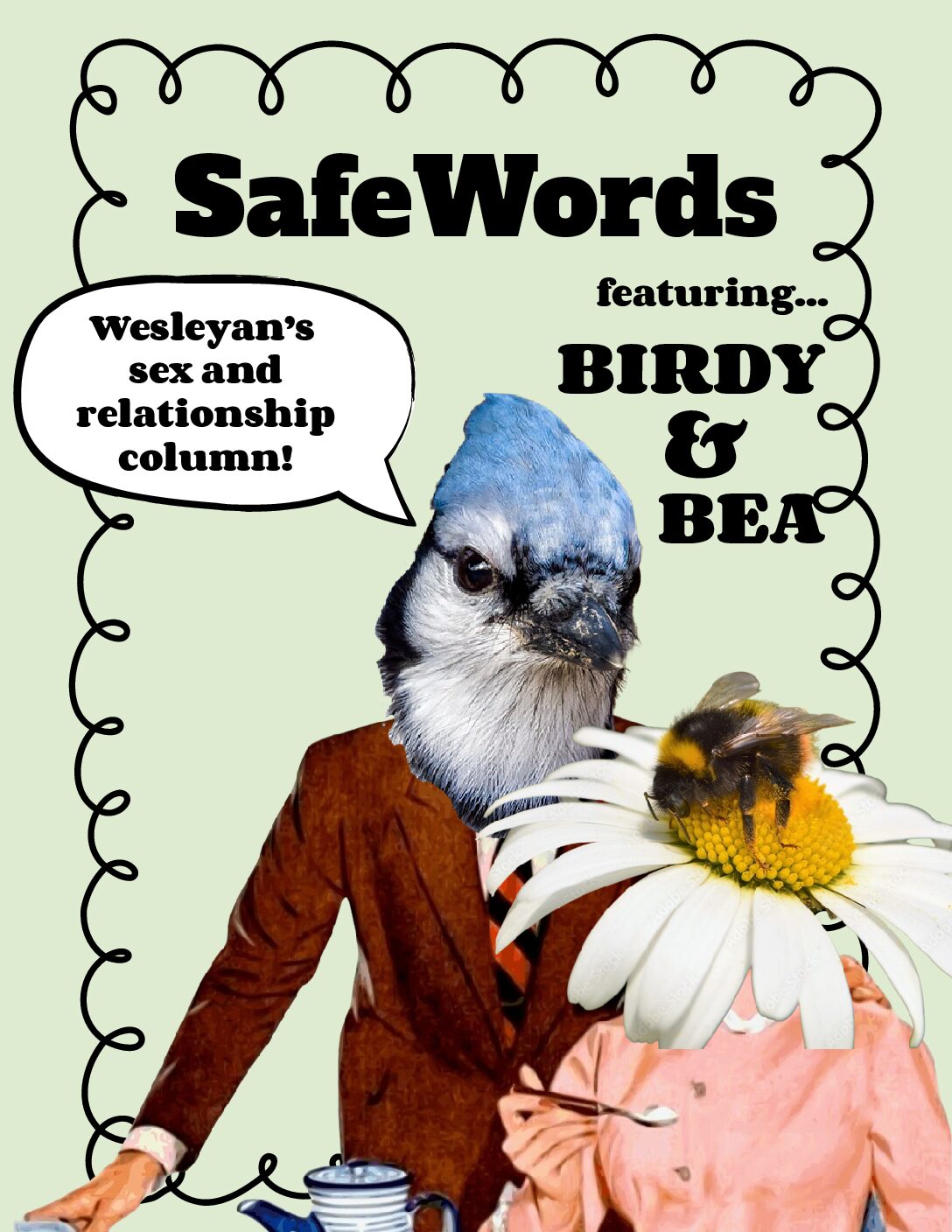
We plan to expand our coverage of Middletown goings-on, science and research on campus, as well as international student perspectives, at a time of federal immigration crackdown. We’re moving ahead full steam, with our newly revived sex column, “SafeWords” that debuted last semester, expanding our Puzzles team, and bolstering how we get our coverage out to you with our social media and weekly newsletter.
As we bid farewell to our Comics section, whose work you can now view in our Digital Archives, we gather more perspectives for you with Letters on Pragmatic Hope, an essay series begun in the fall that seeks out a broad range of Wesleyan faculty, staff, and administrators to answer how students can act with purpose and efficacy amid an increasingly authoritarian environment.
We’re also revamping our website! (Again. This time, with more promise, zeal, and a more navigable interface, we’re told.) More on this sooner than you think.
All things considered, in a time when news consumption can daze, confuse, and overwhelm, we’re humbled to be working with a staff of mostly unpaid 20-something-year-old volunteers. They help us see every production that there’s value in being astonished by the world around you and telling about it, no matter how disarraying it may first seem. There’s always a way to find it within us to tell an important story. There’s always a way to find it within us to listen, and grapple with it. We feel a little bit that way when we read Satrapi’s recount of her relationship with the media.
As we begin this spring semester, we urge you to engage with the news, not just dwell on it. Submit a tip about an upcoming protest to our reporting team. Write an article for our Opinion section. Make a contribution to The Argus to ensure that our reporting continues. Send us a letter; we promise to be good listeners. Be astonished, be frustrated. Take breaks. Rail at God if you must. Ask questions. Keep reading. Keep reading. Keep reading.
Resist the urge to turn an eye, we know we will.
Always yours,
Janhavi Munde ’27 & Peyton De Winter ’27
Editors-in-Chief

Leave a Reply