
As DKE Seeks a Return to Campus, Expansive Goals With Few Policy Promises
There are few University organizations as controversial as the Gamma Phi chapter of Delta Kappa Epsilon (DKE).
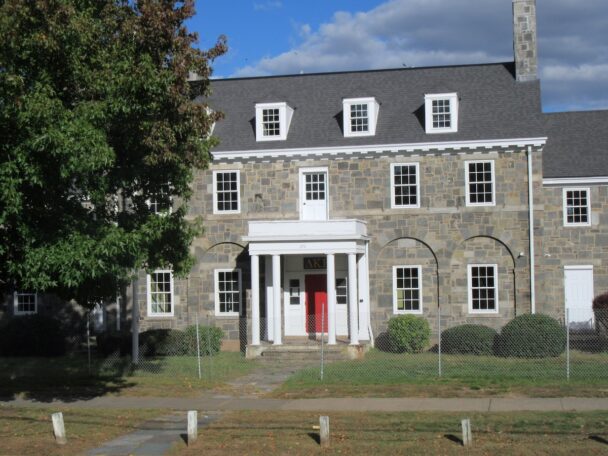
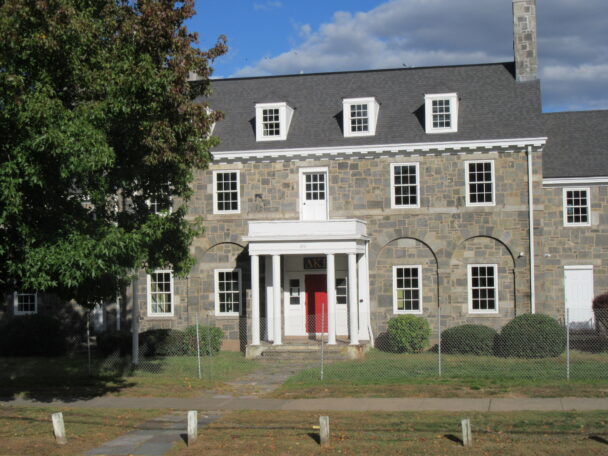
A quick summary of the fraternity’s recent history: rumors of intense hazing rituals, a seven-year lawsuit against the University’s mandatory coeducation policy (a lawsuit DKE initially won before the Connecticut Supreme Court overturned it), and a residential ban from its 276 High Street house.
As the fraternity conducts a perennial evaluation of its social and residential status on campus, members have outlined goals to increase DKE’s role in university life, diversify its membership, and maybe, just maybe, return to its house.
On DKE’s website, the group describes itself as a “private, members-only social fraternity founded at Yale University in 1844 by and for the school’s social elite.” The three qualities that make a DKE member, the site states, are “the gentleman, the scholar, and the jolly good fellow.”
Yet, long before the current closure of its house, these jolly good fellows faced significant controversy on campus.
In November 1999, an Argus article detailed accusations that DKE members chanted homophobic slurs during an initiation event. A student judicial board later cleared the chapter of these accusations.
In 2015, DKE, “along with a number of its members, was found responsible by a Student Conduct Board for a range of violations related to off-campus hazing activities,” the March 2021 Wesleyan Connection reported.
The fraternity had clashed with the University in 2014, when the University mandated that all fraternal organizations on campus implement plans to provide opportunities for all non-male-identifying students to join their communities by Fall 2015. While other fraternities, including Psi Upsilon (Psi U) and Alpha Delta Pi (ADP), submitted plans deemed in accordance with the new requirement, the University accused DKE of not cooperating with this new standard.
In an update on the policy, then-Vice President of Student Affairs Michael Whaley said DKE’s plan to incorporate women in the fraternity “did not include a timeline or detail for its proposed approach to partner with a sorority to achieve co-education; nor did it adequately assure the University that female residents would have full and equal access to common areas of the house.” Therefore, the University would no longer allow students the opportunity to live in the establishment.
In 2015, DKE sued the University via its parent company, the Kent Literary Club (KLC), and sought punitive damages from the University. DKE argued that since the University allowed students to live in gender-specific dorms and program housing, the University’s targeting of the fraternity was a case of “selective discrimination” and “an egregious example of political correctness gone wrong.”
In 2017, a Connecticut jury ordered that the University pay the fraternity nearly $800,000 in legal fees and damages.
Years later, in December 2020, the University accused DKE of breaking COVID-19 restrictions and hazing policies with a scavenger hunt that sent its members across the northeast to cities as far as Boston and New York City, ultimately leading to the organization’s two-year suspension. This blow to the organization was quickly followed with another strike in March of 2021, when the Connecticut Supreme Court reversed the 2017 ruling.
In 2022, the KLC detailed plans for physical renovations. “[The] new plans for the house included around 36 beds divided equally between men and women,” President Gary Brietbord said. The following year, the University reinstated DKE as a non-residential group.
Then-president of DKE Colin Campbell ’25, said in a 2023 Argus article that members planned to move into the house following renovations detailed by the KLC in the Fall 2024 edition of the fraternity’s newsletter.
“The house itself would be co-ed, just not the frat,” Campbell said. “You could have 15 people from the fraternity living in the house, and you could have 15 people of any gender identity living in the house.”
But the efforts fell flat, and today, the house remains uninhabited. Nevertheless, DKE has invested a significant amount of money into renovating and maintaining the house. In the fraternity’s Spring 2025 newsletter, DKE expressed its support for SB 1411, a bill in the Connecticut legislature that would permit college students to live off campus. Former DKE President Nicholas Orphanos ’26 said that he and three other members had testified in support of the bill. As of publication, the bill has not moved out of committee. It’s unclear to what extent, if passed, the bill would have forced Wesleyan to allow DKE as a housing option.
Even though DKE has remained unable to secure a residential presence, Campbell detailed multiple long-term changes that he hoped the organization would implement, including organizing workshops for the fraternity with Dia Fortenberry, Assistant Athletic Director of Diversity, Equity, and Inclusion and Engagements, to “create…a more inclusive space in the long run and bring about lasting change.”
Campbell also outlined his wish to diversify DKE.
“There’s a lot of work that we have to do…the fraternity used to be more diverse—now, I think it’s probably the least diverse it’s ever been,” he said. “We really want that to change…we are trying to get as many non-athletes in, and as many people of color in.”
“We want to incorporate more people in two ways,” current DKE member Tomo Ishikawa ’27 said. Ishikawa is a non-athlete—somewhat of a rarity in the fraternity—and an international student from Japan.
“We want more non-athletic or international students because they’re just as valuable as members,” he said. “We’ve really been trying to expand outside of just athletes [into] different personality types, races, ethnicities, backgrounds, and whatever else.”
Fellow international student, non-athlete, and DKE member Gray West ’28 concurred.
“There’s been a long history of non-athletes joining DKE, and it’s an initiative that continues to grow alongside initiatives to incorporate more students of color, international students, and students with differing ideologies,” West said.
The Argus recently sat down with Nolan Roche ’27, DKE’s current president. Roche’s point was clear: He doesn’t want DKE to lurk in the shadows as a mysterious, foreboding organization.
“We want to be more visible. We want to make ourselves open in the public, where we’re in the [University’s greater social] scene,” Roche noted. “I’ve really tried to make an effort to meet people from, say, Eclectic, or ADP, and learn more about them, to kind of just establish a relationship with others.”
Yet, Roche acknowledged DKE’s inherent exclusivity.
“[It’s] just because of the non-coeducational factor,” he said. “I think it’s a misconception, because DKE isn’t our whole identity as students. It’s a small part of what we do on campus.”
The Argus asked about former president Campbell’s goal of gender inclusivity within the fraternity’s residential aspect.
“Whenever we have an event or have a charity, we constantly try to involve people of all gender identities,” Roche said. Because of their status as part of the national, male-only organization, women cannot officially join the chapter.
Roche also spoke to the fraternity’s reputation for subjecting prospective members to abusive and antiquated rituals.
“There’s no hazing. We’re aware of incidents that have occurred at other fraternities at other schools, but we do not condone that. We view it as inappropriate and not in alignment with our ideals,” Roche said.
For future events, Roche spoke highly of the house.
“There’s a lot of great people here,” he said. “I think opening up more social space is something that could really benefit all of Wesleyan.”
Willow Simon can be reached at wsimon@wesleyan.edu.
Thomas Lyons contributed reporting.



Leave a Reply