
Highly Anticipated “Marta Becket” Charms as First Show in Brand-New Fries Arts Building
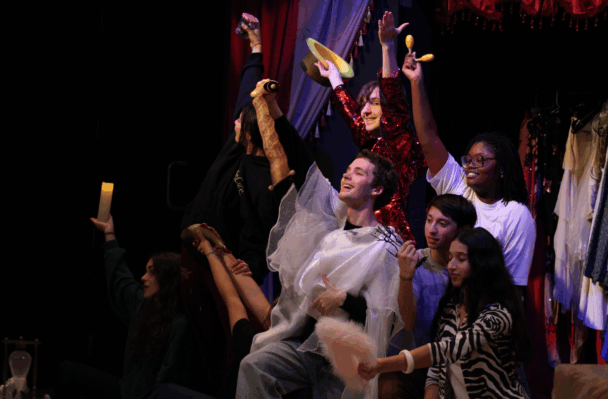
On Nov. 13 through Nov. 15, the University Theater Department christened the brand-new Fries Arts Building’s Hex Theater with their production of “Marta Becket, Save Us All.” The show was “devised,” meaning the script was created in rehearsals by the actors and the director. Therefore, although the production was directed by Associate Professor of Theater Katie Pearl, the cast played a major role in its development, all the way up to the day of its premiere.
“Marta Becket, Save Us All” introduces the audience to a group of tourists gathered at the Amargosa Opera House, a few months from today, as they receive a shelter-in-place order. Miles away from home and not knowing whether their lives are in imminent danger, the strangers sequester themselves in the small town of Death Valley Juncture.
Throughout the play, the cast familiarizes the audience with the life and passions of Marta Becket, the late dancer, painter, actress, and individualist. Whether the characters yearn to uncover their own authentic selves through a deeper understanding of Marta Becket’s life, or (for one) were simply unaware that the great performer has passed and were hoping for a show, her spirit draws each person to her sanctuary and stage.
Devised theater is the creation of a production through a collaborative process. Once cast, the ensemble members do not receive scripts. Instead, Pearl gave them a simple prompt, “Marta Becket’s life,” and tasked them with building a world and a plot from scratch.
Pearl told The Argus that she began the school year already knowing the size of her cast-to-be, and the core questions that would shape their dialogue. Pearl spent the summer researching Marta Becket because she was drawn to Becket’s decision to leave her solid career in New York City. Why move to a venue where no one can see you perform?
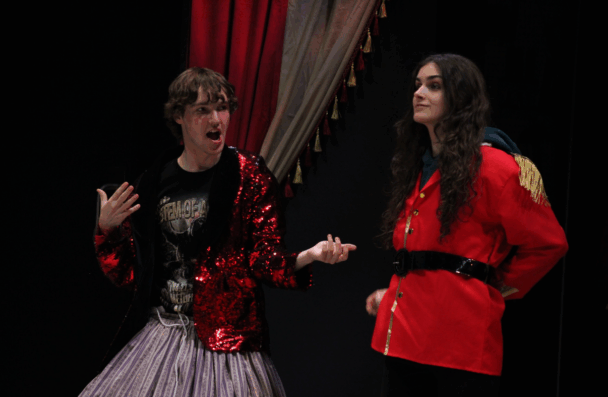
Pearl wanted her show to explore the modern definition of success, and how our personal interpretations influence our authentic selves. In devised theater, questions like these serve as a “launchpad for conversation.” During rehearsals, the cast conducted experimental exercises in empathy and ethos, building connections between ensemble members. Pearl would go home and convert these exercises into scripts that would adjust and evolve throughout the next few months, up until opening night. Each member of the ensemble was also a writer, so the rehearsal process entailed learning a craft rather than simply memorizing a script.
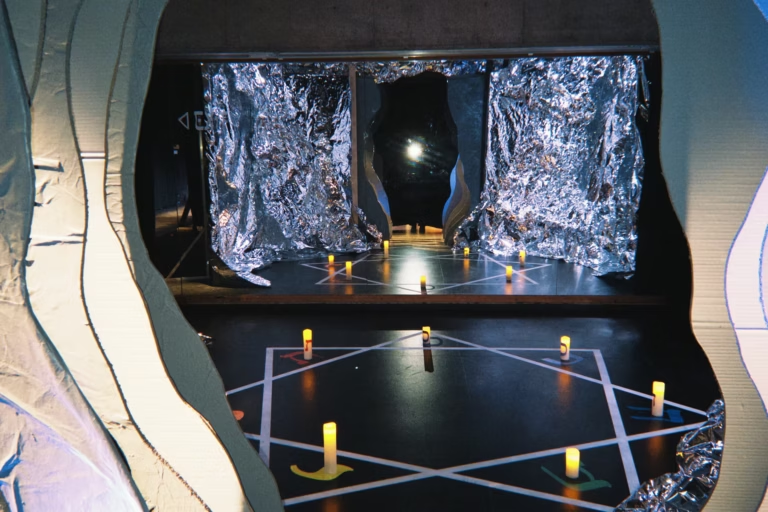
The play opened in the lobby of Fries Arts Building, its walls plastered with photographs of Marta Becket’s murals. The audience was then led into the Hex Theater by Stella (Chloe Bean ’28), our personal tour guide, and the Amargosa Opera House’s caretaker. They were guided around columns that bordered the black box, carpeted with tan lace and scattered with trinkets, transformed into the desert that housed Amargosa and trapped the characters.
Pearl began the writing process with the intention that the space would feel “intimate with the audience,” and become “a playground” for the cast “that could hold any number of discoveries.” She succeeded, with some audience members taking their seats on cushions at the edge of the ground-level stage.
The characters attempted to continue their search for whatever originally enticed them in Amargosa, now in the midst of forced isolation during the unknown national crisis. To calm their group’s growing anxieties, tourists Ivy (Zoe Ferguson ’28) and Finn (Quinn Tolman ’29) staged an impromptu show encompassing and retelling the life of Marta Becket. Cursed with talent and an overbearing mother, Marta—born Martha—had never experienced pure, self-directed joy in performing. Ultimately, she decided to abandon her success and escape to Death Valley Juncture, where she performed at the Amargosa Opera House every night, whether anyone is in the audience or not.
The plot was interspliced with a cappella music, dust devils, interpretive dance numbers, pop covers, and puppetry. When casting, Pearl did not look for students who would simply fit a predetermined bill of characters. Instead, she looked for actors who were willing to play and experiment. She took notice of talents that would fuel character development and resurrect Marta Becket’s eternal spirit on her stage.
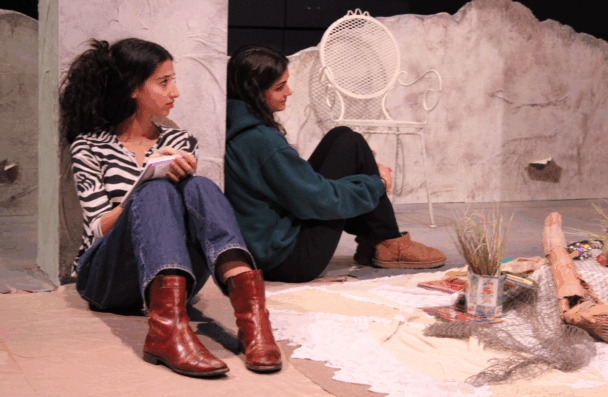
Pearl described “the group of alchemists and thinkers” she assembled for this production. When Momo (Sally Hu ’29) discovered a pair of ballet shoes in the sand, she rose en pointe and gracefully counseled her fellow castaways as she spun while simultaneously soothing herself. During a dream sequence medley, Ivy subconsciously comforted her anxiety through a lyrical number, bowing to puppet horses that drift alongside her, through the scene. Sezra (Saydie Grossman ’26) serenaded the desert with Mitski’s “I Want You” to overcome her devotion to silence, and to accept that it very well might be “the end of the world.” Each actor’s talent propelled their characters to embrace an aspect of their authentic selves that could not be actualized under the strain of public judgment.
A vital aspect of this show is the puppetry, crafted by Maya Lozea ’26 as her senior capstone. In addition to the horses during the dream sequence, she created a fragmented ballerina, meant to symbolize the spirit of Marta Becket. Each ensemble member controlled a limb, choreographing the life-size body through cohesive movements that mimic Marta’s grace. The cast’s physical manipulation of the pieces, combined with its craftsmanship, transformed the puppet into a character in its own right.
Pearl hoped that after seeing this show, the audience would reconsider their own definitions of what success looks like in their own lives.
“The idea of a successful person is outdated,” she said. “We cannot rely on society’s idea of success as a roadmap for our own journeys, so we must depart from public approval, and devise our own instincts.”
Sophia Bourne can be reached at sbourne@wesleyan.edu.


Leave a Reply