
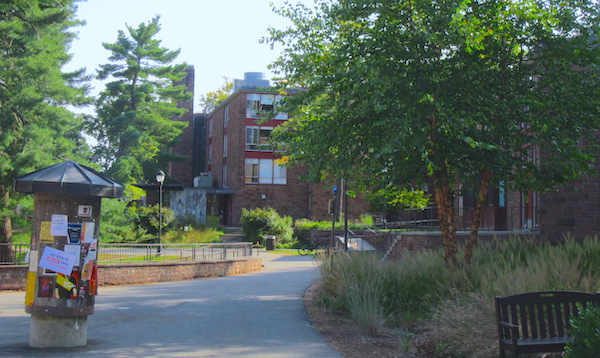
Butterfield C Floods, Marking Fourth Flood in Seven Years
While the University has many rites of passage, only the luckiest first-years get to wade through the annual Butterfields flood.
The Butterfields flood that occurred on Friday, Sept. 19 marked the fourth flood in the last seven years. This flood arrives as the second residence flooding of the calendar year, following the flood at Bennet Hall this January.
A leaking water tower in Butterfield C caused a flood early in the morning. Students reported waking up to pools of water inside their rooms as the water seeped down every level of the building and made its way to the bottom floor, including Summerfields. Some residents also complained that water leaked in through gaps in the walls and the doors.
Physical Plant and a cleaning team reached the site soon after students reported the damage. The team prioritized draining water from carpets to avoid smell and mold, and provided dehumidifiers and fans to help dry out dorm rooms and hallways. The cleaners also helped hang residents’ personal belongings on the railings to dry in the sunlight.
Resident advisors reassured residents that the water was not bathroom water, students told The Argus.
A Butterfield C resident remarked on her lack of preparation for the flood, both physically and mentally, and expressed a lack of communication from ResLife staff.
“I’ve heard from other people who have lived in [the Butterfields] that fires and leakage are common, and we were not really told that information up front,” Flora Woo ’29 said. “I think if we had known, maybe we could have set trash bags or tarps, or just even be mentally prepared, instead of being completely shocked and kind of thrown off balance.”
“‘No way to prevent this,’ says only dorm where this regularly happens,” read a The John Wesley Methodist Charter headline Saturday.
Woo further commented on the lack of Butterfield C as a social space and the potential idea of using the University’s endowment towards improvements in the residence halls.
“I think that the [Butterfields] are designed to be inherently anti-social,” Woo said (echoing a student joke that the residence hall was designed by a prison architect). “I can’t think of one benefit living there, besides [Summerfields], which also causes a ruckus for me, because I live right above [it]. There’s so many things that [the endowment] goes towards, and I think that one of those things in the future could be [Butterfields]. I love Wesleyan, and I want to love where I live, but unfortunately, I can’t.”
The residents also appreciated their resident advisors’ efforts, such as providing plastic bags for any valuables and electronic items to prevent any further damage, residents told The Argus.
Flooding continues to persist as an annual problem that affects ResLife deeply, especially in the Butterfields.
“Flooding has been a problem since I’ve worked at the Butterfields,” Butterfields resident advisor Alex Arrieta ’27 said. “People on this campus know that the Butterfields is the dorm with the most problems, partially because we have the largest number of students. Because of Summerfields, we get a lot of activity.”
Raiza Goel can be reached at rgoel@wesleyan.edu
Sasha Chajet Wides can be reached at schajetwides@wesleyan.edu




Leave a Reply