
It Was Not Just an Attack on Charlie Kirk, But on Free Speech
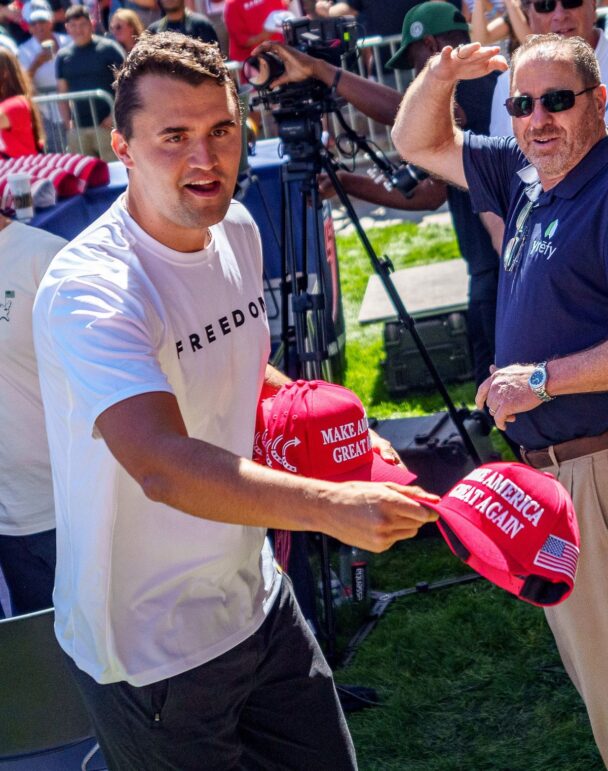
On Wednesday, conservative political activist Charlie Kirk was shot and killed, which marked the most significant political assassination in over 50 years.
After the news came out that Kirk had been shot, a friend, who I have long respected for their deep intellectual judgment and insights, texted me, “I see him as a free speech icon more than a conservative pundit.”
This friend identified something crucial that can be hard to articulate. The attack on Kirk was not an attack on a partisan, but an attack on dialogue itself. Kirk was not merely Gen Z’s version of William F. Buckley, Rush Limbaugh, Sean Hannity, or Mark Levin. Rather, he traveled college campuses across the country engaging students in conversation and debate.
Kirk’s commitment to free speech reflected a proud American tradition going back to the founding. When drafting the Constitution, the Founding Fathers were well aware of the centuries of acute violence in Europe centered around politics and religion. They wanted to build a republic where differences could be resolved with discussion and not violence.
The newly founded American nation was not religiously homogenous: Puritans were in New England, Quakers in Pennsylvania, Catholics in Maryland, and Anglicans in the South. The First Amendment ensured religious freedom and free speech. It would be words and not weapons that would lead our country forward.
Over America’s 249 years, this principle of free speech has fueled impactful moments: abolitionist literature, protests for women’s suffrage, marches for civil rights. Whatever one thinks of Kirk’s political perspectives, he helped carry this tradition into the 21st-century.
The killer of Kirk did more than just take a life. No, he attacked the fundamental basis of free American society.
Some may think that Kirk’s views were wrong—if you have ever read my Argus columns, you can see that I had some strong disagreements with him. Some have even suggested, disturbingly, that he deserved this fate. History shows there is a better way to resolve these differences. When Shirley Chisholm, the first African American Congresswoman, heard that George Wallace, the segregationist Governor of Alabama and a candidate for President of the United States, was shot, she visited him in the hospital.
“Aren’t your supporters going to be angry that you’re here?” Wallace asked.
“Yes, they are. But I wouldn’t want what happened to you to happen to anyone,” Chisholm said.
A 15-minute conversation with Chisholm sparked a change in Wallace. Wallace changed his views on racial segregation. He befriended Civil Rights leaders John Lewis and Jesse Jackson. In his final term as governor, he was elected with the support of 90% of the African-American community, hired an African-American press secretary, and appointed hundreds of African-Americans to Alabama state offices.
Kirk continued the long American tradition of speech over violence when he encouraged dialogue on college campuses. Imagine if Kirk’s killer had chosen instead to engage in a conversation? Dialogue and a mutual understanding could have emerged. They may have both walked away still disagreeing on the issues, but recognizing they are ultimately human beings.
The question now is, where do we go from here? We can either allow a bullet to silence voices on campuses or we can commit to the principles of free speech. I say that there cannot be any “shooter’s veto.” Instead, we should engage in more speech.
At Wesleyan, students should come together and set up a free speech table where we can civilly speak about our differences. The University should teach civil discourse. Heterodox speakers should be invited to speak on campus. That is how we reject political violence and defend the values of a free society.
Our only response can be more speech and a commitment to that value which built our nation.
Blake Fox is a member of the class of 2026 and can be reached bfox@wesleyan.edu.



Respectfully, if you see Charlie Kirk as “a free speech icon more than a conservative pundit,” then you are a moron. Going on college campuses with signs like ‘abortion is murder prove me wrong’ and debating college students about their human rights doesn’t make one a champion of free speech. Also anyone suggesting he was some brilliant aurator should be laughed at. I don’t think he should have been murdered, but that doesn’t make him some brave defender of the 1st Amendment. Anyone who really cares about defending free speech should be talking about the Trump Administration’s weaponization of the security state against people speaking out for Palestine. One should recognize Kirk was a goof and also that he shouldn’t have been murdered.