
Students declare new hazing policy too ambiguous
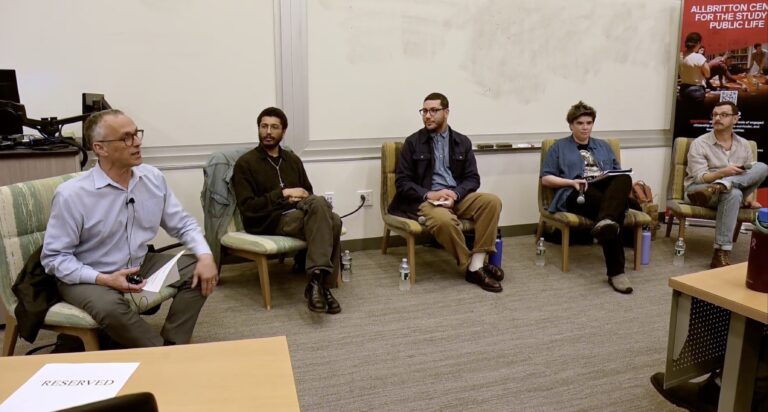
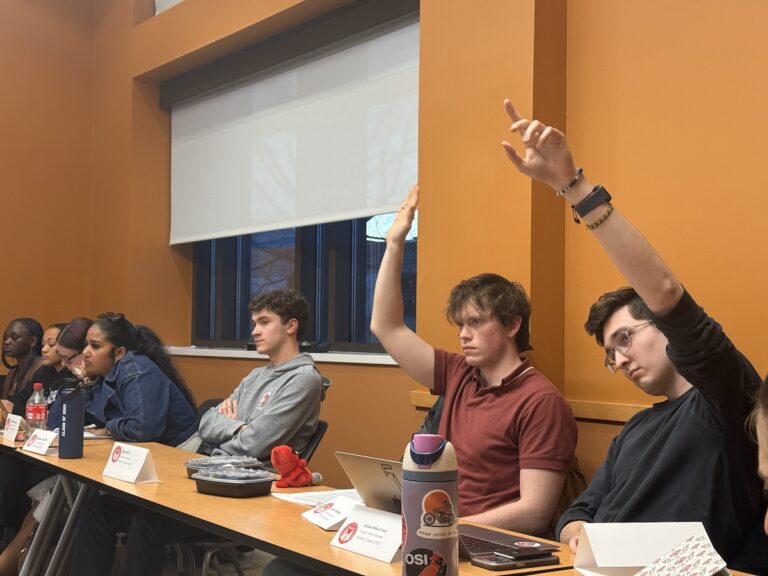
A newly proposed policy that attempts to further define hazing received less than favorable reviews at a student forum on Tuesday. The WSA-sponsored event, which was intended to elicit reactions from the Wesleyan community, ended with just the promise of another forum along with serious questions about policy.
The new guidelines include a blanket statement about hazing, a list of activities that may be considered hazing and a list of acceptable activities that are encouraged as ways to “foster camaraderie and team-building.”
Michael Whaley, Dean of Student Services, drafted the proposal last summer. He said the policy is based on standards of hazing set forth by national Greek organizations.
“We didn’t just sit in the office and dream this up,” Whaley said. “Any fraternity or sorority should be following those guidelines.”
The list of unlawful activities includes “paddling,” “creation of excessive fatigue,” “engaging in public stunts and buffoonery” and “morally degrading or humiliating games and activities.” The list of activities that are encouraged under the proposed policy include “sponsoring a skit night,” “wearing similar clothing as a symbol of unity,” “doing community service” and “participating in a supervised group trip.”
This attempt to articulate what constitutes hazing was criticized by several group participants who complained the items on the “prohibited” list were too ambiguous and in some cases too similar to those suggested as “team-building” events.
By the end of the forum, the group consensus was to discard both lists altogether and work to generate a single list of outlawed hazing activities.
Whaley admitted that the proposed policy leaves many issues open to interpretation and said that responsibility would lie with the Student Judiciary Board, which oversees charges such as hazing.
“There is a whole lot of gray, and not a lot of black and white,” Whaley said.
Most criticism focused on the restriction of activities with long histories among certain groups. For example, some students said that voluntary branding is a tradition for their organization, while it may be considered a violation under Wesleyan’s policy.
“Frankly, some of the traditions I’ve seen do constitute hazing,” Whaley said.
Whaley added that he currently works with the SJB co-chairs to determine what cases go forward.
Students remain concerned about the ambiguity of the proposed hazing policy as well as the role of the SJB in making fair decisions.
“Beyond [the SJB]’s inconsistency, it’s not transparent and it’s not independent from influence within the Administration,” said Robert Weinstock ’06, Vice President of Delta Kappa Epsilon (DKE).
Weinstock said that last year he attended six to 10 meetings concerning violations caused by his fraternity. The fraternity only got charged in two of these cases. Punishment included group probation and individual punishments, depending on the nature of the violation.
The SJB held a meeting at the same time as the forum, meaning the SJB members were unable to attend. Several students noted that the SJB does not have any Greek representation and is often inconsistent in its decisions because of the frequent rotation of its members.
Besides the issue of the SJB, students remain concerned about other aspects of the policy, including the use of the word “consent” and the fact that anyone can file a hazing charge, even if they are not a victim of hazing or a member of the organization involved in the hazing activity.
It was agreed that neither the original policy nor the new one is adequate.
“The status quo was so open that it was being wrongly applied,” said Karen Courtheoux ’05, a member of the Educational Policy Committee. Several students proposed holding another forum or workshop to discuss the issue further.
Underneath all of the rhetoric was the realization that the talk of hazing, whatever the policy may be, will attract immediate negative attention to Wesleyan.
“Hazing is a very loaded word,” Elaine Garven ’05, chairwoman of the Student Affairs Committee, said. “It’s going to look bad for a group if they get charged.”




Leave a Reply