Author: Will Jacobson

  • “Game of Thrones” S8E3: How to Avoid Universal Apocalypse in One Easy Step

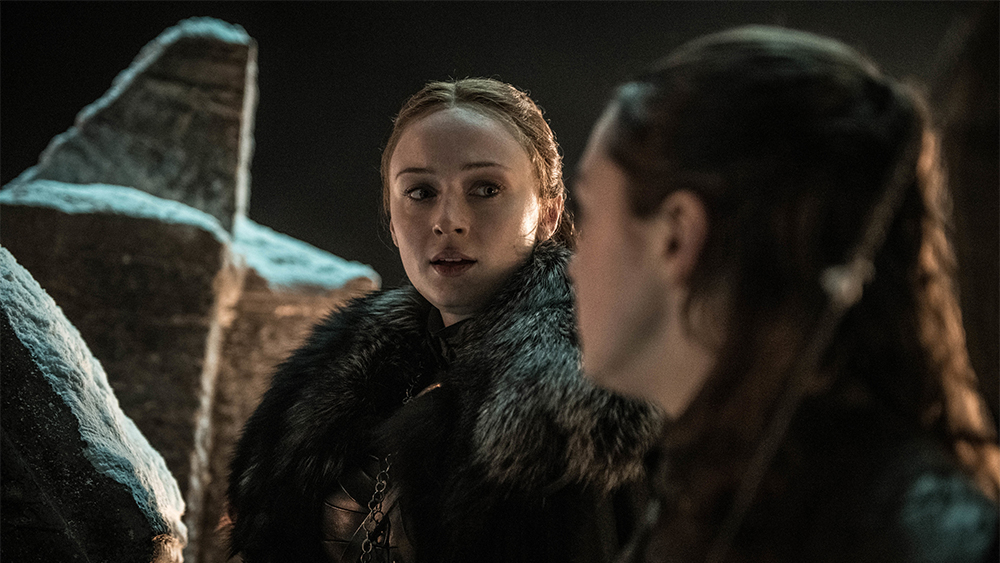
    “Game of Thrones” S8E3: How to Avoid Universal Apocalypse in One Easy Step

    c/o variety.com
    c/o variety.com

    WARNING: This review contains major spoilers for S8:E3 of “Games of Thrones.”

    Since the beginning of the show, eight years ago, “Game of Thrones” has always been about the White Walkers. Or, at the very least, its first scene was all about them, and understandably so. Before the show came to dominate popular culture conversations with all of its vicious power plays, sex scenes, and dragons, the story of an army of dead people slowly marching to end all living civilization was immediately captivating. The fact that most characters refused to believe that they were coming further deepened the White Walkers’ intrigue. Even as the show moved on to sprawl in an infinite number of directions, with dozens of beloved characters to root for, this underlying icy threat seemed to lurk just beneath the surface. Only Jon Snow understood the gravity of the threat they posed, which made him see how all the squabbles going on among the living would be ultimately irrelevant if these freakish creatures were not dealt with first.

    In “The Long Night,” the third episode of the six-episode final season, these creatures were finally dealt with, yet in such a careless and flat manner that the atmosphere of futility and doom that accompanied them throughout the show’s long run has now been rendered pointless. At the end of 90 minutes of gory, mostly incoherent battle scenes, with a few deaths of peripheral characters sprinkled in, The Night King, the White Walkers’ terrifying dear leader, was felled by a single stab from Arya Stark. She jumped out of literally nowhere, unseen by any of the King’s minions, and The Night King proceeded to crumble into a million pieces, which somehow made all of his undead soldiers instantly crumble into a million pieces in solidarity. The staging of this killing was clumsy, but it is hard to imagine any way that it could have lived up to the expectations set for what was essentially billed as Life’s Last Stand.

    This death ended the White Walkers’ run and set the show up to focus on its last living villain, Cersei Lannister, in its final three episodes. Economically, the storytelling couldn’t afford to devote any more time to them, which just points to the larger problems this show faces in its last season. Breaking away from the source material, George R. R. Martin’s “A Song of Ice and Fire” book series, showrunners David Benioff and D.B. Weiss had to consolidate the fate of an entire universe into six big episodes. Given the constraints, it was inevitable that many loose ends would be left untied, and it is hard to imagine any satisfying ending for a show that could theoretically never end. Yet the White Walkers seemed to provide that endpoint. They posed a threat of the end of the world, in a way that many have interpreted as an allusion to the current political discussions around impending environmental collapse. By dissipating that threat in one single episode—before ever expanding on the Night King’s true goals or motivations and before seriously providing the sense of true apocalypse that they warranted—the showrunners did a disservice to the fantastical world they have usually brought to life so well.

    With the end of civilization so conveniently avoided, the show gets to return to its strong suit for its final stretch, which is character relationships and emotional beats. It is hard to believe that any fan of the show truly cares about the fate of the Night King or his army; they are in it for Jon’s unflinching heroism, Tyrion’s quips, or Arya’s stabbing (ha) sarcasm.

    Benioff and Weiss knew this, and so they did away with the lingering existential threat as quickly as possible. It is unfortunate the show has to end, because as it has long established, whoever ends up on the throne will not last there forever. It is hard to see how the series finale will provide a sense of closure. Maybe it will end with a funny conversation between two adored characters, or even a passionate kiss between unexpected lovers. But due to the eradication of true danger, it most likely won’t end with any of the hard-hitting questions it started with.


    Will Jacobson can be reached at wjacobson@wesleyan.edu.

  • Notes From a Mosh Pit: Inside the Barbara Shop Reunion Show

    Notes From a Mosh Pit: Inside the Barbara Shop Reunion Show

    c/o auralwes
    c/o auralwes

    It was a typical, frigid Saturday night on Fountain Avenue, with hoards of brave yet anxious students traipsing up and down the street, unsure what to do with themselves. However, inside one modest little house, a small group of people were treated to an increasingly rare Wesleyan phenomenon: a proper, sweaty rock show.

    It was the supposedly “secret” reunion of Barbara Shop, consisting of Neel Madala ’20 (guitar & vocals), Ezra Kohn ’20 (guitar), Adam Manson ’19 (bass), and Lucas Cereijido ’20 (drums and vocals). The garage-rock quartet took the student music scene by storm last year, playing a prolific number of shows and developing a large following for their energetic, eardrum-damaging performances. A combination of conflicting semesters abroad and graduation dates meant that the band always had an imminent one-year expiration date. In the wake of the group’s disbanding, the student body hoped that, going into the school year, there would be new groups forming.

    Instead, the once-massive indie-rock scene has wilted significantly. While students looking for live performances were once given an immense variety and range of options, some more embarrassing than others, now even a student DJ set has been hard to come by.

    Almost none of the prominent acts that defined some students’ weekend plans for the past couple of years are still active. Maybe it’s the cold weather that has enveloped the campus since October or a new, unspoken, campus-wide commitment to focusing on studies, but there is something different in the air as of late.

    Thankfully, Barbara Shop decided to get the gang back together one last time, albeit in a much more intimate fashion than ever before. While this year’s scene has been defined by official concerts at program houses, this reunion show took place in a house, offering a different experience to Wesleyan concert goers. This smaller environment had two bonuses: a tightly packed crowd and a group of dedicated fans. As the band kicked off, a delirious roar erupted as students collectively released a burst of bottled-up, concert-deprived energy.

    “How’s everybody doing tonight?!” Madala would occasionally scream, less a question than an affirmation that all was right with the universe. The music, channeling the likes of The Strokes and early Arctic Monkeys, was performed with a tightness that could only come from a group with immense chemistry, respect, and love for one another. As the catchy post-punk riffs blared out aggressively from the speakers, the temperature inside seemed to skyrocket. Quickly, jackets were tossed aside and bodies were mushed together.

    Of course, not all were up to the challenge, as some students understandably made the decision to back away from the mass at the front of the room before they risked getting crushed in the mayhem. “Where’s my phone?” one shorter audience member [Editor’s note: It was me, Brooke Kushwaha 20] cried with anguish as dozens of feet slid all over the floor. There was a moment of fleeting terror as she ducked head-first into the danger zone, snatching her phone away from impending destruction. Elsewhere, a taller boy made an impassioned plea to the audience to keep the energy up during a barely perceptible lull: “You better keep yelling! I’m serious!” Another daredevil embarked on a surprisingly successful crowd-surf. With the moshers surrounded by gaggles of more passive bystanders, it became very clear that there was a clash of values along with the clash of bodies.

    As the set went on, the technical quality of the group shined through. Alongside the chugging power chords, invigorating bass lines and steady drumming were occasional moments of pure flair. Psychedelic breakdowns and theatrical, flamenco-influenced lead guitar lines would appear spontaneously yet organically, a testament to the group’s songwriting. The emotional apex of the night, however, came when the whole band switched roles for a raucous cover of Britney Spears’ “Toxic,” featuring Cereijido as the frontman. As the crowd sang along and torpedoed themselves into one another, Cereijido himself ventured deep into the pit, breaking the barrier between performer and audience member and disappearing into the dungeon of perspiration.

    Unfortunately, all good things come to an end. At the end of their last song, Madala, a constant cheerleader throughout the night, stepped up to the microphone, nonchalantly said, “That’s it, we’re done,” and put his guitar aside. This unceremonious ending left many in the audience in momentary denial. “One more song!” was chanted for no more than 20 seconds, somehow delving into “Barbara Shop!” before whittling away into nothing. The lights went up, and the crowd shuffled out back into the cold, once again blending into the anxious and confused mass on the street.

    Barbara Shop may have played their last show, but the band’s legacy continues. A full-length studio album is expected to be finished in the coming months. For now, though, the passionate indie-rock aficionados who found their way to this concert will have to be content with memories of this pleasant night.


    Will Jacobson can be reached at wjacobson@wesleyan.edu.

  • Serenity: When the Awful Becomes the Transcendent

    Serenity: When the Awful Becomes the Transcendent

    c/o rollingstone.com
    c/o rollingstone.com

    In the early months of the calendar year, high-quality film releases are the last thing any experienced theater-goer would expect. With the Oscar season wrapped up, audiences are left to feed on the scraps of projects abandoned by their studios. Conventional wisdom says that spending over ten dollars on a ticket for a product that nobody really wants to sell is not the shrewdest move, but there are certainly some exceptions. One of these exceptions should be writer-director Steven Knight’s new film “Serenity,” starring Matthew McConaughey and Anne Hathaway. It is a film so astoundingly misguided that it deserves the same amount of critical analysis reserved for classic works of art. It is a film that will be discussed for decades, raising questions like how a script like this could be approved, attached to various superstar actors, filmed, edited, and released with the intention of being shown to actual human beings.

    So, why should you see it? In order to understand this movie, you should ask yourself what is more worthy of your time: a serviceable yet predictable Oscar-bait biopic your parents told you to see, or a ludicrously overstuffed thriller that leaves you floored at every turn and laughing hysterically at the most inappropriate times?

    The basic premise is hokey yet simple enough. McConaughey plays a lonely fisherman named Baker Dill, a resident of the fictional Plymouth Island, where he spends his days drinking heavily, spouting cryptic dialogue and devising a master plan to capture a prize tuna named Justice. McConaughey’s performance is essentially an extended riff on his persona for Lincoln car commercials, which is just an extended riff on the same serious roles he has been playing ever since the onset of the “McConaissance.” Every day he goes out on his boat (called Serenity!) and every day he comes back empty handed. Eventually he fires his assistant Duke (Djimon Honsou), yelling at him, “You’ve been bad luck, ever since your WIFE DIED!” as soaring strings punctuate the background.

    Things get fishier when Karen (Hathaway), Baker’s ex-wife, shows up and turns the story of man vs. nature into a Raymond Chandler novel. She tracked him down all the way in Plymouth Island, even with his new pseudonym that he created (for reasons I cannot even begin to fathom). She needs him to murder her new husband, Frank (Jason Clarke, chewing the scenery like candy), because he beats her every night and terrorizes her son, Patrick, who is also Baker’s. If that didn’t make Frank evil enough, the fact that he walks around saying things like “Where can I find some ten-year-old ass?” should be the nail in the coffin. She is offering Baker $10 million to take Frank out on the Serenity and kill him, a heck of a dilemma for our cash-strapped hero who can’t catch a tuna for his life. But wait, there’s more, because Karen casually alludes to the fact that Baker also has the ability to telepathically communicate with Patrick, although this doesn’t seem to be a primary concern for anyone involved. Oh yeah, and also, there is a mysterious salesman (Jeremy Strong) who has been following Baker all over the island, desperate to get his attention.

    Is it a crime thriller? An ode to the sea? A sci-fi epic? Why not all of those things in their weirdest incarnation possible! The devil is in the details: random switches to computer-generated imagery, Hathaway’s character calling her abusive husband “Daddy” every five seconds, and shots of fish being brutally carved up every time anyone is talking about murder. We are also treated to McConaughey stripping down to his bare bottom on half a dozen occasions, but not always for the ultra-cringy sex scenes. During one moment, he announces he’s “going for a swim,” sprints naked out the door of his trailer-park home, and jumps off of a large cliff on the edge of the sea. The way this scene is shot and edited defies description; it was the moment I realized I was seeing something that transcended the “bad movie” label, to something much more memorable and mesmerizing.

    Yet Steven Knight has more tricks up his sleeve. Halfway through the film, a plot twist arrives, one so captivatingly strange that even somebody somehow dozing off would be awakened with a thud. It is simultaneously the best and the worst twist in film history. Frankly, there should never be another twist ever again, as any other will pale in ambition or shock value. It should also warn screenwriters not to rely on cheesy gimmicks, and to just tell a compelling story. It has something to do with the father-son telepathy, the CGI effects, and the fact that this salesman following Baker around is revealed to be named “The Rules.” What does this all mean? That’s what Baker tries to find out, as he spends the second half of the film in a paranoid frenzy. “They say in Plymouth Island that everybody knows everything,” The Rules says to him, to which he drunkenly replies, “Or maybe…nobody knows nothin’.”

    But what does Steven Knight know? It is really hard to tell whether or not he is in on the joke. The man is not Tommy Wiseau; he is an established figure who has released critically acclaimed films in the past, and even co-created the British “Who Wants to be a Millionaire.” Instead of the amateurism of “The Room,” Knight is given a bunch of A-listers on both sides of the camera to make this filth as eye-catching as possible. The slick presentation of “Serenity” only adds more surrealism to the experience. Yet the droll box office numbers probably mean that Knight will not be afforded another opportunity like this. All the more reason then, to knowingly spend ten bucks of your hard earned money on a train wreck. As film studios get more and more content telling the same stories audiences have been seeing for decades, an ambitious, deranged flick like “Serenity” is quickly becoming a dying breed. Check “Serenity” out for yourself and you will understand exactly why this is the case.


    Will Jacobson can be reached at wjacobson@wesleyan.edu.

  • A Eulogy for “American Vandal”: In Defense of Knowing When to Stop

    A Eulogy for “American Vandal”: In Defense of Knowing When to Stop

    c/o cultbox.co.uk
    c/o cultbox.co.uk

    At first, the news that Netflix had canceled its cult favorite mockumentary series “American Vandal” after two under-the-radar seasons sparked great sadness in this writer’s heart. The show expertly blended raunchy, juvenile comedy with biting social critique, and it was all predicated on the genius concept of creators Dan Perrault and Tony Yacenda. Capitalizing on the growing audience hunger for true crime, they decided to swap out the morbid seriousness of the grizzled old men in landmark docu-shows like “The Jinx” and “Making of a Murderer” with delightfully stupid teenagers. Instead of the question of who killed Kathy Durst, we were asked, who spray painted the dicks on the cars in the teacher parking lot? It was certainly a fantastic idea, but for a Saturday Night Live skit, not an entire television series.

    The concept seems as though would wear thin after an hour’s worth of material, and there was always the worry that it would be beaten into the ground in true Netflix fashion. The central character, Dylan Maxwell (Jimmy Tatro), was so well-realized that I began to consider if his presence would be enough to carry the show past this issue. Four hours later, after coming to the last episode, tears were shed, not only out of laughter, but of genuine sadness and sympathy for the plight of so many characters. The show had taken this paper-thin premise and turned it into a complex meditation on adolescence, social media narcissism, stereotyping, and the consequences of publicity. That it managed to cover so many themes, create so many compelling characters, and deliver an addicting plot out of a conceit as deep as a Clickhole headline had me convinced that Perrault and Yacenda were miracle workers. I would dutifully sign up for more material on Dylan Maxwell and his high school buddies.

    The second season, however, decided to adhere to the anthology format (somehow, the series’ creators had now managed to double down on two of the hottest trends in T.V., the true crime and the anthology). Season 2 follows Peter Maldonado (Tyler Alvarez) and Sam Ecklund (Griffin Gluck), the “documentarians” from Season 1, and places them in a new high school with a new investigation with a new gross, shallow joke to base an entire season around. Pete and Sam, while certainly charming in their own right, were arguably the least interesting characters in Season 1, serving as audience surrogates and piecing together all the loose ends of their own investigation. Yet, for the show to continue, some remnant from the first season was needed, and they were the only logical choice. From the humble origins of the Dick Drawer, the more menacing Turd Burglar emerged, with a crime much more sadistic and just plain sad. With all of the gut-wrenching surprises already used up by the first season of “Vandal,” it was certainly less thrilling to watch a season that everyone knew would end in misery and deep introspection for its protagonists. Credit to the creators for making another watchable, profound, and hilarious season of television out of the slimmest idea for an anthology series the world has probably ever witnessed.

    With that in mind, however, it is impossible to think of how a third season would do anyone any good. And so, in the case of “American Vandal,” it’s better to burn out than to fade away.  

    Netflix, which has no problem letting creatively spent shows like “House of Cards” and “Orange is the New Black” die slow and painful deaths, cut the cord early on “Vandal,” which remained sharp even in its less engaging second season. Although it would be nice to think that Netflix made this decision out of long-term planning and artistic considerations, it is already being reported that they are attempting to cut down on the amount of programs made by outside studios. This means it is highly likely some other streaming service will snap it up and churn it out again for a third season.

    Even the best shows in television history have sometimes fallen victim to the one-season-too-many disease. “Dexter,” “Mad Men,” and “Homeland” come to mind immediately. All of these had much larger audiences than “Vandal” could ever dream of, and at least in the case of the latter two, had premises that could theoretically be mined for decades. The ’60s of  “Mad Men” could have extended into the ’70s and ’80s. Imagine Don Draper in the Reagan Era! “Homeland,” which, believe it or not, is still a show, has been ripping its last few seasons’ narratives directly off real foreign policy headlines. While “Mad Men” regained its footing in its two-part final seventh season, it meandered about for a couple of middle seasons, and “Homeland” will limp to the finish line of Season 8 later next June after trending downward for years.

    Then comes the curious case of “American Vandal.” What possible tricks could they have up their sleeve for Season 3? The Tampon Trampler? The Barf Bandit? And then what? Would it be revealed that these mastermind criminals were deeply insecure about their social media presence? After two seasons of exploring the ins and outs of this tiny subculture, it would be great to see what other ideas Perrault and Yacenda can come up with, in some other show or creative outlet. If they choose to limit themselves even further with a third season of “Vandal,” it would be slightly disappointing.

    But that doesn’t mean I wouldn’t watch it.


    Will Jacobson can be reached at wjacobson@wesleyan.edu.

  • Tricking and Treating: A Look Back on Halloweekend

    Tricking and Treating: A Look Back on Halloweekend

    c/o ryelibrary.com
    c/o ryelibrary.com

    Halloweekend is always a jam-packed time for students at the University. This year particularly, over nine official events in program houses occurred over the two-day span, leaving the study body scattered. The Argus spoke to a few students about how their weekend went, and whether it was more tricks or treats.

    Saadia Naeem ’20 separated her weekend into highlights and lowlights.

    “Highlights of Halloween weekend was that my friend Zarah was visiting from home, and her and I dressed up as Netflix and Chill,” Naeem said. “It actually ended up going very well and allowed us to get creative. I think a lowlight was that I personally still had a lot of midterms, and so I was pretty stressed which sucked.”

    Naeem noted that she wished the University got more into the spooky Halloween spirit during parties.

    “Highlight was also seeing the different costumes that people had, but lowlight was that I wish people maybe put in a little more effort to make their costumes scary,” Naeem said. “I wish that over all more spooky things like movies and stuff were happening this weekend that was not necessarily just a party. Like more real Halloween parties where you drink punch with eyeballs in it and scary looking cookies and a ton of candy and maybe watch a scary movie…but alas. This is college.”

    Emily Litz ’20 felt ostracized for her decision not to wear a costume.

    “I was thinking about how everyone is divided on whether or not to respect those who choose to come as nothing,” Litz said. “I personally think that it makes those who did dress up feel foolish and not respected or supported. I think all Wesleyan students are in the position to use what they have and come up with something.”

    Litz noted that a highlight of her weekend was the Earth House concert on Saturday with Kevin Holliday and Roach Girl and expressed a desire for “more normal music.”

    “It would be cool to have trick or treating in dorms, or something,” Litz said. “Just to be more festive. I don’t know.”

    Ryan Keeth ’20 was disappointed by Public Safety’s involvement in Friday night’s activities. That night, Psi Upsilon’s event had been shut down early due to several students falling unconscious, in need of immediate medical attention.

    “Psafe severely restricted students’ access into Psi U on Friday night, and this was long before whatever medical emergency occurred,” Keeth said. “The building wasn’t even close to being at capacity, but there were Psafe officers outside preventing anyone from going inside. The line to get in went all the way down the block. On the inside, it was weirdly empty and the lack of people made it a really uncomfortable, unenjoyable atmosphere. I’m not in Psi U, but it seems like they’ve done a lot to accommodate the requests of the school and adapt to the changing campus climate. I feel like the school owes it to them to help them host parties and continue to be a social presence on campus.”

    According to Keeth, campus administration and nightlife must work together in order to create a positive environment for students.

    “Inhibiting events at places like Psi U will backfire, either by leading people to seek out fun in less supervised places or by leading people to choose different schools with better social scenes altogether,” Keeth said.

    On the other hand, Nick Catrambone ’21 appreciated the University’s social scene for its wide spread of social options.

    “I think that what Wesleyan does well, in general, but also on Halloweekend, is that there is a variety of parties you can go to,” Catrambone said.“Like you can do Fountain, but also like, Roach Girl.”

    Additional reporting done by Brooke Kushwaha. 

    Will Jacobson can be reached at wjacobson@wesleyan.edu.