
Author: Spencer Dean

  • “Someone That They Can Count On”: Foster Care Support Project Receives Patricelli Funding

    “Someone That They Can Count On”: Foster Care Support Project Receives Patricelli Funding

    Nita Rome, Staff Photographer
    Nita Rome, Staff Photographer

    Junior Kat Osorto waited eagerly for the phone to ring in Wesleyan’s sleepy student-run cafe. When it did, signaling the arrival of a transportation van, she and a handful of her peers met the driver and traveled 15 minutes down a Connecticut interstate highway.

    This day represented the culmination of months of work by a group of four Wesleyan students seeking to enact social change that extended beyond campus. They named their venture the Foster Care Support Project (FCSP), and founded it with the goal of helping local foster children develop through mentoring, tutoring, and companionship. Finished with organizational work, background checks, and training, Osorto would finally meet a 12 year-old foster child with whom she hoped to build a relationship during her remaining time at school.

    “I was curious to see what he’d be like, and I tried to think of things to prepare for him,” Osorto said, who used her relationship with her 12 year-old brother for ideas. “I was wondering how should I build this relationship, what should I focus on, and how can I help him grow personally.”

    Once at the facility, Osorto and her paired child, Julian*, spent their evening playing board games and getting to know each other.

    “I think when I finally met him I was really surprised,” Osorto said. “His interests were actually quite opposite from what I was thinking.”

    Julian seemed most focused on technology and building contraptions by following YouTube tutorials, according to Osorto.

    “I’d see him and I’d see an engineer, his attitude was so firm in a way,” she said.

    As two strangers in an unusual new environment, the pair took some time to develop a close relationship. Eventually Osorto decided to teach Julian computer programming, an activity well-aligned with his passions. Julian was quick to learn and the two grew to thoroughly enjoy each meeting and new lesson, Osorto said.

    Now in its second semester of operation, FCSP has paired up over ten foster children with student volunteers that meet weekly. But as co-founder Luke Lezhanskyy ’20 will tell you with contagious optimism, the group has no intentions of plateauing at this number.

    “Going beyond this year, ultimately the goal is to reach all of Connecticut and, hey, maybe one day reach all of New England,” Lezhanskyy said. “I think that sort of expansion will be slow, it’ll be difficult, but eventually I think that is a feasible goal that can be realized.”

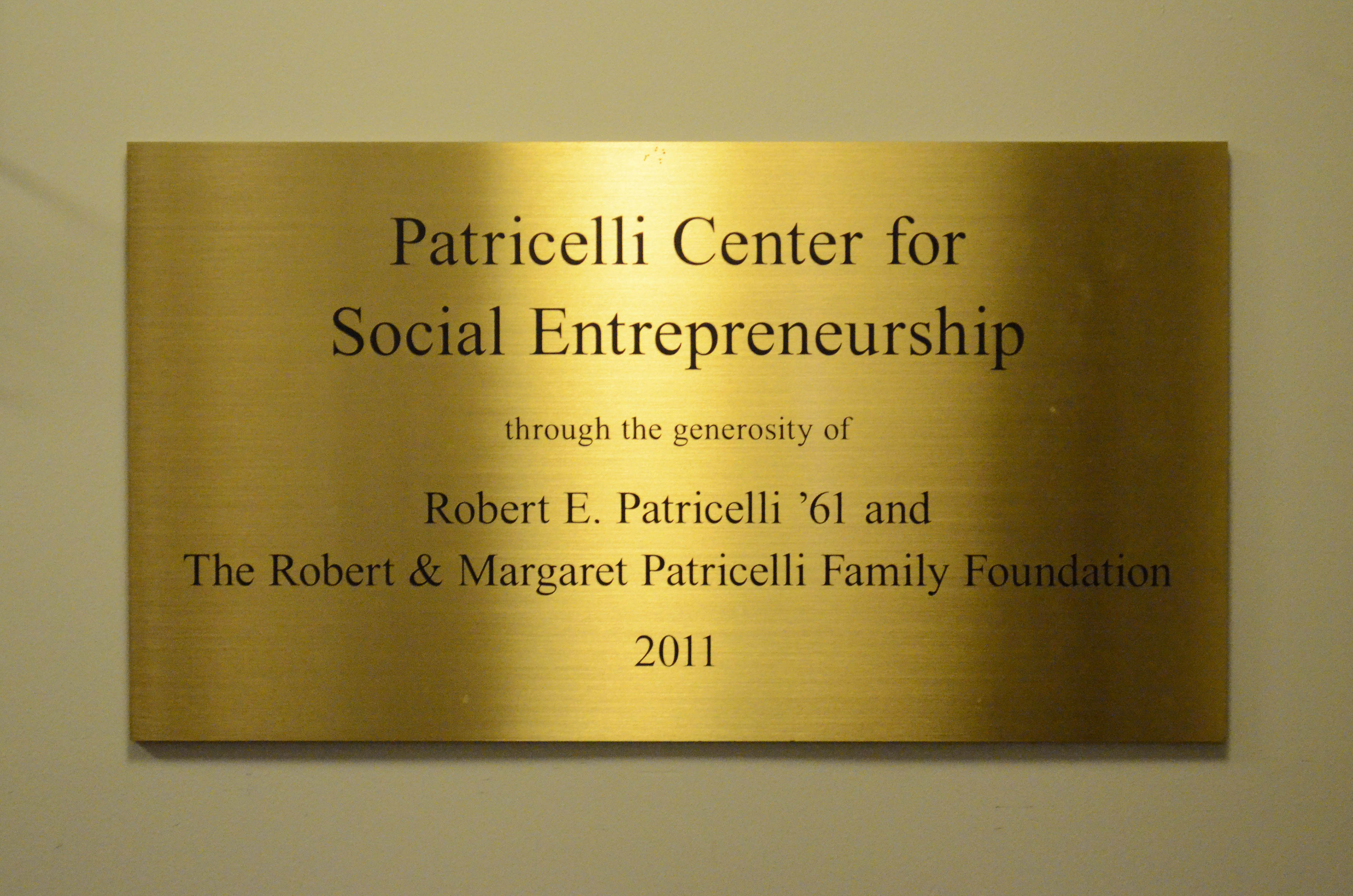
    On March 4, these objectives suddenly became significantly more attainable. Following a lengthy proposal process, FCSP was selected by the University’s Patricelli Center for Social Entrepreneurship as one of four student-led ventures to receive a $5,000 seed grant.

    “The whole idea of the Patricelli Center is we’re trying to get students who are sitting in classrooms learning about problems to kind of translate what they’re learning into a project that could work on the ground and have an impact,” explained Patricelli Center intern Hana El Safoury ’19, who works as a grant coordinator.

    Nita Rome, Staff Photographer
    Nita Rome, Staff Photographer

    The process this year began with about a dozen student proposals, which were weeded down by the Patricelli Center to six finalists. On March 1, Luke and the other finalists presented to a panel of 17 judges, most of whom were Wesleyan graduates.

    For the first time, the judges selected four winners rather than the typical three. Although the Patricelli Center only had the budget for three grants, the panel felt strongly enough about the quality of all four pitches that they ultimately chose to support the fourth with funding from their own pockets.

    While FCSP was already an established student group before winning the grant, this was not a requirement for the competition. Other recipients, like the group Downstream Podcasting presented by seniors Alli Fam, Ben Saldich, and Isaac Price-Slade, pitched their ideas as plans that they hoped Patricelli money could help get off the ground. Downstream Podcasting proposed a goal to diversify the podcasting industry through providing workshops for underrepresented students and opportunities for these students to work on Downstream’s podcast series.

    “Why I loved this year’s competition is…[the projects] varied,” El Safoury said. “People are running with their ideas or with projects that they’ve already established.”

    Another distinguishing feature of the projects is the variable scope each established to address their particular goal. For FCSP and Downstream Podcasting, students set their sights on the Wesleyan campus and local community—at least initially. The other two winners took a different approach. First-year Sydney Ochieng’s venture, Accessible and Affordable Sanitation for Women (AASW), seeks to increase access to proper sanitation for schoolgirls in Mombasa, Kenya. And the last winner, Dharma Gates presented by Aaron Stryker ’19, wants to offer students across the U.S. access to an affordable meditation-centered gap semester program.

    What unites these diverse programs is adherence to the Patricelli Center’s selection criteria. Each venture must address a social problem, be sustainable, be scalable, and have potential for impact. For FCSP, Luke said the whole growth process started with identifying a social problem that he and other students wanted to address.

    “At its core, FCSP is a project that is trying to empower foster children through mentorship,” he said.

    To get FCSP off the ground and running, Lezhanskyy said the founders were able to get support from other groups on campus in addition to the Patricelli Center. The Office of Community Service, Allbritton Center for the Study of Public Life, and Wesleyan Student Assembly all pitched in essential funds to cover costs like the program’s transportation operation.

    Once all logistics were secured, volunteer-child pairs like Kat and Julian were at last able to meet. At this moment, Lezhanskyy said the program began to check another box on the Patricelli Center’s selection criteria list: social impact.

    “The kids, I believe, get a sort of support,” he said. “They get the knowledge that [they] are meaningful enough that a college student is taking the time for free to just come and spend time together. We’re not doing rocket science, you know…. But it’s difficult to describe how important that companionship is to a child’s development.”

    Carola Melendez-Rios, a caseworker for three youths enrolled in FCSP, voices the children’s perspective with commensurate conviction about the program’s potential for impact.

    “[The kids] had expressed interest in the program and we thought it would be a good fit for them because they do definitely need academic support and they need socialization support,” Carola said. “Socialization is a big thing. Learning how to have appropriate social skills with different people in different environments is really important and we thought this would be a really good opportunity.”

    Weekly meetings have been very well-received, according to Melendez-Rios. She, like Lezhanskyy, now hopes the program can expand to assist even more children.

    “[The kids] are really looking forward to coming every week,” Melendez-Rios said. “I know they enjoy having people to talk to, people to play games with, and it’s at a place where they feel safe.”

    Melendez-Rios also emphasized that FCSP is providing these children with support on a volunteer basis.

    “One youth in particular really developed a relationship with one of the tutors and they’ve continued to meet and have a therapeutic relationship beyond their time here, which is really what would be our hope for anybody who participates in a program like this,” Melendez-Rios said. “It’s having someone that they can count on that they know isn’t there because they’re being paid.”

    With a $5,000 check cashed in FCSP’s name, the students now face decisions on how to expand the current operation while retaining these close relationships.

    “We hope that grantees will embrace the process of prototyping, learning, and iterating their ideas,” said director of the Patricelli Center Makaela Kingsley, who will remain a point of contact while winners allocate their newfound funding. “We hope they will continue to build strong partnerships with other stakeholders. Ideally, they will lay a foundation for financial sustainability.”

    Lezhanskyy’s strategy for financial sustainability stresses survival through connection. He hopes that by collaborating with other organizations doing similar work, the program will continue to thrive long after he and other founding members graduate.

    “There are a lot of different organizations—state, local, and national—that are working to effect some sort of change with the [foster care] system,” Lezhanskyy said. “As a result, there’s a lack of communication in trying to create some sort of coordinated effort to really do something about the system…. There are organizations that are doing similar or pretty much identical work, but they don’t communicate with one another.”

    FCSP members are currently attempting to partner with one such nonprofit called Mentor, which, fittingly, connects mentors with at-risk youths. Lezhanskyy said they had no idea Mentor even existed until a coincidental conversation with a friend of his a month ago. He also hopes to have a relationship with at least one more foster care organization and one more college or trade school in the state by the end of the year.

    “I believe [the grant] will give us the resources to expand our work further,” Lezhanskyy said. “The key to doing something really lasting—in this state at least—is to create a coordinated effort. A network can do much more good if it’s connected and people are going at it together rather than all alone.”


    *Names have been changed to protect the identity of minors in the foster care system.


    Spencer Dean can be reached at srdean@wesleyan.edu.

  • SPA Lab’s Inaugural Sleep Week Emphasizes Link Between Sleep and Wellbeing
    On Monday, Nov. 12, the University’s Sleep and Psychosocial Adjustment Lab (SPA) launched its inaugural Sleep Week. Aimed at improving students’ health and wellness, Sleep Week consisted of daily events which raised awareness about the importance of sleep.

    Planned events included a photo and video campaign, an interactive session with Assistant Professor of Psychology Royette Tavernier, a documentary screening, and prize giveaways like sleep masks and stress balls. The initiative concluded on Friday with a trivia night in Usdan Cafe.

    “I wanted to know how students perceived sleep in relation to their wellbeing and to gain some insight into the culture of sleep among their peers,” Tavernier said. “So my team and I came up with the idea for Sleep Week to give students an opportunity to learn more about the research we do in the lab, as well as to engage in discussions about sleep and wellbeing.”

    The SPA lab examines the link between sleep and psychosocial adjustment—a reflection of an individual’s psychological wellbeing that is influenced by their experiences in the social arena. Directed by Tavernier, the lab focuses its research on late childhood, adolescence, and early adulthood. In past years, Tavernier has published findings in journals such as the Journal of Sleep Research, Journal of Youth and Adolescence, and Developmental Psychology, among others.

    “Although the field of sleep research is relatively new, there have been significant breakthroughs in research on sleep deprivation, chronic sleep loss, and insomnia,” Tavernier said. “Additionally, a number of experimental studies have shown negative implications of inadequate sleep for memory and other indices of cognitive functioning.”

    According to the National Sleep Foundation, young adults (ages 18-25) should aim for seven to nine hours of sleep per night. However, results from their 2018 Sleep in America poll reveal that many struggle to prioritize sleep, and that this may be especially relevant for young adults, who represent the demographic with the lowest sleep duration scores. Findings suggested that just 10 percent of American adults prioritize their sleep over other aspects of daily living like work and social life.

    “Many students I talk to feel like they can’t make sleep a priority,” Tavernier said. “This saddens and worries me a lot.”

    Additionally, the Sleep in America poll found that 90 percent of U.S. adults with excellent sleeping health feel very effective at getting things done each day, while only 46 percent reported the same with poor sleep health.

    “Sleep is a huge determining factor of both the quality and longevity of life,” Tavernier said. “I hope students can feel empowered to prioritize sleep. There is so much that goes on in the brain while we sleep that benefits our memory and our ability to regulate our emotions.”

    Research results from the SPA lab’s studies have identified similar as well as more nuanced effects of sleep for students at the University.

    “Specifically, research findings from the Sleep and Psychosocial Adjustment lab [based on a sample of Wesleyan students] have indicated significant differences in sleep disturbance, alcohol use, and mental health between student-athletes and non-athletes,” Tavernier said. “These findings are relevant to Wesleyan students for understanding not just what happens as a result of poor sleep, but also what factors predict our ability to get a good night’s sleep.

    Once these predictive factors have been identified and understood, Tavernier said that the community will be better able to target those specific factors within programs aimed at promoting sleep at the University.

    One way students can prioritize sleep is with knowledge about chronotypes, which represent being a morning or night person. Some individuals naturally prefer to both go to sleep and wake up early while others may favor late nights and sleeping in. However, most individuals fall somewhere in between the two extremes.

    To address the topic of chronotypes, Sleep Week had planned a screening of  “The Secret Life of your Body Clock” in Judd Hall on Thursday, Nov. 15, although weather conditions ultimately meant the event had to be canceled. The BBC documentary tackles questions such as why one is more likely to have a heart attack at 8 a.m. and more likely to crash their car at 2 p.m.

    Tavernier recommends that college students attempt to schedule according to their chronotype when options permit. For example, someone who prefers to wake up early and not stay up late should try to opt for earlier classes.

    “Instead of thinking about sleep as something to do when your body is tired, I hope students can think about sleep as something to do to boost brain functioning,” Tavernier said.


    Spencer Dean can be reached at srdean@wesleyan.edu.

  • Climate Change Denialism: Dr. Michael E. Mann Dispels Illusions
    Climate Change Denialism: Dr. Michael E. Mann Dispels Illusions

    Spencer Dean, Staff Writer
    Spencer Dean, Staff Writer

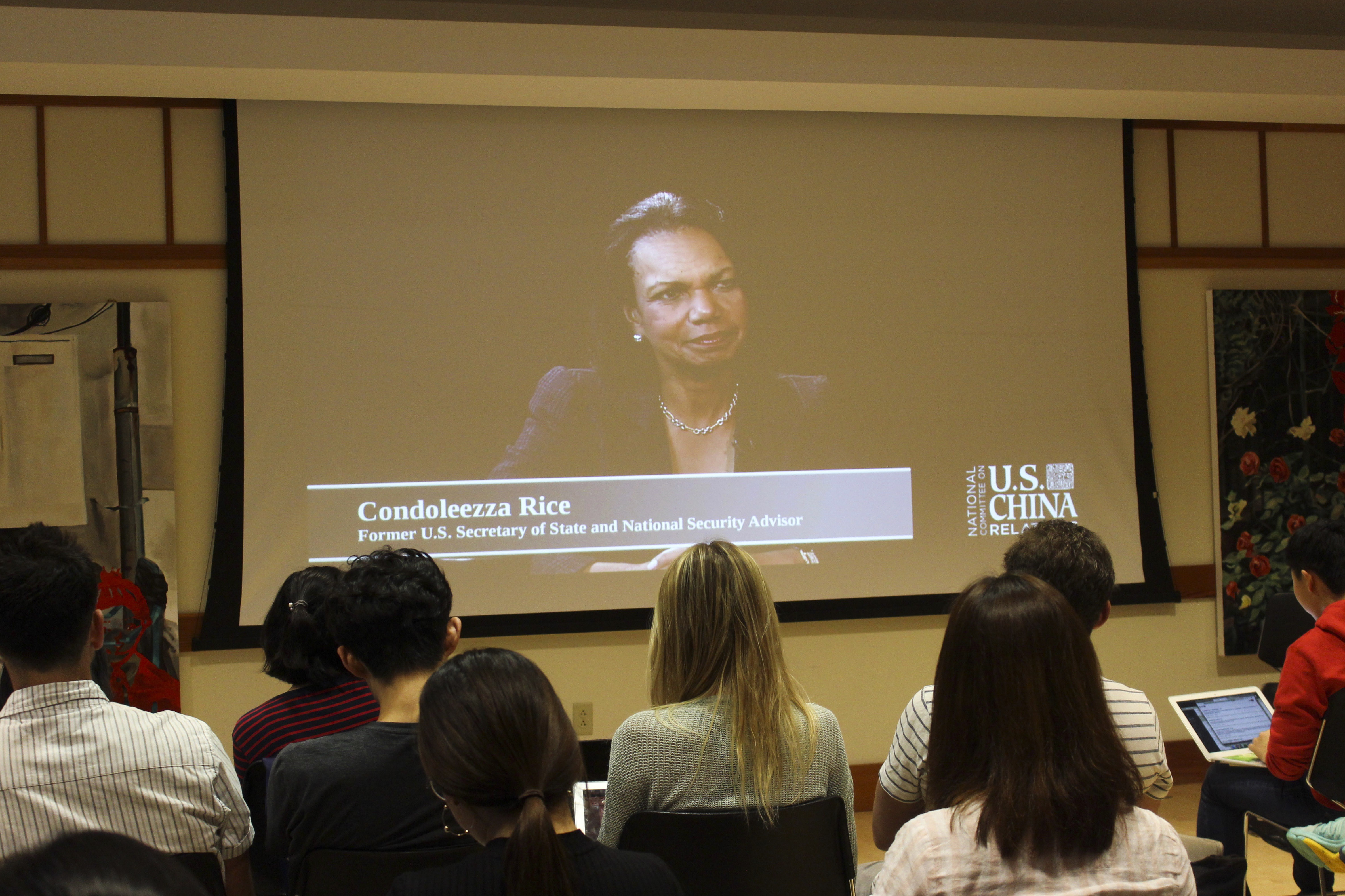
    Dr. Michael E. Mann, Director of the Earth System Science Center at Pennsylvania State University, visited campus on Oct. 25 to deliver a lecture addressing climate change denial. The Department of Economics hosted this talk as a part of their fall seminar series.

    Mann’s lecture followed the outline of his 2016 book about climate change denial titled “The Madhouse Effect,” which he co-authored with Pulitzer Prize-winning political cartoonist Tom Toles. Mann noted that when he and Toles were working on the book, some climate scientists questioned the relevance of climate change denialism.

    “We had colleagues who said at the time, ‘Why are you writing a book about climate change denial? We’re past that. We’re done with that. We’re moving on and are going to solve this problem and in the years ahead are going to be focused on solutions,’” Mann said.

    However, the book’s topic became pertinent soon after its publication, with the 2016 election of President Donald Trump. This event induced a return to what Mann referred to as the “Madhouse effect” of climate change denialism, perhaps best represented by Trump’s infamous 2012 tweet asserting that the concept of global warming was fabricated by the Chinese as a tactic for making U.S. manufacturing less competitive.

    “Some say that our book was prophetic because it indeed presaged a return into the madhouse of climate change denialism where we now do have a president who denies the basic science of climate change,” Mann said.

    Mann continued to discuss how denialists have been granted a place in public discourse over matters like climate change.

    “There’s this notion that those who reject the science of climate change are somehow skeptics, that they are somehow opposing the orthodoxy of the scientific community and that there’s something noble about that,” Mann said. “But simply rejecting mainstream science based on the flimsiest of arguments that don’t stand up to the slightest bit of scrutiny, that’s not legitimate scientific skepticism, it’s contrarianism or denialism.”

    One by one, Mann refuted denialist arguments that aim to shroud climate science in uncertainty. These arguments included claims that climate change does not pose an imminent threat, that it may be self-correcting, and even that it is actually a good thing, which was a comment from former Administrator of the Environmental Protection Agency Scott Pruitt.

    “We know humans have most flourished during times of what? Warming trends,” Pruitt said in February. “I think there are assumptions made that because the climate is warming, that that necessarily is a bad thing.”

    The remainder of Mann’s talk emphasized just how patterns of climate change have and will continue to be detrimental to the planet. One consequence is a longer and more extreme hurricane season, exhibited by recent events like Hurricane Michael in October.

    According to the Guardian, Michael was the first category four hurricane to make landfall on Florida’s panhandle, and came unusually late in the hurricane season (June 1 through Nov. 30) for such a large storm.

    Mann characterized climate change as a threat multiplier. For instance, a direct consequence of climate change like a drought in Syria—likely the worst in the last 900 years—can lead to a ripple effect on other concerns like terrorism. Mann pointed to the fallacies in statements from politicians like Trump who insist we should not be distracted by issues like climate change and should instead focus on issues like international terrorism.

    “That drought has created the conditions—the instability—to force rural farmers into the cities like Aleppo where they compete for food, water, and space with the people who live there,” Mann said. “More competition for fewer resources leads to conflict; conflict and instability creates an atmosphere where terrorist organizations can form.”

    Mann also described his personal battles with climate change deniers. In 1998, Mann and two colleagues published a paper that reconstructed trends in the planet’s past temperatures and included a graph displaying this model. The graph, which The Atlantic called “the most controversial chart in science,” has been likened to a hockey stick because of the temperatures’ relative flatness for hundreds of years and then recent spike.

    “It has become sort of an icon in the climate change debate because it tells a simple story,” Mann said. “You don’t have to understand the physics of the climate system or any of the nuances of the science to understand what this graph is telling us: There is something unprecedented happening today with our climate, and it probably has to do with us.”

    The chart and Mann himself would go on to become targets of concerted efforts at discreditation. In the 2009 “Climategate” pseudo-scandal, emails between Mann and colleagues were hacked and combed through to extract pieces that could be used in claims that the scientists were attempting to hide declines in global temperatures. Then-Governor of Alaska Sarah Palin wrote an opinion piece in the Washington Post touting this argument.

    “The email she was referring to was an email I had actually received,” Mann said. “It was in early 1999, on the heels of the warmest year we had ever seen…so scientists couldn’t have been talking about a decline in temperatures. Temperatures were increasing dramatically. Instead they were talking about some bad tree ring data that shouldn’t be used because they’re unreliable.”

    Despite his numerous conflicts with climate change deniers, Mann retained an optimistic tone for the end of his lecture.

    “I hope you will all vote in this upcoming election,” Mann said. “There is still an opportunity to act in time to avert catastrophic climate change, but we don’t have time to waste.”


    Spencer Dean can be reached at srdean@wesleyan.edu.

  • Students Gather for Viewing of Town Hall With Condoleezza Rice to Discuss U.S.-China Relations

    Students Gather for Viewing of Town Hall With Condoleezza Rice to Discuss U.S.-China Relations
    Spencer Dean, Staff Writer
    Spencer Dean, Staff Writer

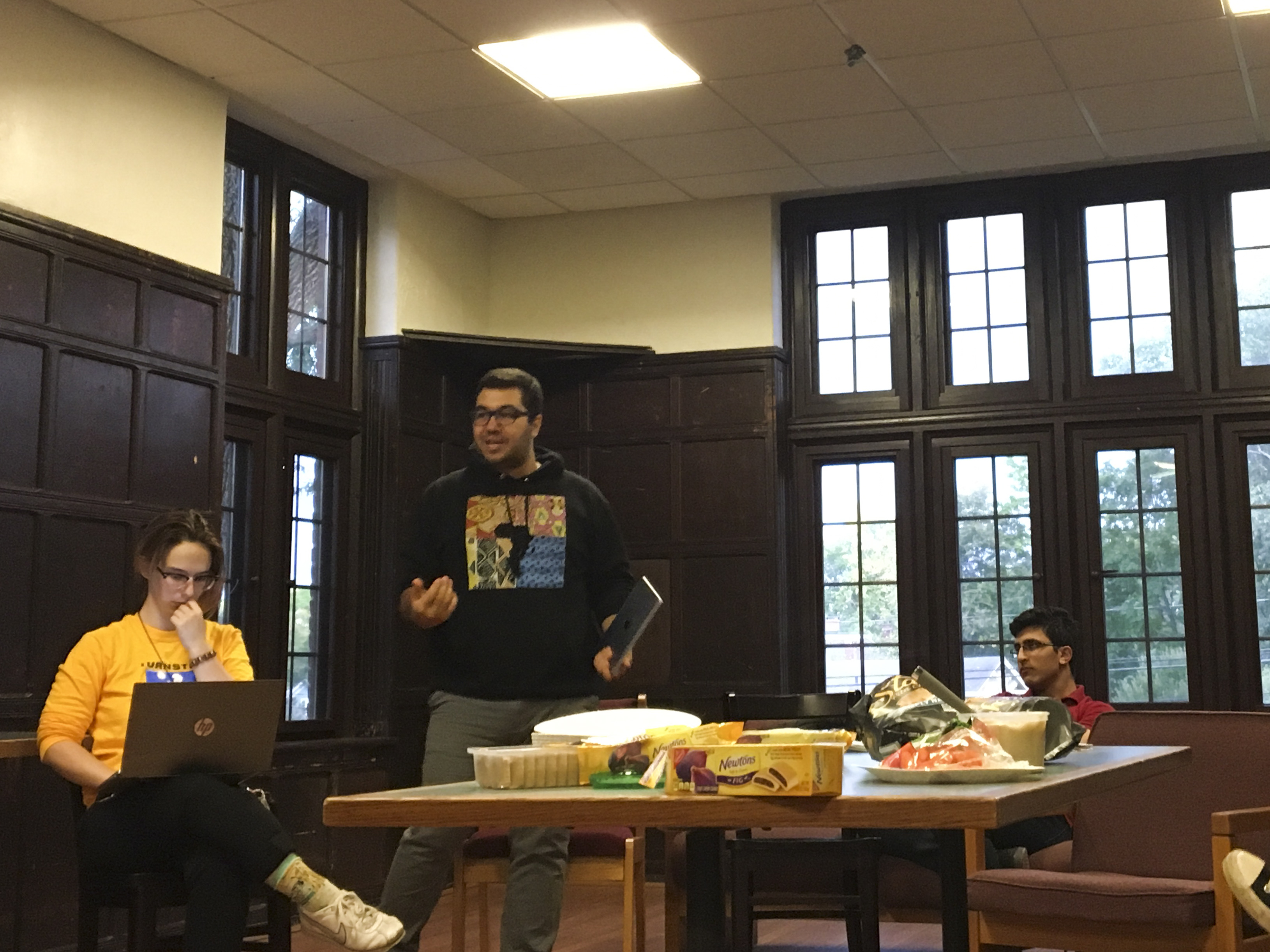
    Students and faculty gathered at the College of East Asian Studies this past Tuesday, Oct. 9, to participate in a town hall event which featured a webcast of former U.S. Secretary of State and National Security Advisor Condoleezza Rice. In a broadcast reaching over 100 town hall locations, Rice discussed United States-China relations.

    The National Committee on U.S.-China Relations, whose president moderated the interview, hosts this event annually. Past interviewees include former President Jimmy Carter and former National Security Advisor Susan Rice. This year, the University was invited to screen the webcast in conjunction with a presentation by a local host.

    Attendees were encouraged to submit questions for the moderator to ask Rice via Twitter. Out of the several Twitter questions selected, one was submitted by Mathias Valenta ’20.

    “In what ways can liberal nations such as the U.S. encourage an increasingly powerful China to abandon the use of force and integrate into the system of international law?” Valenta asked.

    Rice first commended the importance of the question at hand, then answered by advocating for Chinese policies with broader definitions of national interest.

    “There are kind of two ways that great powers act in the international system,” Rice said. “One is that they act only on their own interests in the narrowest sense of their own interests, and everybody else you’ll just have to get out of our way. The other is a sense that you have a broader definition of national interest which includes the idea that if others are prosperous—if others enjoy peace—you’re better off too…. I would say to China, ‘If you’re gonna play on the big stage, try to do it in a way that makes the world more prosperous and peaceful for everybody, not just for China.’”

    Valenta, a History and Economics major, was drawn to the town hall event due to a fascination with foreign policy, specifically the question of how to achieve a system of international order where violence no longer exists.

    “The United States has always been a proponent of international law and, you know, equality and rules determining how we behave with one another,” Valenta said. “It seems that China has a very different, more power-oriented vision of how international relations should be formed.”

    Valenta said he agreed with Rice on the point of encouraging China, through primarily diplomatic means, to participate in international organizations and conversations.

    Preceding the webcast, each venue had a local China expert or panel discuss the topic. Director of the Allbritton Center for the Study of Public Life and Professor Peter Rutland led this segment of the event.

    Rutland and Rice’s presentations stressed several of the same topics, including trade dynamics, the flow of ideas and intellectual property, and activity in the South China Sea.

    Rutland spoke first about the trade gap between the United States and China. China’s recent economic growth—which is occurring at unprecedented rates—has been heavily export-led, fueled by demand in the United States especially. Rutland described this exchange of goods and services as mutually beneficial.

    “The U.S. gets to buy a lot of cheap goods that go into Walmart and so on, and that boosts the living standards of Americans,” Rutland said. “China benefits because it has the jobs and growth.”

    According to the Office of the United States Trade Representative, the United States goods and services trade deficit with China was $335.4 billion in 2017. United States exports were $187.5 billion and imports were $522.9 billion.

    “China seems comfortable with this,” Rutland said. “This is the engine of their growth and they’re comfortable lending the U.S. the money to fund the deficit.”

    But Rutland explained that President Trump and others are not satisfied with this asymmetrical exchange and are currently making efforts to adjust the imbalance through tariffs. In September, the Trump administration announced it would impose tariffs on roughly $200 billion worth of Chinese imports. Since then, the President has said he is prepared to impose tariffs on an additional $267 billion.

    Rice, emphasizing her support of free trade, said that she believes there are other ways the United States could achieve reciprocity without relying so heavily on tariffs.

    “What the administration has said is, ‘Our only tool is tariffs, so we’re going to use tariffs and use tariffs until we get a response,’” Rice said. “I think we have many other tools at our disposal. One is that we do have the ability to look more closely at Chinese investment here if American investment cannot be done there.”

    Rice elaborated, saying that there are whole segments of the Chinese economy that are closed to foreign investment. She believes the Chinese economy would increase success with more openness and that the U.S. should press for reciprocity.

    On the topic of trade relations, both Rice and Rutland dwelled upon the notion that this exchange is not just about the flow of goods, but also of ideas. Rice cited stories of American CEOs who, drawn by cheap labor, were forced into joint ventures in China only to lose their intellectual property.

    “There is work that could be done to change some of the structural issues that are leading to some of these trade imbalances,” Rice said.


    Spencer Dean can be reached at srdean@wesleyan.edu.

  • SJP and JVP Discuss Misconceptions of Palestinian Liberation at Palestine 101
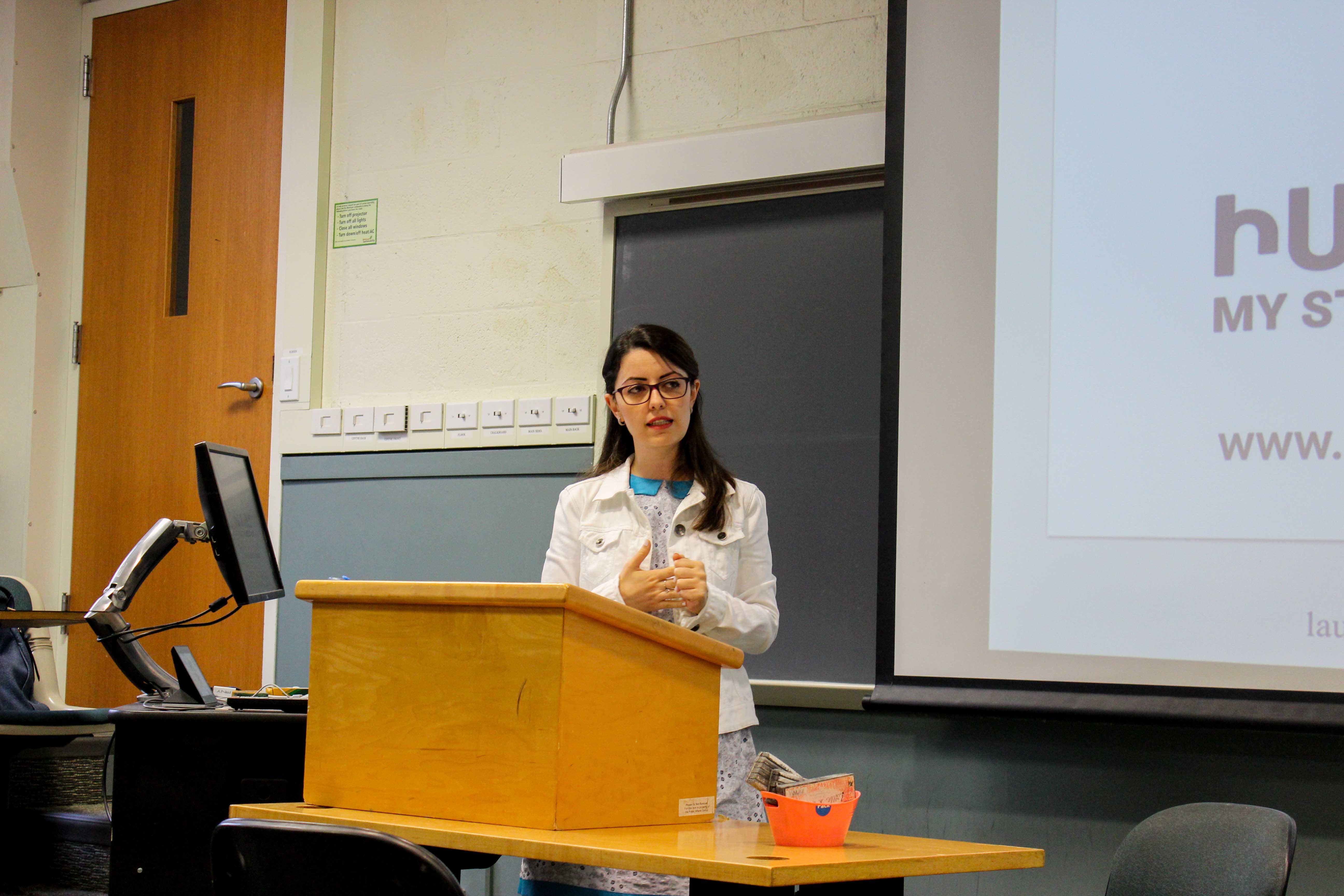
    SJP and JVP Discuss Misconceptions of Palestinian Liberation at Palestine 101

    Spencer Dean, Contributing Writer
    Spencer Dean, Contributing Writer

    On Wednesday, Oct. 8, student organizers from Wesleyan Students for Justice in Palestine (SJP) and Wesleyan Jewish Voice for Peace (JVP) convened in 200 Church as co-hosts of a Palestine 101 information session. The event was advertised to community members seeking to learn about and support Palestinian liberation and human rights.

    An initial Palestine 101 event, which featured a discussion led by Chair of the American Studies Department and Professor of American Studies & Anthropology J. Kēhaulani Kauanui, was held by SJP on Sept. 19. As this event landed on the Jewish holiday of Yom Kippur, organizers scheduled the additional Oct. 8 event to accommodate more students.

    “We decided that the need was great enough—because we had missed a whole group of people who were observing—to do a second one and to hopefully reach out to people who couldn’t make it to the first one and to continue to be a more active presence on campus,” SJP member Dani Jewell-Tyrcha ’21 said.

    Jewell-Tyrcha said that the first event may have been slightly more well-attended, in part perhaps because of the draw of Kauanui.

    “She’s very, very well-versed and very knowledgeable on issues of colonialism and white supremacy,” Jewell-Tyrcha said. “[She’s] also very knowledgeable on Israel-Palestine issues as well.”

    Through a slideshow presentation, an informational video, and a discussion activity, the event on Wednesday provided attendees with an introduction to the SJP and JVP groups as well as a general overview of the ongoing struggle between Israel and Palestine.

    The scope of the presenters’ historical review began with May 14, 1948, when the Israeli Declaration of Independence was proclaimed. The presenters highlighted that the following day, May 15, is called Nakba Day by Palestinians. Nakba Day commemorates the mass exodus of 700,000 Palestinian people, who either fled or were expelled from their homes preceding and following the declaration. The students also outlined the Six-Day War of 1967 and this year’s Great March of Return.

    Several students stressed the significance of vocabulary choice with regards to Israel and Palestine’s history. One interactive exercise led by the group instructed attendees to discuss with those sitting next to them the definitions of words such as colonialism, apartheid, and Zionism. The group contended that one common mischaracterization of the situation arises from labeling it as a conflict.

    “The violence between Israelis and Palestinians is often falsely presented as a conflict between two sides with irreconcilable claims to one piece of land,” states a pamphlet printed by Wesleyan SJP. “In reality, this is a conflict over territory between a nation-state, Israel, with one of the world’s most powerful and well-funded militaries, and an indigenous population of Palestinians that has been occupied, displaced, and exiled for decades.”

    Part of SJP’s mission statement, according to the group’s Facebook page, is to raise awareness and provide students with an alternative resource of information to the mainstream media.

    “We hold a lot of educational events,” SJP member Indigo Cochran ’21 said. “Education is a big goal of ours.”

    In addition to holding educational events, SJP and JVP also work on more direct activism tactics. For example, students spoke about the controversial Boycott, Divest, and Sanctions (BDS) campaign, which promotes various forms of boycott in order to put pressure on Israel. One instance of such activism occurred in 2017, when SJP activists at the University coordinated an effort to boycott Sabra hummus on campus as a BDS strategy.

    “We do a combination of organizing, sometimes related to pressuring the administration, including BDS,” Cochran said.

    Some of those in attendance at the Oct. 8 event were also members of JVP. Presenters commented on the coalition work being pursued by the two groups, which share some of the same goals.

    “People in JVP are really great collaborators because they come from a very unique perspective in that their ties to the Jewish community are still very strong and their Jewish identity is generally still very strong as well, but they’re very knowledgeable in a side of the issue that a lot of people in SJP aren’t,” Jewell-Tyrcha said. “Being pro-Palestine and anti-Zionist while being Jewish is a hard identity to have, and so I think our collaboration stems from having a lot of the same passions and interests and care for Palestinian liberation but coming from different kind of perspectives and histories and backgrounds on it.”


    Spencer Dean can be reached at srdean@wesleyan.edu.

  • Allbritton and Fries Centers Host Asya Darbinyan for Talk on Revolution in Armenia

    Allbritton and Fries Centers Host Asya Darbinyan for Talk on Revolution in Armenia

    Spencer Dean, Contributing Writer
    Spencer Dean, Contributing Writer

    Asya Darbinyan of Clark University visited campus to deliver a lecture on the peaceful grassroots revolution that disrupted established power structures in Armenia from April to May 2018. This lunchtime talk on Thursday, Sept. 13, was hosted by the Allbritton Center for the Study of Public Life and the Fries Center for Global Studies and was sponsored by the the Nazar and Artemis Nazarian Family Foundation.

    Darbinyan, a Ph.D. candidate at the Strassler Center for Holocaust and Genocide Studies at Clark, presented a narrative of the “Velvet Revolution” with emphasis on how Armenian women and youth shaped the movement. After a month of peaceful protests, the movement was successful in removing two-term president Serzh Sargsyan from power.

    “This was the movement of ordinary Armenian people who mobilized for establishment of transparent government,” Darbinyan said. “This was a grassroots-level movement and eventually won against almost impossible odds.”

    In 2015, then-President Sargsyan initiated a constitutional referendum to change the country’s government from a semi-presidential system to a parliamentary republic in the 2017-18 presidential cycle. Making the amendment effectively removed term limits and allowed Sargsyan to run again for office, although he had pledged not to.

    “When the referendum was happening, Serzh Sargsyan promised not to attempt to stay in power,” Darbinyan said. “He promised on camera to the entire nation that he was not going to be a candidate for prime minister. When the time came, however, in March 2018, it became clear that that was a lie.”

    The election of Sargsyan, which was also marred by allegations of electoral fraud, sparked the Velvet Revolution. Within two months, Sargsyan conceded and resigned.  

    Darbinyan, who recently returned from spending time in Armenia, said that even organizers of the Reject Serzh movement—as the revolution was also called—did not fully believe that change would come about so smoothly.

    “Such changes do not happen frequently in post-Soviet regions, especially peacefully,” Darbinyan said.

    While the official revolution lasted merely from April to May 2018, Darbinyan explained that a series of peaceful protests starting in 2012 had primed the Armenian people for this moment.

    “Acts of peaceful disobedience and protest were becoming more and more common in Armenia in the last decade,” she said.

    One protest in 2012 prevented the destruction of a cherished park which was slated to become a major construction site in the capital of Yerevan; in 2013, Armenians rallied against government plans to impose a higher bus fare.

    “People were against it because nothing else had changed,” Darbinyan said. “Salaries hadn’t changed, scholarships hadn’t changed, but suddenly they were going to pay more for public transportation.”

    This protest included individuals with cars driving to bus stops and offering free rides to those who refused to pay the new bus fare, largely students and young professionals.

    “All of these young people later were going to be the basis for the major revolution that happened in April,” Darbinyan said as she projected an image of a massive crowd at a Velvet Revolution protest.

    Sanya Bery ’21 attended the lecture for Professor of Government Peter Rutland’s “Evolution of War” class. Rutland is also the director of the Allbritton Center for the Study of Public Life.

    “I didn’t even really know what was happening in Armenia,” Bery said. “I thought it was really interesting how everyone kind of came together to accomplish a goal. Usually what causes internal turmoil is very split.”

    The unprecedented nature of this revolution manifested itself in not just the peacefulness of the protests, but also the influence of women in the movement. Images of the protests showed mothers with their children in strollers marching through the streets of the capital.

    During her time in Armenia, Darbinyan spoke to women involved in the protests. One of the messages she relayed from those conversations was that the patriarchal structure of society actually helped women stay out and fight more. Since most providers for families are men, women were more free to take to the streets. She also added that they were less likely to be bothered by police because of the societal mindset that women were less dangerous or threatening.

    “Because it was not seen as bad behavior to go out to the streets anymore, these women could go out and participate in demonstrations during the daytime when the men were at work,” Darbinyan said.

    The Velvet Revolution drew from protests in other countries for inspiration. For example, in what Darbinyan called a pots and pans rally, organizers called on women to go home, get their pots and pans, hold them out their windows, and make a racket. This act accentuated how despite overwhelming support and involvement, some women and others were not able to get to the streets and protest.

    “Armenian women had vowed to continue their kitchenware rally until Serzh Sargsyan would resign,” Darbinyan said. “Fun fact, in 20 hours he did resign. Of course not only because of pots and pans.”

    Darbinyan highlighted how the movement fostered more than just political change; it also transformed many Armenians’ mindsets about concepts like justice, solidarity, and even attitudes towards each other.

    “Those couple of weeks in April had a revolutionary impact on Armenians,” Darbinyan said.

    Darbinyan’s speech concluded on an uplifting note, as her optimistic words were coupled with final images of celebration in the streets of Yerevan.

    “What I myself saw in my time in so-called ‘New Armenia’ was the trust that people have in new possibilities and potentials,” Darbinyan said. “There is a firm belief that together they can be the change they so hoped to see in Armenia.”

    Darbinyan was just one speaker in a lecture series presented each semester by Allbritton regarding topics of public concern, including contemporary, foreign, and domestic issues.

    “The Armenian revolution was a major event of the year,” Rutland said. “It’s recent, it’s still unfolding, and we don’t hear much about it at all. It’s a small country, as [Asya] said, of three million people in the middle of Eurasia…. She brought a lot of issues out that I hadn’t heard in the press coverage, like the role of women in particular.”


    Spencer Dean can be reached at srdean@wesleyan.edu.