
Author: Kaye Dyja

  • Israeli Apartheid Week Begins

    Israeli Apartheid Week Begins

    Dani Smotrich-Barr, Photo Editor
    Dani Smotrich-Barr, Photo Editor

    Students for Justice in Palestine and Jewish Voice for Peace are hosting the third annual Israeli Apartheid Week from Monday, April 23, to Friday, April 27.

    Sponsored by the Resource Center and the American Studies Department, the events will range from a screening of “On This Land,” to a conversation with Rana B., a history and Modern Arab Studies Professor at Birzeit University in occupied Palestine.

    The first event, a screening of the documentary “On This Land” followed by a Q&A session with filmmakers Nitasha Dhillon and Amin Husain, took place on Monday, April 23, in the Powell Family Cinema. The film is a work-in-progress, feature-length, creative documentary that takes the viewer on a journey to Palestine.

    “‘On This Land’ weaves together the Palestinian landscape with a multitude of voices from the Occupied Territories in order to understand Israeli domination and look with the Palestinians at the future of struggle,” the Facebook page for Wesleyan Students for Justice in Palestine reads.

    On the following day, Director and Senior Scholar of Arab and Muslim Ethnicities and Diasporas Studies at San Francisco State University Dr. Rabab Abdulhadi will lead a talk entitled “Teaching Palestine: Pedagogical Praxis and the Indivisibility of Justice,” in Judd 116 at 4:30 p.m.

    “[Dr. Rabab Abdulhadi] will discuss justice-centered knowledge production in Palestine scholarship, pedagogy and advocacy and the two international conferences she co-organized with Palestinian universities that brought together participants from Indigenous communities, third world, and communities of color from the U.S., South Africa, Puerto Rico, Haiti, Chile, Vietnam to Palestine,” the event poster states.

    The third event, “A Civil Offense? Criminalizing BDS,” will take place on Wednesday, April 25, in Downey 113 at 4:30 p.m. J. Kēhaulani Kauanui, a University professor of American Studies and Anthropology and Advisory Board Member of the U.S. Campaign for the Academic and Cultural Boycott of Israel, will host the discussion, focusing on the politics of punishment and political repression.

    Lastly, on Friday, April 27, Professor Rana B. will conduct a Skype conversation entitled “Academic Life in Occupied Palestine.”

    “The talk will discuss campus life under occupation, and give insight as to how university campus movements can stand in solidarity with and support students of Palestine,” the event poster reads.

    Director of the Equity and Inclusion Resource Center Demetrius J. Colvin urges the community to recognize how the issues surrounding Israel and Palestine stem from the fallout of colonization.

    “For me—and once again, this is my first week as a co-sponsor for this event—some of the things that are always on my mind whenever I’m supporting events like these, is ‘how do we not just think of this as an ‘other’ thing, or this exotic thing that’s outside of us?’” Colvin said. “Instead of thinking ‘oh, these Israelis and their problems’—don’t get me wrong, there are problems and issues—but we need to see this as a larger impacted pattern that’s been played out and continues to be played out everywhere.”

    Going forward, Colvin hopes the week will grow as the Students for Justice in Palestine and Jewish Voice for Peace collaborate with more student groups.

    “I would love to continue to support the event as it connects and collaborates with more student organizations to be a part of the event organizing,” Colvin said. “And making some of the connections that we’re not just learning about this ‘other’ or this thing that’s far away from us.”

    Kaye Dyja can be reached at kdyja@wesleyan.edu and on Twitter @kayedyja.

  • Chaplain Dr. Imam Sami Shamma Discusses Muslim Prisoners in the Trump Era
    Chaplain Dr. Imam Sami Shamma Discusses Muslim Prisoners in the Trump Era

    c/o Wesleyan Muslim Student's Association
    c/o Wesleyan Muslim Student’s Association

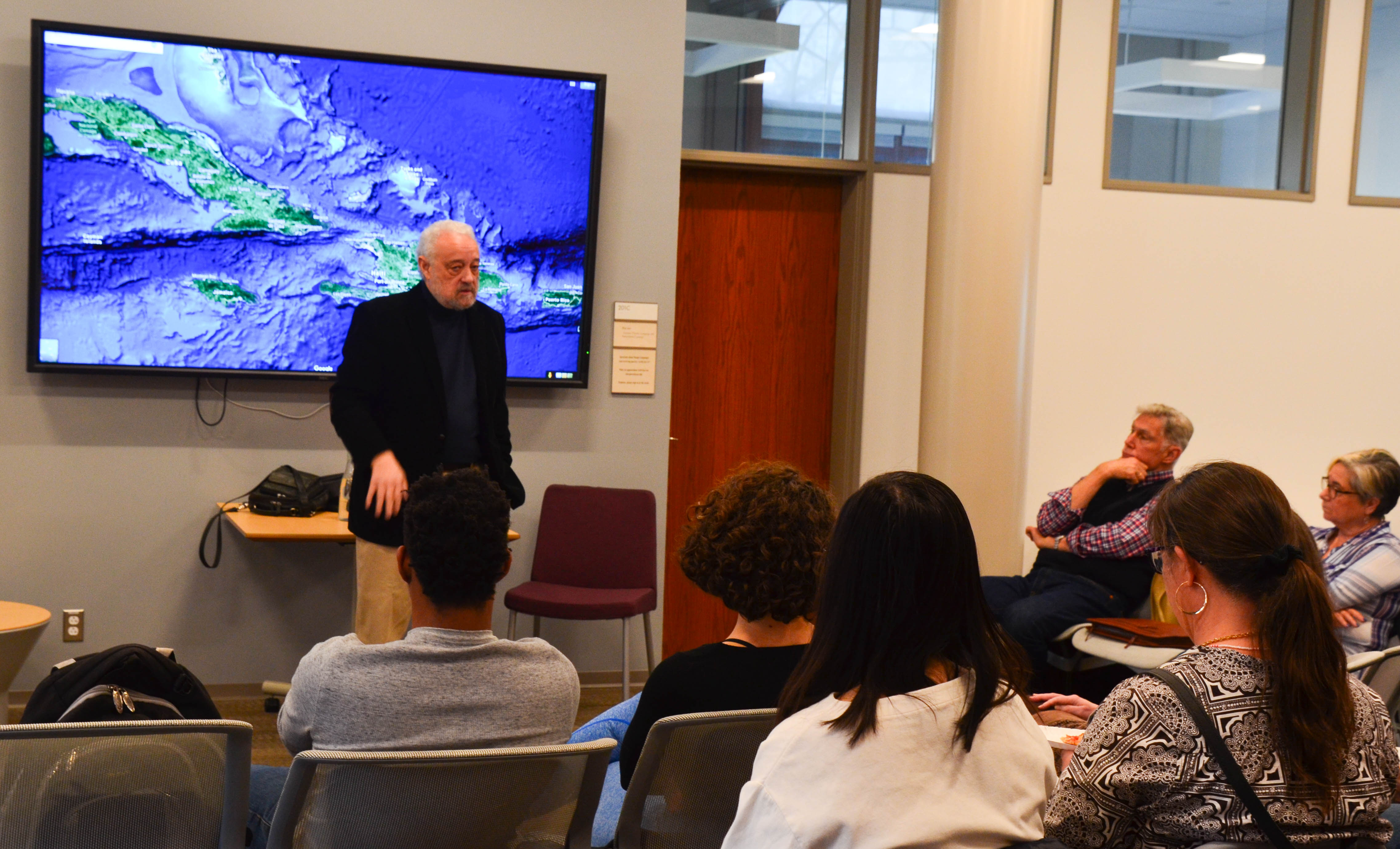
    Imam Sami Shamma, a Chaplain in the Connecticut Department of Corrections, hosted a lecture entitled “Muslim Prisoners in Post-Trump America,” on Wednesday, April 18. The talk was organized by the Office of the Muslim Chaplain and the Center for Prison Education (CPE).

    “So, this talk is obviously especially pertinent right now in this time of mass incarceration and increasing xenophobia and Islamophobia,” said Program Manager for the Center for Prison Education Noah Barth as he introduced Dr. Shamma. “One of the problems with the prison complex in America is that it’s very opaque; if you do not work there or are not housed there, it is hard to really know or understand how it operates and the complexities involved.”  

    Shamma began his talk by describing the four topics on which he wanted to focus: Muslims, inmates, 9/11, and the Trump era.

    Islam, as Shamma explained, is a religion whose people believe in one God. Muslims, according to Shamma, believe that God sent the prophet Muhammad to share the voice of God through the Quran.

    In terms of correctional facilities in Connecticut, there are 14 state prisons and one federal prison, housing just under 14,000 prisoners in total. Within that population of inmates, 13 percent of all inmates identify as Muslim.

    Many of these Muslim inmates form close communities for protection, structure, and access to education.

    “These Muslim communities have characteristics, and they have ways of handling themselves,” Shamma said. “These people are very often more educated than the rest of the population, far more read than the rest of the population, and they represent the most inmates that have attended the Wesleyan program [CPE]. They have a very strong sense of community, and they also have structure.”

    While correctional officers usually break up prison groups on account of the possibility of gang formation, Muslim groups are allowed to remain together.

    “They are grouped, they protect each other, they give each other support, and yet they are not labeled as a gang, which is incredibly fabulous and important,” Shamma said.

    Often, other inmates see these safe Muslim communities and want to join, creating what Shamma labeled four common subgroups within the Islamic prison population. The first group consists of authentic, practicing Muslims that truly believe the words of Islam. The second group contains curious inmates who are intrigued by the Muslim inmates’ lifestyles. Shamma said that many of the inmates that fall within this category usually base their religious affiliations on changing calendars.

    “In the Connecticut prison system, an inmate is allowed to change his religion every 90 days,” Shamma said. “Some of them follow the food calendar, because there are good times in the high season to become a Jew, and it’s pretty good to be a Christian around Christmas time.”

    The third group within Muslim prison populations seek group protection, while the fourth group is usually made up of gang members who can only convene by attending religious services.

    Shamma then transitioned into discussing how Trump’s presidency has affected the Muslim prison population. As hate crimes skyrocketed after the 2016 election, many Muslim inmates and officers faced increasing discrimination. He also described how many African-American prisoners felt a rekindling feeling that the American prison system is, and always will be, stacked against them.

    Shamma related these feelings many inmates experienced after Trump’s election to the events that followed 9/11. As Shamma described, on the morning of the attack on the World Trade Center, all Connecticut prisons went on lockdown and all Muslim inmates were segregated. Some remained in isolation for up to three weeks. The inmates were interviewed by the F.B.I., their cells ransacked, and their Qurans confiscated. Facing so much hatred and discrimination, over 60 percent of the registered Muslims changed their religious affiliations on the register.

    For the next two years, Shamma couldn’t remember one Muslim inmate being given parole.

    “They were told to their faces by the guards that they were going to kill them,” Shamma said.

    Shamma then opened the floor to a Q&A session, where audience members asked about the culture of staff members, gender dynamics within Islam, and how Shamma mentally prepares for work every day.

    “Imam, how do you prepare yourself before you go into the correctional facility and then decompress when you come out?” an audience member asked.

    “My tension drops the minute the doors close behind me as I walk into the prison,” Shamma responded. “And my tension and apprehension goes up the minute I walk out.”


    Kaye Dyja can be reached at kdyja@wesleyan.edu and on Twitter @kayedyja.

    Duties and responsibilities
    css
    Duties and responsibilities
    Style Hunter
    Fashion
    Health
    Recipes
    Travel
    Game Reviews
    Travel
    Healthy recipe
    Lifestyle
    Vogue
    Health & Fitness
    Recipes
    Dating
    fashion show
    Fashion magazines
    Best Of
    Future Cars
    Bad Girls
    Automotive
    Training
    Weight Loss
    Classic Cars
    http://tinfob.com/index.php/2018/02/23/drive-me-with-citrisgrungy-to-clear-your-heart/?preview=true
    Fashion
    Health
    Style Hunter
    Health
    Bad Girls
    Motorsports
    Music
    Best Of
    Street Fashion
    Style Hunter
    Vogue
    Investments
    combustion
    entertainment
    exercise
    food
    gain
    guide
    life
    locomotion
    locomotion
    suggest
    appetite
    appetite
    apply
    artifice
    benefit
    building
    business
    city
    company
    company
    cosmetics
    cosmetics
    costume
    data
    design
    designers
    details
    develop
    entrepreneur
    family
    fashion
    fashion
    food
    health
    life
    limit
    locomotion
    marketing
    markets
    Microsoft
    perfume
    sleep
    style
    art
    battle
    calories
    combustion
    css
    fashion
    food
    gain
    life
    locomotion
    sleep
    suggest
    food
    guide
    life
    suggest
    Anewcar
    audi
    Electricpower
    mix
    Modelnumber
    nursing
    order
    performance
    sportscar
    team
    technique
    Theautoshow
    Thedetector
    Thefilter
    tire
    traffic
    Anewcar
    audi
    champion
    Electricmachine
    Electricpower
    mix
    order
    performance
    repair
    sportscar
    team
    technique
    Theautoshow
    Thedetector
    traffic
    apply
    artifice
    benefit
    building
    business
    city
    company
    costume
    develop
    Duties and responsibilities
    hairstyle
    jewelry
    limit
    markets
    method
    Microsoft
    muscle
    style
    tourism
    advertising
    art
    band
    foundation
    games
    series
    song
    time
    vocalist
    battle
    beauty
    entertainment
    exercise
    guide
    arthritis
    Diabetes mellitus
    dirty
    estrogen
    girl
    impotence
    prostitute
    Reproductive
    Sex party
    underwear
    administer
    menu
    publishers
    restaurant
    resume
    retailers
    sexy
    sports
    team
    work
    banks
    earnings
    enterprise
    Interest rate
    investment
    Make a profit
    Motor car
    oil
    plan
    shares
    valor
    Interest rate
    Motor car
    shares
    art
    Rock and roll
    appetite
    artifice
    benefit
    building
    city
    company
    cosmetics
    costume
    data
    design
    designers
    develop
    entrepreneur
    family
    fashion
    finery
    food
    hackers
    jewelry
    life
    limit
    locomotion
    marketing
    markets
    method
    Microsoft
    Diabetes mellitus
    menstrual cycle
    Sex party
    underwear
    design
    entrepreneur
    family
    fashion
    finery
    health
    jewelry
    Microsoft
    muscle
    nutrition
    health
    jewelry
    markets
    method
    Microsoft
    muscle
    nutrition
    perfume
    profits
    shoot
    sleep
    style
    tourism
    anxiety
    art
    beauty
    climbing
    combustion
    cosmetics
    designers
    entertainment
    exercise
    fashion
    finery
    food
    future
    gain
    health
    music
    nutrition
    photography
    sleep
    style
    tourism
    anxiety
    art
    gain
    guide
    life
    suggest
    Anewcar
    audi
    champion
    driver
    Electricmachine
    Electricpower
    Mercedes
    mix
    Modelcar
    Modelnumber
    nursing
    order
    performance
    repair
    security
    sportscar
    team
    technique
    Theautoshow
    Thedetector
    Thefilter
    tire
    traffic
    Anewcar
    audi
    champion
    driver
    Electricmachine
    Electricpower
    Mercedes
    order
    performance
    repair
    security
    sportscar
    team
    technique
    Theautoshow
    Thedetector
    Thefilter
    Thetrack
    tire
    traffic
    appetite
    apply
    artifice
    js
    js
    city
    company
    costume
    data
    design
    details
    develop
    entrepreneur
    family
    hackers
    hairstyle
    health
    jewelry
    life
    limit
    locomotion
    method
    method
    muscle
    nutrition
    perfume
    profits
    shoot
    shoot
    sleep
    style
    tourism
    anxiety
    battle
    beauty
    calories
    climbing
    entertainment
    exercise
    food
    Street Fashion
    Style Hunter
    Vogue
    Gadgets
    Business
    Health & Fitness
    Recipes
    Travel
    Music
    Music
    Recipes
    Best Of
    Outdoors
    Stretching
    Training
    Health
    Motivation
    Nutrition
    Fitness class
    Street Fashion
    Style Hunter
    Vogue
    Music
    Gadgets
    Business
    Health
    Stretching
    Healthy recipe
    Training
    Lifestyle
    Motivation
    Food
    Nutrition
    Gadgets
    Gym equipment
    Health
    Routines
    Lifestyle
    Sport equipment
    Street Fashion
    Style Hunter
    Fashion
    Music
    Stretching
    Training
    Music
    Recipes
    Food
    Street Fashion
    Style Hunter
    Vogue
    Gadgets
    Business
    Recipes
    Travel
    Music
    Best Of
    Eurozone
    Investments
    Bad Girls
    Real Estate
    Retail
    Automotive
    Dating
    Healthcare
    Industries
    Attitude
    Bad Girls
    Lingerie
    Appetite
    Street Fashion
    Style Hunter
    Vogue
    Business
    Health & Fitness
    Street Fashion
    Style Hunter
    Vogue
    Gadgets
    Animations
    Auto Shows
    Photography
    Classic Cars
    First Drive
    Motorsports
    Outdoors
    Entrepreneurs
    Eurozone
    Investments
    Attitude
    Real Estate
    Lingerie
    Healthcare
    Appetite
    Industries
    Markets
    Technology
    Hot Tips
    Outdoors
    Stretching
    Naughty Toys
    Night Sins
    Food
    Gadgets
    Lifestyle
    First Drive
    Best Of
    Music
    Street Fashion
    Gadgets
    Healthy recipe
    Business
    Health & Fitness
    Recipes
    Motivation
    Travel
    Nutrition
    Street Fashion
    Fitness class
    Style Hunter
    Gym equipment
    Vogue
    Street Fashion
    Recipes
    Travel
    Gadgets
    Business
    Health & Fitness
    Eurozone
    Investments
    Attitude
    Real Estate
    Retail
    Automotive
    Healthcare
    Industries
    Real Estate
    Lingerie
    Appetite
    Automotive
    Hot Tips
    Healthcare
    Naughty Toys
    Industries
    Night Sins
    Untold Stories
    Real Estate
    Retail
    Automotive
    Stretching
    Healthcare
    Industries
    Weight Loss
    Real Estate
    Technology
    Health
    Lifestyle
    Motivation
    Nutrition
    Fitness class
    Gym equipment
    Routines
    Sport equipment
    Street Fashion
    Gadgets
    Style Hunter
    Business
    Vogue
    Health & Fitness
    Gadgets
    Recipes
    Business
    Travel
    Recipes
    Weight Loss
    Recipes
    ?Health & Fitness
    Animations
    Top Ads
    Automotive
    Industries
    Fitness
    Weight Loss
    Featured
    ?Business
    Travel
    Training
    Fitness
    Fashion
    Health & Fitness
    Car News
    Entrepreneurs
    Eurozone
    Investments
    Top Global News
    Healthcare
    Training
    Fashion
    Health & Fitness
    Fashion
    ?Fitness Training
    Weight Loss
    Science
    New Look 2015
    Recipes
    Fashion
    Health
    Photography
    Sport
    Top Ads
    Health
    Motivation
    Nutrition
    Training
    Fitness class
    Health
    Motivation
    Car News
    Future Cars
    Auto Shows
    Motorsports
    Technology
    Entrepreneurs
    Real Estate
    Retail
    Car News
    First Drive
    Future Cars
    Motorsports
    Technology
    Life
    Entrepreneurs
    Eurozone
    Real Estate
    Retail
    Top Global News
    Automotive
    Healthcare
    Industries
    Markets
    Technology
    Fitness
    Training
    Weight Loss
    Health
    Lifestyle
    Science
    New Look 2015
    Business
    Health & Fitness
    Recipes
    Travel
    Lifestyle
    Photography
    World
    Top Ads
    Health
    Motivation
    Nutrition
    Health
    Nutrition
    Car News
    First Drive
    Future Cars
    Technology
    Life
    ?Entrepreneurs
    Eurozone
    ?Investments
    Real Estate
    Retail
    Top Global News
    Fitness equipment
    fitness
    fitness
    animation
    games
    movies
    music
    news
    tutorial
    business
    cookbook
    fashion
    fitness
    health
    magazine
    news
    sports
    Street fashion
    travel
    Fitness equipment
    fitness
    nutrition
    Nutritious food
    routine
    training
    video
    Yoga
    business
    Fashion magazine
    Fashion show
    Female models
    fitness
    health
    lifestyle
    Small tools
    The recipe
    Fitness equipment
    fitness
    nutrition
    Nutritious food
    routine
    training
    video
    Yoga
    art
    fashion
    health
    music
    photography
    sports
    The recipe
    travel
    hygiene
    industry
    invest
    medical
    Motor car
    Real estate
    technique
    advertising
    alliances
    band
    fun
    games
    hero
    hot
    movies
    music
    Rock and roll
    series
    song
    time
    vocalist
    appetite
    artifice
    benefit
    building
    business
    city
    company
    cosmetics
    costume
    data
    design
    designers
    details
    develop
    Duties and responsibilities
    entrepreneur
    family
    finery
    hackers
    health
    jewelry
    jewelry
    life
    limit
    locomotion
    marketing
    markets
    markets
    method
    Microsoft
    muscle
    nutrition
    perfume
    shoot
    sleep
    style
    tourism
    Duties and responsibilities
    entrepreneur
    family
    finery
    food
    hackers
    hackers
    jewelry
    life
    limit
    locomotion
    marketing
    markets
    method
    muscle
    nutrition
    perfume
    profits
    shoot
    sleep
    style
    tourism
    anxiety
    battle
    beauty
    calories
    climbing
    combustion
    entertainment
    exercise
    food
    future
    gain
    guide
    life
    locomotion
    suggest
    activity
    banks
    business
    investment
    Make a profit
    markets
    Motor car
    oil
    plan
    profits
    Duties and responsibilities
    finery
    Duties and responsibilities
    Duties and responsibilities
    entertainment
    designers
    Modelcar
    appetite
    anxiety
    Duties and responsibilities
    Vogue
    Fashion show
    Gadgets
    Business
    Health & Fitness
    Recipes
    Travel
    Series
    Music
    Top Ads
    Photography
    Animations
    GamePlay
    Sport
    Movie Trailers
    Music
    Style Hunter
    Vogue
    Fashion show
    Gadgets
    Business
    Gym equipment
    Recipes
    Routines
    Travel
    Fashion
    Health
    Photography
    Sport
    Best Of
    Weight Loss
    Fitness class
    Science
    Street Fashion
    Best Of
    Health
    Game Reviews
    Series
    Top Ads
    Recipes
    Animations
    Travel
    Music
    Movie Trailers
    Music
    Photography
    Tutorials
    Sport
    Outdoors
    Fashion
    Health
    Weight Loss
    Health
    Style Hunter
    Fashion magazines
    Fashion show
    Gadgets
    Business
    Health & Fitness
    Recipes
    Travel
    Fashion
    Health
    Music
    Travel
    Game Reviews
    Photography
    Sport
    Movie Trailers
    Auto Shows
    Entrepreneurs
    Attitude
    Recipes
    Travel
    Business
    Game Reviews
    Series
    Top Ads
    Fashion
    GamePlay
    Health
    Movie Trailers
    Music
    Music
    Tutorials
    Recipes
    Travel
    Sport
    Retail
    Dating
    Auto Shows
    Health
    Game Reviews
    Recipes
    Series
    Travel
    Top Ads
    Music
    Recipes
    Animations
    Travel
    GamePlay
    Music
    Vogue
    Routines
    Street Fashion
    Vogue
    Fashion magazines
    Dating
    Retail
    Outdoors
    Training
    Auto Shows
    Fashion
    Health
    Future Cars
    Recipes
    Game Reviews
    Healthy recipe
    Series
    Top Ads
    Animations
    GamePlay
    Movie Trailers
    Music
    Tutorials
    Automotive
    Healthcare
    Industries
    Markets
    Technology
    Fitness
    Stretching
    Weight Loss
    Health
    Lifestyle
    Science
    Lifestyle
    Car News
    Auto Shows
    Classic Cars
    ?First Drive
    Uncategorized
    Entrepreneurs
    Eurozone
    ?Investments
    ?Retail
    Top Global News
    ?Healthcare
  • Professor Emeritus Dupuy Delivers Lecture on Haitian Migration
    Professor Emeritus Dupuy Delivers Lecture on Haitian Migration

    Dani Smotrich-Barr, Photo Editor
    Dani Smotrich-Barr, Photo Editor

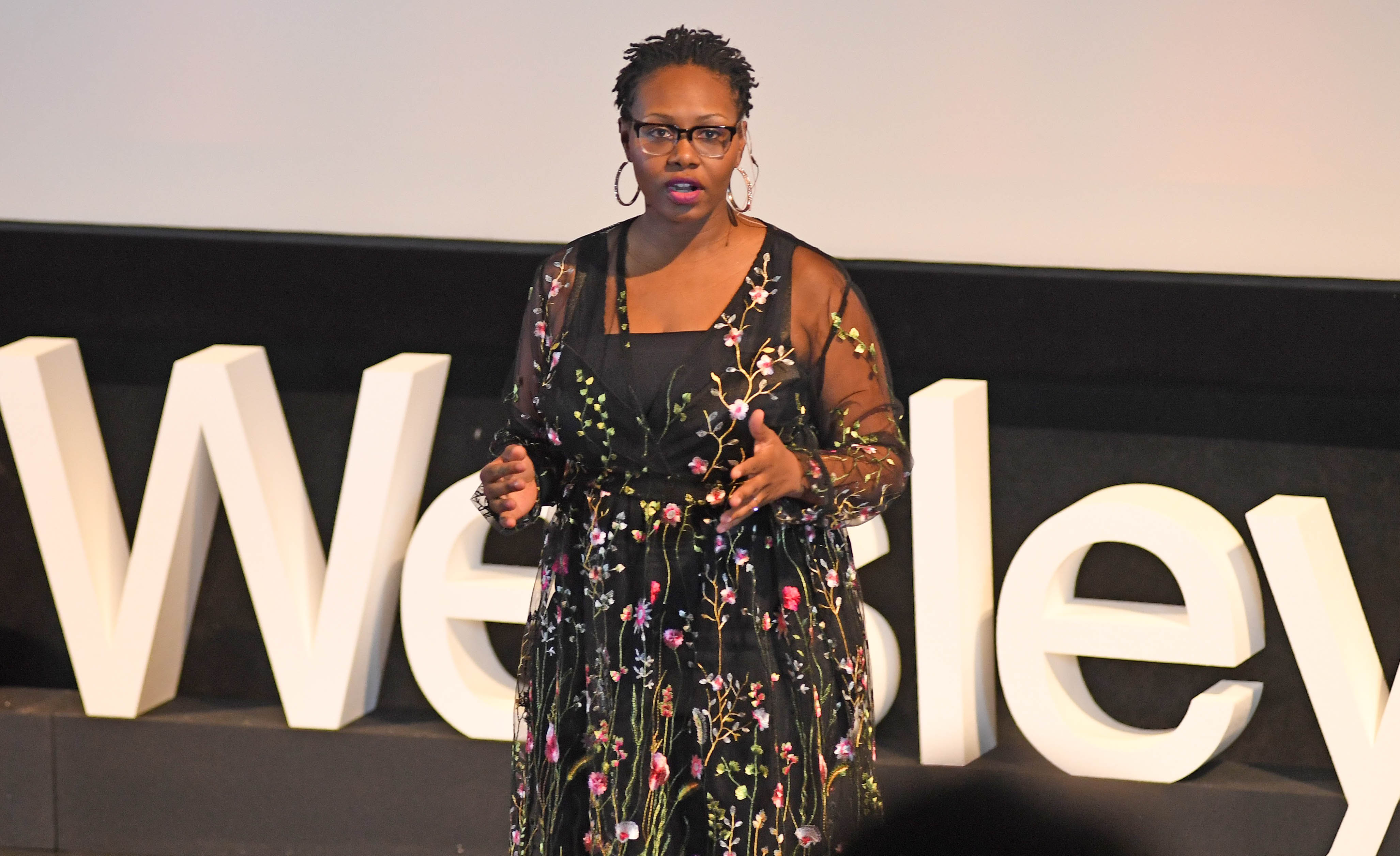
    Sociology Professor Emeritus Alex Dupuy held a lecture entitled “Haiti: Migration, and Globalization” in the Fries Center for Global Studies on Thursday, April 12. The event was sponsored by the Allbritton Center for the Study of Public Life and Wesleyan World Wednesdays.

    Dupuy writes broadly on social, economic, and political developments in Haiti and the Caribbean. He is the author of “Haiti in the New World Order: The Limits of the Democratic Revolution,” “Haiti in the World Economy: Class, Race, and Underdevelopment Since 1700,” “The Prophet and Power: Jean-Bertrand Aristide, the International Community, and Haiti,” “Haiti: From Revolutionary Slaves to Powerless Citizens. Essays on the Politics and Economics of Underdevelopment,” and more than three dozen other articles in professional journals and anthologies.

    “Haiti: Migration, and Globalization” focused on the political and economic factors—both domestic and global—that transformed Haiti into an exporter of labor to the United States and other countries in the hemisphere in the twentieth century. He started by describing conditions of Haiti during the eighteenth century.

    “In the 18th century, the French colony of Haiti was the most productive of all the slave, sugar-producing colonies,” Dupuy said. “Haiti produced more than all English, French, Dutch, and Spanish colonies in sugar output.”

    With the largest slave population in the Caribbean, the colony of Haiti was a net importer of forced labor. Today, Haiti is a major exporter of labor.

    “So, how did this get started?” Dupuy questioned. “I’ll start with the effects of the U.S. occupation of Haiti from 1915 to 1934.”

    As Dupuy described, the United States began to export Haitian labor to the Dominican Republic and Cuba for work on sugar cane fields.

    “It was one of the first major processes of transforming Haitian labor to working in other places,” Dupuy said.

    Dupuy also explained how political persecution sparked another wave of migration.

    “The second large wave of the migration didn’t really begin until the 1970s, when the Duvalier regime took power in 1971,” Dupuy said. “By the late 1960s, the wave of oppression of the Duvalier leadership was such that the first wave of migrants were people fleeing from political persecution.”

    Another factor that began to propel not just educated citizens, but also unskilled workers, to emigrate to the U.S. was the establishment of new policies by the International Monetary Fund and other economic institutions. These organizations transformed Haiti into a major producer of exported goods, making it possible for the U.S. to create factories in Haiti and rely on cheap Haitian labor.

    This created a gradual decline of agriculture that pushed people from the countryside into urban centers to work. However, these urban centers only held about 8 to 10 percent of the population. As a result, Dupuy explained, people began moving to where they have already established contactplaces like New York, Miami, and Canada.

    Food tariffs are a second problem that further contribute to a changing economy in Haiti.

    “Part of the problem in Haiti is twofold,” Dupuy said.“One is that its agriculture has declined, and another indication of agriculture is not only that Haiti produces most of the food it consumes, but it produces all the rice it consumes.”

    When Bill Clinton came into office, Dupuy stated that he placed tariffs on the rice, which made it incredibly expensive to export food.

    “Haiti is now spending a lot of its resources on having to import food,” Dupuy said.

    Dupuy then described Haiti’s economic development in relation to other countries experiencing significant economic changes.

    “The migration has become an absolutely crucial lifeline for the region,” Dupuy said. “But unlike other countries that have been experiencing some degree of economic development, Haiti is still relying on the service industry as its only other source of foreign input rather than expanding its economic base.”

    Dupuy ended the lecture by participating in a Q&A session.

    “You mentioned how the turn for [the Haitians] was the U.S. occupation of Haiti,” a student asked. “But I’m curious to find out more about what economic gains could have come to the island had France actually given back reparations.”

    Dupuy then advocated for an investment to protect Haitian agriculture, a link between agricultural production and small industries, and to make education more widely available.

    “So, it sounds as though there’s some possible models here that Haiti could potentially imitate,” a professor remarked during the Q&A.


    Kaye Dyja can be reached at kdyja@wesleyan.edu or on Twitter @kayedyja.

  • University Hosts First TEDxWesleyanU Event

    University Hosts First TEDxWesleyanU Event

    c/o Will Barr
    c/o Will Barr

    The University hosted a TEDxWesleyanU event on Saturday, April 7, bringing together speakers, students, and community members to the Ring Family Performing Arts Hall to explore a broad range of topics ranging from the psychology of career decisions to the importance of liberal arts.

    The event was organized almost entirely by University students and included 13 speakers throughout four separate sessions, spanning a total of six hours. Some of the speakers included local politicians, like Middletown Mayor Dan Drew and State Representative Matthew Lesser, as well as prominent businesspeople such as Anand Kini ’92, the Chief Financial Officer of NBCUniversal. The event also featured alumni from less conventional careers, such as Michael Yamashita ’71, a photographer for National Geographic.

    “I want to congratulate the students who have done a fabulous job organizing this event,” President Michael Roth ’78 said to begin the event. “This is fantastic for Middletown, this is fantastic for Wesleyan, and I’m very grateful to the creativity of the students and the wonderful lectures you’re about to hear throughout the day.”  

    The event was the culmination of over a year-and-a-half of work, and organizers are already planning next year’s event, which will include a larger venue to open the talks to more students and community members. Although organizers had initially contemplated creating a unifying theme or slogan, they eventually decided against this in order to invite as many ideas as possible.

    “The goal was to have different ideas,” Core Team Member Melisa Olgun ’20 said. “That represents Wesleyan, in that Wesleyan doesn’t have a specific student demographic or something that is necessarily us.”

    The first session featured Angela Yee ’97 of “The Breakfast Club” radio show, Mayor Drew, and Director of the Gordon Career Center Sharon Belden Castonguay. In Yee’s talk, she discussed how to combat hate in the current tumultuous social and political climate.

    “Isn’t it crazy that you could hate somebody you don’t even know because of their race, gender, religion, or sexuality?” Yee asked before describing the psychology of hate.

    Session two included talks by Kini, Representative Lesser, and Professor of Sociology Anthony Hatch. Throughout his session, Kini championed liberal arts as a necessary companion to science, technology, engineering, and math (STEM). Although Kini believes that Netflix, Snapchat, and other digital disruptors can be viewed as champions of STEM, he argued that traditional “Big Media” holds strong ties to liberal arts as it maintains a strong place in the American media marketplace.

    “It’s not STEM or liberal arts—it’s not one or the other,” he said. “You need both.”

    Lesser provided an optimistic story of a Connecticut resident who worked to make insurance companies provide coverage of a critical fertility preservation procedure. The resident met with each state legislator, eventually passing the bill.

    “The thing that Melisa [the resident] did—that so many other people should do—is realize that you’ve got people who work for you,” Lesser said. “And you should learn how to use them.”

    The third session featured Syrian artist and architect Mohamad Hafez, Reproductive Mental Health Psychiatrist Lucy Hunter ’92, and Lily Herman ’16, activist and writer for Refinery29 and Teen Vogue.

    Session four included Yamashita, Vice President of Microsoft in China Aaron Painter, National Dream Director of the Future Project Sallomé Hralima ’02, and Anchor/Correspondent of CNN en Espanol, Maria Santana ’98.

    Yamashita discussed the role of luck in his career and how it relates to the field of photography.

    “Why is it that nobody wants to talk about luck?” Yamashita asked. “Perhaps because serendipity, good luck, good fortune, seems out of our control. But I believe that photography depends on it. It’s what separates photography from all other visual arts—painting, drawing, sculpture—all depend on control with a skillful hand an artful eye. I also believe that luck can be controlled. You can do things to influence that luck. You can control chance.”

    Santana illustrated the pervasiveness of fake news within the Trump era, and how the public can be smarter when ingesting news.

    “Read past the headline,” Santana said. “A good headline will draw you to the story, but you can’t just leave it at that. You have to read past that because context is everything, and the headline will never give you the full context, never tell you the full picture.”

    Reacting to the event, Olgun expressed hope that the overarching goals of TEDxWesleyan were met.

    “Each of our talks and speakers are there to inspire, and I would hope that anyone who came felt inspired,” she said.

    Cormac Chester contributed reporting to this article.


    Kaye Dyja can be reached at kdyja@wesleyan.edu or on Twitter @kayedyja.

    Mason Mandell can be reached at mjmandell@wesleyan.edu or on Twitter @masonmandell.

  • AASC and Shakti Organize Asian-American Identity Month
    AASC and Shakti Organize Asian-American Identity Month

    c/o Asian American Student Collective and Shakti
    c/o Asian American Student Collective and Shakti

    The Asian American Student Collective (AASC) and Shakti are holding a month-long celebration of Asian-American culture, identity, history, and activism from Thursday, March 29 through Saturday, April 28.

    Events will range from a celebration of Cesar Chavez, to a poetry workshop, to a live performance from Jason Chu in Malcolm X House.

    “Together, we will explore issues that affect Asian people living in America in the context of mixed identity, interracial relations, and what it means to be an international Asian student at Wesleyan,” the event’s Facebook page said.

    According to Kyle Shin ’20, a board member of the AASC, the AASC and Shakti planned the month-long celebration from the beginning of last semester.

    “We’ve been talking about it since fall semester, and we began reaching out to artists and speakers and all that different stuff in the fall and over winter break,” Shin said. “Essentially, we’ve been getting them contracts and booking them rooms and stuff, and reaching out to other clubs right since we got back. So, it’s been like a semester long process at least.”

    The month will be comprised of sixteen events, but not all of the events will be run directly by the AASC and Shakti, a student organization which promotes South Asian culture and identities.

    “There are other clubs’ events that we’re putting on,” Shin said. “For example, there’s the JSA’s Japanese Culture Show, which is this Friday. Another is Mabuhay during WesFest, which is an Asian Arts show. So, they’re not all run directly by us, but we run about half of them.”

    The Mixed Identity Dinner Discussion, which took place on April 5, is one example of an event created in collaboration with another club.

    “As part of Asian American Identity Month, AASC, Shakti, and other student groups are facilitating a series of free dinner discussions,” the AASC’s Facebook page said. “This week’s topic is Mixed Identity in Asian America, and is brought to you in collaboration with MIX Club, Wesleyan’s student group for students passionate about race and ethnicity through multi-ethnic, interracial, and cross-cultural lenses, including students of mixed heritage and transracial adoptees.”

    While Shin is personally in charge of two events, he’s particularly excited about the “Jason Chu Live Performance.”

    “He’s a Chinese-American rapper from Delaware that went to Yale and he now lives in L.A.,” Shin said. “He’s pretty well known in the community. He’s coming to X House on April 13, and I’m actually opening for him.”

    Planning the celebration was hard work as the AASC and Shakti faced many obstacles putting it together, particularly when trying to acquire money, finalize contracts, and plan the events themselves.

    “Even if you have the support of other clubs, getting money from all the different sources from campus can really be a big run-around,” Shin said. “Also, getting the contracts finalized and signed were a process that I’d never done before and there are a lot of ways that could be smoother in the future. I think next year we’re definitely going to start the planning process earlier, and maybe focus more on how we’re going to advertise instead of just having a bunch of events in order to get more people at each one.”

    Ultimately, Shin hopes that Asian American Identity Month will clear misconceptions within the community regarding Asian-American students, their identity, and the role of international students within the community.

    “I think there are a lot of misconceptions about Asian-American and Asian students on campus,” Shin said. “One thing that may be confusing for non-Asian students are that there are a lot of international students, which is not the case in most places. I live in San Francisco, so I’ve always had a strong Asian-American identity so having all these international students is actually very foreign to me. There are very big socio-economic differences, and there are things like terminology that is not easily accessible to our community. We’re talking about terms like ‘the Model Minority,’ or ‘internment,’ or ‘Angel Island’—all these important things, like Cesar Chavez day.”

    Shin believes that this year’s work will make planning the month easier in the future as well as make PoC event planning more visible to the greater student body.

    “I think we’re really trying to get people thinking about these things so that when we do ask for a larger department in American Studies or when we want to collaborate with other PoC. groups on campus, the process will be a little bit easier,” Shin said. “We’re really trying to get ourselves out there and hope that we can establish a yearly month at least.”

    Kaye Dyja can be reached at kdyja@wesleyan.edu or on Twitter @kayedyja.

  • Class of 2022: How Does it Stack Up?

    Class of 2022: How Does it Stack Up?

    In the past four years, the University’s applicant pool has increased by 35 percent, from just under 9,500 in 2014 to this year’s record of 12,788. For the Class of 2022, however, approximately 17.5 percent—2,233 students—were admitted, which marks a slight increase from the roughly two thousand students admitted to the Class of 2021. The male to female ratio of 45 and 55 percent, respectively, remains consistent with that of the past several years.

    According to Dean of Admission and Financial Aid Nancy Meislahn, the Class of 2022 is estimated to deliver 780 new students to the University, a number on par with the Class of 2020. 1,096—9 percent of applicants—students applied Early Decision and 404 were admitted, comprising 18 percent of all admission offers. Many of those students are expected to visit the University next week for WesFest, which will take place from Wednesday, April 11 to Friday, April 13.

    The amelioration of the University’s financial state means that the University was able to increase financial aid offers to low-income students hoping to attend.

    “The most important thing we’re doing is adding to financial aid, so as to ensure that students who do decide to come to Wesleyan are able to have the aid they need to make the most out of their experience while they’re here,” President Michael Roth ’78 told The Argus last year.

    Delivering on Roth’s promise, the University offered financial aid to half of all applicants, an increase of three percentage points compared to last year. In addition to increasing financial aid offers, the University continues its attempts to reduce potential income disparities by remaining test-optional. Nonetheless, three-quarters of applicants chose to submit their test scores for consideration.

    As in previous years, the median test scores of admitted students have risen significantly. The median ACT score for the Class of 2022 is 34, a full point higher than last year. The SAT medians for English/writing and math are 740 and 770, respectively. These scores place the average University student in the 99th percentile of all students who took standardized tests this year. Even those with test scores in the bottom 25 percent ranked in the mid-97th percentile nationwide.

    Another major academic shift occurred in students’ high school course choices. Compared to last year, more students took four years of a foreign language (82 percent), while fewer students took biology, chemistry, and physics and math through calculus (83 and 87 percent, respectively).

    The demographics of the incoming class of 2022 display changes as well.  Last year, 16 percent of the applicants resided in New England, while this year, 18 percent of applicants live in New England. Similarly, in 2017, 16 percent of admitted students lived in 70 countries including Argentina, Cyprus, and Ethiopia, while this year, 16 percent of admitted students live in 63 other countries. More international students were admitted this year, increasing from 266 to 280 students. English is a second language for 16 percent of the admitted students.

    The University strives to continue its commitment to diversity in admissions. Admittance of students of color increased from 44 percent to 45 percent, while admittance of first-generation students decreased from 15 to 13 percent.  

    “The admitted students are diverse in nationality, region, first language, race, ethnicity, and socio-economic status,” the Admissions Office wrote in the Profile of Students Offered Admission for Fall 2018. “The variety of talents and commitments to school groups, civic and religious organizations, politics, and the arts make successful candidates more likely to contribute to the life of this vibrant community called Wesleyan.”


    Kaye Dyja can be reached at kdyja@wesleyan.edu or on Twitter as @kayedyja.

    Erin Hussey can be reached at ehussey@wesleyan.edu or on Twitter as @e_riss.

  • University Students Named Fulbright Scholars

    University Students Named Fulbright Scholars

    c/o wesleyan.edu
    c/o wesleyan.edu

    The U.S. Department of State’s Bureau of Educational and Cultural Affairs recently named the University one of the leading producers of Fulbright scholars. The list, released Feb. 20, includes the U.S. colleges and universities whose alumni have entered the Fulbright program in the 2017-2018 academic year. The Fulbright Program is the U.S. government’s leading international educational exchange program.

    “Since its inception in 1946, the Fulbright Program has provided more than 380,000 participants with the opportunity to study, teach and conduct research, exchange ideas and contribute to finding solutions to shared international concerns,” the Fulbright Program website states.

    Chosen for their academic achievements and leadership potential, over 1,900 U.S. students, artists, and early career professionals in more than 100 different fields of study receive Fulbright Student Program grants annually. Over 800 recent graduates study, teach English, or conduct research overseas annually.

    Six alumni and one graduate student were selected for Fulbright awards for the 2016-2017 academic year. Those accepted include graduate music student Warren Enström, Jennifer Cascino ’17, Kate Cullen ’16, Sophie Zinser ’16, Claire Brady ’15, Shourya Sen ’15,  and Rob Roth ’14.

    Cullen, now working in Chile, researches innovative ways to monitor glacial retreat and effective climate change adaptation strategies. Focusing on Mocho Glacier in the Chilean Lake District, Cullen partners with local experts in Santiago and Valdivia to evaluate local vulnerability and hazards from rapid glacier melts.

    Enström, a graduate student working at the University of Gothenburg, develops software-based virtual musical agents that listen to their environments and generate music in response to their immediate surroundings.

    “The Fulbright has offered me the opportunity to see a different part of the world, to travel and meet new people, to be immersed in another language, and to become familiar with another place,” Enström wrote in an email to The Argus. “It’s given me a chance to experience different ways of living. I’ve never been to Europe before, so everything is unfamiliar and exciting. I’m meeting people I’d never have known existed, seeing art and hearing music that I would never have encountered, and building relationships with people that otherwise wouldn’t have been possible. The internet has made the world music smaller, but physical presence is something entirely different.”

    Cascino investigates the genetic and molecular basis of systemic inflammation that occurs in specific forms of cancer at the Centro Nacional de Investigaciones Oncológicas (CNIO) in Madrid. Cascino hopes to aid the characterization of the fundamental mechanism behind this form of metabolic dysfunction, which can lead to lethargy and death.

    Brady analyzes the effects of water scarcity on female Syrian refugees in Jordan, the world’s second most water-scarce country (which also hosts the largest number of refugees).

    Sen currently works in Laos as a Fulbright English Teaching Assistant. He wants to become a professor eventually and is now trying to gain experience teaching university-level students. Sen is passionate about learning new languages, traveling, and forming relationships with people from diverse backgrounds.

    Sophie Zinser, stationed in Jordan, works under the directors of Jesuit Refugee Services’s Jordan Office and the Center for Women’s Studies at the University of Jordan. Currently, Zinser analyzes community-based nongovernmental programs focused on arts as a community builder and on young women beneficiaries. Zinser aims to derive best practices to share with Jordanian NGOs.

    Rob Roth works as a teaching assistant in Colombia. He works with Universidad Nacional students trying to acquire English proficiency.

    Interested students can apply to the Fulbright Program through the Fries Center for Global Studies.


    Kaye Dyja can be reached at kdyja@wesleyan.edu or on Twitter @kayedyja. 

  • Wesleyan Athletics Hosts Competitive Fundraising Initiative

    Wesleyan Athletics Hosts Competitive Fundraising Initiative

    c/o wesleyanathletics.com
    c/o wesleyanathletics.com

    From Feb. 21 to 28, University athletic teams will participate in a competitive fundraising initiative called Wesleyan Athletics Giving Days (WAGD). Throughout the week, athletic teams will compete for the greatest percentage of donor participation for their sport. The highest scoring teams, one men’s and one women’s, will win $5,000.

    Director of Athletic Fundraising Karen Whalen, Assistant Director of Alumni and Parent Relations Jenna Starr ’15, and Associate Director of Alumni & Parent Relations Bessie Bianco plan and execute WAGD.

    “We each have specific responsibilities, all of which include collaborating with coaches and staff in Athletics, University Relations and University Communications,” Whalen wrote in an email to The Argus. “As you can imagine, keeping score for a competition like this is no small feat and my team can’t do it without the help of colleagues in the Operations Office of University Relations. It’s a real team effort.”

    Last year, WAGD raised over $125,000, and Men’s Tennis and Softball each took the $5,000 prize. Women’s teams also had more participation than men’s. However, Whalen wants to emphasize the initiative’s charitable aspects.

    “Though the gifts definitely help each team supplement their central operating budgets, the main purpose of the campaign is to generate awareness that Athletics is also a philanthropic cause at Wes,” Whalen said. “For this initiative, we primarily focus on participation, not dollars raised.”

    Generally, team fundraising results in immediate benefits for the University’s sports programs.

    “Every year we must fundraise the full cost of our spring training trip and the players pay for the difference of what is not raised,” Softball Head Coach Jen Lane said in the Wesleyan Newsletter. “Winning WAGD helped defray the players’ out-of-pocket costs, both last year and will again this year. It also helped supplement our equipment budget as well as give us more money for meals on the road and team breakfasts for Saturday home doubleheaders.”

    Additionally, if the number of participating donors on a team exceeds $1,500, an extra $5,000 will be given for sports medicine enhancements.

    “Sports medicine is an essential part of the overall athletic experience for all Cardinal student-athletes,” Director of Athletics Mike Whalen said in the Wesleyan Newsletter. “Strengthening the Athletic Injury Care program to meet the needs of our athletes is one of many non-sport-specific reinvestment opportunities planned for Wesleyan Athletics.”

    As of now, men’s and women’s lacrosse are in the lead, with 40 percent participation from the women’s team and 33 percent from the men’s.

    “I know I speak for our coaches and student-athletes when I say thank you to WAGD participants,” Coach Whalen wrote in an email to the Argus. “I am proud to be a Wesleyan Cardinal and humbled by their commitment to the work we do. We wouldn’t be able to provide our student-athletes with the opportunity to achieve, serve and lead without the enthusiastic support of our alumni, parents, friends, and fans.”

    Mackenzie Mitchell ’20, varsity women’s soccer player, commented on the important of WAGD within the Wesleyan community.

    “This is important because the athletics community at each NESCAC school makes up a considerable portion of the student body,” Mitchell said. “That influence of that breadth can be positively routed towards giving back to the local community and having a greater impact than just on the field, court, track, etc.”

    Kaye Dyja can be reached at kdyja@wesleyan.edu and on Twitter as @kayedyja. 

  • Dr. Joi Lewis Honors MLK’s Legacy

    Dr. Joi Lewis Honors MLK’s Legacy

    c/o joiunlimited.com
    c/o joiunlimited.com

    On Thursday, Feb. 15the Martin Luther King Commemoration Committee, the Resource Center, Office for Equity & Inclusion, Student Activities and Leadership Development, and the Center for African-American Studies welcomed Dr. Joi Lewis to speak at the 2018 Rev. Dr. Martin Luther King Commemoration. The event took place in the Cromwell Concert Hall at 12:15 p.m.

    The commemoration began with a welcome from Resource Center Director Demetrius Colvin and the MLK Commemoration Committee. He described how we, as humans, have work to do socially and politically.

    “I have been changed by everything that’s been happening socially and politically,” Colvin said. “Even just what was happening yesterday in our country—I know I’ve changed. I know there’s a sense of urgency that I feel, that I didn’t feel three or four years ago.  I know I’ve been changed with a sense of ‘I have to do something’ more than the routine of the things I’ve been doing. I know I’ve been changed when I can’t continue to be a bystander.”

    Colvin then introduced Antonio Farias, Vice President for Equity & Inclusion. Farias discussed unity and the importance of coming together as a means to move forward.

    “I want to talk about how we critique without dismembering each other,” Farias said. “How we navigate upon our weaknesses, our privileges, our power, and how we can be blind to the alliances that we necessarily have to take advantage of if we are going to continue to survive as a people.”

    Natasha Guandique ’20 approached the stage next. She presented an audio recording of an excerpt from Rev. Dr. Martin Luther King Jr.’s Wesleyan Baccalaureate Address from June 7, 1964.

    “You see each of us lives in two realms: the within and the without,” King said. “The within is the realm of destiny, the without is the realm of structure. The within is the realm that deals with ultimate concerns, the without deals with practical concerns…. Now the great danger is that all too often we allow the means by which we live to replace the ends for which we live. That is always the danger that we will allow the within of our lives to become absolved in the without.”

    Naomi Williams ’19 followed the recording with a rendition James Weldon Johnson’s “Lift Every Voice and Sing.” As she stated, many people regard “Lift Every Voice and Sing” as the Black National Anthem. Isaac Guzman ’21 followed Williams to introduce keynote speaker Dr. Joi Lewis.

    “We gather here today to commemorate and honor one of the greatest revolutionaries and intellectuals in American history, Dr. Martin Luther King,” Guzman said. “Deliberate and humble, Dr. Martin Luther King forcefully combatted racial ideologies in pursuit of emanating love and building connection. Our speaker today, Dr. Joi Lewis, embodies the legacy of Dr. King, as she serves to build connection and sustain community.”

    Dr. Joi Lewis, CEO and Founder of Joi Unlimited Coaching and Consulting, began her speech by talking about Black agency and love, especially during Black History Month. She described how all historical reform movements emanated from a place of love and joy, and that’s what needs to be carried forward.

    “I do want to be sure if you get one thing from my talk today—even if you don’t get anything else—I just want to be clear. Even though I have not met most of you in my life, here’s what’s true: I love you, and I know that you love me. Because that’s what’s really true about who we are as human beings.”

    She continued by discussing her personal life, describing the love, admiration, and influence she feels from her grandmother, mother, and fourteen-year-old niece. They all taught her that one must learn to experience love and joy simultaneously, and that neither can ever be turned off.

    “Even though they were born at very different times, it feels like it’s still the same,” Lewis said. “Both came as teachers to me. I tell my niece Dallas all the time that she’s one of my biggest mentors. She reminds me to play; she’ll be like, ‘Can you put that phone down? Can you be here?’ And they taught me how to hold joy and pain at once.”

    Lewis carried forward the theme of contradictions, the crux of her speech.

    “This is the legacy of Martin Luther King,” she said. “[He and his contemporaries] questioned. They smiled, they laughed, and they cried and pushed and screamed and held contradictions. This legacy of contradictions is what we have left to hold.”

    She concluded by talking about the upcoming film “Black Panther,” the power of representation for Black individuals, and the imagination of a better tomorrow.

    “So, many of us are excited for the premiere of ‘Black Panther’ tomorrow no?” she said. “We so need this ‘Black Panther’ movie. We need things that cause us to imagine that there are other worlds. We are the manifestation of our ancestors’ dreams, including Dr. King’s, but we must continue to dream, imagine, and create other worlds.”

    The event was then followed by a reception at Malcolm X House.


    Kaye Dyja can be reached at kdyja@wesleyan.edu or @kayedyja.

  • President Roth and Provost Jacobsen Present Facilities Plans

    President Roth and Provost Jacobsen Present Facilities Plans

    Dani Smotrich-Barr, Photo Editor
    Dani Smotrich-Barr, Photo Editor

    President Michael Roth ’78 and Provost and Vice President for Academic Affairs Joyce Jacobsen hosted a University Facilities Planning Update and Overview Forum in which they outlined the University’s plans for future construction and additions on Tuesday, Feb. 6.

    “What we’re here to talk about today is an important aspect of Beyond 2020, which was a facilities program that would both enhance the educational spaces on campus to provide support for the distinctive educational program offered and to position Wesleyan as a place where pedagogical experimentation and informal student learning will continue to take place for years to come,” Roth said.

    The forum began with Jacobsen providing a background on the facilities at Wesleyan as well as their budgets. She explained that from 1998 to 2007, under President Bennet’s leadership, the University made weighty investments in facilities such as Clark Hall, Freeman Athletic Center, Usdan University Center, Memorial Chapel, the ’92 Theater, Bennet Hall, Fauver Apartments, and Downey House.

    Since 2008, however, the University has shifted its focus to growing the endowment while still devoting resources to Boger Hall, the sciences, housing improvements, the Allbritton Center, two cogeneration power plants, Fisk Hall, the R. J. Julia bookstore, the Digital Media Studio, the Shaprio Writing Center, Exley Science Center, Citrin Field, the Cross Street Dance Studio, and Malcolm X House. The University also worked with Sasaki Associates to develop a framework for campus planning.

    “So just to remind you, we haven’t been doing nothing during this period,” Jacobsen said. “We’ve done many things like the Gordon Career Center in Boger, the bookstore renovation very recently, and a new turf field at athletics. Last summer, we did the Shapiro Writing Center, we’ve added outdoor spaces at many of the places including in front of Shapiro and Fisk. In Fisk, we also renovated two floors, and again, bringing [science labs] up to date gradually as we hire more faculty.”

    Jacobsen continued the forum by addressing the University’s planning process and desired outcomes in 2018 and beyond. Ideally, the University wants to build new arts facilities, redesign the Public Affairs Center (PAC), and create new additions for the sciences.

    First, Jacobsen addressed the Film Studies building, which currently spans 28,000 square feet. The University wants to build a 16,000-square-foot addition that would include a production studio, a 50-seat theater classroom, expansion of storage facilities, and additional faculty and student spaces. The University hopes this effort will not only cement Corwin-Fuller Professor of Film Studies and Founder and Curator of the Cinema Archives Jeanine Basinger’s legacy, but also that it will leverage the College of Film and the Moving Image’s success and national recognition as a top-ten national film program. The project is expected to cost $15 million and currently, more than $4 million has already been raised.

    “The project will provide a state-of-the-art home to a high-demand major and to a flagship program that has recently added a minor and has vastly expanded its ability to support student filmmaking,” Jacobsen said.

    Following this, Jacobsen discussed the University’s plans to move the Arts Collection into Olin Library. The collection included works by Dürer, Northern and Italian Renaissance artists, Rembrandt and his contemporaries, nineteenth-century French painter-printmakers such as Manet and Millet, and American modern and contemporary artists such as Jim Dine. Classes currently can visit the collection, but no more than twelve students can enter the study space at once time. The collection also lacks climate control.

    Creating a new study space would allow up to 30 students into the space while providing a much more contiguous art preparation space. Similarly, moving the collection to Olin will also provide secure, climate-controlled vitrines so all students can attain more exposure to these artworks and can curate their own mini-exhibitions. As Jacobsen explained, the renovation will also allow for student training in preparation of art for exhibit.

    On top of these changes for the arts, Roth and Jacobsen announced that the University would also like to create a larger, air-conditioned South Gallery on the first floor of the Zilkha Gallery while addressing electrical infrastructure upgrades as needed.

    “In the current space where we are, only twelve students at a time can go into the study space,” Jacobsen said. “The goal is to increase the study space area and the print room area, so more people can attain access to it. [The new space] will also allow for a climate controlled space.”

    After addressing the arts, Jacobsen turned toward the Public Affairs Center (PAC), home of the University’s social sciences. Originally built in 1928 and last renovated in 1954, PAC encompasses 77 offices for faculty and staff as well as 13 teaching spaces, covering 48,000 square feet. In a Sasaki survey, PAC was cited as one of the University’s most heavily used buildings and least liked.

    “As those of you that are in PAC or walk by it know, the patio at the front is really not worked out well,” Jacobsen said. “In nice weather—let alone days like today—you never see students hanging out there. It’s also been a disaster from a maintenance point of view.”

    As Jacobsen explained, the building structure currently requires annual maintenance and houses mechanical systems that are wasting University money. PAC’s transformation will cost about $40 million and will include internal and external changes, such as renovated classrooms, additional lounge areas, connectors to the main part of the building, and as Jacobsen describes, more useful circulation space.

    Lastly, Jacobsen addressed a redesign of the sciences. Since the early 2000s, the University has gone from 200 science majors per class to about 400 today, especially in Neuroscience, Biology, and Psychology. According to Jacobsen, the Hall-Atwater building—built in 1965—cannot support the expansion required in the sciences, as Wesleyan is a leader in the sciences amongst its liberal arts peers.

    “The main problem here is that Hall-Atwater, which is actually the newer building over there, is really not working out that well,” Jacobsen said. “On top of that, we’ve had a big growth in science majors, and we’re really not able to service the area, particularly the nexus of Neuroscience, Biology, and Psychology. We also can’t service the new growth areas of the College of Integrative Sciences and the College of the Environment in the way we’d like to.”

    Roth and Jacobsen then opened the floor to Q&A, during which faculty and students asked about print collections, the Alsop House, and the connection of the University with Middletown.

    “I think President Roth did a good job articulating the importance of expanding our global and local brand,” Sultan Olusekun ’19 said. “But as we move closer to Main Street, I didn’t see anything in that plan that was about areas like Williams Street or 56 Hamlin or Broad Street Books.”

    Kaye Dyja can be reached at kdyja@wesleyan.edu or on Twitter as @kayedyja