
Author: Henry Yang

  • Wrestling Avenged Against Springfield in First Match of the Semester

    Wrestling Avenged Against Springfield in First Match of the Semester

    c/o wesleyan.edu
    c/o wesleyan.edu

    It is fair to say that the Cardinal wrestling team has not been receiving their best results over the course of the winter. While some dominating victories are worth mentioning, they have also fallen to a hand of old rivals in many humble defeats.

    The NEWA Dual Championships on Sunday, Jan. 20 posed mixed results for the Red and Black. Despite a 39-9 sweep over in-state neighbor Trinity, the Cardinals had some bitter luck on the day of the NEWA Dual Championships. Not only did they drop the first match against Springfield with only two points to level, they were also eventually edged out by Castleton, 24-23, in the match advancing to the fifth-place of the championship.

    Without much hassle, the Cardinals took over the night from the start as they claimed the first two matches to lead by six points. Zack Murillo ’19 set up the momentum by winning the first and a strenuous OT bout with a 3-1 sudden-victory decision over Nicholas DeRosa. Tristan Stetson ’20 followed that up with an impressive 4-3 win over the second-ranked 133-pound wrestler in New England, Ian Tolotti. When the Pride took 141 by sudden-victory decision to cut the deficit, senior captain Shane Ross ’19 stepped up to win the second-consecutive OT match with a 9-7 SV decision, leading the team to take two more matches at 157 and 165. Trailing 18-3, Springfield rallied with back-to-back decisions at 174 and 184 to get within eight with two matches to go. However, that was their last effort. As Simon Chee delivered a technical fall in 4:31 at 197, the Cardinals sealed the victory.

    c/o wesleyan.edu
    c/o wesleyan.edu

    The Dirty Birds maintained a record of 3-5 at the end of the winter break campaign and were eager to set their record straight at Springfield College after returning to campus.

    The Wesleyan wrestlers triumphantly announced their return as they beat Springfield in a ding-dong battle of 23-15: a sweet revenge for the 17-15 defeat they suffered six days earlier. Remarkably, the Pride’s efforts to defend their senior night made the match feature as many as four bouts that were decided in overtime, with both teams each claiming two. With this crucial victory, Wesleyan improved to 4-5 overall in dual matches this season, while Springfield’s standing is now 9-6.

    While some may question the lasting power of Wesleyan’s recent form, it is important to understand that the team has already gone far beyond fans’ expectation so far. As mentioned in the Argus’s last coverage of the team, much has happened since the departure of two All-Americans, Isaiah Bellamy ’18 and Devon Carrillo ’17 GR ’18, as well as the two other senior members.

    In an interview with Wesleyan athletics, Head Coach Drew Black revealed the challenges and changes that have been with the team since last summer. Perhaps the most evident change is that the team has shifted its strategic focus from higher bouts to lower weights. Because there will no longer be “guaranteed” points from high weight brackets, the reshuffle of the focus has motivated everyone in the team to step up for the team in duals. Judging from the team’s fall campaign, it is astonishing how it has coped with intense difficulties and adjusted so quickly in only a few months. With a talented pool of newcomers and the experience of junior members, Wesleyan’s roster and lineups have become more balanced than any other time in recent years, not to mention the four seniors at 125, 133, 141 and 149 who have become anchors for Wesleyan.

    “This past fall has been one of our best falls ever in terms of the team culture,” Coach Black remarked. “Moreover, the former All-American Carrillo has also played a role in the team’s adjustment.”

    Last fall, the recent graduate remained on campus as the assistant coach, and his work has been exceptional, because, as Coach Black said, “just having him around exudes a lot of confidence.”

    With only four events remaining on their fixture, February will be a crucial month for the Wesleyan wrestlers. While individuals are striving to improve their records, the team is looking look to continue its streak of three straight consecutive winning seasons and build up the momentum on the road to Roanoke, Va. for the National Championships.


    Henry Yang can be reached at hyang01@wesleyan.edu.

  • Wrestling Starts Hot: Forys ’20 Named Most Outstanding Wrestler at Doug Parker Invite
    Wrestling Starts Hot: Forys ’20 Named Most Outstanding Wrestler at Doug Parker Invite

    Lianne Yun, Staff Photographer
    Lianne Yun, Staff Photographer

    In this month’s wrestling events, the Cardinals sent a powerful message as they fought their way to a fourth-place finish in the season-opening tournament at the Roger Williams Invitational on Nov. 10. The Cardinals collected as many as 96 points, behind only the wrestling powerhouse Johnson & Wales University (153.5), host Roger Williams University (132), and Messiah College (108).

    Among the featured 12 wrestlers across nine different weight classes, Dylan Jones ’19 established himself as the team’s highest individual placer, finishing in second place at 133 with an impressive technical fall. Elsewhere, James Matias ’19 at 141 and Simon Chee ’21 at 197 both finished fourth as they faced fierce battles from two crowded brackets. While Chee registered two pinfall victories and finished with a record of 3-2, Matias won three matches straight by decision before he was unfortunately edged out by Gabe MacDaniel of Johnson & Wales (3-5 by decision) in the semi-finals.

    In addition, senior co-captain Zack Murillo ’19 picked up a fifth-place finish at 125 as he went 3-2 after falling to Jay Albis, last year’s NCAA National Champion. Other encouraging news came from the three sixth-place finishers, including Shane Ross ’19 at 149, who went 4-2 with a pinfall win, Roy Forys ’20 at 165, who went 4-2 with two pinfalls and two major decision wins, and the rising star Marco Gaita ’22 at 174, who won two matches in the championship bracket.

    The Cardinals resumed action at Doug Parker Invite on the Nov. 17 as they looked to finish strong before the Thanksgiving break. The stellar performance from Forys helped Wesleyan finish sixth among 17 strong competitors as the junior received two well-earned titles: the Most Outstanding Wrestler of the Invitational and the New England Wrestling Association (NEWA) Co-Wrestler of the Week. The host, Springfield College, took the title for the fourth time in the last six years as they totaled 111.5 points with two first-place finishers. Rounding out the top-five were Centenary University (102.5), Southern Maine University (97.5), the Coast Guard Academy (94.5), and East Stroudsburg University (88.5).

    Forys, who made his heroic return this season, tore through his competition at 165. Starting with a pin of Warren Young of Plymouth State University, he followed that with a comfortable 13-4 major decision win over Juan Vernaza of Southern Maine. In the third round, he unleashed a barrage of moves to pin Nick Jabs of Coast Guard in 1:25 to advance to the semifinal, where he registered another pinfall win against Marquan Payne of East Stroudsburg University. The highlight of Forys’ dominant run finally came when he faced the No. 2 ranked wrestler at 165, Nick Remke. In a hard-fought battle, Forys summoned a late charge to edge out the Coast Guard sophomore by an 8-5 decision to take home the top spot. The junior is now 9-2 this season with five wins by pin.

    At 133, Jones continued his fine form and went 3-1 to claim his second second-place finish, only losing to last year’s NCAA Southeast Regional Champion, Ricky Cavallo of Johns Hopkins University. Rounding out the top performances on the day were the fifth-place finisher at 125, Murillo, and third-place finisher at 149, Ross. Both of them were inches away from the title as they both went 4-1.

    Next up, the Cardinals will be visiting Rochester Institute of Technology this Saturday to compete in their 53rd annual invitational. While The Argus will be taking its winter break as the semester rounds up, we encourage all wrestling fans to stay in tune with Wesleyan Athletics for more updates from Scott Viera Invite, Lycoming Duals, and NEWA Dual Championships coming up in early January.


    Henry Yang can be reached at hyang01@wesleyan.edu.

  • EFL Clubs Change Tradition and Unite for Rainbow Laces
    EFL Clubs Change Tradition and Unite for Rainbow Laces

    c/o skysports.com
    c/o skysports.com

    It is official: Football’s fight against homophobia might have reached a tipping point.

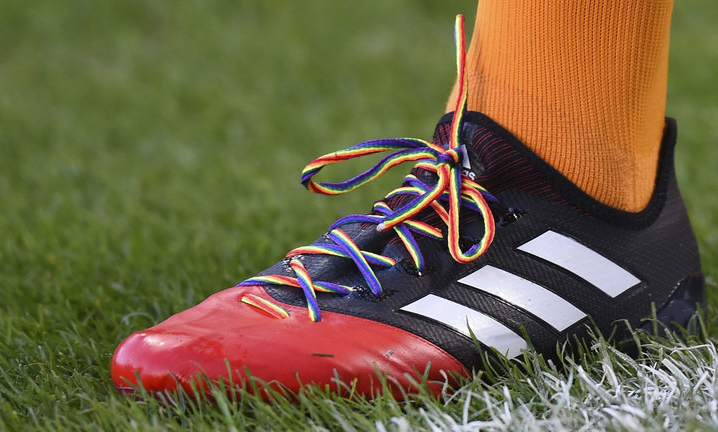
    About 10 days ago (Nov. 14), The Football Association (FA) in England announced that all 72 member clubs of the English Football League (EFL), including the Premier League, would unite in their support of LGBTQ inclusivity by turning pitchside equipment rainbow colored. This not only marks the second year for the EFL’s involvement in the Rainbow Laces campaign, but also forms part of a new, three-year partnership with Stonewall, the largest LGBTQ-rights organization in Europe.

    The initiative reveals The FA’s strengthened determination in making the Beautiful Game more and truly inclusive toward LGBTQ-identifying players, staffs, and fans alike. As a head-on approach to anti-LGBTQ discrimination, the partnership is a huge deal for soccer, which has waited years to declare for a long-term, consistent support for the LGBTQ community.

    If you are still puzzled, chew on the following: How many top athletes worldwide are openly gay? And how were their coming outs received? It’s unfortunate that the issue of homosexuality in soccer is still taboo among both players and fans.

    Historically speaking, football, or sports in general, has left little or no room for narratives outside of the established “norm” characterized by cold, pragmatic virility. During the second half of the 19th century, sport became an independent practice separated from other social activities. Since contact with other bodies is functional and sexuality is set aside, engaging in sports has since implied the desexualization of the human body, the neutralization of its erotic power, and eventually, the normalization of heterosexuality. In what is often referred to as “the most popular sport,” this was furthered following the tactical revolution of assigning players with more specific functional roles and less freedom.

    The community’s mainstream attitude towards its LGBTQ members remains harsh and intolerant, which breeds and is in turn reinforced by the toxic fan culture dominated by heterosexuality. That is, on the sideline, homophobic slurs like are repeated ad infinitum. And homophobia is perpetuated through everyday behavior in less official channels.

    Such culture of homophobia has cost too much for the football community despite the positive work that has been done. While there has been a great deal of talk and a large number of initiatives aimed against homophobia in football, real change remains elusive, even after the death of Justin Fashanu. Fashanu was one seen as one of English football’s great hopes. But his career and life have been disturbed greatly after coming out in 1990. He quickly became a scapegoat for fans and fellow professionals, and at Nottingham Forest, even the beloved Brit Brian Clough didn’t give him enough shielding from fan insults. Eventually, after being obliged to switch clubs several times, Fashanu tragically committed suicide.

    Still, with increasing worldwide attention, many efforts have been made, at least in the EFL community, to fight against anti-LGBTQ discrimination. Wembley Arch was lit up in rainbow colors for last year’s campaign and again this year for a groundbreaking fixture at Wembley Stadium featuring Britain’s most successful LGBTQ football club, Stonewall FC. Elsewhere last year, FIFA even introduced a new anti-discrimination monitoring system for the 2018 World Cup qualifiers and the FIFA Confederations Cup in an attempt to clamp down on discrimination. It was a relief to see that all 64 World Cup games in Russia were monitored by the three anti-discrimination match observers in the stands.

    That is, soccer’s attitudes to sexuality are coming under increasing scrutiny from inside and outside the game. According to a BBC Radio 5 live survey in late 2016, 82 percent of supporters say they would have no issue with a gay player, while 8 percent of fans still claim they would stop supporting their team if one of their players came out. And that is within their rights, but thanks to the work of Stonewall, the FA, and many LGBTQ fan groups, homophobic abuse no longer is. The baton is now passed to everyone in the soccer community to prevent the abuse and violence from that eight percent, and the answer is simply: “If you hear something, say something.” This will come as a shock to those who decide to remain on the opposite side because they have yet to figure out we are on the same team.


    Henry Yang can be reached at hyang01@wesleyan.edu.

  • Everything You Need to Know about the Historic Superclásico Copa Libertadores Final

    Everything You Need to Know about the Historic Superclásico Copa Libertadores Final

    c/o diariopopular.com.ar
    c/o diariopopular.com.ar

    “Derby day in Buenos Aires makes the Old Firm game look like a primary school kick-about.”

    Examples like this show how cliches are being overused in sports writing. But when Gavin Hamilton, the editor of World Soccer magazine, made this comment in 2004, it was more of a literal instance of ventilating an opinion. In fact, what started as a neighborhood rivalry is now considered one of the world’s craziest sports feuds, producing the most hard-fought and explosive game at least twice a year.

    A Superclásico is intense enough when it is a league match. So when Boca Juniors and River Plate meet for the second leg of the competition this Saturday, it will undoubtedly be heated. Imagine Barcelona playing Real Madrid in the Champions League final, the New York Yankees against the Boston Red Sox in the World Series, and Muhammad Ali vs. Joe Frazier for the heavyweight titles. Roll all of them into one and you still might not be catching a glimpse.

    Like any other derby, Superclásico is about class, history, and psychotic fans. In 1901, a group of sailors and immigrants founded River Plate in La Boca, the working class dockland area of Buenos Aires. Four years later, another group of Italian boys followed the same suit. However, in 1925, River moved north to the more affluent area of the city, Núñez, and since then, Boca Juniors has been known as a working class club, with many fans coming from the local Italian immigrant community. By contrast, River Plate became known by the nickname Los Millonarios (The Millionaires), with a supposedly upper-class support base.

    The social divide has made it easy for the two sets of fans to insult the other and for more hostility to be formed. And that’s why the Superclásico is particularly noted for the passion of the fans, with what the BBC accurately described as “a sea of colorful flowing banners, screams and roars, chanting, dancing, and never-ending fireworks.” Although violence is never justified in any sport, the fans of Boca Juniors and River Plate have not only seen but contributed to what could be the ugliest side of football. A typical Superclasico consists of, say, two red cards, riot police, and a goal after 45 seconds. And after all of that, as in 2013, it could end in a draw.

    As with many great derbies, tragedy is unfortunately a part of Superclásico history, however easily it has seemed to be forgotten by the fans. On June 23, 1968, 74 people died and over 150 were injured trying to exit the stadium after a typical Superclásico match. Most of the victims were young, with an average age of 19. It remains the largest football-related disaster in Argentina’s history. While recriminations and accusations followed immediately afterward, an official investigation failed to identify a responsible party, resulting in the sustained conflict between Boca and River supporters as they continued to point fingers at each other as well as the police.

    Setting aside the dirty history, the match still remains the greatest platform for potential stars to make their name in Argentine football and announce themselves to the wider world. Superstars and all-time greats such as Diego Maradona, Alfredo Di Stéfano, and the likes of Juan Román Riquelme and Gabriel Batistuta have done exactly that to go through the doors of these two teams.

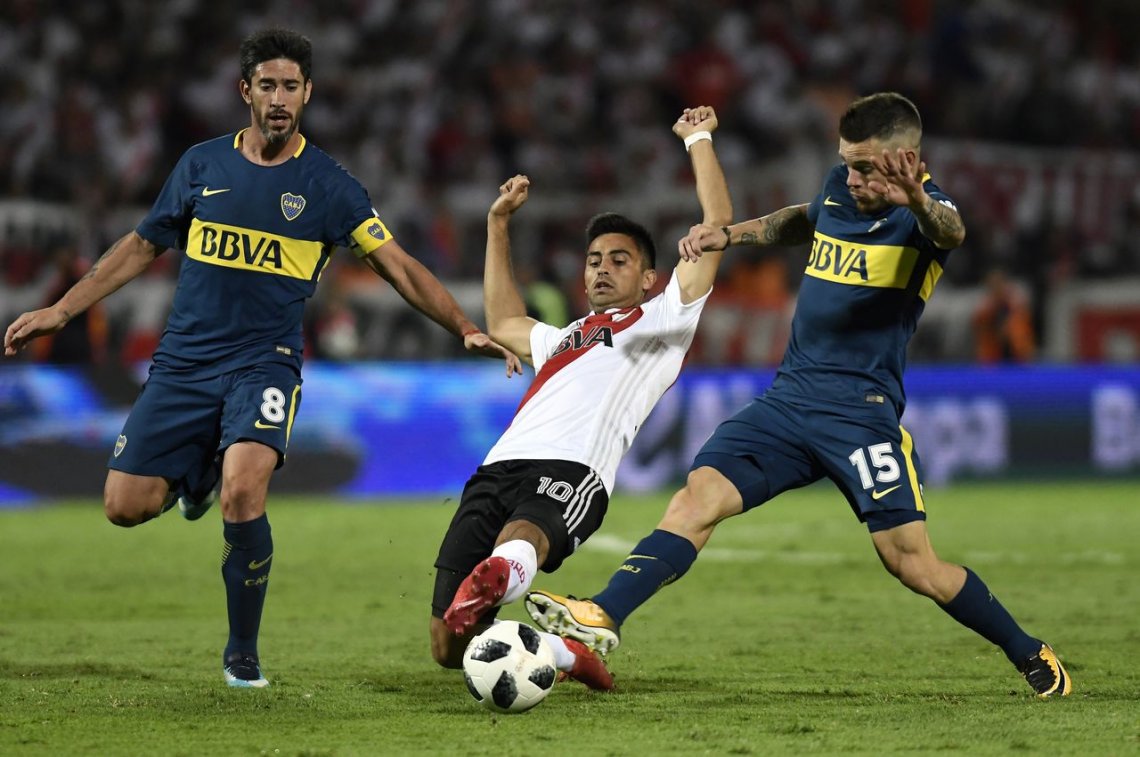
    The delayed first leg of the Copa Libertadores final has already been played on Sunday, with Boca Juniors and River Plate putting together a thrilling 2-2 draw. While Boca used their home advantage to take the lead twice before halftime, River responded by equalizing the game in 36th and 61st minutes to leave the tie all square. With only a week until the second leg, the best thing you can do is cross your fingers and be ready to witness another footballing carnival at River’s Monumental stadium. Hopefully the absence of River’s coach Marcelo Gallardo from the stadium and the ban of away fans will play down the pressure, and, more importantly, make the game more about the game itself.


    Henry Yang can be reached at hyang01@wesleyan.edu. 

  • Wrestling Preview 2018-2019: While Seniors Will Be Missed, the Future is Bright

    Wrestling Preview 2018-2019: While Seniors Will Be Missed, the Future is Bright

    c/o Wesleyan University
    c/o Wesleyan University

    Isaiah Bellamy ’18, Carter Armendarez ’18, Dominic Pirraglia ’18 and Devon Carrillo ’17 GR ’18—these were the names that almost dominated the 2017-2018 recap for the wrestling team. With the exceptional efforts from these senior captains, the Cardinals registered another historic and memorable season, etching their names into program history for the numerous records and achievements. However, the excitement also came with new uncertainties: With the departure of the core members, will the team keep up with the momentum they set in the past few years? To answer this question, The Argus is here to recap the past glories and take a look at their prospect in the upcoming winter campaign.


    The Past Glory

    In the capstone event of the year, Wesleyan finished 18th in the country at the NCAA Championships led by two All-Americans, Bellamy and Carrillo, who finished third and eighth at 285 and 197, respectively. By making into the top-eight flight, both wrestlers earned a deserved place in the All-America team, marking the first time in program history that the Cardinals had two All-Americans in a single season. The third-place finish from Bellamy also set a new record as it was the highest finishing at NCAAs in Wesleyan history.

    In addition, Bellamy finished as the No. 1 pinner in the country across all NCAA divisions with 24 pins of his 38-3 record. He was Wesleyan’s second-ever pins leader in the country after Nick Scotto ’13 in 2013. Bellamy also finished fifth in the NCAA for the “Most Dominant Wrestler Award” as well. Carrillo finished third in the country in pins with 21 of his 37-5 overall record.

    The team also placed third at the NCAA Northeast Regional Championships with six regional placers, three NCAA qualifiers, six All-American Scholars, and another winning dual season at 12-7 defeating numerous top 20 teams. Coach Drew Black finished his 20th season and reached 200 career wins, both huge accomplishments. Additionally, Carrillo boasted a phenomenal overall record of 35-2.


    The New Challenge

    If there were an Achilles heel to the 2018-2019 Cardinals, it surely is with the departure of these men. Last year’s team was historically good, but all collegiate athletes eventually graduate, and the Cardinals must be ready to match their past success. With only three senior wrestlers on the board, the team is in desperate need for younger wrestlers to step up as potential team leaders to pull off more Carrillo-level success.

    The pressure brought by last year’s accomplishments is also going to be a challenge for the team. The fall campaign is a good chance for the wrestlers to improve their forms and find ways to bring up their A-game. However, a slow start could bring more pressure to the young wrestlers, who are trying to prove themselves as the reliable ones. Still, with the experience of Coach Black, this should not be a big issue.


    What to Watch For

    The team will begin the 2018-2019 campaign on this Saturday at the annual Roger Williams Tournament, where they finished sixth last year. The team is certainly looking forward to establish a momentum at the first event of the year, but since coaches and wrestlers know being highly ranked before Thanksgiving matters little compared to March, we’ll also get a chance to witness the debut of some new faces. The squad of rookies has not only complimented the team dynamic by adding depth to raise the game of upperclassmen, but is also reported to contain much talent. Up next, Wesleyan will be back at the mat on Nov. 17 at the Doug Parker Tournament as the new defending champion. After being crowned at the tournament for the first time in history, the Cardinals will introduce their new squad with the same ambition. The last event to watch for is the RIT Invitational at Rochester Institute of Technology. Wesleyan has established an impressive record at the tournament and managed to earned a second place finish last year.

    In general, according to the coaches’ feedback, the core of the team is still intact, as proven by the strong showings in preseason training. Furthermore, the young core has matured since last season. As part of the All-NEWA Honorable Mention list, Amir Daouk ’20 finished the season with a 24-12 record at 125 and Zack Murillo ’19 went 21-7 at 133. James Matias ’19, who was named to the 2015-16 All-NEWA Rookie Team, earned his second consecutive Honorable Mention with a 22-10 record at 141. Elsewhere, Simon Chee ’21 started his freshman campaign with a bang and continued to impress the coaches and the crowd with his tenacity and work ethic on the mat. With other last year’s rookies, the sophomores will bring back the experience of last season to guide them heading into the 2018-2019 slate. Harrison Karp ’21 has expressed a similar attitude.

    “I would say my sophomore year has been a lot easier because you know what to expect and can prepare for a challenging season in the best possible way,” Karp said. “Additionally, we have so many experienced returning upperclassmen that have been effective leaders. They really made the fall captains practices both fun and productive which really prepared us for the season.”


    Henry Yang can be reached at hyang01@wesleyan.edu.

  • Both Crew Teams End Season With Strong Performances

    Both Crew Teams End Season With Strong Performances

    The solid season-openings at Head of the Riverfront set high hopes for the crew teams as they headed to Cambridge, Mass., on Oct. 20 for the 54th annual Head of the Charles Regatta. Since its inception in 1965, the Head of the Charles has become a prestigious race and now is the largest two-day Regatta in the world, attracting hundreds of thousands of rowers to the banks of the Charles River.

    c/o Wesleyan University
    c/o Wesleyan University

    The women’s team competed in as many as four events over that weekend, with the Varsity Eight finishing in sixth-place in the Women’s Collegiate Eights. It was the whole team’s top performance. As last year’s runner-up and the previous year’s champion, the women’s V8 attracted much attention and intense competition in the Collegiate Eights race. As expected, they managed to thrive under pressure and finish strong in a time of 19:15.840. The current record holder of the course, Bates College, defended their title with a mark of 18:18.054, outpacing the runner-up Williams and third-place Worcester Polytechnic Institute. Just half an hour later, the Wesleyan Varsity 4 boat finished 14th overall in the 40-team field with a mark of 22:02.002, ahead of their Little Three foes Williams and Amherst. This marked an impressive win, as defeating the Mammoths and Ephs is always newsworthy at Wesleyan.  On Saturday, the Women’s Club Fours finished 34th in the 52-boat field with a mark of 20:36.125. The event featured a number of Division I programs including the top-three finishers, Marist College (18:44.285), University of Tennessee (18:44.443) and Dartmouth College (18:56.453), so the finish was impressive given the competition.

    O

    c/o Arya Alizadeh
    c/o Arya Alizadeh

    n the same water, the Wesleyan men’s crew team highlighted its campaign with a 12th place finish among the 36 collegians in the men’s Collegiate Eight race. Coming off of a winning performance at Head of the Riverfront, the Cardinals improved their 17th place finish from last year and established themselves as the top NESCAC crew at the Charles River. Despite the rough water condition with a punishing headwind throughout the course, the men’s Varsity Eight handled the adversities well and pulled off a strong closing mile to cross the line in 16:44.252. The event was won by the renowned Michigan Rowing Association with a time of 15:58.108. In addition, the second V8 boat competed in men’s club eight on Saturday and finished 14 of 36 in a predominantly DI field. Coxed by Danny Helfman ’21, the team navigated the winding 4,800-meter course with a time of 15:46.771.

    Unfortunately, despite being the favorites at Head of the Fish, the Cardinals had to end their day early as weather conditions worsened around noon, and all remaining competitions were cancelled. Nevertheless, three boats from the women’s team were able to compete and excel in several events, with a third-place finish in the Varsity Eights race and another in the 2V8+ event. The only boat from the men’s team that was able to race was the Collegiate 4+ boat, which finished 22nd of 36 teams.

    The campaign at Fish marked the end of fall campaign for both teams. While the last three long-distance races have been enjoyable to watch, the majority of the teams’ competition, including the New England Championships, takes place during the spring season. The fall season provides excellent opportunities for the team to test its merits before the winter. As always, stay tuned with The Argus for another thrilling rowing season starting this March.

    Henry Yang can be reached at hyang01@wesleyan.edu.

  • Looking Back and Ahead: Senior Rowers Discuss Return

    While the new freshmen have yet to adapt to the life at Wesleyan, their orientation leader Olivia Pearson ’19 has almost finished her first week of training back with women’s crew. The Atlanta native had a different junior year from most of her friends. In order for a more in-depth study in Spanish, she went aboard for a year-long exchange program in Chile, while watching her teammates continue to row, including team captain Emma Porrazzo ’19. Their experiences, however, do share some similarities. While they both rowed in high school, their recruitment wasn’t the stuff of legend. No Internet buzz. No big welcome parties. No Sports Illustrated stories. But they did enjoy their own unique experiences as they kept trusting the process and being patient. Amid the chaos of Drop/Add, The Argus had a chance to speak with the two rowers to hear about their experiences, expectations and much more.

    c/o athletics.wesleyan.edu
    c/o athletics.wesleyan.edu

    Like many other senior athletes, Pearson still couldn’t help but lament how her year abroad went so fast, but she is also extremely excited for the return and said that she relishes a challenge. Her piece of advice for the freshman is to enjoy the ride and compete to the best of your ability every single day.

    When asked about how they are feeling about the upcoming season, both Pearson and Porrazzo expressed their excitement in meeting with their old friends and new faces. Pearson also spoke about her appreciation for what Head Coach Pat Tynan’s has done in the past few years.

    “Crew team has always been the place of an empowering group of women,” said Pearson. “So I’m sure it will be the same this year. Pat has put an enormous effort in in building the team’s atmosphere and I’ve never came to realize how important it is until now. I had even started missing him when I was away. I am also excited to meet our new assistant coach.”

    On the matter of being a senior captain, Porrazzo explained her gratitude to her teammates and staff. She explained that it is the energy in the dressing room which drives her forward and makes her uphold a commitment to other teammates whom she cares about deeply.

    According to many, one of the things that contributes to the crew team experience is the opportunity to travel to a variety of sites to compete. Pearson picked the Head of the Charles River Regatta in fall 2016 (in which the Cardinals placed first) as her favorite and said that it was one of the proudest moments in her career.

    Moreover, Olivia also talked about how her study-abroad experience impacts her rowing career.  Much to our surprise, she admitted that the cultural difference was so huge that she already started to feel like she needs to readjust herself to living in the States again.

    c/o athletics.wesleyan.edu
    c/o athletics.wesleyan.edu

    “Honestly I didn’t come out with the same level of fitness as everybody else on the team does,” she said. “Although Pat did give me a training plan and I did some of it, but I didn’t row much. Personally, it was hard for me to do a lot of stuff without the team or without another person because it was both mentally and physically challenging. Chile was an amazing country, but there’s no competitive collegiate league, so I had to attend a rowing club.”

    With the crew season approaching in late September, the returning seniors are spending time preparing for not only the season, but also the personal goals ahead of them. Both Pearson and Porrazzo have a few items to check off their college bucket lists this year, such as maintaining their high GPAs and visiting Usdan more often. Although seemingly lofty, their goals are a short order compared to what they achieved as proud members of the student-athlete community.

    Following last year’s impressive record, the team are looking forward to a successful fall campaign as they head back to the heated New England water. In about three weeks, the Cardinals will be traveling to Hartford for the annual Riverfront Regatta, where a clash between the Little Three rivals will take place. Then, on the weekend of Sept. 20-21, Pearson and her teammates will return to the Head of the Charles Regatta, as they seek to beat last year’s second-place finish and aim for the title.

    Henry Yang can be reached at hyang01@wesleyan.edu.

  • Head Coach Tynan Reflects on Years of Success, Leadership With Women’s Crew

    Head Coach Tynan Reflects on Years of Success, Leadership With Women’s Crew

    c/o Arya Alizadeh, Wesleyan Athletics Department
    c/o Arya Alizadeh, Wesleyan Athletics Department

    After his time at Yale University, Coach Pat Tynan came to Wesleyan in the 2009-10 season and has spent almost nine years at the helm of the women’s crew program. Nine years is not long-term in comparison to many other experienced coaches at Wesleyan; however, Tynan has made the most of it by leading Wesleyan to success at a national level with great speed, helping aid the emergence of star players like Rachelle Flowers ’19, who will be joining the US national team in the World University Championships.

    For many rowers, be it current or former, Tynan is the man who has always been there to help them survive the four-month roller coaster of relentlessness, blood, thunder, sweat, and tears, all of which can happen in the treacherous weather of New England. As the team finally received a break after claiming the Little Three title for the second consecutive year, Tynan sat down with The Argus to talk about his coaching philosophies, his relationship with his athletes, as well as the key to excelling at his job.

    The Argus: To start with, is there anything that you would like to share about the aim you set for the team this season?

    Pat Tynan: As always, the aim of the team is to create an environment where our student-athletes can train and compete at the highest level. That hopefully leads to winning some races along the way but I think that when we’re able to get a group of people to support each other, invest all of the time and energy into what we’re doing, and continue to make progress that’s a pretty awesome feat—results aside. But we do want to, ultimately, is prepare to win races.  

    A: It is very impressive that the team has been able to maintain the momentum in last fall and brought its performance up to an even higher level. Your team is currently ranked No. 2 in the USRowing/CRCA Coaches’ Polls. Just how satisfied are you with the team’s performance so far?

    PT: We’re never really satisfied. That’s why we keep doing the amount of work we do. I think the team is less satisfied than I am, which is a great recipe. They keep asking what else they can do.  As a coach, I feel so grateful to be able to work with athletes like that.  

    A: Having finally received a break in your fixture, what kind of arrangements have you made for the athletes in order to prepare for the next event?

    PT: We were able to put in a lot of intensive training this past week because we didn’t have to prepare for a race this past weekend. We’ll keep doing what we’re doing, technically, but just try to sharpen that up and do it a little better. We know that we’ll see a lot of really good teams over the next two weeks. Our athletes know that, even though we’re racing well and continue to make progress, so is much of our competition. At this point, I know that our team likes to race so the best thing I can do is kind of stay out of the way and let them do their thing.

    A: Many players have expressed gratitude to your professionalism and consideration for them. What has been the key to your success in this job?

    PT: That’s really nice to hear. Obviously, rowing is a huge part of what these women are doing at Wesleyan but it’s not the only thing. I think that being able to adapt to how this generation of athletes responds is key. They want structure. They want to be pushed and be held accountable but they also want to know and understand the bigger picture. Having a great assistant coach is also key. Now having young kids myself has really helped to keep things in perspective for me. I don’t lose my patience with athletes like I used to. I also try to keep learning and keep getting better at what I do. I don’t always get it right and certainly make mistakes but if I’m going to ask the women on the team to make changes and improve then I need to continue to do the same.  

    A: Finally, just for the banter, we have the same question for you as for your athletes. What is a fun fact of the team that you would like to share?

    PT: They like birthdays. They really like birthdays. They always acknowledge someone’s birthday and sing happy birthday at practice.  They also have an Instagram page where they post the meals they cook.

    Henry Yang can be reached at hyang01@wesleyan.edu.

  • The Rule Change Bound to Alter the Super League’s Landscape

    The Rule Change Bound to Alter the Super League’s Landscape

    c/o foxsports.com
    c/o foxsports.com

    Ever wonder why the “shopaholics” of Chinese Super League (CSL) have remained quiet this winter? You may be thinking about an economic recession or taxation, but what’s happening is actually more interesting. In an attempt to develop players for the struggling national side, the Chinese Football Association (CFA) announced that clubs will be forced to field at least one domestic player and as many Chinese players under the age of 23 (born after January 1, 1995) as they do players from overseas. As the new season has begun, the new rule has not only added an element of unpredictability to the new season, but also put some players’ futures at risk.

    Those at risk are the domestic players who have just turned 24. Among the 16 teams participating in the CSL of 2018, there are only 11 players of the age of 24, most of them coming from teams in the middle-lower table. It is already expected that these 24-year-olds will become victims of this latest CFA policy.

    Now aged 25, Mingyang Du would never have thought of being unemployed when he became a “super sub” for his team just two years ago. Despite his sensational performance, Du was never a regular first-choice nor a rotation player for Beijing F.C. that season. When he was 24, he lost his place on the team following the announcement of the first U23 rule. A year later, with the renewal of the U23 policy, Du was completely forgotten and still remains a free agent. It is a great pity to witness how a rising star has wasted his youth on the bench. For other 24-year-olds in the league, leaving the CSL for more playing time would be a difficult but necessary decision unless they are willing to face an uncertain future like Du’s.

    Still, I was surprised to find that many articles that support the policy were using a somewhat social Darwinist perceptive. They claimed that in this “Darwinian process,” being often sidelined or unemployed is a fair reflection of the player’s lack of skills, thus it has nothing to do with the policy. On the surface, such an argument makes sense; after all, you can still find one or two 24-year-olds getting regular first-team soccer over time. However, it failed to consider that the reason many 24-year-olds are sidelined is not that they are not qualified, but that the policy has prevented them from entering fair competition with other U23 players. In fact, the crux of the matter, however ridiculous it may sound, is simply that there aren’t enough decent U23s. As a result, most teams would only include one U23 player in their lineups, meaning that two of their substitutes would also be U23 players. If a 24-year-old cannot make their way into the line-up, it means that there’s also no place for him on the bench, unless he can put on a better performance than those foreign players and those more experienced.

    Some social Darwinists also argued that the policy has notable pros and cons: Although it forced 24-year-olds into a difficult situation, it did help produce young internationals such as Dalun Zheng and Junlin Min. Sound convincing? Not really. Before Zheng and Min became squad regulars as U23 players and then continued to play key roles in their teams, both of them had spent a significant amount of time playing in the lower leagues, where they learned how to survive and thrive in competition.

    As the CSL has gained worldwide attention and enjoyed much success in Asia, the difficulties faced by these 24-year-olds are often overlooked. Not only do most people look forward to seeing more young players benefit from the policy, but also many U23 players have expressed their gratitude toward the CFA. Maybe they shouldn’t celebrate too soon—it’s only a matter of time before these youngsters reach the age of 24. While young internationals including Zheng and Min have proven themselves worthy as top-level players, most of the U23 players have not and are rapidly losing the chance to do so. They’ll only get limited playing time as substitutes. U23 players are also unlikely to get loaned out, as they have already become a scare, overpriced resource due to the quota.

    Yet, it is still too soon to say whether or not the policy can produce the desired results. Using rules to protect the development of local soccer has been a common practice all over the world, and sometimes we could only wait for years to see whether a rule was effective or not. For the 24-year-olds in the CSL, however, waiting is something they cannot afford. At this critical point in their careers, they do not have time to think about the future of Chinese soccer but, rather, are focused on the future of themselves and their families. While many athletes of the same age are enjoying success in the prime of their careers, it is a pity that these players are having their career stagnated due to an unfair policy.

    Henry Yang can be reached at hyang01@wesleyan.edu.

  • What It’s Like: Life as a Cardinal Crew Walk-on

    What It’s Like: Life as a Cardinal Crew Walk-on

    c/o Laurie Flowers, Wesleyan Athletics Department
    c/o Laurie Flowers, Wesleyan Athletics Department

    You’ve played your sport since you were five or six. You define yourself as an athlete and an expert of your craft as you have always given 100 percent to be the best you can be. You’ve enjoyed championships, awards, and accolades from friends, parents, faculty, the media, and almost everyone you’ve met. Then, once arriving at college, you decide to take a break.

    This is the story of a lot of people at Wesleyan and collegiate athletes in general. After all, playing college sports is not a risk-free proposition and there are certainly tradeoffs involved. Classes, on-campus jobs, rehearsals, relationships: when all of these things are on your plate, there is nothing wrong with making choices in order to live a balanced life.

    However, there are also athletes who have followed a completely opposite path. Instead of taking a break, they embarked on a new journey in competitive sports, making a year-round commitment, and never regretting the decision. As a new recruiting season approaches, The Argus sat down with two members of women’s crew, Sam Hill ’20 and Meghan Heffernan ’21, and one oarsman from men’s team, Andrew Martin ’21, to get some insight on their experience of rowing as a walk-on.

    The conversation began when the athletes shared how they got involved with the team. Heffernan told a rather simple and modest story.

    “I was walking into Usdan where a little table was set up with some oars over it and I stopped by because I was curious,” she said. “After talking with Coach Jones, I just showed up in their next practice. Through weeks and months when I finally kind of learned how to row, they congratulated me and announced that I was officially in.”

    “It was just self-selecting; there were no tryouts,” Hill added. “People who didn’t feel like doing it just dropped out eventually. I have played sports throughout my life and I was going to play collegiate lacrosse at Johns Hopkins last year, but eventually, I decided not to go DI. When I came here and I knew that I would need a sport and to be on a team. So I emailed the coach during the summer and joined the team in September.”

    When asked to describe their experiences in three words, each of the walk-ons had inspiring phrases to summarize their season.

    “Do your job, ”Martin said.

    “Support your teammates,” followed Heffernan.

    “Race against yourself,” added Hill.

    Then, the conversation was interrupted by laughter and banter when the group was asked to reveal a team secret.

    “Somebody stole our speaker and we’d like it back,” Heffernan said after much consideration.

    According to Heffernan, there is a room in Freeman where the team had a speaker bolted to the wall. Even a lock on the door could not deter the crook.

    “Another secret is that we have to pay for our betting tees and I wish I didn’t have to do that. It’s something that only happens in crew,” said Hill.

    When asked about their opinions on their head coach, Hill opened up to express their love for Pat Tynan.

    “[Tynan is] a wonderful coach and a super adaptable one, more so than any other coaches I’ve ever had,” said Hill.

    Heffernan agreed and added that when she was struggling earlier in the year, she was glad to have Coach Tynan there, making her feel genuinely warm. He still checks in with her every week.

    There is no doubt that it is important for student-athletes to find a balance among all that is on their plate.

    “The key for me finding balance is controlling the things I can control,” Martin said. “It’s about taking every practice, every class, and every race one at a time. When I’m on the water, the only thing I can control is making extra effort, being focused, and finding ways to move with the shell. When I’m in the classroom, I’m only in control of my focus. Whatever you do in life, if you want to succeed, you have to be disciplined.”

    Speaking of the advice they have for pre-frosh who want to follow their foot-steps, Martin and Heffernan believed that it is important to employ a good strategy both mentally and in practice.

    “Crew is all about self-sacrifice,” Martin said. “You have to demonstrate the mental toughness to embrace everything rowing throws at you. A varsity sport is a major time commitment, but if you love to compete and empty the tank every day, there’s nothing better on Earth. Walking-on when the team is predominately made up of recruits is challenging. It’s all about the willingness to sacrifice yourself for the guys around you, compete your tail off, and do your job every day.”

    “Don’t be afraid of your upperclassmen,” Hefferman said. “They will understand you, help you and teach you in the way that coaches can’t have.”

    Lastly, The Argus probed a test of their friendship by asking the crew members to nominate the person they love the most on the team. It took them some time to decide before Hill finally decided to sing the praises of Sophia Shoulson ’18.

    “She is one of the most under-appreciated people on this campus,” Hefferman said. “If you want to talk about someone who balances the team and the academics, there is no one else on the team but her. Also, she was a novice in her freshman year, so to be a novice and look up to her being in the second-ranked 1V in the country after only three years is amazing and incredible. She showed me that it is all possible.”

    Heffernan expressed the same view and nominated first-year Emily Frazer-Abel.

    “I admire that fact that she is always at practice and giving her best even while she was having a prolonged back injury,” Heffernan said. “But honestly, if you mention any of my teammates, I can tell you a million reasons why I love them.”

    Not long afterward, this casual Sunday night conversation came to an end when both of them realized that they didn’t pick each other and then broke into a tongue-in-cheek argument, a reflection of the positive atmosphere on the team.


    Henry Yang can be reached at hyang01@wesleyan.edu.