
Author: Henry Spiro

  • Cinefiles 9/19-9/22

    Welcome, cinematically inclined friends, to our third week at Wesleyan! Although the first two weeks practically flew by, it also somehow feels as if we’ve been here forever. Papers and problem sets are beginning to pile up, and now that the stress of Drop/Add is over, it’s time to settle into the school year and plan your time. No evening classes? Perfect. You can mark the film series on your calendar every Wednesday through Saturday night.

    We begin this week with “Summer 1993,” kicking off the annual Hispanic Film series that will continue for the remaining Wednesdays this month. Here we showcase powerful recent works from across the Spanish-speaking world, beginning with the captivating tale of a motherless six-year-old named Frida.

    Our Thursday film, “Los Angeles Plays Itself,” marks the first documentary of the year, and our Friday film marks the final 3D screening on this month’s calendar with the highly-anticipated “Incredibles 2.” This superhero extravaganza is sure to please, but those with epilepsy or photosensitivity should be warned that this film may be triggering to these conditions. To round out the week, stop by the series on Saturday for the utterly romantic “Wuthering Heights.”

    We’ll see you there!

    “Summer 1993”

    2017. Spain. Dir: Carla Simon. With Laia Artigas, Paula Robles. 97 min.

    Wednesday, Sept. 19. 8 p.m. Free.

    The first installment in our 2018 Hispanic Film Series is a recent release by female filmmaker Carla Simone. Simone won the Goya Award for Best New Director and the film, ‘Summer 1993’, was also nominated for Best Original Screenplay. It follows the summer escapades of six-year-old Frida who’s placed in her uncle’s care following the death of her mother. Frida struggles to settle in and feel at home in her new environment in Catalonia as she grapples with grief, isolation, and belonging. The film is miraculous in its sensitivity and profound in its themes. Seek it out for Simone’s confident and careful directorial touch and for many moving performances.

    “Los Angeles Plays Itself”

    2003. USA. Dir: Thom Anderson. Documentary. 169 min.

    Thursday, Sept. 20. 8 p.m. Free.

    Hailed as the best documentary about Los Angeles ever made and packed with enough clips to make a cinephile’s mouth water, this lengthy film revels in the contradictions, the conflicts, the beauty, and the dust of the desert metropolis known as Los Angeles.  The film reckons with the numerous representations of LA across various films and television series and filmmaker Thom Anderson’s interpretation of those (mis)representations. Anderson offers a critical analysis, reflection and history of LA over time, and his knowledge, wit, and passion make the film a gripping and entertaining viewing experience for all.

    “Incredibles 2”

    2018. USA. Dir: Brad Bird. With Craig T. Nelson, Holly Hunter. Animation. 125 min.

    Friday, Sept. 21. 8 p.m. $5.

    While Elastigirl is off working to make superheroes legal again, Mr. Incredible faces his own challenges holding down the fort at home with Violet, Dash, and Jack-Jack. Action-packed adventures ensue as everyone’s favorite family returns to face a new villain in this sequel to the beloved original from Pixar. Come see it at the Goldsmith on Friday if only to observe Edna Mode’s iconic face in three glorious dimensions on the big screen.

    “Wuthering Heights”

    1939. USA. Dir: William Wyler. With Merle Oberon, Laurence Olivier. 103 min.

    Saturday, Sept. 22. 8 p.m. Free.

    In this adaptation of Emily Bronte’s classic novel, the bond between childhood friends and soulmates Cathy and Heathcliff is put to the test when the wealthy, respectable Edgar Linton appears on the scene. Will their star-crossed love endure? This tale of tragic romance was nominated for eight Academy Awards, including best picture and best actor. It took the win for Gregg Toland’s hauntingly beautiful black-and-white cinematography.

    Beatrix Herriott O’Gorman can be reached at bherriottogo@wesleyan.edu.

    Julia Levine can be reached at jjlevine@wesleyan.edu.

  • “American Vandal” Mixes Poop Jokes and Sharp Social Commentary

    “American Vandal” Mixes Poop Jokes and Sharp Social Commentary

    c/o medium.com
    c/o medium.com

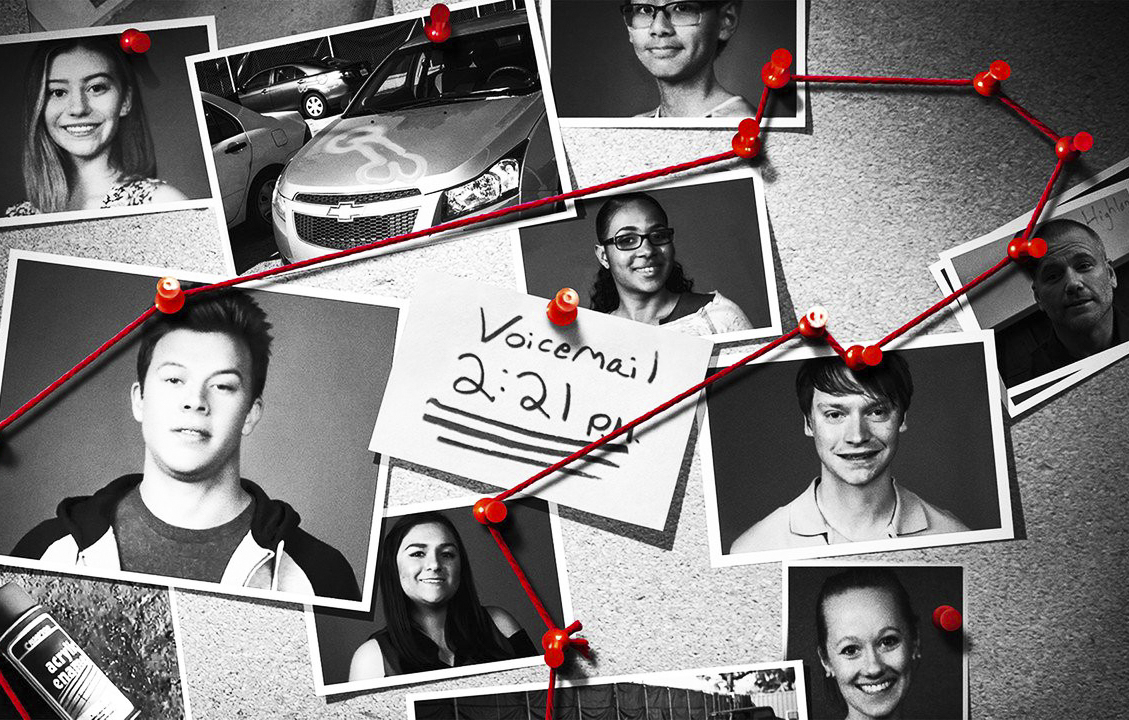
    With an outstanding first season, “American Vandal” transcended its incredibly silly premise. A pitch-perfect parody of true-crime shows, “American Vandal” followed Dylan Maxwell (Jimmy Tatro), a high school senior accused of spray painting images of penises on several teachers’ cars. His story was told from the point of view of Peter Maldonado (Tyler Alvarez), a sophomore and wannabe filmmaker, and his friend Sam Ecklund (Griffin Gluck), who turns the story of Maxwell’s alleged crimes into an instantly popular documentary. The main appeal of the show, at least at first, was the very serious treatment of very silly crimes. Every staple of true-crime documentaries, from the reenactment of certain events, to talking head interviews, is painstakingly recreated as characters discussed every vulgar detail of the vandalism. Yet as the series progressed, it became remarkably better, with a surprisingly compelling mystery and an insightful examination of truth and injustice. “American Vandal,” was not merely a funny mockumentary; it was something deeper.

    But it was still the kind of show that could’ve been lightning in a bottle, something that works once, but could never be replicated in a second season. Shockingly, Season 2 of “American Vandal,” while not quite as funny as the original, manages to actually be significantly smarter, with deeper themes and a lot more to say about how the world works.

    The new season opens with an update of what’s happened to Peter and Sam’s lives since we last saw them. In a meta twist, their show was picked up and distributed by Netflix, who funded their second season. The two budding filmmakers have decided to investigate the case of “The Turd Burglar,” a prankster who terrorized the St. Bernardine Catholic high school by spiking the cafeteria lemonade with laxatives, causing nearly the entire student body to defecate their pants; hid poop in a piñata, which simultaneously was unleashed on a group of students; and placing cat poop in the T-shirt guns fired at a school basketball game. “The Turd Burglar” hides behind an Instagram account, threatening more pranks. This time around, the accused is the social outcast and oddball Kevin McClaine (Travis Tope), who confessed to the crimes. But there may be more to the story than appears at first glance; after all, Kevin was one of the students who drank the lemonade. Why would he drink the lemonade if he knew what would happen to him?

    Many of the strengths of the original season are present again. The central whodunit surrounding the identity of “The Turd Burglar” is as engaging as the first season’s mystery. Its story goes beyond mere mystery, however, dealing with complex themes and creating multi-dimensional characters worth investing in. The cast is uniformly excellent, portraying each of their high schoolers with realism and quirks specific to each character.

    Admittedly, the new story isn’t as funny as the first. This is primarily because Kevin makes for a far less funny character than Dylan did. Kevin is an outcast, and a pretentious weirdo (an early introduction sees him describing the “proper” way to drink tea), which makes him less funny than annoying or pitiable. Dylan, on the other hand, was the star of the show, a pitch-perfect stoner who made for great comedy (it helps, too, that he was played by Tatro, whose performance was extraordinary). Furthermore, the gimmick just doesn’t feel as fresh this time around. It’s still a very funny show, but it’ll never feel as original and new as it did in its first season.

    If the new season lacks the humor and characters of the first, it more than makes up for it with its sharp social commentary. “American Vandal” uses its silly premise to deal with very serious real-world issues. The first episode outlines the tactics used by police officers to force false confessions, and plant crimes on innocent people; another episode explores the extreme lengths that the privileged and powerful people go to protect each other from facing consequences for their corruption; the season’s finale makes a jaw-dropping, powerful statement about how social media changes how we see ourselves and others.

    The arguments made by the show are important in their own right, but what’s truly impressive is how seamlessly they’re integrated into the narrative. A lot of overtly political movies and TV shows fall into the trap of basing the entire story around their message, have characters explain the point of the story to the audience (often vis-á-vis a monologue), or present the opposing argument as a straw man. “American Vandal,” falls into none of these traps. The social commentary is fundamentally part of the narrative, not forced onto it, and as a result there’s no need for anyone to blatantly explain what the show is trying to say. Even the arguments of the eventually revealed “Turd Burglar” are taken seriously. It’s astonishing not only that a show about a poop-based prank has so much to say, but how well it says it.

    “American Vandal” proved in its first season that it wasn’t a simple, one-gag show stretched out across eight episodes, but that it was something more. With Season 2, “American Vandal” demonstrated that it had a powerful message about modern society. We can only guess what Season 3 may achieve next.


    Henry Spiro can be reached at hspiro@wesleyan.edu and on Twitter @Judgeymcjudge1.

  • “Predator“ Still Delights, Over 30 Years Later

    “Predator“ Still Delights, Over 30 Years Later

    c/o denofgeek.com
    c/o denofgeek.com

    Ever since its initial 1987 release, “Predator” has left behind a complicated legacy. Nowadays, it may be best known for the scene featuring a macho-handshake, which has become a meme format; or, it’s remembered for Arnold Schwarzenegger comically screaming “Get to the choppa!” through his thick Austrian accent. It has dealt with a critically and commercially failed sequel, the infamous “Alien vs. Predator” movies, a failed reboot, and now yet another reboot, already met with mixed reviews and mired in controversy. Still, anyone who’s seen the movie can tell you that “Predator” has more than stood the test of time. Save for some jokes and tropes that have become outdated and insensitive, the action and storytelling on display are still as thrilling as they were decades ago.

    The story follows a group of elite U.S. soldiers, led by “Dutch” (Schwarzenegger) as they venture into a Central American jungle with the goal of rescuing a government official being held hostage. Naturally, when the team arrives, everything is more complicated than expected. They discover the skinned corpses of U.S. Special Forces officers hanging from trees, but no tracks or any evidence that they were ambushed; their rescue mission was just a set-up to retrieve military intelligence; and something appears to be lurking in the trees. Aggravatingly, the film spoils, from the get-go, what that mysterious “thing” is: the opening shot of the film is a spaceship landing on Earth, an utterly unnecessary way to spoil a plot twist the rest of the movie tries to build up.

    Given that the ’80s was a decade of extremely macho action movie heroes, “Predator” takes a refreshingly nuanced approach to its masculine heroes, often parodying and critiquing the idea that pure brute force is the key to victory. Yes, this is still a film in which the entire cast looks like they could be on steroids, as they fire massive guns and blow a ton of stuff up. But, this aspect of their personalities is often mocked. An early scene, the sight of the muscular Schwarzenegger and Carl Weathers turning a simple greeting into an arm wrestling match is more satire than it is serious, a means of mocking trends in ’80s movies rather than replicating them. The team consistently fails to bring down the titular monster by attacking it, guns blazing, instead eventually defeating it through tactical thinking. Considering some cultural aspects of the film have become deeply outdated, it’s surprising that its attitude toward its muscle-bound heroes is still compelling.

    Yet, what really makes “Predator” so damn compelling is how the film constantly reshapes itself. Under the taught direction of John McTiernan (who directed another action classic, “Die Hard,” just a few years later), the film’s pacing and tension never slack. When Dutch and his team carry out their planned mission, McTiernan cuts between all of them, in various positions, as they spray bullets and hurl explosions through a small encampment. The scene has just the right amount of excessive violence; yet it works so perfectly because the action that follows it is so strikingly different. When the team leaves the encampment, they’re picked off one by one by the alien Predator. The style of the action shifts; suddenly, we’re watching a slasher flick, in which each of the characters is bloodily picked off, one by one, by a hidden creature. When only Dutch remains, the film undergoes yet another change, becoming a tense, brutal showdown between two superhuman creatures (I am referring, of course, to both the alien Predator and former body builder Schwarzenegger).

    All of this is to say nothing of the titular Predator, who terrifies both due to McTiernan’s direction and the creature’s unforgettable design. The alien isn’t actually seen until an hour into the film, save for the outlines of an otherwise invisible creature. We do, however, see the world from the Predator’s point of view, looking at everything through the lens of a thermal camera. As a result, McTiernan shrouds the Predator in mystery, making his later appearances all the more unnerving. Yet, no amount of tension-building or suspense could make up for a ridiculous looking creature. Thankfully, the Predator’s design is unforgettable. He’s covered in cool technology, with a body the shape of a muscular humanoid (not too dissimilar from the film’s protagonists), crocodile skin and massive curved fangs. It’s this cross between human and beast, familiar and unfamiliar, that makes his design so memorable.

    Unfortunately, other aspects of the film have aged uncomfortably poorly. The only female character—a rescued hostage—barely speaks for most of the film (mercifully, she’s not presented as a forced love interest). There are several jokes, crudely mocking women and gay men, which are discomforting to watch. Even the basic premise of several American soldiers invading Central America only to be attacked by a creature that hides in trees has the undertones of U.S. colonialism, without seriously criticizing the soldiers’ actions.

    Despite these flaws, the filmmaking on display in “Predator” is a near masterpiece. It’s the rare blockbuster that never has a dull moment, nor does it ever feel like it’s repeating itself. Even over three decades later, “Predator” is still a wildly entertaining ride.


    Henry Spiro can be reached at hspiro@wesleyan.edu

  • Why the Ending of “Twin Peaks: The Return” Is Still Fascinating, One Year Later

    Why the Ending of “Twin Peaks: The Return” Is Still Fascinating, One Year Later

    c/o variety.com
    c/o variety.com

    It’s been a little over a year since the finale of “Twin Peaks: The Return,” aired, and I’m still haunted and fascinated by its one-of-a-kind ending. The original “Twin Peaks,” created by surrealist filmmaker David Lynch and TV writer Mark Frost, followed the titular small town in the aftermath of the death of Laura Palmer, a popular high school student. It was one of the earliest examples of Golden Age television; a genre mash-up of soap opera parody, murder mystery, and supernatural surrealism. Its first season was a huge hit, but ratings and quality declined in the second season when Lynch and Frost were forced to reveal Palmer’s murderer (the two had hoped to never reveal the killer; the mystery would be to pin together various subplots in the town). It unfortunately ended with an infamous cliffhanger, one that promised a darker, stranger third season. Over 25 years after its cancellation, Showtime revived the show with a new season, dubbed “Twin Peaks: The Return.”

    While much of the season was strong, leaning into Lynch’s filmmaking style more than the original, there was perhaps no instance as striking as its final moments. The show’s ending is remarkable: It’s horrifying and haunting, but a complete stylistic departure from much of Lynch’s filmography. It is without a doubt the strangest ending to a TV show ever, but also, perhaps, the most fascinating.

    “The Return” has an incredibly elaborate and dense narrative; for this reason, I’ll try to be brief in summarizing the plot of the final two episodes. “Episode 17” follows many beats of a traditional, upbeat finale. Many of the main characters are reunited; the forces of evil are crushed by the forces of good; there’s even a romance. Fulfilling a plan to crush an evil supernatural force nicknamed Judy, FBI Agent Dale Cooper (Kyle MacLachlan) is sent back in time to the night of Laura Palmer’s murder. He finds her and guides her away from her fated demise. But as the two are walking through the dark forest, she screams, and suddenly is gone.

    Picking up where that scene left off, “Episode 18” sees Cooper return to the present. He’s seemingly fulfilling every step of the plan, and then, finally, meets up with a woman who by all appearances is Laura Palmer. Only, she claims to be a woman named Carrie Page (played by Laura Palmer actress, Sheryl Lee). Undaunted, he asks her to take a drive to Twin Peaks, where they head to Laura Palmer’s old house. A woman answers the door; she isn’t Laura’s mother, nor has she heard of the Palmers. The pair walk down the house’s steps, standing in a dark suburban street. Cooper, confused, asks, “What year is it?” Carrie doesn’t respond. Laura Palmer’s mother is heard off in the distance, calling out to her daughter. Carrie looks up at the house. She screams in horror. The lights in the house blackout. The screen cuts to black. Roll credits.

    The question of why this incredibly vague and abstract ending is so haunting has been difficult for me to answer, but I think I have found some semblance of an answer. Much of the final scene’s power (and horror) comes from how Lynch uses uncertainty. Laura Palmer’s death, the inciting incident of the entire show, is undone, but the consequences of this are never shown. It’s not clear what, if any, of the show’s plot actually happened. The entirety of “Twin Peaks,” may or may not have been entirely destroyed.

    It’s not just the plot that has been thrown into chaos: Agent Cooper, too, no longer seems to be acting like himself. In a scene at a diner, he saves a waitress from harassment by three cowboys. While this act of heroics is in line with Cooper’s character, he does it in a way that is nothing like the Cooper of the original series. The Cooper seen at the diner immediately leaps to violence as opposed to more peaceful methods. He behaves like a deranged vigilante as opposed to the methodical, albeit quirky, white knight of the original series. Gone is the off-beat heroism of the FBI agent whose goal was to track down Laura Palmer’s killer; replacing him is a man who may or may not still have his sanity in check.

    The result of this is that we, the audience, are left with a sense of total uncertainty. Everything that we thought we knew about “Twin Peaks” is no longer a given. Cooper may have never tried a “damn fine cup of coffee” at the Double R Diner; his evil doppelgänger may have never left the Black Lodge. After hours invested into watching the show, the most basic of facts about it may no longer be true.

    Lynch uses this sense of uncertainty to craft the show’s final, horrifying moments. The sound of Carrie’s screams is terrifying, not only because they’d be terrifying in a normal situation, but because it’s impossible to know what prompted her. The simple image of house lights blacking out would normally be only a little unsettling; but because of the uncertainty Lynch crafted throughout the episode, it becomes a menacing image. We’re left both literally and figuratively in the dark.

    Furthermore, the ending is incredibly unexpected. This is somewhat a given, as “Episode 18” follows such a non-traditional story arc. But the ending is also unexpected because Lynch completely inverts his own stylistic tendencies. Most of Lynch’s filmography features elaborate, surrealist horror. The ending of “Eraserhead,” for example, sees a deformed baby growing into a massive, terrifying monster, who seemingly attacks its father. The iconic finale of the original “Twin Peaks” featured a demonic spirit possessing, murdering, and creating identical doppelgängers of multiple characters. But the final scene of “The Return” is far less complicated. Besides the sound editing, the final scene is straightforward and simple. This simplicity adds to the brilliance of the final scene. Carrie’s unexpected scream is shocking in and of itself. But it’s ultimately more of a surprise that Lynch completely subverts the stylistic tendencies he’s known for.

    Yet, I can hardly call the final moments of “Episode 18” a perfect ending. It’s remarkably frustrating and anticlimactic. Many of the various stories I’ve invested hours into are never given a proper conclusion; it’s pretty likely that all those stories were wiped out by Cooper’s time travel. The pacing of “Episode 18” adds to this frustration. Much of the episode is incredibly slow-moving, featuring lengthy scenes of people driving, with almost no dialogue between them. For all that to lead up to what is, essentially, an anti-climax, is undeniably upsetting.

    Still, it’s been a year since the ending aired, and I still can’t get over it. I haven’t even discussed what it might “mean,” or the various theories about what’s “really going on.” I haven’t discussed the various critical reactions to it, with some claiming the ending was oddly hopeful. I’ve barely even touched on the show’s mythology at play in those final moments.

    Maybe something frustrating, confounding, and anticlimactic can still be remarkably brilliant. Lynch has often claimed that the more mysterious something is, the more beautiful it is. While I would definitely describe the ending of “Episode 18,” as mysterious, I don’t know that I could call such a horrifying scene “beautiful.” It is, however, a brief moment that’s held my attention for over a year and will probably continue to hold my attention for many years more. That might not qualify as “beauty,” but it’s definitely something remarkable.


    Henry Spiro can be reached at hspiro@wesleyan.edu and on Twitter @judgeymcjudge1.

  • A Founder’s Perspective: Stein ’21 Forms Nigun Circle to Help Students Sing and De-Stress

    It’s a rainy, dark, and cold Monday night, and I am surrounded by an ethnomusicology graduate student from France, a freshman dance and neuroscience double-major, a junior philosophy major, who leads the campus meditation group, and a senior government major, who coordinates Jewish community programming, among other close friends and people I don’t know yet. As we schmooze about how stressful midterm season is, more students walk into the dimly lit classroom and take a seat in the inner or outer circle of chairs. At 8:07 p.m., I close my eyes, take a deep breath, and begin to sing. My voice cuts through the conversations and becomes the only audible sound for about three seconds. Another voice joins mine, and our voices become one. Moments later, our unified voice grows in strength as a roomful of college students sing together.

    We sing on any neutral syllable that feels right to us personally. I may sing, “Yai dai dai,” while the person next to me sings, “Yum bum bum.” We sing the same melody over and over again for between 10 and 30 minutes. As the melody becomes a friend to us, harmonies soar above and below it, elevating and supporting the musical magic. When I feel the time is right, I signal the conclusion of this melody by slowing down my singing to a stop while everyone else follows me. We sit in silence for a few moments until I open my eyes, mesmerized by what we have just created. Somehow, all of the midterm stress has melted away.

    “Welcome to the Wesleyan Nigun Circle,” I say, interrupting the powerful silence. “What you just sang is called a ‘nigun.’ It’s a soulful, wordless melody that is rooted in Jewish tradition but can be a spiritual experience without being religiously exclusive.”

    I founded the Wesleyan Nigun Circle at the beginning of my freshman spring semester. During my first semester, I took a class called Introduction to Social Entrepreneurship, where I prototyped a student-led nigun circle as a solution to the problem of stress and anxiety in college. I thought it was a great idea in theory to start one, but I had no intention of actualizing it, as I didn’t think I had the time. However, after pitching my idea to the class, a senior raised his hand and asked, “Can you please make this a real thing? I want to experience this.” I was shocked by his question, but I shouldn’t have been. Wesleyan needed this. The nigun circle would fill this gap while still providing the stress relieving and healing power of creating music with other people. I thought about his question for a minute and then responded, “Okay, I’ll do it…. But do you want to start it with me?”

    He agreed, so I went to Yeshivat Hadar’s Singing Communities Intensive over winter break to develop the skills to start what would become the Wesleyan Nigun Circle. I learned how to create and lead a nigun circlemusically and organizationally. I had experienced only one nigun circle before the intensive, and immersing myself in three days of singing “nigunim” (plural of nigun) made me even more enthusiastic about this enchanting music.

    The Wesleyan Nigun Circle meets to sing nigunim together and sit in silence for a few minutes in between each nigun. There is no commitment or prior knowledge required. Students can come every week or once a semester. They know it’s there for them when they need it. It attracts students of all faith backgrounds, people with musical training and people who claim they can’t sing, undergraduate and graduate students.

    Every week is a different incredible experience. The musical journey depends upon the singers, who vary each time. However, the calmness with which I leave each evening is consistent from week to week. In a feedback survey, 92 percent of students responded that the Nigun Circle is indeed relieving their stress and anxiety. They share that the Nigun Circle is a time to slow down and just be, to savor the special moments when everyone is experiencing something powerful. After an hour and a half of singing in community, students go back into the real world feeling refreshed and focused. Some root causes of stress and anxiety in college are a fear of judgment, a need to meet expectations, and a constantly busy schedule. The Nigun Circle is a judgment-free zone, there are no expectations, and time seems to stop for a few hours every Monday night.

    The Wesleyan Nigun Circle has evolved over the course of a semester and will surely continue to grow in the years to come. The key to its success is that people love coming, so they keep coming back and tell their friends. They love the singing, the silence, the people, and the post-singing snacks. A nigun circle is a truly beautiful way to connect to yourself and others, rejuvenating your soul and lifting your spirit.


    Lisa can be reached at lcstein@wesleyan.edu. 

  • “McQueen” Documentary Sheds New Light on a Designer’s Private and Public Lives
    “McQueen” Documentary Sheds New Light on a Designer’s Private and Public Lives

    c/o dazed.com
    c/o dazed.com

    CW: This article contains some graphic language involving rape.

    Seven summers ago, I saw the exhibition “Savage Beauty” at the Metropolitan Museum of Art. I was shocked by the literal and figurative dark underpinnings in the fabric, as if the designer wanted to weave life and death together. A new documentary, “McQueen,” sheds some light into the darkness behind the designer of that exhibit, the iconic and controversial fashion designer Lee Alexander McQueen.

    Film editor Cinzia Baldessari splices footage taken by McQueen when he was in England and France to reveal the contrast between his private and public lives. His mother, Joyce McQueen, who died nine days before Lee Alexander hanged himself on February 11, 2010, says in the film that her youngest child had a very happy childhood but was exposed to violence by his uncle at a young age, which tormented him for the rest of his life.

    The documentary features interviews with two members of McQueen’s family: his sister, Janet McQueen, and nephew, Gary James McQueen, who consented to be interviewed by the directors, Ian Bonhôte and Peter Ettedgui. Ms. McQueen revealed, in a “British Vogue” article, that her first husband sexually abused her brother when he was nine years old. Her son, Gary, is the creative director of the Gary James McQueen brand, which makes scarves that promote three themes from his uncle’s fashion design: life, death, and rebirth.

    The documentary is interspersed with family interviews conversations with, among others, Bernard Arnault, the chairman and chief executive officer of LVMH Moët Hennessy Louis Vuitton SE; Joseph Bennett, the production designer for the cable series “Rome”; Detmar Blow, the royal British architect and husband of Isabella Blow, who discovered McQueen’s talent; Katy England, the fashion stylist who continually worked with McQueen; Dana Thomas, the author of “Gods and Kings: The Rise and Fall of Alexander McQueen and John Galliano”; and André Leon Talley, the former American editor-at-large for “Vogue.” Some of McQueen’s mentors, friends, partners, and assistants are also interviewed.

    The best interview was with one of his mentors, the Italian fashion designer Romeo Gigli, who revealed that Lee, in 1989, talked his way into securing the job as a design assistant without a M.A. in fashion design.

    Three years later, McQueen received his M.A. from Central Saint Martins College of Art and Design. The infamous Victorian serial killer, Jack the Ripper, inspired the clothes McQueen designed for his degree. The documentary points out that the horrors of Victorian England—especially violence against women—became a core facet of McQueen’s work, which was criticized for being misogynistic.

    One of his most infamous fashion shows, “The Highland Rape,” occurred in 1995. This show featured models staggering down the runway wearing ripped dresses that exposed their breasts and/or some of their genitalia, as if they had just been sexually assaulted. He later clarified that the use of “rape” applied to England’s “rape” of Scotland—his ancestors fought against the English in the Jacobite risings.

    In response to being accused of misogyny, McQueen explained that he wanted to empower women with his clothes.

    “I design clothes because I don’t want women to look all innocent and naive, I want [them] to look stronger,” he said. “I’ve seen a woman get nearly beaten to death by her husband. I know what misogyny is…. I want people to be afraid of the women I dress.”

    The documentary also contains interviews with some of the models that worked with him: Grace Jones, Jodie Kidd, Kate Moss, Magdalena Frackowiak, and Naomi Campbell. He told them to rebel against society, challenge conventional perceptions of all women, and disturb their audience when they walked down the runaway.

    In “Ways of Seeing,” the late English art historian John Berger states that women are always conscious of how the world views them, turning them into objects of desire—in his famous formulation, “Men look; women appear.”  The women who modeled for McQueen collaborated with the designer to turn themselves into a challenging spectacle that shattered the normalcy of fashion and society. In the process, McQueen proved that fashion could be both avant-garde and political.

    This documentary changed my opinion about McQueen. Before seeing it, I viewed him as a somewhat perverse fashion designer—someone who was so extreme that he once stole from slaughterhouses bloody sheets, which he converted into costumes for women. While I still think that some of the clothes he designed are distasteful, I see how his difficult life shaped the themes of his artistic fashion. He wanted to design striking clothing for women that would serve as a protective shield in a sexist world, in the process empowering them for survival. In these terms, his legacy as an artist and a provocateur is assured.


    Tristan Genetta can be reached tgenetta@wesleyan.edu.

  • Political Nuance Can’t Save “Jack Ryan” From Its Clichéd Characters

    Political Nuance Can’t Save “Jack Ryan” From Its Clichéd Characters

    c/o tvguide.com
    c/o tvguide.com

    When the first trailer for Amazon Prime’s new series, “Jack Ryan,” dropped, it looked practically antiquated. It appeared to be a newer version of “Homeland,” the gritty thriller that took a serious look at international relations and CIA spy work. But whereas “Homeland,” came out against the backdrop of the Osama Bin Laden assassination, “Jack Ryan” had the misfortune of being released during a depressing and embarrassing time for the United States’ international pedigree. “Homeland” came out at a time when the zeitgeist would be increasingly compelled by the war on terror; “Jack Ryan,” was released when nobody wants anything to do with the U.S. government.

    It’s a refreshing surprise, then, that “Jack Ryan,” takes a surprisingly nuanced approach to its subject matter. Rather than paint a picture of the United States government as the ultimate hero, it never flinches away from its cruelty, specifically the use of torture and bombings that affect both high-level threats and innocent civilians. The show begins not with the origins of its titular hero, but two young Middle-Eastern children watching their surroundings being bombed by (presumably) U.S. military bombers. Yet, for all its political savvy, the show suffers from a total failure to develop its characters beyond simple clichés.

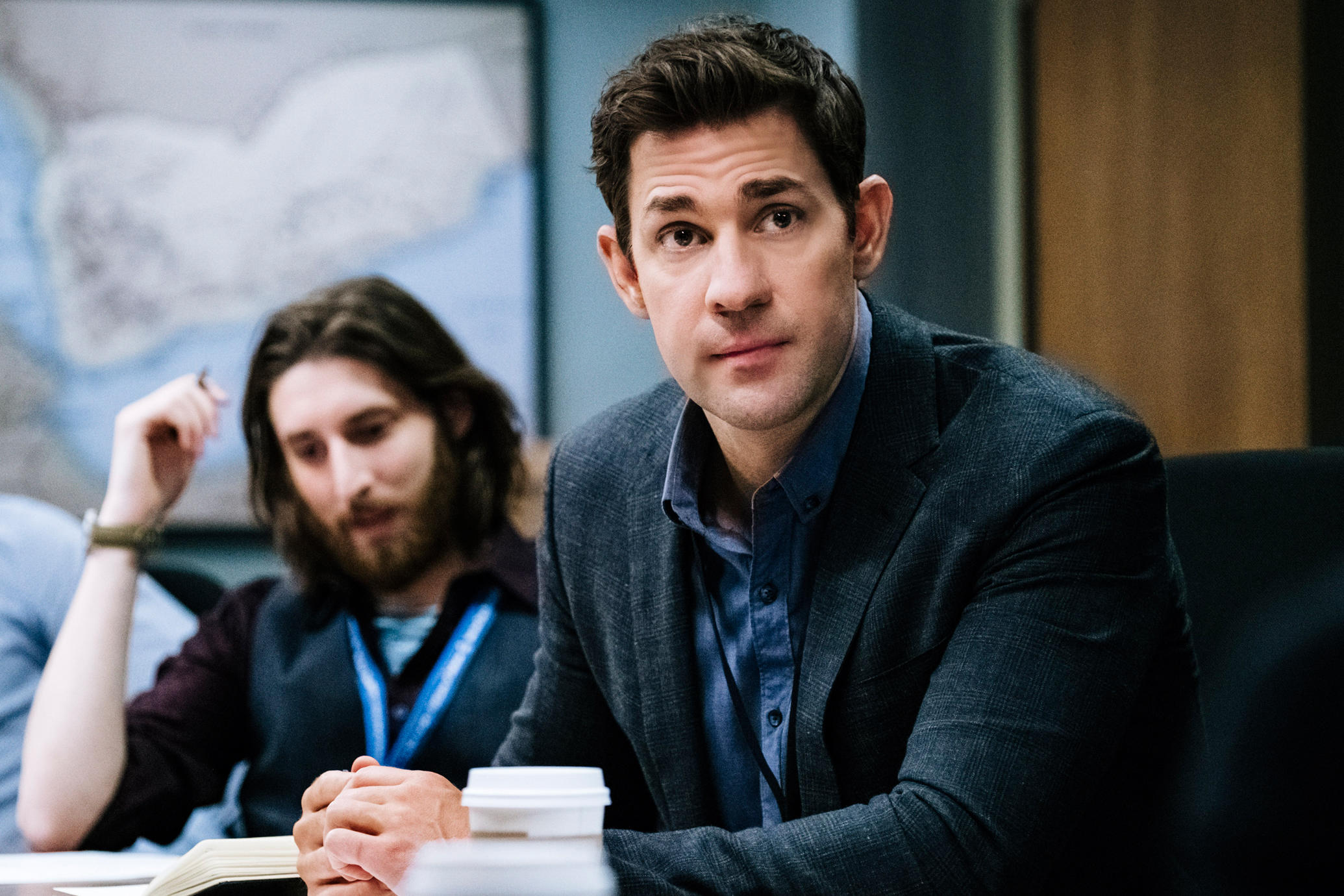
    But I’m getting ahead of myself. The show follows Jack Ryan (John Krasinski, of “The Office” fame), an Economics Ph.D. and military veteran working for the CIA. He butts heads with his new boss, James Greer (Wendell Pierce) over potential evidence of a new terrorist threat, a man who goes by the name of Suleiman (Ali Suliman). Over the course of the first two episodes, the show cuts back and forth between Ryan and Greer’s investigation of Suleiman, as well as exploring the antagonist’s backstory.

    In its finest moments, “Jack Ryan” serves up subtle critiques of the United States’ use of force and torture, as well as some excellent action sequences. In the first episode, Greer and Ryan travel to a military base in Yemen to interrogate two men connected with Suleiman. Ryan’s discomfort with the sounds of prisoners crying out in pain reflects our discomfort; he gets intel out of one prisoner not through torture, but by breaking bread with him. Similarly, during some tense and explosive action sequences, the camera never shies away from the civilians fleeing the fire fights. That’s not to say that “Ryan” is somehow “pro-terrorist:” the show, too, focuses on how innocent women and children are coerced into horrific situations.

    Yet, while the shows politics are refreshingly nuanced, its characters are anything but. Nobody gets developed beyond flat clichés. Ryan, for example, is little more than a “guy with a hunch.” The show hints at his PTSD but doesn’t explore it further. Similarly, Greer is little more than a guy with a bad temper, who swears a lot and complains about his divorce-in-progress.

    It remains to be seen whether or not these characters will be fleshed out further; as it stands, there isn’t much reason to be invested in the show for much of its runtime. The pacing of each episode is slow, with a self-serious, gritty tone. This could work wonders for the show, just as it did for “Homeland.” But that show had some multi-dimensional characters. Carrie Mathison’s bipolar disorder created compelling conflicts, both her internal struggle with her mental health, and her struggle to separate her paranoia about Nicholas Brody from the truth about him. Brody, too, was multifaceted, particularly with his struggle to hide his conversion to extremism during his time as a prisoner of war. The characters of “Ryan,” however, do not have equivalent dimensions to them. We never really see Ryan grapple with his mental health nor do we ever understand Greer’s anger and frustration with the world. The result is a show, that for much of its runtime, is uninteresting, slowly moving from cliché to cliché, treating each of them like the stuff of great drama.

    It’s a shame, because Krasinski and Pierce are otherwise compelling lead actors. As Ryan, Krasinski lends subtle anxiety to the role. With little more than a look in his eyes, he’s able to depict a man who’s already seen too much and is worried about seeing much worse. Pierce, too, deserves better material. He brings a certain gravitas and weight to Greer, but the character is so thinly written, there’s little that Pierce can do to make him compelling.

    It’s a shame; given the current political climate, a show with this kind of nuance could be really important. But, in its first two episodes at least, “Jack Ryan” is mostly a bore. There’s hope it’ll get better, either later in the season or in season two. Otherwise, this globetrotting spy adventure lacks the depth needed to be truly intriguing.


    Henry Spiro can be reached at hspiro@wesleyan.edu and on Twitter @judgeymcjudge1.

  • From “Jurassic World” to “Mission Impossible”: Ranking the Summer’s Biggest Movies

    From “Jurassic World” to “Mission Impossible”: Ranking the Summer’s Biggest Movies

    Each summer, Hollywood releases many of its biggest movies. They’re the kinds that can cost over $200 million to produce but make more than double that at the box office. The following is a ranking of six 2018 summer blockbusters, from worst to best.

    6. “Jurassic World: Fallen Kingdom” 

    c/o hollywoodreporter.com
    c/o hollywoodreporter.com

    Undoubtedly the dumbest blockbuster of the summer, “Jurassic World: Fallen Kingdom” is only occasionally entertaining and never for the reasons the filmmakers intended. Set after the events of the last film, “Fallen Kingdom” sees Claire (Bryce Dallas Howard), the former cog in the corporate machine, become a compassionate dinosaur rights activist. She reunites with Owen (Chris Pratt) to help the dinosaurs flee from a volcano about to erupt on the (now-closed) Jurassic World. But apparently that wasn’t a ridiculous enough premise for the writers: After leaving the island, the two find themselves in a massive mansion, where a shady businessman (Rafe Spall) is hoping to sell the dinosaurs to the highest bidders. It’s a haunted house movie—but with raptors! Also, there’s a little girl who (spoiler alert) is actually a clone of another little girl.

    The film is ripe with great B-movie material, the kinds of ideas that make a classic “so-bad-it’s-good” movie. But it also has a genuinely talented director behind the wheel (J.A. Bayona, who manages to craft scary, memorable imagery throughout the film), a massive budget, and two charismatic stars. Even with its iconic brand name, it’s hard to see how this script was ever turned into an actual movie, let alone one that made over $1 billion. It’s only ever entertaining when you can laugh at it, when everything on screen is both patently absurd and treated with the utmost seriousness. Pratt literally flip-flops away from molten lava; dinosaurs are auctioned off in an elaborate ceremony; a veterinarian successfully performs a blood transfusion on a dinosaur despite never previously having seen one in close contact before. It’s occasionally an unintentional riot, but otherwise, “Fallen Kingdom” is pure tedium and a tragic reminder that massive audiences will shell out their hard-earned dollars for nonsense like this.

    5. “Solo”

    c/o projectrepublictoday.com
    c/o projectrepublictoday.com

    The first “Star Wars” movie to massively flop, “Solo” follows Han Solo (Alden Ehrenreich) in his early days as a smuggler, showing how he became the man we know and love. Or at least, how he got all of his stuff. (Did you ever wonder where he got his blaster from? Woody Harrelson gave it to him! How did he make the Kessel Run in less than 12 parsecs? He took a left turn!)

    “Solo” is not only a mediocre, studio mandated film; it’s a depressingly mediocre film. Originally, it was set to be directed by the talented duo behind “21 Jump Street,” directors Phil Lord and Chris Miller. Their improvisational style, however, upset the big-wigs at Lucasfilm, so the pair was fired after most of the movie was filmed. The pair was replaced with the prolific director Ron Howard. Lord and Miller could’ve made something fun and fresh for “Star Wars,” but Howard’s final product is an incredibly generic film. Every beat feels like it’s meant to tap into our nostalgia for the original “Star Wars.” At no point, however, does it feel like the film is interested in telling a compelling story.

    “Solo” is dull from beginning to end. The set-pieces are tensionless, both because Han will obviously live and because of their uninteresting staging. The story plods along without any interest in character development. Even Donald Glover (aka the rapper Childish Gambino) is disappointing, so focused on his Billy Dee Williams impression that he forgets to turn on the charm. Besides its odd fixation on introducing and quickly killing off side characters, “Solo” is completely forgettable.

    4. “Deadpool 2” 

    c/o cnet.com
    c/o cnet.com

    A sequel to the surprise hit, “Deadpool 2” is never quite as funny or compelling as the original, but it’s still an entertaining, wild ride. After the death of his girlfriend, Wade Wilson (Ryan Reynolds) gains a newfound sense of purpose in life after a time-traveling mercenary (Josh Brolin) tries to assassinate a child, who grows up to become a mass-murderer. He’s joined by a few new sidekicks, most notably Domino (Zazie Beetz), whose superpower is her incredibly good luck.

    Much of what made the first one great was how original and shocking it was. It was a superhero movie that dared to relentlessly and crudely mock everything that made it a superhero movie; it parodied romantic comedies with a crude, sex-laden montage; its hero frequently broke the fourth wall and even took some harsh jabs at Reynolds himself. It was unlike any other major blockbuster. Yet, this inevitably meant that a sequel would be disappointing. A film convention cannot be shocking or original twice, so “Deadpool 2” could never surprise and shock as much as its predecessor.

    Still, there’s also a lot to like about this movie. Replacing the first film’s director, David Leitch (of “John Wick” fame) crafts more over the top and stylish action sequences. Many of the new supporting cast members, such as the aforementioned Beetz and Brolin, are delightfully funny and charming. There’s a bit more emotional depth to the proceedings. And, the post-credit scenes are delightfully silly. “Deadpool 2” is probably the best “Deadpool” sequel we’d ever get; which is to say, it’s not as good as the original but still pretty entertaining.

    3. “Ant-Man and The Wasp”

    c/o cnet.com
    c/o cnet.com

    A charming, albeit low-stakes, superhero flick, “Ant-Man and The Wasp” is a delight from beginning to end, even if it’s easy to spot the flaws. Set after the events of “Captain America: Civil War,” Scott Lang (aka Ant-Man, played by Paul Rudd) is in his final days of house arrest when he’s suddenly contacted by Hank Pym (Michael Douglas) and his daughter Hope (Evangeline Lilly). As it turns out, Hank’s wife, Janet (Michelle Pfeiffer), has a brief opportunity to escape from the “quantum realm,” a microscopic world in which she’s been trapped for decades. Out to stop them is a villainess nicknamed “Ghost” (Hannah John-Kamen), who has gained both superpowers and great suffering due to her connection to the quantum realm. Plus, Scott must dodge his parole officer (Randall Park), while Hope must avoid black market dealer Sonny Burch (Walton Goggins).

    If that sounds like a lot of narrative territory for one movie to cover, that’s because it is. “Ant-Man and The Wasp” overstretches itself trying to deal with subplot after subplot. It throws in tons of sci-fi mumbo jumbo to explain things (like the quantum realm and how it works) that doesn’t actually make sense but have to work in a certain way to advance the plot. There are too many antagonists, none of whom get enough screen time to develop or become interesting.

    Still, the film is funny and charming. The chemistry between Rudd and Lilly is terrific, the action sequences are creative and fun, and the humor is consistently good throughout. It’s a delightfully fun film, in spite of its many noticeable flaws.

    2. “The Incredibles 2”

    c/o mystatesman.com
    c/o mystatesman.com

    Like “Deadpool 2,” “The Incredibles 2” was never going to live up to the original. Its predecessor remains one of the best animated films of all time, with its combination of stylish, 50s-inspired aesthetics, exciting action, and surprisingly deep and moving family drama. It’s the rare film that appeals to both children and adults. Yet, unlike “Deadpool 2,” “The Incredibles 2,” mostly recaptures the charm of the original.

    Set immediately after the ending of the first film, “Incredibles 2” follows the Parr family as they grapple with the world’s renewed disdain for superheroes. The family is helped out, however, by a sibling pair of tech geniuses, Winston and Evelyn Deavor. The pair hope to prove to the public that superheroes are the saviors, not the destroyers, of society. They enlist Helen Parr (Holly Hunter) to reclaim her old identity as the superhero Elastagirl, leaving family patriarch Bob (Craig T. Nelson) to take care of the kids. Meanwhile, a new villain, Screenslaver, begins using mind control to wreak havoc.

    While there are some issues with plotting and pacing, “Incredibles 2” is still a worthy sequel. The animation is utterly breathtaking, with exhilarating, stylish action, and an impeccable attention to detail. The humor is still on point, especially with the expanded presence of super-powered newborn Jack-Jack. If there’s anything the sequel does better than the original, it’s in dealing with its themes. The original leaned into Ayn Randian themes about how society crushes quote-unquote “superior” individuals, but the sequel seemingly inverts that, warning about how the wealthy can get away with crimes or how the powerful can do untold damage. It still never rises to the highs of the original, but “The Incredibles 2” is still an impressive sequel.

    1. “Mission Impossible: Fallout”

    c/o indiewire.com
    c/o indiewire.com

    Without a doubt the most exhilarating movie of the summer, “Mission Impossible: Fallout” is a thrill ride from start to finish. A continuation of the last film, “Rogue Nation,” “Fallout” follows special agent Ethan Hunt as he hunts down a terrorist group known as “the Apostles,” who formed after the capture of Solomon Lane (Sean Harris) and the take-down of his group, “The Syndicate.” The Apostles are attempting to sell three plutonium bombs to a mysterious man named John Lark, an extremist who believes that global peace can only exist after mass-suffering. To help capture the bombs, Ethan is forced to work with CIA assassin August Walker (Henry Cavill). Hunt also unexpectedly reconnects with Ilsa Faust (Rebecca Ferguson), who has her own hidden goals for dealing with Lark.

    Unlike previous “Mission Impossible” movies, which tend to peak midway through their runtime, “Fallout” manages to consistently outdo itself. Each action scene is more tense and breathtaking than the last. A HALO jump (a “High Altitude Low Opening” parachute jump) is almost immediately followed by a brutal bathroom brawl; a car chase is succeeded with Hunt leaping across buildings to nab the bad guy. Even in its calmer, non-stunt moments, “Fallout” is breathlessly paced. Within its simple narrative framework, “Fallout” throws in plot twist after plot twist, making up for the otherwise predictable reveal of Lark’s identity. (Though no amount of plot twists can make up for how genuinely creepy it is that Tom Cruise, aged 56, is still getting female love interests who are a fraction of his age).

    It’s shortcomings aside, “Fallout” is a near masterpiece. It’s a pure adrenaline rush throughout its nearly two-and-a-half-hour run time. The action, from the brutal fisticuffs to Cruise’s death defying stunts, are absolutely astonishing. Certain moments, especially from the remarkable climactic battle, have to be seen to be believed. “Fallout” is not only the best blockbuster of the summer, it’s one of the best action movies of all time.


    Henry Spiro can be reached at hspiro@wesleyan.edu and on Twitter @judgeymcjudge1.

  • Bolin’s “Dead Girls” Addresses Female Victimhood, On-Screen and Off

    Bolin’s “Dead Girls” Addresses Female Victimhood, On-Screen and Off

    c/o harpercollins.com
    c/o harpercollins.com

    “I have tried to make something about women from stories that were always and only about men,” writes Alice Bolin in the introduction to her book, “Dead Girls: Surviving an American Obsession.”

    The women at the heart of “Dead Girls”—a smart, mordant collection of essays released this past June—all belong to a very specific category. They pop up again and again, in movies, books, TV shows, and sometimes even on the news. They are often young, usually beautiful, and always dead. The Dead Girl is less a person than a victim, and her mysterious and violent end generally marks the beginning of the “real” story. Laura Palmer is a Dead Girl, and so is Lilly Kane. Hae Min Lee, the high school student whose murder is covered by the first season of Sarah Koenig’s smash hit investigative journalism podcast Serial, is a real-life Dead Girl. Bolin finds this fixation both troubling and fascinating, and her essays grapple with the allure and danger of female victimhood as a pop culture trope.

    The defining quality of a Dead Girl is, paradoxically, her lack of any true defining qualities. After death, women are defined not by their own lives and personalities but by the impact their death has on the people—and particularly the men—around them.

    As Bolin explains, “the Dead Girl is not a ‘character’ in the show, but rather, the memory of her is.”

    A Dead Girl inevitably leaves in her wake a tangle of jealous lovers, protective relatives, and tormented, morally ambiguous investigators. These characters are all hallmarks of a Dead Girl show, and the girl herself only matters so long as she can continue to give these men meaning and narrative purpose.

    “There can be no redemption for the Dead Girl,” writes Bolin. “But it is available to the person who is solving her murder…the victim’s body is a neutral arena on which to work out male problems.”

    Bolin’s writing references an impressive variety of art and media, from the hardboiled detective fiction of the 1930s to the New Wave films of the 1960s to the reality TV of the mid-2000s. But “Dead Girls” is not purely a work of cultural criticism, it is also a personal account of Bolin’s own experiences. Several essays in the collection detail her move to Los Angeles and subsequent struggle to find herself in a new and unforgiving environment.

    At first, these more personal essays seem disjointed from the main narrative of the book. Unlike the women she writes about, Bolin is alive and kicking (physically, if perhaps not emotionally). Yet as she describes her ongoing existential malaise—which leads her to visit famous L.A. cemeteries like Hollywood Forever and Forest Lawn and watch hours of true crime shows like Dateline and Forensic Files, which detail the gruesome murders of real-life Dead Girls—the connection starts to emerge. “Dead Girls” is not just a description of a cultural phenomenon. It is also a thoughtful reflection on the difficulties of existing as a whole, complex person in a society that seems to prefer its women quiet, passive, and ideally not even alive.

    This loss of identity is not the only repercussion of this endless obsession with violence against women. When women are constantly presented as victims rather than people, this violence starts to seem like a pedestrian and even expected feature of modern society.

    “Externalizing the impulse to prey on young women cleverly depicts it as both inevitable and beyond the control of men,” Bolin writes.

    As Bolin is quick to note, this perception is particularly dangerous in a country where 73 percent of sexual assaults are committed by acquaintances of the victim and three women are killed by their partners every day. The impulse to prey on women is in no way beyond the control of men, yet it continues to be treated as an unfortunate but inescapable feature of modern life, a source of narrative intrigue rather than a trend that might be stopped.

    “It’s clear we love the Dead Girl,” writes Bolin. “Enough to rehash and reproduce her story, to kill her again and again, but not enough to see a pattern. She is always singular, an anomaly, the juicy new mystery.”


    Tara Joy can be reached at tjoy@wesleyan.edu.

  • “Barry” Mixes Bleak Violence With Goofy Humor

    “Barry” Mixes Bleak Violence With Goofy Humor

    c/o HBO Canada
    c/o HBO Canada

    “Hitman discovers his passion for acting” is not exactly a compelling story premise. It sounds like fertile ground for broad, uninteresting comedy with unrealistic scenarios and characters who are hard to believe in. And yet, show creators Bill Hader and Alec Berg took that premise and turned it into a remarkable show. “Barry” is part dark comedy, part-tragicomedy, and altogether brilliant.

    The show follows the titular Barry Berkman, a former marine and Midwestern hitman. After being offered a job by his boss and father figure, Fuches (Steven Root), Barry infiltrates an acting class to follow his new target. It’s there that he finds a sense of “purpose” in his otherwise meaningless, meandering life. Naturally, this being a comedy, Barry is a terrible actor, in need of the guidance of a teacher. He’s taken under the wing of Gene Cousineau (Henry Winkler), an emotionally abusive but talented acting coach. He also develops a romantic attraction to one of the other actors in the class, Sally Reed (Sarah Goldberg), a struggling actress with dreams of fame and success.

    Of course, things don’t go according to plan, and Barry finds himself tangled up in a group of Chechen gangsters who prevent him from leaving his life as a hitman behind. By the end of the first episode, Barry has killed several of the mobsters, who leave behind potential evidence of his murder. The attack prompts Detective Janice Moss to step in and hunt down whoever killed the gangster, putting Barry’s life in a state of perpetual jeopardy.

    As the titular character, Hader delivers a shockingly fantastic performance. I don’t mean “shockingly” as an insult; as a comedian, he was one of Saturday Night Live’s best performers ever. Stefan is still an utterly hilarious character. But he was never known as a dramatic actor. But in “Barry,” the comedian proves to be a dramatic tour de force. Barry is a man who’s incredibly distanced from his own emotions. Hader often portrays him with glazed over eyes, which light up when he’s acting or in the presence of Sally, his crush. It helps make Barry an incredibly complicated character, a man who’s so traumatized he’s become oblivious to his own emotions.

    The rest of the cast, too, is fantastic. Unlike many other, less compelling shows, “Barry” consistently gives its supporting cast interesting storylines, which, in turn, gives each cast member a chance to shine. Goldberg is wonderful as Sally, showcasing her intense fears and anxieties as well as her own talents. Winkler is stellar, portraying Gene as both an egomaniac and desperate fool. As Chechen gangsters, Glenn Fleshler and Anthony Carrigan are both intimidating and utterly hilarious.

    At its core, “Barry” is a show about people struggling to escape their current personal hells, never successfully. Barry wants to escape his violent and increasingly traumatic lifestyle and follow his true passion. Sally wants to escape the constant struggles of being talented but unrecognized. Detective Moss wants to catch the killer, whom she (correctly, despite what everyone else tells her) suspects is connected to Gene’s acting class.

    The show is able to wring out both pathos and humor from the plights of its characters. Barry’s desperate attempts to act are both funny and sad. He’s found a purpose in life, but he’s incapable of doing it well. The desperation of the other actors in his class are similarly funny and tragic. In one scene, an actress tries to seduce the actor who played Pinocchio in an upcoming movie, but it’s quickly made clear that he didn’t portray the character but was a stand-in who will be unrecognizable under CGI.

    As such, “Barry” is perhaps best described as a tragicomedy. It’s both hilarious and endearing but difficult to watch. Its characters are each trapped in their own existential hell, battling and failing to escape it. While its tone may sometimes vary too much for its own good, “Barry” is still an outstanding show, one of the funniest, and bleakest, currently on television.


    Henry Spiro can be reached at hspiro@wesleyan.edu and on Twitter @judgeymcjudge1.