
Author: Henry Spiro

  • “Daredevil” Can’t Fully Atone for Past Sins, but Season Three Is Still a Vast Improvement

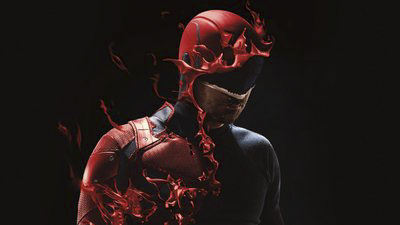
    “Daredevil” Can’t Fully Atone for Past Sins, but Season Three Is Still a Vast Improvement

    c/o brobible.com
    c/o brobible.com

    Warning: This review contains some spoilers about “Daredevil” Season 3.

    Marvel’s four Netflix shows have all struggled with similar flaws. They’ve been messy and inconsistent in quality, with the occasional brilliant episode followed by one which outright kills the season’s momentum. They’ve confused moodiness for character development, slow pacing for smart storytelling, and philosophical murmuring for deep themes. “Daredevil,” the first of the Marvel shows released on Netflix, began this trend. Occasionally, it was a gritty and intense thriller; other times, it was a chore to sit through, as various characters grumbled about justice and whatnot. Its second season was even worse than the first, establishing great storylines before killing their momentum, or moving on to some other plotline entirely. Its few high points were outweighed by its frequent and tedious lows.

    To be clear up front: No, “Daredevil” does not fully overcome these flaws in its third season, but it’s still a huge improvement over its predecessors. Aside from its early slow-going episodes, the season is a tense thriller with plenty of twists and turns to keep you guessing, the best action this series has seen yet, better pacing and character development, and a consistent level of confidence that the show hadn’t previously seen.

    Taking place after the events of “The Defenders” (the crossover between the Marvel-Netflix shows, an unfortunate, terrible misfire), Season 3 begins with Matt Murdock’s (Charlie Cox) rehabilitation. Murdock was in a horrible accident as a child, which blinded him but heightened his other senses, allowing him to eventually become the vigilante known as Daredevil. Murdock has decided that he should live out his days solely as his crime-fighting alter ego, and that his days as a lawyer failed to bring criminals to justice. It’s a belief that’s backed up by season one’s big bad, Wilson Fisk (aka Kingpin, played by Vincent D’Onofrio) being released from the high security prison Daredevil had helped put him in. Fisk, it seems, has greater plans than merely escaping prison when he decides to work with FBI agent Ray Nadeem (the sympathetic Jay Ali). It’s also clear that there are plenty of people in high places working to do his bidding. There’s also another big bad this season in the form of FBI agent Benjamin “Dex” Poindexter (aka Bullseye, played by Wilson Bethel), a violent and unstable man with nearly superhuman marksmanship, who Fisk manipulates to achieve his own ends.

    Fisk’s manipulative games give “Daredevil” the opportunity to tell a story that doesn’t run out of steam, unlike earlier seasons. It’s never entirely clear what Fisk is doing, nor is it clear if characters are playing into his games or genuinely battling against him. The result is a consistently tense season, which leaves viewers constantly waiting for the other shoe to drop. Moreover, the narrative doesn’t start and stop like last season, which similarly attempted two major villains, but failed by separating them into two differing storylines. This season, the narrative is streamlined into a conflict between Daredevil, Fisk and Bullseye, and an exploration of how the sins of their past weigh on the present (the show finally figures out what to do with its protagonists’ Catholic identity). It also has a more personal touch this time around, as much of the supporting cast step out of Murdock’s shadow, and are depicted as living their own compelling lives (as opposed to delivering exposition to Daredevil, like past seasons).

    With such a talented cast, it’s a relief that “Daredevil” doesn’t waste its talents on brooding and empty storylines as it had previously. D’Onofrio is a standout once again, with his terrifying mix of profound insecurity and intense outbursts of anger continue to make him one of the most chilling small screen villains in recent memory. Yet, he’s beat out by newcomer Bethel, whose anger and instability manage to flawlessly walk the fine line between over the top and genuinely intense. Supporting characters, like Karen Page and Foggy Nelson (Deborah Ann Woll and Elden Hanson, respectively), finally get their own personal subplots, instead of existing to feed Murdock exposition. As a result, the talents of Woll and Hanson finally get a chance to shine. Unfortunately, Cox is still given little more to do than brood and languish in angst, but at least he does that with skill and charisma.

    But the real appeal of “Daredevil,” is, and will always be, its impeccable action sequences. Elaborately choreographed, brutally fought, and fantastically filmed, the show previously set a high bar for fight scenes on TV shows. Here, it manages to outdo itself, delivering some of the best action scenes ever shown on television. The season is punctuated by unnervingly tense fight scenes between Bullseye and Daredevil, in which the two equally matched fighters duel it out to ruthless effect.

    Most impressive of all, however, is an astonishing one-shot take early in the season. “Daredevil” had done similar work before; in its first season, a brutal brawl in a hallway, in which the titular vigilante saves a kidnapped child from a group of criminals, was an impressive, seemingly unstoppable highlight. But this season, “Daredevil” has done something even more impressive. In episode four, Murdock must escape a prison as a riot breaks out. Not only that, but he’s been drugged by one of Fisk’s goons. What follows is a nearly 11-minute scene done in a single shot, as Murdock battles off prisoners bribed by Fisk, interrogates an enemy of Fisk to gain intel, and finally escape the prison as it’s dowsed in gas grenades, and a frenzy of prisoners and guards duking it out. The scene is, simply put, a technical tour de force; from the quality stunt work, brutal fight choreography, and the flawless camera work. It is simply astonishing that the show was not only able to produce such a lengthy and elaborate single shot scene, but that it worked so exceptionally well.

    Still, at other times the action is more disturbing than entertaining. In a deliberate but odd choice, some of the action mirrors real life a bit too much. Midway through the season, Bullseye disguises himself in Daredevil’s outfit, and proceeds to kill innocent people in a newsroom, and later a church. The show is smart enough not to have him precisely mirror real-life tragedies; he’ll kill with projectiles he throws with precision and intensity at his intended victims, as opposed to having him directly mirror reality and kill the innocent with machine guns. Still, it’s a bizarre and unsettling choice to depict scenes that so closely resemble real life catastrophes, especially given that the show doesn’t really have anything to say about them.

    Then there’s the misguided finale, which loses sight of much of what made this season such an improvement. The pacing slows to a crawl, failing to build excitement for what should be a tense climactic showdown between Daredevil, Bullseye, and Fisk; the quality of the fight scenes drop dramatically; and everything ends on a note that’s far too sappy and upbeat for this kind of show. It’s a finale that oddly loses sight of the show’s identity in favor of a much less interesting, more generic show.

    Still, the sins of the finale are forgivable. Much, though certainty not all, of what comes before is the kind of tense, engaging television that put Netflix on the map. Season three practically demands you to binge watch it, with all its shocking plot twists and cliffhangers. It still can’t quite escape the flaws of past seasons, but still, “Daredevil” has seen a massive leap in quality, making it a show worth watching again.


    Henry Spiro can be reached at hspiro@wesleyan.edu and on Twitter @JudgeyMcJudge1.

  • “Riverdale” Remains Ridiculous, With All the Highs and Lows That Follow

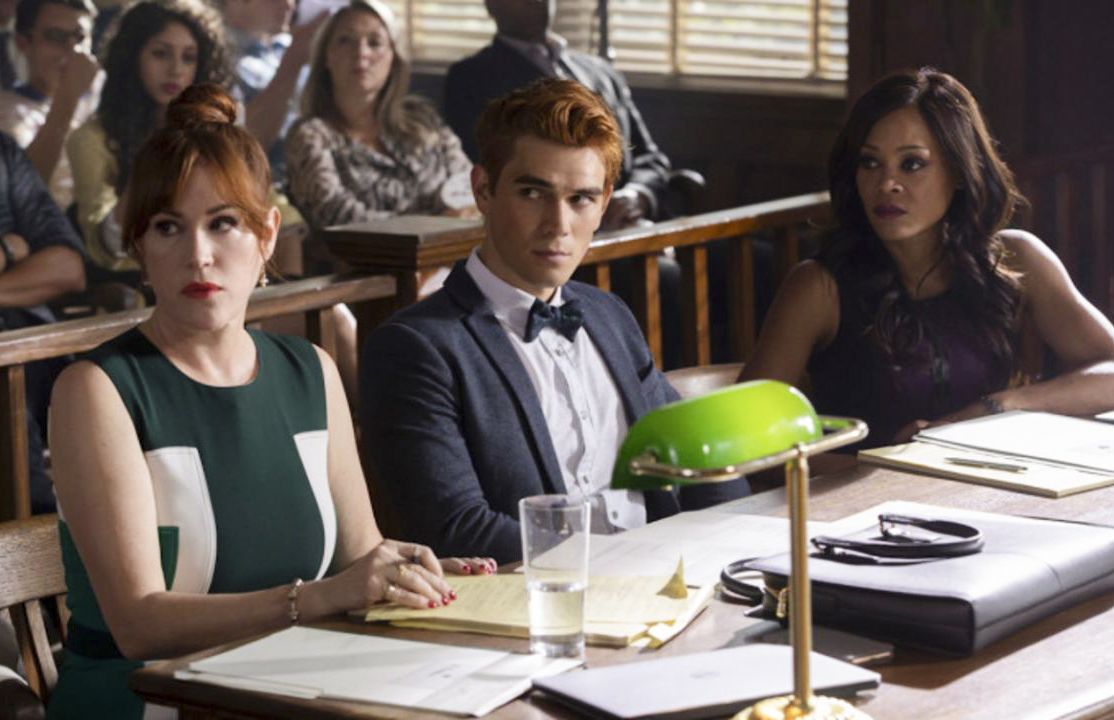
    “Riverdale” Remains Ridiculous, With All the Highs and Lows That Follow

    c/o moviefone.com
    c/o moviefone.com

    The first season of “Riverdale” was a surprise success, taking a premise that should’ve fallen flat on its face (adapting the Archie Comics series, but mixing in the tone and darkness of “Twin Peaks,”) and turning it into one of TV’s best guilty pleasures. Like “Twin Peaks,” the show revolved around a shocking murder in a small town populated by quirky characters, each with their own hidden secrets. Even more so than the show that inspired it, “Riverdale” leaned into the soap opera aspects of its storytelling, throwing in plot twist after plot twist to delirious effect. This was a show in which Betty Cooper (Lili Reinhart), a loving teenage sweetheart in the comics, puts on a wig and drugs and tortures a football player for slut-shaming her friend Veronica (Camila Mendes); in which Betty’s sister Polly (Tiera Skovbye) learns she’s technically been in an incestuous relationship; and a show where the murderer is revealed to be the father of the murdered.

    Did I mention they’re all in high school?

    At its best, “Riverdale” was some of the most ridiculous television that’s ever been produced, constantly finding ways to top its most outlandish storylines. But it was a victim of its own success: when renewed for a second season, its episode count was bumped up from 13 to 22, which, theoretically, would’ve given the writers more room to explore new and expanded plotlines. In practice, it backfired: its first season was able to focus primarily on the murder mystery at its core, but season two had a more difficult time sustaining a single storyline over the course of an additional nine episodes.

    Things started off strong with another mystery, the identity of a serial killer known as the “Black Hood.” But once that storyline was seemingly resolved halfway through the season, things began to fall apart. Most of the main plotlines just weren’t that engaging; it wasn’t interesting to see protagonist Archie Andrews (KJ Apa) become the puppet of Hiram Lodge (Mark Consuelos), the greedy, manipulative father of his girlfriend Veronica; nor was the drama between rival gangs all that compelling. “Riverdale” works best when it’s focused on a central mystery, one whose resolutions are creatively ridiculous.

    With the start of its third season, “Riverdale” is partly back on track, partly stuck in its sophomore slump. There are some genuinely great new mysteries to be solved here, but also some stories that are simply tedious. Unsurprisingly, the show’s strengths remain its ridiculous mysteries. Following the realization that her husband was the Black Hood, Alice Cooper (Betty’s mom, played by “Twin Peaks” alum Mädchen Amick) has joined a hippie cult currently known only as “The Farm,” to do some much-needed emotional healing. “Riverdale” being “Riverdale,” Betty has some suspicions about the creepily kindhearted group. Meanwhile, she teams up with her boyfriend Jughead Jones (Cole Sprouse) to investigate the recurring sight of a creature referred to as “The Gargoyle King,” linked a game called “Griffins and Gargoyles” which has prompted several students to commit suicide. It’s also a game that the parents of Riverdale seem to have encountered before, with similar deadly results.

    It’s when “Riverdale” fully embraces insanity like this that the show excels; but not all of season three follows suit. Archie’s newest storyline is undoubtedly the weakest of them all. After last season’s cliffhanger, in which he’s framed for murder by Hiram, Archie finds himself imprisoned and protecting himself from gang violence, a warden who forces his prisoners to participate in a brutal fight club for the entertainment of the town’s wealthiest, and other prison-story clichés. It’s an example of “Riverdale” at its worst, when it tries to use Archie to explore teen angst and other, real-world issues like corrupt prisons.“Riverdale” thus far has proven to be incapable of genuine portrayals of teenagers or any real-world issues; it’s too utterly preposterous to ever properly convey something so serious.

    Nor does it help that the prison plotline has dragged other characters, like Hiram and Veronica Lodge, down with it. Hiram, once a promising series villain, has become utterly comical. Consuelos’ excellent performance can’t hide the fact that Hiram is a middle-aged man with a grudge against a teenager who’s dating his daughter. Doesn’t he have better things to do? Never mind that he had already outstayed his welcome last season. Veronica, too, was once a compelling character, clashing with and rebelling against her manipulative family, and fighting with her friends over the glaring differences in their families’ respective wealth. Now, she spends most of her time doing all she can to help Archie out; in the process, she’s become increasingly one-note.

    Still, I’d be lying if I said there weren’t moments where I felt that the show I once knew and loved was back. In the series premiere, for example, the Southside Serpents (Jughead’s gang), must retrieve their dog (named Hot Dog, of course) from a rival gang, the Ghoulies. Many of the show’s main characters, upon retrieving Hot Dog, find themselves surrounded by rival gang members, seemingly doomed to a beating, or, worse still, death at the hands of the Ghoulies. Luckily the team has come prepared: armed with a bow and arrow aimed at the heart of the Ghoulies’ leader, Cheryl Blossom (sister of season 1’s murder victim, played by Madelaine Petsch) saves the day. It’s a deus ex machina so supremely absurd, contained within an already absurd plotline, I couldn’t help but smile. It doesn’t seem like it’ll ever be as consistent as its first season, but “Riverdale” still manages to be as ridiculous as it is ridiculously entertaining.


    Henry Spiro can be reached at hspiro@wesleyan.edu and on Twitter @JudgeyMcJudge1.

  • “Halloween” Wastes a Killer Premise

    “Halloween” Wastes a Killer Premise

    c/o ew.com
    c/o ew.com

    Based on the marketing alone, the new “Halloween” movie seemed like it would be a thrilling and original take on the long-running franchise. A direct sequel to John Carpenter’s classic, it put the original film’s star, Jamie Lee Curtis, front and center; traumatized by Michael Meyer’s killing spree in the original film, Curtis’ character, Laurie Strode, has spent the last 40 years preparing for him to escape from prison, so she can enact revenge for all the pain he caused her. In other words, “Halloween,” seemed like it wouldn’t be a traditional, clichéd slasher, but instead a tense game of cat-and-mouse between a nearly supernatural force of evil and a scorned woman looking to take revenge.

    For the first half hour or so, “Halloween” delivers on that promise. Laurie is a deeply scarred woman, having suffered through two divorces, and the loss of her daughter to child services. She lives in the woods in a house filled to the brim with guns and elaborate security measures. Curtis is immediately phenomenal in the role, simultaneously a badass and a broken woman. One of the films standout scenes sees her having an emotional breakdown in front of her family, stammering her words and desperately trying to put on a happy face, when all she can focus on is the lingering, scarring image of the man who nearly killed her. When Meyers escapes his high security prison due to a bus crash, Strode immediately begins putting plans into action. The film reaches this moment a bit slower than it should have, distracted by subplots and uninteresting characters, but I was excited enough by the promise of a battle between Strode and Meyers, victim and victimizer, to overlook these flaws.

    But then the film kept moving along, and my hopes were dashed. The film shifts focus from the fascinating Laurie to her less interesting high school granddaughter, Allyson (Andi Matichak). Slowly but surely, Curtis begins to vanish from the film, replaced by a seemingly endless supply of teenagers with no purpose other than to get inebriated, have sex, and be cannon fodder for Meyers. Before I knew it, I was watching yet another dull slasher flick.

    It’s not hard to see why the film went this route: a nostalgia trip, which repeats classic pop culture beats, is more likely to be a hit with audiences than something that meshes elements of the old and the new. One need only look at the mass-appeal of “The Force Awakens,” which retreads roughly the same story as the original “Star Wars,” and the divisive controversy of “The Last Jedi,” which throws out much of the franchise’s mythology. Playing to expectations is safe, going against them financially dangerous. It seems the creators of “Halloween” took this to heart, replicating much of the story of the original, with only a handful of twists to shield them from criticisms of unoriginality (which, clearly, did not work against this critic). For much of the movie, Michael Meyers kills people, a majority of whom are teenagers trying to have a good time on Halloween night. It’s what you’ve seen before, what you expect.

    If this is the kind of movie you want, then “Halloween” will suffice. Under the direction of David Gordon Green, there’s rarely a moment without some kind of suspense. There’s always the sense that Meyers is hiding just around the corner, waiting to attack once someone finds him. It helps, too, that Gordon Green has some solid technical skills. There are some impressive and lengthy moving takes in the movie, watching Meyers calmly walk through suburbia before brutally murdering the first person he runs into. For a man who has never previously directed a horror film, Gordon Green is surprisingly excellent at steadily building tension.

    But he also makes the mistake of making the film too gritty and dark. Perhaps thinking that Meyers (who, the movie reminds us, killed “only” five people in the original) wouldn’t be truly scary in today’s day and age, decided to film with dark cinematography, and gruesome, realistic blood and gore. Meyers’ kills, as a result, seem real. Too real. Much of the charm and entertainment of the best slasher films is that they’re inevitably campy. The “Friday the 13th” movies were more over the top than unsettling because of the obviously fake blood and body parts; the same goes for “Nightmare on Elm Street,” which used the inherently fake-looking special effects to its advantage. That film was creatively over the top, which made it both scary and wonderfully campy. The same cannot be said of “Halloween.”

    Nor does Meyers really need to be made any scarier. He is, as the film presents him, a force of pure evil. He has no motivation or endgame; he simply kills whoever he comes into contact with. With his expressionless white mask, he is a terrifying menace, regardless of the decade or cultural climate surrounding violence. Even today, you don’t need to do much to make a serial killer unsettling. But Gordon Green ignored this fact and ignored the lessons to be learned from past horror films. As a result, much of the film is purely discomforting, not in an enjoyable way. There’s nothing “entertaining” about watching a man’s head be stomped into gooey blood; nor is there anything “fun” about watching a child be strangled to death.

    The film’s flaws, unfortunately, do not end there. “Halloween” boasts a script which is remarkably clunky.  Written by Gordon Green and co-writers Danny McBride and Jeff Fradley, the dialogue is awkward, with forced jokes at inopportune moments, and characters who talk like they have no motivation beyond delivering exposition to the audience. The story consistently finds the most convoluted possible ways to get characters from point A to point B. An entire romantic subplot exists just so one character can lose their cell phone; a major plot twist serves only to get Meyers closer to Laurie, and the twist quickly ignored once he gets there (never mind that said twist is irredeemably hammy and stupid).

    After nearly two hours of clunky clichés, when Meyers and Laurie do, finally, confront each other, “Halloween” immediately elevates itself. The tense standoff between the two is genuinely exhilarating. The lines between predator and prey are blurred, as Laurie stalks Meyers throughout her own home carrying a gun she has spent forty years learning how to use. There are visual callbacks to the climax of the original “Halloween,” which serve as both clever Easter eggs, and as a means to highlight the trauma Laurie’s been through. The closet in which Meyers may or may not be hiding isn’t merely a closet; it a reminder of the place where Michael once had her cornered, trying to claw his way in so he could murder her. With Gordon Green’s smart use of hand-held camera work, and the stark darkness of the house, the climactic showdown is absolutely thrilling from beginning to end. Too bad it takes nearly two hours to get there.

    Look, I don’t want to sound overly harsh in this review: I was generally mildly entertained during the runtime of “Halloween.” It was mostly suspenseful, and Meyers is once again a genuinely scary boogeyman. It had a clunker of a screenplay, but what horror movie doesn’t? It’s not a bad movie by any means, but it’s one I’m still bitter about. I was expecting an epic fight between two Hollywood legends: the commanding talent of Jamie Lee Curtis, and the unrelenting force of malevolence known as Michael Meyers. I got an unoriginal, slightly above mediocre film. Don’t expect me not to hold a grudge against “Halloween.”


    Henry Spiro can be reached at hspiro@wesleyan.edu and on Twitter @JudgeyMcJudge1.

  • “Bad Times at the El Royale” Delivers Shocking Twists and Even More Shocking Moral Insights

    “Bad Times at the El Royale” Delivers Shocking Twists and Even More Shocking Moral Insights

    c/o comingsoon.net
    c/o comingsoon.net

    In the opening of “Bad Times at the El Royale,” a man (Nick Offerman) enters a hotel room, presumably at the titular El Royale, and spends several hours removing the carpet, opening up the floorboards, and hiding a red leather bag underneath the floor. The room is colorful, with the kind of wallpaper that used to cover the walls of every Vegas casino in the 1950s. He turns on the radio, listening to the comforting sounds of the song “26 Miles,” by Santa Catalina. He hears a knock on the door, opens it to the sight of a man he recognizes; he turns his back, and is shot and killed, his blood hitting the camera lens. The scene perfectly sets the stage for what’s to come, cleverly announcing that “El Royale” will be a tense, slow-burn thriller, with plenty of mystery and suspense punctuated by brutal violence. But the real shock of the film is not any of its many plot twists; it’s that writer-director Drew Goddard goes beyond crafting a good throwback noir, making a film that doubles as an insightful social commentary and a Coen-brothers style, pseudo-religious parable.

    Jumping ahead 10 years into the late 1960s, the movie’s main plot follows four strangers, whose paths cross at the titular hotel, built on the border between California and Reno. There’s Darlene Sweet (Tony-winner Cynthia Erivo), a soul singer with a job in Reno the next morning; Father Daniel Flynn (Jeff Bridges), a Catholic priest suffering from dementia; vacuum salesman Laramie Seymour Sullivan (Jon Hamm); and cynical hippy Emily Summerspring (Dakota Johnson). Being a thriller, no one is as they seem.

    But to say more would be to spoil one of the main delights of the film; namely, its numerous layered and unexpected plot twists. Even the most attentive viewers won’t see every reveal coming, including a genuinely shocking early death of an important character. Moreover, unlike most thrillers, Goddard refuses to spell everything out for his audience. Major plot twists and revelations are made clear to the viewer, obviously, but there are some secrets that are left unspoken. The dots are all present; now we must connect them. There’s also the Tarantino-esque plot structure, in which the film frequently utilizes flashbacks to deliver important exposition and character development and jumps between perspectives of the same events. The result of all this is a thoroughly engaging narrative that demands your utmost attention.

    It also certainly helps that the story is brought to life by a fantastic cast. Erivo is the clear stand-out, portraying the moral heart of the film with raw emotion and charisma. Her fantastic singing voice is put on display nearly every available opportunity, and it’s hard not to be grateful for the chance to listen to her belt out classic songs from yesteryear. Bridges is unsurprisingly excellent, bringing a genteel charm with tragic undertones to Flynn, a man for whom life has brought terrible suffering. Hamm is right at home here, riffing on his old performance in “Mad Men,” albeit with some differences brought about by an early plot twist. Johnson is perhaps the weakest link in the cast, but this really only seems to be because her character is underwritten; otherwise, her steely demeanor and grit make lend some depth to someone who otherwise doesn’t get enough screen time to really shine.

    From a visual standpoint, “El Royale” is an absolute treat. Goddard, with the help of his cinematographer Seamus McGarvey, treat us to a terrific mix of an idealized view of 1960s America, contrasted with dark and violent imagery. The pair consistently contrasts the colorful appearance of the hotel with its many dark secrets. Goddard is particularly good at building suspense, to the point where seemingly innocent dialogue between two people seems like it could turn violent at any moment. He knows what to show us and what to keep hidden from us; how to cut between multiple points of view as things are about to go from peaceful to bloody. Even more so than his previous film “A Cabin in the Woods,”  “El Royale” knows how to keep an audience on the edge of their seats.

    Perhaps he’s too good at that: it was only at the end of the film that I realized the film was also doubling as a social commentary, and a pseudo-religious story about purgatory and redemption. I had been too thoroughly engaged with the twisty narrative to notice that all the references to the Vietnam War were not set-dressing, but part of a prolonged examination of how during the war, America had no sense of right and wrong, caring only about the struggle to violently dominate others. It’s an idea perfectly embodied by a cult leader who appears in the film’s third act, Billy Lee (Chris Hemsworth, who combines his usual charisma with a sinister edge, making him the perfect actor for the role). I won’t say too much about his role in the film, but his ideology is clearly meant as a jab against the United States’ actions in the war, ignoring questions of morality in favor of violence and indoctrination. He’s also (one of several) men throughout the film who manipulate women for his own ends, making up the second aspect of the film’s commentary: the world is a place run by men, who often care little about women beyond using them for their own manipulation. It’s hardly an irrelevant message for today (even though it could have been developed further).

    Then there’s the side of the film clearly inspired by the Coen brothers, in which religious symbols and ideas are used in a decidedly secular world. Many of the Coen brothers movies operate under a system of morality, in which sin is (sometimes) punished by men, not gods. The same philosophy applies to “El Royale;” the hotel is a kind of purgatory, in which each of the characters must grapple with their past sins. But, despite the presence of a priest, it is not God before whom they must repent, but each other. There is no real order to the world they inhabit, and there is no God to save the good and punish the bad. Who gets to be saved and who is punished depends on sheer luck and a little ingenuity. Still, the film suggests there are still reasons to be good, even if doing so won’t necessarily lead to good consequences.

    While there is much to praise about the film, certain problems hold it back from being as great as it could have been. Its characters, for starters, never feel fully developed. Each is given a flashback or two to explain their backstory and motivation, which is a smart way to get around exposition dumps. But it also means we never truly get to know the characters beyond the bare minimum we need to know about them. Scenes that are meant to be moving and emotional have less impact as a result. Then there’s the uninspired climax, which ties up all loose ends with in the least creative way possible. Finally, while it’s not really a major issue, the film never does anything with the fact that the hotel is in both California and Nevada; it’s certainly neat set-dressing, but it’s hard not to wish for greater payoff.

    These are all nit-picks, though. The film is otherwise fantastic, a visually stunning film with an absorbing and genuinely surprising plot. It may hold itself short of being an instant classic, or on par with its sources of inspiration (it can’t compare to a Coen brothers or Tarantino classic), but it makes one thing clear: Drew Goddard is a filmmaker to watch out for.


    Henry Spiro can be reached at hspiro@wesleyan.edu and on Twitter @JudgeyMcJudge1.

  • “The Good Place” Maintains Its Plotty, Philosophical Charms

    This review contains spoilers for Seasons 1 and 2 of “The Good Place.”

    “The Good Place” on NBC is a show that constantly reinvents itself. In fact, when I wrote a review after watching the second season premiere last year, by the next episode the premise for the entire season was completely different and almost everything I wrote was entirely irrelevant. I’m writing based off of the two-part premiere (aired on Sept. 27) and the third episode of Season 3, but—be warned—everything written here could be utterly immaterial by the next episode.

    To recap, “The Good Place” follows four dead humans—Eleanor (Kristen Bell), Chidi (William Jackson Harper), Tahani (Jameela Jamil), and Jason (Manny Jacinto)—who realize that their neighborhood in the afterlife, the titular “Good Place,” was in fact in the “Bad Place” hell equivalent, designed by the demon Michael (Ted Danson) to psychologically torture them. Once Eleanor figured out the ruse in the Season 1 finale, Michael reset the experiment. Unbeknownst to his boss Shawn (Marc Evan Jackson), Michael rebooted the four humans’ memories over 800 times before teaming up with the self-named Team Cockroach. Over the course of Season 2, the humans and Michael, along with the evolving android receptacle of all knowledge in the universe Janet (D’Arcy Carden), learn that people can change to be better. Moved by his new friendships and exposed as a traitor to Shawn, Michael petitions omniscient binge-watching judge of all things in the universe Gen (Maya Rudolph, named for hydrogen, the only thing in existence when she was born) to bring Eleanor and company back to life and give them a chance to be better people on Earth to avoid eternal torment in the afterlife. Season 3 follows their exploits on Earth, pulled together as a result of Chidi’s study on near-death experiences changing people’s ethical evaluations.

    The main conflict of the season arises from Gen’s declaration that Michael and Janet cannot return to Earth to help the humans in any way. Michael, realizing that they only got better when they were together, breaks her rules to nudge them towards each other, using a variety of accents and disguises including a man named Zach Pizazz and a librarian with a dodgy Australian accent. Michael has the right idea; “The Good Place” excels as an ensemble comedy, with the six brilliantly defined and acted characters bouncing off of each other. Every single actor fully inhabits their role, from Eleanor’s snarky wit to Jason’s affable idiocy. Watching the characters interact is a true delight, especially within such a high concept sitcom. “Parks and Recreation” and “The Office” (other works from “Good Place” creator Michael Schur) were also mainly driven by their characters, but had less plot-driven narratives. Schur, taking his cues from “Lost,” still packs a lot of plot into the 20 minute episodes, but the show rarely feels rushed. The twists and fast-moving plot aren’t the only things that beckons for a re-watch; every frame seems stuffed with visual gags that someone couldn’t possibly notice with only one viewing.

    While the fast-moving plot and visual puns have been consistent throughout the series, this season also features some new elements, first among them the new character Simone (played by “Killing Eve’s” Kirby Howell-Baptiste), a neuroscience professor and love interest for Chidi. Howell-Baptiste fits in wonderfully in the world of “The Good Place” and an expanded role for her would be a boon for the series. The new setting of Earth (specifically Australia) for the season also feels slightly off-balance; some of the wacky humor mined from the fantastical afterlife is missing. But that doesn’t mean the show is slacking on the laughs; in fact, a trip to an America-themed restaurant offered up so many jokes it was hard to keep up, so the new setting offers new terrain for the writers.

    The show is still a way to grapple with ethical dilemmas, although the Chidi-teaches-the-group-ethics dynamic hasn’t been present in the new season yet. Still, the fundamental goodness of “The Good Place” (integral to Schur’s vision) remains. The show is about learning that people can be better, can grow, and can learn. Watching six hilarious actors and characters bounce off each other is fun, but part of the joy of watching “The Good Place” is the idea that not every piece of media (especially in the current moment) has to be intense and dark to deal with heavy ideas. Instead, it can be a sitcom that sometimes conjures up a novelty pencil that says “Lordy, Lordy, I’m over 40.”

    Season 3 is markedly different from its predecessors, mostly due to its new setting and the challenges that entails. With this new setup, it limits the amount of time all six players (seven with the worthwhile addition of Howell-Baptiste’s Simone) can interact together, mostly segmenting the cast into the five humans and the otherworldly beings. Carden in particular suffers a significant lack of screen time, which is unfortunate since her portrayal of Janet, the not-quite-android not-quite-human, has always been a high point of the series. Another point I hope to see developed is the idea that the entire system of the afterlife is flawed; if people can continue to grow and change, is it really morally justified to sentence the majority of the population to an eternity of torture?

    Much like at the outset of last season, conflicts that seemed like they could sustain the entire show are resolved within episodes, only for the show to blow itself up again. I can’t tell you where this season of “The Good Place” is going, but I trust Michael Schur and his talented team of writers and actors that wherever it goes will be great.


    Meg Cummings can be reached at mcummings@wesleyan.edu.

  • “Venom” Stumbles From Cliché to Cliché

    “Venom” Stumbles From Cliché to Cliché

    c/o cnet.com
    c/o cnet.com

    “Venom” is a movie that, like its lead, suffers from a split identity. For the first half, it wants to be a modern revival of body horror flicks. Its scares don’t come from ghosts jumping out of the shadows, but the extreme discomfort caused by the sight of extraterrestrial goo maliciously attacking and consuming its human prey. But then, at the halfway point, the film very suddenly becomes a goofy buddy comedy, between an alien creature and the human its attached itself to. “Venom” could have been a success if it had decided to fully commit to either genre. But it doesn’t, and the result is a total mess.

    “Venom” begins with hard-hitting journalist Eddie Brock (Tom Hardy), as he begins investigating the Life Foundation, led by Carlton Drake (Riz Ahmed). Drake’s corporation has made massive strides in creating pharmaceutical treatments for cancer, and additionally creates spaceships to search for potentially habitable alternatives to Earth (even in the era of Elon Musk, the Life Foundation is hard to buy into). Brock, however, has good reason to believe that they’ve been conducting lethal experiments on society’s most vulnerable. His interest in the Life Foundation coincides with their recent capture of several alien organisms, known as symbiotes, who attach themselves to other organisms to survive earth’s oxygen levels. Surely enough, Brock eventually finds himself attached to one of those symbiotes, the titular Venom.

    For the entirety of its runtime, “Venom” stumbles from plot point to plot point with no sense of rhyme or reason beyond fulfilling the template for superhero movies. Early on, Eddie causes his own personal demise: his fiancée Anne Weying (Michelle Williams) happens to be working as a lawyer for the Life Foundation. The day before doing (what was supposed to be) a puff-piece interview with Drake, Eddie reads Anne’s email, sees evidence of Drake’s crimes, and decides to turn the interview into a confrontation. Naturally, Eddie is fired, given that he screwed up a major interview and couldn’t cite any sources to back up his extreme claims; Anne leaves him, as his stunt has gotten her fired from her job.

    This sets up a classic plot point of the superhero origin movie: our hero is crestfallen and must spend the rest of the movie rising up. Think back to “Iron Man,” in which Tony Stark is kidnapped, and must forge his own path back home, before eventually facing off against the film’s villain. In “Venom,” we are meant to believe that Eddie’s downfall was the result of being morally righteous in an immoral world. He will then, with the help of his extraterrestrial buddy and their combined powers, rise up against the evil corporate villain that is Carlton Drake, and the symbiote he’s eventually conjoined to. His early downfall, then, fulfills the first part of the template of a superhero origin story.

    But Eddie’s actions make absolutely no sense. Why would a respected journalist be so irrational as to accuse a powerful man of heinous crimes with so little evidence? Couldn’t he have waited for another opportunity, where he could confront Drake with actual evidence of his crimes? Why risk his fiancée’s job over this?  If anything, he absolutely deserves everything that happens to him. But the movie still presents him as a hero in a tragic situation. It’s a major problem with “Venom”: things happen because they’re supposed to happen in these kinds of movies, not because they actually make sense.

    It’s genuinely infuriating that such a talented cast is wasted on such lazy writing. Ahmed, a remarkably gifted actor, isn’t an intimidating villain, nor a satirical portrait of Silicon Valley billionaires. Instead, his performance resembles a clumsy, B-movie mad scientist. Williams is wasted as a boring love interest who mostly serves to move the plot along (admittedly, her character gets ever-so-slightly more to do than love interests in other films, but that can’t make up for her lack of personality or significant character development) Then there’s Hardy. A terrific performer, he, like the rest of his cast, seems lost within the material, unsure of what to do with it. For the most part, he chooses to embrace the silliness of it all, making weird faces, and throwing himself completely into the absurdity of the role. Not that any of that can make up for his ridiculous New York accent, which comes off as a bad Mark Wahlberg impression more than anything else. Still, he, unlike his other castmates, is at least enjoying himself, a quality which makes the movie far more entertaining whenever he’s on screen.

    It’s here that I have to be fully honest: while nearly every aspect of it was a scattershot mess, I still (occasionally) enjoyed myself during the runtime of “Venom.” Even if the dialogue was rough around the edges, I enjoyed watching Hardy banter back and forth with his alien alter-ego, if only because Hardy was trying so hard to make it work. I enjoyed the design of Venom; his freakish size, black skin with white veins pulsing through it, enormous teeth and slithering tongue made for a serviceable movie monster. It was satisfying to see the monster battle his way through SWAT teams and motorcycle chases, even if the editing was choppy.

    “Venom,” is not a good movie by any means; and what entertainment it offers is fairly minimal. It’s a movie that should have been quite entertaining, given the cast and premise behind it. One can only hope that its inevitable sequel will know what kind of movie it wants to be and correct the mistakes of the franchise’s past. If that sequel turns out to be a marked improvement, then maybe “Venom” is worth watching, if only to catch up for the next one. Otherwise, there’s only so much good to be found in this mess.


    Henry Spiro can be reached at hspiro@wesleyan.edu and on Twitter @JudgeyMcJudge1.

  • Indie-Pop Band Dear Nora Visits Earth House

    Indie-Pop Band Dear Nora Visits Earth House

    c/o daily.bandcamp.com
    c/o daily.bandcamp.com

    On Wednesday night, Earth House was packed with indie-pop fans for a dazzling solo set by Katy Davidson of Dear Nora. The band’s newest album “Skulls Example” was released in May, and Davidson was recently featured on the Dirty Projectors album “Lamp Lit Prose,” released in July.

    Alex Richwine ’20, hosted the event and was happy to message The Argus about the process of getting a big name on campus.

    “Bringing Dear Nora to Wes kind of happened by chance, which is actually how all of the shows I’ve booked before have come about,” Richwine wrote. “With this one, my friend Allison was contacted by Katy [of Dear Nora, who] said they were looking to play some college shows on their little northeast tour…. This was all pretty short-notice as far as campus concerts go because the tentative date of the show was three weeks away at that time. I do not recommend trying to book a show with that short notice because it makes people’s lives difficult in the WSA office, as well as being personally stressful. I was lucky that the funding process and contract process were much easier than usual.”

    But being one of the more influential bedroom-pop acts of the 21st century, Dear Nora was a catch Richwine couldn’t pass up.

    “One of the reasons I admire Dear Nora so much is that they have had such a marked, positive influence on the indie/DIY ethos in the ’00s and beyond,“ he continued. “Bands like Joyce Manor, Girlpool, plenty of DIY bands and bedroom pop acts all see the simple elegance of these tunes as an inspiration. It makes me think you could apply some form of that great Brian Eno quote about The Velvet Underground to Dear Nora’s post-9/11 masterpiece Mountain Rock: ‘The record probably didn’t sell more than 30,000 copies but everyone who who bought one started making music in their bedroom.’”

    Opening the set was BIG MOOD (also known as BIG MOON), a band from Amherst, Mass. Only the frontman made it down to play a few original songs, admitting a devoted inspiration to Dear Nora. His electric-guitar-heavy cover of Carly Rae Jepsen’s “E.MO.TION” was perhaps the most memorable moment of his set. The charming awkwardness of the solo set embodied the bedroom-pop vibe developed by Dear Nora almost two decades ago.

    Bye Forever, from Purchase, N. Y., was the second opener with a powerful indie-rock set. With thunderous basslines, head-banging drums, and an angry, yet almost mournful, vocalist, the band left a resounding rock-and-roll vibe among the audience. Hinting at a new single, they played a selection of original songs filled that had the audience head-bumping.

    Toning things down, Katy Davidson took over to the cheers of the audience, equipped with only an electric guitar. They invited everyone to take a seat for a melodic and bittersweet performance. Dear Nora, described by Pitchfork as “Your Favorite Indie Rocker’s Favorite Indie Rocker,” treated an excited crowd first to heartfelt performances from their 2018 album, “Skulls Example.” After a few more dreamy and poetic songs from the band’s 2004 masterpiece, “Mountain Rock,” Davidson humbly took some eager crowd requests and performed a few covers. Before closing, politely lamenting the room’s heat and taking out some records for sale, Davidson lingered, and I got the chance to ask her a few questions. They still excitedly plays college shows, mentioning their last one at Lewis and Clark College (the band is named after their music professor at Lewis and Clark, Nora Beck).

    “I love young energy, I love seeing what’s going on with young people,” Davidson told me. “Not to sound too old, but this is such an amazing and important demographic.”

    But Davidson, although long past their college years, didn’t come off as old at all. Their relaxed yet powerful energy enraptured an attentive audience, encapsulating a college-age sigh-inducing melancholy that is truly timeless.


    Meredith Olin can be reached at molin@wesleyan.edu.

  • Student Dancers Reflect on University’s Varied Dance Scene

    Student Dancers Reflect on University’s Varied Dance Scene

    Ava Nederlander, Staff Photographer
    Ava Nederlander, Staff Photographer

    There is much to be said about the various dance groups at the University, which feature an extensive and diverse range of styles from contemporary hip hop to traditional slave dances. To gain a better understanding of the dance scene at the University, we’ve profiled a few of them, and asked their members to share their experiences.

    Terpsichore

    Perhaps the University’s best-known group on campus, Terpsichore encompasses a wide range of dance styles. Their once-a-semester show often fills the entirety of Crowell Concert Hall. Everyone who auditions is given a role in the show, and students can choreograph dances to the style of their choice.

    “Terp is something that is very hard to describe, since it is filled with a wide array of dance styles,” said Melanie Nelson ’19. “The point of Terp is for everyone who is participating in it to have fun while dancing, and to feel amazing about themselves while they are dancing. There is no specific style of dance that is done in the Terp performances, but honestly any style of dance would be welcomed with open arms.”

    Collective Motion

    Following a similar philosophy to Terpsichore, Collective Motion aims to create an inclusive, comfortable space for all people who are interested in dancing. Both groups are open to all dance styles, though Collective Motion is primarily centered on contemporary dance.

    “[Collective Motion’s] focus is creating community through dance by allowing anyone to choreograph, perform, or participate in workshops,” Katie Lowen ’19 told The Argus. “We are founded on the principle that anyone who wants to dance should have a space to do so.”

    It’s a philosophy that has been met with praise by many, including Darcy Neureiter ’19.

    “I think the person and group that best represents what the Wesleyan dance community should aim to emulate…is Katie Lowen and what she has done with Collective Motion,” said Neuretier. “Katie completely rebooted the group…based on the belief that anyone who likes to move can dance, which is such an important philosophy. The Wesleyan dance community needs to pay attention to the beauty, art, and ethos that is Collective Motion. They are doing awesome things.”

    Weshuffle

    According to Kalee Kennedy ’19, Weshuffle performs tap dances in the traditional Broadway-style, though their specific interests change with their leadership. Like Terpsichore, the group doesn’t hold auditions, but allows anyone who is interested to join their group. (Perhaps not coincidentally, any members of Weshuffle are also members of Terp Core, the leaders of Terpsichore).

    Fusion

    Much as it name implies, Fusion—a hip hop group—draws inspiration from a variety of styles and tries to find new dances within its specific genre and its traditions.

    “By official classification, we are a hip-hop group, but the point of Fusion is to ‘fuse’ dance styles,” Neureiter said. “We draw on classic hip hop vibes like old school, new school, popping, locking, dropping, and whacking but we also like to infuse some unexpected movement styles into what we do. What’s cool is that everyone comes to Fusion with really different dance backgrounds, and the diversity of movement styles is evident in our choreography.”

    Praise Dance

    Praise Dance, another group on campus, focuses on dance as a spiritual experience and expression of religious worship.

    “Its main stylistic focus is…liturgical dance.” Arielle Ashley ’19 told The Argus. “The movements are designed as an offering of praise and adoration to God, while also serving as ministry to the audience. The performance tends to be very emotional as each dancer connects with the words of the song so as to become the medium through which the message in the song lyrics is amplified.”

    WesMalai

    WesMalai is a dance group that focuses on South Asian music and dancing, and specifically on contemporary Bollywood dance.

    “WesMalai focuses on Bollywood dance, which is an eclectic form combining classical Indian dance styles with various world dance forms, like hip hop and jazz,” Medha Swaminathan ’19 said.  “WesMalai likes to feature modern Bollywood dance pieces, while also incorporating a couple more traditional numbers each year. Currently all of our members have foundational training in different styles of Indian classical dance, so we love to use that as a base for our contemporary choreography.”

    Kumina

    Kumina primarily focuses on traditional African slave dances, as well as popular contemporary Jamaican dances. Similarly, the music they dance to ranges from old and traditional, to modern and new.

    “The name of the dance group, Kumina, is actually the name of a traditional dance form indigenous to the parish of St. Thomas in Jamaica, which was practiced as a means of communicating with ancestor’s spirits,” explained Ashley. “This is a product of the history of slavery in Jamaica, wherein the slaves sought to preserve parts of their African culture.”

    Seniors reflect on the dance scene

    While many students praise the dance groups on campus, they are not without criticism.

    “To be honest, getting into dance groups is pretty competitive which is a double-edged sword,” noted Neureiter. “On one hand, you end up getting some insanely talented groups which put on unbelievable shows, but the other side is that the dance scene can feel exclusive and elitist, I know that even people in groups can feel disillusioned with the community sometimes.”

    Still, even with her criticisms, Neureiter is quick to praise her experiences with Fusion.

    “I’ve grown a lot as a dancer and a person because of my involvement and I’ve learned so many valuable lessons (many from my peers) about hard work, persistence, the creative process, and what it means to create something as a team,” she said. “That’s the best part. You get to interact with and learn from these creative people that are exceptionally talented performers, and you get to produce pieces of creative work with them. I find dance to be really creatively fulfilling.”

    Perhaps the best part of the University’s extensive list of dance groups: there’s something for everyone.

    “The easiest way to describe the Wesleyan’s dance scene is that it is as diverse as the school itself,” said Fred Wills ’19. “The sheer number of groups that we have across all styles of dance is extremely impressive and makes our dance community so unique!”


    Henry Spiro can be reached at hspiro@wesleyan.edu and on Twitter @JudgeyMcJudge1.

  • Cinefiles 10/3-10/5

    Cinefiles 10/3-10/5

    Welcome to October, one and all. I guess it’s time to put out your jack-o-lanterns and pick up your broomstick because it’s that time of year again! We may be prematurely gearing up for the festive season, but that’s just because there’s so much to look forward to.

    Let’s jump into the penultimate week of this series calendar! Are you all chomping at the bit to see what we’re scheduling for the rest of October and November? So are we! What will make the final cut? It’s still up in the air, so we’ll let you know when we know. I can, however, tell you that are some spooky Halloween picks that are sure to get your spines tingling and your skin crawling. For all those out there with an aversion to the horrific, do not fret. We’ve got some less chilling and more heartwarming movie mashups lined up for you too. Never fear, The Wesleyan Film Series is here!

    On Wednesday this week we are continuing with our Contemporary Hispanic Film Series—one of our most beloved annual programs here at Cinefiles HQ—with the 2017 drama “Cocote” from Dominican director Nelson Carlo de los Santos Arias. Thursday sees Satoshi Kon’s first trailblazing feature, “Perfect Blue,” which is sure to leave an impact on viewers. There will be some content and trigger warnings posted on our social media platforms in advance of this screening, so viewers know what to expect. Friday welcomes iconic lovers Jack and Ennis to the Goldsmith in a film burning with a love so fierce and tender it will be sure to light a flame within you: Come see “Brokeback Mountain.”  Rounding off our week is a screwball comedy with a whole lot of bite and a whole lot of heart. You’ll be laughing the stress of college debts away with “The Palm Beach Story.”  Enjoy!

    c/o variety.com
    c/o variety.com

    “Cocote”

    2017. Dominican Republic. Dir: Nelson Carlo de los Santos Arias. With Vincente Santos. 106 min.

    Wednesday, Oct. 3. 8 p.m. Free.

    With our third film in the now iconic annual Contemporary Hispanic Film Series being another 2017 release, we’re truly keeping you up to date on what’s happening in the world of Hispanic films! The story of “Cocote”  follows Alberto returning home to the Dominican Republic to attend his father’s funeral, only to learn that this death was no accident or act of God but instead a calculated murder, which he must now avenge. Much loved at TIFF and winner of the intriguing Signs of Life Award electronic-art.foundation for Best Film, this is one recent release you will want to catch.

    c/o youtube.com
    c/o youtube.com

    “Perfect Blue”

    1997. Japan. Dir: Satoshi Kon. With Junko Iwao. Animation. 81 min.

    Thursday, Oct. 4. 8 p.m. Free.

    Satoshi Kon’s debut film will keep you on the edge of your seat. This animated psychological thriller follows beloved pop star Mima Kirigoe as she leaves her thriving music career behind to pursue acting. Mima’s decision to depart from her band is met with a very mixed response, causing an obsessive fan to begin stalking her, unable to accept this change. As Mima’s nightmarish tale unfolds, the lines between fiction and reality begin to blur.

    c/o mask9.com
    c/o mask9.com

    “Brokeback Mountain”

    2005. USA. Dir: Ang Lee. With Heath Ledger, Jake Gyllenhaal. 134 min.

    Friday, Oct. 5. 8 p.m. $5.

    One of the most important American films of the 2000s (in this writer’s humble opinion), “Brokeback Mountain”  is often oversimplified as a “gay cowboy” movie. But this film is a touchstone for queer cinema and one of the few blockbuster films to portray a complex and nuanced gay love story with Hollywood-heartthrob, movie-star leads. To say that this film had an impact is to put it mildly. For many (one of our writers included) this was the first depiction of queer romance they’d ever seen on film—or at least the first they’d seen take center frame. Join us on a journey with Jack Twist and Ennis del Mar that begins in the summer of 1963, lasts across decades, traverses thousands of miles, and defies the limitations of conventional love and commitment. It’s a hopeful and heartbreaking tale of courage, fear, and the struggle it takes to be happy with oneself.

    c/o moviemarket.com
    c/o moviemarket.com

    “The Palm Beach Story”

    1942. USA. Dir: Preston Sturges. With Claudette Colbert, Joel McCrea. 88 min.

    Saturday, Oct. 6. 8 p.m. Free.

    When Tom and Gerry Jeffers find their marriage strained by financial difficulty, Gerry leaves her husband in search of a wealthy man to wed, hoping to use her newfound funds to support Tom’s inventions. Of course, this scheme turns out to be far more complicated than she could have imagined in the most delightful and entertaining ways. Along the way our protagonist crosses paths with a colorful cast of characters including the rambunctious Ale and Quail hunting club, the strange millionaire John D. Hackensaker III, and his flirty sister Princess Centimillia. Director Preston Sturges is at his best in this classic screwball comedy.


    Beatrix Herriott O’Gorman can be reached at bherriottogo@wesleyan.edu.

    Julia Levine can be reached at jjlevine@wesleyan.edu.

  • “The Predator” is Not the Sequel We Need, Nor the One We Deserve

    “The Predator” is Not the Sequel We Need, Nor the One We Deserve

    Warning: This post discusses major plot points from the newly released film, “The Predator.” Not that you should bother watching it.

    It is hardly surprising that the latest follow-up to the action movie classic, “Predator,” is not as good as the original. What is genuinely surprising is how utterly abysmal it is. “The Predator,” the clumsily named sequel, is stunningly awful. Somehow, director and co-writer (along with Fred Dekker) Shane Black, who also starred in and helped write the original, manages to only capture the absolute worst qualities of “Predator.” In theory, his decision to turn the franchise into an action-comedy is a good one, but in practice it’s a cinematic catastrophe. It’s genuinely astonishing that a filmmaker as smart as Black managed to craft one of the dumbest, sloppiest movies of the year. Nearly everything about the film, from casting mistakes to offensive and unfunny jokes, is dreadful to watch.

    The movie begins with a new Predator heading to Earth, outrunning another spaceship chasing it. This new Predator crashes and runs into our new protagonist, the elite U.S. sniper Quinn McKenna (Boyd Holbrook), who steals some of its technology. Government agents capture the Predator, who is then experimented on by the villainous Will Traeger (Sterling K. Brown) and biologist Casey Bracket (Olivia Munn). Quickly, Quinn is captured by government soldiers and placed in a bus with a group of veterans with mental health issues (nicknamed “The Loonies”); his autistic son Rory (Will Tremblay) gets his hands on some Predator technology; and a newer, “Ultimate Predator” gets thrown in the mix. (If that sounds like a lot to process in the first 15 or so minutes of a movie, that’s because it is).

    The original “Predator” featured a charismatic cast playing compelling characters; “The Predator” has the opposite. Everything that made Holbrook so compelling in “Logan” makes him terrible here. In that film, his lack of charisma helped him portray a grizzled villain; here, that very same lack of charisma should’ve disqualified him from playing the lead in an action-comedy. Trevante Rhodes, who plays one of “The Loonies,” would’ve made for a far more entertaining lead; unsurprisingly, the studio went with the boring white guy over one of the stars of “Moonlight.” Munn is decent, but saddled with a shoddily written character. None of the other Loonies ever really register. Only Brown manages to amuse with an entertainingly cocky performance, but he’s barely on screen.

    Similar to how it treats Brown’s charm, the narrative fails to appreciate what little goodness it has. A Predator vs. the Ultimate Predator story could’ve made for an inventive, campy movie. Yet very early on, the original Predator is killed off, causing the narrative to refocus on the Ultimate Predator, a new monster who’s clearly supposed to be scarier and more intimidating than the original. In practice, the new baddie is just incredibly boring. There is also an odd amount of attention paid to Quinn’s son, leading to some deeply uncomfortable scenes. I’m not lying when I write that there are momentssometimes even jokesinvolving Rory watching people be blown to smithereens or having their guts sliced and torn out of them. Why an action-comedy wasted a perfectly good idea in favor of having a child witness graphic violence is beyond me.

    Regrettably, bizarre narrative choices aren’t the only issues with Black’s storytelling; there is no detail too important, or too relevant to a given scene that the film doesn’t overlook and ignore. It seems as though the entire film, from script to edit, is a rough draft. Character motivations rarely match up with their actions and relationships between characters don’t make sense. Why would Quinn’s estranged wife (Yvonne Strahovski, woefully underserved by the material), give a rousing, inspirational speech about her husband’s skill as a soldier? Doesn’t she hate him?

    There are also tons of smaller details that are left unexplained. How and where did the “Loonies,” a group of fugitives, get their hands on an RV and plenty of firearms? The film just cuts to them in an RV prepping their weapons, with no explanation as to how they got there. Normally, specifics like this don’t matter, but there are countless moments in which the details, big and small, are illogical or ignored. At a certain point it becomes hard not to be aggravated when characters randomly arrive with a helicopter.

    Much of this could have been forgiven if the film did the bare minimum and delivered some decent action scenes. Yet cruelly, “The Predator” does not even have entertaining action. Every potentially enjoyable fight is over-edited into incomprehensible nonsense; nearly every other fight scene is just comical. Instead of relishing in the delightfully over-the-top deaths of major characters (like the original “Predator” did), Black does everything in his power to obscure these moments, which should have been highlights of the film. Other moments are more absurd than anything else; I chuckled at the sight of one character ramming a police car into a “Predator Dog” (don’t even get me started), but I was not thrilled by it. Admittedly, there are a few decent Predator kills, but even those moments are few and far between.

    More surprising than the editing is the new film’s sense of humor, which is far more outdated and offensive than the first movie’s. There are more gay-panic jokes made in the 2018 sequel, than there were in the 1987 original. One character goes by the nickname Nebraska, as his real name is “Gaylord.” We are, of course, meant to laugh at the idea that a gruff, ex-Marine could be named “Gaylord.” Naturally, we don’t laugh, because it’s not funny, but a lazy homophobic joke (there are unfortunately, other similar examples).

    There may be more female characters this time around, but they’re written and treated far worse than the original film’s lone woman. The aforementioned wife is written completely incoherently. The other woman (Munn’s character) is forced to cower before the Predator while completely naked, awaken in an unfamiliar motel room to the sight of male strangers staring at her, and tragically endures even more mistreatment by the writers. She may not have said or done much, but at least the woman in the original “Predator” wasn’t forced to endure creepy men hitting on her for the entire movie.

    It gets even worse. For some reason, Black devotes large sections of the film to the subject of mental health issues and how they affect people, only to show that he comprehends next to nothing about the subject. Take Quinn’s autistic son: Somehow, his Asperger’s allows him to read and understand the Predator’s alien language. It also makes him the target of the “Ultimate Predator,” who wants to use the young child’s DNA to evolve, because according to the film, autism is an advancement in human evolution. Then there’s Baxley (Thomas Jane), a character whose Tourette’s syndrome serves only one purpose: A joke, in which he says something disgusting to Olivia Munn’s character that, without his mental condition, would constitute harassment. (As you’ve probably already guessed, that moment is played for laughs).

    Despite this exhaustive list of flaws, I still haven’t discussed the absolute nadir of the film. That dishonor belongs to the film’s grotesque handling of suicidal depression. (Yes, in a film about an alien hunting an alien, there’s also discussion of suicide. Seriously). You see Nebraska, one of the previously mentioned “Loonies,” has been forced into therapy after a failed attempt to take his own life. At the end of the film, he gets the chance to heroically sacrifice himself, flinging his body into the engine of the Ultimate Predator’s ship, to stop the alien from leaving with Quinn’s young son. In a normal movie, this would be an example of Hollywood heroism in which we’re meant to cheer on Nebraska’s bravery. In this film, we watch a suicidal man smile before finally offing himself. Are we supposed to cheer? Weep? Gawk in horror at this horrific mishandling of an issue that claims the lives of millions annually?

    Who knows. Nothing about “The Predator,” makes any sense at all. It is impossible to understand what Black and Dekker were thinking when they wrote this. I will never comprehend any artistic decision made in this movie. But I’ve spilled enough ink over this dumpster fire. At this point, it’s best to try to forget about this catastrophe.


    Henry Spiro can be reached at hspiro@wesleyan.edu and on Twitter @JudgeyMcjudge1.