Author: Henry Spiro

  • God’s Ear: A Family Faces Grief

    God’s Ear: A Family Faces Grief

    Grief is an inherently strange experience. After losing a loved one and dealing with the fact that they are gone forever, the world can no longer make sense. Everything seems meaningless, and yet tiny details take on extraordinary significance. Sacred moral values cease to make sense. The world, in fact, stops making sense, and in many ways, falls into dark absurdity.

    Such is the premise of “God’s Ear,” written by Jenny Schwartz and directed here at Wesleyan by May Treuhaft-Ali ’17. Debuting last weekend at the ’92 theatre, Schwartz’s non-linear play follows a family’s grief following the death of their son, Sam. Ted, the family father (Jack Reibstein ’17), cheats on his wife at an airport bar with an old acquaintance Lenora (Olivia Weinshank ’18). Lanie, the family’s daughter, questions everything, constantly asking “But why…” and expressing ridiculous dreams about adulthood such as “I wanna be Helen Keller when I grow up!”

    Perhaps Mel, the family mother (Connie Des Marais ’17), has it the worst: She’s followed around by an imaginary tooth fairy (Robin Waterman ’19). She also tries and fails to bury Sam’s old toys and struggles in her relationship with her husband, among other personal dilemmas. Grief consumes all the protagonists, confusing them and manipulating their perceptions in various ways.

    The play itself is a baffling mystery, and, almost paradoxically, that is its best virtue. The dialogue is confusing and almost nonsensical at times; at various points in the play, characters will ask each other questions like “How’s the dog?” over and over and over again, prompting different and increasingly strange responses each time.

    In another illustration of its absurdity, an early scene in the play escalates from passionate romance between Mel and Ted to vicious, almost comically violent fighting, back to love, and then to accusations of infidelity. While Ted is on an airplane, a flight attendant (Alex Minton ’17) puts a gun to his head, threatening to keep him on the plane indefinitely. Why all of this happens is besides the point; the focus of the play is instead on the existentialism it evokes from the audience, the blending of emotions, and ultimately, its shatteringly sad confusion.

    With such a baffling, difficult script, the performers could have easily buckled under the weight of such pressure and difficulty. Thankfully, the cast was made up of extremely qualified performers who were able to overcome such challenges. Marais is the clear star of the show. As Mel, she channels an intense, manic energy combined with deft comic timing, stealing every scene she’s in.

    As Ted, Reibstein captured the uncertainty and sadness characteristic of mid-life crises, beautifully portraying a role that shouldn’t have worked in the hands of a college-aged actor. Elizaveta Kravchenko ’19 was electrifying and terrifying as Lanie, portraying classic childhood frustration and confusion about the nature of life itself (although, it is worth noting that she is clearly too tall to be a child; a minor complaint, yes, but one that did occasionally take audience members out of the experience). Weinshank was excellent in her portrayal of Lenora, who is an admittedly clichéd “I’m single and getting older, ha ha ha” character, expertly mixing anger and drunkenness.

    The production values and direction itself were similarly excellent. Treuhaft-Ali was able to elicit wonderfully intense performances from her cast, and her staging was both elegant and creative. The fight choreography, conceptualized by Aaron Josephs ’18, was excellently handled. The puppets used by the Tooth Fairy (and a GI Joe toy come to life, played by Minton) were quirky and comical. Perhaps the most pleasant surprise of the night was the wonderful set design by Daniel Gordon ’19. Colorful, minimalist, and random, it reflects the chaotic nature of the play itself.

    In spite of the strengths of “God’s Ear,” I would be lying if I said the production was perfect. With all the emotional intensity on display, it’s easy as an audience member to be overwhelmed and drained toward the second half, dampening the intended emotional effect. The lack of an intermission was a major mistake; it became difficult to focus after putting the audience through a wringer of sorrow and misery. Many of the jokes didn’t land as hard as they could have. Frankly, the show was too miserable for its own good.

    In the end, however, there was catharsis: the beautiful moment when the family confronts their grief and can move on to face the future. In this moment, they snap out of their confusion and reality restores itself to comfortable logic. It’s a thoroughly beautiful ending (which I won’t spoil here), and it makes up for the minor flaws of the production. It’s a wonderful reminder that, for all the confusion and nonsense of life, there can still exist moments of joy, however brief they might be.

  • Deadpool Isn’t Silly Enough to Satisfy Audiences

    Deadpool Isn’t Silly Enough to Satisfy Audiences

    c/o apocaflixmovies.com
    c/o apocaflixmovies.com

    After years of increasingly stale superhero movies, each more confusing and boring than the last, Hollywood seemed poised to give audiences a release from this tedium in the form of “Deadpool.” The infamous character—known as the “Merc[enary] with a Mouth,” and celebrated for his juvenile humor, R-rated violence, and fourth wall breaking—should have been a clean break from superhero familiarity. The movie should have wowed audiences with its ridiculousness, its audacity, and its penchant for humor. For the first 45 minutes or so, “Deadpool” was exactly that: a shot of adrenaline and a departure from the cynicism that has driven franchises for the last few years. But by the end, it revealed itself as dull and cynical as the rest.

    But I’m getting ahead of myself. Who even is Deadpool? Played to perfection by Ryan Reynolds, former mercenary Wade Wilson discovers he’s suffering from terminal cancer, just after he proposes to his girlfriend Vanessa (Morena Baccarin, of “Firefly” fame). Wade is recruited into a program that claims to be able to cure him and make him into an indestructible superhero. Unfortunately, the program is led by psychopaths, and Wade is brutally tortured and nearly killed. Wade is miraculously able to burn the facility to the ground and escape, discovering his newfound powers of superhealing in the process. Cue the montage of Wade hunting down his torturers and creating his special suit.

    If all of this sounds like tedious, standard affair for a superhero movie, that’s because it mostly is. The film has some clever tricks, such as using flashbacks to bounce back and forth between Wilson’s origin story and some satisfying action sequences. Nonetheless, the plot is still so standard that even with the structural cleverness, crudeness, and meta-humor employed by writers Rhett Reese and Paul Wernick, the story and characters still register as flat. Wilson’s bartender friend Weasel, played by the normally excellent comedian TJ Miller, is perpetually bored looking, wasting the terrific jokes he’s given. The film’s main villains, Ajax (Ed Skrein) and Angel Dust (Gina Carano) are entirely bland and forgettable. As a movie about such an eccentric character, it deserved a more compelling or absurdist plot than a cookie-cutter origin story.

    But perhaps I’m being unfair. After all, the true merit of any action film lies in, well, its action. In that sense, “Deadpool” (mostly) delivers. Director Tim Miller is stylistically frenetic, every punch, gunshot, and sword stab hitting hard and fast. The opening scene, a brutal brawl on a highway, is tense, fast-paced and thrilling; it also deftly inserts moments of comedy, such as when Deadpool talks directly to the audience or shows off his crayon drawings to the thugs he’s beating up in a moving car. The hyper-stylized fight choreography is excellent from start to finish. The action is distinctly bonkers and intense, exactly the kind of action that “Deadpool” needed.

    And yes, while the plot is dull, the comedy really is fantastic. The opening credits aren’t even credits; they’re satire, mocking Hollywood tropes as well as the film’s cast, including Reynolds himself (he’s referred to as “God’s perfect idiot”). There are some wonderfully dark bits with a cab driver named Dopinder (Karan Soni), who’s in the midst of a romantic quarrel. Reynolds jokes about his failed movies and himself as an actor (“You think Ryan Reynolds got this far on a superior acting method?”). The writers frequently take pot-shots at their own studio (“It’s like the studio couldn’t afford any other X-Men”) and the X-Men franchise as a whole. The movie is, simply put, really funny.

    Yet, in spite of the humor, in spite of the action, I was still let down. After an exhilarating first act, the film settles into predictable, boring rhythms without much action, and it’s never able to pick up steam again. Deadpool as a character is delightful; so why, then, is the film’s finale split between him and two X-Men (Colossus, played by Stefan Kapicic, and Negasonic Teenage Warhead, played by Brianna Hildebrand) who possess none of his charm or ability to entertain? Why does two-thirds of the movie focus on moving the plot along, anticipating the moment Wade Wilson actually becomes a superhero? Why does the movie take itself so seriously, including long, drawn-out dramatic and romantic scenes? Why does the whole film feel oddly restrained, as if it wanted to be more ridiculous than it is?

    In attempting to make a viable franchise, 20th Century Fox, the studio behind this film and the atrocity known as “X-Men Origins: Wolverine,” has once again dulled Deadpool. He’s not meant to be a team player; he should be on his own, as violent and crass as he wants to be. He should be laughing in the face of anything serious, not lamenting the state of his life. He doesn’t need a full movie to explain his origin story: it simply restricts him rather than letting him blossom into the outrageous, entertaining anti-hero he could be.

    Look, “Deadpool” is by no means a bad movie; it’s quite good, by all accounts. But at a time when Hollywood needed a breath of fresh air, a wild rebel who would spit in the face of everything done before, it delivered more of the same, albeit rated R. “Deadpool” isn’t enough of a departure from the norm, but it serves as a reminder that the superhero movie bubble will soon burst.

  • “Hail, Caesar!” Fails its Talented Cast and its Hopeful Audience

    “Hail, Caesar!” Fails its Talented Cast and its Hopeful Audience

    c/o collider.com
    c/o collider.com

    Within everyone is a desire for salvation, for some mythical figure or revolutionary to save humanity from its troubles. Centuries ago, humans found salvation in religious figures ranging from Christ to Muhammad. A few hundred years ago, salvation was present in the ideals of democratic revolutions. In the 20th century, the revolutions morphed into the violent idealism of fascism and communism.

    The details change, but the fundamentals remain the same: “If only we could just [fill in the blank], we could end all of our problems!” Most revolutions fail, usually due to some delusional dogma that leads its followers toward pointless violence. But the yearning for a savior, someone who rises above the rest of humanity, who delivers a message of perfection on earth, still remains.

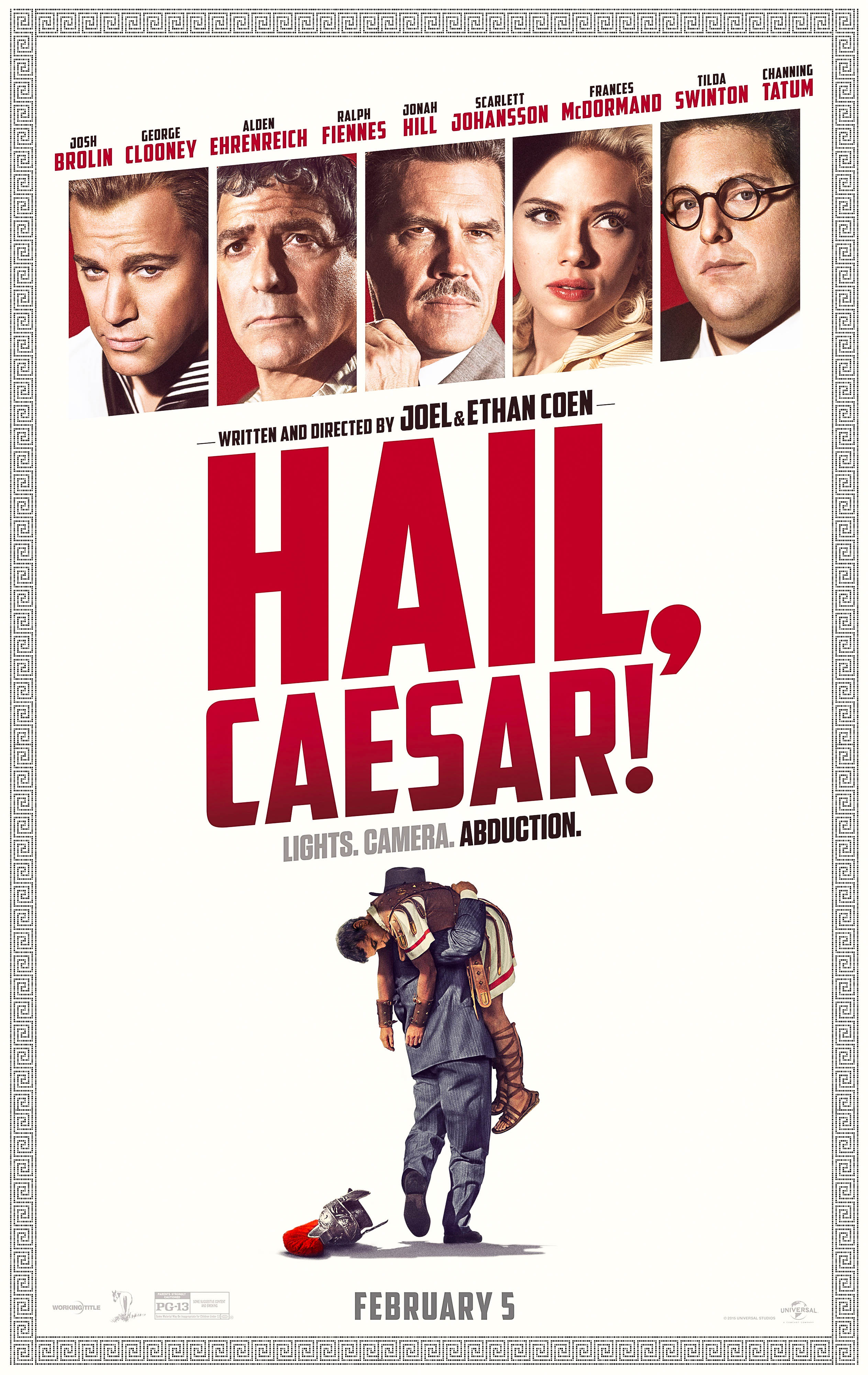
    This idea is the thematic crux at the center of “Hail, Caesar!” the Coen brothers’ latest movie. Beyond this broad theme, there is very little that holds together the fabric of the film, and the result is scattered moments of brilliance that add up to an unsatisfactory whole. “Caesar” has the colorful visual quirks of a Wes Anderson flick, and the subtle melancholy of a Charlie Kaufman movie. It has a plethora of celebrity actors, from George Clooney and Channing Tatum to Scarlett Johansson and Ralph Fiennes, yet nearly every major role comes off as a half-hearted cameo. “Caesar” deals in both the glory and nostalgia of old Hollywood, but has little to say about it other than, “Hey, Hollywood was crazy, right?” The film has something big to say about the human condition, but it lacks a plot, compelling characters, and (most surprisingly) good performances.

    Set in 1950s Hollywood, “Caesar” follows Eddie Mannix (Josh Brolin) as he stresses over making movies in a timely manner, keeping internal corruption out of the eyes of the press (represented by Tilda Swinton as identical twins, for some reason), and confessing his sins, Catholic style, every 12 hours or so. Mega-star Baird Whitlock (George Clooney) is preparing to star in a movie within the movie, also called “Hail, Caesar,” about a Roman centaur who discovers the Christian god when he’s drugged by an extra and kidnapped by a mysterious, shadowy group.

    Shockingly, but not really, his kidnappers turn out to be a group of communists hell-bent on destroying capitalism. (Although this was meant to be a twist, communism is essentially a prerequisite for any movie set in 1950s Hollywood.) The third major plot of the film deals with Hobie Doyle, played by relative newcomer Alden Ehrenreich, a star of Westerns who, much to his disdain, finds himself recast in a fancy drama by Laurence Laurentz (Ralph Fiennes, the biggest treat of the film). Themes such as utopia, religion, and nostalgia are meant to connect these plotlines, but alas, they don’t.

    The movie’s saving grace should have been its performances, but unfortunately, this was not the case. Brolin, the closest thing this movie has to a protagonist, is quite solid as Mannix, but the Coens’ script doesn’t know if he’s supposed to be a satirical archetype or developed character, and he is therefore neither. Brolin brings subtle anxiety to the role, but the Coens do not allow him to do much else.

    The rest of the cast similarly suffers from poorly drawn characters, and for reasons I cannot comprehend, many of them come off as deeply uncomfortable on camera. Johansson, doing her best New Jersey accent, and Swinton each appear in roughly two or three brief scenes, both looking oddly tense and uncomfortable on-camera. Clooney, as a boozy, egotistical star, has practically been handed the chance to play himself, but he never seems at home in his role, either. Considering the talent on and off of the camera, “Caesar” somehow presents audiences with the poor combination of weak characterization and acting.

    There are two exceptions: Tatum and newcomer Ehrenreich are absolutely wonderful from start to finish. Tatum is a natural song-and-dance man, positioning himself as a 21stcentury Gene Kelly, joyously tapping and singing his way through a musical number pulled straight out of old Hollywood; Ehrenreich captures and sustains a subtle nostalgic sorrow in every scene he’s in, as his profession (an actor in Westerns) slowly becomes irrelevant.

    And, while I’m being charitable, I must say that the Coens have done a lovely job directing in every sense not related to their actors. Their scenery is lush and colorful, and their visual direction captures a quiet and tremendous sense of sorrow. Their deliberately unsubtle Christ imagery, from Soviet subs rising from the depths of the sea, to poor Roman citizens gazing in awe at their savior, matched with a grandiose score by the fantastic Carter Burwell encapsulates the underlying sorrow of utopian ideology. In its best moments, “Caesar” is a sensory exploration of the yearning for the utopian and provides moments of startlingly tragic beauty.

    In the film’s (and the film within the film’s) climactic finale, Whitlock delivers a rousing speech about how humanity could save itself from its folly. But he stutters on the final lines: “If we only had but…but…uh….”

    The director screams, “Cut!” and frustratingly cries, “Faith! It’s faith!” But did faith really help the Soviets? Did it really save the Romans citizens from eternal poverty? No, it did not, and the Coens understand this perfectly; there is no simple solution to end all problems, only the ability to dream them up.

    Immediately after this scene comes an abrupt shift in tone and plot: Mannix decides that making movies is his sacred duty, the camera swings upward toward the sun (and, symbolically, the heavens) and cuts to the beginning of the credits…or, more precisely, the Coens’ names plastered across the screen. Because, well, who needs a real ending when one can simply pat oneself on the back for hard work and mediocre results?

    “Hail, Caesar!” is not worthy of this blatant self-praise. It could have, and frankly should have been, but it isn’t. Instead, it leaves audiences sighing, lamenting, and shouting to the sky up above, “They could’ve made a great movie, if they only just…just….”

  • In Defense of: Video Games as an Art Form

    In Defense of: Video Games as an Art Form

    c/o forbes.com
    c/o forbes.com

    Video games have progressed dramatically since their creation. What began as a simple time-killer in the form of “pong,” video games morphed and evolved into arcade games, home entertainment, massive online worlds, and much, much more. Yet it is all too commonly assumed that video games are somehow not an art form. While it’s true that “Super Mario Galaxy” is never going to compare to the Mona Lisa, modern day video games can tell incredible stories, contain beautifully designed worlds, and allow for a level of escapism that only art can provide. But instead of acknowledging video games as an medium worth critiquing, we still cling to the idea that they somehow don’t qualify as art. It is foolish to argue that video games are not an art form; they are worthy of praise and critique, adoration and hatred, and the levels of analytical discussion that all other art forms are subjected to.

    Before diving into my defense of video games, I should point out that there definitely are games that are indeed mostly “mindless and violent entertainment.” Games like “Call of Duty,” “Battlefield,” and others exist primarily to allow players to engage in epic battles against other players online in an admittedly addicting way. However, the claims that these games make people more violent have been debunked in some studies, and aside from the risk of wasting hours sniping online strangers, there is little legitimacy to the argument that shallow entertainment is in no way art.

    More to the point, one cannot deny the visual artistry within every modern game. A team of artists design environments, characters,  and other visual aspects before they are implemented by designers, similar to the artistic sketches done by major Hollywood directors and their staffs. Unlike a painter, sculptor, or other visual artist, a video game artist must create a world to be lived in and explored by the player, not a static work to be observed. The artists develop the basic images, and game designers animate them and bring them to life. In the best games, painstaking efforts are made to create a world that feels real: every drop of rain, grain of sand, or ray of sunshine must interact with and react to the player or other aspects of the environment. Video games create dynamic worlds, in which the player immerses themselves. Anyone can view works of art from the Italian Renaissance, but only in “Assassin’s Creed II” can one actually interact with Renaissance Italy.

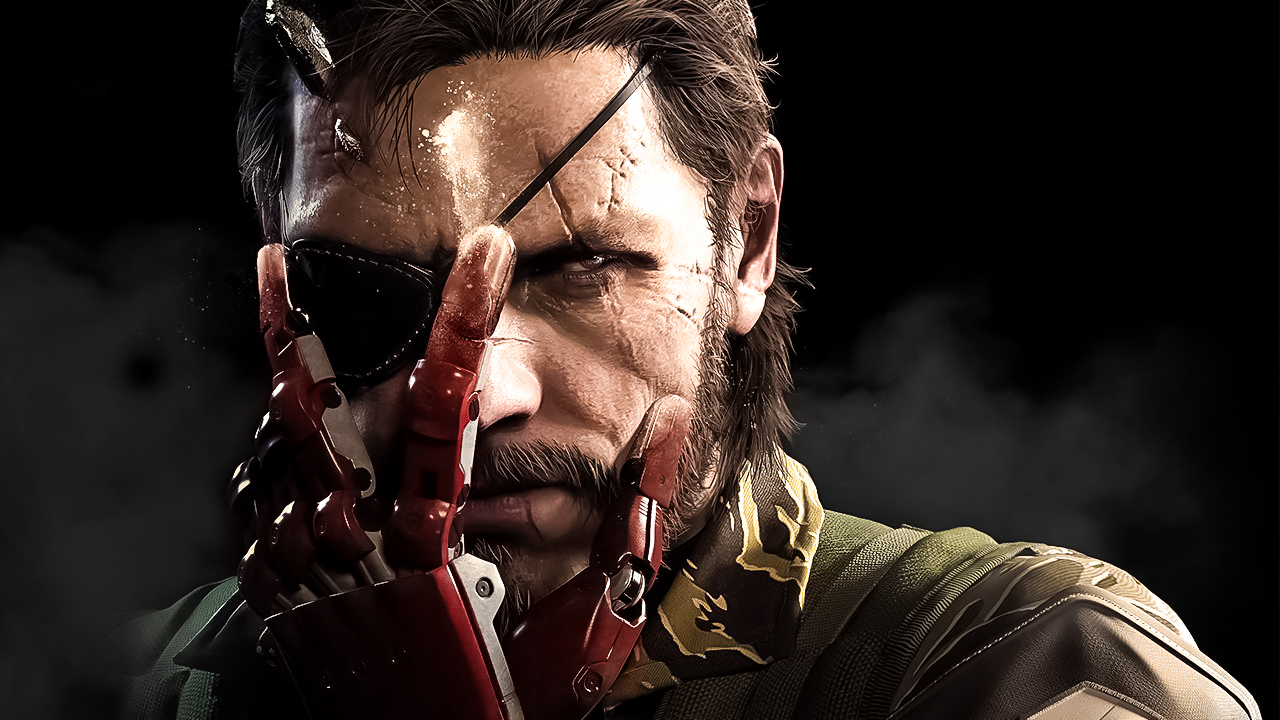
    Second, video games are a storytelling medium unlike any other. The obvious reason is that the observer is also the protagonist. Rather than watching events unfold from a distance, as one does in other narratives, you’re actively participating in the story, creating an unspoken emotional connection between your character and yourself. Some games do not take advantage of this; others, such as the “Fallout” series, “The Last of Us,” and “Metal Gear Solid V,” embrace this player-protagonist relationship and use it for incredible storytelling feats. “Fallout” games allow for a “choose your own adventure” approach in which you must grapple with serious ethical questions in a world torn apart by nuclear war. “The Last of Us” removes the the player’s ethical agency, forcing them down a dark path without any options. “Metal Gear Solid V” wrestles with the nature of identity, both the protagonist’s and the player’s. Ultimately, while any good work of art will conjure emotions in its audience, a video game can elicit a deeper level of feeling in its players, as they are responsible for any tragedies that occur.

    “Metal Gear Solid V” has a scene that takes advantage of this phenomenon particularly well: you’re forced to enter a quarantined zone full of your own soldiers who are infected with a highly contagious and deadly disease, and you’re given the order to kill the infected. Of course, they’re all infected. The true twisting of the knife comes when you stumble upon a room full of infected soldiers, who immediately salute you, patriotic music playing in the background. Before the mission ends, your character is shown walking through a hallway full of dead bodies, empty bullet shells by your side. You stagger and collapse to the ground in agony, the music remaining surprisingly ethereal. It’s an example of what art, specifically video games, does best: allowing the player to understand the emotions on display, without experiencing actual trauma. “Metal Gear Solid V” enables the player to experience, on some level, what it feels like to commit monstrous acts of violence, without actually doing so. There have been many great war movies that create visceral terror in the viewer: but only in a video game can that terror feel personal.

    The absolute bleakness of “Metal Gear Solid V” and “The Last of Us” is a complete rarity in video games, and, rather than represent storytelling in games, they represent a spectrum of potential genres and tones. Typically, the player-protagonist relationship is used for gleeful escapism and the realization of childhood fantasies. In the “Assassin’s Creed” series, you’re a stealthy assassin living in famous historical periods, climbing walls and diving off the sides of famous landmarks. In the “Arkham Knight” series, you live all your childhood dreams of being Batman, gliding around Gotham and beating baddies to a pulp. In the “Mass Effect” trilogy, you’re Commander Sheppard, a war hero made in your image, who’s out to save the galaxy from ancient foes who have risen from the dead (and bureaucracy). Who among us hasn’t had childhood dreams of being a cool assassin, or batman, or the hero of the galaxy? Even for those who haven’t (or are lying to themselves and everyone else), video games provide a variety of both remarkable storytelling and joyous escapism.

    A fundamental flaw with video games, as an art form, remains: Technology is constantly improving and changing, so even games from a few years ago can become outdated and unworthy of being played. But they’re art—maybe not the eternal, sophisticated art of Shakespeare or Picasso, but art nevertheless. And any work of art is worthy of being discussed, critiqued, and enjoyed.

  • Big Money, Little Soul: “Star Wars” Goes the Way of “Avatar”

    Big Money, Little Soul: “Star Wars” Goes the Way of “Avatar”

    c/o starwars.com
    c/o starwars.com

    *This article contains spoilers.*

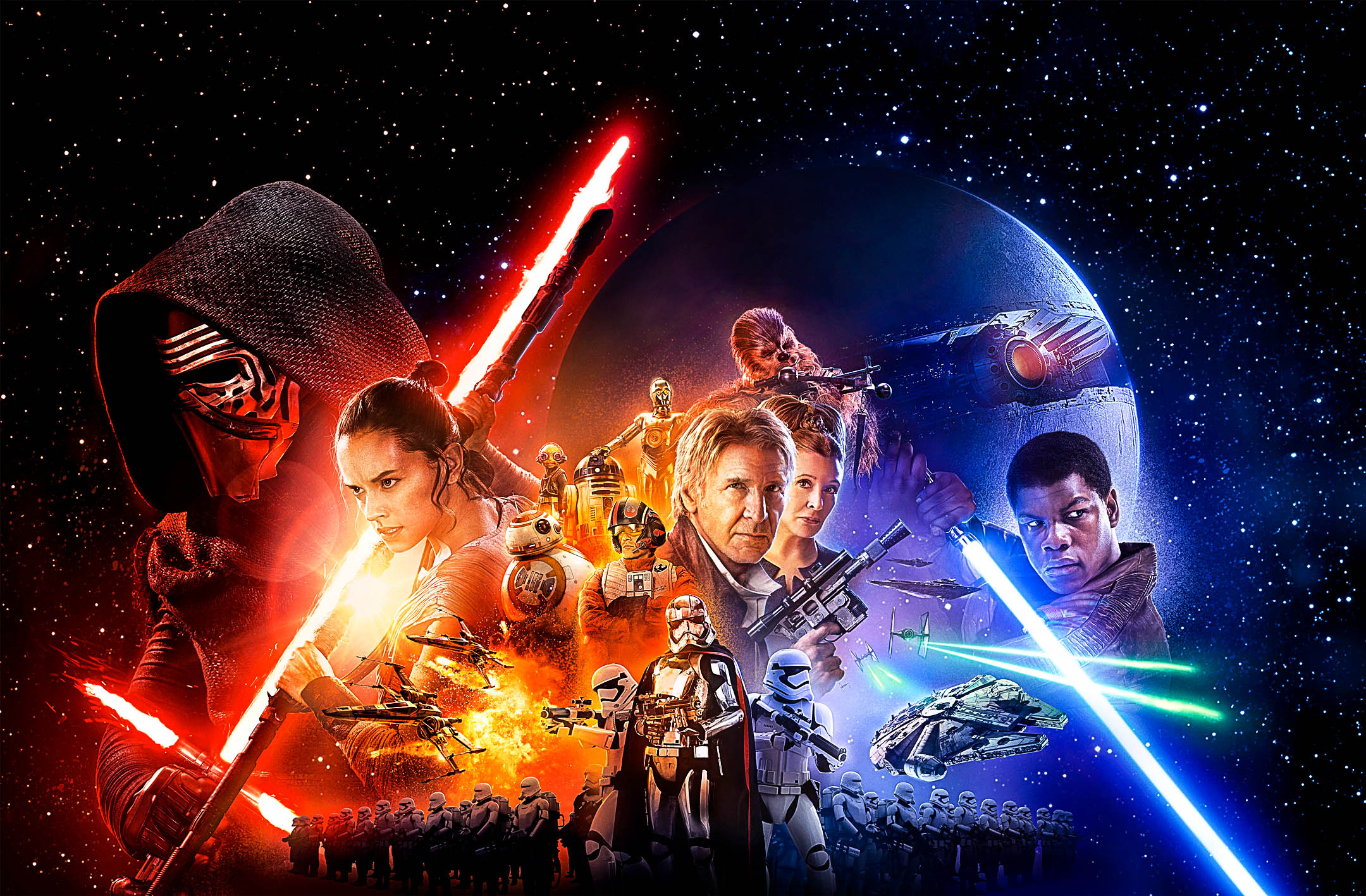
    As of writing, “Star Wars: The Force Awakens,” has grossed 770.4 million dollars at the domestic box office, surpassing the previously set box office record held by James Cameron’s “Avatar.” The hype, in purely economic terms, has paid off. Yet, despite earning millions, the movie has already failed to make its mark on the world’s cultural consciousness (meaning, the ideas or works of art that tend to be widely discussed or considered important at a given time) and will likely fail to influence Hollywood. The reason for the long-term irrelevance of “The Force Awakens” can be traced back to “Avatar,” its spiritual predecessor, as well as the great Hollywood blockbusters.

    “Avatar,” for the many of you who saw it but probably don’t remember it, was the “Star Wars episode seven” of yesteryear (or, to be exact, six years ago). It was an incredibly hyped film, one that was supposed to change the face of blockbuster movies. Its release made a total of 2.79 billion dollars. But after “Avatar” left theaters, the general feeling towards it was less of a thrill and more of a shrug. It was a movie with extraordinary special effects, a metaphor for post-9/11 invasion (or stealing lands from native people, whichever you prefer) with some nice action as a bonus. But that was it. There was nothing that really stood out about it, beyond its being a good movie. It lacked the true sense of spectacle that comes from spectacular film-making. So, we forgot about it. “The Force Awakens,” similarly well-made but hardly unique, seems to be destined to go down the same path.

    What exactly, then, makes a blockbuster influential, both in terms of shaping Hollywood and remaining in our cultural conscious? For starters, the movie itself must be unlike anything that came before it. Think back to 1977, when the original Star Wars hit theaters. Offering a combination of whimsy and wonder, mystery and mysticism, action and philosophy,“Star Wars: A New Hope” was a defining moment in film history, and everyone wanted more.

    Or consider 2008, when Hollywood was dramatically altered by “The Dark Knight” and “Iron Man.” After years of disastrous attempts at adapting comic books for the silver screen, these two movies not only succeeded but also completely transcended what was thought possible with action movies. Christopher Nolan’s “Knight” was a stylish, morally ambiguous tale about the nature of good and evil; “Iron Man” was a wry, ironic action movie willing to mock superhero clichés. They were not only great movies—they were an entirely new breed of cinema, and anyone who’s been to a movie theater can see their influence. Marvel has been pumping out interconnected superhero hits ever since, and while other superhero movies have tried to mimic Nolan’s dark style, they often fall short of his intellectual depth and prowess.

    As for “Avatar” and “The Force Awakens,” they lack the directorial brilliance of influential blockbusters. Cameron showed exceptional use of special effects, but the effects don’t make the movie. Abrams shows off some lovely visual storytelling in his latest film (Rey’s introduction, done with very little dialogue, is a particular highlight), but his techniques are hardly revolutionary. “Avatar” and “The Force Awakens,” in terms of filmmaking alone, give audiences very little to talk about; they’re neither exceptional nor terrible, but merely competent.

    Of course, there are plenty of great films whose success lies in their screenplays rather than their direction. One of the joys of “The Dark Knight” were the lengthy monologues on good and evil (Alfred’s “Some men just want to watch the world burn,” speech; Harvey Dent’s line,“You either die a hero or live long enough to see yourself become the villain”; and others), or the pleasure and terror of the Joker’s inconsistent anecdotes about his facial scars. The dialogue of “Avatar” and “The Force Awakens” is hardly memorable: the former is thoroughly dull, while the latter only has a few third-act zingers from Han Solo (the rest is basically exposition, or people calling Oscar Isaac’s Poe Dameron “One helluva pilot!”). Their plots are similarly vapid: “Avatar” is a simplistic, unoriginal argument against invasion; “The Force Awakens” is “A New Hope” 2.0. Neither one is thrilling.

    And while good performances are always worth talking about, only the most superb actors can leave their mark on a blockbuster. The success of “Iron Man” rested primarily on its star, Robert Downey Jr., and “The Dark Knight” was an instant classic in large part because of Heath Ledger’s posthumous, spine-tingling portrayal of the Joker. “Avatar” lacked great performances, but “The Force Awakens” has several. However, in the world of blockbuster movies, actors often contribute little to a film’s influence. The first “Star Wars” is hardly remembered for the acting (most of which, when observed closely, is pretty poor); nor is “Jurassic Park,” “E.T.,” or any other classic blockbuster. Daisy Ridley, John Boyega, Adam Driver and Oscar Isaac are fantastic actors who deserve all the attention and admiration they can get, but people will probably remember them more than the movie itself.

    What has “The Force Awakens” left audiences talking about? Who are Rey’s parents? What a wonderful way to start a dull discussion. The shock of Han Solo’s death? You mean the plot twist anyone who’s ever seen an interview with Harrison Ford saw coming? Or what about Supreme Leader Snoke, the holographic baddie with no personality? A few great memes or satirical twitter accounts? Hardly groundbreaking. “The Force Awakens” is all too similar to “Avatar” beautifully made, but devoid of a pulse beneath the effects. Abrams’ film, it seems, is destined to go the way of “Avatar.”