
Author: Hannah Reale

  • April’s Survivor Solidarity Month Seeks to Showcase Campus Resources

    April’s Survivor Solidarity Month Seeks to Showcase Campus Resources

    c/o facebook.com/WesSFCC
    c/o facebook.com/WesSFCC

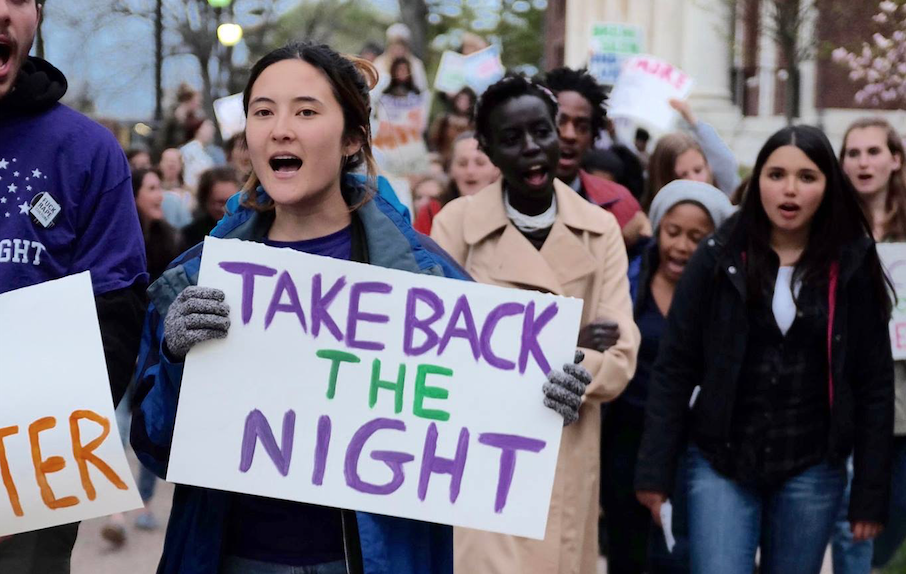
    Students have teamed up to hold Survivor Solidarity Month (SSM) this April, a series of events that will culminate with this year’s Take Back the Night on Thursday, April 25.

    Office of Survivor Advocacy and Community Education (SACE) Intern Rachele Merliss ’19 and Bystander Intervention Intern Jewelia Ferguson ’20 were both involved in last year’s events, Sexual Assault Awareness Week. This year, the committee tasked with organizing the month of events refocused its goals to publicize the resources on campus available to survivors of sexual assault. 

    Ferguson noted that the theme of SSM changes on a yearly basis. In 2018, the theme was power and choice, and this year’s focuses on advocacy and reclamation.

    “[It was based on] the idea that, after a sexual assault or after an experience like this happens, you still have power, you still have choice,” Ferguson said.

    Ferguson noted that this year’s theme shifts the focus from ways survivors can retain power to ways others can support survivors.

    “We’re wanting to highlight the resources on campus, and because sexual assaults are so common, how you, as a friend or as a loved one, can support a survivor,” she explained.

    In addition to shifting the focus of the events, the committee chose to expand last year’s Sexual Assault Awareness Week into a month-long series of events. This is only the second year that such a series is being held, and after last year, organizers hoped to build up to Take Back the Night over a longer period of time.

    “Last year, having it as a week was kind of overwhelming, just in that it was a lot of events that they wanted to do in a very short time, and now we’re sort of spacing things out a little bit more,” noted committee member Jenna Sneifer ’20. “That was partially to be sensitive to people, because we’re dealing with really heavy topics, and also just so that we could put more in and have more time to plan things and get traction.”

    Organizers hope that students who attend the various events will learn how to best support survivors. Merliss, whose work in the SACE Office revolves around planning events that educate the community about interpersonal violence, discussed how sexual misconduct can occur within structured environments like student groups and how student leaders tasked with addressing misconduct often have no guidelines to reference when making decisions. 

    “If someone comes to you on an interpersonal level with an experience of violence that they want to share with you, how can you react, how can you support that person, how can you point them in the direction of resources that might be able to help them, or tell them about reporting options?” Merliss asked, questions that the committee hopes to answer through SMM events. “Also, when someone has had an experience of violence in a [student] group that they’re in, how do group leaders deal with that? That was something that came up a lot while we were planning, and people were like, ‘I need to know more about this topic,’ so that’s why we decided to have a training that the SACE Office is going to lead.”

    In addition to the training held by the SACE Office on April 18, the committee is hosting a documentary screening on April 4; an art gallery on intimate partner violence, co-sponsored by Adolescent Sexual Health Awareness (ASHA), on April 11; Denim Day, an annual international event where people wear denim in symbolic support of survivors, on April 24; and finally Take Back the Night on April 25. Different events are sponsored by the SACE Office, WesWell, and the Sociology Department.

    Beyond drawing attention to supporting survivors, organizers hope to expand attendees’ conception of what sexual violence and survivors can look like.

    “A lot of what you see in the media is young white women who have experienced interpersonal violence, and that’s just a problem with the media and the #MeToo movement, in a lot of ways,” Sneifer said. “That’s talking about men survivors, people of color, LGBTQ—that’s something we’ve been trying to keep in mind as we’ve been planning this, making sure that we teach people how to recognize and respond to a diverse array of narrative because they’re all out there.”

    Merliss noted that students who traditionally come to these events may often already be educated on sexual assault and survivor advocacy, so she hopes that they will be able to reach a broader audience this year.

    The committee will be sharing a calendar of the upcoming events with campus in the coming days. Beyond the events the committee is hosting, it will be sharing other events that fall within this year’s SSM themes, like the all-campus Bystander Intervention Training on April 13 and the weekly survivor support group on Wednesdays.

    University students interested in working on topics of sexual assault and sexual health year round can look into joining groups like ASHA, Students for Consent and Communication (SFCC), SACE, the Title IX Student Advisory Committee, or WesWell. The SACE Office is also starting a new advisory committee, which just started meeting, but it will be accepting applications for more students to join in the coming academic year.

    Organizers hope, above all, for students to come away from SSM events with a better understanding of how survivors can be supported.

    “Everyone can be supportive,” Ferguson said. “Sometimes people feel like they need training, or they’re not a professional, so they don’t know how to help someone or just be there, but with supporting a survivor, all you have to do is listen, and say that you care, and that you believe. That’s just the foundation of it all, and anyone can do that.”


    Hannah Reale can be reached at hreale@wesleyan.edu.

  • Trustees Send Mixed Messages in Quarterly Meeting
    Trustees Send Mixed Messages in Quarterly Meeting

    c/o wesleyan.edu
    c/o wesleyan.edu

    The Board of Trustees met for their quarterly session on Friday, March 1 and later joined students for an open meeting. Students and trustees discussed key topics such as upcoming facilities projects and ongoing talks to divest the University’s endowment from fossil fuel companies. University President Michael Roth ’78 then went to the Wesleyan Student Assembly (WSA) meeting on Sunday, March 3 to address the recent board meeting and answer any questions from students.

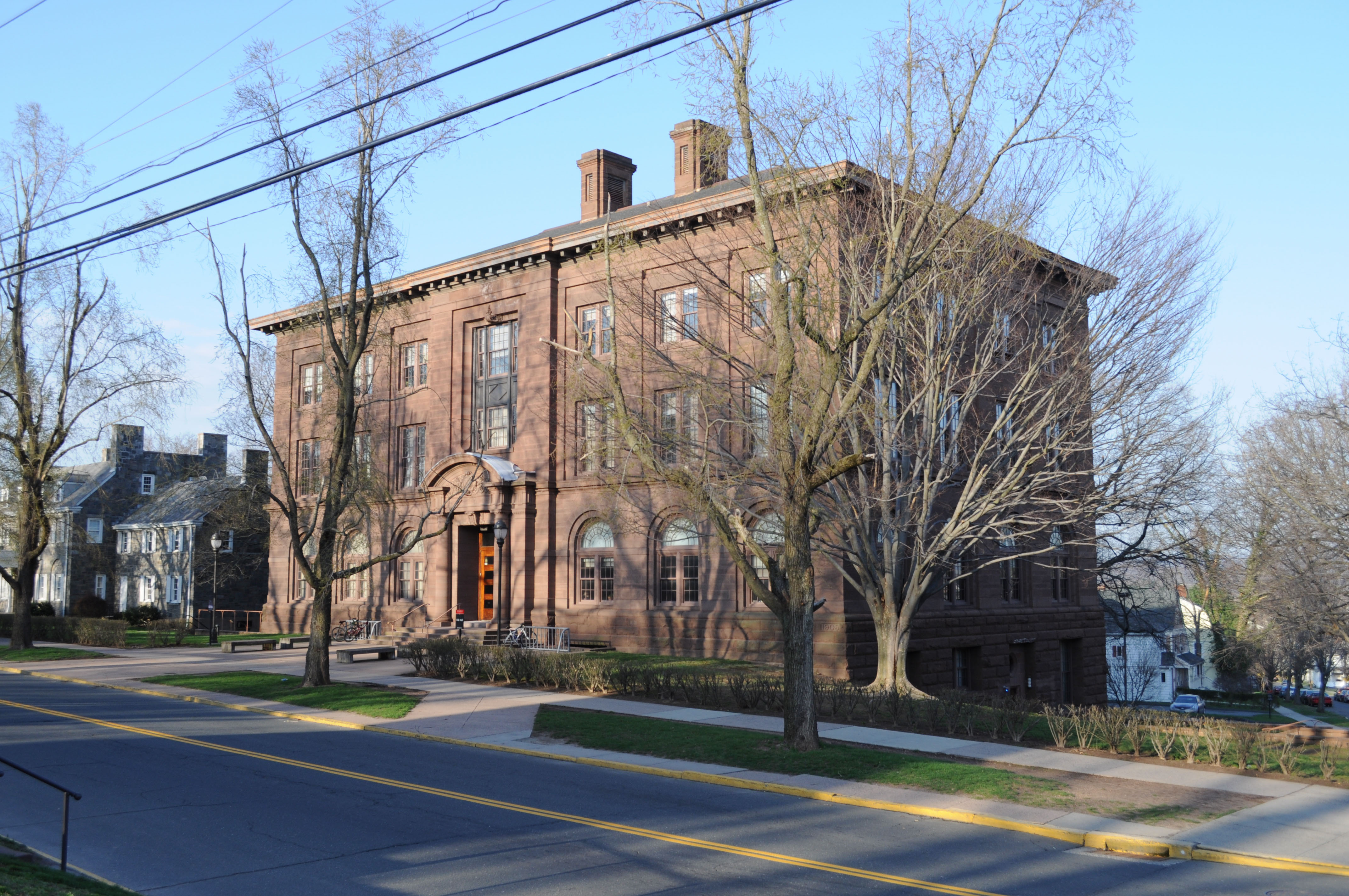
    Several resolutions were passed during the Board’s meeting, such as plans to build a $16 million expansion to the Film Center, on which Director of Physical Plant Alan Rubacha expects to begin construction early this summer. During the WSA meeting, Roth spoke about the timeline of the facilities projects in the coming years, including the ongoing transfer of the Davison Art Center’s collections to the Olin basement, the dramatic renovation to the Public Affairs Center that is expected to finish in 2024, and the planned demolition of Hall-Atwater that will replace it with a more energy-efficient building.

    60 students attended the open meeting with the Board. This is a dramatic increase from previous semesters, during which very few students—typically fewer than 15—would come to discuss topics of concern with the Board. The meeting was hosted in a new speed-dating format, which was conceived of by WSA Vice President Keishan Christophe ’19. Students sat in small groups at several tables, and trustees rotated every 10 minutes, allowing students to have face-to-face interactions with one or two trustees at a time. In the past, student-trustee meetings have been held with both parties in one large group. At these events, students could bring questions and concerns to the group as a whole.

    Most students came to the meeting with plans to address a particular concern or set of concerns, including fears about the safety of wood-frame houses and the lack of social spaces on campus. Several students also brought up concerns about custodial workers being overworked and expressed hopes that the University would hire more staff.

    Divestment from fossil fuels arose as a point of controversy on which board members expressed differing views as they rotated. When asked about divestment, Board Chair Donna Morea ’76, P’06, emphasized that the University selects fund managers rather than individual stocks.

    “We want to make sure that our managers of funds are socially and environmentally conscious and share our values,” Morea said. “As far as fossil fuels go, we are all dependent on fossil fuels. Some of you might even have cars, and they might even use gas. And so the way we’ve approached this issue is to try to lean in on newer sources of energy and encourage our managers to begin to diversify their portfolios and lean into the future, but we do not have a hard-and-fast policy about investment.”

    However, when asked directly if divestment was a priority for the Board, Morea replied, “No.”

    Later on, Board Member Franklin Sirmans ’91 offered a contradictory interpretation.

    “There is definitely advocacy for the climate and its relationship to what we’re invested in,” he said.

    When asked where the advocacy came from, Sirmans emphasized that it was from within the Board.

    “It’s coming within the [investment] committee, it’s coming from the full board, who, in a way, is responsible for whatever the investment committee report is, and that happens at every board meeting,” he said.

    When told that Morea had directly said that divestment was not a priority for the Board, Sirmans said, “Wow. I’d be surprised.”

    At the WSA meeting on Sunday, Roth was asked what evidence would compel him to push for total divestment from fossil fuels.

    “I would have to see that it would make a material difference in our effort to become a better steward of the environment and that it’s not just symbolic,” Roth replied. “I don’t want to say it shouldn’t be symbolic—I think the symbolic part is important, and maybe I’ve underestimated that importance—but I would want to see the argument that actually doing this would have a benefit beyond making us feel better about ourselves.”

    A few key statistics came out of the board meeting, such as approving a 4.4 percent tuition hike for the 2019-2020 academic year. As student representatives on the Board wrote in the March 2019 Board Report and addressed more extensively during the meeting, the Board had only expected to raise it by 4.1 percent but had to increase it to accommodate lower-than-expected recent donations.

    When discussing admission, trustees learned that the Class of 2023 also, so far, has the highest percentage of people of color in University history. In terms of socioeconomic diversity, 17 percent of accepted Early Decision (ED) applicants were eligible for Pell Grants, and the percentage of students admitted through the QuestBridge program was the highest-ever recorded.

    At the WSA meeting, Roth emphasized that evaluating students from various income brackets based purely on academic merit would not help in determining which students are most deserving of admission.

    “I, for one, have advocated for more Pell-eligible students, which is the government designation for low-income,” Roth explained. “Others say, ‘No, we want to have more money available for students from families who are really sacrificing to go to Wesleyan but aren’t low income….’ They’re all academically gifted, and there’s so many applications that look the same in terms of academic perspective. So I have my own perspective—the Board doesn’t fully agree with me, alas—to really raise the number of Pell-eligible students.”

    Morea also told the Board that she plans to step down from the position of chair after the 2019-2020 academic year. She instructed them to select her replacement by the May meeting, which will be the next time the Board comes together.

    Hannah Reale can be reached at hreale@wesleyan.edu or on Twitter @HannahEReale.

  • New Presentation Studio Offers Students Opportunities for Skill Development

    New Presentation Studio Offers Students Opportunities for Skill Development

    c/o commons.wikimedia.org
    c/o commons.wikimedia.org

    This semester, the Center for Pedagogical Innovation (CPI) launched a new program called the Presentation Studio for students who want to develop their presentation skills in a one-on-one setting with a peer mentor. Students can come in for a 45-minute appointment to work on class presentations, conference presentations, job interviews, and pitches. The Studio provides assistance on all aspects on these projects, from visual design to presentation organization to public speaking. 

    Modeled after the Shapiro Writing Center’s Writing Workshop, the program aims to promote the art of the presentation.

    “The idea is to create the concept of presentations as more of a robust assignment,” Assistant Director of Instructional Design Jeffrey Goetz said.

    Traditionally, the CPI has focused on teaching faculty and staff. One of their ongoing projects, the Universal Design for Instruction, enables professors to apply teaching strategies that are inclusive and effective for a diverse classroom. Now they’ve turned toward the student, in response to faculty’s requests for more student support in the area.

    “This is the first big initiative we are taking to support students,” Director of the CPI Jennifer Rose said.

    Both Rose and Goetz agree that presentation skills are also valuable in the workforce, as presentations are more common in workplaces than academic writing. Stills, these skills are not nurtured as much in college.

    Goetz noted that professors have told him that presentations are often not prioritized and understood by the student body. It seems that, among the student body, presentations are thought of as an add-on to the more serious work of a class. The Presentation Studio wants to reframe that conversation.

    “I went through a sample of [syllabi] from the fall semester and found that 33 percent of them had a presentation assignment of some kind,” Goetz said. “There are certainly a lot of faculty assigning it so creating the support for it was really important.”

    According to Goetz, presentations and papers are structured in a very similar way. The presentation just has an extra element: the actual verbal communication of the material.

    Goetz explains that there are two sides of making a good presentation: design and delivery. Design consists of slide flow, color choice, and logical progression of ideas, as well as addressing typical issues for presentations. 

    “One of the things that is an extremely common problem is overloading slides with too much information,” Goetz said.

    The actual delivery of the presentation, however, takes a different set of skills. As part of a 45-minute appointment, students can practice their speech with a mentor who will give feedback.

    Serena Rusk ’20 is one of three mentors who help students with their presentations. She believes that body language and confidence are important to the presentation delivery and that they can be taught and nurtured with practice.

    “Having good technique and creating a presentation that both communicates the information and looks good will allow you to be confident when giving the presentation,” Rusk said.

    While Rusk is confident talking in front of people, she realizes this is not the case for everyone.

    “When I was in elementary middle school I went to an alternative charter school, and we focused—didn’t take tests or exams—we just focused on communicating information,” Rusk said. “So I practiced giving presentations and sharing portfolios of work all the time, so that was my educational foundation, and since then I’ve just been refining that skill and realizing that there’s more than just confidence. There’s a technique that can be applied.”

    Beyond developing students’ skills in one-on-one appointments, Goetz wants to implement group workshops. In the coming week, the studio’s page on the University’s site will incorporate a page of useful tips, and WesPortal will be getting an easy appointment feature for the Studio like the Writing Center.

    In April, The Presentation Studio is also hosting a Pecha Kucha competition, a timed presentation of 20 slides that will reward first and second place with $100 and $50 of Cardinal Tech credit, respectively.


    Stuart Woodhams can be reached at swoodhams@wesleyan.edu

  • Bynum Discusses Book, Research on Enslaved Rhode Islanders
    Bynum Discusses Book, Research on Enslaved Rhode Islanders

    c/o Wesleyan English Department
    c/o Wesleyan English Department

    On Thursday, Feb. 21, the English Department hosted Assistant Professor of African American Literature and Culture at Hampshire College Tara Bynum to give a talk and answer questions from students and staff. The talk, entitled, “Speculative Pleasures: ‘The Archive’ and a Barbecue; or, Who Are Obour Tanner and Cesar Lyndon,” took place at Downey House with students and English faculty in attendance.

    Assistant Professor of English John Murillo addressed the contents of Bynum’s forthcoming book “Reading Pleasures” in his introductory remarks prior to Bynum’s lecture.

    “‘Reading Pleasures’…examines the ways in which 18th-century enslaved and/or free men and women feel good or experience pleasure in spite of the privations of slavery, unfreedom, or white supremacy,” Murillo told the audience.

    Rather than summarizing the book, Bynum recounted her experience researching it. In the process of looking for texts that reflect pleasure and joy, Bynum found the failings of archives to preserve the writings of African Americans. She noted this lack of literary records makes any study of African-American cultural history particularly difficult.

    “Black lives clearly don’t matter in the archive,” she said.

    Bynum began her lecture by projecting an image of a letter by African-American poet Phillis Wheatley, written during the mid-18th century. She highlighted a mention of Obour Tanner, a friend of Wheatley’s, who has been the subject of some scholarship, mostly concerned with the two women’s correspondence. Little is known of her life, beyond that she was a servant to a wealthy Rhode Island family and was married to Samuel Hopkins, the famous abolitionist and theologian. Intrigued, Bynum took it upon herself to learn more.

    “[I saw my archival research as a way] of making black lives matter,” she said.

    The next slide was one of Tanner’s few surviving letters, which she wrote while president of an organization called the “Females Society.” Bynum pointed out that Tanner signed her first name as “Orbour” with an extra “r,” and that such spelling variations were not uncommon in her correspondence. The letter was addressed to the leader of the African Benevolent Society, which was founded in 1807. Bynum speculates that Tanner wrote it several decades after her correspondence with Wheatley.

    Bynum then turned to researching the president of the African Benevolent Society, hoping to find more information regarding Tanner, but found nothing. After a series of other dead ends, Bynum at last came across the account book of Cesar Lyndon, an enslaved man living in Newport, R.I. What at first appeared to only be a list of financial transactions soon became significant when Bynum realized that Lyndon often did business with friends of Wheatley, putting him in close proximity to Tanner.

    Of particular interest was a list of purchases for a pig roast that was to be held in August 1766. Bynum noted that several of the goods were imported, demonstrating the cosmopolitan nature of late colonial Rhode Island and Lyndon’s own personal prosperity.

    “[The list included] wine, sugar, ‘tea and coffee,’ ‘limes for punch,’ beet roots, celery, and pickled lobsters,” she said. “He’s always selling pickled lobsters…. Lyndon spends quite a few pounds, shillings, and pence too to host this gathering, not only for his menu but also the necessary lodging.”

    The guests of this gathering included Zingo Stevens, an important Newport stone carver, known for his gravestones, who was also a friend of Wheatley. Little is known of the other attendants, even their ages, but Bynum used the evidence at hand to approximate them.

    “Zingo’s age is unknown, but he does die 51 years later in 1817, which would suggest that on this day in 1766, he is young enough to live another half century and old enough to love…and to roast a pig with his 30-something-year-old friends,” Bynum said.

    She was unable to prove that Tanner and Lyndon ever met, but she emphasized that all her discoveries, from the civic-minded letters to the pig roast, highlight the pleasures of enslaved people that often go overlooked.

    “[I start] at base with the idea that no matter what their political status is, we’re talking about people,” Bynum said.

    When another audience member asked Bynum how she was able to extrapolate so much from such scant materials, she gave a concise response. 

    “I just trust [the writers] when they say it,” she said.


    Trent Babington can be reached at tbabington@wesleyan.edu.

  • New Bystander Intervention Curriculum Debuts

    New Bystander Intervention Curriculum Debuts

    After launching a new Bystander Intervention Training model, WesWell and the Office of Survivor Advocacy and Community Education (SACE) hosted the first all-campus training of the program’s 101 session on Saturday, Feb. 23. Director of WesWell Seirra Fowler and SACE Director Johanna DeBari worked together to design the new curriculum, which is split up into two two-hour sessions rather than two three-hour sessions.

    Over the course of the two-hour training, SACE Intern Rachele Merliss ’19 and Bystander Intervention Intern Jewelia Ferguson ’20 covered topics including consent, healthy and unhealthy relationships, gender roles, alcohol use, the basics of intervention, and resources available to survivors. Forty students attended the training, which served not just as an informative lecture but also as a dialogue, allowing for nuance in conversations about such themes.

    “With 101, we talk about rape culture, we talk about alcohol use, we talk about interpersonal violence, and when you want to intervene, first you need to know what these signs are, you need to know why it’s problematic, you need to know why you are intervening,” Ferguson said. “So I think 101 is a good conversation starter: Why are these things problematic? Why should I feel like I need to step in and support this person?”

    The changes to the curriculum, according to Fowler, came in response to input from Bystander Intervention Facilitators, who are students trained to teach other students.

    “It made sense to update it,” Fowler said when asked about the impetus behind the curriculum change. “We have student facilitators, so we always meet with them and they give us feedback about, ‘Maybe this example is a little outdated now,’ or ‘These are things that are going on in our community so maybe we need more attention on this….’ We think that maybe the length of time was a barrier, but we felt like if we made it shorter and maybe rebranded it as a new curriculum, people would be interested.”

    The 101 session informs the subsequent 201 session, which can be scheduled with groups of at least 15 people through Ferguson. Bystander Intervention 201 looks at more specific methods of intervening, and to take the course, students must have already completed 101.

    As Fowler and DeBari explained, Bystander Intervention Training has always operated on a 101 and 201 model with two different training sessions to explain how to intervene and why it’s necessary, but the order the content is presented in has now been reversed.

    “When we were talking about making this shift and updating the curriculum, it’s great that we’re teaching people how to intervene, but it seemed like it would make more sense to focus on ‘Why do we need to intervene?’ first,” Fowler explained. “That’s why 101 is really talking about the culture, sexual violence, rape culture, drunk scripts—things that we’ve learned throughout our lives which may or may not be healthy or supportive of survivors…. [Now it’s] this is why we need to intervene, then this is how you do it, which is the focus in 201.”

    Those signing up to participate in Bystander Intervention Training are typically involved in a student group. The new 101 curriculum was first taught last semester to Greek organizations on campus and is consistent no matter the group in attendance.

    “Whether someone went through the Greek life one or the all-campus one, if they want to have a conversation about it, they’ll be able to speak the same language,” Fowler said. “When we’ve done ResLife staff training, some of the examples we will use will be specific to a dynamic between a resident and a [Residential Advisor], or a [House Manager] and a student…. We never want to change it too much [from session to session], but still want to feel like people can come and still identify with some of the examples that we’re talking about.”

    The perspective of the training session is primarily rooted in how to avoid potential perpetrators and how to help others in unhealthy or dangerous situations. Nevertheless, DeBari hopes that the conversations about consent will also prompt students to reevaluate their own sexual activities in addition to making sure others are being responsible and treated healthily.

    DeBari encourages student groups to reach out if they hope to have further dialogues about group-specific topics that they hope to address in a more structured environment.

    “What we’re hoping is Bystander is a starting point, and if there are other opportunities where people want to have conversations, we can figure that out as it comes,” DeBari said. “There’s research that shows that the tools of prevention that are most effective are ones that happen at multiple points of contact, so having more than one conversation has better results in terms of shifting culture.”


    Hannah Reale can be reached at hreale@wesleyan.edu and on Twitter @HannahEReale.

  • New Sustainability & Environmental Justice Course Cluster Joins Curriculum

    New Sustainability & Environmental Justice Course Cluster Joins Curriculum

    The Educational Policy Committee (EPC) approved the creation of a Sustainability & Environmental Justice Course Cluster on Feb. 7. The cluster contains courses from the Anthropology, Biology, Psychology, American Studies, and Philosophy Departments, among others.

    “Encompassing the climate change, ecological sustainability, and environmental justice, this course cluster recognizes that sustainability and environmental justice are (or should be) central to public policy debates, scientific and intellectual inquiry, and the foundations of social and economic life,” the cluster’s description reads. “A course cluster also makes these courses easier to find for both students and faculty advisors (especially important as they cross both disciplinary and divisional lines), attract prospective students to Wesleyan, and raise awareness of this field among students and faculty.”

    Cluster Coordinator Anthony Hatch, who teaches courses cross-listed in Science in Society, African American Studies, the College of the Environment, the Environmental Studies Program, and the Sociology Department, finds the interdisciplinary nature of the cluster essential to its success.

    “The courses that are currently listed within the cluster often originate in intellectual spaces that move across disciplinary boundaries,” Hatch wrote in an email to The Argus. “This makes sense because practices of sustainability and the realities of environmental injustice are implicated across domains of scientific inquiry, a diverse range of ecosystems, and the social lives of all sorts of living things and not just humans.”

    Hatch also spoke to the overall ease of the EPC approval process.

    “Professor Basak Kus (Sociology), chair of the EPC, was open and kindly receptive to our proposal and took it before the EPC ahead of the schedule we were expecting,” Professor Hatch wrote. “Their unanimous support for the cluster signals how important Wesleyan faculty believe issues of sustainability and environmental justice are to what we research and teach.”

    WSA Representative Ariel Deutsch ’21, who serves on the EPC as a student representative alongside Rosanne Ng ’19, pointed out that the cluster serves to guide students’ course selection but does not have a designation on transcripts like minors or certificates. Deutsch believes that the Sustainability and Environmental Justice Cluster is a step in the right direction for the University.

    “I was thrilled by the Sustainability and Environmental Justice Course Cluster because I believe that the issue of environmental sustainability underlines almost all public-policy discussions relating to everything from economic to social life, and this grouping of courses is a clear representation of that,” Deutsch wrote in an email to The Argus. “I also think that the creation of this course cluster speaks to the commitment of both the University and the student body to expand spaces to have these important conversations around social inequality and sustainability.”

    The creation of this cluster comes as part of executing the University’s Sustainability Action Plan (SAP), explained Sustainability Director Jennifer Kleindienst.

    “Integrating sustainability into the curriculum is one of the three current pillars of the Sustainability Office (the other two are reducing environmental impact and building sustainability into campus culture),” Kleindienst wrote in an email to The Argus. “I see the course cluster as one of many ways to achieve this integration, alongside incentivizing faculty to bring sustainability and environmental justice into their courses and providing opportunities for faculty to connect across disciplines.”

    As part of the SAP, professors can apply for $500-$1,000 stipends through the Sustainability & Environmental Justice Pedagogical Initiative if they shift the contents of their curricula to better involve concepts of sustainability and environmental justice. The initiative has been around since the 2016-2017 academic year and works alongside the Sustainability Across the Curriculum workshop and seminars, which guide professors to productively amending their syllabi.

    The EPC recently approved changes to the art history major and minor and has proposed a Bachelor of Liberal Studies program to faculty, which they are expected to vote on next month.


    Jordan Saliby can be reached at jsaliby@wesleyan.edu.

    Hannah Reale can be reached at hreale@wesleyan.edu

  • Professor Emeritus Joe Reed Passes Away, Fondly Remembered by Colleagues
    c/o fantasticarts.com
    c/o fantasticarts.com

    Professor Emeritus of English and American Studies Joseph W. Reed passed away on Feb. 11 at the age of 86, President Michael Roth ’78 recently announced in a blog post. Joe Reed was preceded in death by his wife, Kit Reed, an award-winning journalist and fiction writer, as well as a professor and resident writer in the University’s English Department. She passed away in September 2017.

    Joe Reed received a bachelor’s degree, master’s degree, and Ph.D. from Yale University, in addition to participating in ROTC programs. He took a position with the Wesleyan English Department in 1960, moving to Middletown with Kit. The two of them were often seen walking their Scottish terriers near and on campus. 

    “They were legendary, and part of a classic Wesleyan that welcomed quirkiness, originality, and encouraged outrageousness as long as it was interesting,” Associate Professor of American Studies Indira Karamcheti, who had been friends with the Reeds since the 1990s, wrote in an email to The Argus. “They were themselves obsessively productive, creating any number of novels, short stories, reviews, criticism, scholarship, paintings.”

    During his time at the University, Joe Reed not only taught hundreds of students per semester, but he also played a significant role in founding the Film Studies and American Studies programs, eventually chairing the American Studies Department. The American Studies program was founded just over 50 years ago by Olin Professor of English, Emeritus, Richard Slotkin.

    The couple was involved in Wesleyan beyond just teaching classes on campus. Three of Joe Reed’s books were published through the Wesleyan University Press, and Kit Reed published two. Joe Reed also collaborated with Professor of English, Emeritus, George Creeger in 2012 to create a collection of 19th-century images for Special Collections. And, most recently, as noted on the Wesleyan Connection, a labyrinth was dedicated to the Reeds in 2009.

    “They have surprised and inspired us with their humor, their eccentricities, and their love of literature, film and art,” project leader Stephen Alter ’77 said in 2009, reflecting on the labyrinth project. “For all these reasons, we dedicate this labyrinth in their honor, so that future generations of Wesleyan students will trace these paths and discover the secrets that lie therein.”

    Beyond his love for and contributions to the arts, Joe Reed was noted time and time again as a spirited and intellectual character.

    “He was renowned among Wesleyan students and faculty for the originality of his mind, the keenness of his insight, and the depth of his aesthetic appreciation,” Professor of English Sean McCann wrote in an email to The Argus. “A founding figure in American Studies, he could speak illuminatingly about the historical significance of Edison and the cultural history of American beverages. Generations of Wesleyan students and faculty will remember him as a fiercely independent thinker and as a warm and generous mentor who fostered a lively sense of community.”

    Joe Reed retired in 2004 but stayed active in the arts. As Karamcheti noted in her email, and as Reed himself wrote in the spring 2016 issue of the Wasch Center for Retired Faculty Newsletter, he had another longtime passion beyond teaching: painting.

    “For me, painting is less a second career than a parallel career,” Joe Reed wrote. “I’ve been painting for almost as long as I have taught. It began with four water colors for Prof. Frederick A. Pottle, my mentor and later collaborator at Yale, and Marian Pottle, the Boswell bibliographer. They were in Maine for the summer; we redecorated their bathroom as thanks for a summer we spent in their house in New Haven…. The bathroom walls needed that finishing touch: herbal watercolors. I painted four.”

    His colleagues spoke warmly of him and Kit when reflecting on their presence as members of the Wesleyan community.

    “When Kari and I moved to Middletown in 2007, Joe and Kit were the first to welcome us with a meal, with animal stories, with art and friendship,” Roth wrote in his blogpost. “We will cherish his memory.”

    Karamcheti also noted the Reeds’ friendliness.

    “Their big yellow house on Lawn Avenue was always open to anyone—student, faculty, writers, artists—who loved art and writing and most of all good conversation,” Karamcheti wrote.

    Another, Professor of Psychology, Emeritus, Karl Scheibe, met Joe Reed in 1963 and emphasized his creativity.

    “He was aptly described as a character, outlandish in some ways, a loyal and even loving friend, a petulant and unyielding adversary, always a source of energy and commonly an object of wonder,” Scheibe wrote in an email to The Argus. “Joe was constantly working on some intricate design— producing miniatures of perfection with hands that seemed constantly atremble; all the while guzzling a mug of ice tea.”

    Joe Reed is survived by his three children, Mack, John, and Kate, and four grandchildren. His family wrote an obituary for him on their donation page for Alzheimer’s Los Angeles, noting his work with Wesleyan and his big-heartedness.

    “Joe was a brilliant professor and artist, a deeply loyal friend, a fierce champion of colleagues whom he knew were brilliant, but were being discriminated against for their race, sex, or sexual orientation,” his family wrote. “Despite the ugliness of Alzheimer’s, we lucked out with Dad. He knew us, would talk to us, and laugh with us. May our sense of humor always be the last thing to leave.”


    Hannah Reale can be reached at hreale@wesleyan.edu and on Twitter @HannahEReale.

  • University Submits Concerns Regarding DOE Proposed Regulations to Title IX

    University Submits Concerns Regarding DOE Proposed Regulations to Title IX

    The Department of Education (DOE) proposed new regulations on Nov. 29, 2018, that could change the way that Title IX procedures at universities are conducted. A period for public comments closed on Jan. 30 but is being reopened for one day—Friday, Feb. 15—to ensure that everyone has the opportunity to comment if they encountered technical difficulties at the end of the comment period. Not every comment submitted during this period has to be responded to, but those that courts find to be “significant” must be addressed. The University and the law firm Pepper Hamilton, LLC, acting on behalf of Wesleyan and 23 other universities, submitted comments to the DOE regarding the proposed regulations, citing various concerns with the proposed changes to Title IX procedures.

    Crucial changes proposed in the regulations include the requirement for live hearings, the option for cross-examination in each case, and a presumption of innocence for the respondent. (The full text of the proposed regulations is 144 pages, but the DOE also published a one-page fact sheet that highlights several of the key points.)

    The University took issue with the proposal on multiple fronts: the narrowing of the definition of sexual harassment, the requirement for live hearings, the ability for hired attorneys to conduct cross-examinations on involved parties, and the regulations’ failure to distinguish proceedings for student and faculty reporters were among their objections.

    “We believe that many of the proposed changes (including the narrowed definition of sexual harassment) will not improve campus culture,” the comment reads. “Rather, they will reduce the number of complaints/reports, unnecessarily complicate and make less predictable what is currently a reasonable system, and create hardships for students…. We support efforts to ensure fairness and encourage solutions that work for both the reporting and responding parties. We oppose, however, requirements that limit prevention and response through narrowed definitions or that effectively convert the campus community standards and discipline process to full-scale litigation or criminal proceeding without any of the systems or safeguards offered in those arenas.”

    Pepper Hamilton, LLC, also submitted a 21-page comment to Secretary DeVos, challenging the Department of Education’s ability to mandate a particular method of procedures in the first place and arguing that the Supreme Court has established that individual schools retain flexibility in their implementation of disciplinary processes.

    “Our primary concern with the Proposed Regulations is that the Department seeks to remove the autonomy of private, independent schools like the Institutions, by seeking to impose a uniform, ‘one-size-fits-all’ set of procedures for handling all allegations of sexual violence and sexual harassment, for every school in the United States, regardless of the school’s size, history, geography, mission, values, or culture,” Pepper Hamilton’s comment reads.

    Previous administrations, like the Obama Administration, have passed “guidances” over the past several decades. Perhaps most notably, in 2011, the Office of the Assistant Secretary published the “Dear Colleague Letter,” which instructed schools to use a preponderance of the evidence in Title IX proceedings. In short, the burden of proof was lowered such that schools only had to determine that it was more likely than not that, for example, sexual harassment had occurred. (Secretary of Education Betsy DeVos rescinded this guidance in September 2017.)

    The proposed regulations differ from the previous guidances in one crucial way: They would become a part of federal law.

    At Wesleyan, Title IX procedures have changed significantly over the past few years. As former Vice President for Equity and Inclusion Antonio Farias posted on the Equity @ Wesleyan webpage, the University hired the Victim Rights Law Center (VRLC) in early 2017 to assess Wesleyan’s Title IX policies, practices, and structure. VRLC released a report in early February 2017 that recommended several changes to the University’s existing systems. In addition, the report praised multiple facets of University life surrounding Title IX, such as the existing partnerships with outside organizations and the attitudes of the student body towards sexual assault and harassment. The Office of Survivor Advocacy and Community Engagement (SACE) was created as a direct result of the recommendations, and Johanna DeBari was hired at SACE’s director. Several other recommendations were implemented.

    There is no definitive timeline about when the regulations will go into effect, or what form they will be in when they do, as the DOE could choose to heavily modify what they have written in response to the comments they have received.

    “[The DOE] could throw the whole regulations out, they could start over,” DeBari said. “They could take nothing into consideration and keep them exactly the same. And that’s the really tricky part about this—for me, the most frustrating—is feeling like we can’t give people answers. For now, we just keep doing what we do, as the process is, and supporting people in the ways that we can until we hear otherwise.”


    Hannah Reale can be reached at hreale@wesleyan.edu or on Twitter @hannahereale.

  • Provost Jacobsen to Become President of Hobart and William Smith, Leave University at End of Academic Year

    Provost Jacobsen to Become President of Hobart and William Smith, Leave University at End of Academic Year

    c/o hws.edu
    c/o hws.edu

    Provost and Senior Vice President for Academic Affairs Joyce Jacobsen will be leaving Wesleyan University at the end of the academic year to take on a new position as the president of Hobart and William Smith Colleges, President Michael Roth ’78 announced in an all-campus email on Feb. 8. At the end of the academic year, Jacobsen will have dedicated 26 years of her career to Wesleyan.

    In the email, Roth listed several of Jacobsen’s achievements during her time at Wesleyan, tracing her progression within academia from her beginnings as a professor of economics in 1993 to her current status as Provost and Senior Vice President of Academic Affairs.

    “The thing I’m most proud of is being the person who came up with the proposal to create minors at the University,” Jacobsen said in an interview with The Argus. “I think that’s been a big boon for both some departments and some students to have that as an additional option…. Since then, as you can see, it’s been good, and we have both disciplinary and interdisciplinary minors.”

    In addition to the implementation of the minors program, which occurred while she was chair of the Educational Policy Committee in 2010-12, Jacobsen also noted several accomplishments and ongoing projects that are points of pride for her, such as completed renovations to Fisk Hall and the Shapiro Writing Center, the ongoing renovations to the Olin Basement for Wesleyan’s art collection, and the upcoming renovations to the Public Affairs Center (PAC) and the Film Center. Jacobsen also reflected more personally on how her work at Wesleyan has factored into her life.

    “When I first came here, I had one child who was just three years old, and I was pregnant with my second child, and I had that second child halfway through my first semester here, so partly being at Wesleyan has been raising my children here,” she recalled. “So it was kind of like this middle part of my life was about child-raising and being here, and now over the last six years, since they’re out of college and I don’t have to take care of them anymore, I’m able to devote myself more fully to work, which has been a good thing, I think, in general, and so then this is kind of the culmination of that.”

    Beyond her pride for her achievements at Wesleyan, Jacobsen is looking forward to taking on new challenges and projects as the president of Hobart and William Smith Colleges. In particular, she commented that she hopes to enact similar changes that Wesleyan has seen in recent years and focus on building up Hobart and William Smith’s endowment.

    “I really enjoyed meeting the students and faculty and staff up there, and the alums seem really devoted to the place,” Jacobsen said. “In many ways, it’s very similar to Wesleyan. It’s a little smaller—it doesn’t have graduate programs—but the overall average is about the same, and the feel is very similar.”

    The area by Hobart and William Smith Colleges, she noted, has a rich history for women’s empowerment. Hobart and William Smith used to be Geneva Medical College, which admitted and graduated the first licensed female physician in the United States, Elizabeth Blackwell. Jacobsen will be joining a line of significant women as the colleges’ first woman president.

    “That’s one of the reasons I applied for the job,” Jacobsen said. “I thought that would be important…. [Elizabeth Blackwell] was a big childhood heroine of mine, and so I think that’s very exciting that I can be the first [woman] president at that school, which gave birth to the first female physician in this country, too.”

    Roth noted in his all-campus email that they are starting to plan the search for the person who will take over Jacobsen’s role. Roth also expressed happiness for Jacobsen, despite the loss Wesleyan will undergo with her departure.

    “Though this is a loss for Wesleyan, and for me, I have to recognize that this is a wonderful opportunity for her,” Roth wrote. “We will miss her very much!”

    “I’m going to miss Wesleyan a lot,” Jacobsen said. “I’m still part of the Wesleyan community—as an alum, because we all get to become alumni when they give us our degree when we become full professors—so I feel part of the community…. And I’m certainly planning to come back and see the PAC after it’s renovated, and to see after they finish moving the art collection.”


    Hannah Reale can be reached at hreale@wesleyan.edu and on Twitter @HannahEReale.

  • With New CAPS Hire, University Moves Towards Meeting Student Needs

    With New CAPS Hire, University Moves Towards Meeting Student Needs

    William Halliday, Staff Photographer
    William Halliday, Staff Photographer

    On Jan. 23, Director of Counseling and Psychological Services (CAPS) Dr. Jennifer T. D’Andrea informed the community about the hiring of a new full-time psychiatric Advanced Practice Registered Nurse (APRN), Tamanna Rahman, in an all-campus email. The former APRN left CAPS in September 2018, and since then the department has been working to fill multiple vacancies and expand resources.

    Rahman’s arrival follows the addition of two new full-time psychotherapists, Priya Senecal, LPC, and Ginnie Taylor, Ph.D., who replaced two psychotherapists who also left in September 2018. As an APRN, Rahman will be able to assess, diagnose, prescribe medication, and plan treatment for students as needed. She has specialized training in mental healthcare provision, managing psychiatric medication, and conducting therapy. Rahman will begin seeing students in March.

    “At CAPS, my role will be to work closely with the therapists here to conduct psychiatric evaluations and provide medication management for those students who could benefit from medication in addition to therapy,” she wrote in an email to The Argus. “I take a holistic approach to my evaluations and treatment planning, and am happy to talk to students about all the factors that can improve their wellness and mental healththis may include nutrition, exercise, sleep, meditation and mindfulness, complementary and alternative treatments, in addition to medication.”

    Rahman graduated from Williams College in 2007 before obtaining a degree from Yale School of Nursing as a psychiatric mental health nurse practitioner in 2016. In between, she worked as a labor organizer for UNITE HERE before working at a community mental health agency, specifically with severely mentally ill individuals in the homeless population.

    This year’s new hires mark an expansion of CAPS, which was initially a small office that functioned according to a limited private-practice model. When D’Andrea became the CAPS director in 2011, it shifted to a community mental health model. D’Andrea nodded to Wesleyan’s support of CAPS’ effort to meet student needs. While acknowledging the challenge of meeting high student demand for individual therapy, she pointed out CAPS’ ability to expand its capacity over the years.

    “In 2011, CAPS staff consisted of 2 full-time psychotherapists, a part-time psychotherapist, and a psychiatrist who came in for 3 hours/week,” she wrote in an email to The Argus. “Currently, we have 4 full-time psychotherapists, a part-time psychotherapist, a full-time postdoctoral fellow position, a full-time psychiatric APRN position, and a thriving training program in which we welcome 6 psychologists-in-training each year.”

    This growth has occurred over the past several years, notably within current students’ memory. President of the Wesleyan Student Assembly (WSA) Emma Austin ’19 commented on the growth of CAPS, both in clients and capacity.

    “The need for CAP[S] has rapidly increased as more and more people have been seeking the services, most notably for a consistent therapist and not just a short-term listener,” she said in a message to The Argus. “CAPS hasn’t adequately responded to the demand, which led to a WSA-led CAPS campaign in 2016 that was instrumental in hiring full-time, consistent APRN, decreasing wait time, and showing the administration just how critical CAPS is. But still, we started this year with several vacant positions because the sheer client load (a quarter of the student body visits CAPS each year) leads to high turnover.”

    For years, the WSA has consistently advocated for sustainable solutions for providing students with the resources they need and for shifting CAPS to a long-term counseling model as opposed to the current short-term crisis-appointment model.

    “Unfortunately, it comes down to funding and I’m certain that CAPS is doing all that is humanly possible to provide the most quality care with what they have, but it isn’t enough,” Austin wrote. “While there are certainly improvements that I am proud of and see as positive change, wait times are still high, some students do not feel comfortable at CAPS, and long-term care is discouraged. We can recognize that this is an issue the administration is taking very seriously while simultaneously continuing to be loud.”

    Multiple former CAPS employees expressed the same sense that a dearth of resources is the primary cause to their seeming inability to meet students’ needs.

    “I think CAPS is very similar to a lot of college counseling at universities, where mental health staff really isn’t valued, is probably underpaid, understaffed, because it’s a department that doesn’t really make money for the university,” said former CAPS postdoctoral fellow Joy Zelikovsky. “So not a lot of resources go into it until something happens, and then all of a sudden, it’s like, ‘Woah, woah, woah, why isn’t CAPS on top of this?’”

    William Halliday, Staff Photographer
    William Halliday, Staff Photographer

    Despite CAPS’ dramatic expansion in the past several years, it has not been without growing pains. This past year, student attention was focused on CAPS due to the major loss in staff that occurred right before the start of the fall semester.

    “Late last summer we experienced the unexpected departure of two full-time psychotherapists and our psychiatric APRN,” D’Andrea wrote in an email to The Argus. “This loss of three full-time providers all at once was unquestionably extremely difficult for students and for the operations of the office. In particular, students who hoped to receive medication management from CAPS struggled to find community providers even with the assistance of CAPS therapists. At the same time, this type of turnover is far outside the norm for CAPS.”

    D’Andrea explained that a large portion of CAPS’ care providers are externs, who are psychology graduate students developing their treatment skills. These externs, who are unpaid, use the knowledge that they have gained in their studies to help Wesleyan students with their mental health. She noted that, as this training staff changes every year, it may give the appearance of an exceptionally high turnover rate because approximately half of the staff changes every year.

    Nevertheless, D’Andrea says that the positive effects of this program far outweigh any consequences that frequent changes might have, as it allows CAPS as a whole to see many more patients in a more timely manner. During the 2017-2018 academic year, D’Andrea reported that 29 percent of students went to CAPS for an average of six sessions apiece.

    “It is undeniable we still struggle with high demand for individual therapy,” D’Andrea said. “We strive to bring students in as soon as possible for their initial intake appointment, while at the same time allow them to see their therapists frequently enough to feel supported and helped by our office. As you can imagine, these two goals are in competition with each other and we constantly try to strike the right balance between them.”

    Zelikovsky, who worked with CAPS from 2015 to 2017, touched on the same division of resources. She highlighted that CAPS’ session limit, which allows for approximately one semester of therapy if a student comes every other week, can be flexible for some students.

    “The difficult part, which is what we always struggled with…is that we had some really high-risk acute clients, and if we do long-term therapy with everybody who walks through the door, that means that there are other students who aren’t even getting in the door,” Zelikovsky said in an interview with The Argus. “We can always refer out to the community, [but] Wesleyan is an interesting place where you have a lot of high-income clients and a lot of low-income clients, so there’s several people for which that just wasn’t an option. They could not afford to go into the community, which then it becomes a question of: Well, do we enforce the session limit knowing that they need more, or do we keep them on knowing that that’s a slot that another student isn’t going to be able to take? So that came up frequently, and it was sort of just like, ‘We do the best we can.’”

    Former CAPS full-time psychotherapist Annie Keating-Scherer, LCSW, also noted other challenges that all college counseling services face, such as the simple fact that students are not always on campus and will eventually graduate, so CAPS cannot serve as a consistent or permanent solution. In addition, students are typically leaving home for the first time, experiencing a period of often-lonely self-exploration and also, for people in their early 20s, noticing or feeling the effects of serious mental health problems for the first time. All of these factors add up to thousands of Wesleyan students who could require CAPS assistance.

    “One thing that concerns me about CAPS having a bad reputation [is that]…will students in need go to it when they need it?” Keating-Scherer reflected. “I was always concerned when negative things were coming out. If I’m a freshman kid, and I’m coming in, I’ve never been to counseling before, and I’m reading something about how this place isn’t going to help me, or it’s poorly run, or it’s a mess, or I’m not going to get help anyway, then why would I go there?”

    Despite the numerous challenges the office faces, CAPS still serves as a resource for students who are seeking help, treatment, or just a conversation at no cost. For now, CAPS is moving forward with hiring a fifth full-time psychotherapist and bringing Rahman on board.

    “I believe all the past experiences I bring to this role, both within the healthcare field and otherwise, will help me be a compassionate and effective provider for Wesleyan’s diverse student body,” Rahman wrote in an email to The Argus. “I have extensive experience working with patients who need all levels of care, from help learning how to manage daily stress to crisis management, and I hope these skills will allow me to be a good support for the students here!”


    Hannah Reale can be reached at hreale@wesleyan.edu and on Twitter @HannahEReale. 

    Noa Street-Sachs can be reached at nstreetsachs@wesleyan.edu