Author: Hannah Reale

  • “La La Land” Whimsically Subverts Its Own Genre

    “La La Land” Whimsically Subverts Its Own Genre

    c/o la.curbed.com
    c/o la.curbed.com

    Warning: This review contains plot spoilers.

    Just go see it. Before you read this, before you pollute your brain with the wonderful twists and turns that this tale will bring you, go watch “La La Land.” Watch it and come back and read this and argue with me, because I’m sure that many of you will disagree.

    First and foremost, see it for the beautiful, old-fashioned style. Embrace the big musical numbers with splashes of vibrant color that contrast and complement each other. Let the romantic montages and piano-based songs envelop you. The music, while not especially memorable or unique, is addicting and fun–I’m still listening to the soundtrack day and night and enjoying every second of it.

    Even if you don’t want to analyze every second, see it for the sake of pure enjoyment. Putting aside any examination of the film’s plot or visual style, it’s still a fantastic feel-good movie.

    “I walked out of the theater really happy,” Finn Collom ’20 summarized.

    What’s more, the emotional weight of the film cannot be underestimated.

    “[It’s] a smack over a head when you realize that the guy she’s kissing isn’t him…” commented Nikhil Ghosh ’20. 

    There is a pure and simple joy in the upbeat tracks and engaging visuals that’s entirely separate from any deeper meaning, and most people that I’ve talked to about the film have described how moving it is. But I want to discuss specifics…

    “La La Land,” directed by Damien Chazelle, stars Ryan Gosling and Emma Stone as two determined, artistically-driven individuals. Mia (Stone) wants to be an actress and Sebastian (Gosling) wants to open his own jazz club. They meet in an awkward and quirky way and inevitably fall in love. The opening line of Avril Lavigne’s “Sk8er Boi” acts as adequate plot summary.

    “He was a boy / She was a girl / Can I make it any more obvious?” Lavigne unintentionally foreshadows.

    The film itself is faced with a struggle similar to that which Sebastian’s character faces: modernizing and innovating to maintain the audience’s interest while keeping a strong, clear link to the traditional roots of the genre. Sebastian romantically clings to traditional jazz while the film itself clings style-wise to 1950s movies, highlighting bright colors, dramatic lighting, and camera angles. However, unlike Sebastian, the film ends up betraying its own genre, and I believe that it’s for the better.

    The first and most pivotal indication of this betrayal is Mia’s big audition scene. When she arrives, rather than deliver a prepared scene or monologue, she’s asked to simply tell the casting agents a story. My rom-com-oriented brain was tingling: She was going to tell the story of a man that honked his horn at her in morning L.A. traffic, she’d flipped him off, and then the two of them had dated for a year. But no. She tells a story about her aunt, who inspired her to enter the theater world. At that moment, it all clicked for me. “La La Land” is not a love story. It was never about the two heroes ending up together. This is the story of two extraordinarily passionate and determined individuals. Two dreamers who, unlike so many, actually achieve their dreams.

    In the end, Mia and Sebastian live happily ever after, but not together. Of course, we all want the two gorgeous main characters to get married and have a family, but, even in the final fantasy scene where they continue their relationship, it’s still an imperfect world. Sebastian never achieves his dream of opening his own club. The two of them were so good for each other because they pushed each other towards their own passions–and in doing so, each also pushed the other away.

    In fact, it would seem that Mia and Sebastian are deeply and romantically in love, but with their professions as opposed to each other. One night, Sebastian comes back from tour to surprise Mia. She brings up his work with his new band because she thinks that he would be happier playing traditional jazz. They fight and he reveals his insecurities about opening his own club because people might not come. Mia then tries to reassure him by saying that people are drawn to those that remind them of their own passions and, due to his strong passion for jazz, people will thus be drawn to his club.

    This is the singular idea that sums up their relationship. It’s exciting and rare for both of them to find someone as inspired as themselves. They revel in each other’s hunger for their art, but, of course, such singularly-minded people cannot maintain a serious, committed relationship. They were willing to make the hard choices to preserve and prioritize their careers over each other: When either of them choose the other over their art, they are both unhappy.

    The surrealism of the film (which appears most vividly in a planetarium scene) occasionally takes away from the storyline, although the filmmakers were clearly trying to pay homage to older films of the genre. The film also deviates from realism in the plot line, given that the two end up extremely successful in their fields. The film’s lack of a diverse cast is also a legitimate criticism that should detract from its popularity. Despite its imperfections, however, the film’s technical mastery and clear call back to 1950s films makes it an extremely fun viewing experience.

    They are romantics. They are artists. They are dreamers. And, yes, for a little while, they need each other. He pushed her to create roles for herself and explore new depths of her abilities in acting and writing, while she pushed him to follow his specific passion for pure jazz. But, in the end, they needed to fulfill their individual goals more than they ever needed each other. They were drawn to each other for their similarities and those very similarities are exactly what drove them apart.

    Mia and Sebastian’s respective lives are my own kind of happy ending: to know what you love, pursue it, and reach it, despite the numerous obstacles and temptations that come across your path. In film, romantic relationships often fall into place. The same cannot be said for professional achievement, which is usually portrayed as reliant on luck, in addition to a significant amount of hard work. Seeing their struggles, failures, and eventual success is inspiring.

    Some choose to believe that Mia’s relationship at the end of the film is an unhappy one because they are not as overwhelmingly adoring as Mia and Seb were; however, the lack of obvious passion between Mia and her long-term partner, Greg (Finn Wittrock) does not necessarily indicate an inferior relationship.

    If anything, see “La La Land” to participate in the conversation. Whether you think they should have ended up together, or that they rightfully sacrificed their relationship for the good of their individual careers, or that the film’s lack of diversity (in any sense of the word) trumps its praiseworthy qualities, at the very least, I can say that it’s worth your time.

  • “Fantastic Beasts and Where to Find Them:” A Harry Potter Fan’s Perspective

    “Fantastic Beasts and Where to Find Them:” A Harry Potter Fan’s Perspective

    c/o comingsoon.net
    c/o comingsoon.net

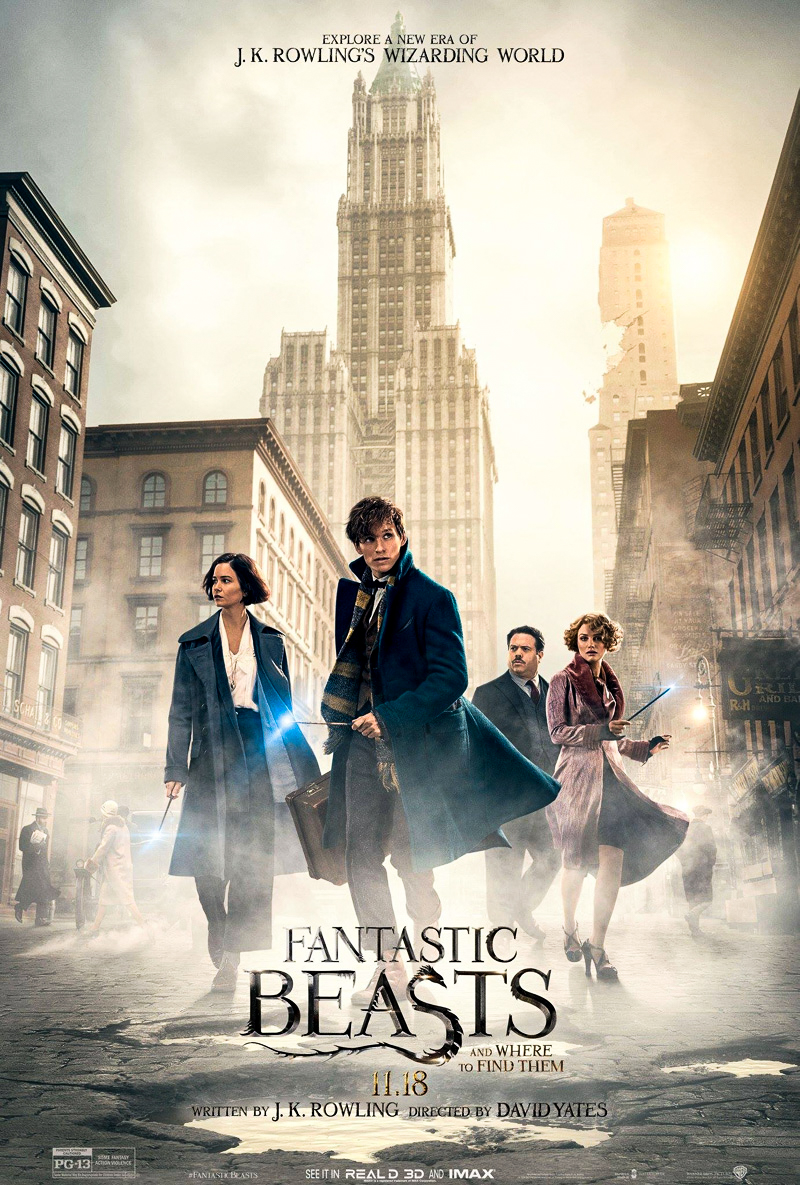
    Walk in expecting a very CGI-ed movie about magical creatures and you’ll be pleasantly surprised by the warm, cozy nostalgia that slips in with mentions of Hogwarts and nifflers. The secret to enjoying this movie is to not think of it as a Harry Potter movie at all. Just keep your expectations low and distance yourself from (what I consider to be) the impossibly high standards that the rest of the series sets. I loved seeing a familiar and yet new magical world.

    There is no time for exposition in this blockbuster; we are thrown into the wizarding world with Jacob Kowalski (Dan Fogler), a No-Maj/Muggle/non-wizard that provides an outsider’s perspective. The audience is given little to no context of who the characters are, which I can imagine is disorienting for those who haven’t seen or read the rest of the series. Newt Scamander, an English wizard portrayed by Eddie Redmayne, comes to New York on his way to Arizona. His trusty suitcase works in the same way as Hermione’s handbag in the final book: It’s much larger on the inside. Several ecosystems of magical creatures coexist within it, a feat that is wholly, for lack of a better word, fantastic. He meets Tina Goldstein (Katherine Waterston), a disgruntled ex-Auror who escorts him into the U.S. version of the Ministry of Magic due to his blatant violation of magical laws.

    What impressed me most of all about the film was its success in creating a Hufflepuff hero. Going in, I had unconsciously assumed that there would be few references to Newt’s Hufflepuff identity and that, in fact, he would simply be a Gryffindor-type character with a black and yellow bow on top. I was only half right: There were barely any mentions of his House, apart from a gray and yellow scarf that he wears and his aptitude for Herbology, but the many qualities often tied to The Badgers are obvious. Like many protagonists, Scamander’s character has a dash of charm and a bit of idiotic bravery, but a character trait that is most emphasized is his compassion. His creatures are shown time and time again to be his top priority, and his idiotic bravery only slips out when he’s attempting to protect them.

    “Fantastic Beasts” also addresses complicated family situations. Through the character of Credence Barebone (Ezra Miller), the audience more explicitly sees the consequences of childhood abuse. In the original series, this theme was often glossed over; when Harry spends time with the Dursleys, they are portrayed as unpleasant rather than downright abusive, although they are clearly both. The damage that this kind of violence causes to a child was almost entirely overlooked with only a couple of exceptions, which cannot be said for this film. Credence’s mistreatment is a crucial part of who he is rather than a largely irrelevant portion of his backstory.

    Although the film’s stance on abuse is clear, many moral conundrums are raised and not all of them are answered. Gellert Grindelwald, the main antagonist, has a plot to expose wizardry to the Muggle/No-Maj world so that wizards no longer have to live in hiding. The violence with which he plans to do this is shown as immoral. However, the film never addresses the possibility of wizards peacefully existing out in the open with the rest of humankind. At one point, Scamander makes an offhand comment about America’s unusually strict laws about interacting with non-wizards, but the topic is rarely addressed again. The potential for a more peaceful world seems to be outright rejected as ridiculous, and the viewer is supposed to take this as fact.

    One of the biggest takeaways from “Fantastic Beasts” is its physical manifestation of oppression. A new creature is introduced, called an Obscurus, which is created in children that are so hateful of their own magical abilities that they suppress them. Then, by the age of 10 or so, the magic has been transformed into a dark power that eventually consumes and kills the child. Though the film indirectly addresses issues faced by the LGBTQ community and those with mental illness, depictions of diversity are overall extremely limited. Interestingly, instead of the conventional, feel-good encouragement, this film serves as a clear warning about the internal torment that suppressing your identity can cause. Either way, it’s very effective.

    The drama of scenes that involve the Obscurus are highlighted by the intense, theatrical score. The soundtrack was composed by James Newton Howard and evokes the same tone as the music in the original “Harry Potter” films. These orchestral works are mostly uplifting and bring back a childlike sense of adventure, of fearlessness, of magical opportunity. David Yates’ directing style is also identifiable as reminiscent of the earlier movies, which makes sense, considering that he directed the last four “Harry Potter” movies in the original eight. J.K. Rowling wrote the script for “Fantastic Beasts,” which further lends to the nostalgia that the film induces.

    Certain bits of dialogue within the film seem to be talking to the project itself, such as when Redmayne very plainly says, “Try very hard not to be predictable.” This movie was undoubtedly made for people who were already fans of the wizarding world. Filmmakers tried their best to make sure that that group was entertained. Wordplay with “Chaser” and “Seeker” (positions in the magical game of Quidditch), along with the frequent use of spells from the original series, gave me goosebumps every time.

    As always, Redmayne’s stunning acting talents shone through, supported by the classic lovable idiot trope in Fogler’s portrayal of Kowalski and Colin Farrell’s depiction of Percival Graves. Waterston and Allison Sudol, who played sisters, have little character depth beyond the tropes that they represent. Hopefully, both characters will be expanded in future films within the franchise. In 2014, J.K. Rowling announced that there would be a total of five “Fantastic Beasts” movies, so get used to seeing nifflers and Erumpents and billywigs and, of course, Redmayne gracing the screen.

  • Reframing the Dialogue

    From Andy Warhol’s commentary on capitalism to sculptures that publicly mock prominent figures, art has long had its role in politics. However, one art form that is rarely explicitly discussed, but arguably has the biggest influence of all, is journalism.

    In this era of political turmoil, I’ve spent more time reading online news articles and trying to become educated on “the big issues” than ever before. In my reading, I’ve become more and more aware of the glaring bias that many news sources have.

    This bias is not something that should be criticized; it simply must be acknowledged. It plays into our confirmation bias, a theorized universal psychological tendency for humans to seek out information that aligns with our pre-existing views and, more dangerously, disregard that which doesn’t align. As a liberal person and a fan of talk show hosts such as Jon Stewart and John Oliver, I have to acknowledge that I get almost all of my news from sources that are liberal-leaning. But that should change.

    When The New York Times reported that Donald Trump had been elected president, they ran an article titled, “Donald Trump Is Elected President in Stunning Repudiation of the Establishment,” written by Matt Flegenheimer and Michael Barbaro. The authors used language like “threatened” and “polarizing” when referring to Trump and the election’s outcome, commented on the irony that working-class white voters connect to an extremely rich candidate that has had extremely different experiences in his life, took note of the hypocrisy in his recognition of Hillary Clinton’s accomplishments in his victory speech due to his previously hateful speech toward her, and painted Clinton in a humanizing manner. The Times endorsed Clinton for president in late September. In their explanation for their choice, they took a decidedly pro-Clinton, but not anti-Trump, stance.

    On the other hand, Bret Baier, an anchor for Fox News, took an entirely different tone when addressing Trump’s victory. As the prediction for Trump to win Pennsylvania came in, pushing him over that elusive 270 mark, Baier took Fox’s viewers on a stylized journey through Trump’s campaign. He told an underdog story, a particular lens that has been used to analyze Trump’s candidacy many times over the course of the election. The president-elect’s route to the White House was described in an exciting, adventurous manner. Baier started by commenting on the entire election, saying it is the most “unreal, surreal election we have ever seen. This candidacy starting on an escalator ride one year ago…[Trump] has defeated the candidate once figured to be undefeatable.” The words on the paper can be read as negative, depending on your personal bias, but the way that he said it was exuberant in the news clip. Although touching on the controversy and divisiveness that has plagued his campaign, Baier told a David and Goliath story rather than focusing on the fact that a white man has, once again, beat out someone else that’s more qualified for the job. But maybe that’s my bias showing.

    In no way am I suggesting that we must embrace the xenophobia and bigotry that has just become even more explicitly incorporated into the mainstream Republican rhetoric; however, I do believe that, in our current polarized environment, journalism is just another thing that is dividing us. And yet art and the media is what can, in the end, bring people together over partisan lines.

    Personal narratives and empathetic conversations are the only way to overcome the enormous gap between liberal and conservative viewpoints. Dividing language that frames itself as an unbiased source of information will only hurt the desire for unity that permeates this country. As I mentioned before, bigotry should be acknowledged and should in no way be set aside for the sake of arriving at a temporary state of peace, but, to arrive at a happier middle ground in terms of policy, we must start a dialogue.

    A recent study by David Broockman and Joshua Kalla revealed that an effective way to reduce prejudice against transgender individuals was by having a relatively short, non-confrontational conversation with those that have negative biases. In the conversation, prompting the prejudiced individual to consider the position of transgender people within society with empathy led to a lasting decrease in their bias. Going forward, journalism should not be considered an unbiased source of information; instead, we must see it as a tool that leads to both becoming informed and promoting empathy and understanding on both sides.

    Unlike much of mainstream journalism, other art forms usually have a clear bias or intention with their work. A short film called “Love is All You Need?” shows how art can alter our perspectives. It depicts the life of a young straight girl in a world where homosexuality is the norm. Although failing to address a sexual spectrum, it creates an alternate reality that can help heterosexual individuals understand homosexuals’ situation in American society by showing heterosexuals in the “cast-aside” position, referred to with insults such as “breeder.” The film cues us to align with the main character and we are devastated as she is excluded by her peers time and time again. The misery and depression that builds over the course of the girl’s short life causes us to feel deep empathy for her and, when the film ends, we are left wondering why a society would be prejudiced against people for their sexualities. Journalism can, and should, have the same impact.

    The light in which a situation is painted entirely affects the way that it’s perceived. The impact of our words as writers cannot be underestimated. And rendering the natural emotional responses that many have to current events irrelevant, like fear of the election of Donald Trump, will only prolong this tumultuous state.

    As time passes, all forms of art develop in various ways. Moving forward, we must consciously consider the role of journalism and the inherent bias in any article. As readers, we must be wary, but we must also be compassionate. Artists and writers have an even more important part to play in the immediate future: promoting empathy.

    Reale is a member of the class of 2020.

  • “Murder on the Beantown Express,” A Slapstick Murder Mystery, Entertains

    “A murder mystery novelist, a Wesleyan student, a detective, an old woman, a couple, and a train conductor walk into a police station.” It seems like the start of an elaborate joke, and, in fact, it is. It’s the setup for Second Stage’s most recent comedy, “Murder on the Beantown Express.” The punchline, as is slowly revealed over the course of the hour-and-fifteen-minute runtime, is a series of one-liners and a hyper-sexualized vending machine.

    Hugo Kessler ’19 wrote and directed the comedic murder mystery, which ran at Music House from Nov. 3 through 5. As he mentioned during his introduction to the play, “Beantown” is meant to serve as a distraction from this year’s general national misery. Although never stunning the audience with its originality, Kessler’s work introduced plenty of red herrings and witty banter to keep everyone entertained.

    The play begins with six people sitting together in a waiting room: Gertrude Perrybottom (Jack Warren ’20), Bobby Flint (Willis Weinstein ’20), Tony Doyle (Ariel Edelman ’20), Sylvia Banks (Ella Larsen ’20), Mara Ferraras (Sophie Elwood ’20), and Will Pierce (Eddie Chapman ’20). As the audience soon learns, all of them were on a train to Boston when a fellow passenger, Jackie Parks (Hannah Levin ’19), was murdered.

    The plot progresses and confusion builds as the detective, Robert Belgrave (Charlie Barrett ’19), interrogates each of the characters. Bobby leads the other passengers in conducting their own investigation that parallels Detective Belgrave’s. Each character has a reason to be suspected. Whether it’s ties to a prominent New York City crime family, a background in intricate murders, or strange stories about the Perrybottoms, everyone has a backstory or character quirk that’s not to be trusted. However, the characters are mainly indifferent to the murder until it appears that they will personally be affected when another one of them is killed off. As expected from a play about murder, suspicion and paranoia develop more and more over time, alleviated by comedic interludes that highlight individual cast members’ talents.

    On the technical front, the show was excellent. Daniel Gordon ’19 successfully designed a simple yet engaging set. The stage was divided into two rooms within the station: an interrogation room and a waiting room. Only two scenes occurred outside this set, which were portrayed with tables and chairs downstage. Mio Magee ’18 did a fantastic job with lighting design, appropriately setting the mood and adding drama when necessary or funny. Lisa Kravchenko ’19 also wowed with her makeup design, skillfully aging a freshman to an old woman.

    Weinstein and Edelman stood out as a hilarious couple. They kept the audience members on their toes with their hysterical chemistry, delivering side-splitting one-liners such as out-of-place references to beekeeping and, perhaps most simply, a well-timed “Ew” as another character began to cough and die. Warren also achieved hilarity as Gertrude, an elderly woman whose rampant sexual desires and odd anecdotes enthralled the audience.

    “Jack Warren’s comic timing was amazing,” said Maggie Rothberg ’20, who attended the show. “It consistently made me laugh out loud.”

    With much of the cast being made up of first-year students, The Argus spoke to those involved in the production about the experience of working on a cast that was dominated by new talent.

    “‘Beantown’ was a fantastic introduction to the Wesleyan theater scene for me,” Edelman wrote in an email to The Argus. “I’ve never been in a show that was entirely run by students before and it was super fun to be working with an original script. It really showed me the ingenuity of student theater.”

    The difficulty in murder mystery parodies is finding the balance between mystery and parody. “Beantown” missed the mark a few times with the occasional bit of oddly timed humor during a more serious portion of the play. Still, there was certainly no predicting the plot of this wacky dramedy, which successfully held the audience’s attention for the duration of the production.

    There were frequent references to Wesleyan or Kessler himself, with mocking mentions of Boger Hall’s new name and the movie “Hugo.” However, the humor that got the most laughs was based off the characters’ interactions with one another—or props—rather than allusions to concepts that weren’t on stage. The show also jokingly addressed serious issues within the U.S. film industry, garnering snaps of agreement from the audience.

    Although almost entirely sticking to the murder mystery parody formula, the production was compelling throughout, even if not due to bewilderment with the many prominent bizarre elements. The play ends in a police station with a writer for The Post, Casey Jackson (Dan Bachman ’17), interviewing the murderer and throwing in a final twist just before the curtain.

    Overall, “Murder on the Beantown Express” was worth seeing for the entertainment factor and the wonderful performances delivered by an enthusiastic cast. Second Stage now has productions due to be performed on most weekends for the rest of the semester, including “High School Musical” from Thursday, Nov. 10 until Saturday, Nov. 12. Although two murder mystery parodies this season have filled the quota (“The Storm of Mystery” was shown at Psi Upsilon from Oct. 6 through 8), it’s a genre worth continuing to explore in the future.

  • The Dangers of Hitting “Shuffle”

    I’ve never had particularly unique music tastes. I spent years listening to The Fray, Coldplay, Green Day, and The Script. I drew power from “Gives You Hell.” I convinced myself that I was inspired by the anger and sadness and emptiness that permeated the tracks. And, for a while, I was. But then it became a miserable habit.

    During the dark days of second-semester junior year and first-semester senior year of high school, tracks like “For the First Time” played on loop as I pulled all-nighters. I spiraled into a routine of putting my headphones in to block everything else out, just for a break. I was trying to escape tests and papers and college apps and stop myself from feeling the pressure of it all. I needed to allow myself to calm down and think.

    Instead, music just aided me in emotionally shutting down.

    Listening to this music was stressful. I pressed “shuffle” because I genuinely didn’t care which song was played; I couldn’t really tell the difference between them. I associated the playlist of 136 songs with those nights of work, and I couldn’t enjoy a second of it. Even the positive tracks, like Vampire Weekend hits, were tainted. So, in October, I purged my music collection.

    I got recommendations from friends of happy, motivational songs and “Senior Year Survival Playlist” was born. I had 170 upbeat songs and, despite work and stress the likes of which I had never experienced before, I was feeling better. I had Imagine Dragons and Beyoncé and The Mowgli’s singing in my ear, motivating me and calming me. My mood was no longer instantly worsened by “my favorite songs” and real relief came from immersing myself in music.

    This one change had a ripple effect. A month later, I stopped compulsively watching bad, overdramatic procedural shows that were just a mindless way of procrastinating. The elimination of “Bones” and “Vampire Diaries” and “Grey’s Anatomy” from my weekly routine gave me the freedom to play guitar and read and finish up my work and get to bed an hour earlier. Cutting out another mechanical habit further lessened my internalized pressure.

    Now I’ve developed my own tastes in music. I listen to support my friends’ musical endeavors, I listen to expand my tastes, and I listen to what makes me happy. I can appreciate technically beautiful and beautifully technical tracks, but appreciation is entirely separate from enjoyment for me. I don’t care about a song’s popularity. I don’t care if it’s punk-pop, vocal jazz, folk, or electronic indie-pop. I just care that I like it.

    I know that this probably sounds obvious to most readers. Of course you’re supposed to listen to things that you like to hear. But it took me 17 years to act on that very simple principle.

    Now that I’m out of the horrible panicky swirl of last fall, I can choose to listen to Adele tracks and cry because I want to. For me, music can be a wonderful aid in emotional release. But there’s no more compulsion and no more suppression. I’m no longer a musical zombie and I go through life with melodic purpose.

    Music can be in the background, it can be the main event, it can be anything you want. I don’t know if my experience of getting into a musical habit is common or incredibly strange or simply reflective of my deep-rooted instinct to form routine, but I do know that listening with intention has heightened my self-awareness. I’m not afraid of confronting my emotions and I’m conscious of the control that I have over my mood. My more positive outlook has led to a desire to reflect internally, which has made me much healthier emotionally.

    So all I can say is, listen to whatever you want. Don’t let your musical tendencies of the past define your tastes now. Check out the Discover Weekly playlist on Spotify or get artist recommendations from friends. The bottom line is (as I’m sure a disgustingly healthy Instagram account would say) be aware of what you’re putting into your body. Cut down on carbs and beef up on good, fun vibes, because we all deserve some joy once in a while. Host a dance-party-for-one in your dorm room while your roommate’s out. Cry on your bed because that’s what your body needs today. Recognize the power you have over yourself and choose to plug into positivity.

    Reale is a member of the class of 2020.

  • Behind the Pug’s Mug

    Dogs. Man’s best friend. Arguably the best animals in the world (an argument that I am happy to make). Kind and loyal. Loving and generous.

    When I think about dogs, I think about golden retrievers and German shepherds. Glorious black labradors running toward me, tails wagging like they’ve been injected with speed, clean tennis balls held tightly in their mouths (and then they want you to throw it, but they’re not willing to give it up. What’s up with that? I mean, it’s adorable, but what’s up with that?).

    But we’re not here to talk about those majestic creatures. No, we’re here to talk about pugs.

    That’s right. Pugs. Maybe you think they’re cute. Maybe you just think they’re ugly. Maybe you think they’re so ugly that they’re cute. Maybe you don’t really think about pugs at all. But what generally comes to mind is the characteristic smushed-in face. As Nathan Shankman ’20 said, “They’re cute. They’re like little marshmallows. They’re just tiny, wonderful…. ”

    Over hundreds of years, we’ve bred them for that adorable mug and eyes that bug out of their heads. We think it’s endearing and, because of it, they’re suffering.

    Before researching pugs to write this article, I was fairly neutral toward them. Although I strongly identify as a dog lover, I wouldn’t consider myself an animal rights’ activist, just a big fan of their work. However, after reading about how much we’ve screwed with their bodies just to make them into a more “ideal” shape, I am strongly tempted to go find dog breeders and swiftly and mercilessly punch them in the face.

    Due to both inbreeding and breeding for particular traits, the pugs’ genetic pool has become severely limited. Furthermore, a majority of the pug population suffers from severe respiratory problems, spinal problems, and vulnerability to eye damage. The respiratory problems are partially due to their recognizable faces, which have excess skin over the nose and hide a severely compromised respiratory tract. Their curly tails are actually due to abnormalities in the spinal column, which commonly exist in multiple places in any given pug. Their eyes, due to their tendency to bug out, are extremely susceptible to a range of injuries that most other breeds are protected from.

    In the past decade or so, awareness of our excessive artificial selection has skyrocketed. Like pugs, many other breeds of small dogs are struggling. Nowadays, 80 percent of French bulldogs have to be artificially inseminated, and then the puppies must be removed by C-section because their heads are simply too big. Without human help, a pregnant French bulldog has a very low chance of being able to successfully give birth.

    Some may argue that this isn’t so important. As we all know, dogs are a domesticated species. As long as humans are looking out for them, there is no reason to worry. But we’re not always taking care of them. Approximately 3.9 million dogs enter shelters in the U.S. every year, often being given up by people who can’t take care of them anymore. Not everyone takes such a humane approach. It’s impossible to estimate how many stray dogs there are in the country, but it’s well-documented that some pet owners who find themselves unable to care for their animals choose to just abandon them. There’s no guarantee that these dogs are being cared for, and we have to start considering their health because, right now, they quite literally can’t live without us.

    Back in 2012, a renowned veterinarian, Dr. Gerhard Oechtering, called for us to stop having these types of dogs as pets. He says: “The whole veterinary profession is faced more and more with the situation that we are becoming the repair troop for small animal breeders. We should totally stop breeding brachycephalic breeds. Breeders have shown they are not able to breed healthy animals.”

    I think that it may be harsh to entirely eliminate a breed of dog, for even if we created them, that doesn’t afford us the right to later eradicate them. Instead, I suggest an alternative solution: crossbreeding. If we breed pugs with various species, the genes that have previously led to so many health problems will become less and less common. We won’t entirely be giving up the classic pug look, and many of their features will still be visible. Our inhumane actions of the past will be rectified, and we will go forth in life knowing that those adorably wrinkly faces are still out there.

    Help pugs and bulldogs and support the initiative to let their breed’s medical problems be purposefully and carefully limited. Dogs have been loyal to us, and it’s time for us to be loyal to them.

    Hannah Reale is a member of the class of 2020.