
Author: Emmy Hughes

  • Greenwood and Herbst Receive NASA Grant for Chondrule Research

    Two University professors—Assistant Professor of Earth and Environmental Sciences Jim Greenwood and Professor of Astronomy and Integrative Sciences Bill Herbst—have received a grant from the National Aeronautics and Space Administration (NASA) totaling $550,000. The grant will help Herbst and Greenwood fund their research, specifically a joint-program entitled “Experimental simulations of chondrule formation by radiative heating of hot planetesimals.”

    As the title indicates, the program focuses on research in chondrule formation. Chondrules are spherical mineral balls of melted igneous rock that are present in meteors, often known as chondrites. According to Herbst, they are also remnants of a time dating back close to the origin of the solar system.

    “[Chondrules] are among our oldest fossil records of the solar system,” Herbst wrote in an email to The Argus. “They formed before the Earth and other planets did. They preserve clues to the origins of our planet and solar system. But they have remained mysterious for decades. Our work will hopefully peel back some of the mystery about them and help us understand how they fit into the picture of the origin of the Earth and planets.”

    Chondrules are primarily composed of silicate minerals and can be surrounded by crystalline or glassy feldspar. While much is known about their composition, questions remain about their formation, including the original energy source and the precursor materials. In order to form, chondrules require intense heating and then rapid cooling, which is a process difficult to identify in the early solar system. Herbst and Greenwood’s research will focus on identifying the origin of at least some chondrules.

    Their theory, called the “flyby model,” proposes a potential origin.

    “The flyby model is conceptually very simple,” Herbst explained. “If there are hot planetesimals in the early solar system, bubbling over with lava and volcanoes and erupting stuff, then anything close-by will get heated. If the right kind of pre-meteorite rock [flies] by at the right time it could be just like putting it in an oven and ‘sintering’ it into a solid—something that is done commercially in furnaces on Earth and that we will simulate in a furnace in Exley. The precise products that arise from this process can be used to tell a lot about what heated the rocks, how they were orbiting and what conditions were like in the asteroid belt, where the meteorites formed, billions of years ago.”

    The NASA grant will help pay for a post-doctoral fellow who will work with Herbst and Greenwood. The fellow, working specifically in Greenwood’s lab in the Exley Science Center, will reproduce chondrules in order to identify potential conditions for their origins.

    The grant itself was a sizable undertaking on the part of Herbst and Greenwood.

    “It takes literally months to write [grants like this one],” Herbst noted. “NASA imposes all sorts of requirements on the grant that you must meet. It is then evaluated by a panel of experts and competes in a pool for limited amounts of government money. The success rate for grants in our general area has recently been only 15-20 [percent] because relatively little money is committed to this area. Naturally, Jim and I were absolutely delighted to learn that the grant was funded.”

    University students studying science have received generous donations from NASA in the past.

    While Herbst and Greenwood are professors in two different fields, they are united in this project, which grew out of the Planetary Sciences Program. This program is a joint venture on the parts of the Earth and Environmental Sciences and Astronomy Departments, and offers a minor for undergraduate students as well as a graduate student program.

    Herbst notes that this is another example of the values of interdisciplinary programs.

    “The research grew out of this collaborative, interdisciplinary program, and it is a great example of how such an approach to science—which is widespread at Wesleyan (e.g. the CIS program) can work,” he said. “I’m sure that without the interdisciplinary approach that we bring to science (and other fields) at Wesleyan, this research would never have developed in the way it did.”

    In the end, Herbst and Greenwood will be conducting research in a fairly mysterious and very interesting field of cosmochemistry.

    “It is all pretty exciting to us!” Herbst said.

  • Wesleyan Refugee Project Hosts Silent Auction

    The Wesleyan Refugee Project (WRP), a campus organization that raises awareness for the worldwide refugee crisis and aims to support individual refugees, hosted an online silent auction between April 4 and April 10. The auction raised money for an online company called Paper Airplanes, which connects college students in the United States with Syrian refugees, and is one of the organizations with which the WRP works.

    This is the second semester the WRP has hosted a silent auction. With 65 items available for bidding, the auction took place entirely online, run though the website “32 Auctions.” Items ranged from pieces of jewelry to handmade art to food (“Batch of Cookies,” “Batch of Brownies,” and “Batch of Cupcakes” were all items available for bidding). In a category called “Specialty Services,” the auction offered a range of options, from sailing lessons to portrait photography to gift cards. The most popular item was “A Portrait of Your Pets by Lydia Tonkanow,” with 22 bids, while rides to locations such as Bradley Airport were also popular for bidding. In all, at the date of publication, the auction raised $400 out of its $600 goal.

    Joshua Su ’17 was featured in multiple items available for bidding, notably one called “Dinner with Josh Su” as well as “Haircut by Josh Su.” Both were labeled as “priceless” under value, and “Dinner with Josh Su” had a bid at $10.50 at the date of publication. Su notes his eagerness to participate in the auction.

    “I got involved because my dear friend Cheryl [Hagan ’17] is very involved and it has always been something I supported,” he wrote in an email to the Argus. “I knew there were ways and services I can provide (I had done haircuts where people, mostly friends donated to a charity of their choice) so I naturally offered what I could.”

    Su added that he felt fundraisers, like this one in particular, served a worthy purpose.

    “This is not just a fundraiser but also raises the [public relations] and the issue and needs that Paper Airplanes and the WRP are trying to meet,” he explained. “[A]nd I think getting people to talk about it and be motivated to actually do actionable things has been a way that the silent auction has been important.”

    The site page for the auction describes its goal.

    “All of the proceeds collected from this event will be donated to Paper Airplanes—a program that remotely connects American college students and Syrian refugees for English tutoring,” he said. “They are fundraising to pay for TOEFL and IELTS tests, critical English tests for their Syrian students who want to attend university or seek employment opportunities. In the face of recent political opposition and uncertainty, these efforts are critical and we must show our support.”

    The Paper Airplanes website describes its mission in two bullet points: providing digital assistance to “conflict-affected communities” and fostering “cross-cultural relationships” between students and tutors. They have four distinct programs: English, which helps to provide English tutoring through a digital classroom; Turkish, which works to provide Syrian refugees in Turkey with knowledge of the language; Women in Tech, which helps to teach women coding; and Youth Exchange, which connects United States high school classes with Syrian refugee high school classes.

    Casey Smith ’17, one of the founders of the Wesleyan Refugee Project, notes that Paper Airplanes is just one of a multitude of projects on which the campus organization is working. She also explained that despite the Trump administration’s anti-Muslim and anti-refugee laws, the WRP is continuing to do the work it has done in the past.

    “The issues are changing and how people are talking about them are changing, but we’ve pretty much been able to keep doing the same work in the community,” she explained. “So, we still have eight volunteers going every week to IRIS [Integrated Refugee and Immigrant Services] for a few hours to work with our clients there, in New Haven. We’ve been volunteering for them for three years, and it’s still going really well, [we’re still] doing the same work. We work on Energy Assistance applications, and so basically that just means our volunteers help various people with paperwork, getting all their forms together to apply for energy subsidies, and that’s been going really well. Then we also still work with the International Refugee Assistance Project, which provides legal services to refugees trying to come to the U.S….And even if that program were to end, I think we would still try to help people get as much documentation as we can, just because the idea is at some point, the U.S. will keep resettling those people, hopefully.”

    Julia Morrison ’17 leads IRIS, and noted some of the work they’ve been doing.

    “At IRIS, we help refugees apply for energy assistance, so we fill out forms, governmental forms, that will allow them to apply for and often receive some amount of monetary assistance that will pay for heating and electricity,” she said. “We go there twice a work, and work with two wonderful case managers.”

    Smith also explained that with all the various projects, which have a total of between 50-60 volunteers, meetings are project-based.

    “We don’t really have WRP-wide meetings because there’s a lot of different stuff people are doing, and so people just meet in their separate projects,” she said. “It’s all about delegating.”

    The WRP has a variety of events and fundraisers coming up, including a panel about Yemen and a documentary screening, as well as a photography exhibit located in the CFA green.

    If you would like to get involved in the Wesleyan Refugee Project, check out their Facebook page or email Smith at cksmith@wesleyan.edu.

  • Congresswoman Rosa DeLauro Calls Students to Action

    In response to the election of Donald Trump as the 45th U.S. president, the Wesleyan Democrats (WesDems) are hosting a succession of political speakers in a series called “Resistance in the Age of Trump.” This series aims to demonstrate the steps current Democrats in office are taking to oppose the Trump administration, in addition to informing the University and Middletown communities of actions they too can take. On April 1, the series opened with Connecticut Congresswoman Rosa DeLauro as its first speaker, addressing a full audience in the University’s Public Affairs Center.

    After an introduction from state representative and Wesleyan alumnus Matt Lesser ’10 and WesDems president Simon Korn ’17, Rosa DeLauro took to the podium—though over the course of the talk she spent little time behind it, preferring instead to walk around the floor. She opened the talk with a call to action, noting the necessity for persistent efforts on the part of the nation’s public.

    “There’s such a need for your drive and your energy right now,” DeLauro said. “The way I characterize it, it’s really dangerous times, perilous times. So your engagement and involvement…is really critically important.”

    Moving on to note the importance of paying attention to the multifaceted dimensions of certain issues, DeLauro entreated students to stay informed in order to ensure their voices are heard.

    “It’s important to understand the nuances of the various debates that are occurring in the Congress, the fine points of those debates,” DeLauro said. “To the extent that you find an area that you’re particularly interested in, follow that, because it’s not always what you read in the paper or what you hear on the news, et cetera. It’s much more granular than that in terms of what the outcomes are and can be in these events. As I said, these are a difficult few months. We are in uncharted waters.”

    DeLauro then moved into a discussion about the Affordable Care Act, explaining the dynamics surrounding the Trump Administration’s attempt, and subsequent failure, to repeal it. She brought up multiple perspectives on the issue, noting first the unity of the Democratic National Party in regard to preserving the Affordable Care Act, and the important role the public paid in keeping the bill afloat.

    “I believe that the reason why that bill was pulled, and they had such a failure, was because of the American people,” she said. “The marches, the phone calls, the letters, the communication. The overwhelming communication, to people, not just in their offices in Washington, but in their district offices. It was overwhelming.”

    DeLauro transitioned into a criticism of a number of people Trump chose to put into office, namely Secretary of Education Betsy DeVos and Environmental Protection Agency (EPA) Administrator Scott Pruit.

    “Betsy DeVos, Secretary of Education,” DeLauro said. “Wow. I don’t know what to say…She does not believe in public education… And talk about separation of church and state, she has a major tie with religious institutions, and I went through 16 years of Catholic education, but this is not public education, which is 90 percent of our kids. She does not believe in making sure that they are provided for. So we will do the same thing; I’m watching the administration as closely as I can.”

    Likewise, DeLauro noted the negative consequences of the Trump administration’s decision to place Scott Pruitt as the administrator of the EPA. DeLauro mentioned that Pruitt had sued the EPA over a dozen times, and that not only does he not believe climate change is caused by humans, but he also rescinded executive orders from the Obama administration that protected the environment and curbed emissions.

    “They’ve got the wrong priorities,” she said. “We’ve got to protect scientists and researchers.”

    After finishing her talk with another call to action, in which she stressed the necessity of political involvement, DeLauro took questions from the audience. Théo Storella ’20 posed a question concerning hope for moving forward efforts on prominent issues under this administration.

    “Resistance is really good to keep things from moving backwards, and that’s great, but for these issues like healthcare and the environment and stuff like that, we not only need to keep ourselves from moving back, we’ve got to go forward,” he said. “So if we don’t have the house of representatives, would you say there’s kind of a degree of hopelessness in that?”

    DeLauro replied by explaining the necessity of first fighting Republicans on their efforts to dismantle both healthcare and environmental laws, and then from there, Democrats furthering efforts in both. She explained the importance of the 2018 elections in getting things turned around, as well as mentioned the importance of ensuring the Affordable Care Act was not repealed. She noted that no matter what, one should not lose hope.

    “I never talk about hopelessness, I got to tell you that, I never go there,” she said. “I can’t go there.”

    Korn and board member Alexandra Prendergast ’20 both thought it to be a successful and extremely relevant event.

    “This is one of the components of our plan to become a focal point for the resistance against the Trump administration on campus,” Korn explained. “It’s about asking people who have experiences with resisting presidential administrations, the Trump administration specifically, [and] making a difference in the face of long odds, or making a difference in the face of any kind of odds. How we, as Wesleyan students, who live in a liberal district, who by and large come from liberal districts, can make a difference.”

    Prendergast shared in Korn’s sentiment as to the importance of bringing speakers to the University.

    “This year, we’re seeing a lot more political activism nationwide than we have in many, many years, and so I think it’s extremely important as Wesleyan democrats that we engage with the community here on campus and elsewhere to try and get people active and involved in politics,” she said.

    Despite the heavy topic, DeLauro’s speech and Q&A session was ultimately hopeful.

    “People cannot get tired of engaging on these issues,” she said. “You’ve got to overwhelm the system.”

  • Poet Claudia Rankine will be 2017 Commencement Speaker

    Poet Claudia Rankine will be 2017 Commencement Speaker

    c/o libguides.transy.edu
    c/o libguides.transy.edu

    Commencement speeches addressing a class of graduates from a secondary institution are a historical tradition in which hundreds of universities, including Wesleyan, take part each year. Notable speakers have included former presidents, writers, actors, and entrepreneurs, and all are usually considered extraordinary human beings who may have words of wisdom or advice to give to a new generation of scholars. The University’s 185th commencement, honoring the graduating seniors of the Class of 2017, will take place on Sunday, May 28, with renowned writer Claudia Rankine delivering the address.

    Claudia Rankine is a poet, playwright, and essayist known for her multimedia projects and award-winning collections of poetry. Most notably, she has been praised for her collection “Citizen: An American Lyric,” a meditation on racial aggression in modern America, ranging from slips of the tongue to explicit violence, and the effects this can have on a person’s ability to speak, perform, and live. “Citizen” is the recipient of over a dozen awards, including the National Book Critics Circle Award in Poetry, and is a finalist for the 2014 National Book Award in Poetry.

    Some of Rankine’s other poetry collections include “Don’t Let Me Be Lonely: An American Lyric” (Graywolf Press, 2004), which is an extensive multi-genre project of poetry, essays and images, as well as “Nothing in Nature is Private” (Cleveland State University Poetry Center, 1995), which received the Cleveland State Poetry Prize. In addition to editing numerous anthologies and writing two plays, in 2013, Rankine was elected as a Chancellor of the American Academy of poets, and in 2016, she was awarded a MacArthur “Genius” Grant. She currently works at the University of Southern California as the Aerol Arnold Chair of English.

    President Michael Roth ’78 commented on the choice of Rankine as commencement speaker, noting that choosing speakers often involves managing a variety of forces.

    “There’s a real juggling of what’s possible, what would be unbelievable, what would be great, [and] what would be a fallback,” President Roth said. “In this case, Claudia Rankine has a long association with Wesleyan University Press, she’s a recent MacArthur winner, she’s one of the most famous poets in America. We haven’t had a poet in quite some time. She speaks to issues of the moment, as someone whose work intersects with the Black Lives Matter movement. The book of course that her reputation became so widely known for is ‘Citizen,’ which is of course is very interesting in terms of immigration.”

    “I think it’s a great thing to have a poet….She’s a poet who also has reached a popularity unlike any other American poet, I don’t know, maybe since Robert Frost if not before. I’m really looking forward to it; I have no idea what she’s gonna say,” he added.

  • Why We Must Change the Rhetoric of Climate Change
    Like other forms of rhetoric, verbal efforts to promote environmental sustainability are rooted in human nature. In a society that desperately needs to engage in more sustainable practices, environmentalists and activists must ask themselves how best to persuade the public to participate in practices that are environmentally beneficial, or at least less detrimental. It is a dilemma, like other dilemmas of public persuasion, that is rooted in the question: how do we get people to care?

    Traditionally, most climate rhetoric has centered around people’s sense of morality, justice, and ethics. While these arguments are fair and hold water, I believe there is another method of rhetoric that may receive a heightened degree of response: a human-centered one that appeals to a person’s sense of selfishness and, to an extent, right to exist in a prolific world.

    I am not naturally a cynical person, but I do have one slightly disparaging (though nonetheless observable) belief: humans are innately selfish. Though selfishness is usually considered a negative trait, it is a universal one, whether that manifests in large ways or small. This is not to say that compassion and empathy do not exist; they do, to an enormous and powerful extent. However, I’d like to note that selfishness, too, plays an equally, if not more, powerful role.

    The rhetoric of climate change does too little to appeal to the sense of selfishness that is fundamental to humanity. Rather, climate and sustainability rhetoric appeals to a sense of goodwill or guilt, with phrases like “Save the coral reefs!” and “Save the polar bears!” being some of the first that come to mind when considering the reasons to combat climate change. These phrases, though of course rooted in truth and a need for action, present humans as the ones who must do the saving of other creatures, rather than a species also at risk. Likewise, the species to which they refer are very much removed from the lives of most ordinary people. How many of us have seen a polar bear in the wild, or frequented a dying coral reef?

    Instead, we must shift our vision from a need to swoop in and save other creatures to a need to also save ourselves. If, environmentally, we continue to move in the direction that we are currently heading, the earth will reach a tipping point, crossing a boundary from which we will not return in over the course of our species’ existence. Average temperatures will increase drastically, and the climate will shift to a degree that is nearly impossible to predict. But these changes have the potential to affect humans to a massive extent. Entire neighborhoods will be flooded and destroyed due to rising waters and increased storm intensity. Devastating hurricanes like the ones that have ripped through the East Coast will become more frequent and more intense. And this is just in the short term. In the long term, climate change has the potential to, in the most extreme case, wipe out the human race. Therefore, when we talk about the effects of climate change, when we say that we must “save the planet,” rather we should be saying “save humanity.” Not only because this style of rhetoric will motivate more people, but because the future of humanity is increasingly at risk, as we make our planet more and more unlivable for our species.

    On a similar note, the attention to non-human animals that pervades climate rhetoric also diverts attention from the many communities of lower socioeconomic standing that have already been severely affected by climate events. A prime example is post-Hurricane Katrina New Orleans, in which the poorer communities suffered greatly from flooding. And many places, including the predominantly Black neighborhood of the Ninth Ward, remain severely damaged and largely abandoned. And yet, a decade after Katrina, little attention is paid to this community, with much more diverted to endangered animals and, more simply, the non-human “Earth.”

    In spite of what is previously written, I do not intend to argue that we should ignore the continued destruction of non-human habitats, or that we should divert attention from pressing concerns of environmental degradation affecting plants and animals more than humans. There are thousands of species much more at risk from the impacts of climate change and hundreds currently endangered or extinct due to human interference, like, of course, coral reefs and polar bears. Efforts to protect the environment for non-human plants and animals are incredibly important, incredibly necessary, and in many ways more so than anthropocentric concerns.

    We should, rather, include ourselves in the mix of species at risk, recognize that humans are not exempt from the impacts of climate change. We are as much a part of, and dependent upon, this environment as any other species, as much as we try to distinguish ourselves as disconnected from nature. This acknowledgement of dependence ensures that within rhetoric of saving the environment, it is clear that we are not angelic beings swooping in to save “nature,” but simply making the necessary actions to save our home and ourselves.

    But the largest reason behind the need to shift climate rhetoric from “save the earth” to “save ourselves” is this: the earth, as a living planet, is going to be okay. Despite the rhetoric, the planet will weather climate change as it has weathered massive fluctuations in climate in the past. While in this case, the reason behind the climate fluctuation is quite different, as it is caused singularly by one species, there will still be plants and animals that thrive in changing environmental conditions. The environment, while perhaps taking a very different form to the one we know today, will soldier on.

    This planet has undergone five major mass extinctions in the past: The Ordovician-Silurian, the Late Devonian, the Permian, the Triassic-Jurassic, and the Cretaceous-Tertiary. The Permian Mass Extinction, also known as “The Great Dying,” marks the most extreme example. 250 million years ago, 96 percent of life on earth went extinct, potentially due to colossal climate change. All life on earth today is descended from that surviving four percent. It is a percentage almost impossible to compute, almost impossible to imagine that life persevered and ballooned into the diversity of species we have today. And yet here we are, billions of years after the origin of life on this planet, in an extraordinarily ecologically diverse world. Thanks to diverse genetic pools of many species, life will persevere even with rising temperatures and sea levels and increased storms, floods, and droughts. The environment, or some form of environment, will survive. It may not, however, include humans.

    Culturally, humanity is taken to be eternal, endless, excepted from the rules of nature and evolution under which other, far less advanced species operate. In other words, we fancy ourselves eternal, and the earth temporary. While in reality both are ephemeral, it is also true the earth will far outlast humanity, as will life. We are not, by a long shot, the most resilient species on this planet. While we are excellent at adapting, we are not excellent at surviving through massive floods and tsunamis, living in droughts and extreme heat.

    Thus, we must make efforts to shift the language around climate change to one that throws humans in the mix, recognizing the need to save humanity as more pressing and more true than the need to save the planet. Not only must we see ourselves as very much immersed in and dependent upon this environment, but we must realize that our future as a species relies upon our ability to recognize that we are more vulnerable than we think.

  • Anger, Politics, and Writing intersect in Mishra Lecture

    Anger, Politics, and Writing intersect in Mishra Lecture

    c/o Huffington Post

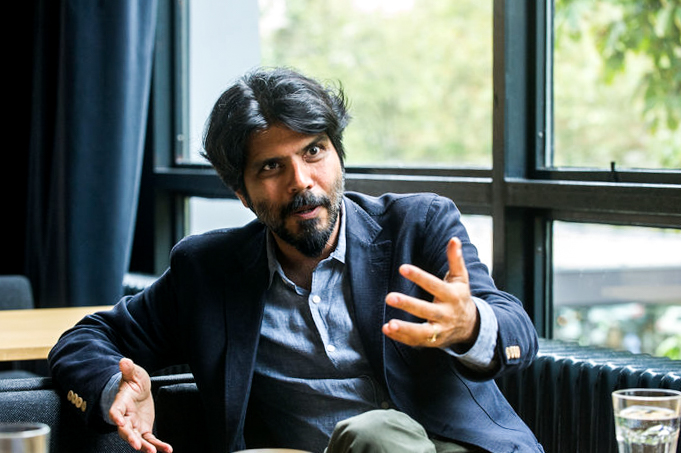
    Pankaj Mishra has written all his life. Not only does he regularly contribute to publications such as The New York Review of Books, The Guardian, and The New Yorker, he has also authored a number of nonfiction and fiction works that have received high praise and numerous awards. According to Mishra, creating the well-researched and thoughtful pieces that he’s known for takes dedication and perseverance, and from time to time, eavesdropping.

    “Strongly recommend eavesdropping,” he said.

    Mishra addressed this advice to a group of students at a Q&A session in the Downey House lounge on March 2, prior to the lecture in Russell House later that evening. While the Q&A session primarily covered questions about the writing process and the pieces students had read in class, the lecture revolved around Mishra’s new book, “Age of Anger: A History of the Present.”

    The seats in the Russell House lecture room filled quickly by 8 p.m., and many students found themselves seated on the floor or outside when Assistant Professor of English Hirsh Sawhney took the podium to briefly introduce Mishra and his recent work.

    “When I was your age, not too long ago, I lived in London, and every weekend I would rush to the local store where I lived to buy a copy of The Guardian weekend magazine to be able to read the most recent article by Pankaj Mishra,” Sawhney said to the crowd. “And those reads were invigorating and eye-opening to me. All that’s to say that it’s pretty amazing and remarkable to be here 15 years later, in this capacity.”

    Sawhney then noted the importance of reading works by people like Mishra in this current political landscape, a landscape in which Donald Trumps are elected president, Britain leaves the European Union, and Hindu Nationalism is rampant in India.

    “If we seek to move on from this horrible present,” Sawhney added, “We need to ask ourselves: ‘How did we get here?’”

    “Pankaj Mishra’s erudite and illuminating new book The Age of Anger enables us to commence with this reckoning,” Sawhney said, and invited Mishra to the podium.

    Mishra opened with a discussion of Timothy McVeigh. In 1995, McVeigh parked a truck filled with explosives outside of a Federal building in Oklahoma and detonated it, killing 168 people in what became known as the Oklahoma City bombing. He was executed in 2001.

    Mishra drew on the similarities between McVeigh and the Islamic extremism that now defines so much of the world stage. As Mishra discussed, what connects these two forms of terrorism is an ostensible fundamentalism, which he sees as an imposition of rationality on what is an unpredictable, emotional being: humans.

    “Such ideological eclecticism only became possible because all these lone wolves possesses a will to violence and mayhem untrammeled by any fixed doctrine Islamic or otherwise,” Mishra said.

    Mishra sustains that the urge to pin some rationality on extreme terrorism—in McVeigh’s case a conservative radicalism and in Islamic extremism case a religious fundamentalists—is due to the modern tendency to frame everything through economics idea that humans will always act in their best interest.

    After Mishra’s opening reading, he sat down with Sawhney for a conversation about liberalism, relations with Islamic states, and media in the modern age of Brexit and Trumpian politics. Sawhney posited a question about international politics in this era, to which Mishra replied with commentary on a variety of political subjects.

    “I think perhaps, we during the Cold War got into the habit of thinking very simply about the world,” he said. “We didn’t have to think too hard, let’s put it this way, about the world, which was divided into the free world and the un-free world…And those habits of thought, those very simple habits of thought, we then basically moved them over to Islam, saying that we are locked in some kind of ultimate generation-long struggle with Islam and fascism or Radical Islam. Which in our minds is a very slippery slope.”

    The two moved on to a discussion of national power and pride.

    “I think the addition of great power always has this effect of making people fundamentally complacent, of thinking that the rest of the world basically wants to be like us, and that we are a great model for everyone else, and that our technologies, our economic methodologies, are successful and that they should be followed by other people,” Mishra said.

    Mishra noted that these kind of theories can find their way into the mentality of a nation, such as the United States, without being fundamentally challenged. He added that this is worldview, with the advent of Brexit and Trump, is now being challenged, thus causing a state of shock in American and British citizens.

    “Maybe, it’s a good kind of shock, if it forces us to become more rigorous,” Mishra said. “If it actually forces us to reckon with these experiences, these diverse experiences. Not just the winners of history, but also let’s look at the losers of history.”

    The two then began discussing Mishra’s book, specifically in the context of 17th and 18th century thinkers, to which Mishra referred throughout its pages.

    “When I started thinking about this particular book, I felt that I had to go back…to the moment when the modern world that we live in, when its principles were being formulated,” Mishra said. “When we were debating what sort of society we should make, we should have, given that we are moving away from older forms of society, which were dominated by tradition, traditional religion, or traditional forms of political authority. And it was important to look at those debates and to identify the problems that were even then being diagnosed in the late 18th century.”

    Sawhney, later in the conversation, brought the topic around to Arabic and Asian writers who are left out of Western canons of literature. Considering the importance of these perspectives and works, Sawhney asked Mishra his thoughts on the effect of the loss of these voices. Mishra explained that this loss stems from the large egos of large countries.

    “Big countries—and I come from India, we suffer from the same syndrome—big countries have big heads. They are self-centered. They produce huge amounts of culture, literature, art. And so yes, there has been a creative intellectual loss.”

    Following Sawhney and Mishra’s conversation was a Q&A session, in which students and faculty addressed Mishra with their questions. Topics ranged from Assistant Professor of English Lily Saint’s questioning of Mishra’s reliance on male figures in his talk that evening to the increasing threat of demagoguery in age of dwindling social mobility.

    At the other Q&A session that took place previously in the day in Downey, Mishra discussed his affinity for writing about politics.

    “It’s always fascinating to me: this process of finding out just how one comes to be interested in the the things one is interested in,” he said. “What are the different accidents, why did I think of this. That in itself is a narrative that I feel should be told, should be shared.”

  • David Lowery Discusses Intellectual Property

    David Lowery Discusses Intellectual Property

    c/o Rebecca D'Angelo, New York Times.
    c/o Rebecca D’Angelo, New York Times.

    Over the course of his life, David Lowery founded the band ensemble Camper Van Beethoven, advocated for artists’ rights, and wrote (and continues to write) about the impact of technology on the music industry. On Feb. 20, he spoke at the University’s Monday Night Lecture Series. His lecture, entitled “Artist Levellers and Digital Diggers,” addressed the ins and outs of intellectual property, through the lenses of the music industry and the British Civil War.

    Director of the Center for the Humanities Ethan Kleinberg opened the lecture by welcoming the audience back to the new series for the spring semester. The theme of the Monday lectures, “Intellectual Property/Intellectual Piracy,” addresses questions of privacy, property, and piracy rights in the modern technological and capitalistic landscape.

    “At what point did [artistic creations] move from being communal, shared cultural artifacts, to being things that we ascribe to individuals, or businesses?” Kleinberg asked, highlighting one of the questions the lecture series seeks to answer.

    After a general opener for the upcoming series, Kleinberg introduced Lowery to the audience.

    “We get to welcome back to Wesleyan, David Lowery,” Kleinberg said.

    “After a thirty-year absence,” added Lowery, to a collective chuckle from the audience.

    Lowery took the podium and preceded his lecture by discussing his personal and professional background. He told the audience that he graduated from the University of California Santa Cruz (UCSC) with a degree in mathematics, something he later used to get a job in the then up-and-coming territory of Silicon Valley. While at UCSC, Lowery founded the band Camper Van Beethoven, which he considered an antidote to the hipster musical sentimentality that pervaded the era. One of the band’s iconic album covers demonstrated this mentality, in which the members stood around a slightly out-of-frame pickup truck, breaking all album cover rules.

    “What we’re doing in this photo is actually really interesting,” Lowery said. “You could not be a hit and have [a photo like] this photo of your band, but in using this photo, [people] were like ‘Look these guys are nuts! What are they doing? They’re hippies, they’re playing ska music and psychedelic music, they played a Pink Floyd song, then they played punk rock, and Dead Kennedys, and we don’t understand any of this.’”

    The framework around which Lowery both named and delivered his talk is derived from the names of different factions from the English Civil War, which occurred between 1642 and 1651.

    “The Levellers and the Diggers were two factions who were sort of on the same side in the English Civil War: They were both pro more-or-less universal suffrage,” he said.“They were both on the side of good.”

    The fundamental difference between the two, however, is that the Levellers believed in holding private property, while Diggers believed in shared, common property. According to Lowery, the dichotomy serves as a metaphor for intellectual property. Do we alone own rights to our ideas and art, or is everything we put out into the world in the realm of collective?

    Lowery himself, while not offering a cohesive answer to the question, spent much of his lecture delving into the ethics and dynamics of digital and intellectual property. He did this by discussing the music industry—an industry he knows well—but also through logically covering the different aspects of the data landscape. Lowery explained that his time in the world of Silicon Valley and his experience in the music industry put him in a good position to write about intellectual property.

    “So, when I became a critic of the digital treatment of intellectual property, I was well-placed to start these arguments,” he said.

    Before delving into the subject at hand, Lowery offered the room a statement that would frame his talk.

    “Your data is so pervasive and easy to get,” Lowery said.

    With that, he described to the audience his driving question, which simply asks whether or not we actually have intellectual property.

    “I think the first place to look is: Do we own our private data?” Lowery said.

    Lowery proceeded to bring in sources that touch upon the issue, mentioning the notable article “Where Does Facebook Stop and NSA Begin?” This is a piece he feels describes privacy not as a metaphysical condition, but something we possess.

    “There seems to be a notion, maybe self-evident, maybe not, that we do own something,” he said. We do own this, it is ours.” he said.

    Adding to this, Lowery brought up the British musician Kate Nash, who is known internationally for her song “Foundations.” Nash accused Snapchat of using the backbeat for “Foundations” in a filter without paying her, nor telling her they were going to use it. Nash lashed out against Snapchat by recording a video of herself using the filter.

    “Hi Snapchat, it’s Kate Nash! I can barely hear myself over my own song,” she addresses to the camera. “But where’s my paycheck?

    “It’s a big company, and they’re only using a little snippet of her song, but if you know her stuff, it’s a really defining piece of music by her,” Lowery said. “I assume she owns the composition—it’s a very personal song—and the record label probably owns the music. There’s the composition and the recording, and they’re two separate copyrights. The record label may or may not have licensed the music, but you also have to give commission to the author.”

    From here, Lowery presented different scenarios involving “stolen” intellectual property to the audience, asking at what point they would feel violated. The scenarios began with a friend posting a photo on Facebook that you sent them in a text, moved to Forever 21 using that photo on shirts and bags without recognizing that it’s yours, and finished with your photo ending up on a revenge porn site.

    “Now, you’re getting into moral rights,” Lowery said. “I think the debate of whether there’s intellectual property or not, or something that is like property, I think we all sort of have a sense, or we have a consensus, that there is something that’s abstract, that’s intellectual that we own.”

    Lowery then brought the talk back to history, this time associating intellectual property rights with natural rights and legal rights. Noting the importance of the difference, he asked which category intellectual property would fall into, adding that we don’t have a universal answer.

    Henrik Palmer ’20 attended the talk, and though he felt he left with more questions than answers, he noted that the event sparked his interest in the topic.

    “I just thought the whole idea of intellectual property, especially with the lens of the internet and all sorts of digital platforms, was really interesting in how to give some sort of award to the artists,” said Palmer. “Especially [because] I grew up illegally downloading music off the internet.”

    Lowery returned to a discussion of music in the Q&A session when Palmer asked him about the direction artists can take in terms of maintaining the rights to their music; he referenced the media-sharing landscape that’s making it more and more difficult for artists to make the money they deserve.

    “There really were independent distributors, independently-owned record shops,” he said. “This was a system that was completely separate to the major labels.  I don’t think that it’s the artists’ fault, but this just illustrated what I’m talking about, which is that we created these plutocratic platforms and there’s really no way to put your albums out there…your music’s either has to come out of the largest record company in the world, the second largest company in the world, or a company that wants to be a very large company. It’s not the same environment that there was years ago.”

  • Davison Health Center to Provide Reduced Cost Menstrual Products Per WSA Initiative

    The University’s Davison Health Center will now be offering menstrual products at a reduced cost to students due to a proposition from the Wesleyan Student Assembly (WSA). The pilot program is the culmination of the work of students interested in ensuring these health products are available at a reasonable price and in an accessible location.

    The initiative was spearheaded by Angel Riddle ’19, who started the project on in the fall of 2016. According to WSA member Livia Wallick ’20, who took over the endeavor when Riddle moved on to other work, the program owes its origin to a post in the WesAdmits Facebook group.

    “There was a post in WesAdmits a while ago [in which] someone was kind of ranting about how there weren’t any free menstrual products in bathrooms, and how it’s a really natural process that a lot of people go through,” explained Wallick. “We provide soap and paper towels and everything like that, but not menstrual products. So [Riddle] came up with the initiative to work on this, and get in contact with the health center and some companies to see if we could [provide products] for free, but it ended up being really expensive, so we came up with the idea of purchasing menstrual products at cost and then selling them at cost.”

    According to Wallick, this idea has been in the works since the spring of 2016, when the WSA passed a resolution voicing support for access to menstrual products as a human right. While Riddle put the initiative into action, Wallick, along with Student Life Committee chair Lizzie Shackney ’17, helped it come to fruition.

    “We’ve been concerned about accessibility–both financial and physical, like being stranded in Usdan without access to anything–for a while, and this is the solution we were able to come up with alongside Davison and Student Affairs,” Shackney explained in an email to The Argus. “Products in Weshop and in-store are expensive and getting off campus to buy what you need is not a sustainable solution.”

    Wallick described that much of her role in the undertaking was simply writing emails to administration members to promote involvement in the project. According to Wallick, Director of Davison Health Center Joyce Walter played a seminal role in ensuring the products were available to students.

    “I am part of the Student Affairs Advisory Committee (SAAC) and the WSA proposed the idea of providing menstrual products for students,” Walter wrote in an email to The Argus. “The Health Center orders many supplies and I reviewed inventory through our vendors and found bulk products which are very inexpensive to distribute. The Health Center sells other medical supplies so it seems natural to offer menstrual products.”

    University Students received a campus-wide email detailing the distribution of products at Davison Health Center on Feb. 10.

    “The Health Center has purchased bulk supplies of Naturelle regular absorbency tampons and Maxithins individually wrapped sanitary pads,” the email reads. “Supplies will be available 6 days a week when the Health Center is open. The cost is $2.00 for 15 tampons and $2.00 for 10 maxi-pads, and students can pay by cash or charge to their student account.”

    Before purchasing menstrual products, students must fill out a form that details which products they would prefer and the amount they would like to purchase.

    “Students interested in purchasing should complete the form and bring it to the reception desk at the Health Center,” Walter explained. “We have bags ready for distribution of each product.”

    Though this is a step forward in terms of the provision of menstrual products to the student body, there is the potential for future steps, according to Walter.

    “We are starting the pilot program this week with the WSA student announcement,” Walter explained. “It is the hope of SAAC to find funding to distribute in other large venues on campus.”

    Shackney echoed the same sentiments.

    “If there’s a lot of demand for products, I’m sure we’ll expandwe’ve talked about finding ways to provide products in Usdan, Olin, and Exley as well, so I think that’s the next move,” she said.

    Though the pilot program is still young, Wallick is excited for the direction this venture will take.

    “Right now, I think this is a really great step in the right direction, having affordable menstrual products,” she explained. “I think it’s something that’s important to do at Wes because more than half of the student population menstruates, and most people who menstruate in their lifetime have been caught in a situation where they’re uncomfortable or been caught unaware by their period, so this alleviates some of that stress and lets students and faculty and staff at Wesleyan live their best lives.”

  • “Ride for Resistance” Comes to Hartford

    c/o Katie Vasquez '20
    c/o Katie Vasquez ’20

    The Red Warrior Society and Mothers Against Meth Alliance (MAMA), on their ongoing “Ride for Resistance” tour of the East Coast to promote and protect indigenous rights, stopped in Hartford on Monday, Feb. 7. Hosted at the Unitarian Universalist Church, the event featured seasoned indigenous protesters who shared their experiences fighting for their rights to clean water and land. The Red Warrior Society and MAMA, working in conjunction, are heavily involved in protests against the Dakota Access Pipeline (DAPL). Over the course of the evening, the speakers gave their stories as well as called members of the audience, which included several University students, to action.

    MAMA founder Julie Richards opened the night with some backstory on how she became involved with the efforts to protect indigenous rights, and the origin of MAMA. Her story is a tumultuous one, beginning in her childhood and still unfolding now.

    Richards explained that her mother was a single parent of four. As a child, she was abused by her mother’s boyfriend, which led to emotional problems later in life. When she went to high school, Richards explained that she struggled with self-esteem issues and alcohol usage.

    “I began to drink, I started having ugly feelings about myself and I hated myself,” said Richards. “I started drinking and using drugs. I started having hateful feelings toward my mom.

    Richards explained that she became involved with an older man and became pregnant at 15. She went on to note that despite the responsibilities of single-parenthood, she still wanted to go back to school. With the help of her mother and brothers, she graduated high school, and then went to college. There, she met another older man, with whom she had another daughter.

    “I ended up getting married to him, and he turned out to be very abusive,” Richards said. “I was married to him for 17 years and the last time we met he almost killed me, so I ended up divorcing him after 17 years.

    After this period in her life, Richards said she again turned to alcohol.

    “I lost everything,” Richards said. “I lost my house, I lost my kids. Just everything I had. And, you know, one day I woke up and said, ‘I don’t want this life, I want a better life, I want my kids back.’ So I quit drinking; I went back to the Lakota way of life. I started attending ceremonies. I started sun dancing. I’ve been sober now for ten years; I’ve got my children back.”

    Despite these many leaps forward, Richards explained that things in her life were not entirely healed.

    “Six years ago, my oldest daughter became addicted to meth,” she said. “I tried to get her help but there was nowhere to get her help.”

    This prompted the origin of MAMA, Richards’ meth awareness and resistance organization that has close ties to the Red Warrior Society. Meth usage, Richards notes, is a serious problem in indigenous communities, and it has been given little attention.

    “I started doing meth awareness, education with the kids, the local apartments right behind my house,” Richards said. “I thought, I better educate about the dangers of this before they see it, before one of their friends introduces it to them, so I started doing meth awareness and education.”

    “The people are all scared of the meth dealers, but I’m not,” she said.“I’m not scared of them. So I started stalking them.”

    Richards explained that her attempts to eradicate meth usage in her area stem from a distrust of the police and a deep desire for change. Richards does not fight solely against meth, however, and has been actively involved in Red Warrior Society for some time. Her work spans across multiple issues affecting indigenous people, from meth to water and land rights and protests against the Dakota Access Pipeline. She gives credit to her great grandmother for her will to fight.

    “[My great grandmother] fought in the Battle of the Little Bighorn, right alongside her husband and her sons,” she said. “And her husband was killed, but she was a survivor. She fought so that I could be here today, you know. That’s why I fight so hard.”

    The next to speak was Victor Puertas, who too has been heavily involved in protests, including many against the Dakota Access Pipeline.

    “The water and land is being taken away from indigenous nations,” Puertas began. “But when those indigenous nations rise up, they’re being targeted, they’re being called violent, they’re being attacked, they’re being assaulted.”

    Puertas described the Red Warrior Society, which is a nonviolent group of individuals dedicated to ending the construction of the Dakota Access Pipeline, which they claim will contaminate drinking water and disrupt indigenous lands. The pipeline’s construction, thought stalled, has recently been backed by the new Trump Administration.

    “Who we are and represent, is a small part of what is called ‘Red Warrior Camp’ and what we call now ‘Red Warrior Society,’” Puertas explained. “The Red Warrior Society wants to spread its message of unity and solidarity.”

    He went on to describe the detrimental effects of the construction of the pipeline.

    “A pipeline doesn’t seem like a big deal, but it really is,” he said. “A pipeline is one of the most destructive projects you can even think about. Every single pipeline leaks. In five to ten years, you’re going to have leaks that go to the water. Also, for indigenous people, if you build things like that, you’re basically assaulting our land, destroying our land. ”

    He noted that protesters remain persistently peaceful, while police will use freezing water, pepper spray, tear gas and even dogs to force them to leave protests and to deter their efforts. With videos of police spraying protestors with tear gas or water playing on the screen next to him, Puertas told the audience of his experiences protesting.

    “How many of you people here have heard about the dog attacks on the water protectors?” he asked of the audience. “It happens to a lot of people. It happens to me, it happens to elders, it happens to sisters.”

    The University’s Fossil Fuel Divest group, which is dedicated to protesting University investment in fossil fuels and thereby protecting people and the environment, provided vans for students to attend the event. Mina Klein ’17, an active member of the Fossil Fuel Divest, is among those who were in attendance.

    “Even though DAPL is still in the news, it is certainly not receiving the same level of public scrutiny and media attention as it was right before construction was paused and before the inauguration,” Klein wrote in an email to The Argus. “There are so many things that deserve and require energy and attention right now, but that doesn’t mean that Standing Rock and pipelines and the oppression of indigenous sovereignty will go away. So that’s why I think it is important to attend NoDAPL events broadly speaking.”

    Despite the many obstacles protesters face, Puertas noted that he is thoroughly impressed with the level of bravery and dedication he has seen.

    “I’ve never seen so much courage in people, let me tell you that,” he said. “I’ve never seen so much.”

  • Get a Clue: A Review of a Period-Tracking App

    Get a Clue: A Review of a Period-Tracking App

    c/o lauralaurablog.com
    c/o lauralaurablog.com

    For those of us who deal with periods and all the baggage that inevitably arrives with them each month, it can be difficult to avoid the occasional period-related disaster. In other words, I don’t think I’ve met anyone who gets a period without some horror story or another. In a time when dialogue about topics traditionally considered taboo is opening up, I’ve found people are increasingly ready and willing, even eager, to talk about periods. Perhaps in conjunction with that change in conversation is the emergence of the period-tracking app Clue: an app that saves both lives, and underwear.

    Clue found its way into my life just a few months ago, suggested by my good friend Chloe Thorburn ’20. Intrigued but slightly skeptical at first, I downloaded it and checked out a couple of the functions. First and foremost, the app is discrete in name and design, so if someone’s going through the apps on your phone, they won’t notice immediately that you have an app entirely devoted to your period (not that that should ever a bad thing).

    Clue is super user-friendly. You start off by inputting a bit of information about yourself, like height, weight, age, and your best guess as to the duration of your cycle. Clue then estimates the time of your period and fertile window so that you know when you can generally expect it to arrive on your doorstep. Clue also has an algorithm that allows it to predict your cycle more accurately as you input more and more information about your periods over time. Simply put, like the tell-tale sign in a science fiction movie that artificial intelligence is about to totally demolish the human world, Clue learns and adapts.

    Clue also has options for you to input information about each day of your period, like heaviness of bleeding, symptoms of PMS, and even the status of your hair (is it greasier than usual or looking amazing?). All this information is used to get a better picture of you and your cycle so Clue will be increasingly better at predicting it in the future.

    Clue also has a tab called “Cycle Science” that explains the scientific reasons behind asking you to input so much data. For example, Clue explains that the app tracks hair because “skin and scalp change in response to hormonal variations occurring throughout your cycle.” Understanding this information keeps you updated on your reproductive help, as well as help you plan ahead, ensuring you have the necessary supplies when you need them.

    I talked about the app with Thorburn, who notes that she’s been a fan since she first downloaded it and loves a number of the app’s features.

    “I was really happy when I found this app because it’s not too pink and flowery, and it feels scientific,” Thorburn said. “It gives you tons of information about different elements of your period, like, for example, why cramping happens. When I first got it, I just read things about my period for hours, and it was very informative.”

    Along with the period calendar, Clue also sends out emails that give an overall assessment of your reproductive health after you’ve inputted data about six cycles. The email gives you your average cycle and period length and the average variation in your cycle. It simply says whether or not your cycles are in the expected range and if you should consider talking to your health care provider. In essence, the app is a seriously useful tool for understanding the way your body works.

    “I definitely feel like I know a lot more about my period,” Thorburn explained. “Before I started tracking my period, I never knew when it was going to come. But the app gave me a lot of information, and I realized that my period was actually really irregular because I can see it on the app. It’s so helpful to know so that if I feel like I’m off by a few days, I don’t think ‘I’m pregnant.’ I can look at the app and say, ‘Oh, this is just a normal variation in my cycle.’”

    Aside from all of those features of Clue, the app also lets users share their cycles with friends, and there’s a tab in the app that neatly arranges your friends’ cycles. This is a great tool for understanding why you may be syncing up with someone, but it’s also just a nice way to stay connected to people you care about. Maybe you see a friend’s period is coming up so you grab a couple bars of chocolate from RiteAid, or pack a couple extra tampons in your backpack. Maybe you see that they generally PMS for a few days before their period, so you make sure you have some Advil in your bag. In my personal experience, having a group of friends who are all on Clue is actually really fun because it reminds me that I’m not alone in this, and it makes something that can feel pretty terrible into a something I can freely talk and joke about.

    “I personally like the community feeling of [sharing data with friends], because when you’re on your period, it feels so terrible, and it’s really shameful. You’re embarrassed because you don’t want to have to tell anyone, so sharing your data with your friends really puts it on the up and up,” Thorburn noted.

    I took an unofficial poll in the WesAdmits Class of 2020 Facebook group regarding the widespread use of Clue on the University’s campus. Of the 61 responders, 36 people didn’t know what Clue was, and 21 knew what Clue was and used it regularly. I’m assuming that there are many more people on campus who haven’t heard of the app, but it’s nice to know that its use isn’t limited to my small group of friends. Likewise, I asked students to tell me about their experiences with the app, and I received a positive response from a student who prefers to remain anonymous.

    “I’ve been using [Clue] for about a year and a half now,” the responder said. “And it keeps getting better and better. The predictions for period dates are more often than not exact, at least they have been for me, and it’s a very simple app to use.”

    Whether your period is regular or not, Clue is a user-friendly and affirming app that puts the science of your period and reproductive health directly into the palm of your hand. I’d strongly recommend its use, both to avoid sticky situations and to keep you informed.