Partners in Data is a column written by Executive Editors Caleb Henning ’25 and Elias Mansell BA ’24 MA ’25. We are partners who share a love of data analysis—which includes tracking our dates through graphs—as well as writing. While we both have experience with data collection and data analysis, this column is exploratory and our methods will not always be robust. If you have any suggestions for quantitative topics related to Wesleyan that we can investigate, or if you’d like to see our data, please reach out!
As the spring semester kicks off, we’re all going through the familiar routine of buying new notebooks, reuniting with friends, and navigating the perils of drop/add. As data analysts who’ve heard the constant complaints of students struggling to get into the classes they want, we were interested in spending some time looking into just how hard it is to get into the classes you want to be in.
But the University, regrettably, does not have a beautifully organized spreadsheet with drop/add statistics (as far as we’re aware). So we collected our own data. Although we did not have time to look at all 666 non-POI classes on WesMaps, the course catalog, we were able to analyze numbers from the six departments with the most majors and the five departments with the least. We manually recorded the capacity, the number of seats available, and the number of pending enrollment requests for each class in these departments on the evening of Thursday, Jan. 23—a snapshot of the chaotic and dynamic process known as drop/add.
The six largest majors that we decided to include in our analysis were psychology with 270 students, economics with 265, government with 187, computer science with 125, film studies with 121, and English with 118, while the five smallest majors were dance with 9 students, classical studies with 12, Italian Studies with 12, African American Studies with 15, and religion with 15.
However, if you look at the Fall 2024 major reports, where we got our data, these are not actually the smallest majors. (That honor belongs to Global South Asian Studies, Medieval Studies, Romance Studies, and German Studies.) We decided to exclude departments with fewer than five courses due to the small sample size, which may not have been the most statistically rigorous approach. Additionally, we classified cross-listed courses under their primary department listed in WesMaps to avoid double-counting courses. We quantified the demand for each class by adding the number of enrollment requests to the number of students currently enrolled and dividing the resulting sum by the total capacity of the class.
Now that we’ve gotten the methods out of the way, here are three takeaways from our analysis:
c/o Caleb Henning
Large departments have not adjusted the number of spaces in courses enough to meet high demand.
The average demand for courses in the six largest majors surpasses 100% (Figure 1), while smaller departments have an average demand of approximately 70%—except for dance, which is evidently very popular with non-majors. So if your drop/add luck has been poor, maybe try learning Italian or diving into African American Studies!
Psychology majors have it rough, with an average demand of 168% across courses. The introductory course for the major, “Foundations of Contemporary Psychology” (PSYC105), faces a demand of 270%, with 189 students competing for 70 seats. It doesn’t get much better once you’re in the major: Four psychology courses have over 200% demand, and almost every single course has more than 100% demand.
Government isn’t much better than psychology: It has an average demand of 164%, 6 courses with over 200% demand, and only one course where demand does not outpace capacity. Economics, on the other hand, isn’t as bad as it may seem: The department faces an average demand of only 129%, with only one course with at least 200% demand and 6 courses with less than 100% demand. Next time you hear an economics major complaining about how hard it is to get into their classes, remind them they don’t have it the worst! (We can say this because one of us is an economics major.)
That said, demand can vary widely between classes in the same department: Dance has an average demand of 99%, which encompasses courses with as little as 20% demand and as much as 212% demand.
c/o Caleb Henning
2. The level of the course doesn’t make as much of a difference in demand as you may think.
Before we looked into the data, we both believed that the introductory courses were the barrier to entry for larger majors: As long as you could make it past the first course, you would have an easier time with upper-level electives. Our analysis shows that this isn’t always true. 100-level courses in large majors have a demand anywhere from 27% to 270%, while 300-level courses in large majors have a demand between 25% and 237%. Smaller majors, on the other hand, have consistently lower average demand regardless of level.
So good luck to all in the most popular majors on campus—you’re going to need it.
3. Small departments are kept alive by non-majors.
The three lowest levels of average demand sampled are 63% for Italian Studies, 67% for African American Studies, and 82% for religion. While these are much smaller numbers than the data for large majors, even small departments have some courses with over 100% demand. These classes are not filled with majors: Italian Studies and African American Studies only have 12 majors each and religion has 15. These are below the average capacities of 20, 18, and 24, respectively (Figure 3). This tells us that non-majors are an important part of small departments.
c/o Caleb Henning
While these graphs show that drop/add isn’t always as bad as you might think, there is something sad about the data. Non-majors can browse through classes in small departments and get the well-rounded liberal arts education that we know and love, but it’s difficult to get into any courses—lower or upper level—in the largest departments on campus. There is one question the data can’t answer: How many students who are interested in psychology, government, economics, computer science, and English—but not committed enough to navigate drop/add—never get to take any courses in those departments because the demand is so high?
Rebecca Oppenheimer, a curator and professor at the American Museum of Natural History (AMNH), delivered a talk on degenerate matter—which includes white dwarfs, neutron stars, and brown dwarfs—on Tuesday, April 23 for the annual Sturm Memorial Lecture. The lecture began at 7:30 p.m. in the Ring Family Performing Arts Hall, and was followed by a reception and observing at Van Vleck Observatory.
The Sturm Memorial Lecture—named after Kenneth Sturm ’40—invites an astrophysicist to campus to speak about their research. The public event is aimed at a general audience, and has been held annually since 1991, except for a three-year hiatus due to the COVID-19 pandemic. Funding was provided by the NASA Connecticut Space Consortium, the Albritton Center for Public Life, and the Astronomy Department, which selects speakers based on their accomplishments and communication skills.
“We look for someone who is both an outstanding, creative, accomplished astrophysicist, and who is an excellent communicator with students and the public,” Astronomy Department Chair Meredith Hughes wrote in an email to The Argus. “We have had so many wonderful Sturm lecturers over the year[s], including three Nobel laureates and an astronaut—that’s the level of awesomeness we work to bring to our campus!”
Dean of the Natural Sciences and Mathematics Martha Gilmore, a planetary scientist, introduced the event and described its history, while Professor of Astronomy Ed Moran introduced Oppenheimer. He noted that Oppenheimer was originally invited to speak in 2020, before the pandemic necessitated the cancellation of the Sturm Memorial Lecture that year.
“Dr. Oppenheimer has done as much as anyone to bring us closer to those goals, and she has made observational discoveries that have revolutionized our ideas about star and planet formation,” Moran said.
Oppenheimer began her lecture with a response to Moran, introducing herself and her topic.
“Ed, that was a really lovely introduction—actually, I’m a degenerate,” Oppenheimer said. “In physics, degenerates are something entirely different. In some ways, they’re supreme, and current theories and models show that the universe will eventually enter a degenerate state.”
Oppenheimer explained that degenerate matter behaves differently than the matter we encounter on Earth. When the mass of an object increases, we typically expect the size—or radius—of the object to increase proportionally. Degenerate matter, however, gets smaller when more mass is added.
“Think of two rocks,” Oppenheimer said. “You take them, put them together: it’s twice as big. Think of two pieces of this degenerate matter. You put them together and it shrinks—it gets smaller. And the more you put on it, the smaller it’ll get. There’s no such thing in any of our daily experience that behaves this way.”
Oppenheimer delved into some astronomical history to explain the significance of degenerate matter. Astronomer Friedrich Bessel detected a small companion orbiting Sirius, one of the brightest stars in the night sky, in 1844. He noticed that the companion is 4,000 times fainter than Sirius, yet it is massive enough to cause a large deviation—a wobble—in the motion of the star. A spectrum of Sirius taken in 1915 revealed that the companion, called Sirius B, contains the mass of the Sun within the radius of the Earth.
The immense density of Sirius B was not explained until the 1920s, when quantum mechanics described a new kind of pressure: degeneracy pressure. This pressure prevents extremely dense objects from completely collapsing under their own gravity. When an object is extremely compressed, electrons are forced into the lowest-energy states possible, creating degeneracy pressure. Displaying a slide filled with equations, Oppenheimer explained some of the mathematics behind degenerate matter, such as the Heisenberg Uncertainty Principle, the Pauli exclusion principle, and equations of state.
“I hope no one is terrified by this,” Oppenheimer said. “You should never be terrified by math. It’s fun, especially calculus.”
Although there is no degenerate matter on Earth, Oppenheimer provided three examples of degenerate objects: white dwarfs, neutron stars, and brown dwarfs. She showed a plot of mass-radius relations for these three objects, as well as Jupiter and M dwarfs, a type of star.
“Everything interesting in the Universe is on this plot,” Oppenheimer said.
Almost all stars eventually become white dwarfs, which contain half the mass of the Sun within the size of the Earth. These objects are composed entirely of hydrogen and frequently surrounded by planetary nebulae, the material ejected by a star when it becomes a white dwarf.
“They were called planetary nebulae because people at first thought they were planets,” Oppenheimer said. “These things are just gorgeous. They come in all kinds of shapes and sizes.”
As a part of her curatorial work at the AMNH, Oppenheimer created a three-dimensional model of the Helix Nebula, which has a white dwarf in its center. She showed this model as a part of her presentation.
“Part of the fun of working at the museum and being in the planetarium is occasionally I’ll get to make a new planetarium show,” Oppenheimer said.
Neutron stars are another example of degenerate matter, compressing 1.4 times the mass of the Sun into the size of Manhattan. These objects are the cores of certain stars—those that are 8 to 40 times as massive as the Sun—and remain after supernovae. Oppenheimer shared an image of the Crab Nebula, the remnant of a supernova.
“It’s just beautiful,” Oppenheimer said. “I mean, why wouldn’t people be interested in this? This kind of matter doesn’t exist here on Earth.”
A third kind of degenerate matter is a brown dwarf, an object with a mass between that of a large planet and a small star. Although brown dwarfs can vary widely in mass, their radii are fairly constant. While describing stellar masses, Oppenheimer took a moment to discuss a pet peeve.
“By the way, never tell anyone that the Sun is average,” Oppenheimer said. “It’s not. Ninety percent of stars are lower mass than it. The sun is also very quiet. Sort of a weird star. So, you don’t live around an average star. I hear that all the time, and it drives me up the wall.”
Oppenheimer spent some more time discussing the mass-radius relationships of celestial objects, noting that the classification of these objects into stars, planets, and brown dwarfs is arbitrary. She argued that it would make more sense to base a classification system on the mass-radius relationship of these objects, which tend to fall into four trends.
“Now if you look at this [mass-radius plot on the screen] and forget about these stupid labels, why wouldn’t you really characterize this as four different groups of objects?” Oppenheimer said. “One of the proposals a while ago was that we forget about these terms because nature doesn’t know anything about what we call planets.”
Having provided examples of degenerate objects, Oppenheimer switched focus to her technical work on imaging brown dwarfs. To emphasize the challenges of imaging these relatively faint objects, Oppenheimer shared a simulated image of what the Sun would look like if seen from 30 light years away. No planets were visible without suppressing the light of the Sun, and even without this light only Saturn and Jupiter could be easily seen.
Because stars are so bright, it is difficult to directly image orbiting planets. Jupiter, for example, is a trillion times fainter than the Sun. Oppenheimer works on coronagraphs, which block out the light of stars so that fainter objects—such as planets—can be seen.
“When you’re driving at night or standing on the side of the road and there’s a car coming towards you—the bright light in your eye—and you hold your hand up, you can actually see the car and maybe the side of the road,” Oppenheimer said. “That’s essentially what we’re doing.”
Oppenheimer described some of her specific projects building instruments for astronomical imaging, sharing photos of various telescopes, her lab, and her dog. Before Oppenheimer sends an instrument she has built to its new home, she brings the instrument to the dinosaur exhibits at AMNH after closing hours.
“I don’t think there are many astronomical instruments that have met a T-Rex before,” Oppenheimer said.
Oppenheimer noted that there are approximately 250 scientists at AMNH, which functions not only as a museum for the public but also as a research institution. The cases in the Collections Core at AMNH highlight different research departments, and two are dedicated to astronomy. Oppenheimer curated one of those cases.
“I can’t put a brown dwarf in there, so what I did is, one of the cases is about instrumentation,” Oppenheimer said. “It’s really wonderful to be able to put something like 30 years of your career together into a case to show the public.”
In addition to direct imaging, Oppenheimer explained that she also studies degenerate objects by measuring their movements via spectroscopy, similar to how Bessel detected Sirius B. If a star has companions, its spectrum will shift depending on the masses of those companions. One instrument Oppenheimer uses to detect Earth-sized planets is the Palomar Radial Velocity Instrument (PARVI).
“I’ve had so much of my time there because it’s such an effective observatory to do radical new types of instrumentation,” Oppenheimer said. “Most places don’t let you monkey around and try things out.”
Before the speaker and attendees left for the reception at the observatory, there was a question-and-answer session.
Professor of Astronomy Seth Redfield asked Oppenheimer what new developments in astronomy in the next 10 to 20 years she most looked forward to.
“I think one of the things we found with…all these thousands of worlds… is that they’re all different,” Oppenheimer said. “To me, it’s that range or diversity that I’m most interested in.”
Gilmore asked Oppenheimer whether a brown dwarf and a planet could be in the same system. Oppenheimer hinted that a paper she is working on will have more details about the answer.
“Actually, I will give you a little teaser,” Oppenheimer said. “I’m working on a paper on that brown dwarf that I found a long time ago…. This turns out to be a really interesting system, far more interesting than we knew in 1994 [when it was discovered]. There should be…a couple of papers coming out soon. There are three radial velocity–detected planets orbiting this thing within this 5 AU circle here…. They’re roughly about 1, 3, and 8 Jupiter masses…and there’s something very weird about this thing as well. And that’s all I can say at the moment.”
Although the Astronomy Department has wrapped up this semester’s public events, space nights and kids’ nights will resume in the fall.
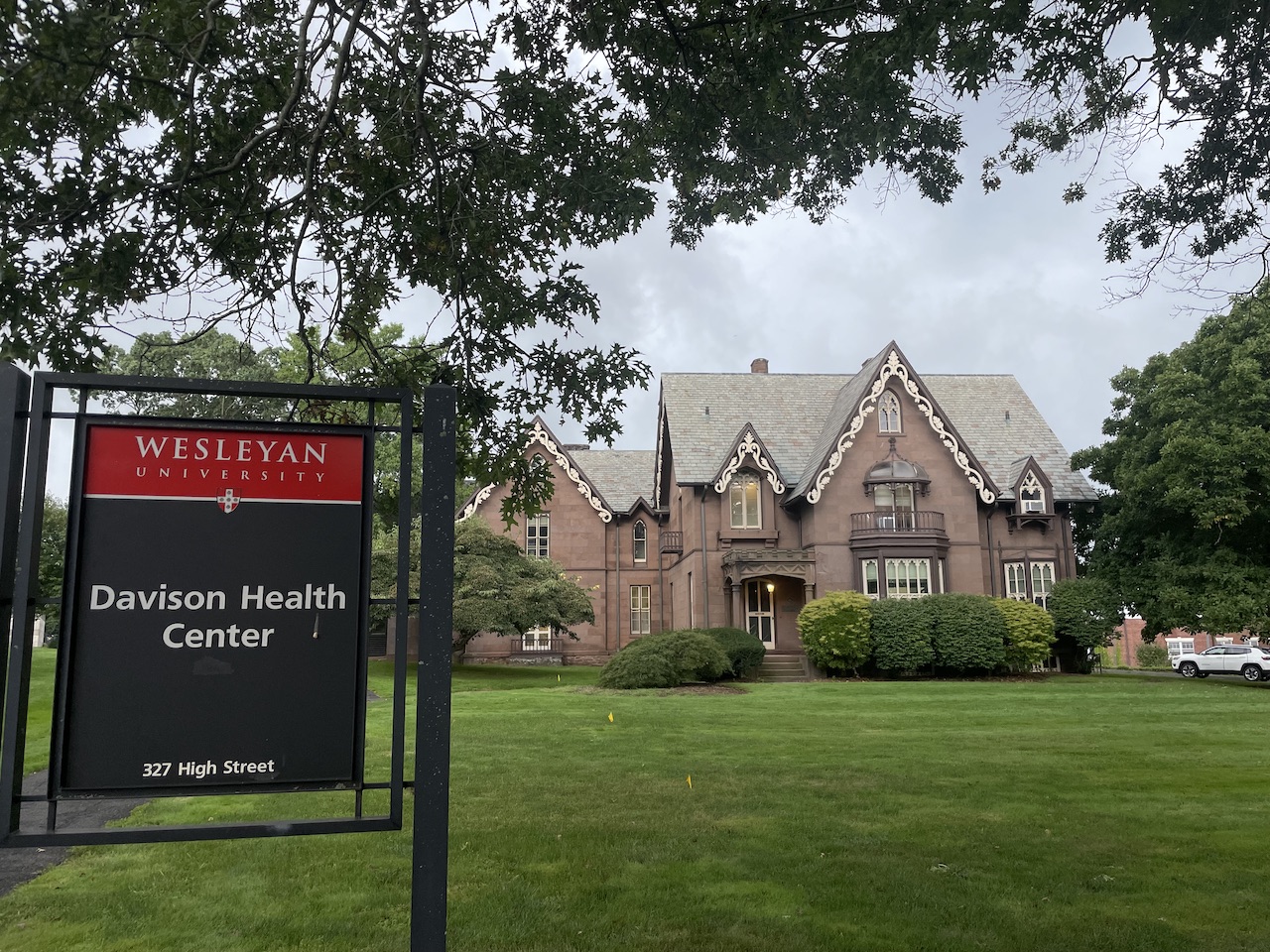
Classmates missing from lectures, faces hidden behind masks, a return to hybrid classes for some: the flu is circulating around campus, along with other viruses such as COVID-19. In a campus-wide email on Wednesday, Feb. 7, Medical Director Thomas McLarney announced that there have been over 85 cases of influenza A—the most common flu strain in adults—reported to Davison Health Center since the semester began. Davison has urged students, faculty, and staff to take precautions, including washing hands, wearing masks, and getting vaccinated.
“When people ask me to describe flu symptoms, I usually tell them that the flu will not feel like a truck ran them over,” McLarney wrote in the campus-wide email. “Instead, it will feel like that truck ran over them and then backed up several times.”
The flu is often associated with the winter months, typically peaking in January and February. The phrase flu season, however, is something of a misnomer, according to McLarney. The flu can begin spreading as early as October and end as late as March, and outbreaks—such as the infamous swine flu of April 2009—can occur during any time of year.
“[The flu] is just not that prevalent during the months that are ‘off flu season,’” McLarney wrote in an email to The Argus. “Flu seasons vary from ‘light’ to very ‘active.’”
According to the Centers for Disease Control and Prevention (CDC), there have been at least 22 million cases of the flu in the United States this flu season, with 250,000 hospitalizations and 15,000 deaths. These numbers are approaching those of the 2022–2023 flu season, but are significantly higher than those of the 2021–2022 flu season. The COVID-19 pandemic—which exposed fewer people to other viruses and may have increased susceptibility to the flu—may be responsible for the rebound in flu cases this year, according to McLarney.
“Now that we are back to normalcy in regards to Covid, flu is definitely a contender,” McLarney wrote. “Many variables go into how robust the flu season will be and many times this is not sorted out until after…. Some experts feel that we were just due for a robust flu season.”
Other viruses are circulating as well, although a so-called twindemic—when outbreaks of two diseases, such as the flu and COVID-19, occur concurrently—has not come to pass on campus. According to McLarney, there have been fewer than 25 cases of COVID-19 reported to Davison Health Center since the semester began, with no more than 10 concurrent active cases.
“Fortunately the number of Covid cases has been much [lower than] in previous years at the beginning of the semester,” McLarney wrote.
McLarney emphasized that vaccination is the best preventative measure against the flu. Vaccination lowers the risk of illness by 40% to 60% and reduces the severity and duration of symptoms if the flu is contracted.
“[The components of the vaccine] vary form year to year based on influenza patterns,” McLarney wrote. “Some years the experts nail it and other times not. Nonetheless, the vaccine is protective.”
Although the CDC recommends getting vaccinated by the end of October, it is not too late to receive a flu shot. According to McLarney, it takes approximately two weeks after vaccination to achieve full immunity, but anyone who has not gotten vaccinated already should still get the flu shot, which is required for all students without religious or medical exemptions. Documentation of vaccination status can be uploaded through WesPortal.
“I would advise folks to get a flu vaccine if they have not done so,” McLarney wrote. “If you already had the flu, get the vaccine once you have recovered. You can contract another strain of flu this semester.”
The University ran its annual flu clinic for students last semester at the end of October and beginning of November. Students, however, can still get vaccinated at local pharmacies.
“Vaccinate!!” McLarney wrote. “I am a strong advocate of vaccination. It is the number one preventative measure.”
McLarney advised that people with an egg allergy can still get a flu shot, and that vaccine side effects—which can include aches, low-grade fever, and soreness—should not be a deterrent. The flu can lead to serious complications, such as pneumonia, for anyone and is particularly dangerous for the very young, elderly, and immunocompromised. Getting vaccinated protects individuals as well as more vulnerable populations.
“The flu vaccine does not cause the flu,” McLarney wrote. “[Side effects are] the body’s response to the vaccine. The symptoms one can experience with the flu are significant.”
In addition to getting vaccinated, there are other steps that students, faculty, and staff can take to decrease the spread of viruses on campus. McLarney recommended washing hands with soap and water frequently, using alcohol-based hand sanitizers when soap and water are unavailable, coughing into the inside of your elbow, and avoiding contact with other people’s saliva, such as by sharing drinks and utensils.
The flu is most contagious during the first three to four days of illness, although infection may be possible one day before symptoms begin and up to seven days after. McLarney advised that anyone with respiratory symptoms, regardless of the cause, should wear a mask in public.
“Masking helps to decrease the spread of contagion, whether it is caused by the flu, COVID-19, RSV, or any of the other circulating winter viruses,” McLarney wrote.
McLarney noted that antiviral medications can shorten the duration of the flu by approximately 18 hours if started within the first 48 hours of symptoms and are available by prescription. While antivirals can have side effects such as nausea, vomiting, headache, and neuropsychiatric symptoms, these medications can be important for the immunocompromised or hospitalized. However, over-the-counter treatments should be enough for most who contract the flu.
“In most cases, recovery from flu just requires good self care: rest, hydration, fever reducing medications, medications that can ease cough and congestion,” McLarney wrote.
Although McLarney advises students not to go to class if they have a fever or feel too sick, Davison only provides sick notes for students with conditions that require more than a week to recover, such as COVID-19 and concussions. For conditions with a shorter duration, such as the flu, medical staff ask students to sign a form that lets them confirm that they were seen at Davison if a professor calls. Two students—Diana Tran ’26 and Drew Olsen ’24—who tested positive for COVID-19 this semester mentioned that they attended classes online when possible while isolating.
“Most of my classes have an online option that the professor set up, but for some of my classes that isn’t possible so I’m just missing 1–2 weeks of classes, depending on how long my quarantine is,” Olsen wrote in an email to The Argus.
While Tran was able to isolate safely in her single in Writer’s Block, she noted that her symptoms—which included a fever, sore throat, and cough—made it difficult to eat meals.
“Isolation was fine, but I had a difficult time obtaining food especially because my appetite just disappeared and it was hard for me to eat,” Tran wrote in an email to The Argus. “It’s a blessing that the Resource Center has microwave oatmeal and microwave soup though.”
Olsen had less severe symptoms than Tran, but they were concerned about the risk of infecting others. They emphasized that it is important for close contacts to wear masks indoors. According to McLarney, Davison has been busy lately due to the spread of viruses. Both Tran and Olsen have also noticed an increase in people getting sick.
“There’s so many sick people,” Tran wrote in an email to The Argus. “As I was going to Davison to make an appointment to see if COVID was still affecting me…I bumped into one of my friends who told me his friend needed COVID tests. And inside the medical center, I bumped into another friend who had the flu. Recently, I bumped into yet another friend with the flu too.”
Students should contact Davison Health Center at 860-685-2470 for more information about the flu and other medical concerns. Davison Health Center is open Monday through Friday from 9 a.m. to 5 p.m. for appointments and on Saturdays from 10 a.m. to 2 p.m. for urgent care; outside these operating hours, there is a message center for urgent medical concerns.
“Our mission is to take care of the student body,” McLarney wrote. “If we know that we are looking at a potentially very busy day, our staff will meet and devise a plan to get our students seen in a timely and efficient manner.”
Major Maintenance Committee reviewed potential maintenance projects and allocated the $3.8 million priorities budget for 2024 on Wednesday, Jan. 3. This annual budget is designated for costly and complicated projects that fall outside the scope of renovation, construction, and work orders. The Major Maintenance Committee funded 23 out of 28 proposals for the calendar year, including work on academic, residential, and student life spaces.
“Every single thing on the list [of proposed maintenance projects] is all important. It needs to happen,” Wesleyan Student Assembly (WSA) Student Life Committee Chair Ruby Clarke ’24, who is a member of the Major Maintenance Committee, said. “It’s just a matter of priority and where we’re going to be allocating our funding for the next year, and then certain things are differently urgent.”
The projects that the Major Maintenance Committee is prioritizing for 2024 consist of six studies to plan future work, six upgrades, six repairs, and five replacements. While some maintenance projects address disrepair and deterioration in spaces, others focus on updating older buildings for new purposes, understanding building conditions for future projects, or replacing parts to limit later costs. University Facilities Operations and Construction Services will work alongside outside contractors to accomplish these goals.
“A perfect example [of limiting maintenance costs] is kitchen counters in our wood frame houses,” Director of Construction Joseph Banks said. “If we get super-cheap formica, it’s going to get damaged very quickly, and we’ll have to replace it. So we’re trying to use more durable materials in that way. It’s just good sense and good design.”
c/o Caleb Henning
The University plans to study the University Organizing Center (UOC), moisture mitigation in Downey House, campus lighting, the Davison Art Center envelope, the Ring Family Performing Arts Hall, and wood frames.
The upgrades in question will be seen in Bennet Hall, the Freeman Athletic Center (FAC) bridge and training room, the structure of the Patricelli ’92 Theater, performance space in the Center for the Arts (CFA), and the Walsh Center for Retired Faculty.
Spaces receiving repairs include the entry of South College, parking lots, the roof and ceiling of Usdan University Center, the Music Studios elevator, the exterior of Malcolm X House, and the FAC courtyard stucco.
Finally, the University will be replacing the front door of Olin Memorial Library, the carpet in Usdan Marketplace, the air handler in FAC, a part in the sewage system beneath Usdan University Center, and the cooling tower at 55 High St.
“I’m kind of a building nerd, so all of them are interesting to me,” Banks said.
Facilities and Construction curates a list of candidate projects for major maintenance throughout the year, drawing on complaints and suggestions from students, academic departments, staff, and others. At the beginning of each year, the Major Maintenance Committee meets to discuss each proposal and vote on which projects should be prioritized.
“You can imagine Major Maintenance and Facilities as kind of this giant spider web that’s set up,” Banks said. “Basically, people call us. We get all kinds of stuff—complaints, suggestions, etc.—as to things that people are hoping to change.”
Banks noted that adding a project to the priorities list can be serendipitous.
“It’s really important in that process to look further out than just the immediate problem that’s presenting itself,” Banks said. “But then, when you begin looking at it more broadly—looking at all the systems that are going into the building, looking at how it’s used, looking at the conditions—oftentimes you can solve that original problem while also achieving a number of other objectives at the same time if you’re careful.”
Each member of the Major Maintenance Committee this year received 12 votes, physically represented by stickers, and could allocate up to three votes for each project. Afterwards, projects were funded based on budget and priority: Proposals were listed in order from most to least votes alongside their estimated costs and funded until the budget of $3.8 million was approximately reached. In their decisions, the 33 members of the Major Maintenance Committee prioritized preventing damage, maintaining accessibility, limiting future maintenance costs, updating spaces, and supporting pedagogy.
c/o Sightlines
“Some of those goals are making sure that we’re protecting the people that are involved,” Banks said.
The Major Maintenance Committee funded over 80% of proposals this year, with five projects falling outside the limits of the budget: Van Vleck Observatory dome repairs, Zilkha Gallery repairs, Olin window replacements, Fauver upgrades, and FAC field house duct and ceiling painting. Facilities plans to work on these projects as much as possible without outside contractors; break the projects into smaller, more manageable components; and renominate some projects for the maintenance priorities budget next year.
“Some of the things that weren’t approved were very expensive, high-ticket items,” Clarke said. “Part of the conversation that we had as a group was that some of the bigger stuff might be broken down into smaller things.”
Although large projects such as the construction of the new science building or the renovation of the Frank Center for Public Affairs are conspicuous on campus, maintenance is an integral part of the work done by Facilities. According to Banks, most buildings have a life cycle of approximately 20 years before they require maintenance and replacement. Less than 17% of spaces on campus, measured by total square footage, were built within the last 20 years; over 80% were built before 1975, and some are over two hundred years old. This is due in part to a period of intensive yet lower-quality construction after World War II, with 40% of spaces on campus built between 1951 and 1975.
“[Maintenance signifies] not necessarily a failure of the buildings, but rather sort of predictable life cycle costs,” Banks said.
Some of the priority projects target high-traffic buildings on campus. According to the Major Maintenance Committee meeting presentation, sewage from both Usdan University Center and Boger Hall accumulates in a pit in the basement of Usdan, resulting in frequent complaints about the smell. One of the projects funded for this year, which received the third-most votes, will address the issue by replacing the sewage pit with a sealed ejector system. Another project will replace the front door of Olin, which has been visibly pulled out of alignment with the door jamb by heavy use and now has problems locking.
“There was some stuff [like the door of Olin] where I was like, ‘Oh my gosh, I didn’t realize that was a problem,’” Clarke said. “There were a lot of things [like the sewage under Usdan] that I just thought I was making up.”
Clarke noted that students had especially expressed support for two projects on the priorities list: the ’92 Theater structural study and upgrading the Music Studios elevator, which dates to the mid-1970s. Although the University conducted a study on the ’92 Theater last year, the building cannot be upgraded or fully used until Facilities understands the structures that support the ceiling. Facilities completed the elevator repairs approximately two weeks ago.
“I know a lot of music majors are like, ‘Why is there no [working] elevator to the classrooms or to the studios? This is a necessary thing,’” Clarke said. “I think that that sentiment was really shared…. I’m really glad that that is getting done, because I know that’ll really impact people.”
The proposals included feedback from departments, organizations, and individuals across campus. The WSA Community Committee helped organize the proposal for a study on the UOC, which faces safety, accessibility, and water infiltration issues. Clarke emphasized the importance of continuing to involve students in the study once it begins.
“If students’ wishes aren’t respected, then the space isn’t functioning as it’s intended to be,” Clarke said. “I think it’s really important that as the University decides what to do for this building—and for the program and for its programmatic use—that we ensure that students are still involved with it or else the whole thing starts to fall apart.”
Banks highlighted the Ring Hall study as an example of a project that he finds interesting. Ring Hall was originally constructed in 1976 as a cinema, but it has been increasingly used for lectures and small concerts. As the function of the space has changed, issues have come up. The doors at the entrance are rusting, the HVAC system is outdated, the seats need repair, and the space is inaccessible because the auditorium relies on stairs. The priorities budget will provide the funds for an architect to study the space and create drawings, building on another study conducted on the CFA last year. The previous study focused on acoustics, audio-visual equipment, lighting efficacy and safety, and theatrical aspects such as rigging and aisle widths.
“Ring Hall was high on all of those things for not performing as well as it could, so that was one of the reasons that this was chosen this year,” Banks said.
Three projects on the final priorities list focus on residential spaces. Bennet, which received the second-most votes, will be unoccupied this summer for work converting steam pipes to hot water, providing the first opportunity since the building was completed in 2005 for major upgrades and repairs. The exterior of Malcolm X House will also be repaired, and a study of wood frames—which make up 22% of residential bed capacity on campus—will create floor plans, analyze conditions and elevations, and recommend certain houses for renovation. Clarke looks forward to seeing improvements to residential spaces through these projects and hopes that the wood frame study will result in improvements to accessibility.
“People spend a lot of time in dorm space, and I think that can really make or break a good college experience,” Clarke said. “I lived in Clark my freshman year…and I think that was a really great experience, and I want to help utilize that experience for everyone.”
Clarke pointed out that ultimately, the committee must balance practical and aesthetic concerns.
“Part of Major Maintenance is to make campus functional for people who are here, but there are also things that are perhaps less functional but are necessary for the image of Wesleyan,” Clarke said. “There is…this idea of Wesleyan that we’re trying to maintain.”
An open letter to the Jewish community at Wesleyan—
We write to you as Wesleyan alumni who have been watching with great concern the increased tensions on many college campuses concerning Hamas’ terror attacks on October 7 and Israel’s military response. We understand that in this time of heightened discourse, challenging rhetoric and concern for physical safety, some of you may be feeling silenced, threatened or confused. We write to ensure you know that we stand with you and you are not alone.
Wesleyan has always been a special place where we vigorously debate all things large and small. The Wesleyan difference is that these debates are shrouded in civility and respect…and we learn from each other. As members of the Wesleyan community, you should expect an open forum to engage in civil discourse, physical and emotional safety in your academic and social communities, and freedom from harassment, antisemitism, dehumanization and bullying. Should you choose to, you should be able to identify as a Jew and a Zionist on campus. This is not special treatment… all communities at Wesleyan should be entitled to the same.
We encourage all of you to seek the support you need over the coming weeks—whether through Jewish community organizations such as Chabad and Bayit or personal networks like family, friends, colleagues, administrators and teachers. We are all reeling from the horrific events of October 7 and its aftermath—but we are stronger when we move forward together. Please know that we have your backs in the coming days and we pray for your comfort and wellbeing.
Although you may not always notice her, Jessica Luu ’24 is everywhere. She leads scientific communities as a club officer for the University’s student chapter of the American Chemical Society, co-president of the Wesleyan Astronomy Club (WesAstro), and house manager for Science House. A Goldwater Scholar and nanoparticle researcher, Luu majors in chemistry, Environmental Studies, and the College of Integrative Sciences. Beyond the sciences, we interrogated Luu about her short-lived stint on the Wesleyan Student Assembly (WSA), secretive work as a co-chair of the Community Standards Board (CSB) and former Eco Facilitator, and atrocious attendance as a copy editor for The Argus. She sat with The Argus outside Pi Café shortly before Halloween to talk about her research, ResLife, and quitting.
The Argus: Could you tell us about your research in general terms?
Jessica Luu: The motivation behind my research is understanding the materials used in solar cells so we can improve the efficiency of our solar cells, for climate change and energy transition reasons. My research focuses on the conductivity of gold nanoparticles using terahertz time-domain spectroscopy. It’s important to understand how electrons behave within materials like gold nanorods because those are frequently used for solar cell applications.
A: Could you tell us about how your first research experiences have led to this one?
JL: The summer after my freshman year, I did research with [former Associate Professor of Chemistry] Michelle Personick. She does nanomaterial synthesis for catalysis. I learned some techniques for how to synthesize nanoparticles. I went to Rice University the following summer and did research in Professor Naomi Hollis’ lab, where she also does nanomaterial synthesis. She mostly uses aluminum. There, I learned some more techniques.
I came back here, and I wanted to expand my skill set beyond chemistry. Hollis is also a physicist and an electrical engineer. She has a lot of titles. Science is not as sectioned off as it seems. So, I was like, let me start this new project with [Assistant Professor of Physics and Environmental Studies Meng-ju Renee] Sher, where I used my nanomaterials synthesis skills and learned some spectroscopy techniques and understanding of the physics behind my materials from her laser lab.
A: How do you feel that research at Wesleyan compares to research at other universities?
JL: I mean, we’re a small liberal arts college. We don’t have the same resources as an R1 [university at the top level of U.S. government funding for research]. But I think it’s probably the best place for an undergrad to start research. At an R1, the very best undergrads get into research labs, as opposed to anyone who wants to be involved.
A: Do you have any tips for students who want to get involved in research?
JL: Browsing your department’s website, looking at faculty, and maybe reading up on what they’re doing. If you think you would want to be involved in their research, you just have to email them. Cold-emailing works pretty well on this small campus.
A: Do you have a summary of why your research is important, for someone who knows absolutely nothing about chemistry?
JL: Understanding how structure influences the chemistry and physics of materials is really important. For my research specifically, there’s not really much research out there that looks at the conductivity of metals like gold, specifically on the nanoscale, because we just assumed they’re really conductive. We haven’t really investigated how shape or size [of particles] actually influences conductivity or conductivity-related properties. So it is a lot of probing. It’s a fundamental science, and then figuring out what that can be used for in the real world.
A: Do you have a favorite chemical reaction or favorite chemical?
JL: Hmm.
A: Or least favorite?
JL: CTAB [cetyltrimethylammonium bromide]. There are a lot of issues with syntheses that use CTAB. CTAB has some sort of contaminant or inconsistency in the way it’s produced, which makes it really difficult to synthesize nanoparticles consistently. Nanoparticle synthesis is really dependent on really small factors, like the quality of the materials you’re using.
A: How do you think chemistry can intersect with environmental studies, and do you have any thoughts on how your majors overlap in general?
JL: Chemistry is behind everything environmental. The nitrogen fixation cycle is one really important process that happens in the environment.
[In terms of majors,] chemistry is kind of the hard science. Environmental Studies has some intersections with chemistry; I wanted to learn more about the social issues and societal implications of my research. Then, the College of Integrative Sciences—as I said before, all of science can be interdisciplinary. It’s a lot stronger when you have a background in multiple sciences, so you fully understand what you’re doing.
A: Do you have a favorite biome?
JL: Probably just a deciduous forest. I like trees. I evaluate universities based on how many trees they have. Rice has a lot of trees—but on their campus, is the thing. They plant the trees on the campus, and I go into Houston, and there are not many trees.
A: How is Wesleyan for trees?
JL: It has a lot of trees. Even though it’s a city, it’s more of a suburb. Very good on the tree meter.
A: Exley or Hall-Atwater?
JL: Neither. Science House.
A: That’s a great segue. How long have you lived at Science House?
JL: I lived in Science House as a sophomore, but last year I became the house manager of Dacha, formerly known as Russian House. This year I returned to be the house manager of Science House.
A: Do you have a favorite activity that you planned?
JL: We did a science trivia night. A couple of residents were like, “Let’s do a Jeopardy.” We advertised it to the greater community. We had about 25 people show up. It was based on a lot of random science facts that I learned a lot from. I didn’t know that cheetahs are really genetically similar [to each other].
A: Are you still an Eco Facilitator?
JL: No. I ended up starting the Cotton Coat Project after I was an Eco Facilitator.
A: Do you want to tell us what that is?
JL: The intro chemistry and intro bio labs were using these polymer lab coats. Also orgo [organic chemistry] lab. We just discard them at the end of the semester. That is a lot of waste. So I wanted to find funding for cotton lab coats, which could be used for a couple of years because you could wash them. I applied to the Green Fund and got funding—almost $12,000 over the course of two years. And we were able to get some cotton lab coats.
A: What’s been your experience being on the CSB? I don’t know if you can even talk about it.
JL: I can talk about it generally. I think it’s a really important role to have on campus, and I don’t really know how much else you could say.
A: This is a question from when Andrew Lu ’23 and I were interviewing you about your appointment to the CSB in spring 2022: Do snitches get stitches? Can you answer that?
JL: I mean, I hope they don’t.
A: Follow up on a typo I made: Do stitches get snitches?
JL: I don’t know. No comment.
A: What happened with the WSA?
JL: Oh God. I realized, you know, Sunday evenings are a big time commitment, especially for grad school application season. I realized I don’t have the amount of time necessary to promote change on this campus in an effective manner.
Michael Quinteros [’24 and I] wanted to follow in Andrew Lu and Aidan Jones’s [’23] footsteps, these previous senators. They did some good work and we wanted to help, but then we realized it was unrealistic given our commitments to other things during our senior year.
A: Well, talking about your tendency to quit things, weren’t you a copy editor for The Argus? Although, in another way, you didn’t really quit if you’re still on the email list, so you’re just a really, really poor attendance copy editor. Do you ever read the emails?
JL: The last one was like copy, copy, copy, copy, copy, copy, copy, copy. It was funny enough that it caught my attention. I was just like, “Oh, they’re at it again.”
A: We can move away from things you quit now.
JL: I mean, it’s important to know when you have to quit something. I was just having such a hard time quitting the WSA, ’cause I was just like, “Ah, I signed up. Now I’m backing out.” But you have to know what your priorities are.
A: That’s good advice. Do you have any tips for figuring out what your priorities are?
JL: I feel a lot of what I do is kind of career-oriented, or something that will benefit me in the next five years. So that’s what I tend to prioritize. I guess for people who don’t really know what they wanna do in the next five years, maybe prioritize something that you know that you enjoy and that will have a greater impact on yourself and others.
A: What has it been like being involved in WesAstro?
JL: It’s been pretty fun. We haven’t had our first meeting yet this semester, but we’re working on it. WesAstro mainly does lecture series, like student-led lectures on topics people are interested in. Sometimes we discuss other students’ research in astronomy and physics.
Last year we built a Lego Saturn V [rocket], which is a pretty big event, and now that Lego [model] is situated in the basement of Van Vleck Observatory. We hosted Astro Jeopardy last spring and then we hosted the 1.5th annual astro jeopardy for KNAC [Keck Northeast Astronomy Consortium] this year.
A: I’m just kind of disturbed by the half in 1.5th.
JL: Because it was only half a year away, so it wasn’t really the second.
A: What is it like being the financial manager for WesAstro?
JL: You learn how to get money from the SBC [WSA Student Budget Committee]. I think it’s fun. I like writing grant proposals, which is a skill I definitely need for the future. It’s nice to see other people approving [requests] and being like, “Yes, this is a good idea.”
A: Do you have a favorite activity that you’ve planned for WesAstro?
JL: It probably would be the Saturn V because that was the most successful pre-planned event.[Long pause.] We also got the Astronomy Department a food dehydrator.
A: Oh…. Wait, why?
JL: Bananas and apples. We were trying to do an astronaut food event based on dehydrating food. We looked at dehydrating food as a method of preserving food because astronauts eat freeze-dried food in space.
A: What would you like to dehydrate in the future?
JL: The dehydrator came with a booklet of things to dehydrate, and I think a lot of it was meat products, which is kind of interesting, but it’s a little scary. But that’s something I would want to try.
A: You know, I think we’re aligned on that because my first thought when Anne [Kiely ’24] asked that was humans. So, you know, that’s just kind of another kind of meat. I’m just going to ask something random. What’s your favorite astronomy pun?
JL: Shoot. That requires me to have knowledge of puns in my head.
A: And you don’t?
JL: I don’t. I’m sorry.
A: That’s really disappointing, Jessica. Do you have at least a chemistry pun?
JL: No. I don’t know. I have this booklet of puns I got from an expo at a meeting. I don’t have it on me. They were not that funny, but they were not funny enough that they were funny.
I feel like you have a bunch of out-of-pocket questions.
A: You wear a lot of black.
JL: It just matches with everything.
A: It wasn’t a question. You have a black water bottle right now. You have black glasses, a black jacket, a faded black shirt. I think you have a black pin in your hair. You have dark blue jeans, but they’re not that far away from black. And then you have black shoes.
JL: Oh man. I feel attacked. I have a black backpack too.
A: So, do you think just black goes well with everything in general? Like all colors? Or does black just go well with all your clothes because you only wear black?
JL: I think the latter.
A: The last time we [Anne and Elias Mansell ’24] interviewed a WesCeleb she was dressed in all pink. So it’s really a theme. You’re really a strong contrast with Neff.
JL: I’m depressed. Yesterday, I was a black cat for Halloween.
A: That makes so much sense. That really fits you.
JL: It’s ’cause I didn’t have a costume and I had the cat ears I bought two years ago. That was really it.
A: Tell us about your relationship with chairs, as in the piece of furniture.
c/o Jessica Lu
JL: Well, you know, I had a friend called Maya [Durden ’23]. She was my freshman roommate in Butts A and she graduated last year, a year early, and now she’s at NYU for her master’s in teaching. There was one day—it was you [Elias], me, Jamar [Kittling ’24], and I don’t remember who else—we were in the DFC [Daniel Family Commons] and we were like, “Haha, wouldn’t it be so funny if we just sent a photo of chairs to Maya,” because she wasn’t there, and then we just started sending photos of chairs to her from random friends’ numbers.
A: She didn’t have all the numbers.
JL: Yeah, she got really upset. There’s this orange Subaru on campus. There used to be multiple. I think there’s only one [now], which is a Middletown resident’s orange Subaru. So, now it evolved into me taking photos of that orange Subaru every time I see it and sending it to Maya. She also sends me orange Subarus back. I feel like I’m a menace because I’m just stalking this person.
A: Is there a relationship between the orange Subaru and the chair?
JL: There was an orange chair on Harvard’s campus that I sent to Maya, but I don’t really know why I started sending orange Subarus to Maya.
A: My favorite one was sending a photo—I don’t remember who did it—but sending a photo of Karen Collins to Maya because she [was] chair of the Math[ematics and Computer Science] Department.
JL: Yeah, it’s been a while since I sent her a chair though.
A: You’ve got a lot of options here outside Pi.
JL: Those are boring.
A: What makes a good chair?
JL: Something that’s not easily accessible or visible. It has to be hidden somewhere, so [Maya] doesn’t know where it is.
I sit in that chair in Sci Li [Exley Science Library] at the Macs and do my work all the time. So that’s my favorite chair in terms of utility. I don’t really have a favorite-looking chair. They all look like chairs. I don’t know if I should be like, oh yes, these chairs I saw in a museum that were elaborate-looking but not functional. They just were modern art pieces that did not look comfortable at all. So they were just art. They were not chairs, I would say, at that point.
Oh, we were also gonna steal a chair from Usdan and put it in her room in Full House [while she was asleep]. She lived in Full House.
A: Yeah, we [Jessica and Elias] didn’t know how to break into Full House. I forgot about that. I’m pretty sure at one point though, we got pretty close. I think we had a plan to ask someone to let us in. It was the middle of the night. It was really cold. But we were even walking around Usdan and circling it [to take a chair] and PSafe showed up and then we got freaked out.
JL: We had a chair-stealing plan. I wrote on my notes app.
A: Does the CSB prosecute for attempted chair stealing?
JL: We don’t have anything for that because I feel like that’s more preemptive. A premeditated crime is more of a federal crime, not on the conduct board for students here.
A: Are you saying this is worse?
JL: Probably, yeah. I mean, it’s just a chair.
A: You’re saying that attempted chair stealing should be a federal crime.
JL: Perhaps.
A: Maybe Usdan really chair-ishes its chairs. See, I had a pun. Now where’s yours?
JL: I don’t have any, man.
This interview has been edited for length and clarity.
Welcome to a new semester of The Argus! As the incoming Editors-in-Chief (EICs) this fall, we couldn’t be more excited to get started on Volume CLXXIII!
We both got involved with The Argus during our first year at the University, when Sabrina Ladiwala ’24 was remote and Elias Mansell ’24 was trapped in his dorm in Butterfield A. It’s crazy to think that it’s been three years since then. Sabrina started attending Argus Sunday meetings as a curious first-year and ended up falling in love with the Arts & Culture Section and the community she found. Elias was drawn to the newspaper by his passion for editing and, later, the chaotic community. Sabrina is a former arts & culture editor who also previously worked on the anti-racism committee, and Elias was a copy editor and news editor. Coming from different sections, we’re looking forward to working together and bringing our different experiences and strengths to the paper.
Like many of our predecessors, we want to emphasize quality over quantity. We know that this isn’t possible without our staff, which is why our main goal for this semester is to build community and improve recruitment and retention. With over 40 students on masthead, numerous staff writers, and many more students interested in student journalism, The Argus should be a positive experience for everyone involved. We love that The Argus is a space for anyone to make their voices heard and share their opinions with the Wesleyan community. We want to emphasize that this is not just for Wesleyan students, faculty, and staff, but the Middletown community as well. If you have a story that you’d like to share, please submit a tip on our website or reach out to either of us at sladiwala@wesleyan.edu and emansell@wesleyan.edu.
We know The Argus necessitates unpaid labor from almost everyone who works on it, and not everyone can afford to dedicate their time to volunteer work. Although we believe that everyone deserves to be paid for the work they do, The Argus is not financially supported by the administration—an agreement that allows us to maintain journalistic independence—and we rely on donations and advertising revenue to pay our student workers. We are working with Financial Managers Lily Faith-Goldfine ’25 and Caleb Henning ’25 and Executive Editor Rachel Wachman ’24 to ramp up our fundraising efforts in the hopes that we can eventually move toward a need-based pay structure. Please consider donating via the donation page on our website, and we thank everyone who has already donated for their support.
An integral part of our motivation for focusing on The Argus’ finances is our goal of amplifying voices that aren’t always given a turn to speak. We’re hoping to raise funds to eventually expand the Argus Voices Fund, which pays low-income students of color for their work on The Argus regardless of their prior journalism experience. The application is currently open until Monday, Sept. 25, and interested students can reach out to us for more information.
We’re actively working to bring back and reshape the anti-racism committee that was active when we were first-years. We hope that this can be a way for new students to get involved with The Argus as well as to bring new ideas to the table on how to discuss anti-racism. We’re humoring other resurrections from The Argus’ past, so keep an eye out!
There were so many great additions to the paper that we can’t wait to see again. Make sure to check out Argus Apps in the Opinion section, From the Argives in Features, and the return of the Cinefiles column in Arts & Culture. We’re also excited to announce that our Opinion section will now be publishing twice a week this semester! Beyond our six writing sections, we’re looking forward to expanding the Argus Podcast as well as our social media presence. We hope to connect across several platforms with both current and previous members of our community. Follow us on Twitter, Instagram, Facebook and TikTok, and don’t forget to subscribe to our newsletter!
As we start this semester, we want to thank everyone who has helped and supported us throughout the summer, during pre-semester staff training, and this first production. First, we have to thank our amazing Managing Editor Kat Struhar ’25! This paper would not be possible without her working behind the scenes, checking in with us, and bringing her all to this paper. Second, we’d like to acknowledge all the previous EICs that have stood in our shoes. Without them and their guidance, we wouldn’t be here running this paper today. We’d like to give an extra special thank you to our Executive Editor Rachel Wachman. From her helpful tips to answering our last-minute questions, Rachel has been our greatest cheerleader, and we actually have no idea what we’d do without her. Most importantly, we want to thank you all, our dedicated readers. Thank you for supporting The Argus and sharing your stories with us.
That’s all from us for now! Here’s to the start of a great semester!
Sincerely,
Sabrina Ladiwala ’24 and Elias Mansell ’24, Editors-in-Chief
Medical Director Tom McLarney announced that COVID-19 vaccinations and masking will not be required for the fall semester in an all-campus email on Friday, Aug. 18, 2023. The University continues to strongly encourage that students, faculty, and staff be vaccinated against COVID-19 and students are still expected to report positive test results.
While COVID-19 cases have been rising in recent weeks with the spread of Omicron subvariants EG.5 and BA.2.86—EG.5 is more infectious and BA.2.86 has mutated more than previous variants—McLarney emphasized that it is difficult to determine whether cases on campus are higher than normal since most students have only been on campus for a week. However, the majority of students are reporting mild symptoms, according to McLarney.
“Overall I feel we are doing well considering that Covid cases are on the rise worldwide,” McLarney wrote in an email to The Argus. “Most students feel they have a mild upper respiratory illness or allergies. This is what we have seen this past year with all the Omicron variants for the most part.”
“[COVID-19 is] much less severe now (hopefully this will continue),” McLarney wrote. “This may be due to the nature of the current strains and the fact that most students are either fully immunized and/or have natural immunity from having Covid-19.”
Although the University previously required students to be vaccinated against COVID-19 and receive a booster, it is no longer mandating COVID-19 vaccines. However, the University recommends that those who are eligible for the newest vaccinations should continue to receive them, following the guidelines of the Centers for Disease Control and Prevention (CDC) and Connecticut Department of Health. The CDC recommends that anyone 12 or older get one updated vaccine beyond the original two-dose vaccination, which became available through Pfizer-BioNTech and Moderna in September 2022.
“Sometime this month a new Covid booster will be available,” McLarney wrote in an email to The Argus. “It has not been determined yet who is eligible for this (elderly, immunocompromised) or whether it will be available for all. Again, [it is] strongly recommended.”
University policies dictate that a student must remain in isolation for at least five days following a positive test result. While quarantining, students are only allowed to leave their residences to get grab-and-go meals. If a student tests negative on the fifth day after their symptoms begin, they can return to classes, activities, and socializing as long as they wear a mask. Although this is not mentioned explicitly on the Health Service’s COVID-19 page, McLarney shared that anyone who continues testing positive after five days is required to continue isolating for up to 10 days.
“We do not police our students,” McLarney wrote. “Our experience has shown that most students take this seriously and are compliant with the protocols. Wesleyan students on the whole care about their classmates, staff and professor’s health.”
Continuing with previous semesters’ guidelines, students who test positive for COVID-19 are not required to be isolated from their roommates. Immunocompromised students or students taking medications that compromise their immune system will be separated from students testing positive.
“By the time one is diagnosed with Covid, they have been contagious for several days at least. We still encourage distancing and hand washing,” McLarney wrote. “If a house can designate a ‘Covid bathroom’ it would be an added layer of contagion safety but handwashing and cleaning surfaces should suffice nicely if a extra bathroom is not available.”
Any students who test positive for COVID-19 are encouraged to monitor their own health.
“Since the symptoms are for the most part very mild we do not check in on our students and we encourage self care,” McLarney wrote. “We do encourage our students to call the Health Center (we are available by phone 24/7) if they have any concerns.”
Although McLarney believes that the University community as a whole will monitor their symptoms, isolate, and mask appropriately, students are concerned that some cases are slipping through the cracks.
“It is frustrating because I feel that people with symptoms are not actually testing, and even if they do test positive they might not report it,” B*, an anonymous member of the class of 2025 wrote in an email to The Argus.
One student in the class of 2025 reported that they struggled to complete the form for reporting positive tests in WesPortal. When attempting to submit it, the webpage said that the form could not be submitted as it had already been completed once this semester. The contact listed on the form had retired and could not be reached. Eventually, the student was able to report their positive test result, and Davison Health Center sent a medical note to the student’s class dean four days later.
“Although replies and communication took longer than expected, the Health Center did offer to help in any way they could,” A*, the anonymous member of the class of 2025, wrote in a message to The Argus.
Some students who tested positive for COVID-19 reported feeling that isolation guidelines are difficult to find.
“[The] exact isolation guidelines were not entirely clear from their “Changes to COVID-19 Policies” email from 8/18, in that University guidelines do not match those of the CDC—that detail was not mentioned,” A wrote. “As I continued to test positive following the first 5 days, University statements were unclear regarding how to proceed in this case.”
B, who has had COVID-19 three times, reported feeling unsupported in navigating the isolation process during drop/add, where attendance in classes is important as a professor can drop any student who doesn’t come to the first day of class.
“It is my second year in a row where I missed the first week of classes because I had Covid,” B wrote. “It is extremely frustrating because there is no support from the university and I missed introductions and critical class time. I was fortunate that all of my professors were understanding.”
These experiences have been especially difficult at the beginning of the school year.
“In a way, I feel quite a bit of grief, and still do, about having covid at the beginning of the semester,” A wrote. “Having to miss the entire first week of classes—where you meet professors and peers for the first time, are immersed in the chaos of Drop/Add, and have extracurricular commitments (like various audition cycles, for me)—just felt like one loss after another, especially because I had to quarantine the full 10 days.”
In the midst of last week’s heat wave, students testing positive for COVID-19 had an especially hard time due to the lack of air conditioning in most dorms on campus.
“I was minutes away from checking into a hotel in town because of how unbearable my room was during the day (and at night too, but everyone without AC shared that situation),” A wrote. “At that point thankfully my symptoms had subsided, but if I was still feeling sick, I would’ve gone to a hotel without hesitation, as the dorm’s heat posed a potential health risk.”
A reported that the University eventually helped them find space to cool down, permitting them to work and attend Zoom classes while in the air-conditioned library while masked and socially distanced.
“It took many emails with people from multiple departments to figure out what my exact course of action was safest,” A wrote. “Despite all that, it seemed that everyone was trying their best to help me and make sure I was staying and keeping others safe. I am extremely grateful I was granted permission to be in the library (after going through the Health Center, Accessibility, [the Office of Residential Life], and my Dean).”
The Pandemic Planning Committee continues to meet as needed and will publish updates to COVID-19 policies as the situation evolves.
Dean for Academic Advancement Laura Patey announced in an email to the class of 2024 on Thursday, Nov. 17, that Class Dean David Phillips will retire at the end of the Fall 2022 semester. Phillips is the current dean for the class of 2024 and has been a class dean at the University for 22 years. A committee of students, faculty, and staff is currently in the process of finding a replacement.
During his time at the University, Phillips advised countless students, monitoring their academic progress and providing support by connecting them to academic and non-academic campus resources, from the Dean’s Peer Tutoring Program to Counseling and Psychological Services (CAPS).
“To really be able to do your job as a class dean, you need to understand the reasons for poor academic performance,” Phillips said. “The role of the class dean is to figure out what is the real cause of things and address the cause rather than just the symptom. If you’re having family difficulties and you do poorly in chemistry, you don’t need a tutor.”
Phillips joined the Office of Student Affairs in the summer of 2000 after four years of teaching American history at Bennington College. Although he graduated from the University of California (UC), Santa Cruz with a major in studio art, he decided to become a historian, receiving a master’s degree in social history from UC Santa Cruz and a PhD in American Studies from Yale.
“When I was on faculty at Bennington, I saw my relationship with students to be more purely academic and intellectual,” Phillips said. “It’s not like I didn’t care about their lives, but my engagement with students was in the classroom and in advising for course choices…. Taking on the class dean job really expanded my horizon in terms of working with students to be more aware of that co-curricular side.”
Phillips was born in New Haven, Connecticut, but spent most of his early life traveling because his father was a foreign service officer. He has lived in India, New Zealand, Mexico, and the Philippines.
“Education was sort of the anchor in my life,” Phillips said. “We lived in so many different countries, and being in school was sort of the one constant thing in my life, so I guess it’s appropriate that I’m in higher education.”
Over the course of Phillips’ time at the University, he has seen it undergo a number of changes. These changes include the creation of new minors and certificates, large increases in the cost of tuition, and the reorganization of the class dean role. Amidst these changes, Phillips has served as the faculty advisor for visiting students participating in the Twelve College Exchange and as the the faculty representative for the Truman Scholarship and Beinecke Scholarship. Additionally, he has overseen the University degree and helped implement the Bachelor of Liberal Studies program.
“Learning people’s backgrounds and everything is a big part of it,” Phillips said. “You get to know people for four years and then they graduate and you have a new first-year class and that process starts again. The students are the most interesting part of the job.”
Phillips is also the data coordinator for the Office of Academic Advancement, overseeing the semesterly academic review and annual senior review. During these reviews, the Office of Academic Advancement looks at students’ grades and credits to determine academic standing and ensure that students are on track to graduate in their majors. As data coordinator, Phillips has also developed many of the tools in WesPortal that students are now familiar with, including the credit analysis report.
“We monitor students’ grades and their credits, and if we sense that people are a little bit low on credits, we reach out and encourage them to do better,” Phillips said. “If we learn a student has earned unsatisfactory grades, we work with those students to connect them to support resources so they can improve their academic performance.”
The new dean for the class of 2024 has not yet been selected, but a search committee, which includes two students, is currently in the process of reviewing candidates. After receiving a set of pre-determined criteria, the search committee interviewed applicants in a round of Zoom meetings. As a result of these interviews, the committee has extended invitations to three of the candidates to come to campus, according to Wesleyan Student Assembly (WSA) Student Life Committee Chair Orly Meyer ’24.
“There’s a student lunch, which I’ll be attending along with some other [WSA] senators and various students from around campus,” Meyer said. “Then we’ll also interview the candidate and meet with them at other points in the day, and they’re gonna meet with other administrators and faculty to learn about the position and have people meet them.”
These on-campus meetings will be happening on Friday, Dec. 9, Tuesday, Dec. 13, and Wednesday, Dec. 14. According to Meyer, the committee will likely extend a job offer to their selected candidate shortly after. In the meantime, Patey and other class deans will helping fill in for the role.
“The other class deans will be available to students in the class of 2024 over winter break, and we are planning for the new class dean to be in place by the start of classes in the spring,” Patey wrote in an email to The Argus.
“We have had two class deans retire in the past 5 years and two other deans left to pursue wonderful opportunities,” Patey wrote. “While change is certainly hard, we feel as though we have a strong team in Academic Advancement and look forward to welcoming the new class dean to the team.”
Having worked with Phillips for 10 years, Patey expressed her appreciation for his work in the Office of Academic Advancement.
“[Phillips’] willingness to share his knowledge and his ability to teach and mentor, both colleagues and students alike, has been truly valued and appreciated,” Patey wrote. “We have all benefited from his wisdom and generous spirit and his deep concern and commitment to the students with whom he has worked. I am grateful that I had the opportunity to work with David and wish him all the best in his retirement.”
WSA Senator Heather Cassell ’24 expressed a similar appreciation for Phillips, explaining that he helped Cassell return to school after medical leave, obtain medical accommodations, and request incompletes.
“[Phillips] understands his job is to help students navigate the institution, or navigate it for them, to make it easier for them to focus on being students,” WSA Senator Heather Cassell ’24 wrote in an email to The Argus. “I will miss him.”
Although Phillips has enjoyed his job, he is looking forward to retirement.
“I’ve developed very good relationships with many students and I will miss those students,” Phillips said. “I will miss many of my colleagues and the friendship and camaraderie. I like my job, but I’m not gonna miss it that much, if you know what I mean.”
There will be a retirement reception for Phillips on Thursday, Dec. 15 at 4 p.m. in the Daniel Family Commons. All Wesleyan community members, regardless of class year, can RSVP through a Google Form emailed to the class of 2024.
Rachel Wachman contributed to reporting and can be reached at rwachman@wesleyan.edu.
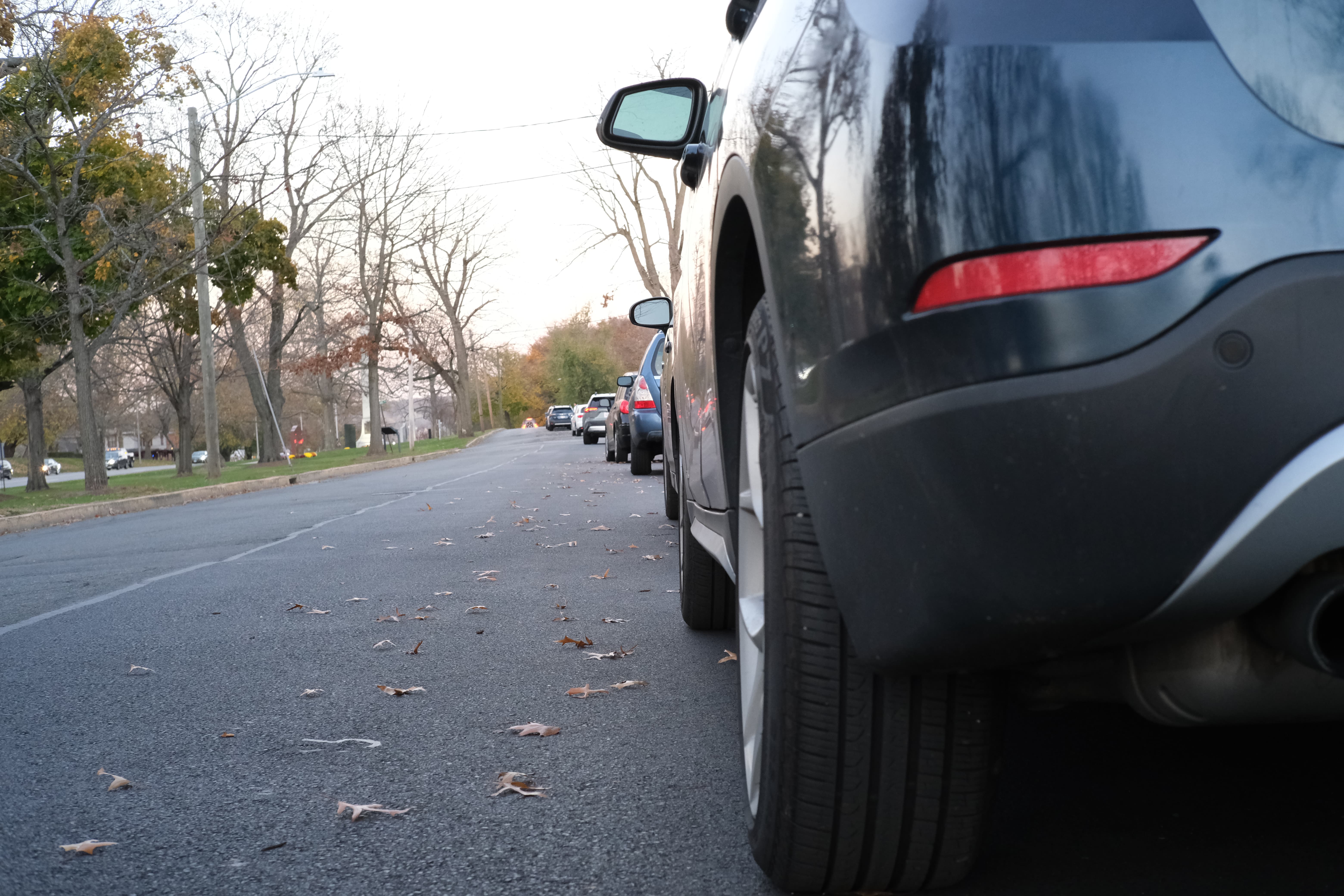
Four unknown suspects removed and stole catalytic converters from two student vehicles parked on Veterans Way, near Washington Terrace, on Wednesday, Oct. 26 around 3:45 p.m., according to an all-campus email from Public Safety (PSafe) Director Scott Rohde. A passerby and a student reported the theft to PSafe and the Middletown Police Department (MPD), who are currently investigating the theft. A witness saw four people wearing ski masks and dark clothing get out of a black Nissan Altima, remove the catalytic converters from the two vehicles, and drive away.
A catalytic converter is a part of a car’s exhaust system that works to decrease pollution from the car’s carbon emissions. According to Rohde, catalytic converters are often stolen from cars because they are made of platinum and palladium, metals that are in high demand due to a global shortage.
“What happens is the thief steals the catalytic converter and typically sells it on the black market to someone that can extract the materials, then ultimately sells those materials unofficially for a comparatively low price compared to what someone could obtain them legitimately for,” Rohde said.
After removing the catalytic converters, thieves will sometimes sell them to recycling plants that can extract the platinum and palladium inside of them or to pawn shops, according to MPD Captain Brian Hubbs. However, recycling plants rarely require any form of identification from sellers, which makes it difficult for the police to track down where these converters have come from.
“No one from the recycling plant was responsible for identifying the person bringing in the material,” Hubbs said. “They weren’t responsible for tracking it…. So [thieves] would take in the materials, they could come in with 15, 20 at a time, and get the payouts for it.”
Middletown has recently pushed for legislation that would require recycling plants to check the identification of sellers in the same manner as pawn shops and would require individuals to register as licensed recyclers. This has led to a slight reduction in catalytic converter thefts in the area, but they remain a problem across Connecticut and the country. Between 2019 and 2020, insurance claims for catalytic converter thefts increased 325% nationwide. However, the incident on Oct. 26 is the first time a theft of this nature has happened on campus.
“It happens everywhere,” Rohde said. “In this case, it happened in broad daylight. There’s always a concern. Is it rampant in Middletown? I would say no. But does it happen? Yes.”
In addition to the lack of identification requirements at recycling plants, catalytic converters don’t have serial numbers that allow them to be traced back to their owners. Additionally, the speed with which catalytic converters can be removed also makes thefts difficult to solve.
“It also happens extremely fast,” Rohde said. “Catalytic converters can be removed in 30 to 45 seconds by an experienced thief from a vehicle.”
Savannah Ryan ’24 realized that her car’s catalytic converter had been stolen after she saw police cars parked on Washington Terrace, the same street she had parked her car on. When she started her car, it was louder than normal.
“[I] thought I was going crazy because [my car] was working perfectly a few hours ago,” Ryan wrote in an email to The Argus. “A police officer came up to me after hearing my car start and said I also might have gotten my catalytic converter stolen and then the other police officer checked under my car, and sure enough, it was gone.”
Because the parts needed to fix Ryan’s car have been discontinued, she no longer has access to a working vehicle. In addition to paying a $500 insurance deductible, she also has to purchase a new car.
“This theft has left me feeling vulnerable/taken advantage of,” Ryan wrote. “It is disheartening to pay $125 for a parking permit, park on what I think is a safe street with surveillance…and then come out of my class to a car that no longer works. I was completely blindsided.”
Although the MPD has continued to investigate the incident, there has been little progress. An MPD detective saw a black Honda with dark window tints leaving the area after the crime, but it did not have a front license plate and could not be tracked. Video footage was also referenced to investigate the incidents, but has not uncovered any new information.
“They attempted to find video footage using Wesleyan’s cameras in the area and they didn’t have any footage that was gonna be useful and it didn’t look like there [were] any city cameras in the area that were gonna capture the event,” Hubbs said. “At this point, the case is considered open but with no suspects or leads.”
PSafe and the MPD often work together to solve vehicle crimes, and Hubbs commended the usefulness of Wesleyan security cameras.
“[PSafe] has been instrumental in the past with even just some of our motor vehicle accidents where we had two conflicting statements from operators, and they try to have as many cameras on campus as possible for your safety and for everybody else’s,” Hubbs said. “And they are very quick to jump and help us out and ‘Hey, can you review it, see if you caught that intersection.’ And they’ve actually helped us out quite a bit.”
PSafe is taking steps to attempt to prevent further catalytic converter thefts while increasing safety for student vehicles in general.
“We are spending more time, especially on the night shift, checking parking lots and being more visible in parking lots,” Rohde said. “Our efforts are spent on increasing preventive patrols and being more aware of people that may be either checking or loitering around parking lots, especially after dark.”
Additionally, the police have been trying to focus prevention efforts in areas they feel are more at risk by increasing their presence there.
“For example, we have our industrial park road area; it’s not just personal vehicles out there, it is large commercial vehicles because it’s a commercial industrial area, so they tend to lose their catalytic converters a little bit more frequently because of how much more money the suspects can get from it,” Hubbs said. “So when we have an influx or we’re seeing like one or two pop up in an area, we try to flood that area for a period of time and…we just try to be diligent when we’re patrolling.”
Because these crimes are so widespread and difficult to prevent, Rohde recommends students who are concerned about potential catalytic converter thefts remain vigilant, keep up-to-date insurance information on hand, park in well-lit parking lots, and move their cars to different parking spots every few weeks.
“Do not leave your car unattended for long periods of time, ’cause if someone’s watching it they may target it more than if that car is moved,” Rohde said. “So if a student’s in, let’s say, the Vine Street lot and they haven’t moved their car for weeks, [it would] probably be a good idea to go up there occasionally and move [their] car to a different parking location, preferably a noticeable distance away from where they parked it.”
Hubbs reiterated the importance of remaining aware and reporting any crimes in progress.
“The biggest thing that people lose sight of is not calling in suspicious vehicles or not paying attention to their surroundings,” Hubbs said. “If you are keeping your head on a swivel and seeing someone getting underneath a vehicle, that should stand out for the average person and it should be reported immediately…. It could be something that is completely innocent, but I’d rather them respond and not be needed than be needed and not respond.”
Rohde emphasized that it’s extremely dangerous for anyone witnessing a theft to approach the scene due to the strength and sharpness of the tools used in the crime. Thieves use sharp mechanical instruments such as electric or battery-operated saws to quickly and efficiently remove the catalytic converters.
“The best approach is to call and not get involved,” Rohde said. “Do not approach the people. Do not try to stop them.”