
Author: Emma Smith

  • 40th Annual Middletown Public School Art Exhibition Premieres Virtually

    40th Annual Middletown Public School Art Exhibition Premieres Virtually

    c/o wesleyan.edu
    c/o wesleyan.edu

    When I think back to my middle school art classroom, I remember a place of solace: a warm, creative environment in which experimentation was encouraged and I could seek respite from the various social and academic complexities of life as a pre-teen. While I can’t recall any of the art projects that my class did in particular, I do remember entering class feeling self-conscious and leaving class feeling restored and creative. 

    In the pandemic, art classrooms continue to be a place of safety, nurture, and risk-taking, despite the many adjustments that have had to be made in order to accommodate art-making in socially distanced and remote settings. True to the ethos of creativity that they cultivate in their classrooms, both physical and virtual, teachers and administrators of the Middletown Public School system have leaned into flexibility and adaptation in their art curricula to continue to provide a safe and engaging learning environment for all grade levels, from kindergarten through high school. 

    Last Saturday, March 13, the Middletown Public School System presented their 40th Annual Art Exhibition, sponsored by the Middletown Board of Education, the Middletown Public Schools Cultural Council, and the University’s Center for the Arts. The exhibition was live streamed on the Middletown Stream YouTube channel, where it is still available for viewing.

    Middletown Public School Superintendent Dr. Michael Conner spoke to the collective effort that went into creating this year’s exhibition, a full year into a global pandemic. 

    “One year later, we have made significant progress [dealing with COVID-19], and when we talk about one year later, the 40th annual art show, despite it being virtually on the platform that we have to display the artwork of our students, [I commend] the hard work of our teachers, [Chief of School Operations and Communications] Mr. [Marco] Gaylord for putting this on, and just our families and our students,” Conner said. “It really shows not only the artistic and aesthetic side of our students, but the resilience and the perseverance of our teachers and this cohort.” 

    K-12 Visual Art Department Head Julie Shvetz also spoke to the ways in which teachers and students have worked hard to adapt to the constantly changing public health conditions in Middletown. 

    “This year we were met with unique challenges as a department,” Shvetz said. “Our teachers took on the situation with dedication and determination to ensure our students were able to have an equitable experience in the arts, whether they were hybrid or remote students in our schools.” 

    Shvetz cited the public school system’s distribution of home art kits to students in order to facilitate remote learning across the district and said that she is proud of all the art that the students created. 

    After the opening remarks from Conner, Shvetz, and Gaylord, the exhibition shifted to presentations by teachers at each grade level, with photo displays of their students’ work arranged in pages, juxtaposed over a virtual gallery graphic: imagine an art museum, but two dimensional. The art teachers, who appeared as bitmojis in the opening slides of their classes’ presentations, took a few moments to present their respective classes and the different projects in which their students engaged this semester. Teachers shared personal anecdotes from the year, poetry about the art classroom, and quotes from their students about the experience of making visual art during this time. 

    “Education professionals like to say that 2nd graders stop learning to read and start reading to learn, and that’s what you’ll see in our second grade gallery,” said Bielefield Elementary School 2nd Grade Art Teacher Ari Kubie in their presentation. “You’ll see our students blossoming and really coming into their own as artists. This year, educators across the district adjusted our curriculum to include an increased emphasis on social, emotional learning. We know that the arts are an important tool to help students process emotions and to build resilience, which means that art class was especially important this year.”

    Middletown High School Sculpture, Pottery, and General Art teacher Kimberly Holliman discussed the various types of artwork her classes have focused on this year. 

    “I’ve found a real happiness in using my role to help students find success in the arts,” Holliman said. “In pottery and sculpture this year, our art show highlights pieces focused on creative and technical skills, including wire and plaster figure-making modeled after artist Alberto Giacometti. We finished these pieces with their own paint and design.” 

    While the presentation highlighted student creativity and gave teachers a chance to speak to the work that went on in their classrooms, the livestream was only an overview; Gaylord emphasized that the virtual gallery offers additional videos and visuals, as well as the opportunity to leave compliments for students on their pieces.

    The virtual gallery is accessible online via the Wesleyan Center for the Arts event page, and the live stream of the exhibition is available on the Middletown Stream YouTube channel

    “This is just a taste of what’s on this platform,” Gaylord said to wrap up the event. “Please take your time to visit all of the galleries and all of the videos that are presented at this year’s show.”


    Emma Smith can be reached at elsmith@wesleyan.edu or on Twitter @elsmith_8. 

  • A Capacious Life: Remembering Professor Christina Crosby
    A Capacious Life: Remembering Professor Christina Crosby

    c/o nytimes.com
    c/o nytimes.com

    Christina Crosby, a scholarly icon and beloved professorial member of the English Department and Feminist, Gender & Sexuality Studies Department, passed away from pancreatic cancer on Jan. 5, at the age of 67.

    After becoming a University professor in 1982, Crosby made waves in the academic community as a founding member of the Women’s Studies department. She was deeply involved in the beginning of the Diane Weiss ’80 Memorial Lectures and wrote her first book, “The Ends of History: Victorians and ‘The Woman Question’” in 1991. In 2002, Crosby was appointed as the chair of the Women’s Studies department (which was officially renamed to its current title, the Feminist, Gender and Sexuality Studies department, in 2007). In 2003, a sudden bicycle accident and resulting paralysis catapulted her into a new equilibrium.

    According to her partner Janet Jakobsen, the Claire Tow Professor of Women’s, Gender and Sexuality Studies at Barnard College, Crosby’s favorite word was “capacious,” which means “having a lot of space inside; roomy.” Crosby viewed education in particular as a capacious activity, one that allowed for expansion, pushing boundaries, and building both understanding and collaboration. Jakobsen emphasized that this attitude constitutes the legacy she hopes Crosby has left at the University and in the world.

    “When you ask the question about legacy, I think about expansiveness, of seeing the University as a place where [education] happens, and valuing being an educator,” Jakobsen said. “[T]hat was the part of the job that she valued the most highly. And valuing education as a capacious activity that could expand more broadly into the world, where many of her students went on to various activist [roles], social justice practices; went on to become writers themselves; went on to become academics, many of them. [Her students] went on to become professors; went on to become healthcare providers—alternative healthcare of various kinds and also regular healthcare providers. On and on like that.”

    Besides having a vast appreciation for scholastic avocations, Crosby also had an enormous capacity for caring for her students, which made her a natural favorite among the Wesleyan student body. One of these student admirers was Anna Hauser ’23, who took Crosby’s course titled “Reading the Victorians” in Spring 2020.

    “You can feel her presence, no matter what,” Hauser said. “And no matter how much you know about her story, she just [was] very welcoming and very open to being a presence to cling onto. We’ve only spoken individually like twice, but I still didn’t feel like I was imposing by creating this deeper connection, I feel like that was something that she wanted with students.”

    Crosby’s unique ability to connect with students, colleagues, and others allowed her to develop close relationships with a large number of people in her life. This group included Maggie Nelson ’94, an acclaimed writer and professor at the University of Southern California, who wrote her undergraduate thesis under Crosby’s advisement.

    “I was into politics, but I’d never studied feminist theory per se before walking into Christina’s class,” Nelson said. “And you know, she’s such a great teacher, and I was so blown away, and actually wrote about [her] in my book, ‘The Argonauts,’ about her very dashing and very legendary charisma in the classroom.”

    After she graduated from Wesleyan in 1994, Nelson became close friends with Crosby. Their relationship was further fortified in 2003, after Crosby suffered the traumatic accident.

    “Christina, from her hospital special care bed, you know, paralyzed at that point from the neck down—she wanted to talk to me about, if you can imagine, the vicissitudes of some theory or other that she was thinking about,” Nelson said. “It was very intense. She would say to her nurses, ‘Have you heard of secularization?’ She would ask them these questions and then describe to them the concept in ways that they could completely understand, and then she was very interested in [hearing back about] their experience.”

    Jakobsen emphasized Crosby’s life force, which informed her teaching, her personal relationships, and her approach to living in a body drastically changed by her cycling accident.

    “One of the things that I loved about her work was that she was very dedicated to the text that she was teaching, both feminist theory and also the Victorian novels and other literature that she taught,” Jakobsen said. “I often emerged from teaching drained, and Christina would often come out of teaching feeling thrilled and energized and so interested in what the students had said. Feeling that expansiveness that the classroom can provide, where you enter with certain ideas about the text, whether it’s critical, theoretical, or literary itself, and you come out with other ideas, having talked with your students—that’s a very powerful part of my memory of Christina.”

    Many current Wesleyan students got to know both Crosby’s life story and narrative voice when her 2016 memoir, “A Body Undone: Living on After Great Pain” was selected as the First Year Matters text in 2018 and sent to all matriculating students.

    “Writing, no matter about what subject, has its way with the writer,” Crosby wrote in the memoir. “Writing helps to teach us what we can’t know otherwise, which makes it a demanding and invaluable discipline. Writing offers, not a way out, but a way into the impossible dilemmas of not-knowing.”

    “I think that, obviously, [there is] that legacy and the contribution of that book and its honesty,” Nelson said. “And its probing and its willingness to poke at pieties around disability, I think, will be a very lasting legacy for her.”

    Nelson added that Crosby’s accident both shaped and complicated her perspective on her life.

    “After her accident, I just felt like Christina was more able to allow for harmony and disharmony, and hell and grace in a moment…because her daily existence was so full of pain, and yet she was able to be so grateful and to have so much in her life that felt rich,” Nelson said. “And I think she was just uncommonly alive to how to be with these contradictory feelings, just to be enraged at the loss of her former body and to be completely devoted to living in the body that she had. It was an emotional lesson for me that I just kind of hope to never learn.”

    Like Nelson, many more recent students also felt that they had shared a special connection with Crosby through their academic experiences together. Julia Chung ’21 took Crosby’s section of Ways of Reading,” which serves as the introductory course for the English major.

    “I wrote this really cheeky essay that was just like a list of all of the painful moments in [Nelson’s] book ‘The Red Parts,’” Julia Chung ’21 said. “She wrote me an email back just saying that it was a real pleasure to have that stupid cheeky essay. I felt like, ‘Oh yeah, someone is saying you have this good academic brain, but also you don’t need to be using it in this academic institutional way.’”

    Hauser also discussed the way that Crosby would accept whatever people had to give.

    “A lot of people in that class were like kind of half-in, half-out, especially once we transitioned to being online [due to COVID-19,]” Hauser said. “And I felt like she never was really bothered by that, I felt like she accepted whatever level of attention people were willing to pay [at] any moment, and she didn’t hold grudges against people for not being ready or perfect. That was really nice.”

    While there are many places that will carry on Crosby’s legacy and spirit, her essence will certainly continue to be felt most at Wesleyan, where she poured her passion and energy into every aspect of her professorial role. Jakobsen spoke to Crosby’s impactful connection to the University.

    “Thinking back to the lecture for the First Year Matters…I remember [her] ending as, coming to the conclusion of her speech and then saying, ‘Welcome to Wesleyan,’” Jakobsen said. “That sentence, ‘Welcome to Wesleyan,’ that Wesleyan was a place that welcomed students and their interests—that was Christina to me.”


    Emma Smith can be reached at elsmith@wesleyan.edu.

    Annika Shiffer-Delegard can be reached at ashifferdele@wesleyan.edu.


  • CAPS, WesWell, and SHAPE Offices Undergo Staffing Changes
    CAPS, WesWell, and SHAPE Offices Undergo Staffing Changes

    Leaders at the University’s Counseling and Psychological Services (CAPS); Support, Healing, Activism and Prevention Education (SHAPE) office; and WesWell will be vacating their positions this semester.

    CAPS Mental Health Education & Prevention Coordinator Angie Makomenaw will be stepping down and moving on to a different institution on Friday, Feb. 26. SHAPE Director Johanna DeBari is scheduled to begin maternity leave on Tuesday, March 16. WesWell Director Seirra Fowler also left her position at the University on Jan. 29.

    Although Makomenaw is excited to move on to her new role, she is also committed to making the transition as smooth as possible for the CAPS office and for future staff members who will fill her position. 

    “We’re trying to work to see how I can help out still so that there’s not a gap, because I don’t want there to be a gap,” Makomenaw said. “Also, since I’m familiar with a lot of the technology, I don’t want [the tech responsibility] to be placed on someone else who has to relearn.”

    Unlike CAPS, which is composed of a number of staffers, the SHAPE office will only be staffed by Student Intern Asiyah Herrero ’22 after DeBari’s maternity leave. However, DeBari emphasized that the community of care provided by various offices and services at the University and in the Middletown area will step up to meet student needs regarding intimate violence support and prevention. 

    “It’s some folks from CAPS, some folks from the Office of Religious and Spiritual Life, some other folks from the Women and Families center in Middletown, as well as resources through New Horizons, which is another off-campus resource,” DeBari said. “So it really is a collective community of care to ensure that people have multiple options. And then also, [Assistant Vice President for Equity and Inclusion] Debbie Colucci will be a resource for people who want to get the lay of the land for both connecting to confidential resources as well as understanding rights and resources under Title IX in particular. That’s kind of the bulk of the supportive resources and how that part of my role will be filled.”

    WesWell is also experiencing a difficult transition with the departure of Fowler, but newly-hired Alcohol and Other Drug Specialist September Johnson is helping with directorial responsibilities until the office hires someone new into the role. Like DeBari, Johnson emphasized the role of the University’s community of care in terms of providing health and wellness services to students. 

    “While we may be going through many changes at this moment, our offices are committed to continuing this community of care to help students thrive at Wesleyan,” Johnson said. “Helping the student body will continue to be our top priority, even through the changes we are experiencing.”

    Johnson specifically takes a holistic approach to students’ relationship to substances, in addition to helping students more generally. 

    “The health and wellness world is filled with lots of great information that can help students lead healthy and happy lives,” Johnson wrote in an email to the Argus. “However, there is also a lot of misleading, incorrect, and ill-informed [information] mixed in as well, especially when it comes to alcohol and other drug use. I was drawn to this position as it gives me the unique position to help students navigate this information, while also holding space for hard, yet caring, conversations to help students.”

    In Makomenaw’s absence, CAPS plans to continue with community mental health initiatives, including creating a CAPS student advisory committee, providing multimedia mental health resources, and offering student-centered workshops and webinars. The CAPS office aims to make these programs accessible to students, both on- and off-campus.

    “We will be having three webinars done by our externs, they’re working on it right now,” Makomenaw said. “They’re still debating on the topics, because it’s really dependent on students and what is most needed. All of those webinars, of course, will be recorded, and we’ll put them up on our YouTube page.”

    While DeBari is on maternity leave, anyone who sends her an email will receive an automated response outlining available resources for addressing interpersonal violence and mental health crises. This information is also available on the SHAPE website

    DeBari also mentioned that the SHAPE office is in the process of hiring another student intern to build programming for Survivor Solidarity Month, which will take place in April. 

    Debari said she hopes that her new colleagues in CAPS and WesWell will continue to prioritize anti-racism and intersectionality in their work, as well as to embrace teamwork.

    “I hope that the folks who step into those positions have the same collaborative energy and willingness to be part of a team, and connect in that way,” DeBari said. “Although I will deeply miss my colleagues who are also my friends, I’m excited to welcome whoever steps into that position and continue the work.” 


    Emma Smith can be reached at elsmith@wesleyan.edu

    Stephanie Monard can be reached at smonard@wesleyan.edu

  • In “LIFE RUINER,” Ella Dawson ’14 Recounts Abusive Relationship at Wesleyan

    In “LIFE RUINER,” Ella Dawson ’14 Recounts Abusive Relationship at Wesleyan

    CW: This article contains references to emotional/physical abuse and suicide.

    c/o elladawson.com
    c/o elladawson.com

    When Ella Dawson ’14 arrived at Wesleyan’s campus in the fall of 2010, conversations around consent, sex and sexuality were not exactly where they are now. According to Dawson, feminism was still considered a dirty word; rhetoric around consent was limited to “no means no”; the public was still reeling from George Bush’s campaign for abstinence education

    Though discussions about sex may have been lacking, sex itself was most certainly not. Dawson said she had a complicated relationship with Wesleyan’s pervasive hookup culture, which generally equated—and arguably still equates—sexual liberation to sleeping with as many partners as possible. 

    “There was this binary view, at least in my mind as an 18-year-old, of, you’re either someone who believes sex is part of a relationship and you’re judgmental of casual sex, or you are a sexually empowered young woman who screws whoever she wants to and does whatever she wants and can have sex without emotions,” Dawson said in an interview with The Argus. “And as a result, I was super defensive of hookup culture itself because I interpreted criticism of hookup culture as criticism of a free sexuality.”

    Within the context of Wesleyan’s hookup culture and lack of conversations about consent and communication with sexual partners, Dawson found the latter half of her time at the University largely defined by a relationship that was abusive and traumatizing. This December, Dawson shared her story in the form of “LIFE RUINER,” a micro-memoir that she has shared on her Patreon, a platform through which creators share personal content with paid subscribers. 

    Set mostly at Wesleyan in Dawson’s junior and senior years in 2013 and 2014, “LIFE RUINER” takes the reader through a semi-linear progression of her relationship with Blake (all names were changed to protect privacy), an attractive yet troubled party acquaintance turned sexual and romantic partner. 

    “He was young but sexy, confident in his body and his skin,” writes Dawson in the opening pages of her micro-memoir. “Soon it was just me and Blake dancing together, his hands on my hips and his breath hot on my neck. He smelled like cologne and sweat and cigarette smoke. I felt his breath catch as he ground against me just a little, a suggestion to test the waters.”

    After their initial encounter, Dawson and Blake’s relationship does not follow the typical narrative arc of a one-night stand. Dawson narrates their meet-ups at classic campus spots, ’Swings and in her LoRise, their budding romance fraught with red flags that only seem problematic retrospectively: “When he admitted a few weeks into our whirlwind romance that he’d been on cocaine that first night, the night we got dinner at WesWings, I found it funny,” writes Dawson. “It was another absurdity, a sitcom twist.” 

    A few late night hookups and trips to Whey Station later, everything changes for Dawson when she wakes up to itchy raised bumps on her labia, which are ultimately diagnosed as genital herpes. From this point forward, her relationship with Blake slowly devolves into cycles of emotional abuse and manipulation as he also receives a herpes diagnosis and begins to threaten suicide. When Blake reaches an emotional low at the end of the summer and the two break up, Dawson begins to replace her feelings of dirtiness and shame surrounding her STI diagnosis with understanding and empowerment. Back on campus, though, she and Blake begin hooking up again until Blake nearly overdoses on prescription drugs and alcohol and Dawson discovers that he has physically abused his ex-girlfriend, Kris. 

    “It coursed through my bloodstream, a chronic trauma that got better and worse and better and worse,” writes Dawson to close “LIFE RUINER.” “I was not just some girl; that, at least, I knew.”

    The narrative of Dawson’s memoir ends here. She cuts off Blake, speculates about whether she conferred herpes to him or he conferred herpes to her (an ultimately unsolvable mystery), and moves on with her life, carrying the scars of Blake’s emotional abuse with her. 

    Dawson said that she avoided including a closing reflection or tidy ending to her micro-memoir because it would not have been true to her experience of trauma and abuse.

    “I find that there’s never really a neat ending for an abusive or a traumatic experience,” Dawson wrote. “There can be the narrative ending of, ‘I never spoke to him again, we broke up.’ But in terms of the emotional experience and the way it’s impacted me as a person, I’m still dealing with this, I’m still learning from it, and healing and trying to de-center it as part of my identity.” 

    Since Dawson still carries the trauma of her relationship with Blake, she explained that narrating their encounters proved emotionally and technically challenging. 

    “It’s difficult to write about experiences of abuse, because as a survivor you feel the need to protect your abuser, so I kept self-censoring,” Dawson said. “Last summer when I wrote the bulk of this, I finally gave myself permission to tell the full story without taking out bits and pieces and without thinking about anyone else’s truth but my own, and it took me a long time to be able to do that, but I created something really beautiful, that I was proud of, and that I hoped would resonate with others.”

    Dawson also commented on the title of her piece, “LIFE RUINER,” which acts as both a nod to Blake’s accusation that her transmission of herpes onto him was a life ruining event and an open-ended question about what it means to have a life experience shaped by abuse. 

    “To ruin someone’s life is, it seems like a crime or an attack or something done really intentionally, when in reality, I think a lot of what happened between us was just an accident, of not knowing how STI testing works, and not knowing how to talk about it, and not understanding what herpes is,” said Dawson. “But, ‘LIFE RUINER,’ when I wrote it as the title I was like, this is it, this is what I’m trying to question and understand, is, what does it mean to ruin something or someone? And are we ever really ruined? But it was also a way to forgive myself. I am not a life ruiner. If I give someone herpes, I’m not ruining their life.” 

    Dawson hopes that her piece will prompt readers, and particularly Wesleyan students, to center conversations around emotional abuse and sexual health. After all, aspects of life at Wesleyan that Dawson remembers are still true of campus today. Many students still pretend not to know their hookups in Usdan or fail to disclose information about STIs, and sexual assault and emotional abuse are still prevalent within our campus community. 

    “I think Wesleyan has an opportunity to figure out all these issues first, and I just hope that the writing that I’m doing on Patreon and with ‘LIFE RUINER’ can help give folks some language to talk about it,” Dawson said. “Even if it’s just texting your one night stand and saying like, ‘Hey this is really dehumanizing, I’d like to know you.’ Giving people permission and some framework for understanding what they’re going through.”


     Ella Dawson’s writing can be read on her website, and “LIFE RUINER” can be accessed by subscribing to her Patreon

    Emma Smith can be reached at elsmith@wesleyan.edu and on Twitter @elsmith_8. 

  • WorkForce Time Continues to Spark Student and Worker Frustration

    WorkForce Time Continues to Spark Student and Worker Frustration

    workforcesoftwareOn Feb. 18, the University announced that they would be implementing WorkForce Time (WorkForce), a new timekeeping system to track hours for on-campus workers. The University implemented the system on July 27, according to an all-campus email from Associate Controller Melanie Messier.

    WorkForce was introduced to streamline time-keeping processes, according to the all-campus email sent on Feb. 18 by Senior Vice President and Chief Administrative Officer and Treasurer Andy Tanaka ’00 and Vice President of Information Technology and Chief Information Officer Dave Baird.

    Workforce will simplify processes and consolidate the current multiple reporting systems into a single system,” the email read. “We’ll use various technologies—including time clocks, computers, phones, and tablets—to document time worked and to record leave. A significant amount of paper waste will be eliminated, and supervisors will be able to approve hours quickly.”

    The original announcement was immediately met with outrage from student workers and staff alike who cited concerns about the use of geo-fencing technology, a lack of transparency from the University about their contract with WorkForce, and the fear that the software will be used to cut employee jobs and pay.

    On Feb. 26, soon after the University announced the change, Physical Plant and clerical and secretarial workers voted unanimously to oppose WorkForce in a union meeting. 

    United Student/Labor Action Coalition (USLAC) wrote and circulated a petition condemning the switch to WorkForce, which amassed over 1,300 signatures. The petition restated concerns about geo-fencing surveillance, a technology that tracks the location of workers to determine whether or not they are in the workplace. The petition also stated that WorkForce threatens to cut jobs and compensation, poses a lack of transparency about implementation and cost and logistical concerns; further, the petition claimed that WorkForce markets itself as an anti-worker organization. 

    USLAC member Ivanna Morales ’22 said that her concerns about WorkForce arose immediately after learning about the new system, especially because many employees were not consulted about the transition to WorkForce.

    “In the spring, when we first found out that WorkForce is going to be implemented at the school, we were concerned,” Morales said. “First of all, with how fast everything was going and how most workers had no say.”

    Morales added that her worries only grew after researching WorkForce further. 

    “We did our own research and looked at their website and what they promoted, and a lot of it was focused on cutting wages and, you know, maximizing productivity and lowering labor costs and all these other things that basically announced that the school was trying to get this new system that was sold as an anti-worker system in many ways,” Morales said. 

    Like Morales, Sustainability Director Jen Kleindienst was concerned about the implementation of WorkForce, namely due to the nature of the jobs in the Sustainability Office not being suited to a timekeeping system such as WorkForce. 

    “I will admit that I was skeptical from the beginning of whether or not it would be easier,” Kleindienst said. “It really feels like WorkForce is built for offices that have students physically come to work, to work shifts. You know, students going to Olin to work the circulation desk. You clock in, you clock out. That’s your job. Most of the jobs in the Sustainability Office are meeting for an hour, spending 10 minutes writing emails, spending 17 minutes emptying a compost bin, lots of small tasks.” 

    Assistant Director of the Jewett Center for Community Partnerships (JCCP) Diana Martinez also anticipated issues with the new technology software and expressed concerns about how much additional work the new system would generate.

    “We have, at any point, anywhere between 15 and 18 different programs operating under our umbrella, managing hiring folks,” Martinez said. “For 18 different programs is a huge undertaking, it is a lot of work figuring out which program people are working with.”

    In response to widespread concerns from students, faculty, and staff, on Mar. 1, the Wesleyan Student Assembly (WSA) unanimously passed a resolution calling for an immediate halt to the administration’s implementation of WorkForce.  

    Despite the growing opposition, the University went through with the implementation of WorkForce time, which was made official by Messier’s July 27 email. The email also advertised available training materials as well as Zoom WorkForce support hours to help aid everyone in the transition. 

    Kleindienst noted that the University worked ahead of time to prepare supervisors to use the new system. 

    Over the summer Wesleyan introduced WorkForce and they did a lot of prep ahead of time talking to supervisors,” Kleindienst said. “Throughout the process, everything was presented as ‘this is going to make everything easier.’”

    Despite promises from the administration that WorkForce would streamline the process of logging work hours, has created confusion for many employees and presented a host of challenges.

    “As with any major change in systems, the transition to WorkForce has been a bit bumpy and there has been a learning curve for everyone,” Director of Media & Public Relations Lauren Rubenstein wrote in an email to The Argus.

    Rubenstein also insisted that most of the issues with WorkForce have been worked out, and the implementation has saved time and made processes easier.

    “The implementation of Workforce has had the intended effect of saving staff time by streamlining payroll processing as we’ve moved from multiple systems of capturing and recording time to a single system,” Rubenstein said. “As a result, we’ve been able to free up staff time that previously was used to perform manual processes, allowing us to strengthen internal control procedures around reviewing payroll data.”

    However, many students and staff members do not feel that any streamlining has occurred. Student workers at Long Lane Farm reported that the system has created, rather than addressed, problems with recording hours and processing payment. 

    “It’s brought up a lot of issues that I kind of feel like we never had to deal with when we did the method of payment that we did last year, which did not involve WorkForce at all,” Farm Financial Manager Cameron Williams ’23 said. “We were not able to use WorkForce on the farm for, I would say at least half the time, like half the semester, which was very frustrating because then obviously people were just not getting paid.”

    Cameron Berry ’22, who also works on Long Lane Farm, said that one of the major issues with using WorkForce has been the fact that the system is often not able to detect that workers are on the farm. Not to mention, campus WiFi does not extend to the farm’s location; for students who do not have a cell phone data plan, this has posed major issues with clocking in and clocking out.  

    Berry added that the setup of WorkForce has brought extensive logistical challenges relating to payment.  

    “The biggest problem I think for most people, has been the fact that for the first like seven or eight weeks the farm was not using WorkForce, like it wasn’t set up yet,” Berry said. “And so we had been recording hours the way we did in previous years, which is a system that worked for all of us very well… And they said they would back pay all of that and they have not done that yet. So there’s like seven or eight weeks worth of wages that have not been paid.”

    At the time of publication, according to Williams, these wages have not been paid.

    We are still waiting,” Williams wrote in an email to The Argus. “The hours have now been submitted for the 4th time now. Payroll keeps saying they need us to do more work to make the retro hours similar to the WorkForce format thus creating roadblocks.”

    Physical Plant employees also expressed frustration with WorkForce, citing a wide range of issues with the software, including the geo-fencing feature.

    “We’re in our own building, clocking in and out and it’s not working,” Material Handler and Physical Plant union steward Kris Patterson said. “We’re doing all this stuff that you’ve put in place for us to use it. None of it works.”

    In response, the University turned off WorkForce’s geo-fencing feature for Physical Plant in November, after months of disagreement.

    “The geo-fencing feature is one good example of the technology not working as expected,” said Rubenstein. “When we realized it wasn’t accurately logging employee coordinates where they were punched in, we de-activated the feature.” 

    HVAC/Utility Mechanic and union steward Pete McGurgan noted that another issue with WorkForce is that it does not take into account the nuances of Physical Plant’s contract with the University. 

    “There’s a contract that WorkForce Time never considers,” McGurgan said. “There are all sorts of little nuances to it.” 

    For instance, if a Physical Plant employee stays past 3:30 PM (the end of Physical Plant’s work day) to finish a project they are supposed to be paid for a full hour of work, even if they did not work for the full hour. 

    “Employees who are required to work less than one-half (1/2) hour beyond their regularly scheduled work day, or who are required to work less than one-half (1/2) hour before the start of their regularly scheduled work day, will be paid the minimum of one (1) hour of overtime,” Article V, Section 5 of the Physical Plant Union contract reads.

    However, since WorkForce calculates time worked in quarter hour increments, it does not take this part of the contract into account.  

    “WorkForce Time can’t do that,” McGurgan said. “So I’ve had that happen to me many a time, and I’ve submitted the proof of it and it still has yet to be fixed. That was months ago… It doesn’t take into account that we made an exception to keep things in a more fluid flowing fashion.”  

    As a result of their disagreement with the University over the use of WorkForce, Physical Plant has brought a grievance against the University. Currently, according to McGurgan, Patterson, and union steward and Electrician Phil Huntington, that grievance is in step three, meaning that union stewards have presented the grievance in writing to the Director of Human Resources Lisa Brommer and Assistant Vice President of Human Resources Toby Bates. According to Rubenstein, the members of the administration will meet with Physical Plant union stewards this week.  

    If the grievance is not resolved with Human Resources, the grievance proceeds to step four and to arbitration with an independent arbitrator. In this case, the arbitrator’s decision will be final and binding. Alternatively, instead of proceeding to arbitration, the University and Physical Plant can request that a Federal Mediator provide assistance. 

    Major issues with WorkForce are not limited to Long Lane Farm and Physical Plant. Many student workers, with a variety of jobs, have encountered serious problems with the system.  

    Tammy Shine ’21, who both works at Science Library and is a Course Assistant for Elementary Statistics, mentioned that wage theft has been a serious issue due to the infrastructure of WorkForce.

    “I would definitely say one really annoying thing about Workforce is from what I’ve seen, it only pays you in increments of quarters of hours,” Shine said. “If you’re logging five minutes, it’s going to round down to zero. It will only log it as time paid if it’s an increment of fifteen. So it will be either 4.25 hours, 4.5 hours, that kind of thing. For my CA job, which is more by the minute, I’ll just stop it whenever I finish. I feel like sometimes I’m losing money in that way.”

    Shine added that WorkForce adds extra tasks for student workers as they go about their jobs each day, and in particular complicates the process of clocking in and clocking out. 

    You have to clock in and clock out at the exact times that you are coming in and leaving work and it’s hard because I’m not used to it,” Shine said. “Either I’ll forget to clock out or I’ll forget to clock in, things like that. The frustrating thing about it is if I make a mistake, I can’t change the hours myself. I have to email my boss and tell her what happened and ask her to fix it for me, which just feels inconvenient for both of us.” 

    Violet Daar ’22, who works as a Course Assistant and is also a member of USLAC, said that WorkForce has not only made recording working hours more difficult, it has also taken away positions from student Financial Managers in clubs and student groups on campus and added work to the plates of supervisors. 

    “Along the same lines of this narrative of streamlining and all of that is the University saying like, oh, it’s going to make everything so much more efficient, like it’s going to be great,” Daar said. “All this stuff. And we’ve heard the complete opposite from people who are dealing with payroll and so a lot of people used to—who were financial managers who used to have that position now can’t do it as a student and a certain kind of supervisor has to do it. So now the supervisor who is doing all this other important work is spending like days of their week doing payroll, which is ridiculous, and obviously the opposite of efficient.” 

    Morales also pointed out that addressing issues with WorkForce has added tension between student employees and their supervisors. 

    “And during this time when we only kind of see our bosses through Zoom or through a very limited [way], it kind of makes it a tense relationship,” Morales said. “You know, what used to be a really like close, tight-knit like workplace is now like ‘Oh, like I messed up on this or I forgot to clock in here. I did this wrong.’ It’s like numerous emails, because I don’t know the system, they don’t know the system and it’s just not conducive to a good working environment… It just kind of creates this like antagonistic environment, almost.” 

    Staff members who supervise student workers agreed that WorkForce has only added to their workload. 

    “If the student does anything other than clock in at the beginning of their shift and clock out at the end, it will likely require additional manual approvals from their supervisor,” Assistant Director of Admissions events Jordan Nyberg said. “Even something as simple as the student forgetting to clock in and typing in their times instead forces the supervisor to go in and tell the system that the action was OK.  It’s absolutely worth the effort to make sure that everyone gets paid for their time worked, but each of these manual approvals requires time and it starts to add up when you’re doing approvals for many students each week.”

    The manual aspect of processing WorkForce quickly becomes tedious for supervisors that oversee many students. 

    When I process payroll, I also then have to grapple with error codes and overrides for 150 students every week,” Martinez said. “And so if a person manually entered their time, I have to manually approve every single instance of the manually entering time.” 

    One of the reasons for errors with logging hours in WorkForce is that Federal Work Study prohibits students from working during class time. However, since many students’ schedules change substantially during Drop/Add, the system is currently filled with outdated schedules that prevent students from correctly entering their hours. 

    “I’ll get error messages anytime a student works during what is designated as their class time,” Kleindienst said. “Throughout the semester I’ve had numerous students in the office, either email me or note in the comment section of their time sheet entry ‘Hey, I had signed up for a class during this time, but I dropped it a while ago I don’t know why it’s still showing that I have class now’ or ‘Hey, this class pretty much always ends a half an hour early because it’s a lab’ or you know, whatever the case might be. And so that adds another layer where I need to email every single student that has something like that show up, check in with them, have them respond.”

    Kleindienst also expressed frustration at the Finance Office’s response to issues with the system. 

    “One of the main frustrations is that the perspective of finance has been, ‘Hey, this is a new platform. And, you know, as we, as we get used to things, people will get used to it. And then some of the issues will go away over time,’” Kleindienst said. “And I certainly think that that will be true for people who continue to work, but anyone who employs students or works at Wesleyan knows that students graduate and leave positions. And so it might be better in the spring semester than it was in the fall semester, but then I’m going to hire new students and we’re going to start this all over again and then over and over and over again.”

    Morales said she thinks that issues with WorkForce are not isolated concerns. 

    “Yeah, I think I’ll get on my little soapbox and just say that like this is a symptom of a much, much larger problem at Wesleyan,” Morales said. “We see time and time again that Wesleyan puts a profit over people, over the workers.”


    Claire Isenegger, Sophie Griffin, and Olivia Ramseur contributing reporting. 

    Emma Smith can be reached at elsmith@wesleyan.edu

    Hannah Docter-Loeb can be reached at hdocterloeb@wesleyan.edu 

  • #RetailMadeMe TikTok Sparks Student Activism
    #RetailMadeMe TikTok Sparks Student Activism

    c/o TikTok
    c/o TikTok

    When Kristin Souza came across a thread of Tik Toks on Twitter discussing the deliberate destruction of usable items in the retail industry under the hashtag #RetailMadeMe, she immediately thought of a relevant experience that she needed to share. In response, Souza recorded a simple video of herself speaking about an incident involving University merchandise. 

    “I was the General Merchandise Coordinator for a private university in Connecticut, and someone that put in the order for sweatshirts and apparel had selected the wrong shade of coloring for the font, and so we had boxes, hundreds if not thousands of sweatshirts and t-shirts came in, and it was the wrong shade of red,” Souza said in the video, which has since made its way onto the Twitter feeds and Instagram stories of many students at the University. “We live in a city that’s got a homeless shelter and an admittedly large homeless population. When I suggested donating them I was told, and I quote, ‘We don’t want a bunch of those people wearing our sweatshirts.’ And so we were told to chop them up into pieces so that they could not be salvaged from the dumpsters.” 

    Souza subsequently clarified in an interview with The Argus that the experience she mentioned in the TikTok occurred while she was the General Merchandise Coordinator at the University’s former bookstore, Broad Street Books. 

    In response to the TikTok, 27 students, many of whom are members of campus activist groups including Wesleyan North End Action Team (WesNEAT), Middletown Mutual Aid, Wesleyan Democratic Socialists, United Student/Labor Action Coalition (USLAC), Wesleyan Democrats, and the Sunrise Movement attended an organizing call on Monday, Nov. 16. 

    Organized by Wesleyan Student Assembly (WSA) Community Committee (CoCo) Chair George Fuss ’21 and CoCo Vice Chair Bryan Chong ’21, the call was intended to brainstorm the ways in which workers and susceptible community members could be protected from classist discriminatory actions by the University moving forward.

    “I really think that this incident crystallizes and shows very starkly, all of these things that historically, student activists at Wesleyan have advocated for, and I’ve organized around,” Chong said. “Fundamentally, this institution is, if there’s no other concerted effort to push it, is naturally going to be complicit in systemic discrimination. It’s naturally going to tend towards its classist and racist tendencies.”

    Echoing Chong’s sentiments, Fuss said he believes that the WSA can get involved in a multitude of ways, including through supporting activist groups on campus, namely Middletown Mutual Aid.

    “We do want to have some kind of official condemnation through the WSA and endorsing the kind of efforts that have [been done], in whatever form that eventually takes,” Fuss said. “We talked a lot about a clothing drive to help the people in Middletown. We’re not exactly sure what kind of form that’s going to take, I mean, I know Middletown Mutual Aid is already doing kind of a clothing drive. We’re going to sort of amplify their efforts, especially during the winter, as it gets colder and people are particularly vulnerable.”

    The rapid response from student activists at the University has been well received by Souza, who said she has been impressed by the mobilization of students in response to the TikTok. 

    “The general reaction in my circles is, is honestly impressed that Wesleyan students are trying to take this and run with it, either holding the University accountable or getting the community at large, kind of more aware,” Souza said in an interview with The Argus. “That’s the reaction I’m getting, to be honest, it’s more about what you guys are doing.” 

    Fuss hopes that this incident will encourage students to participate in campus activism.

    “I think for a lot of freshmen, this is going to be shocking because Wesleyan has this kind of image of a very progressive university,” Fuss said. “And I think it’s easy to get very disillusioned, but I think we should sort of use this to pull the wool from under your eyes and, and get involved in student organizing because that’s kind of the way we can fight back into this mentality.” 

    Middletown Mutual Aid Coordinator and Co-Coordinator of WesNEAT Emily McEvoy ’22 highlighted that student activism and the redistribution of wealth from students is essential, particularly because a University degree and education comes with their own elitism.

    “I hope students read it as a call to action, if you didn’t realize it already, like, even if you don’t come from an elite background, you now occupy an elite place in society by virtue of you going to an institution that is able to look at the world in this way,” McEvoy said. “Just the constant pressure to break down those walls and give back when you can, which is a lot for some of us. I hope that it’s a call to action for stuff like that. And for donating and redistributing wealth and making plans to redistribute wealth when you have wealth in the future, by virtue of what you’ve earned from your Wesleyan degree.”

    Souza emphasizes that, as evidenced by the hashtag #RetailMadeMe and the Twitter thread, while this incident is harmful to communities across Middletown, it is not an unusual occurrence. 

    “This is clearly a very common problem,” Souza said. “The destruction of product is happening everywhere.”


    Emma Smith can be reached at elsmith@wesleyan.edu

    Oliver Cope can be reached at ocope@wesleyan.edu 

  • CAPS Adapts to Socially Distant Semester
    CAPS Adapts to Socially Distant Semester

    c/o Ava Nederlander, Photo Editor
    c/o Ava Nederlander, Photo Editor

    Like most organizations and departments on campus, the University’s Counseling and Psychological Services (CAPS) has had to completely rethink the way they engage with students this semester. While students used to be able to access mental health care and attend workshops in the CAPS office in Davison Health Center, services are now only available virtually. Despite the physical separation between clinicians and those seeking mental health support, CAPS staff are working to create new sites of connection. 

    For one-on-one therapy, connection in the age of COVID-19 is achieved through a virtual platform called Doxy ME. CAPS Director Dr. Jennifer D’Andrea explained that Doxy ME is a Health Insurance Portability and Accountability Act (HIPAA)-secure software that allows virtual therapy sessions to take place, without students having to worry that their privacy might be violated.

    While Doxy ME allows students to connect with therapists safely from their own space, it is not a perfect solution. 

    “The limitations are, of course, that we cannot do therapy with people who are out of state, our licenses limit us to doing therapy—both individual and group therapy—with people who are in the state of Connecticut,” D’Andrea said. 

    Mental Health Education and Prevention Coordinator Angie Makomenaw explained that CAPS continues to offer an on-call crisis service to students who are outside of Connecticut, which helps connect them to mental health care in their area. She also noted that students who are not on campus have the opportunity to attend non-clinical educational workshops online.

    CAPS Postdoctoral Fellow Dr. Kelsea Visalli, who runs a workshop on intuitive eating for athletes, said that she has been trying to reach more students this semester by creating YouTube videos. 

    “For our out of state students I’ve tried to kind of do two things: one is to do videos, so there are a few on intuitive eating and just kind of mindfulness skills, and then there are some others just on coping with quarantine, finding motivation, and you can find that, the tag is just @doctor.kelseyvisalli,” Visalli explained. “That’s something that all students can access regardless of where they’re located.” 

    Visalli also worked with Clinical Extern Tania Alaby-Varma, M.S. to put together a webinar for intuitive eating, in hopes that students who were not able to attend the four-week workshop could still access information about mindfulness and eating.

    YouTube is not the only social media platform that CAPS is using in order to expand their outreach to students this semester. Assistant Director of Training and Assessment Dr. Smith Kidkarndee explained that CAPS has expanded their Facebook page, (Wesleyan CAPS) as well as their Instagram page (@wesleyancaps) in hopes of making information on workshops and webinars more readily available. CAPS also added a new subheading to their website, titled “CAPS At Home,” that students can use to navigate resources and watch videos and webinars. 

    Kidkarndee explained that these efforts are part of the larger commitment to providing students with as much support as possible. 

    “We try to collaborate with other departments, trying to facilitate this ongoing community of care,” Kidkarndee said. 

    Another top priority for CAPS this semester is addressing the absence of Black clinicians on their staff, a concern that Ujamaa’s Letter to the Administration brought to the attention of the University community. Makomenaw explained that CAPS is working hard to go above and beyond Ujamaa’s demands. 

    “We want to do more than is being asked,” Makomenaw said. “Yes, we should definitely have a clinician that identifies as African American or Black and can work with trauma experience, absolutely, hands down. But we should also do more as a team so that when we get that member, that member feels comfortable, and in a safe space, and in the community as well. So working as a collective, not only within the CAPS office, but with other offices.” 

    D’Andrea added that CAPS has implemented drop-in support spaces for BIPOC (Black, Indigenous People of Color) and allies this semester. 

    “In recognition that our BIPOC students are being particularly affected by national and global events, we are offering two spaces per week specifically for these student communities so they can come together to provide and receive support,” D’Andrea wrote in an email to the Argus. “Only staff of color will facilitate these spaces. Two spaces per week are designated for student allies, and students attending these sessions will be able to receive support for themselves as well as talk more about how to be effective allies for BIPOC students.”   

    These drop-in spaces will be offered frequently throughout the semester. 

    “Two spaces per week will be offered as general drop-in sessions for all members of the Wesleyan community to come together,” D’Andrea wrote. “One of these sessions will involve structured mindfulness/meditation, and the other will be unstructured general support.” 

    Drop-in spaces like these—as well as more structured workshops—have become instrumental for CAPS as they address the many challenges COVID-19, racist violence, and the upcoming election pose for students, alongside the usual stressors of college life.

    Dr. Ginnie Taylor explained that she has expanded her “Fostering Intuitive Eating for Mental Health,” workshop this year due to a rise in the number of interested students. 

    “[The need for intuitive eating] has become even more pressing with quarantine and stress around food specifically, and we did receive such a record amount of responses to this space, so we actually added two sections because we’re trying to accommodate everybody that responded to the initial mailing about it,” Taylor explained. 

    CAPS workshops and support spaces cover a range of other topics as well. Kidkarndee is leading two workshops this semester: “RIO,” or “Recognition, Insight and Openness,” a three-session workshop that combines mindfulness and action oriented skills to help people negotiate discomfort and distress, as well as  “I Am: Soul and Tell,” with Clinical Extern Sara Jalbert, M.A.

    “I Am: Soul and Tell” is a five-session workshop designed to be a creative space for students to share artwork. 

    “It’s a great opportunity for students who would rather not engage in a more verbal expressive way of engaging in the world, for students or folks who are much more comfortable creating,” Kidarndee said. “We plan to use photography as part of show and tell, you can share a piece of artwork somehow—it could be a song, it could be a dance, it could be a spoken word piece, etc. in which students can bring into a space and kind of share as a community.” 

    While some of the workshops that CAPS offers this semester have been running regularly for several years, others are new. Neal Sardana L.P.C., who runs the FGLI (First-Generation Low-Income) Drop-In Support Space, said that he created this workshop in collaboration with the Resource Center last semester, and has decided to continue it.

    “After really checking in with the Resource Center again and considering FGLI student needs, we decided to continue the space virtually,” Sardana explained.

    Sardana added that the FGLI support space offers a different kind of mental health care than individual therapy. 

    “The goal is for students to have a different way of accessing mental health support,” Sardana said. “It’s different from individual therapy where they’re actually going to be able to gain support from each other, build community. So that’s what the other goal is, gaining support. Building community and also providing psychoeducation. The idea is that the students will kind of bring in the topics, about what they’re kind of dealing with, and through that that will be what we talk about, and then I can build in psychoeducation around that.” 

    Other CAPS workshops offered this semester include a group called “Back at Wes” hosted by Priya Senecal L.P.C., the “CAPS Literary Salon” hosted by Tamanna Rahmann, Psychiatric A.P.R.N. and Doctoral Extern Jonathan Perlow, and the Student Athlete Support Network, facilitated by Jennie Setaro, L.P.C. 

    CAPS clinicians encouraged students to visit their Facebook page and website for more information about their workshops, especially given the excessive stress of this semester.

    “We have been very busy at CAPS this semester, both with individual therapy as well as group therapy and workshop offerings,” D’Andrea wrote in an email to the Argus. “While it is true we have had low attendance at a few of our workshops, demand for individual services has been strong and consistent and most of our group offerings have been well attended. In particular, over the past two weeks we have seen an increase in requests for individual therapy, which we believe is a reflection of increased distress coupled with pandemic fatigue and isolation.” 
    Emma Smith can be reached at elsmith@wesleyan.edu.

  • “Coping in Crisis” Town Hall Centers Conversations About Race, Faith and Mental Health
    “Coping in Crisis” Town Hall Centers Conversations About Race, Faith and Mental Health

    WesleyanT own Hall_Coping in Crisis Publicity Poster-page-001
    c/o Wesleyan University

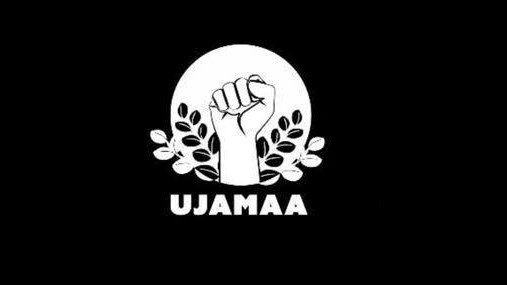
    A town hall event entitled “Coping in Crisis” was held Monday, Oct. 12 via Zoom. Organized by Neuroscience and Behavior Professor Janice Naegele and Senior Class President Pablo Wickham ’21, the discussion focused on race, faith, and mental health. The event featured four panelists: former NBA athlete Allan Houston, Associate Professor of Psychiatry at Yale University Nii Addy, Wesleyan Mental Health Education and Prevention Coordinator Angie Makomenaw, and Pastor and Ebony Singers Conductor Marichal Monts.

    The town hall was moderated by Resource Center Director Demetrius Colvin and Counseling and Psychological Services (CAPS) Assistant Director of Training and Assessment Dr. Smith Kidkarndee. The event was attended by 409 faculty and students, as well as prospective students and families.

    Colvin opened the town hall with a brief introduction about his work in the Resource Center and a land acknowledgement to the Wangunk tribe, the original residents of the land Wesleyan is built on. Then each panelist introduced themselves. 

    Houston, who played professional basketball for the Detroit Pistons and New York Knicks, discussed his organization, the Faith, Integrity, Sacrifice, Leadership, and Legacy Project (FISLL), which works with underserved youth across the United States. Houston then explained the significance of the values that constitute FISLL. 

    “When we look at these five values of faith, integrity, sacrifice, leadership, and legacy, this is what we really like to look at as the fundamentals of life,” Houston said. “They’re a foundation. And the one thing that we just like to understand and promote is that our legacy, what we want to become, who we want to become and our impact on the world around us has to be intentional.”

    Afterwards, Addy, a second generation immigrant to the United States from Ghana explained how his work was influenced by his father’s interest in neuroscience, his faith as a Christian, and how his identity as a Black man impacts his perspective on the prevalence of racial justice in academics.

    Makomenaw introduced herself, first in her native language, as a member of the Ojibwe tribe, later going on to discuss her experience in supporting survivors of gender violence through their process with the criminal justice system. Currently, Makomenaw is working as a new member of the CAPS team at the University.

    Monts explained that he first became affiliated with the University in 1981 as a student and noted his time as a member of Ujamaa, Wesleyan’s Black Student Union. Monts explained that he felt the need to give back to his community of Hartford. Monts began to teach music, which led him to return to the University to begin teaching Ebony Singers in 1986, a class that meets weekly to sing gospel music in Memorial Chapel. Monts is also a Pastor at the Citadel of Love in the North End of Hartford.

    “I’ve come to find out through the years that I was placed there, my purpose there is to be part of the spiritual skyline of Middletown, to be able to help young people who are trying to find their way in spirituality without being forceful,” Monts explained. 

    Lastly, Kidkarndee spoke about his work training CAPS clinicians in cultural competency, as well as ways to explore the intersections of race, sexuality, and gender as they relate to psychology. Kidkarndee is interested in the advancement of racial equity in mental health. 

    Next, Colvin asked the panelists to discuss the current state of conversations surrounding mental health in society, as well as  strategies for maintaining a healthy mental state and work life balance in a time of uncertainty and violence. 

    Monts discussed the stigma that came with discussions about mental health in his family growing up. 

    “Certainly as a Black man, I remember being taught that I’m not allowed to cry, I’m not allowed to feel, you’re supposed to be strong,” Monts said. “My father died when I was 12 years old, and my grandmother walks up to me and says well, you gotta be the man of the house now. So at 12 years old I started trying to learn to be the man of the house, which is totally wrong, and now I know I shouldn’t have been doing that, but there’s stigma attached to it.”  

    Houston explained that in difficult times, his faith has consistently provided him with a pathway forward and a better sense of self. 

    “I think what happened is that—a teammate of mine invited me to go to Bible studies, and what that did for me was it helped me kind of negotiate and navigate, who am I outside of what I’m doing,” Houston said. “Who am I outside of this sport, or this gift, or this calling that impacts other people?”

    Further elaborating on the role of faith in maintaining mental health, Addy explained the way that he approaches mental health from his dual positionality as a Professor of Psychiatry and a Christian. 

    “For me as a Christian, I don’t dismiss the power of God to work in people’s life and to bring healing, but that doesn’t mean that He hasn’t given us tools to be able to address that mental health,” Addy said. “So we can’t ignore psychological interventions, we can’t ignore the knowledge that we have about the brain, all these other components, all the aspects of race.” 

    Makomenaw added that in her indigenous community, dealing with the impact of COVID-19 means mutual care.

    “I’ve been really struggling with the whole, just, not wearing a mask outside,” Makomenaw said. “Because for my community, that’s just a given, you take care of others, you do things to support others, and so wearing a mask is one of those simple ways that we can do it. In that aspect, if one part of your community is not healthy, that affects the entire community, and so therefore it’s not just what you’re going through as far as struggles, but as a community what is going on.”

    Following this discussion on mental health, Colvin asked the panelists to speak about resilience and places in which they find strength, at which point Makomenaw took a moment to acknowledge her family, community, and the power that comes with survival. 

    “I have strong women in my family, and we’ve survived, pretty much, genocide in order to even have our existence now,” Makomenaw said. “Thinking of what we’ve gone through, and what my ancestors have gone through, acknowledging that we are still here—I find strength in that, in that existence, and my children, in just knowing it.”

    After a few more minutes of discussion from the panelists, Kidkardnee answered questions from the audience, one of which asked about how people can cope when their work or social position entails great responsibility. 

    Monts explained that in his work as a pastor, he has had to learn to step away from helping others.

    “If you don’t rest well, then you cannot give whatever you have or whoever you are, you cannot give your best self to people when you do show up,” Monts explained. “So you must. You are not doing anything wrong to take time for you.” 

    Another question from the audience asked the panelists to discuss coping mechanisms for those who are not part of a group rooted in religion or faith. Addy explained that, even on a neurological level, being in community is vital. 

    “Tying it back to even the brain, there’s a whole bunch of neuroscience evidence that shows the importance of us being in community,” Addy explained. “You can even see that when you’re studying things like rats and mice in the lab. When they’re in community together, when they have toys to play with, that changes their brains, that makes them more resilient. They’re less likely to get into patterns that we would associate with some of the same things that we as humans would struggle with, both depression and anxiety.” 

    After a few more questions and answers and final acknowledgements, Colvin thanked the various campus organizations that sponsored the town hall and transitioned to four Zoom breakout rooms for further reflection and conversation. Colvin, Addy, Makomenaw, University Jewish Chaplain and Director of Religious and Spiritual Life Rabbi David Leipziger Teva, Resource Center Race, Ethnicity, and Nationality Intern Jada Reid ’22, and Mindfulness Intern Tyla Taylor ’21 hosted the rooms.

    Naegele said that she deeply appreciated that so many students attended the event, and hopes that the University will continue to host conversations that focus on wellness in conjunction with current events. 

    “That’s where I want this to go in the future,” Naegele said. “I want there to be more town halls or other venues where students feel safe talking about mental health issues they’re having, feelings of isolation, feelings of being overwhelmed.” 

    Wickham, who worked closely with Naegele in organizing the event and selecting panelists, said that alongside the importance of the discussions about race and mental health for people of color that the town hall centered, the collaboration involved made it special for him. 

    “A lot of times we try to do the work in silos and then the campus becomes over-programmed,” Wickham wrote in an email to The Argus. “But if we work together and normalize collaborating then our reach will be greater and more impactful. At the end of the day, it is not about who gets the credit but about what the work will go on to accomplish. I want this town hall to be an annual event and see it grow even more.”


    Emma Smith can be reached at elsmith@wesleyan.edu

  • Ujamaa, Wesleyan’s Black Student Union, Issues List of Demands to Administration

    Ujamaa, Wesleyan’s Black Student Union, Issues List of Demands to Administration

    Ujamaa, Wesleyan’s Black Student Union, circulated a letter to the University administration with a list of demands for tangible actions towards anti-racist work and inclusion efforts on campus. The letter, released last Friday, Sept. 4th, spans 11 pages and articulates students’ concerns about the July 31 email that President Roth ’78 and Alison Williams ’81 sent out about anti-racism on campus, a list of demands of the administration, and a section contextualizing Ujamaa’s role on campus and urging the administration to do better for Black students. 

    The Ujamaa Manifesto Committee, which consists of Events Coordinator Arnaud Gerlus ’22, Communications Liaisons Alice Swan ’21 and Brianna Mebane ’22, and Social Justice Coordinators Jade Tate ’22 and Langston Morrison ’21, began drafting a version of the letter to the administration about three months ago. The committee members said that, after some feedback from students, they treated the drafting process as a collaborative effort, hosting a series of Zoom discussions with other students and Middletown residents. 

    “It was more so just talking about the issues, and talking about what we would like to address on behalf of the Black community at Wesleyan,” Morrison explained. “It wasn’t just amongst ourselves, we had a webinar and we held a town hall where we had the opportunity to discuss with Middletown residents, Wesleyan students and Wesleyan faculty, and a former Black Panther party member [Dr. George Walker]. It was an opportunity where we got to gather a lot of resources together and do something that might have positive change.”

    Dara Swan ’21, the administrator of @blackatwesleyan_u —an Instagram page created to promote stories shared by Black students at the University — was also included in the process. 

    “I had a form in which I said if you have ideas for this list you can submit anonymously or you can just DM me. So I didn’t get that many submissions, I think I got a total of about 7-10 because a few people said the same things.” Dara Swan said.

    This form prompted Dara Swan and Ujamaa to hold an additional Zoom meeting, inviting anyone who wanted to join and share their ideas.

    In addition, the Student Athletes of Color Leadership Council President Babila Fomuteh ’21, was a cosigner and a vocal advocate for the letter. 

    “Wesleyan holds itself to such a high standard of being this very progressive university institution, and the same holds true for the students here, very forward-thinking,” Fomuteh said. “But I feel like there’s still such a lack of acknowledgment and a lack of accountability in that sense of hey, there’s so much work that needs to be done.”

    Wesleyan’s male-identifying student of color affinity group Invisible Men also cosigned the letter.

    Alice Swan explained that after their initial meetings, the Ujamaa Manifesto Committee decided that writing a letter to the administration would be the best way to articulate the demands and concerns of Black students. 

    Gerlus said that though Ujamaa’s decision to write the letter came, in some ways, in response to the Black Lives Matter movement and the continuing violence against Black people, it addresses concerns about Black student life at the University that has always existed. 

    “I think that centrally, this letter came about with everything that happened in the summer,” Gerlus said. “But now, 10 years ago, five years ago, twenty years ago, Black people at Wesleyan have been undervalued and underrepresented. And maybe that has been an active continuation, maybe that has been inactive, it doesn’t really matter at this point, all of the points within this document are trying to affect that normalcy of ‘Let’s have like five Black people on our website. Job done.’ Meanwhile people are being called the n-word or physically accosted or verbally dealing with tons of microaggressions.” 

    The letter itself begins with a quote taken from the Fisk Hall Takeover of 1969 when Black students at Wesleyan crowded Fisk Hall to demand an increase in the number of Black students within the student body as well as the creation of a social support system for these same students. 

    “We seek to dramatically expose the university’s infidelity to its professed goals and to question the sincerity of its commitment to meaningful change,” reads the epigraph from the takeover. “We blaspheme and decry that education which is consonant with one cultural frame of reference to the exclusion of all others.” 

    Ujamaa members said that they were influenced by this historic event when writing their demands, and feel that many of the problems Black students faced in 1969 at Wesleyan, a predominantly white institution, still apply today. 

    “White supremacy that exists in education is not necessarily different from the white supremacy entrenched in the systems of racism that we see happening [right now],” Tate said. “I think it was important that we use that quote because it also talks to the hypocrisy of higher learning, and how it will also be, maybe not always be…an exclusive, privileged place that doesn’t guarantee accessibility and comfort to all students regardless of whether they get admitted or not.”

    Tate also spoke to the timeliness of the letter in the midst of the Black Lives Matter movement. 

    “We also wanted to take advantage of the fact that universities were coming out with their ‘How we’re gonna be anti-racist’ statements in response to all these ‘black at blank’ accounts that were coming out,” Tate said. “I feel like we took advantage of that by saying, no no, you’re not going to just implement what you think anti-racism at Wesleyan looks like, we’re gonna help you, so you can actually make Black students and Black members of the community feel good, comfortable…This national, and even international, push for systematic change facilitated the drive to demand change now.”

    Alice Swan added that the COVID-19 pandemic has further intensified the need for the administration to support Black students on campus. 

    “Going into this really weird time with coronavirus and everything like that, we wanted to find new ways to support Black students,” Swan said. “I think the real goal of this was to just try and create tangible policy change in any way possible, and I think through this list of demands it sort of created an avenue so we can approach different aspects of student life during this time.” 

    Mebane also spoke to the importance of making sure that Black students are not overlooked during this time. 

    “Throughout history, there are so many excuses about why people cannot treat Black people with more support, and I don’t want a pandemic to be, one that is disproportionately affecting our communities, I don’t want that to be one that is used as an excuse to why you are going to continue to put us on the back burner,” Mebane said. 

    Since the letter began circulating through student and faculty circles last Friday, members of the Ujamaa Manifesto Committee said that the community response has been overwhelmingly positive. Alice Swan said that the writers and co-signers of the letter are hopeful that all the demands will be met, and would like to see tangible action on the part of the administration. 

    “I think what we want is for all the demands to be met, but it is unlikely that they all be met,” Swan said. “But I think an appropriate response would be writing sort of like a progress report or short blurb at least for all the demands listed, and sort of keeping us updated with what are the tangible action items that are taking place. Cause we’ve received some kind of short, like one-pager, but it is an 11-page document, so we definitely want them to go through the process of reflecting and actually making an effort to make these things happen.”

    Ujamaa Manifesto Committee members also mentioned goals for keeping faculty accountable that were enumerated in the letter to the administration. 

    “We did note in one particular demand that there should be a joint faculty-student committee that deals with all types of concerns from students, but like I want whatever training that happens, I want it to be successful enough that that committee does not have to rely on just complaints and concerns from students,” Mebane said. “I want faculty members to be actively checking their colleagues on anything that they’ve done wrong… It needs to be a joint effort. Students can’t just continue to do everything and expect the administration to do everything based on what’s going on.” 

    Gerlus added that lasting change needs to be an ongoing and multi-level process, especially in terms of accountability for Public Safety, the University’s campus police. 

    “The administration also says they are going to implement anti-racist training for public safety,” Gerlus explained. “But it is important to know, like, what does that mean? Are they going to be assigned to read “How to be Anti-racist”? I don’t think that book is going to solve all of the issues of Wesleyan. I don’t think that readings and Tumblr posts are going to solve these issues. So, I just hope there is going to be clarity going forward as we meet with them about what these trainings and new orientation areas are going to be. Because it could be nothing and we want to avoid that.”

    In the end, Ujamaa’s driving goal is to create long-lasting change within Wesleyan through ongoing discussions with the administration and keeping campus institutions accountable. But to do this, they are aware that this issue must be kept in the public eye in order to maintain focus. 

    “That’s just my main concern. That we do all this work and have all these people contributing and then nothing really gets changed,” Dara Swan said. 

    Morrison said that going forward, Ujamaa plans to continue pushing the administration to do better.

     “We want change, and I think we want immediate positive change, swiftly. I think that can only happen if, like Alice said, there’s pressure being applied.”


    Emma Smith can be reached at elsmith@wesleyan.edu.

    Lia Franklin can be reached at lfranklin@wesleyan.edu. 

  • Hamilton Prize Winners Talk Inspiration, Creative Process, and Future Plans

    Hamilton Prize Winners Talk Inspiration, Creative Process, and Future Plans

    For many students, high school and college alike, it’s probably hard to recall exactly what was going on in mid-May of 2020. If you had the privilege of a safe home and internet access, the world became virtual, small, contained, and repetitive in the face of the looming threat of the novel coronavirus disease (COVID-19) pandemic. By the latter part of the Spring, each day had begun to feel much the same. 

    c/o newsletter.blogs.wesleyan.edu
    c/o newsletter.blogs.wesleyan.edu

    But Brianna Johnson ’24 remembers mid-May with clarity, because one day in particular stood out. She was expecting a phone call, and, as phone calls so often do, it came at an especially inconvenient time.

    “I had shampoo in my eyes and all of this other nonsense, and I had my phone play music and my phone just stops playing music, and that means I got a call!” Johnson said. “So, I’m like, wait, and I’m rushing to grab a towel to rub the shampoo out of my eyes and I see “Connecticut” and I’m like, I don’t know this number, and I was like, oh wait, Connecticut, that’s Wesleyan!” 

    Calling from Connecticut was University President Michael Roth ’78, who alerted Johnson to the fact that she was the winner of the 2020 Hamilton Prize for Creativity.

    “I didn’t scream right away, I kinda just like, froze, and I was just like, ‘are you serious?’,” Johnson said. “And then I just grabbed my towel, the water’s still running, and I run upstairs and I put the phone on speaker and I’m in my mom and dad’s room . . .  it was just a crazy moment.”

    Johnson’s grand prize-winning piece was a mixtape titled “Tell ‘Em The Truth” which consists of three songs: “Dreams to Reality,” “These Chains,” and “Damages of Duality.” Although Johnson completed her mixtape last year, her musical process started when she was in ninth grade. She explained that she had just moved to a new high school and was feeling pressure from both adjusting to her environment in a primarily white school and witnessing acts of police brutality and racial injustices going on around her in the U.S.

    “I was going home and hearing the news of Michael Brown and the aftermath of Trayvon Martin and things like that so, it was all a lot of pressure that I just decided to release through music, which is not something that I would naturally do, but I just wrote the songs because, yeah, I had to get my anger out somehow,” Johnson said.  

    Johnson said she found inspiration in the cover of the book “Chains,” a novel by Laurie Halse Anderson. The cover depicts a Black girl holding up bound arms.

    “I first thought like, ‘Okay, what do you do with chains?’ And like, not even ‘What do you do’ but ‘What would Black people be doing with chains?’” Johnson said. “And I was like, ‘Breaking them.’”

    The same day that Johnson found out her work had earned her a full scholarship to Wesleyan, two other writers received exciting news as well. Luka Netzel ’24 and Chiara Kaufman ’24 both earned honorable mentions for the Hamilton prize: Netzel for his script to the opening act of a musical and Kaufman for her work in flash fiction (a style of fiction where works are typically shorter than a short story). 

    c/o newsletter.blogs.wesleyan.edu
    c/o newsletter.blogs.wesleyan.edu

    Netzel’s piece, which he titled “Heartful Dodgers,” tells the story of two brothers trying to dodge the Vietnam War draft by joining an Amish community in order to claim that they are pacifists. The plot of Netzel’s submission revolves around the brothers feigning Amish identities in order to blend in with other community members, some of whom are rather suspicious of the protagonists. 

    Netzel explained that he made the decision to write a piece of musical theater because that was the submission category that most appealed to him. 

    “They have the different categories of like the different art forms, so, all of them are very specific and restrictive, except for the theater one, which is just write either the first act of something or a scene,” Netzel explained. “So, I just decided to take advantage of that and I wrote the first act of a musical.”

    Netzel said he intends to eventually finish his musical, but added that he could use some help in the music department. 

    “I just kind of just winged the lyrics and like, made a tune in my head and just thought, ‘Oh yeah, that sounds good.’” Netzel said. “So I have songs, but I don’t actually have any actual [composition], for it, so I really am hoping to meet someone here who knows how music works and then be able to finish that and then finish the other act.”

    While Netzel chose to submit to the open-ended musical theater category for the Hamilton Prize, Kaufman said she knew right away that her submission would be a different genre: fiction. 

    c/o newsletter.blogs.wesleyan.edu
    c/o newsletter.blogs.wesleyan.edu

    Kaufman explained that her flash-fiction piece, “The Maid,” one of two short stories that she submitted, is written completely in a stream of consciousness style. 

    “I wrote it all in one sitting which is very unusual for me, because I’m a very very slow writer,” Kaufman said. “It’s in the style of stream of consciousness meaning that it’s really, it is all first person, it is actually all constructed in one sentence. So it’s not really, there’s not as much of a plot as it is this woman’s particular thoughts.” 

    The central character of Kaufman’s piece is a mother with young children. The mother’s thoughts reveal her fears about motherhood, her relationship with her husband, and concern with the fact that the maid that she has hired is becoming more of a mother figure for her children than she is. 

    Both Johnson and Kaufman said that they have found confidence and voice through their creative work. 

    “It just showed me how important Black voices are and even if you think you’re not making a statement or even if you like, think nobody is listening to you because you’re a marginalized group or you’re not the majority in a space, your voice still matters,” Johnson said. “I think that’s one of the biggest lessons I taught myself on accident by doing this, is that my voice carries some weight.”

    Johnson added that she has carried this lesson with her into all different settings. 

    “It’s really helpful in any type of space, especially a space where I might automatically silence myself because of my own internalizations of like, [questioning] if I belong there, it really gave me more of a confidence like standpoint to show myself like, I’m worth something and my voice matters,” she said 

    Kaufman also explained that the award for winning helped her feel more confident about her role on campus. 

    “I think it really gave me confidence going into Wesleyan, confidence that I belong as a writer and as a student.”

    Kaufman said that she is settling in well and has made many friends, including grand prize winner Johnson. The two writers got to know each other over the summer in their first year seminar, and Johnson explained that they recently saw each other in person for the first time when Johnson was on her way to get her nose swabbed for a COVID-19 test. 

    When asked about what advice they might have for other aspiring writers and creative people, the prize winners had a few different suggestions. 

    Netzel focused on not being too worried about how your writing is received.

    “As soon as you’re done with your first piece, and, you know, people start telling you it’s good and stuff  . . .  you realize that like, ‘Oh, there’s a lot more I could have done’ and then you just get into that, and it’s just, you keep going and you keep getting better and it’s important, just like, let yourself fail.”

    Johnson had similar advice about maintaining authenticity in creative work. 

    “Just go for it like, whatever happens happens, whatever comes out of it comes out of it,” Johnson said. “Just do it. If it’s something that’s in you, don’t hold it in you for too long or you’re going to lose it.”


    Emma Smith can be reached at elsmith@wesleyan.edu.

    Sarah Timbie can be reached at stimbie@wesleyan.edu.