
Author: Emma Smith

  • Quinta Brunson’s “Abbott Elementary” Elevates the Workplace Comedy Genre

    imdb.com
    imdb.com

    I first heard the name of  “Abbott Elementary” creator Quinta Brunson back in 2017, when she was making videos for BuzzFeed. Like most of my peers at the time, BuzzFeed was my primary source of news: Instead of reading the headlines in The New York Times, I would spend hours scrolling through relationship quizzes, celebrity news, and animal content on Snapchat. 

    Brunson was a regular on the platform, and I remember, in particular, seeing her video “If I Came in Second Place at the Winter Olympics.” In the skit, Brunson has just medaled in some sort of downhill skiing event, and though the interviewer is determined to eke out some comment about her disappointment in not winning gold, Brunson is hilariously thrilled with her victory. 

    “Oh, I didn’t expect to land that jump,” Brunson says, goggles atop her head, looking into the camera. “I was taking a chance, so, it’s crazy that I’m alive right now.”

    In what has since emerged as her signature style, Brunson is bubbly and assertive, stepping away from the camera to celebrate her win before jumping back into the frame to grab the mic and ask the interviewer what place he got in the Olympics today. He fumbles, and she laughs. It’s classic satire, and relevant every Olympic season. 

    Brunson has come a long way since her minute-long BuzzFeed parodies. Since then, she has performed in “A Black Lady Sketch Show,” and now she is back on the scene as the director and star of the new hit sitcom “Abbott Elementary.” Just like in her BuzzFeed videos, Brunson’s sense of comedic timing and lovable awkwardness is on full display in the series. 

    Like “The Office,” which is arguably the touchstone for workplace comedy, “Abbott Elementary” is shot in a mockumentary style and centers around an entire cast of characters. Unlike other sitcoms, though, the show follows various teachers and staff throughout a fictional inner-city Philadelphia school. The characters are not shy about talking back to the documentary crew and shooting looks into the camera after questionable interactions. 

    It is truly the characters that make “Abbott Elementary” so special. Brunson plays Janine Teagues, a talented but insecure young teacher, who seems to be a proxy for Brunson herself. Janelle James shines as Ava Coleman, the incredibly misguided principal of the school who, it is later revealed, has only fallen into the job because she caught the superintendent cheating on his wife. Lisa Ann Walter and Sheryl Lee Ralph play seasoned professionals Melissa Schemmenti and Barbara Howard respectively, who always have their classes under perfect control. Chris Perfetti is Jacob Hill, a young white teacher, excited to share his love of history with his students but deeply uninformed when it comes to Black culture. William Stanford Davis delivers the occasional zinger as a trash-obsessed janitor, Mr. Johnson. Then, there is Tyler James Williams as a substitute teacher, principal hopeful, and eventually, full-time teacher Gregory Eddie. As the show progresses, each character emerges as well-crafted and individual, poised to interact with their colleagues in increasingly strange and amusing scenarios. 

    The show spends the first few episodes developing its characters and their particular agendas. Janine, fondly known as Ms. Teagues, is determined to make the school day as smooth as possible for students, though she struggles against major budget restrictions as well as a failing relationship with her immature aspiring rapper boyfriend, Tariq (Zack Fox). She seeks validation and support from Melissa and Barbara, who eventually assist her endeavors but never miss an opportunity to make fun of her naivete. 

    Principal Coleman is mostly interested in getting her hair done and flirting with Gregory, who is deeply uncomfortable with such explicit (and hilarious) objectification. Jacob plays the role of the awkward, aloof white teacher who won’t shut up about the time he spent in Africa, but ultimately develops a heartwarming character arc and friendship with Barbara when they start a community garden together. It turns out that the plants are only growing, though, because Gregory sneaks out to tend to them. 

    “Jacob and Barbara have no idea what they’re doing,” Gregory confesses, deadpan, into the camera. “He was trying to plant a coconut in West Philadelphia in soil with sub-6.3.” He angrily shakes fertilizer onto the plants. “Bruh!” 

    The show begins to pick up steam a few episodes in, and never looks back. By the 1th episode, “Desking,” almost every scene is laugh-out-loud funny. In one memorable moment, Jacob brings in his boyfriend (Larry Owens) to help identify the shoe prints of the children who have been participating in the trend, which involves running across as many desks as possible. Jacob is thrilled to introduce Zach to his coworkers, who have a hard time believing that someone could possibly want to live full-time with their awkward colleague. 

    “So he knew you, and he was like…more?” Ava quips. Zach enters the room and Ava immediately reacts, “Black?” Zach quickly replies, “It’s actually pronounced ‘Zach’. You must be Ava.” 

    Amidst the funny scenes, “Abbott Elementary” develops heartfelt storylines between various teachers and staff members. Brimming with mommy issues, Janine eventually wins over Barbara, who takes her out to dinner after a tough conversation with a parent. Mr. Johnson gives Gregory advice on exploring different career options. Most compelling is the budding romance between Gregory and Janine, which sows the seeds for a quirky love story in future seasons. 

    Also undeniable is the show’s social commentary, which Brunson deftly weaves throughout the season. Abbott Elementary is a hugely underfunded public school, which puts pressure on teachers to supply their own materials and do their own fundraising alongside already demanding teaching obligations. But the show refuses to cast its subjects as worthy of pity—an undercurrent that Brunson emphasizes from the pilot as teachers poke fun at the fictional camera crew for wanting to come in and make a documentary about a sad, poor school. In reality, as viewers see throughout the season, Abbott Elementary is full of life, energy, and humor. The show, in which most of the teachers and all of the students are Black, is a story told by and for the people that it centers. 

    Season one concludes with a class field trip to the zoo before summer vacation, which brings the whole cast of characters together for some excellent comedy and sees relationship dynamics come to a head. Luckily for the show’s fans—and how could you not be among them?—ABC has already renewed “Abbott Elementary” for a second season. As I start a teaching job of my own in Madrid after graduation, I look forward to more laughs as Brunson continues to grow her characters.

    Emma Smith can be reached at elsmith@wesleyan.edu.

  • Why I Stopped Eating Meat: On “Bloodchild,” Knowledge Systems and Animal Ethics

    Last year at Thanksgiving, I took a really careful look at the turkey. Even though it was only my family of four gathered to celebrate with relatives over Zoom, the bird was enormous, shiny, golden, greasy, bare. As usual, I took a helping of dark meat and sat down at the table to eat. The meat was hard to chew. 

    Before Thanksgiving of 2020, and especially before enrolling at Wes, I had always been a fairly unquestioning meat eater. When my sister and I were younger and played recreational sports, we would often stop at the local Five Guys for a quick hamburger dinner with my mother, before practice. We knew that my dad didn’t enjoy fast food, so it was a special treat that just the three of us could share. I phased out meat a little bit when I arrived at Wesleyan and experienced the luxury of the vegan line at Usdan, but still relied on meat as a protein source, particularly because of the physical and caloric demands of my continued involvement in athletics.  

    Looking at the Thanksgiving turkey that day, though, I began to see meat consumption differently. Maybe it was the fact that COVID-19 gave me a break from sports and a time to reflect, maybe the ethical philosophy courses I had taken were finally starting to sink in, or maybe the influence of my vegan partner was getting to me (though I swore to my friends that it was not my new relationship that prompted me to change my mind about meat-eating). Whatever it was (retrospectively, my partner did have a lot to do with it), I began to see the turkey on the table not as a value-neutral, metaphysically meaningless food source but rather as the carcass of a being that once had agency and now had been reduced to an object of consumption. I was flooded with emotion and discomfort. 

    Earlier this year, I read Octavia Butler’s famous piece “Bloodchild” for the first time—the story actually came up in three out of my four classes that semester at around the same time, which felt like some kind of sign. In the short story, the Tlic, an insect-like species, rather violently lay their eggs in male humans in order to reproduce. After witnessing the bloody death of another human man whose hatchlings have been eating him from the inside, the male protagonist Gan rethinks his commitment to his Tlic partner T’Gatoi, but ultimately allows her to lay her eggs inside him due to his familial commitments. 

    Like any good piece of science fiction, Butler’s story effectively builds an alternate world that resonates with readers but is distant enough from their own to provoke feelings of deep discomfort and strangeness. Gan’s human body is warped and exposed by the presence of the eggs of an outsider, which are not particularly welcome. In a society where humans are subjugated, consent to fertilization becomes a gray area, more a matter of duty or species-determined fate than a true choice. 

    I found the bodily domination by the Tlic in “Bloodchild” disturbing and dark, and I imagine that most readers felt the same way. In conjunction with Butler’s broader commentary about gender, reproduction, and power, I believe that engaging in the eating of animals subsists on a “Bloodchild” adjacent logic of bodily subordination for the good of a singular species: as humans eating animals, we posit that there are some “othered” bodies that are worth less than ours, and we exploit them. Feeding, breeding, and genetically modifying animals for the purpose of consumption with the ultimate goal of fueling our collective reproductive agenda feels, or should feel, just as dark and concerning as the invasive fertilization methods of Butler’s Tlic. 

    I am a firm believer that knowledge is socially produced, which situates me as an opponent of human exceptionalism, or the idea that humans are fundamentally different than and superior to other animal species. I’ll elaborate: as humans, we have created particular hierarchies of intelligence based on cultural touchstones, like the ability to add and subtract numbers. Because chimpanzees are unable to add and subtract numbers, many humans view them as less intelligent.

    I would argue, perhaps naively, that chimpanzees are only less intelligent than humans according to human markers of intelligence; to view the species through a human-oriented framework is to neglect the capabilities that they possess, many of which are particularly relevant to their environment, such as being able to recall object placement. Viewing chimps as less intelligent also centralizes humans as the point of comparison to our great ape relatives, when in reality, chimps probably don’t care much whether or not we think they are smart, except to the degree that our assessment of them and their proximity to us dictates the degree of violence we enact on them and their habitats. 

    In fact, aside from human intervention, all animals seem to exist pretty happily in their own societies with their own systems of knowledge. Other nonhuman animals, like bees, live in groups that are highly complex and regulated. Perhaps that very remark even contradicts my earlier point; animal societies do not need to resemble human societies in order to be important and worthy of ethical consideration. It feels to me like a huge mistake, and a lack of imagination, to dismiss animal lifestyles and experiences and to reduce individual animals to exploited non-subjects, like turkeys on Thanksgiving tables. 

    Philosophical analysis aside, the ethical implications of meat-eating seem fairly straightforward. Consuming meat, and especially red meat, is harmful to individual animals, bad for the environment, and detrimental to individual health. So why do so many people continue to eat other animals? 

    I can think of innumerable reasons. I know that for many people, eating meat constitutes part of their cultural practice. For some, meat is a quick and easy way to access protein. Though avoiding meat turns out to be cheaper than buying it regularly, in many (especially, low-income) areas high-quality fruit and vegetables are difficult to access. Not everyone has the privilege of regular, unbudgeted visits to the produce section of Whole Foods, and pushes for vegetarianism and veganism, to my eye, tend to neglect the elements of class privilege that come with the decision to eat a particular diet, or the ability to substantially alter one’s diet at all. Even on Wesleyan’s campus, vegetarian and vegan options are most accessible to those who are willing to spend extra points at Swings or Weshop––as delicious as Usdan’s vegan line can be, it is not always available, nor does eating there for every meal seem at all realistic. 

    Personally, I do have the class privilege to be able to comfortably eat a vegetarian diet, and I view my decision to do so as a strategy for utilizing said privilege for the greater social good. I respect others who are able to make a similar decision, and I also respect those who are not. I also believe that advocacy for vegetarianism and veganism must be, and is implicitly, tied to the fight for racial justice and anti-capitalism; considerations about meat-eating must acknowledge that such dietary decisions (or lack of ability to make such decisions) are multifaceted and intersectional.

    Needless to say, I will not be partaking in the Thanksgiving turkey this year, and I may never again. I am comfortable with this decision, and whenever it becomes inconvenient or difficult, I remember my respect and love for my animal friends. 

    Emma Smith can be reached at elsmith@wesleyan.edu. 

  • Remembering Mike Lynch: Physical Plant HVAC Mechanic Passes Away After 34 Years at the University
    Remembering Mike Lynch: Physical Plant HVAC Mechanic Passes Away After 34 Years at the University

    c/o wesleyan.edu
    c/o wesleyan.edu

    Mike Lynch, HVAC Mechanic and beloved member of the University’s Physical Plant team, passed away in early October, just before celebrating his 35th  year of working at Wesleyan. Lynch is survived by his brother, David. 

    When asked about Lynch and his contributions to Physical Plant, his colleagues emphasized his kindness and generosity as well as his sense of humor. 

    Phil Cotharin, a fellow HVAC mechanic, has been Lynch’s officemate and partner since beginning his 31-year career at the University. 

    “Just know that he was always there to make the fun funnier,” Cotharin said. “And [he was a] very reliable, honest guy. He never told a lie or a fib. He was one of the nicest, most outgoing, giving individuals. That’s one thing about him; you could trust him. He would never pull any punches or pull any wool over your eyes.”

    Physical Plant workers also remember Lynch as an avid fan of the Mets and the Giants. HVAC Mechanic Nick Zinn, who is relatively new to the Physical Plant team, said that he and Lynch bonded over their shared sports affiliations. 

    “We talked baseball every day, talked about fun things every day,” Zinn said. “I’m a Mets fan with him, so I feel his pain. He would vent to me almost every day. That was mine and his bond. We wanted to go to a game, but we never made it to a game.” 

    For HVAC Mechanic David Malone, a Red Sox fan himself, conversations about sports with Lynch went a little bit differently. 

    “At the beginning of every season, I’d tell him, ‘the Mets look good this season; it’s looking like a good year,’ and it was always funny ’cause halfway through the year they’d start to tank and start going downhill, so midway through the year we’d just be laughing,” Malone said. “He would say to me, ‘David, the Mets, not looking too good.’ We would have laughs about that.” 

    Director of Physical Plant Operations Mike Conte shared that Lynch had a true love of the beach. 

    “He and I and a few others spent many memorable weekends at Misquamicut Beach, Rhode Island when we were in our 20s,” Conte wrote in an email to the Argus. “His mom and dad owned a cottage there.”

    HVAC Mechanic Pete McGurgan also noted that Lynch had an extraordinary talent for remembering numbers and facts. 

    “He had an uncanny knack with his memory,” McGurgan said. “You’d be talking about a movie, he’d remember the actors, the actresses, the statistics for a sports team, stuff that he would remember it’s like, ‘get out of here.’” 

    Cotharin added that Lynch’s impressive memory was especially helpful when it came to room numbers and locations around campus. Earlier in their careers, Lynch and Cotharin worked together closely in upgrading campus heating and cooling systems from pneumatic controls to computerized climate control and building automation. Cotharin recalled fondly the many trips that he took with Lynch to various universities to learn about automated building controls and to bring the technology back to the University. 

    Lynch’s years of experience with the University’s HVAC systems have had a huge impact on the team, according to McGurgan.  

    “When you’ve had somebody who’s been here for even five or six years, the institutional knowledge they have . . . they just know where everything is; they can walk into a place and go, ‘I know what’s going on already’ instead of having to start from scratch,” McGurgan said. “That’s so valuable. You can’t replace it.”

    Cotharin pointed out the concrete value of this experience. 

    “You can’t train that. It’s the difference of draining a building of all the heat, draining the building of all the cooling, displacing the students with no creature comfort,” Cotharin said. “That’s very valuable.”

    With the years of experience and knowledge that he brought to the table, newer members of the HVAC team said that Lynch was a great mentor to them in their early days with Physical Plant.  

    “Mike taught me a lot of stuff when I first started here five years ago,” Malone said. “Mike was always there to help me when I first started here with finding my way around and finding my way through different buildings that he might know about.” 

    Since Lynch’s death, the HVAC mechanics have been working hard to fill the space that he has left behind. 

    “We’re coming in every day and trying to play catch-up,” Cotharin said. “And now with all the students back after the year of COVID, from everything being dormant and not running, and going back to full operation, we’ve got a whole new slew of to-do lists around here and not enough people. And Mike was one of those people we needed.”

    Zinn added that the staff’s busy work schedules have made it hard to properly grieve for Lynch. 

    “We haven’t really had time to grieve or anything,” Zinn said. “We were working that same day, trying to fight through that. It’s hard to process.”

    Lynch’s station in the HVAC office is still intact, with his old family pictures, signs, and Mets cap on display. Cotharin said that he is not planning on changing the setup of the workstation anytime soon. To him, Lynch was like family. 

    “It’s like being married,” Cotharin said. “We work together 40, 50 hours a week for 25, 30 years and then, overnight, you’re gone? At 56 years old, my age? We were born 9 days apart.” 

    Physical Plant staff said that they are still waiting to hear whether there will be funeral services for Lynch. In the meantime, they are missing and remembering his presence, his kindness, and his sense of humor. 

     
    Emma Smith can be reached at elsmith@wesleyan.edu.

  • The Sex School: A Wesleyan Student’s Perspective on “Sex Education” Season Three
    The Sex School: A Wesleyan Student’s Perspective on “Sex Education” Season Three

    c/o Good Morning America
    c/o Good Morning America

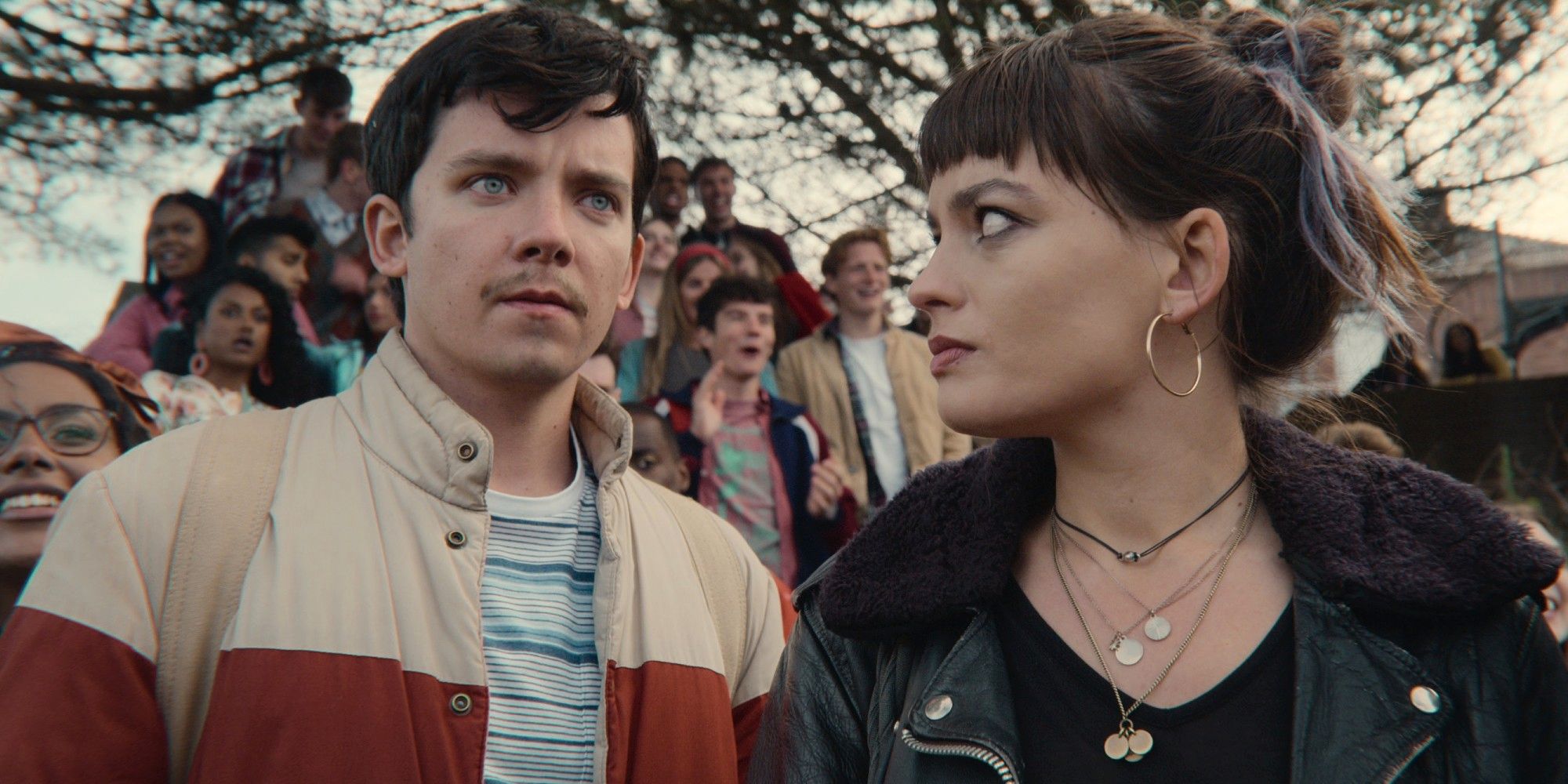
    The third season of the British Netflix hit show “Sex Education” starts off with a bang—pun intended. The first three minutes or so of the first episode feature a montage of the show’s numerous couples getting it on while The Rubinoos’s 1977 cover of “I Think We’re Alone Now” by  Tommy James & the Shondells plays in the background. 

    We see Otis (Asa Butterfield) and new fling Ruby (Mimi Keene) having sex in a car in the woods, Eric (Ncuti Gatwa) and his boyfriend Adam (Connor Swindells) passionately kissing and undressing, and Ola (Patricia Allison) and her girlfriend Lily (Tanya Reynolds) hooking up while in full alien costumes. And that’s just in the first thirty seconds. It’s not an uncharacteristic start to a show that has never shied away from explicit sexual scenes, but it is certainly not the type of opening sequence you want to watch with your parents.  

    Beyond shock value, the sex scenes of season three reflect the show’s driving thesis: sex is a learning process. Rather than dancing around sexual acts, the show puts them on full display, thus demystifying sex as a concept to an extent that verges on hyperbolic. The show seems to laugh along at itself as it delivers on the promise of its title, depicting sex honestly with the aim of teaching its audience, in addition to its characters, a thing or two along the way. 

    The opening scenes of the episode are also reflective of a tonal shift in the third season of “Sex Education.” Moordale, the fictional high school that the teenage characters attend, was the pinnacle of a sexually repressive environment for season one and most of season two (headmaster Groff, played by Alistair Petrie, ran a tight ship), but by the end of the second season, the institution had begun to come apart at the seams. The student body was bursting with, well, lust, and could not go on hiding it, a fact that became particularly apparent with the extremely phallic production of an alien-sex-themed Romeo and Juliet—if you haven’t seen the show before, and even if you decide not to watch it, I urge you to view the last episode of season 2. Early on in the show, individual students’ sexual fantasies and worries and wonderings were private except to the viewers and the characters in whom they confided (usually Otis or his showstopping sex therapist mom Jean, played by Gillian Anderson), but by the end of season two, sex at Moordale was suddenly very much on display, for all to appreciate. 

    As season three commences, viewers are faced with a new Moordale, labeled “the sex school” by local media. In the show’s reality, the school is an institution that is coming to terms with sex positivity. It’s not unlike Wesleyan, actually. Students are at various points in their learning about consent, pleasure, and what constitutes sex. Some students are having lots of sex, others are having none at all. Some want to be having sex, others do not. Many are grappling with their sexualities and coming to better understand their relationships. Moordale even has a wall covered in graffitied penises and sexually graphic phrases, which is vaguely reminiscent of YikYak at Wesleyan, home to many a horny musing. 

    Where Moordale and Wesleyan differ, besides the obvious discrepancies that set a fictional high school apart from a real university, is that Moordale is something of a sexual and relational utopia. Students cause each other emotional pain in their relationships, to be sure, but the only act of sexual violence against a student (Aimee, played by Aimee Lou Wood) is perpetrated by a stranger on the bus. Most of the students work hard to treat each other with respect and kindness, which often does not feel like the case on Wesleyan’s campus, where hookup culture runs rampant, known perpetrators are rarely held accountable, and survivors of sexual violence have few resources that really center their needs. 

    In general, the show has a certain naivete when it comes to issues of race, gender, and sexuality. While “Sex Education” showcases the structural issues that individual characters face (Eric grapples with being forced to hide his identity as a gay man when he travels to visit family in more socially conservative Nigeria, for example) it rarely portrays interpersonal acts of race or gender-based violence, which are certainly not absent at a school like Wesleyan. 

    Superficially, season three seems to posit that Moordale is a sex-positive utopia, the consensual pleasure-seeking world of fornication that we should all strive for. But on closer examination, perhaps not. Season three’s Moordale faces a new challenge in the form of new headmistress Hope (Jemima Kirke), who initially appears to have the students’ best interests at heart, but throughout the season reveals herself to be just as bad as former headmaster Michael Groff, if not worse. She draws lines on the floor and forces students to walk in single file, repaints the iconic yellow lockers a drab shade of blue, and tries to force nonbinary student Cal (Dua Saleh) to wear a tight-fitting uniform, in which they would be highly uncomfortable. And most egregious of all, at least to the Moordale students, she advocates for a sex education regimen that centers abstinence with no discussion of safe alternatives for those that do choose to have sex. 

    The presence of Hope, however repugnant she may be as a character, is just the wrinkle that “Sex Education” needed to continue crafting a compelling narrative in its third season. Cal is also a breath of fresh air and represents a nuanced portrayal of a Black, nonbinary person, which is incredibly rare in mainstream television. 

    Another highlight of the season is a sex scene between longstanding female protagonist Maeve (Emma Mackey) and Isaac (George Robinson), who is disabled and uses a wheelchair. Maeve carefully asks Isaac where and how he would like to be touched, building up a slow and intimate pleasure. The scene is carefully crafted and appropriately tender and sensual, a testament to what sex can be when partners offer enthusiastic consent and are deeply respectful of one another’s needs and desires. 

    Apparently, the Wesleyan Office of Support, Healing, Activism, and Prevention Education (SHAPE) thought so too. Their Instagram account, @wesshapeoffice, featured a post celebrating the scene and promoting their workshop about relationships in the media, which occurred on Oct. 13. In scenes like this, “Sex Education” effectively models what pleasurable and intimate sex can look like, educating viewers that may have been exposed to something more closely resembling Hope’s abstinence-based education back in high school. Seeing these moments on screen is both hopeful and inspiring. 

    I would be remiss if I did not mention all the ways that the third season of “Sex Education” is hilariously funny as well. In the first episode, the school’s a capella group rehearses a song that features the delightful lyrical refrain “Fuck the pain away” while the group bops around in quintessentially awkward a capella choreography, vocalizing the word “Fuck!” Not to harp on the Moordale/Wesleyan parallels, but come on—this parody has Wesleyan written all over it. A running gag throughout the season is Aimee’s pet goat, affectionately named “Goat,” who is perpetually wreaking havoc. Eric is dazzling both in his snappy, smart dialogue as well as his more serious moments, which are frequent as his character continues to develop throughout the season. 

    Season three of “Sex Education” is undoubtedly a triumph. So, should we Wesleyan students look up to Moordale and the world of “Sex Education” as a shining example of what sex positivity could be? Yes and no. At this point, achieving a campus where sexual violence does not occur seems impossible; this detail casts Moordale as painfully unimaginable, tantalizingly out of reach. Simultaneously, there is something to be said for imagining and portraying such a utopia, where sex is so openly discussed and students intentionally pursue consensual and mutually respectful relationships. Like Wesleyan, the strength of “Sex Education” is in its characters and their many subtleties, their challenges and their triumphs, and the unanswered questions that they raise. The show itself seems to continue to grapple with many of them—education is an ongoing process, after all. 

    Emma Smith can be reached at elsmith@wesleyan.edu.

  • Alison Burge and Chandni Kapadia Join CAPS Clinical Team

    Alison Burge and Chandni Kapadia Join CAPS Clinical Team

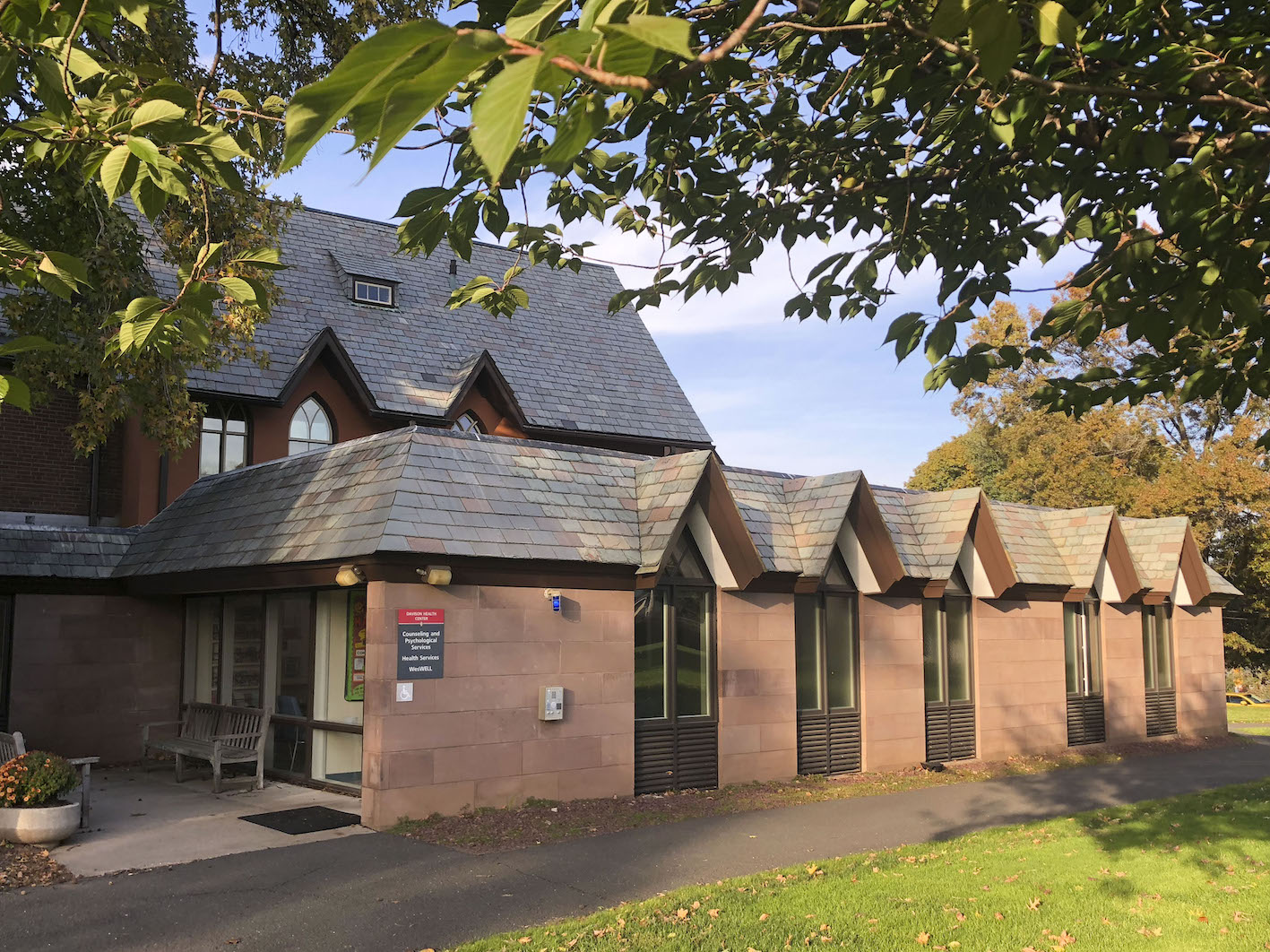
    Counseling and Psychological Services (CAPS) has welcomed two new clinicians to their staff for the fall 2021 semester: Alison Burge, LPC and Chandni Kapadia, Psy.D. 

    CAPS Director Jennifer D’Andrea noted Burge’s background and interests as she joins the CAPS team.

    c/o wesleyan.edu
    Alison Burge, LPC c/o wesleyan.edu

    “Alison Burge, LPC joined our staff as a full-time psychotherapist in August,” D’Andrea wrote in an email to The Argus. “Alison has worked in a variety of clinical settings and she has a special interest in working with first generation students and students who are struggling with depression and anxiety.”

    Burge said that one of the reasons she was interested in working at the University was because, despite her wide range of experience, she had never worked on a college campus.

    “I enjoy working with emerging adults, and providing students with a space to process, reflect and work on becoming the best version of themselves,” Burge wrote in an email to The Argus. “I made the decision to work at Wesleyan specifically after conducting my own research and reading about how Wesleyan challenges their students to explore new ideas and make changes in the world.”

    Burge noted that college students are a particularly unique client base because they face the challenges of navigating a rigorous academic environment while also learning about their identities and transitioning to adulthood. Burge recognizes that COVID-19 has only added to these challenges, and hopes to factor an awareness of these difficulties into her clinical practice.

    “COVID-19 has disrupted the academic experience for many students, leading to an increase in anxious and depressive symptoms,” Burge wrote. “I utilize a client-centered therapy approach which allows for students to be an equal partner within the session.”

    Burge is also looking forward to collaborating with existing CAPS programming, such as the BIPOC Mental Health Collective.

    “I hope to utilize the BIPOC Mental Health Collective to further connect with students and provide students of color with a safe place to voice their concerns and feel validated,” Burge wrote.

    D’Andrea noted that, like Burge, Kapadia looks forward to working with particular student populations.

    c/o wesleyan.edu
    Chandni Kapadia, Psy.D c/o wesleyan.edu

    “Dr. Chandni Kapadia, PsyD joins CAPS this year as our postdoctoral fellow,” D’Andrea wrote. “Dr. Kapadia has a special interest in working with international students and students who have experienced trauma.”

    As someone who was an international student when she was in college, Kapadia explained that she brings firsthand experience with helping students adjust to a new culture and move between different environments. Additionally, an interest in helping others heal from trauma has guided the majority of her work in the field thus far.

    “I have seen how it can really affect the way someone looks at themselves, the world, and others and how often after a traumatic experience, an individual can really struggle to engage with life as they had before,” Kapadia wrote in an email to The Argus. “I really enjoy working with someone to work through a trauma rather than avoid it or try to ignore it. I think most of all I love to work with how trauma can affect relationships and helping people to form healthy relationships after trauma and recognize their worth in their relationships.” 

    Kapadia also has a range of professional clinical experience outside of campus settings.

    “I have worked in community mental health, university counseling centers, an inpatient hospital setting, and most recently in a VA hospital specializing in PTSD,” Kapadia wrote.

    Additionally, Kapadia brings direct experience working with the University’s student population: as part of her training, she worked at Wesleyan in 2018 as a clinical psychology extern.

    Looking forward, Kapadia is passionate about bringing high-quality mental health care to the University population, especially for students who may not have experienced working with a mental health clinician.

    “Often times, at university is where a lot of people will have their first contact with a psychologist or therapist,” Kapadia wrote. “I think being able to help someone create a healthy relationship with mental health is something I feel passionate about. I would like to help students engage in healthy ways of seeking help and learning more about themselves. I also love to work with college students as most students will begin to understand themselves better as they move away from their home environments. It is often challenging yet rich years for identity formation, and I enjoy helping students understand themselves more.”

    Kapadia hopes that students will not hesitate to reach out to the CAPS office if they are in need.

    “I would like students to know that no problem is too small to reach out to CAPS,” Kapadia wrote. “I often have students that say to me ‘I didn’t know if this was a big enough problem to come to CAPS’. If it is bothering you and you would like to work on it, then it is a big enough problem.”

    Students can learn more about CAPS and the resources that they offer on their website

    Emma Smith can be reached at elsmith@wesleyan.edu

  • Vegan Beef: The Great Tofu Faceoff of 2021

    Vegan Beef: The Great Tofu Faceoff of 2021

    c/o Hannah Docter-Loeb, Editor-in-Chief
    c/o Hannah Docter-Loeb, Editor-in-Chief

    Hello! It’s your beloved deferred-from-Brown, Sagittarius, INFJ, Editors-in-Chief Hannah and Emma. Recently, we came to the realization that we are both big fans of tofu dishes. However, in our tofu technique discourse, we discovered that we have very different methods. Behold, the battle of the tofu.

    Hannah’s Recipe:

    I’m obviously biased, but I think my two-ingredient tofu recipe is to die for. I don’t believe in measurements so if that offends you, shield your eyes.

    Ingredients:

    • Extra-firm tofu. This is a must, the silky shit won’t do
    • Trader Joe’s Soyaki, though any Soy Vey works
    • Optional: Couscous, for serving 
    1. Preheat oven to 350 degrees. 
    2. Take the tofu out of the packaging and press using paper towels and something heavy. Replace the paper towels every five minutes/whenever the paper towels get soaked through.
    3. Take pressed tofu and cut it into little cubes.
    4. Place cubes in a large bowl and douse in Soy Vey to marinate.
    5. Let sit in the fridge for as long as you see fit. I’m impatient so I typically wait 20-30 minutes, but longer is probably better.
    6. Oil pan and place marinated tofu on the pan.
    7. Cook until it gets nice and crispy (30-40 minutes). 
    8. Eat! 


    Emma’s Recipe:

    The nice thing about this tofu recipe is that you can obtain all the ingredients at Price Chopper for around $20 or less. I know this because I recently went to Price Chopper, acquired said ingredients, stood in line while awkwardly clutching all of them in my arms, and struck up a conversation with the printed-button-down-clad man in front of me about the merits of vegetarianism. Actually, this recipe can be made vegetarian or vegan depending on your choice of garnish, which is both good for the environment and, as the man from the line said with conviction, makes you feel better. 

    Ingredients:

    • Extra-firm tofu, preferably pressed (see Hannah’s notes above) 
    • White onion 
    • Garlic
    • Yellow rice (I use Vigo: The yellow, cilantro lime and bean versions are all delicious)
    • Adobo seasoning 
    • Taco seasoning 
    • Tomato (optional) 
    • Guacamole (optional)
    • Cheese (optional) 
    1. Boil water and cook rice, following instructions on the package. 
    2. Dice onions and press garlic. Add to a pan with hot oil and sauté until onions look clear. 
    3. Cut tofu into small cubes and add to the pan.
    4. Season tofu with a generous layer of adobo. Stir and cook on one side until the tofu is slightly browned. 
    5. Add taco seasoning and a touch of cooking oil. Toss again. 
    6. Finish off with another layer of adobo to taste. Cook until hot and slightly crispy. 
    7. Serve over rice with tomato, guacamole, and cheese to garnish. Enjoy! 

    Hannah Docter-Loeb can be reached at hdocterloeb@wesleyan.edu

    Emma Smith can be reached at elsmith@wesleyan.edu 

  • No Longer Tiny: The Shed Reimagines Concert Spaces on Campus

    No Longer Tiny: The Shed Reimagines Concert Spaces on Campus

    c/o Timosha White
    c/o Timosha White

    In years past, the University’s Tiny Shed (a play on NPR’s “Tiny Desk”) has hosted concerts in a small shed in the backyards of Fountain Avenue, providing a space for student performers to showcase their singer-songwriter chops to an intimate audience. However, earlier this semester, members of the concert collective decided that Tiny Shed was ready for a rebrand. First and foremost, the collective has a new name: The Shed.

    The Shed’s student leaders, guided by coordinator Joseph Cohen ’22, are still planning on putting together performances that showcase music in a distinctive space, just not one space in particular. 

    “We’re actually doing shows that are specific to a location of the artist’s choosing, and thinking about how they can interact with institutional land and maybe activate or modify spaces around campus,” Cohen said. 

    The experience of space has been central for Cohen’s personal art practice in the past few months.  

    “Last summer I got a grant to do some research and go out to Utah and see some earthwork sculptures that are designed for the environment that they’re based in, in the desert,” Cohen said. “I’m kind of trying to bring that back here a little bit.”

    Chance Lockard ’24, who describes himself as The Shed’s intern, has a hand in rebranding the social media and redesigning the logo for the brand relaunch, in addition to generally learning the ropes at the group. Lockard said he was inspired by the pandemic-necessitated pivot to at-home concerts done by “Tiny Desk,” which allowed artists to showcase their own personal style and space, a model he believes will translate well to the University. The Shed will allow artists to cultivate their own performance spaces.

    “Because a lot of the talent that we are showcasing is here on campus and isn’t obviously as well-known, and they don’t have as well-defined personalities that are so publicly known, it’s more of an immersive experience, and you get a better sense from all angles of what this artist is about and the kind of show you’re about to experience,” Lockard said. 

    Abbi Abraham ’23, the videographer for The Shed, said that holding shows in locations across campus will be consistent with the collective’s counterculture brand, allowing The Shed the freedom to take risks.

    “It does kind of also lend to our history, having [The Shed] in interesting locations, maybe even illicit [ones], because to be honest none of our events have ever been registered, and [Public Safety] has always come to wrap up the show,” Abraham said. “Which makes a really fun finale. I don’t think that the school and administration, based on our current status, is supportive of bands and musicians on campus, to elevate them or give them the support that they need.” 

    Lockard added that another benefit of deviating from the Tiny Shed concert model has been the possibility of bringing outside performers to the University. 

    “We can sample from an even broader range of voices that aren’t all coming from campus,” Lockard said. “It’s exciting for us, it’s exciting for these artists, and hopefully it’s exciting for [students] to hear people that maybe they know and love that are coming here, or maybe people they haven’t heard of.” 

    Though Cohen would not share too much information about what The Shed has in store for the semester, students can look forward to a couple of in-person concerts. 

    “We’re having a show with an on-campus performer in early October, and we’re currently in stages of trying to find a place that the artist specifically can resonate with,” Cohen said. “In late October we are bringing an off-campus artist who makes paintings and performances and books and music and everything in between, and they will be doing a show in the [Center for The Arts], we’ll say for now, and trying to engage the brutalist architecture and reimagine its very stern nature.”

    According to Abraham, a video version of a Tiny Shed performance by student band Mother’s Friends from last spring is also in the works, to be released soon. 

    Members of The Shed have exciting visions for what comes next. Abraham explained that, in years past, members of Tiny Shed recorded video and audio of performers immediately before their in-person performances. This approach created stress for film and sound crews, in addition to putting extra pressure on the bands themselves to play without a warmup. Going forward, Abraham hopes to integrate the film and performance processes. 

    “I think the end goal of The Shed has always been to record with a live audience, which requires really extensive and put-together sound design as well as video recording, ’cause you’re dealing with so many sources of audio,” Abraham said. 

    Lockard shared excitement about planning concerts on a larger scale. 

    “As much as campus has a lovely sentimental relationship with Tiny Shed that I really cherish, it was first and foremost a venue, and it was meant to be appropriate for a bunch of artists to perform in a row,” Lockard said. “But I am really excited at how much one-on-one work we get to do to mimic more larger-scale concerts where artists are allowed more creative control, and I really enjoy how collaborative it is.” 

    Cohen’s aspirations for The Shed revolve around creating a community gathering space that centers music and creativity. 

    “I think my interest has always been lending a place where people can come together in an intentional way,” Cohen said. “The events that we hosted last year were the highlights of my year here, ’cause there was no partying or no fraternizing in the typical college way, and it felt so impactful to everyone, myself included, that we were coming together to appreciate something together and to make something together.”

    Cohen added that The Shed hopes to incorporate fundraising for the Middletown Community Fridge and other mutual aid efforts into the concert experience. 

    Though The Shed doesn’t have anything official on social media or on the calendar just yet, the co-coordinators explained that students should be on the lookout for hints about upcoming performances and videos.  

    “Stay tuned, and if you hear loud noises, walk towards them,” Cohen said. 

    Emma Smith can be reached at elsmith@wesleyan.edu.

  • Letter From The Editors: Emma Smith ’22 and Hannah Docter-Loeb ’22

    Dear Readers,

    Welcome back! We are so excited to write to you for the first (but not the last) time as Editors-in-Chief of The Argus. We have both been staff members since the fall of our first year on campus, and while neither of us envisioned being in this position at that moment, we could not be more excited to helm the publication as campus comes to life again.

    The biggest change for The Argus this year is our return to twice-weekly publication, which was the norm before the pandemic—after all, we are the oldest collegiate bi-weekly publication in the nation, with the exception of wartime and pandemics. We made the decision to return to a more frequent publication schedule knowing that it would enable us to give more writers the opportunity to contribute to The Argus and offer more space to tell campus-related stories.

    As a complement to our first issue, we want to take some time to inform the campus community about our projects and priorities for the semester. We met with our masthead staff over the summer and throughout a week of training to regroup and prepare for the semester ahead.

    One of our major objectives for the summer was a fundraiser to support our student workers: the financial manager, web editor, head copy editors, distribution manager, and layout staff. While we secure funding from the Student Budget Committee (SBC) for printing and website costs, the funds for student workers come from donations alone. We are thrilled to share that our donation campaign was very successful. Thanks to countless donations as well as a donor match, we were able to raise over $8000 and will be able to pay our student workers this semester and into the spring semester.

    We also fundraised for the continuation of the Argus Voices Fund, created in the summer of 2020 by former Editors-in-Chief Serena Chow ’21 and Claire Isenegger ’21 as a way to financially support student journalists of color from low-income communities. The Argus’ current unpaid reporting positions pose a barrier and are only realistic for students from more privileged backgrounds, which partially accounts for the overrepresentation of white reporters in student newsrooms. In our first year of offering the fellowship, we were able to support two student fellows. Thanks to donations over the past year, we will be able to maintain the one student who is still currently enrolled and will be adding two more fellows. We are proud to be able to continue this program.

    Additionally, last year, we took inspiration from the Minnesota Daily and piloted a coverage tracker to help track the demographics of our sources and work on making our coverage representative of the communities we cover. You can read more about the pilot year of our coverage tracker and view the data on our website. We will continue and expand use of the coverage tracker this year. 

    We have also held and will continue to hold monthly anti-racist newsroom discussions, which serve to inspire reflection about who is represented in our newsroom, who is represented in our coverage and how, and the culture of our newsroom. These discussions also prompt staff members to engage with educational information about journalism’s racist legacy and anti-racist practices occurring in the field today. We are continuing to work on making these conversations an open and comfortable space where staff and community members can delve into The Argus’ progress and especially our continued shortcomings. We hope to entwine these conversations and themes with our coverage going forward.

    We are also continuing our speaker series and mentorship program, both of which aim to add an educational component to the newsroom experience. The speaker series connects students with journalists across different fields and educates staff about the profession and the current state of journalism. The mentorship program provides an informal setting where new Argus staff can meet in a smaller setting with older staff members to learn about the inner workings of The Argus and student journalism on campus. 

    Finally, we are maintaining our beat system. Through this system, editors and writers on a “beat,” or a specialized area of coverage, meet regularly with those involved in an organization or area to hear about their work and upcoming events. The system was created to institutionalize thorough coverage of campus and Middletown with a focus on establishing lasting relationships with sources. We believe the system personalizes the reporting process and betters our own understanding of what is happening in the communities we are a part of.

    We know these initiatives represent a huge undertaking, but one of our priorities this semester is to build on previous projects rather than reinvent the wheel. We are grateful for the work that Editors-in-Chief before us have done, and we want to maintain an institutional memory and ensure this work is ongoing. We also want to make sure we are being transparent with the work we are doing and emphasize quality over quantity, especially as we return to biweekly publication.

    Our top priority, however, is to build community and create a space where everyone feels welcome. We hope that anyone who is interested will come to our meetings—for the time being, held on Sundays at 5:00 at the Labyrinth Tent in the Center for the Arts (CFA)—or reach out to either of us. 

    We can’t wait to see what the year holds!

    With love,

    Emma and Hannah 

  • Senior Thesis Production of “The Braided Project” Grapples with the Controversial Legacy of Shakespeare’s “Othello”
    Senior Thesis Production of “The Braided Project” Grapples with the Controversial Legacy of Shakespeare’s “Othello”

    c/o Kelly Nano-Miranda
    c/o Kelly Nano-Miranda

    Isabel Algrant ’21 found inspiration for her Theater Department senior thesis in an unexpected place: William Shakespeare’s “Othello.” Though many people point out issues and controversies with the 17th-century play, Algrant said she sees the value in reinterpreting the show in 2021. 

    “Othello” tells the story of a Black military general living in Venice. When the titular character falls in love with Desdemona, the daughter of a wealthy Venetian man, and marries her in secret, their partnership ignites a controversy in the city. Othello’s supposed confidant, Iago, becomes the villain of the story when he falsely tells Othello that Desdemona has been unfaithful, and at the end of the tragedy, Othello kills her and then himself. 

    As Algrant explained, “Othello” poses questions and challenges to a modern audience, forcing viewers to reflect on Shakespeare’s contemporary society. 

    “It’s a very controversial play, because now we have this famous representation of a Black man who’s killed a white woman,” Algrant explained. “And that reinforces a lot of negative stereotypes that we don’t really like to grapple with or deal with. I was reading the play, and all these people were like, ‘this is a racist play,’ and ‘how dare we keep engaging with this character,’ and all of that, and I was like, here’s a character that represents so much of what is wrong with society, that he felt so much pressure to be loved and accepted into this society that he just exploded at the hint of disapproval from someone he cared about. He just couldn’t handle it.” 

    Algrant described how the meaning of the show has changed for her since she began to engage with it, particularly considering the contemporary dialogue around race and racism in the United States.

    “When I read this play a couple years ago, it meant to me, this is about code-switching and trying to fit into white society when you look so different, and what do you do, and I saw a lot of myself in the character that was constantly editing himself to be appealing to people who would never really feel like he was one of them,” Algrant said. “And then the pandemic hit and George Floyd was killed and Black Lives Matter came crashing [into] the front of our brains, and it became a play about how being a Black man is never a safe situation, and you cannot actually be safe in this position, no matter what you do, and that’s kind of what this play is about in the end.” 

    Part of Algrant’s philosophy in adapting Othello, she explained, was the concept of “radical inclusion.” For Algrant and the cast, this meant that anyone who was interested in being a part of the project was able to do so in some capacity, and those who did not have the time to commit to a position were able to step back over the course of the production. 

    Out of this radical inclusion concept grew the idea of a braided cast, which was facilitated by Braided Cast Coordinator Esmé Ng ’22. Ng explained that the braided cast represented devised theater, in which all cast members were involved in writing and performing their script and engaging with the work of the show. 

    “In an attempt to sort of reclaim the white supremacist narrative of Othello in favor of a more non-white lens, [Isabel] had this idea to have a secondary cast of mostly people of color to kind of comment on the play as it’s happening,” Ng explained. “We sort of described it as a half-step up in terms of reality. They’re more of this artistic interlude, I think, this sort of moment to showcase POC art in the midst of a show that is so centered around white violence.”

    Ng added that, in a performance that so explicitly centers on racialized and gendered violence, they view the goal of theater-making as facilitating a kind of healing. 

    “Whenever we were developing a moment, we were always kind of coming back to the idea of, what would you want to say to this character right now, or, we’re in the midst of telling this story right now, what do we actually want to learn from it, how do we heal from this,” Ng said. “And healing has been a really big theme throughout a lot of our creation. I try to always come from a place of catharsis, especially when making theater about trauma.”

    Along with the braided cast, Algrant and collaborators also adapted the show to include not one, but three sets: the Venice and bedroom sets, which were situated in the ’92 Theater, and the Cypress set, where the bulk of the play takes place, which was outdoors. Set Designer Dana Kim ’21 explained that, ironically, she hopes that viewers will not pay close attention to the set when viewing the show. 

    “It kind of sounds weird, but I hope people can pay not that much attention to the set, cause that’s the point of set design,” Kim said. “Sets should not overpower the show itself, it should kind of support the show.” 

    Kim explained that one of the challenges of designing sets for “Othello” was keeping the black-and-white themed set from looking too monotone, while also drawing the viewer’s eye to the characters. 

    “Particularly about the set, I want people to know that one thing that I spent a lot of time on is to make sure that the set goes along not only with the story itself, but with the costumes and lighting and everything else,” Kim said. “It was definitely challenging because most of the sets are in black and white and costumes are also in black and white, but it was kind of difficult to find where everything doesn’t look very monotone.” 

    c/o Olivia Ramsuer
    c/o Olivia Ramseur

    The main challenge for Kim, though, was working on the set remotely; though she initially planned to return to campus for the spring semester, she ended up staying home in South Korea, and she had to work across time zones to help Associate Set Designer Sam Harris ’23 and Technical Director Elim Grekin ’22 bring the sets to life. 

    When it became clear during winter break that “Othello” would not be able to be performed in person in a traditional theater setting, Algrant, along with Executive Produce/Stage Manager Anna Buchmueller ’22 and Director of Photography Ana Finnerty-Haggerty ’21, worked to turn the staged version of “Othello” into a theater piece devised for film, coordinating cues for five to twenty minute takes within each scene. 

    Currently, Sound Designer and Composer Noah Lilienthal, Director of Photography Connell Oberman ’22, Algrant and Finnerty-Hagarty are in the process of editing and finalizing the filmed version of the production, which will be available via livestream on YouTube by the end of the semester. The film version will feature Sadie Goldstein ’24 as Desdemona, Joseph Godslaw ’23 as Othello, Sam Multer ’23 as Iago, Elizabeth Nefferdorf ’22 as Emilia, and Matt Grimaldi ’22 as Cassio; the full cast list is available in the show’s credits

    Algrant added that using technology to bring “Othello” to life also allowed parts of the production process that would usually remain hidden to become visible. Students can access saved Instagram Live videos on the “Othello” Instagram account, @thebraidedproject.wes, which features an inside look at the technical process of creating the show. 

    Algrant explained that her thesis, which consists of both the production “Othello” as well as a 60 page written component, investigates the meaning of reproducing and interpreting “Othello,” and how the play has taken on different meanings in different historical contexts in the United States. 

    “What my thesis boils down to is, this play in particular, is always a political act,” Algrant said. “And the question is, how are you acting and what are you doing with that power? So the goal of this work was to say, this is a very powerful tool, and so, this is how we are going to act and this is what we are going to do with that power, which is to say, we are going to be inclusive and we are going to tell a story that people don’t really want to hear, and see what that brings us to.”


    Emma Smith can be reached at elsmith@wesleyan.edu

  • At the Men’s Tennis Match, Musings on the Return of Wesleyan Athletics

    At the Men’s Tennis Match, Musings on the Return of Wesleyan Athletics

    c/o Avi Friederich, Staff Photographer
    c/o Avi Friederich, Staff Photographer

    The University’s decision to allow spring sports to return to limited competition was met with mixed responses from many who expressed concern about the potential risk of exposure to COVID-19 from visiting teams. Nonetheless, after a succession of negative tests among athletes and coaching staff, on Saturday, April 3, game-day dawned once again: University spring sports teams prepared to compete for the first time in over a year.

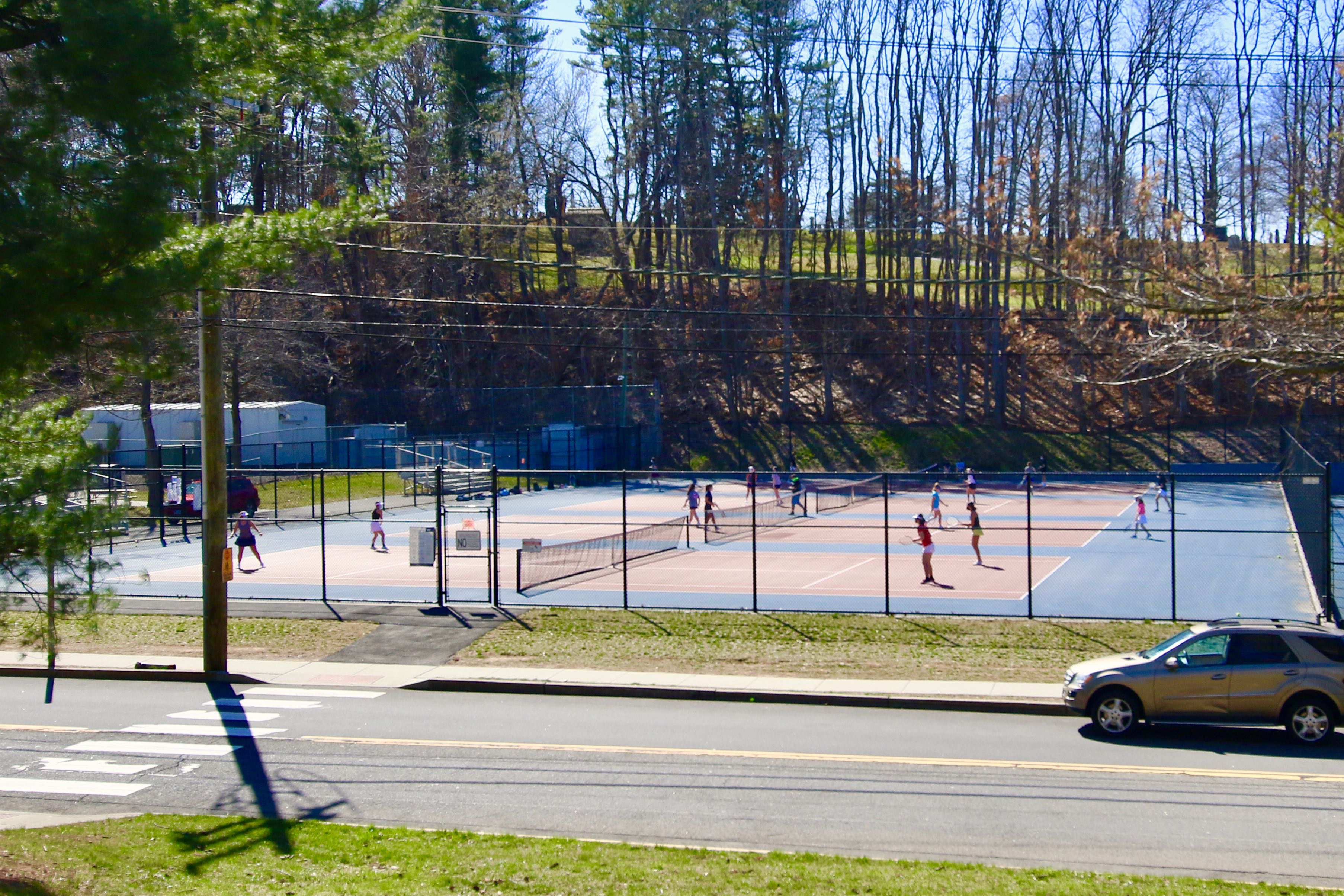
    Curious to see what a sports game might look like in the midst of a pandemic, I headed down to the tennis courts on Vine Street with some friends to watch the men’s tennis team take on Williams College. We joined a group of some thirty fans in the stands, all of whom were dutifully masked and maintaining social distance, most of whom were cheering loudly for the Cardinals.

    While the men’s tennis roster was looking rather slim, with multiple players missing due to various COVID-19 and non-COVID-19 related factors, the team was able to field the standard three doubles teams and six singles matches to compete against the Williams Ephs. As usual, their coaches joined them on the courts, now at a careful distance.

    Unfortunately, the Wesleyan tennis team did not find success on the court. They ceded the match 1-8, with their only (still electrifying) victory coming from Noah Lilienthal ’22 and Ben Mitchell ’24 at number one doubles. Williams bested the Cardinals at the two and three doubles positions and across the board in singles, with Mitchell’s 5–7, 3–6 singles loss constituting the narrowest defeat for Wesleyan. However, regardless of the scores and the outcome, the match represented a triumph in other ways.

    First and most importantly, both teams were able to cultivate an environment that followed COVID-19 protocols, with masking on both sides of the net and social distancing between teammates and from the other team. It was oddly sweet to see opponents exchange a congenial elbow bump after finishing their match, a gesture appropriate both to the sport and to the moment.

    Second, it was delightful for me, even as an observer, to be able to partake in competitive sports once again. As a college athlete myself, a member of the women’s squash team, I have missed the structure of practices and preparation for a match, spending time in the locker room with my teammates, the rush of competing against an opposing university, the stakes, and the drama. It is a strange feeling to at once mourn the loss of practices and matches while also not wishing for their pre-emptive return, knowing that such joy would put my teammates, our opponents, and myself at risk while also adding to general anxieties about a COVID-19 outbreak.

    My team has had the privilege of being able to return to practice safely this semester, thanks to the assurance afforded by twice-weekly testing in combination with masking and social distancing. Still, preparation for a competition season that won’t arrive until November makes finding motivation more difficult. I satiated my craving for live sports with invested viewing of March Madness and the UConn women’s basketball team, which proved fulfilling all the way through their loss to Arizona in the final four on Friday (Aari McDonald played a tremendous game). However, watching Division I players compete mask-less through the TV screen felt distant, surreal, and precarious, with the potential for COVID-19 induced disruption at any point.

    Therefore, to see live sports, and Wesleyan sports in particular, felt like a true hallmark of the country’s progress toward safely controlling and fighting COVID-19. Cheering for Wesleyan, wishing vehemently for the downfall of Williams, knowing I was safe in the fresh air and my mask, I could envision a triumphant return to athletics, and itched for the opportunity to compete with my own teammates against our opponents.

    Post-pandemic, I hope that my fellow athletes will approach sports with a new sense of gratitude for the game, a focus on the artistry and beauty of playing a sport, and perhaps less concern for the scoreboard. Moments in the locker room and on the court, victories, and losses are each a unique privilege and component of my life that I didn’t fully appreciate until they disappeared. When next November rolls around, I know that I will take to the court with excitement, and I hope not to lose sight of the singular pleasure of competing in college sports.

    Emma Smith can be reached at elsmith@wesleyan.edu