Author: ecdavis

  • Interview with David Perry, Part 2

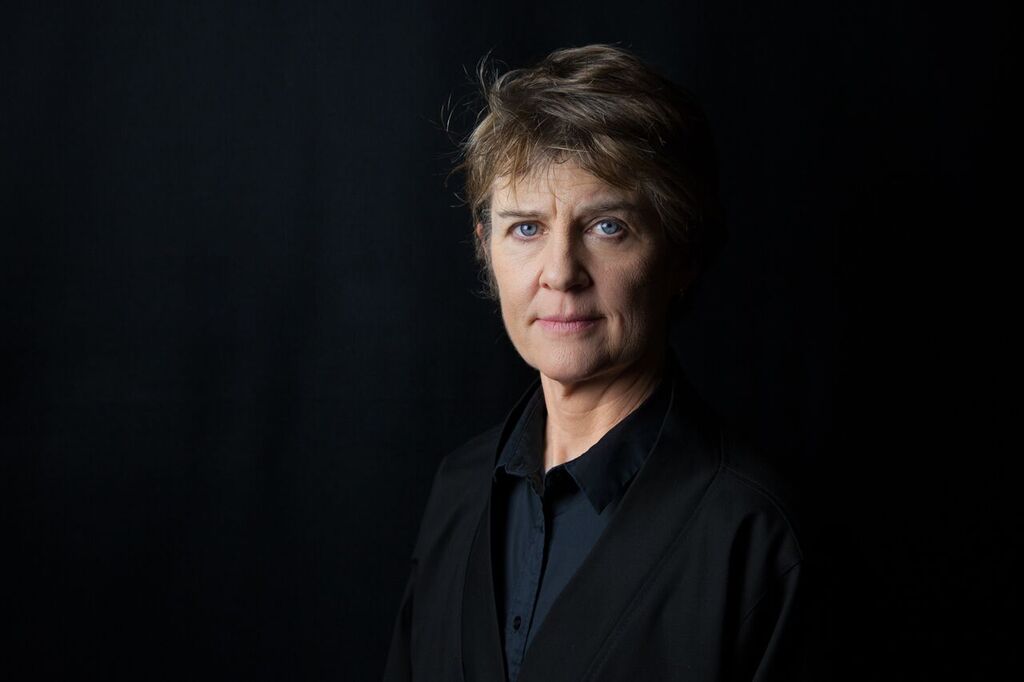
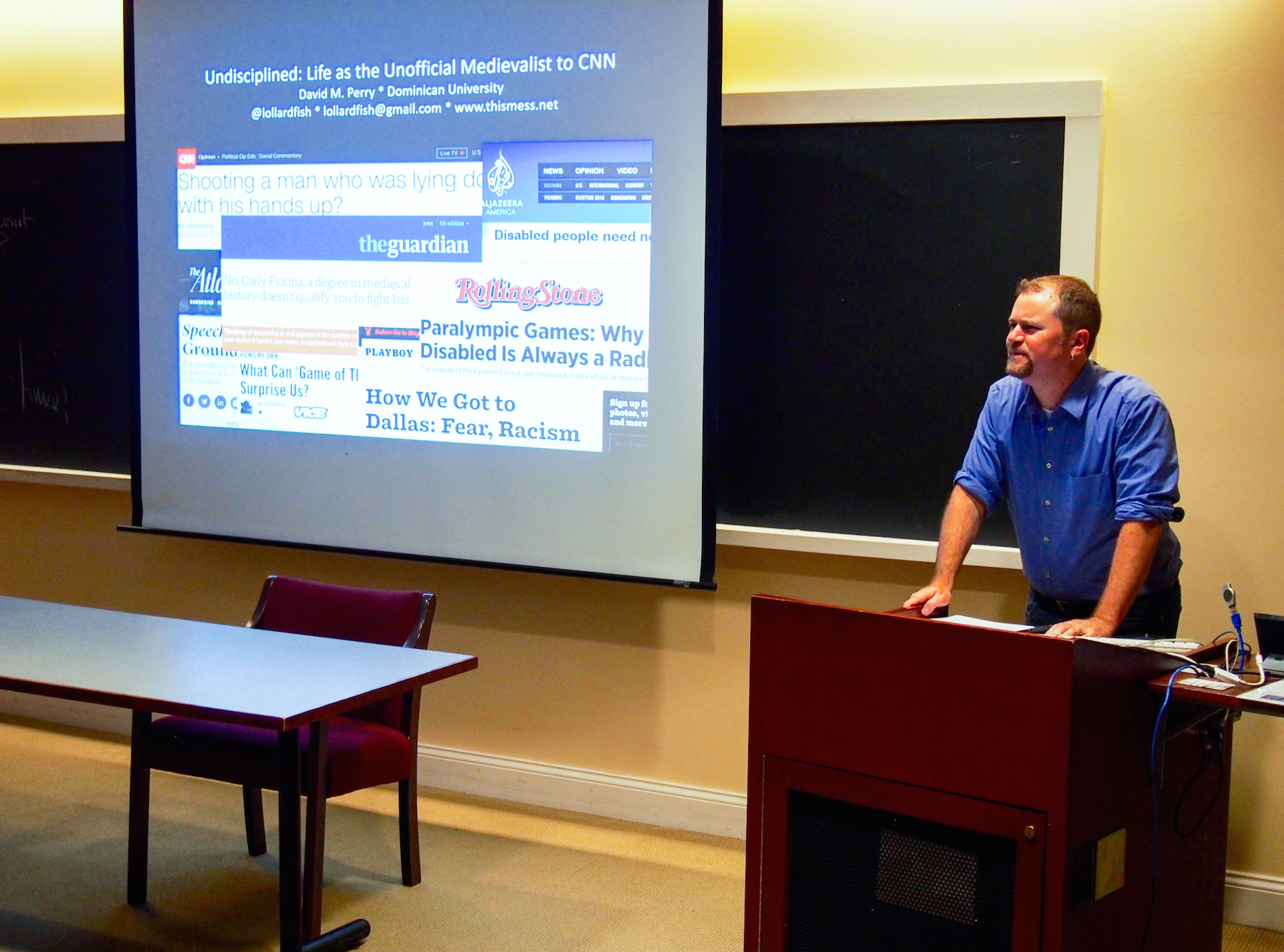
    In addition to his current roles as a history professor at Dominican University and “Unofficial Medievalist to CNN,” David Perry ’95 is a disability rights journalist and author of the blog “How Did We Get Into This Mess?” Following his lecture at the University on Oct. 13, Perry sat down with The Argus to discuss his unconventional career.

    Due to its length, the interview was printed in two parts. Below is the second half of the conversation.

    The Argus: How do you handle differing approaches to language? For example, someone who says “I don’t identify as disabled” but needs resources associated with that identity.

    David Perry: It depends on in what capacity you’re asking me. As a journalist, I’m going to write my story using the most inclusive, accurate, kind of best-practice language possible…obviously quoting people accurately.

    As an advocate, or for the people involved in the disability community, I think you have to figure out where to push and where to educate and where to just provide services….My goal is never to tell the person with lived experience that they are interpreting their lived experience wrong. Never. But my goal is to tell society that stigma matters, and that we have to fight it.

    And so in my journalism, I’m not trying to change the perspective of the individual with lived experience and tell them they’re wrong. I’m trying to tell society, “There’s a big social stigma problem here. Let’s work on it,” so that person can feel that they can change; they can move along to a place not where they’re using the “right” language but where they’re better able to accept all parts of themselves. They’re also more able to articulate their needs, where society is ready to give them help for those needs. It’s a long process.

    I do think we need to de-stigmatize disability and talk about it as a socially constructed phenomenon, like gender and many other categories. There are biological components; there are historical components; there are lots of other kinds of components we can point to, but fundamentally, what is disabled and what is not disabled is socially constructed. And I want that message to get out there.

    A: You discussed the second book you’re writing about the “cult of compliance.” Your first book, “Sacred Plunder: Venice and the Aftermath of the Fourth Crusade,” was about the transport of relics—quite a different topic. How has your focus shifted since your initial foray into journalism?

    DP: Well, I actually think this is a very Wesleyan story. We get our education and we go off to do whatever we’re going to do. But I have met so many Wesleyan alums, both people I knew and people I didn’t, who at some point in the 10 or 20 years after they graduated…saw some kind of an opportunity or a need or something, and I do think Wesleyan teaches us, [however] possible, to try and jump at it. So I’ve jumped.

    It’s people who were one kind of lawyer and then saw an opportunity to make a lot of money—it doesn’t have to be social justice. You know, they saw an opportunity. People who start a business or create an artistic movement or do whatever they do—they jump at it. So that’s kind of what happened to me. I was a writer, and I saw something, and I did some writing, a little writing, a little more writing, and now I’ve really jumped. It doesn’t pay my mortgage; I’m still teaching history. I love teaching history, but [disability rights journalism] definitely is where my passion is right now.

    A: You also spoke about the difference between academic and journalistic writing. Where do you see the value in each?

    DP: There is something incredibly beautiful about deeply specialized scholarship, about spending years or even decades really [getting] to know something and producing new knowledge and new interpretations….It is a wonderful experience to have; I think it is a fundamental social good to have people doing intellectual work of all kinds and in any context. The writing that comes out of that, where you’re trying to write with the most intense precision possible, is also extremely important and valuable.

    The complete polar opposite, but maybe the other side of the same coin, is when you’re trying again to reach an audience with a kind of clarity, but it’s a different kind of clarity. My journalism is informed by my PhD and my years as a teacher and my years of reading theory, and I want the person who reads at an eighth-grade level to be able to process what I’m saying about intersectionality or about social justice or about the social model of disability.

    I’ll give you an example. So on Monday, The LA Times is going to publish a piece with the lede that “Trump is the most ableist presidential candidate in modern history.” Now, I know there are a lot of LA Times readers—a big newspaper, with a big distribution—who have never heard the word “ableism.” They don’t know what it is; my attaching an -ism to a phenomenon will make them want to distance themselves from it. But I also know that ableism is true, that it’s a real thing. So I’m trying in 783 words, I think it is, to bring this academic concept of ableism to a mass audience.

    To me, that’s actually very similar to trying to write a 90,000-word book about nine medieval Latin texts about the movement of relics out of Constantinople. The stakes are a little bit higher—the immediate, day-to-day stakes are higher for the LA Times editorial—but the writing is pretty comparable.

    A: You were previously the Director of Catholic Studies at Dominican University. When I hear the word “Catholic,” I think not only of the religion but of the broader meaning of the word “universal.” How did this position relate to the rest of your work?

    DP: I’m Jewish, and a secular Jew, as I talked about in my lecture. But I got a job at a Catholic university, and I was a little skeptical. My first day on the job, at Convocation, they gave an award to a civil disobedient peace activist, and I thought, “Oh, I’m going to fit in here just fine.”

    I’m a Medievalist, and the Medieval era, at least in Western Europe, [had] this idea of universal Christendom under the Catholic Church. Now, it’s only an idea—highly divisive, quite often oppressive—but…it’s [from] the era that I study, and I’m interested in the ways in which that works. So when I got to Dominican, I wanted to draw connections between the kinds of history I taught and the people working in theology, and have theology students come take my classes. That was part of it.

    I’m no longer directing Catholic Studies, although we still have that program, but I do think that if you have a religious university, there are kind of two ways it can go. And one way I think is the stereotype, which is that it’s about closing, that it’s about using theology and ideology to erect walls, physical or metaphorical, around an institution. Places like Wheaton College, where discussion of homosexuality is not tolerated, or Liberty College, which right now is in the news because it involves the Falwell family. And those are institutions at which I would not be comfortable, although some of them are very intellectually sophisticated places. But it’s using an ideology to create barriers.

    The other kind of institution, though—and that’s where I teach—is where you have a very strong, very clearly expressed religious identity, and from this rock of saying, “We know who we are,” you open your doors so that everyone comes in and you can have really good conversations. I have to say, I think the social justice mission at Dominican University is stronger and less encumbered than at even a place like Wesleyan, where the students are deeply socially active, and the professors are, and the administration is, [too]. But to say that Wesleyan is an institution dedicated to social justice…I don’t know if everyone would agree with that.

    Whereas at Dominican, that’s just kind of the baseline…“Give to the poor,” right? But don’t just give to them, create conditions for empowerment. Open the doors [and] make sure that all voices are [heard], including queer voices, including Muslim voices, including Jewish voices. Because the institution has this very clear rock of identity, and it’s not threatened by diversity. So it’s been pretty great, and I hope it continues; I hope it’s something they manage to keep going.

    A: You’ve referred to yourself as the “Unofficial Medievalist to CNN.” Since the word “medieval” has been tossed around a lot in this election cycle, what do you consider as the real parallels between now and the Middle Ages?

    DP: There is no question for me that history informs the present, and the dominant traditions in American society come out of the Western European tradition and still have a lot of cultural power.…[That’s not] necessarily a good thing, or a bad thing, though it certainly brings a lot of specific patriarchy [and] a lot of specific intellectual traditions, some of which are glorious.

    I mean, I think some of the best things about the university, in terms of how people study and how we learn and how we debate, [such as] the rise of disputatio as a method for [acquiring]  knowledge…come right out of the Middle Ages, along with the Western misogynistic tradition and the Western anti-Semitic tradition. History is complicated and always ambiguous, in terms of what it brings to us.

    There’s clearly a wide strain of rhetoric that’s trying to adopt a medieval position—you could call it a Manichean position, but I don’t know if that’s a good word—that wants to divide the world into zones of “civilized” and “barbaric,” and “good” and “evil,” and “Christian” and “non-Christian,” or “Islamic” and “non-Islamic.” And there are definitely echoes of the Middle Ages, but they’re not simple echoes; they’re constructed echoes….People with agendas have created this fantasy of a Middle Ages that was simpler and clearer and less heterogeneous and are trying to use that to promote a view today. The Middle Ages were wonderfully diverse, not in the way we frame diversity now, but that’s because diversity, like gender, like race, like disability, is a socially constructed moment. Medieval people had their ideas about this.

    To understand the present we do need to understand the ways in which it is informed by the past, but not to make these simple metaphorical [statements such as] “This is like the Middle Ages,” or “America is like Rome.” People want to say that we’re about to fall, like Rome fell. Well, it turns out that Rome didn’t fall….People living in France didn’t know that Rome had fallen; that was not a concept that they had adopted as a narrative of their own [experience]. So I think we have to be very thoughtful about how we make these kinds of comparisons.

    A: Is there anything else you’d like to add?

    DP: The most important thing I’ve learned from shifting from history to journalism is how to listen to sources. And of course, that is something I learned as a historian. You go to your sources, and they say things, and you try to learn from them….Applying that to real people you can just call up on the phone or tweet at or write emails with or go sit in a park [with] in Englewood, Chicago and hear them talk about their lives is a very different kind of experience, and very powerful. Whatever I do going forward, that’s really my goal, to find people with real, true things to say and to listen as hard as I can so that I can share them.

    Part of my success is that it turns out I’m really good at writing 800 words in about 45 minutes. They’re not always perfect; my motto as a journalist is “Pretty good, pretty quickly.” And that has allowed me to grab news cycles and to say things within them. So when [Carly] Fiorina said something about the Middle Ages a year ago, I [had] an essay in to The Guardian within about two hours of the event…so that’s definitely been a skill I didn’t know I had. I wish I was as good when I was an undergraduate at writing 800 words in 45 minutes; many of my sleepless nights would have been filled with blissful rest…if I could have gotten out of my own way and just written these things. But we develop as writers, and that’s where I am now.

    [Lastly,] one of my major topics now is writing about disability journalism, not just producing it but critiquing it in order to try to shift [the] norms. So that people stop writing stories about disability issues without talking to disabled people. I mean, it’s Journalism 101…don’t write about a topic without talking to the people who are living it! But somehow with disability, [reporters] talk to parents; they talk to doctors; they talk to professionals; they talk to politicians. They often don’t try to talk to the person with the disability at all…and that needs to change.

  • David Perry ’95 Talks Disability Rights Journalism

    David Perry ’95 Talks Disability Rights Journalism

    Emma Davis, Features Editor
    Emma Davis, Features Editor

    In addition to his current roles as a history professor at Dominican University and “Unofficial Medievalist to CNN,” David Perry ’95 is a disability rights journalist and author of the blog “How Did We Get Into This Mess?” Following his lecture at the University on Oct. 13, Perry sat down with The Argus to discuss his unconventional career.

    Due to its length, the interview will be printed in two parts.

    The Argus: You mentioned during your talk that you came away with an earring from your time at Wesleyan. In a less concrete sense, what did you carry away from your four years here?

    David Perry: That’s a good question. I thought you were going to ask me about my earring, which I actually got in Harvard Square and not here. But it was with my Wesleyan girlfriend.

    Wesleyan provided me with both companions and mentors in really intense ways. I got to work very closely with a lot of professors, one-on-one, three-on-one. I did theater and history, and in both contexts, I feel I really got to have intense creative and intellectual relationships with experts…people who were teachers but also scholars or artists, who wanted to both do the work and teach the work and partnered with willing undergraduates. And then also my undergraduate cohort….We were all on slightly different paths, and sometimes even radically different paths, but we all had comparable experiences, at least at the best of times, of finding a niche and then wherever we wanted to take that niche, Wesleyan really supporting us as we [went].

    Especially 20 years on, back here on this beautiful day on campus, for the first time I’m feeling very nostalgic and extremely positive about my Wesleyan experience.

    A: You have two children, a son with Down’s syndrome and a daughter, and have written about disability rights in depth as well as women’s rights. How have your children’s identities informed your work?

    DP: Everything I started with when writing about disability really was driven by my experience as my son’s father. A lot of parents start there; I get worried that a lot of parents get stuck there.

    I mostly haven’t written essays about my son, maybe one or two a year plus a little blogging, but some parent bloggers and writers get really stuck in that parent space….The disability community needs parents, but it also as much as possible needs to center the voices of people with disabilities themselves and not the parents. And I try to very intentionally seek out self-advocates and as much as possible self-advocates from marginalized communities. So I’m talking about queer people with disabilities, people of color with disabilities, or queer people of color with disabilities, and I’m thinking of several specific writers in this context.

    My experiences of becoming a father to a boy and a girl, to a child with a disability and a hyper-verbal girl in a patriarchal world, definitely inform my advocacy and my writing. It’s a starting place, and I think I’ve now moved beyond that in many ways, in part because my children get to control their own narratives more and more as they get older. My daughter really doesn’t want me posting pictures of her to Twitter, which I think is a great decision and one that I completely respect. It’s harder to know to what my son would consent, because of his verbal limitations, and so I try to err on the side of not sharing personal details and not telling his story [while] trying to tell my story…it’s kind of a complicated place.

    A: You voiced some criticisms of the disability rights movement during your lecture. Where do you see room for growth or improvement in that field?

    DP: I can think of hundreds of thousands of spectacular activists doing great work on issues that concern them. But it’s a question of resources. There’s millions of dollars, and maybe hundreds of millions of dollars, that go into disability rights-related fields, and not just from the government….In terms of the huge charity and nonprofit world, these giant mega-charities with tens of millions of dollars in their annual budgets, they tend to be focused on the concerns of white, suburban, middle class parents of kids with disabilities…

    And those are real concerns. I am that concern, and we have real issues going on; they are not trivial issues, but they are not the most pressing and the most dangerous kinds of issues.

    A: What intersections do you see with the Black Lives Matter movement and other marginalized identity groups?

    DP: They’re happening more and more…they’re happening online. When you have a black disabled person joining Black Lives Matter, tweeting at Black Lives Matter, tweeting at the leaders of these movements…and also when you have people from outside the disability community reaching out to people in the disability community saying, “Hey! Pay attention to racial justice.” And there are certain key figures, there are people like Lydia Brown in Boston, and Talila Lewis in Maryland, and Leroy Moore in California, and a lot more…who are doing this work on a day-to-day basis and trying to make it happen.

    I just want to make sure that the people with resources are paying attention to the most marginalized issues and that in addressing them, they are centering the voices of people who live in these communities. The Ford Foundation is a good model; they have just become aware of disability rights as a major issue for them when combating inequality, and that’s great. But if what they do is hire a bunch of wealthy, white, well-intentioned consultants to manage where they put their money, they’re not actually going to put their money in the right places.

    These are lessons we’ve learned in every other social justice movement, in which the resource-privileged people are the people who…come into a problem and say, “I’m going to solve this problem.” And if you don’t listen to and center and respect and empower the people with lived experience, you might do some good, but you might do a lot of unintentional harm and you might not do all the good you can. I want these movements involved, and then I want their boards to diversify, and I want their budget-controlling, managerial staff to diversify…I’m sort of an incrementalist; if that hasn’t happened, I want them to pay people from communities good professional consulting wages to work [with] them. That’s the kind of steps I think need to be taken.

    A: Can you tell me more about the universal model of policing you’ve envisioned?

    DP: That’s a complicated question. I’m in the middle of writing a 25,000-word chapter of a book called “The Cult of Compliance: Why Police Kill People with Disabilities,” coming soon to bookstores near you…and by “soon,” I mean 18 months from now.

    The big overview is, I propose a model called “universal design for policing,” which takes from the best practices in the history of the disability rights movement and applies them to policing. This is something that hasn’t really been articulated, although there are plenty of people who are sympathetic to me, who have similar ideas but wouldn’t frame it that way.

    So in the history of the disability rights movement, we have two good ways of addressing needs. One of them is accommodation, in which someone says, “I have a need,” and then you create a system to meet that individual person’s need. And those are fine; that’s how the ADA [Americans with Disabilities Act] works, that’s how this university works. That’s good.

    But it’s better when we create systems that pre-meet needs, whether someone discloses them or not….For example, for every person in a wheelchair, you could assign them a personal assistant to open doors for them and to carry them upstairs. Or you could build ramps and power doors. So obviously, for that example, we have in fact built ramps and power doors…mostly. That’s better; that’s a universal system.

    Right now, even when disability enters the conversation around policing, it’s usually, “Ok, we have people with mental health crises. When we know there’s a mental health crisis, let’s deploy all of these specific, mental health-related resources.” That’s kind of the national conversation right now around mental health and policing, and it’s good. There’s no problem with that.

    But the better solution is to have every cop treat every case as if there was some possibility of some kind of neurotypical or physical difference behavior. Every case, every call, to not, as I like to say, “presume compliance.” In the disability rights movement, we’ve got this phrase, “presume competence,” that your baseline, when you encounter someone, is to presume competence…so [when] you meet someone who’s nonverbal, you don’t assume that they can’t communicate; you assume that you don’t know how they communicate. You presume that they are competent.

    Well, I like to talk about “presuming compliance” as a baseline in every encounter with the police, as opposed to presuming noncompliance and taking it as a threat. That’s going to be great for the deaf person who can’t hear the verbal command; it’s great for the diabetic person who is in insulin shock, and instead of assuming they’re noncompliant and drunk, the police officer goes in with more compassion and thought. It’s also going to be great for the guy who just doesn’t want to listen to the police officer but is in fact not a threat. It’s going to be good for the person who is running away from the police officer, as we’ve had in Chicago where I’m from, and instead of [shooting], the police operate with a baseline that there could be something going on…[and] that doesn’t mean that they’re a threat. Unless [the police] have other evidence of threats, and there are real threats out there.

    We need bigger systems for mental health care; I mean, there’s a whole rabbit hole we have to go down in terms of creating a sustainable society for people with disabilities of all sorts.

    A: You’ve touched on mental illness as part of the spectrum of mental disabilities. Where do you believe mental illness falls as compared to other, more noticeable disabilities?

    DP: Invisible disability of all sorts are very complicated in terms of society….Every time I go to a new college campus or back to an old college campus, I look at their diversity inclusion page. They’re usually great, especially at a place like this, and I look to see whether there are any images reflecting disability. Wesleyan does not have any, and I’d have to say that’s true for 99 percent of the colleges in America. That’s not unusual.

    Now, I’m also sure that it showed me 20 to 50 students, and some of them had invisible disabilities. If we’re not aware of that as a fundamental aspect of the human condition, then we don’t see it. Mental illness—mental disabilities—is a form of disability; they are protected under the Disability Rights Act, they require supports….

    Stigma, lack of supports—that’s a social problem. So when you talk about people who have depression or anxiety who deal with it by not telling anybody, by self-medicating with drugs and alcohol…well, if we’re talking about that at Wesleyan, that’s one set of problems; I’m more interested in those issues on the South Side of Chicago, where there’s lots of untreated PTSD and depression and anxiety which we can talk about as emerging from a racist, oppressive state and trying to live within it. So there’s an intersectionality point. But we also know there are no services available to a lot of those people; there’s stigma within the communities about talking about it, and people self-medicate. And you can say, “Well, that’s their medical problem.” But when we zoom out and really look at it, we see that there’s a huge social component to it, and I want us to work on the social components.

    A: When you talk about the South Side of Chicago, it’s understandably very different from someone like Donald Trump. Nonetheless, you’re coming in as a white native of the city and saying, “Look, there are disabilities within this community.” How do you recognize your status as one of privilege and still do work that benefits that community?

    DP: This is always an issue for a journalist. They—we—are almost always coming in from the outside; if we are an employed journalist or a published freelancer or even a college journalist, we have lots of privilege. If we’re writing about social injustice as a journalist, we are almost always coming in from an outside and privileged perspective. That’s something I’ve had to learn as a self-invented journalist, who didn’t plan to become one. And I think you deal with it first of all by telling the truth to the best of your ability, and second of all, and most importantly, finding people within the community who want to talk about these things, and reporting accurately and honestly and empathetically and clearly and as powerfully as possible what they say, and what they say they want, and what they say they need.

    And yes, it would be great if you could just go to people who are marginalized and say, “Here! Have my column! You write your own essay.” I’ve been saying that in the disability rights community, and some people say, “Yes, I want to write my own essay,” and I’ve been working with them. But for other people, it’s hard to do that kind of reporting; it takes skills, and it takes privilege. We need to diversify our newsrooms; we need to diversify our universities. We need to do a lot of things.

    But at the baseline, you go to the communities, you listen, and you seek out people with lived experience, and you report accurately on that lived experience. That’s my best solution. I’m interested in better solutions.

  • Students Look to Vote Amid Low Turnout

    In less than 40 days, Americans will elect the next President of the United States. However, if past presidential elections are any indication, roughly 42 to 46 percent of eligible voters will not show up to vote on Election Day. Pew Research Center conducted a poll in 2012 showing that only 129.1 million of 241 million eligible voters cast their ballots when President Obama was re-elected, and the numbers have not varied significantly within the past 50 years, nor are they expected to change this election.

    Comparatively, approximately 54 to 58 percent of Americans who are eligible to vote (i.e. 18 and up, not convicted of a felony, etc.) will elect the next President of the United States.

    Only 38 percent of eligible voters between the ages of 18 and 24 cast their ballots in 2012, according to census data. This group of voters, known as “Millennials” or “Generation Y,” has the lowest voter turnout among all age groups, including Generation X, Baby Boomers, and The Silent Generation. Even so, low voter turnout is not a rare phenomenon for young voters who, in 1964, peaked at 51 percent in voter participation.

    When asked why young people have such an abysmal voting record, Jack Warren ’20 spoke to a perceived futility in voting.

    “They feel like their vote doesn’t matter,” Warren said. “The electoral system is incredibly flawed…It’s very difficult to feel like your vote matters when you know that, no matter if you vote or not, your state’s going blue.”

    Oftentimes, the presidential election comes down to certain swing states like Florida and Ohio. For Warren, one vote may not decide the election, but each vote is important, especially if more and more people don’t vote.

    “If everyone adopted that mindset of ‘my vote doesn’t matter,’ then that wouldn’t be true,” he said.

    Co-Chair of the Wesleyan Democrats Simon Korn ’17 contends a similar argument.

    “Even if you don’t personally affect the outcome of the presidential election, or any election…you still should vote,” he said. “People who run for office spend lots of time and lots of money figuring out who votes, why they vote, and how best to represent you….If we as Millennials consistently vote in elections large and small, presidential, local, and state….People who run for office will take notice of that, and they will care about our interests.”

    In the 2012 presidential election, President Barack Obama received 67 percent of the youth vote, compared with Romney’s 30 percent, according to a study by Politico. In a study released days after President Obama secured his re-election, the Center for Information and Research on Civic Learning and Engagement (CIRCLE) at Tufts University concluded the following:

    “If Governor Romney had won half of the youth vote, or if young voters had stayed home entirely, then Romney would have won instead of Obama.”

    Though the data itself includes figures from swing states like Florida, Virginia, Pennsylvania, and Ohio, it nevertheless articulates the influence the youth vote can have on presidential elections. Despite nearly 54 percent of the millennial voter population not voting in the 2012 presidential election, the percentage that did vote guaranteed Obama another four years in office.

    Both Hillary Clinton and Donald Trump recognize how integral the youth vote is to the success of their individual campaigns. This is especially evident when comparing Clinton’s agenda before and after winning the Democratic nomination; she absorbed much of Bernie Sanders’ rhetoric on the economy and education, hoping to reproduce the enthusiasm millennials felt toward Sanders during his campaign. In fact, according to census data the the Pew Research center has analyzed, millennials are now a bigger voting force than any other generation, including the Baby Boomers. This means millennials could likely sway the vote in either Clinton or Trump’s favor.

    If those two options are unsatisfactory, Kati Young ’19 has an alternative.

    “This is an election where third-party candidates have had the strongest backing they’ve had in a long time, so if you’re interested in stopping the two-party system, then this might be a great opportunity,” she said.

    Young developed on the potentially monumental effect the youth vote can have on the presidential election.

    “Too many people have sacrificed to give me the privilege to vote for me not to vote,” she said.

    Young references, among other things, the fight for women’s suffrage, which ultimately led to the passage of the 19th Amendment in 1920, but her statement encompasses all groups whose voices, at one point or another, were silenced as a result of unjust laws, discrimination, and prejudice.

    Local and state elections, though often overlooked, play an equally important role in civic engagement.

    In an article written in The Washington Post on May 9, 2013, it was revealed that “Congressional approval averaged 15 percent, the lowest in nearly four decades of Gallup polling. And yet, 90 percent of House Members and 91 percent of Senators who sought re-election won last November. By 2014, the incumbency rate increased, while Congress’ approval rating decreased. This correlates with an article released by The Washington Post on Nov. 10, 2014 presenting statistics that showed “voter turnout for the 2014 midterms was the lowest it’s been in any election cycle since World War II.”

    Furthermore, outside the United States, in countries where leaders are not elected by the populace or where it is dangerous to vote, people are risking their lives to procure and uphold their right to vote. In the 2014 Afghanistan presidential election, approximately 7 million people voted despite recent attacks “carried out by Taliban militants,” including one on “the Afghanistan’s election commission headquarters,” according to a report by The Washington Post.

    Nonetheless, some argue that it is too difficult to register to vote, or that the process of filling out an absentee ballot is confusing and tedious. College students, who make up a large majority of the youth population, struggle to find time to register to vote in between classes and extracurricular activities. The requirements for filling out an absentee ballot vary from state to state, so it can be challenging to find information on a college campus pertaining specifically to one’s home state.

    Fortunately, Wesleyan offers ample resources to make the process as simple as possible. On the Wesleyan Office of the Registrar webpage, students can find under “General Information” links to information about registering to vote in the state of Connecticut, filling out an absentee ballot, and checking your voter registration status.

    If the information on the webpage is insufficient, Korn disclosed that the Wesleyan Democrats, in addition to collaborating with the Wesleyan Republicans on voter registration events both prior to and on Election Day, have found a possible solution to the anxiety that accompanies the absentee voting application process.

    “We’re going to have people in Usdan telling students how to vote in their home state,” Korn said. “People are going to come up to us, and we’re going to help them out individually one by one. That’s the only way to do it.”

    If none of that works, Korn strongly suggests turning toward the Internet.

    “Just Google ‘How to vote absentee in my state,’” Korn said. “What’s more, once you type ‘How to vote in my state’ in the search bar, Google automatically provides a template of information with step-by-step instructions explaining how to vote absentee. The same goes for when you type in ‘How to register to vote.’”

    Or, eligible voters can go to http://www.canivote.org/ and select their state, and the webpage leads directly to the state’s voter registration site where citizens can learn about deadlines and necessary documentation.

    “When it comes down to it, people have to make the decision on their own to vote and who to vote for,” Korn said.

  • Saving Money, But Not Skimping on Style

    Saving Money, But Not Skimping on Style

    Lily Sperry, Contributing Writer
    Lily Sperry, Contributing Writer

    There is perhaps no other store as frequented by Wesleyan’s myriad style-savvy students than Savers Thrift Store. Often overlooked, sometimes cramped, overwhelmingly fluorescent, and unapologetically evocative of small town America, the nationwide thrift store has quickly become the mainstay supplier of many students’ wardrobes, offering seemingly unlimited quantities of Crayola-colored anoraks, stiff baggy denim, and baby graphic tees, most of which are under $10 and complete with the perfect level of wear typical of an ex-boyfriend’s sweater or a beloved hand-me-down from a family friend.

    But this doesn’t quite articulate the feeling of walking in with no expectations and leaving with the perfect suede jacket or a pair of Levi’s that fit you like a glove or the inexplicable splendor of scoring a designer piece for a fraction of its retail value. In order to fully grasp these feelings (and explore other sides to the experience that exceed the sartorial), The Argus took to the streets, where Savers-wearing students abounded.

    “Thrifting has [a lot] to do with accomplishing a ‘look’ that you put in effort to make by going through a bunch of stuff and scoring something exciting,” Charlotte Strange ’19 said, wearing perfectly broken-in black jeans that one dreams of stumbling upon at their local thrift. “[Ultimately,] I think the popularity of thrifting with college students definitely comes down to accessing cheap clothing.”

    While necessary to some, the phenomenon of thrifting among shoppers who do not do it out of necessity, of course, can be problematic.

    “There is also a more complicated issue of appropriating working class presentation, especially considering the fact that most college students come from financially well-off backgrounds and don’t really need to worry about how much clothes cost, but that is definitely a more complicated notion,” Strange said.

    Like many students here, Strange is not new to thrifting; in her hometown of Portland, Ore., a 147,000-square-foot Goodwill outlet—lovingly coined “the Bins”—reigns supreme among locals and college students alike, well-known for its $2/pound deals and rough-around-the-edges atmosphere (shoppers have been known to fight over certain pieces and are advised to come wearing gloves). Some of Strange’s favorite Bins finds include white painter’s jeans and silky slip dresses, pieces which she has not necessarily had difficulty finding here but which ring in at slightly steeper prices.

    Students from larger coastal cities were not always as lucky, with pickings often reduced to highly-curated vintage stores and picked-over consignment boutiques.

    “I got kind of sick of the LA thrifting scene,” Josh Rabineau ’20 said, who dons his most treasured Saver’s find: a navy blue and red velour tracksuit. “Compared to here, I didn’t do much thrifting at all.”

    “I didn’t go thrifting that much; I was more of a vintage person,” Saam Niami Jalinous ’20 said. “My friends and I had to drive super far to go to outlet stores similar to Savers because the ones in Oakland [CA] were so picked over.”

    These perspectives are by no means an exaggeration. Los Angeles and New York City in particular boast a heavy stock of secondhand stores, each with a not-so-always-unique selection of hand-selected designer goods and “vintage” denim that will set you back hundreds of dollars. In comparison, Savers is nothing short of a gold mine, offering the prospect of unearthed gems with each and every visit. The five-plus stores located within a 20-minute car ride of campus ensure that these gems never expire; a general lack of retail prospects this close to Wesleyan make it the easiest and most rewarding place to shop.

    According to many students, though, there can sometimes be a limit.

    “I feel like Savers is more a place to get T-shirts and jeans,” Rachel Rosin ’19 said. “A nice dress or skirt is a really rare find, unlike at New York’s more curated secondhand boutiques.”

    Rosin has only gone to Savers once so far this school year, but she has emerged with some of her favorite thrifted pieces ever: vintage moss-colored jeans and a cheeky T-shirt with “Let’s talk about me!” written above two pink high heels. Like Rosin, Sarah Sanders-Messmann ’19 reports similar finds, with a bejeweled “Mamma Mia!” graphic tee, blue Wrangler jeans, and mule sandals rounding out some of her favorites.

    “I think that thrifted pieces are far more personalized touches to my style,” she said. “Pretty much all of my most prized items of clothing are thrifted because they’re so much more unique than a T-shirt from [a fast fashion store].”

    Yet, while keeping these assertions in mind, one question still remains: Beyond cost and convenience, why does Savers pervade so many of Wesleyan students’ wardrobes?

    “Ultimately, it has the aesthetic that people want,” Sanders-Messmann said.

    “I think it really comes down to the fact that Wesleyan students really like to try new things,” Rosin added. “Nobody is afraid to take style risks here, and Savers is a cheap way to do that.”

    The Argus is planning on doing a follow-up story to this article on the ethics of thrifting among those who do not do it out of necessity, particularly on a college campus like Wesleyan’s. Please do not hesitate to contact us if you would like to be featured (lsperry@wesleyan.edu, jlahut@wesleyan.edu, ecdavis@wesleyan.edu).

  • Dinner Party Recipes to Nourish and Entertain

    This past weekend, I hosted my first “adult” dinner party. Although I’ve cooked for friends many times before, putting together a multi-course meal (cocktails, entrees, and dessert) for more than two guests was an entirely new experience for me. To ensure there were no last-minute disasters, I chose only recipes I had already tried and that required minimal prep.

    Fortunately, I realized the cooking gods were on my side when I was able to bike home from my grocery and dollar store run without breaking a single one of the champagne glasses I’d purchased. Dinner proceeded smoothly from there: I set the table, put the salmon in the oven, and started to put together the rest of the salad before my guests arrived.

    I then discovered that I’d invited quite a capable group of sous-chefs. My friends chopped, basted, and assembled cocktails without a word of complaint. In fact, they dove in as if I’d provided entertainment instead of chores.

    In my defense as a host, the team effort produced some extraordinary results. One friend was so eager for the second round of potatoes that he popped them into his mouth hot out of the oven, while another said the cobbler almost made her cry from happiness. In short, while I don’t usually brag about my cooking, I’d say this dinner party was an unqualified success.


    Apple Cider Mimosas


    Ingredients:

    Champagne glasses

    Maple syrup

    Dark brown sugar

    Apple cider

    Prosecco


    Directions:

    1. Dip the rim of each champagne glass into maple syrup, then brown sugar. Wipe off any drips on the side of the glass and allow to set for a few minutes.

    2. Fill half of each glass with apple cider, then top with Prosecco. Serve chilled.


    Teriyaki Salmon* Salad (8 servings)

    *Tofu can be substituted.


    Ingredients:

    2 1/2 pounds teriyaki glazed salmon filet

    1 pound baby spinach

    1 cup cherry tomatoes, halved

    1 1/2 cups chopped Granny Smith apple

    1 bunch asparagus

    1 tbsp. dried thyme


    Directions:

    1. The secret to this salad’s success is the teriyaki glaze. I buy mine pre-made (Soy Vay Teriyaki Sauce) and baste the salmon with it right before baking. You’re welcome to make your own teriyaki, but be sure that you have the right balance of flavors before coating the salmon.

    2. Bake the salmon at 425 degrees Fahrenheit until the center has only a tiny blush of dark pink (approximately 10 minutes). The filet should be buttery and fragment easily under your fork.

    3. Wash the spinach and add the cherry tomatoes, apple, and the cooked salmon.

    4. Break the asparagus into halves and steam over water seasoned with thyme.

    5. Add the asparagus to the salad and toss. Serve immediately.


    Perfect Rosemary Roast Potatoes


    Ingredients:

    2 lbs. New potatoes

    3-4 tbsp. olive oil

    Fresh rosemary sprigs

    Salt


    Directions:

    1. Parboil the potatoes until soft enough to slice.

    2. Cut the potatoes into thirds or halves (depending on the size of each potato). Arrange on a baking tray that has been liberally coated with olive oil (2-3 tablespoons).

    3. Baste the tops of the potatoes with the remaining olive oil. All of the potatoes should be shiny by the time you’ve finished.

    4. Strip the sprigs of rosemary and sprinkle over the potatoes.

    5. Add salt. For a more pronounced flavor, use sea salt.

    6. Bake at 425 degrees Fahrenheit until golden and crispy. Serve immediately.


    Easy Peach Cobbler (adapted from Southern Living, 8 servings)


    Ingredients:

    1/2 cup unsalted butter

    1 cup all-purpose flour

    2 cups sugar, divided

    1 tbsp. baking powder

    Pinch of salt

    1 cup milk

    1 tbsp. vanilla extract

    4 cups fresh peach slices

    1 tbsp. lemon juice

    Ground cinnamon

    Ground nutmeg


    Directions:

    1. Melt butter in a 13 x 9-inch baking dish.

    2. Combine flour, 1 cup sugar, baking powder, vanilla extract, and salt. Add milk, stirring just until dry ingredients are moistened. Pour batter over butter (do not stir).

    3. Bring remaining 1 cup sugar, peach slices, and lemon juice to a boil over high heat, stirring constantly; pour over batter (do not stir).

    4. Sprinkle cobbler with cinnamon and nutmeg.

    5. Bake at 375 degrees Fahrenheit for 40-45 minutes or until golden brown.

    6. Serve cobbler warm or cool.

  • Recipe: No-Hassle Turkey Meatballs

    Recipe: No-Hassle Turkey Meatballs

    Emma Davis, Features Editor
    Emma Davis, Features Editor

    After spending a summer in New York subsisting on microwaved veggie burgers and chicken nuggets, I finally admitted to myself that it was time to learn how to cook meat. A year later, I found myself back in the city with a bigger kitchen and a sudden fear of frozen foods, thanks to a wave of Listeria-induced recalls that June.

    Still dreading the slime of raw fat and gristle, I alternated between precooked meatballs and extra-firm tofu for as long as I could stand the monotony. Bruce Aidell’s teriyaki meatballs were my favorite: sweet, flavorful, and easily paired with the raw carrots that are a constant in my fridge. I left meatballs, however, behind when I at last transitioned into preparing raw chicken and salmon.

    This fall, spotting ground turkey at the local supermarket, I realized that meatballs would perfectly encompass the leftover ingredients from my New York Times chicken shawarma. My friend Erin Deleon ’17 and I made a batch together, only to discover that meatballs demand far more spice than you’d expect. The recipe below represents my second attempt at home-cooked meatballs, whose seasoning my roommate pronounced “intriguingly complex.” So if you’re looking for moist, rich meatballs with minimal touching of raw turkey, give these a try!

    Ingredients

    1 pound ground turkey

    1 yellow onion

    4 cloves garlic

    2 tbsp. parsley

    1 tsp. ground cumin

    2 tsp. paprika

    2 tsp. turmeric

    1 1/2 tsp. salt

    3 tbsp. carrot-ginger soup (pureed carrot and fresh ginger)

    1 egg

    4 tbsp. flour, approx. (add last, to achieve desired consistency)

    Grated cheddar, to taste

    Grated parmesan, to taste

    4 tbsp. olive oil


    Directions

    1. Chop onion, garlic, and parsley and fold into ground turkey until evenly distributed.

    2. Add spices, carrot soup, and egg, and mix thoroughly.

    3. Stir in flour in 1 tbsp. intervals until the mixture is firm enough to roll into balls. Grate in cheddar and parmesan.

    4. Roll turkey mixture into 3/4-inch diameter balls (or smaller, if desired).

    5. Heat olive oil until gently steaming. Sautée meatballs until cooked through.

    6. Serve warm, preferably with spinach and pasta.

  • Professor’s Playlist: Barbara Merjan

    Professor’s Playlist: Barbara Merjan

    c/o taikonyc.com
    c/o taikonyc.com

    In addition to teaching Taiko Drumming, Visiting Instructor in Music Barbara Merjan is an instructor at Kaoru Watanabe Taiko Center in Brooklyn. She has also performed extensively in Broadway and Off-Broadway shows, as well as with American pop and jazz artists such as Lesley Gore and Dizzy Gillespie. The Argus sat down with Merjan to ask her the all-important question: What’s in your music library?


    The Argus: What was the last album you listened to?

    Barbara Merjan: On my way up here, I was listening to Blackstar, David Bowie’s album. I was also listening to Natalie Merchant’s album, which is really nice. It’s kind of heavy. But I’m doing a gig that she’s involved with. I’m not sure if I’m supposed to play with her, but I’m trying to familiarize myself with her material.


    A: Can you tell us about the gig?

    BM: Paul Newman and A.E. Hotchner started a camp for kids who have terminal illnesses more than 25 years ago in Ashford, Connecticut. And every year, they’ve done a benefit. It used to be that Paul Newman was in it, Tony Randall, and all these stars would come up and we would do a show, a mock show, of “Guys & Dolls.” But Paul Newman was one of the women, and Bernadette Peters was one of the guys. It was hilarious. I was lucky enough to get to be part of that band.

    Now they have some of the kids, [those] who are well enough, performing instead. And they still get different Broadway people to come up, people like Natalie Merchant this year, Carole King some years. Big names will come up and support, and they raise a lot of money to help the kids. I haven’t really checked Natalie Merchant out, and sometimes people like that will bring their own bands. But it’s pretty gorgeous stuff.


    A: Could you talk a bit about the Broadway and Off-Broadway shows that you’re working on right now?

    BM: I’m [substituting for musicians] at a couple. I’m subbing at “Something Rotten” and “Fiddler on the Roof.” “Something Rotten” is a drum set book, and there’s a separate percussionist, who has a whole battery at the other end of the pit. In “Fiddler on the Roof,” the drummer’s playing timpani and is playing the combined book, so it’s a timpani drum set, xylophone, bells… It’s all one thing.

    Over the summer, I did an Off-Broadway show where I was the drummer, and it was really just drum set. I’m going to do another Off-Broadway show in the fall. It’s kind of a rock band, so again just drum set.


    A: Which musicians working today do you admire the most?

    BM: There are so many, it’s unbelievable. Just listening to David Bowie’s album and the guys who are on that… I know them more from the jazz world, so it’s really awesome to hear them, and also the fact that he selected those musicians. Mark Guiliana on drums, Jason Lindner on keyboards… These guys contributed so much to what that music is. It’s really amazing. And I haven’t seen or heard Jeff Ballard in a long time, but he’s one of my favorite drummers.


    A: For people who are not as familiar with taiko drumming, or the genre of traditional Japanese music that taiko is involved with, which albums are a good introduction?

    BM: That’s a really interesting question, because there aren’t that many albums out there. There are getting to be more. I’ll plug my sensei’s CD, which I’m on, called Néo. Compositions are mostly by him, or us. The traditional stuff is arranged by him in a very original way. It’s amazing, not because of what I’m doing, but because of what he’s doing and what he did. He plays the different Japanese flutes as well. It’s all Japanese instruments. I highly recommend it.

    Sumie Kaneko just came out with a CD that I like. Kaoru-san is playing on it. Kenny Endo has a few CDs that are really good. I’m not sure if Isaku Kageyama has CDs out now, but he’s an amazing performer. He lives on the West Coast now, so it’s really hard to see him perform live here. The On Ensemble is good, they’re also California-based. They’ve done some really creative things with taiko, mashing up different cultures. Kaoru-san’s style is mashing up different things, but it’s really reaching into Japanese traditional music. On Ensemble is more reaching into genres like rap, Tibetan throat singing. It’s all great.

    There are some DVDs that are out there by San Francisco Taiko Dojo. A lot of times, I’m [watching taiko] on YouTube, and I’ll “like” one thing, and something else related comes up. I’ll watch performances or videos from festivals. It’ll just be people holding their cell phones up and recording.


    A: What are some albums or artists that have either affected you emotionally, or set you on a career path?

    BM: It has to be Coltrane’s Love Supreme. I was in junior high or high school when I heard that, that was 10 years after it came out. And that was a heavy influence. And other Coltrane stuff, with Elvin Jones’ drumming. When I was newer to drumming, Buddy Rich was it. Also Karen Carpenter, not that I really understood what she was doing, or what Buddy was doing.

    Then I got introduced to Mel Lewis—the Thad Jones and Mel Lewis Orchestra—and I resonate with that style of music more than with the Buddy Rich style, even though they’re both amazing. It’s just my preference. I don’t think anybody tops Buddy Rich’s drumming, but it’s just not my go-to for a musical experience.

    As far as pop music goes, it was Carole King’s stuff. The Tapestry album was amazing. It’s still amazing. I remember her coming up to me backstage once—[my band and I] were doing “I Feel the Earth Move”—and going, “Had you heard my song before?” I’m like, “That was the soundtrack to my junior high experience, what do you mean? What planet does it look like I’m from?” She was very nice.


    A: What music would people be surprised to find out that you listen to?

    BM: Probably bluegrass. I’m more of a jazz musician, but I like that. There’s some great stuff, like Nickel Creek. I just heard Aoife O’Donovan on NPR, like a month or so ago, and I was like, “Oh my God, that’s incredible.”


    A: What kind of music did you grow up on?

    BM: My parents liked jazz. Show music and Broadway was a big deal; we’d see at least one show a year. The Beatles were coming along as I was eight or nine, so I was a little too young to appreciate them. But I think I was spinning a 45” [Beatles record] when my dad came home and said, “I don’t ever wanna hear that again!” He was so mad. He freaked out, and freaked me out. I think I was playing the B-side, but still.

    But then I got into Black Sabbath and Grand Funk Railroad. And I have to say, my mom was pretty tolerant, letting me listen to that in the living room. I look back, and I think it’s pretty funny that I thought I discovered Ella Fitzgerald, but that was their records. That’s what they loved, and I love it, too.


    A: How do you typically listen to music?

    BM: CDs or MP3s. I hate to say it, because the CD thing really annoyed me. I don’t like streaming; the artists do not get paid. So even if I can get it through streaming, I’ll buy the album if I can afford it. I have so many LPs, but I’m not home a lot anymore. There’s nothing like hearing music live, where the sound vibrations are happening, and I think vinyl represents that the best, by far.


    A: What do you plan on listening to next?

    BM: I’ve got a bunch of stuff. A lot of the time, it’s based on what I’m doing. I’m doing a gig with a singer that I haven’t worked with in a long time, sort of a punkish band. And she was in a band that used to open for The Clash, but that’s not my favorite music. But I’m going to listen to it again, just to figure out my role in it. Even though I don’t identify as much with that scene, I’m still curious to see how that drumming works, with the rest of the context.

    I sometimes ask, “How did I get involved, or why am I still involved, with playing taiko?” Because it’s a very strong cultural identification for Japanese-Americans, Japanese people. Right now it’s coming-of-age in the United States, so where do I fit in? It’s almost helping me understand that there’s a tradition of it here, instead of assuming that it’s just music. We may not teach it or do it the same way [as in Japan], but there’s a tradition here, and I’ve been a part of that. I like being on the outside, on one level, but also trying to learn what it means, and what it means for me.

  • Students Discuss Birth Control Options

    Students Discuss Birth Control Options

    Neha Srinivas, Staff Photographer
    Neha Srinivas, Staff Photographer

    When most people discuss birth control, they usually mention the birth control pill, and the conversation ends there. That is, if there even is a conversation. In reality, there are a wide variety of birth control devices available at the Davison Health Center or your local Planned Parenthood.

    Some, such as the pill, function using orally-administered hormones, alternating between estrogen and progesterone. This type of birth control lends itself to many uses besides contraception, from preventing acne to treating polycystic ovary syndrome (PCOS), a disease that interferes with egg production and causes intense uterine pain.

    Kate ’20* uses the pill to treat her PCOS and says that without it, she would be nearly incapacitated by cramps.

    “One of the only things that stops my cysts from forming is birth control,” Kate said. “There are a lot of different brands, and they all contain a different ratio of hormones. I’m using Junelle because it has the right amount for my condition.”

    Birth control is often stigmatized for its association with promiscuity and is rarely lauded for its medical purposes outside of contraception. Kate, however, embraces birth control as a non-sexualized part of her daily life.

    “If you’re having pain or any other medical condition that can be treated with birth control, I highly recommend it,” Kate said. “There might be a stigma, but in the end it’s just like any other medication.”

    Clara Curbera ’20 also uses the pill and has been taking it since her junior year of high school.

    “I was about to start Acutane, which is an acne medication that requires you to be on two types of birth control,” Curbera explained. “I knew about a few other methods, but the idea of an implant or device made me uncomfortable.”

    While some individuals considering the pill express concern over hormone levels or adverse side effects, Curbera said she was eager to start the medication.

    “I wasn’t worried at all getting on the pill,” Curbera said. “In fact, I was more nervous about not having it. Once I started the pill I was really relieved.”

    Although reliable, the pill can be difficult to keep up, as it must be taken once every day at the same time. Many individuals prefer a longer-term option, such as the birth control implant. The birth control implant is a small rod inserted into the upper arm and that releases hormones into the bloodstream. The implant can last up to four years without needing to be replaced and can be a more convenient alternative to the pill. Side effects of the implant are similar to those of the pill and may involve weight gain or irregular periods.

    Another long-term option is the intrauterine device, or IUD, which uses localized hormones for less prominent side effects. IUDs are inserted directly into the uterine tissue, a process that only takes about five minutes but can be fairly painful and lead to mild cramps afterward. Duration of the IUD varies, with some lasting as few as three years and some as many as 12 years before needing replacement. IUDs can also be removed at any time should the patient change their mind.

    Copper IUDs, unlike their hormonal counterpart, use copper’s natural spermicidal qualities as a contraceptive. Priya Swaminathan ’20 first heard of the copper IUD after using the pill for a year.

    “A few of my friends had gotten them before, and I was really interested in a non-hormonal method,” Swaminathan said. “When I was on the pill, I noticed my mood was more variable, and it was a pain to remember to take it, so the copper IUD was really good.”

    Swaminathan’s IUD lasts up to 12 years and was offered to her by her local Planned Parenthood. The clinic was very involved in her community, and she had been using their resources for a few years.

    “I was actually part of a study that gave me free birth control to test, so I was exposed to lots of different options,” Swaminathan said. “They were looking to find what sort of birth control women would use if money weren’t a factor.”

    For those looking for a short-term option without the daily inconvenience of the pill, the Depo-Provera shot can help test the effects of added hormones without a large commitment. The injection goes into the arm and lasts up to three months.

    With this array of birth control options available, individuals can not only practice safe sex, but also find a device or medication that best suits their lifestyle.

    *Name changed to protect anonymity.

  • The Mystery of the 1970 Fire Bombings

    The year 1970 was a tumultuous one for the University, and the morning of April 30 was no different. Shortly before 4 a.m., two janitors drinking coffee outside Downey House were startled by the sound of shattering glass. It was the first of three fire bombings that would ignite campus that day.

    Less than an hour after the attack at Downey House, which then contained a University bookstore and restaurant, the Music Annex Building at 275 William Street was gutted by fire. While the instruments housed within the Music Annex were safely removed, the building itself was unsalvageable, according to The Wesleyan Argus’ May 1, 1970 issue.

    At 5:30 a.m., another fire broke out at the Information Systems Building at 36 Wyllys Avenue. Firefighters were able to remove its contents, but the rear of the building was destroyed. Half an hour later, a “petroleum product in a bottle” was found at an office building at 50 High Street, where it had yet to ignite.

    The trio of bombings—and failed fourth attempt—remain unsolved, the perpetrators and reason unknown nearly five decades after the fact. At the time, suspicions lay with the student body; many believed that “the Wesleyan fire-bombings were an inside job,” as one Middletown resident wrote to The Hartford Courant.

    Three hundred and eighty students, however, volunteered for fire-watching shifts in the weekend after the bombings, their concern for the campus defying the University’s reputation for militant activism. “Any attack on the college is perceived as a direct attack on us,” Thomas F. Dwyer ’72 and Lewis Rumford III ’72 wrote to The Courant a year later, after a second round of firebombs gutted the Alumni and Development Center and broke a window at Downey House.

    Students and faculty also condemned the April 30 attacks the following day at a May Day strike in solidarity with the Black Panthers that included speeches from some of its leaders. Earlier that week, the Freshman Senators had approved a $1,000 donation to the Black Panther Defense Fund, which supported the members of the Panthers then on trial for murder in New Haven.

    Yet if the students’ endorsement of the Panthers suggests racial harmony amid political unrest, a New York Times article from Jan. 18, 1970 reveals otherwise. In a controversial piece entitled “Two Nations,” Richard Margolis observed that the relationship between blacks and whites at Wesleyan was so fraught that “Solomon would have been overwhelmed.”

    “The blacks have their Ujamaa; the whites have their centuries-old brotherhood of inherited wealth and power,” Margolis wrote, pitting the ostensibly militant black brotherhood against the whites’ efforts to preserve the status quo.

    A similar conflict was playing out in the Music Department at the time, where Assistant Professor Clifford Thornton expressed his frustration at the exclusion of jazz and gospel from the curriculum.

    “Why don’t you have Black music, it’s the only true American art form [sic],” Thornton asked the administration, according to a 1998 interview with his frequent collaborator and fellow jazz musician Marzette Watts.

    After the administration denied his request, citing a lack of funds, Thornton decided to retaliate, Watts recalled. “They blew one of the buildings up, it was never in the papers,” Watts said, adding that he and a number of musicians were then invited to teach as a “quick fix…to cool things down.”

    Whether the incident Watts refers to is the Music Annex Building bombing of April 30, 1970 is unclear. However, Thornton was hired in 1969 and seems to have been joined by other jazz musicians as early as 1971, mirroring the series of events that Watts described.

    Moreover, Thornton himself reported a visit from the FBI about an explosion at Wesleyan that occurred around the time of the Panthers’ trial in New Haven. “I knew nothing about [the explosion] except what I’d heard,” Thornton recalled. Instead, Thornton suggested to the FBI agents that “a group from the extreme right” could be responsible, protesting the University’s increasing liberalism and the admission of more students of color.

    Thus, for at least one of the April 30, 1970 bombings, the cause and culprit are Watts’ word against Thornton’s. And as for the rest of the explosions that rattled campus that morning, we may never know.

  • 9 Things I Wish I’d Known Freshman Year

    Greetings from your local senior! As part of the class of 2017, it’s my distinct privilege to look at all of you frosh and feel very, very old. Fortunately, there’s still some youth left in me…just enough to tell you the nine things I wish I’d known freshman year. Check out the tips below, and enjoy your first weekend of college!

    1. It’s okay to admit that you’re having a tough time.

    Freshman year of college is one of those major transitions where people like to pretend they’re having the time of their lives, even if they’ve never been lonelier. Social media can make it seem like you’re a loser for being worried about making friends or getting into the right classes, but trust me, you’re not. Your orientation buddies and roommate(s) are probably having the same thoughts, so don’t be afraid to break through the small talk and share your fears. You’ll feel better, and they might, too.

    2. Many of your hallmates will become your best friends.

    When someone told me this during my freshman year, I was skeptical. Really? I’m going to befriend the guy who blasts classic rock on his way to the hall bathroom? Yes, despite how much I cursed him out internally for not wearing headphones, he’s now one of my closest friends on campus.

    I also met several of my future roommates just by living on the same hall. I don’t remember when I started thinking they were fun to hang out with—it’s the kind of friendship that sneaks up on you—but I assure you, it will happen with someone in your dorm. Let the communal space work its magic, and you’ll end up with a bestie for life.

    3. Your love life will likely be a hot mess, but you’ll have stories to tell about it for the rest of college.

    Here’s what I learned from a year-plus of the hookup scene: Being single at Wes is both exhilarating and awful. You can fool around to your heart’s content, but be prepared for the emotional rollercoaster that entails. Try not to ruin friendships over sex, and be clear about what you want out of your time with each partner. (It’s better to find out sooner than later whether they’re looking for something long term.)

    If you’re reading this and thinking to yourself, “Thank goodness I’ve got my wonderful significant other back home,” I have news for you. Unless you turn out to be one of those magical people who can make their long-distance relationship last beyond freshman year, you may find yourself joining what’s known as the “Turkey Dump” this November. It’s that awkward reunion over Thanksgiving where you tell your boyfriend or girlfriend that it’s “just not working” and you really need “the full college experience” (a.k.a. hooking up with strangers). If you can make it past that speed bump, I salute you.

    4. Your mental health is just as important as your physical health.

    I can’t stress this enough: If you’re feeling anxious or depressed or dealing with drama, don’t wait to go to Counseling and Psychological Services (CAPS). There’s no shame in speaking to a therapist, and you’ll only feel worse if you allow those bad thoughts to fester.

    This advice applies equally to your friends and hallmates, so make sure to suggest a visit to CAPS or reach out to a Residential Advisor if someone you know seems unstable.

    5. You will be SO grateful to yourself for getting General Education and other requirements out of the way.

    I forced myself through 8 a.m. Arabic and Principles of Biology my freshman year, and I couldn’t be happier about it. It didn’t affect my social life in the slightest, and I was able to study abroad and fulfill my GenEd requirements by the end of junior year.

    As an upperclassman, I look back on those time-consuming classes and wonder how I managed. I can only assume it was my freshman enthusiasm, so I urge you to capitalize on yours. Finish some of the harder stuff early on, and fill your schedule with fun classes once you have the seniority to get into them.

    6. You’ll find some of your favorite classes during Drop/Add.

    While pre-registration can give you the sense that your schedule is set in stone, Drop/Add will actually determine your semester. You may discover that the professor for the class you loved is terrible in person, or that the subject matter bores you beyond belief.

    But for every Drop/Add disappointment, there’s a surprise success. You might stumble across a class that was only added to WesMaps in August, or snag a seat with the perfect professor thanks to an older friend’s advice. So brace yourself for a confusing few weeks, and rest assured that you’ll emerge with four or more classes that don’t fill you with dread.

    7. Staying in touch with your parents/guardians is worth the effort.

    Your parents/guardians love and miss you, and they’d be delighted to hear your news. If that’s not reason enough, consider what an attentive and unbiased audience they are compared to your college friends: Your folks will gladly commiserate over your roommate’s messes or listen as you name every single dining station you’ve sampled at Usdan. Give them a call when you need a conversation that feels like a hug, and remember that they treasure the time with you even when you’re sad or hungover.

    8. You’ll come to love your extracurriculars as much for the people involved as for the activity itself. 

    At the Student Groups Fair on Sept. 16, you’ll have the chance to scope out your extracurricular activities for the semester…and maybe for the rest of your time in college. Don’t worry about making that distinction yet, but try to find a group that offers a sense of community. Your bond with those club members will provide support as you navigate your years at Wes and ensure that your hours spent outside of the classroom are as rewarding as those inside it.

    9. You don’t have to be totally sure of your major by sophomore fall.  

    You’ll be asked about your major from now until your deathbed, so don’t feel like you have to rush to decide. As tempting as it can be to choose a major for the prestige or the financial stability, remember that you’ll have to suffer through three or more years of classes in that discipline to earn your degree. Besides, why aim for a career that’s just as likely to make you miserable?

    I went from Neuroscience to Psychology to the College of Letters and the Writing Certificate, so I understand the struggle of wavering among majors. I promise that you’ll find one (or two or three) that captures your passion, and that it’ll feel awesome, even if you have to explain what your major is to every non-Wesleyan person you meet for the rest of your life.