
Residents question locked door policy
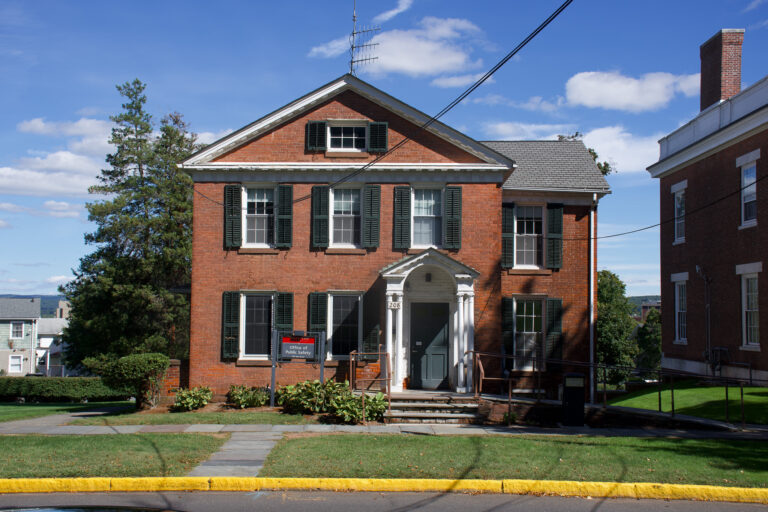
Somewhere in almost every woodframe house on campus, there’s a little sticker on a locked door that reads “BASEMENT or ATTIC ACCESS PROHIBITED.”
Many students believe the restriction is an attempt to prevent students from throwing parties underground, out of Public Safety’s sight. Not true, says Associate Director of Facilities Management Jeff Miller.
“Most all of our basements are unfinished with exposed mechanical systems and wiring that could pose a potential hazard if this equip.m.ent is treated improperly,” he explained. “Most every stairway into a basement does not meet current building codes for proper clearance.”
One student who has broken into his basement and who wished to remain anonymous for fear of the $500 fine charged for access, was skeptical.
“There’s obviously no real risk of allowing students in the basement,” he said. “Shortly after I learned to walk, I learned to walk up and down stairs. Shortly after that I went into a basement. Somehow I’m still alive.”
According to Miller, attic access has been restricted for at least ten years because the fire code requires two exits, while most attics only have one.
“We think it’s pretty absurd that officially we can’t go up there,” said Ashley Williams ’08. “It doesn’t really make sense to me that an attic shouldn’t be accessible simply because it only has one exit, especially if all you want to do is use it for storage.”
Miller said that storage can cause problems.
“Basements become storage areas of junk and other unwanted materials that could create hazards or limit access for maintenance staff,” he said.
“Considering that Physical Plant won’t let students store unwanted school-issued furniture—and at the same time won’t let us use extra space to store it—is relatively absurd to me,” Williams said.
Josh Scannell ’08 agreed.
“It doesn’t make sense that students wouldn’t be allowed access to a basement or an attic, as long as they exist,” he said. “Where is the logic in denying students storage space? There is not a single person that I’ve spoken to that attends another school that has not been shocked and confused that Wesleyan students are not allowed to, one, live off campus and, two, not allowed into the basements of houses which they are paying exorbitantly high rents to be living in.”
Williams, whose Washington Street home doesn’t have a common area, would appreciate the extra space of an open attic.
“It’d be nice to feel okay storing stuff up there and not fearing the fire safety lady busting in and fining us millions of dollars—especially because theft in the north end is pretty rampant and we have no indoor place to put bicycles,” she said.
The $500 fine for access is distributed among all residents of house found in violation. Miller said that the fine is deposited into a building damage account that is used to fund building repairs caused by vandalism or misuse.
“Five hundred dollars is exorbitant any way you look at it,” said Thaddeus Ruzicka ’08. “If the school didn’t already have all of its students and their parents in a financial stranglehold, people would really be pissed off about the fines.”
Another anonymous student, who has opened his basement, sees the fine as unfair, given that all undergraduates are required to live on-campus in University housing for four years.
“If you’re so worried about fire damage and the structural integrity of your shitty houses then let us live off-campus,” he said. “I know that I’m not exactly thrilled that I’m subject to random and arbitrary inspections for which I could potentially get fined outrageous sums for offenses so egregious as having an ungrounded extension cable or, gasp, candles.”
In the future, it’s possible that students won’t face fines for basement access. The three already-built prototype houses, one on Warren Avenue and two on Fountain Avenue, are models of what could eventually replace the maintenance-problem-plagued senior woodframes.
None of the prototypes were built with basements or attics.

Leave a Reply