
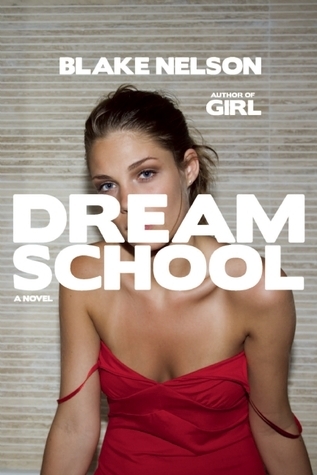
Blake Nelson’s Novel “Dream School” Represents the Ups and Downs of Wesleyan Using The Power of His Cult Voice
It might make sense that few people have heard of “Dream School” by Blake Nelson, given that it’s a non-bestselling follow-up novel to his much more famous debut “Girl” from 1994. The author attended Wesleyan for an undisclosed period, likely sometime between 1979 and 1984. “Dream School” was published in 2011, but takes place at a familiar university in the mid-nineties.
“I was pretty out of my element at a fancy college like Wesleyan,” Nelson said. “But probably most people feel that way.”
The college being called Wellington and the name changes to the dorms and buildings do little to veil the identity of the book’s inspiration. The name of the town where the fictional college exists—Middletown, Connecticut—might also ring certain bells, and if it doesn’t, the book’s themes certainly will. His student narrator, Andrea Marr, both loves Wellington and can’t help but feel out of place. She is from Portland, and not nearly as well off as the droves of rich kids from New York City and California.
“I could adjust myself to people being pretentious or rich or super brilliant or whatever. I could do it. I wanted to do it. It would be the first real challenge of my life,” Andrea narrates at the beginning of her time at Wellington after describing a much-needed swim in the lake with her friends.
However, only 12 pages later, she says almost the opposite.
“I mean, I wanted Wellington to change me; that was the point. But what if it made me pretentious and annoying and stuck up? My parents would be so pissed,” Andrea narrates after talking to a girl who said she broke up with her high school boyfriend before coming to Wellington because she didn’t want him to hold her back from growing and changing as a person during college.
The different attitudes in these two quotes propel the book forward and make it hard to put down. She has problems with friends, but never has trouble making more. Her parents become the glue that reminds her of her past. They are outsiders in the same way she is, and go through periods of tension with her as she tries to become more independent. For example, there are multiple breaks throughout the book where she decides not to go home, much to their ire.
“But maybe that was just my perception,” Andrea narrates. “And also I already felt jealous. Because even though Wellington sometimes seemed stupid or indulgent or whatever, it was basically this incredible little world where you had total freedom to be anything or do anything and have no worries whatsoever.”
Stylistically, Andrea is instantly likable as a narrator. She makes mistakes and shows she’s imperfect, and it’s impossible not to fall in love with her at least a little bit. I haven’t read Blake Nelson’s debut novel, also narrated by Andrea Marr, but after reading this book, I will make a point to do so. Part of Andrea’s appeal is her narrative voice, which pierces and pokes fun at others in a riveting way. For example, she calls out a girl she dislikes in her writing class for always using the word “metafiction.”
“The Queer Alliance…[was] so completely extreme it became ridiculous and if you tried to help or be active in it and you weren’t into total shock politics they would just sniff at you and act condescending,” Andrea narrates, showing that when she does criticize Wellington, she can manage to do so in the most sincere way possible. “It was ultimately about ego. And about protecting their territory. That is the dark side of Wellington: ambitious people who want to control everything.”
There are parts of the school that Andrea loves and parts that she doesn’t. To some extent, it depends on her mood, but more often than not, it simply shows her willingness to engage critically with the world around her.
Nelson is mostly a YA fiction writer, which comes with a certain set of stereotypes. I find that many people expect YA fiction to have fantastical elements; however, in the history of YA fiction, that is a relatively recent phenomenon. This trend began in the late 1990s, around when Nelson would have written his first draft of “Dream School.” Most of Nelson’s fiction is YA, and most of it isn’t remotely supernatural.
There’s something timeless about Wesleyan and the liberal arts college experience. Nelson has a great understanding of that. I do think it is pertinent to mention the book’s effortless nature. Blake Nelson was a man in his thirties writing from the perspective of a young girl, and, if the fan letters from the 90s are any indication, he manages to connect with young girl readers. That feels like enough of a feat.
Henry Kaplan can be reached at hrkaplan@wesleyan.edu.


Leave a Reply