
Major League Baseball’s Collective Bargaining Agreement Issue
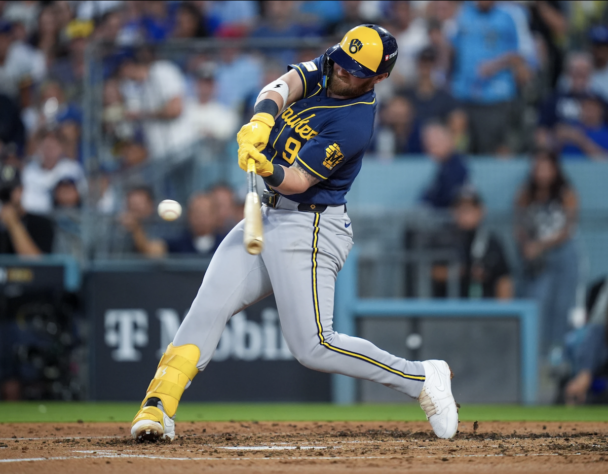
This past Thursday, the Milwaukee Brewers swept the Dodgers in the NLCS, advancing to their first World Series since 1982 and ending the Dodgers’ chance of a three-peat. The Dodgers’ elimination has left three small-market teams in the bottom half of payroll rankings in the Brewers (19th out of 30), Rays (28th), and Guardians (30th) to fight it out in the World Series. While a small-market World Series victory has been pretty atypical in recent years, its occurrence this year might transform baseball for years to come.
On Dec. 1, 2026, Major League Baseball’s Collective Bargaining Agreement (CBA) expires. Although Major League Baseball (MLB) owners and the Major League Baseball Players Association (MLBPA) have started making proposals, there will not be an agreement before Dec. 1, causing a lockout. A lockout doesn’t automatically mean games will be missed; rather, it’s the period between the expiration of the old CBA and signing of the new CBA which can take place solely during the off-season. During the lockout, all transactions are frozen, and teams are unable to communicate with their players. The lockout has become a strategy for the owners, used in 2021, in order to build leverage.
The sports industry has changed a bit since the last CBA was agreed upon in 2021. MLB is now the only major sports league without any sort of spending cap. Instead, they tax teams for spending over certain payroll thresholds. In recent years, some teams have been exceeding the highest threshold and spending an ungodly amount of money when compared to the rest of the league. Specifically, the Dodgers have a payroll of $339 million while the Guardians have a payroll of just $74 million. The Dodgers’ is even higher when you consider they have over $1.1 billion in deferred money. Since 2021, the teams with the lowest payrolls have barely increased their spending. So as the payroll disparity has widened and the Dodgers have gone on their successful run, the health of MLB’s competitive balance has been called into question.
This has led MLB to propose a salary cap for the first time since 1994. The cap proposal is accompanied by a 50-50 revenue split and a salary floor. MLB believes that a salary cap will solve competitive balance by reducing the variability in salaries. What the owners won’t mention is that the salary cap will also dramatically increase their franchise values, which have lagged behind the other major sports.
Meanwhile, the MLBPA is vehemently against the cap both from a salary and competitive balance perspective. The players don’t want a cap on their salaries, as they don’t have a limit on the amount of money they can make. The players also argue that the issue is not that teams, like the Dodgers, are spending too much money, but rather that the bottom teams aren’t spending enough money. While the teams claim they don’t have the money to spend, each small-market team is collecting revenue-sharing money, which they are just pocketing instead of spending. As a result, the players believe a salary floor is key to solving the issue.
Whether a cap or floor or both are a solution to the competitive balance clearly depends on who you ask. The one concrete thing in this argument is the data on what has transpired over the last decade in terms of competitive balance.
The fact that two low payroll teams are competing in this year’s World Series is quite contradictory to the recent trends of both World Series matchups and winners. Additionally, the Brewers’ defeat of the Dodgers, whose payroll was three times theirs, goes directly against MLB owners’ claim that small-market teams can’t compete with the big-market teams. For the MLBPA, a small-market team victory couldn’t have come at a better time.
While this is just one feather in the cap of the MLBPA, it is helping them with public perception of the issue, even though it is not representative of what most often happens.
The stakes are quite high, so neither side will want to concede and accept the other’s supposed fix for MLB’s competitive balance issues. As a result, this negotiation will likely be a staring match, coming down to who is willing to blink first. There is a lot of money at stake in this negotiation, for both the upcoming 2027 season and the seasons to come. While both the MLBPA and the owners have made emergency funds to survive any short-term losses, if the lockout expands beyond the start of the season, the long-term losses could be catastrophic to the sport.
In 1994, when MLB last proposed a hard cap, the players started a strike and the 1994 World Series was cancelled. As a result, MLB lost many fans. MLB has regained momentum and popularity in recent seasons but another strike could severely set the sport back. Additionally, if MLB misses more than 60 games, its national TV deals will not be extended until 2029, postponing MLB’s big payday.
Both the owners and the MLBPA know of these consequences; it’s a matter of whether they take them into account when negotiating and thus negotiate in good faith. While the negotiations will be a bloodbath, they are important for the future of the game. The current MLB system isn’t perfect and needs to be fixed, but I hope they don’t miss any games to do so.
Benjamin Mayer can be reached at bmayer@wesleyan.edu.

Leave a Reply