
The Lighter Side to Athletics: Club Sports and Balancing Fun With Commitment to Compeition
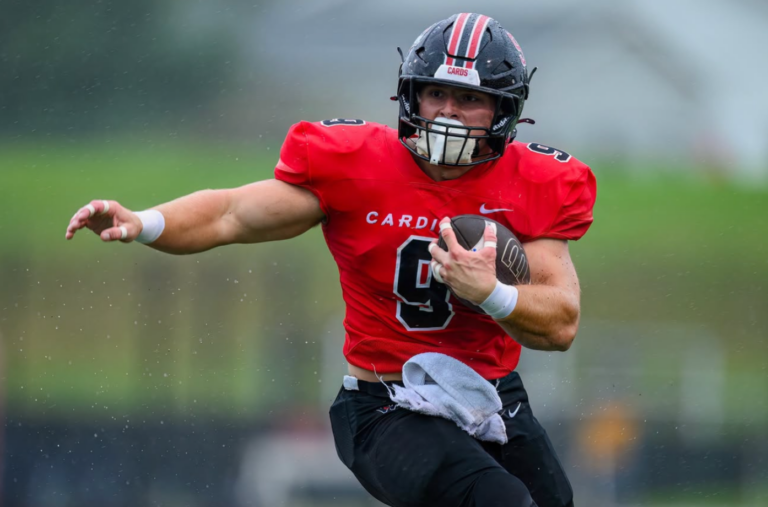
When you think of sports at Wesleyan, you probably think of teams like the powerhouse Wesleyan Volleyball team or the reigning NESCAC Football champions. While the varsity teams are what make up a large part of the sports culture here at the University, we shouldn’t forget about the other athletic teams that also contribute to the sports culture. Club sports aren’t exclusively a less formalized version of varsity. They also have many of the benefits of participating in competitive sports, without the intense pressure and time commitment that comes with playing varsity.
The University is home to twenty club and intramural sports teams, which are all student-run. They practice multiple times a week and compete with other schools in the area. In many cases, club teams even compete in their respective championships or national tournaments. The level of competition ranges from team to team, but overall, most of the club teams here try to reach a balance of fun with competition.
The Argus spoke with four club sports members (men’s soccer, women’s volleyball, men’s rugby and ultimate frisbee) to get a better understanding of both the logistics behind the programs and the culture they focus on promoting.
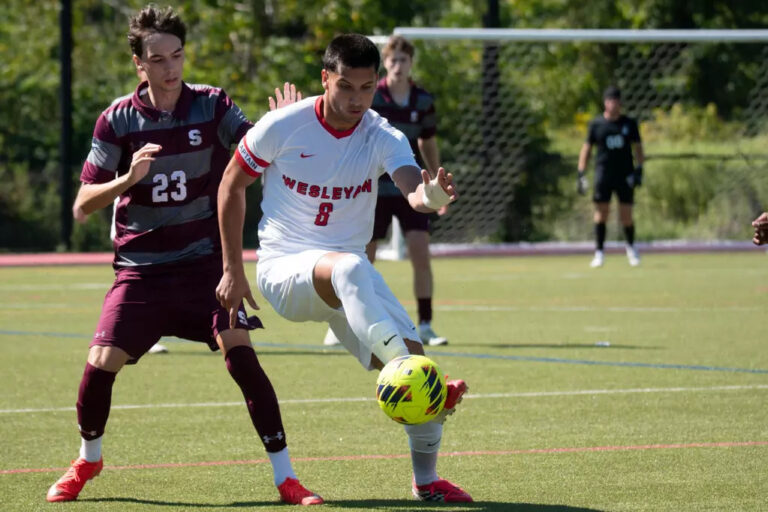
Firstly, it’s important to note that club sports are still a significant time commitment. For men’s club soccer, co-captain Oscar Cassidy ’27 said that they practice three times a week, play in a game once a week, and compete in tournaments.
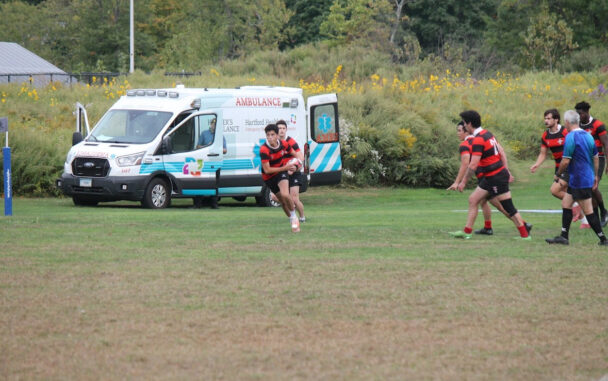
Men’s Rugby is even more of a time commitment. Eli Arthurs ’27, a co-captain who has played on the team for all four of his years at the University, explained that because the The National Collegiate Rugby league is the highest level of collegiate rugby in the U.S., a lot of the other schools they play against are recognized as varsity teams at their respective universities. “Those other teams get more funding and more recruiting abilities, which we don’t get,” Arthurs said. Due to their competition, the team practices four times a week at two hours a practice, with games on the weekend. Despite not having all of the recruiting capabilities that other rugby teams may have, Arthurs said that since he’s been on the team, Men’s Rugby has been a powerhouse among schools from the Northeast. They made nationals for the first time his sophomore year, and they are hoping to do the same in the upcoming spring season.
Women’s Rugby has also evolved into somewhat of a powerhouse. Only four years ago, the team had to borrow coaches from other schools during tournaments in order to be eligible to play. Now, they have more players than most of the other schools they face and are building their program up substantially.
“It’s much more of an established program now. We go to tournaments with more girls than any of the other teams,” Imogene Ostrom ’27 said.
Ostrom is currently a co-captain of the Women’s Club Volleyball team and a key player on the Women’s Rugby team which she co-captained last year. This is her fourth year playing on both teams.
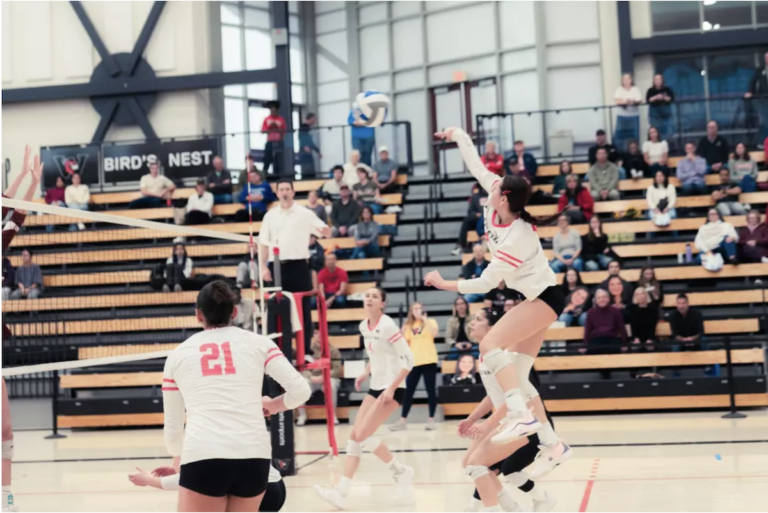
Similarly to Men’s Rugby, the Women’s Club Volleyball team also faces tough competition. Many of the teams that Women’s Club Volleyball plays–like Harvard, UCONN, Columbia, or CCSU–are either very big state schools or smaller elite schools that have coaches, with A and B teams. This, of course, can present its challenges when the captains are trying to find a perfect balance during practices between working hard but also having fun.
“It’s kind of tricky because club sports are in this weird in-between,” Ostrom explained. “We’re not varsity teams, so we shouldn’t be as intense as them. But also, we’re playing other teams that are very good at the sport.”
According to Hayden Anderson ’30, Vicious Circles–one of the University’s Ultimate Frisbee teams–has accomplished this “perfect balance” between competitiveness and fun. The team, known more affectionately as “Vish,” has regular practice twice a week, an optional scrimmage on Fridays with more of the advanced players, and tournaments on the weekend. Recently on October 4th, the team played in a tournament against UCONN, Northeastern, MIT, and Boston University, where they won all four games.
“Vish is a very competitive team. Two years ago, they won D3 nationals,” Anderson said. Even though the team fosters a competitive spirit, Anderson was quick to mention that this doesn’t take away from the community and inclusiveness she feels everyday.
So what ultimately leads a high school athlete to join a club sport? For some, like Ostrom, they played a lot of sports in high school and wanted to continue playing at a semi-competitive level. “I knew playing varsity sports can sometimes create a bit of a toxic relationship between an athlete and their sport,” Ostrom said. She explained that the rugby team has a lot of ex-varsity athletes who played different sports at the University before quitting and joining the club team. “We’re still competitive, but there’s not this intense crippling pressure.”
Cassidy is an ex-varsity Soccer player himself, who quit after his first season as a first-year on the team, and joined Club Soccer that Spring.
“Playing a varsity sport can be pretty all-consuming, but on the club team, although we all care, no one places it on the top of their priority list,” Cassidy said. After quitting the varsity team, he felt an immediate sense of relief and started enjoying school a lot more. “There’s a lot more free time for me to explore different parts of campus.”
The pros of club sports don’t just pertain to a student’s academic and athletic lives. For varsity athletes, their sport often seeps into their social lives. When you spend hours on end practicing, competing, and riding on the bus together all around the Northeast, you’re bound to forge strong bonds with one another. While this is great for many students, it can also be limiting.
Cassidy, who has seen first-hand the social aspect of both varsity and club sports, explained that you can still get all the social benefits of being on a collective team, while also having friends outside of the commitment. “Two of my best friends happen to be my co-captains, but it’s definitely less cliquey than a varsity team would be. Mostly everyone has a separate friend group outside of the team.”
When each athlete was asked what their favorite thing about playing a club sport was, all of them said that it was the people they have met along the way. “I get to practice with other people who are choosing to be there because it’s a club. They’re excited to play, and we’re all doing it for the love of the game,” Ostrom said. “There’s a great camaraderie, and it’s an escape from all of my other engagements on campus,” Cassidy explained. “It’s really a bond that transcends the field,” Arthurs said. Even for a first-year who has only been on the team for one month, Anderson couldn’t imagine her college experience without it. “I would really just keep going each day for the people,” she said. “The community they’ve built there makes me feel so happy, and I look forward to [it] every single practice.”
Genevieve Eisner can be reached at geisner@wesleyan.edu.


Leave a Reply