
Obsessed with “Obsession”: the Horror of A Love Gone Wrong
This review contains spoilers for “Obsession” (2025).
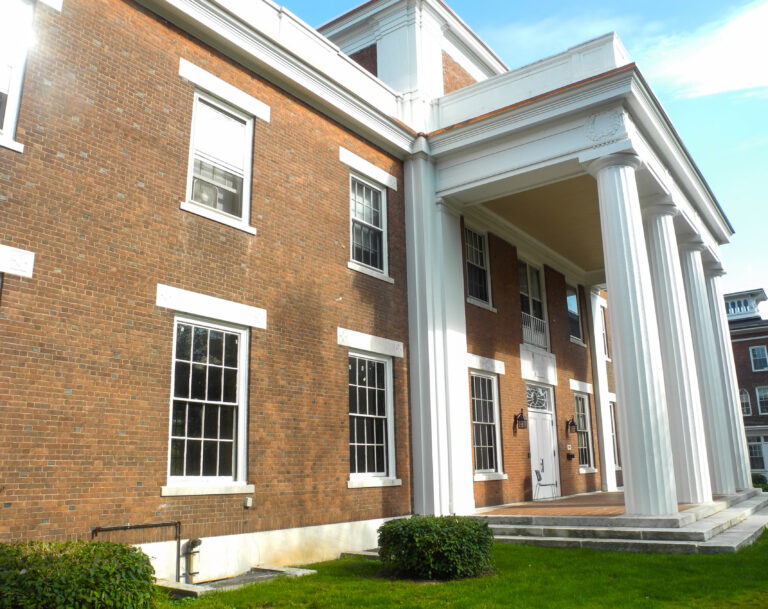
Last Friday evening, the line to the Goldsmith Family Cinema wrapped around the building. Students chattered excitedly in clusters, waiting to fill the seats. The cinema was already full half an hour before the film began. This was due to the Wesleyan Film Series showed “Obsession,” the horror film that went viral this past summer. Released in May of this year, the film has already grossed a whopping $500 million in profit on a microbudget of just $1 million.
“Obsession” was the first horror film that I’ve watched since “Coraline” when I was eight. It took months after watching said animated film to go to bed in peace without my dreams being haunted by those black button eyes. I was never a horror fan, but something about the Wesleyan Film Series screening last Friday drew me in to see “Obsession.”
Now I can give you all the reasons to watch “Obsession” despite not being a horror fan myself.
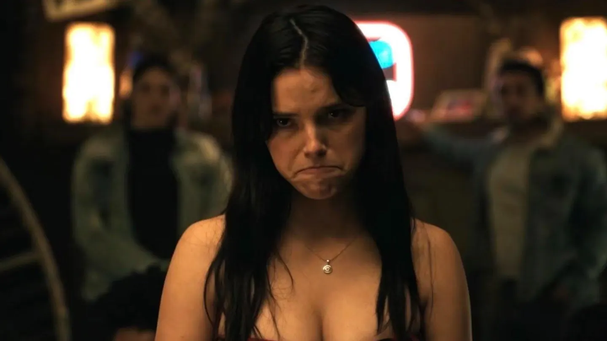
In the film, the aimless twenty-something Bear, who has a big crush on his friend Nikki, uses the mystical One Wish Willow to make her fall in love with him. Inde Navarrette—who played Nikki—carried the film. Despite it being her first starring role, she played Nikki and her multidimensionality well, effortlessly leaning into the film’s psychotic and dark elements. In one scene, after she turns into possession Nikki, Bear wakes up to her watching him in his sleep from the corner of the room under a dim light. This is freaky on its own, but Navarette’s loud wail and sobbing cry in the dim light haunts you as her grimacing face is gradually revealed, showing that she is not the original Nikki. The unhinged bawling scenes throughout the film dramatically intensify and reflect her uncanny behavior as possessed Nikki under the Willow’s curse. Her manic on-off switch between the original Nikki and the possessed Nikki adds another layer of suspense.
Beyond Navarette’s mind-blowing acting, director Curry Barker uses a metaphorical framework to explore the horror of love. Throughout the film, the house serves as a central metaphor for Nikki and Bear’s burgeoning relationship. The house isn’t simply a physical, tangible construct; it also represents Nikki and Bear’s inner selves. We only see the exterior of Nikki’s house, implying that Bear never desires to know who Nikki really is as a person. Bear’s house, meanwhile, is fully showcased throughout the film. We can see the interior of the house with dim lights and messy rooms. The potted plants are dead and dry. This is where Bear’s toxicity is truly revealed, if it wasn’t already hinted at. He is internally rotten. He only desires a physical relationship with Nikki, not true love, which makes his wish even more ironic since he had wished for Nikki to love him more than anyone else in the world.
When the original Nikki switches back briefly, she begs Bear to kill her because she cannot endure the pain of being forced to love him. And it gets worse: He responds with a clueless shrug while saying, “What is so bad about being with me?” Yikes, that’s an asshole.
The film is beyond tragedy. It is way more heartbreaking than anything you can imagine in a horror film. Never mind the gory scenes, like when Nikki cooks Bear’s dead cat to make him a sandwich.
At the end of the film, there are three dead bodies. Everyone in her friend group is dead. Nikki is alive and her curse has ended, but she will have to live with the trauma of her experience.
Although I am not a horror fan, I am obsessed with this film. If you are looking for a tragically horrifying watch, then go for it!
Grace Lee can be reached at glee01@wesleyan.edu.


Leave a Reply