
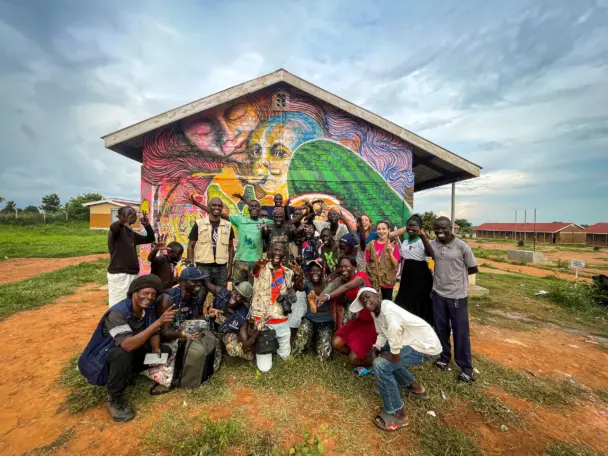
“Artolution: Art Through Crisis” Exhibition Opens at Fisk Hall: Creating and Healing Across the Globe
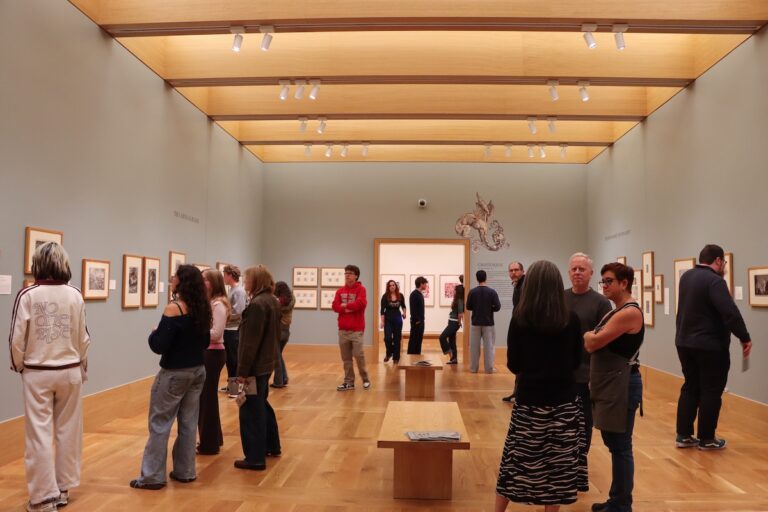
On Wednesday, Feb. 18, Dr. Max Frieder, co-founder and chief creative officer of nonprofit organization Artolution, stepped into the University’s Fisk Hall to welcome a new exhibition entitled “The Artolution: Art Through Crisis.”
Frieder’s passion was immediately tangible at the opening. He captivated the audience with his laid-back demeanor, multilingual greeting, and stylish man-bun. The pieces on display are just a snapshot of the incredible work happening at the organization.
The exhibition at the University features fragments of canvas that have traveled farther than the average person has. After moving through multiple countries over many years and serving as the vehicle through which different communities share their stories and talent, the canvases were brought to the United Nations for their first exhibition. The exhibition thus aims to spread awareness about each individual in the conflict-affected areas.
Frieder’s organization uses art to connect and help people across the globe, particularly those in refugee camps, war zones, and other conflict-affected communities. Art has the capacity to simultaneously serve as language, therapy, and recreation. When life is challenging, art is often one of the few outlets that can override negative feelings and elicit joy.
“[Many individuals] are thirsty for a reason to celebrate,” Frieder said. “The power of creativity is transcendent…. It can create a reason to have joy.”
About 10 years ago, Frieder and his artistic collaborator Joel Bergner came together to combine their shared love for art, community work, and travel to create Artolution.
Artolution has continued to grow, working in over 35 countries. They have regional hubs in Uganda, Bangladesh, Colombia, Jordan, Lebanon, and the United States. Through their art-based programs in different countries, they bring the organization’s four core values to life: livelihood, awareness, social inclusion, and mental health.
Through a dedication to sharing their knowledge, Frieder and Bergner have been successful in their mission. They began by training local artists and educators, encouraging them to continue teaching in the areas where they had implemented their program. Artolution now has over 300 trained local artists. Additionally, the scaffolded organization of their teaching allows them to have a widespread influence. Starting with teaching artist trainers, then teaching artists, then youth, then children, the pedagogical structure encourages intergenerational connection.
The people at Artolution recognize the immense trauma that those in camps and conflict zones endure. Their mission is to provide them a platform to express themselves and find connection and meaning in their lives.
The projects created in these communities are not just frivolous pieces of art; oftentimes, they symbolize the hope and resilience of their creators. They especially highlight the innate joy and unique perspective of children. Frieder believes that children are our role models. The following are some examples of significance behind the artwork.
One group decided to make a giraffe, as the animal is tall enough to see over the war and into their futures. Another group decided on a cow, because no matter how much conflict occurs between different communities, everyone shares a need for the food that cows provide. Other pieces include a boat that reflected their wish to see the ocean, a peacock to represent rebirth, and a mural of an elephant and rooster that signified the Rohingya and Bangladeshi communities. Their artwork actively promotes peace, empathy, resilience, and hope in children and adults alike. Sameer, an artist who has been living in a refugee camp for nine years, encapsulates this artistic aspiration.
“‘Every day is better than the last because we are still alive,’” Frieder said, quoting Sameer. “‘Art is what makes me be able to have my identity. It makes me be able to feel that I can actually do something when I am so powerless in so many of these situations. It’s one of the few things that I can do.’”
While working on a program with women who had experienced different forms of violence, Frieder met Dildar. Dildar left her village after it was burned down, an event that killed many of her family members. She experienced indescribable trauma and tragedy. Her journey to the refugee camp was difficult and required her to hide in holes in the ground during the day and run at night. This routine continued for two weeks until they had to cross a river at the border. They hand wove a raft out of reeds which carried Dildar, her mother, her grandmother, her sister, and her brother with Down Syndrome safely across. Once she arrived at the camp, she was so traumatized she did not speak for nine months, her first words in almost a year sparked by the gift of a paintbrush.
“‘I forgot what it felt like to be alive,’” Frieder said, quoting Dildar. “‘I forgot what it felt like to feel emotions. Painting makes me realize I have a right to have a dream—I didn’t know I had the right to have a dream.’”
Since that moment, Dildar has devoted her life to sharing her story and using her experiences to help others in similar situations. She is now a lead artist trainer and has been working at Artolution for seven years.
Artolution has made significant strides over the last decade and continues to do groundbreaking work. It all started with Frieder’s love of art. According to him, he “came out of the womb painting.” He developed a passion for working with communities while attending the Rhode Island School of Design, creating his own study abroad program where he worked with incarcerated youth in Indigenous Māori communities in New Zealand. Frieder and these adolescents created a mural of a Māori warrior. Through this process, the kids opened up to him with their life stories. After completion, they were granted a permit to hang the mural at the local police station. Their work culminated in an opportunity for them to leave the juvenile detention center to see their mural and watch as the police officers who had arrested them cheered. This moment got Frieder thinking about the possibilities of art as a solution and prompted him to buy the domain name “Artolution” that night.
At the time, he was working solo. As he continued to engage with different communities in Latin America and the Middle East, his mother was skeptical that he could make this work a career. She did research of her own to determine if others were doing similar work. Enter: Joel Bergner. She found his website and sent him an email. It turned out that Frieder and Bergner were moving to New York at the same time. A 30-minute margarita plan turned into an hours long conversation. The rest is history.
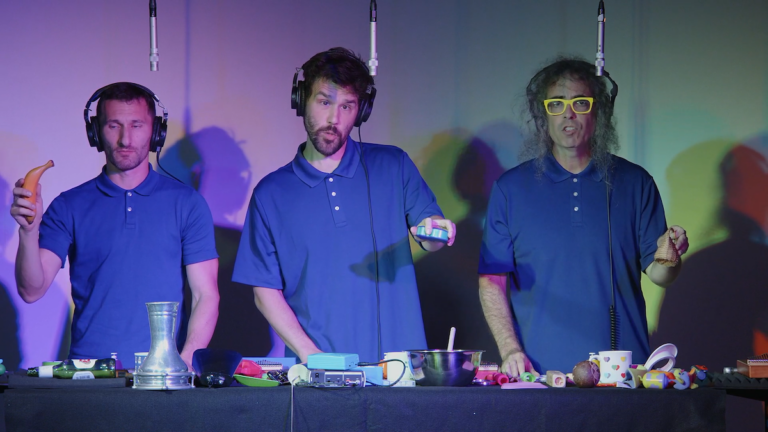
One of their first major projects was the Foundstrument Soundstrument, an interactive sculpture that combined music, art, and community clean-up. This amalgamation of different art forms is common for the organization, as they have programs that include, but are not limited to, music, dance, puppetry, fashion, and ceramics. Interdisciplinarity is a priority at Artolution.
Frieder acknowledged the untapped potential that exists in many communities and explained that often the goal is less about teaching and more about guiding.
“It’s just about harnessing those and just being able to provide a framework where those skills and talents can come out,” Frieder said. “We need to learn from our greatest sages, who are people who are on the front lines, experiencing these experiences every day.”
In addition to the inherent struggles these people already face, we are in an era where support and funding for the arts have significantly decreased while challenges in the humanitarian sector have increased. When asked about how his work has changed or intensified as our country and world move through different political climates, Frieder recognized how overwhelming and depressing it can be to look at every problem that exists, but encourages people to focus on the specific ways in which they can help.
“You can only change what you can change,” Frieder said. “You can only do what you can do.”
One particular quote encapsulates both Artolution’s goal and the transcendent power of art. A group of children created a Foundstrument Soundstrument and were banging on it, dancing and singing as a new boat of refugees pulled into the camp.
When a man named Hamza stepped off the boat, he started grabbing and kissing Frieder, dropping to his knees. According to Frieder, Hamza said, “‘This isn’t what I thought a refugee camp would look like; this is what freedom looks like.’”
The “Artolution: Art Through Crisis” exhibition will be open at Fisk Hall through Wednesday, May 6.
Teddy Tolbert can be reached at ttolbert@wesleyan.edu.

Leave a Reply