
Why is it So Hard to See Theater at Wesleyan? The State of Theater Reservation On Campus
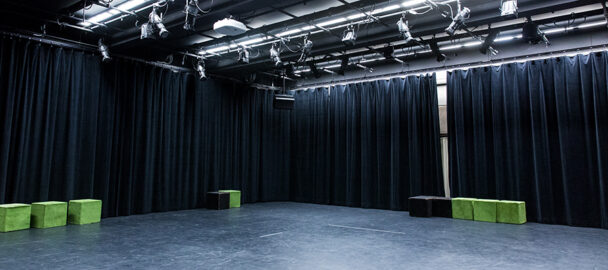
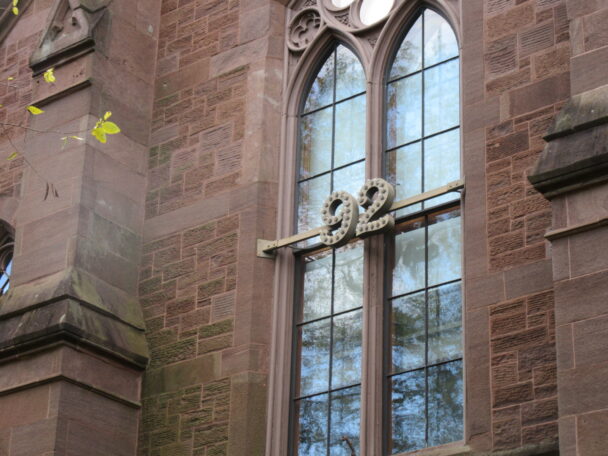
It’s not at every university that a sophomore’s original musical performs to a sold-out audience on campus and then goes on to become a blockbuster Broadway production. Of course, I’m talking about “In the Heights” by Lin-Manuel Miranda ’02, which premiered at the Patricelli ’92 Theater in April 2000.
Miranda’s rise to fame continues to inspire hearts and minds here at our small liberal arts college. I was no exception. On my tour of the University two years ago, this detail stirred me to no end, and it continues to do so. The number of successful artists, musicians, filmmakers, actors, and writers who have come out of the arts scene on campus speaks to the University’s highly creative environment.
While I treasure the privilege of being surrounded by immensely talented people whose creations grant me a brief escape from my endless readings, there are several aspects of the campus theater spaces and student performance culture that have long puzzled me. For example, why is it so challenging to obtain tickets to events such as the Spike Tape Musical Theater Cabaret? Why did my friend and I have to crouch by the windows of the ’92 Theater during the dress rehearsal of “Little Shop of Horrors” to even glimpse some of the Alan Menken science-fiction thriller? Why was FXT’s “Throw It Back” show in Eclectic so packed that viewers had to stand two rooms away to see the lingerie-clad dancers?
It would seem from the outside that the student-run theater groups, including Spike Tape, Noisy Visuals, and SHADES, would be at odds with the Theater Department. However, after speaking with Spike Tape President Vivian Orthwein ’27, Vice President Aden Sheingold ’26, and the Theater Department liaison to student groups, Assistant Professor of Theater Courtney Gaston, it’s become clear they are actually all on the same team.
“We’re all in this together,” Gaston said. “We love the student groups. A lot of them are our students, and we go to their productions. It’s really cool to see them come here and learn everything and then put it all together. Also, for students who have no intention of majoring in theater and don’t want to commit four years to it, they have an amazing resource.”
Orthwein and Sheingold also expressed a sentiment of cooperation, while emphasizing the importance of diverse creative outlets.
“We feed each other’s programs and serve different niches that enable the Wesleyan theater scene to be as vibrant and unique as it is,” they wrote in an email to The Argus. “While we may not appear entwined to the outside viewer, we could not exist without [the Theater Department’s] support in acquiring licensing and borrowing props, costumes, and equipment.”
The groups also have a shared calendar to keep track of all student performances.
“The lines of communication stay fairly open anyway, but this gives a formal avenue for point of contact,” Gaston said.
The collaboration across groups in the University’s theater scene extends to the democratic nature of reserving venue spaces.
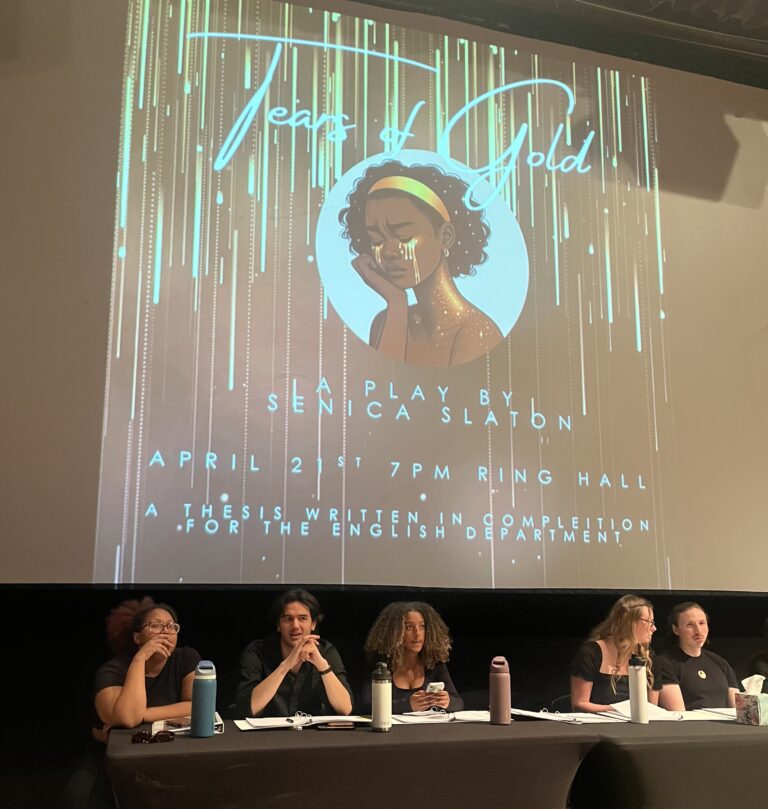
Still, the University is an academic institution, and curricular needs take precedence. Thesis productions are given priority, and the Theater, Music, and Dance Departments get first dibs on spaces like the ’92 Theater and the main stage in the Center for the Arts (CFA). Once the departments have blocked out their weeks, ’92 Theater Manager Joseph Fonseca works with the Students Performing Arts Resources Committee (SPARC) and SPARC Chair Senica Slaton ’26 to communicate amongst the student groups.
“[Slaton] contacts the leadership of any clubs interested in using the space and schedules the SPARC meeting to have a conversation about how to split up the remaining weeks,” Orthwein and Sheingold wrote.
According to an Argus article from 2022 written by Suryansh Dalmia ’24, SPARC is composed of representatives from each student performing group. Second Stage, the theater group that preceded Spike Tape, used to be in full control of the ‘92 Theater. After the organization dissolved during the COVID-19 pandemic and the ’92 Theater was closed to student groups, SPARC was created to equitably distribute the venue among all student performance groups.
“[SPARC] allows for student performing groups to work together and coordinate on logistics for the coming semester,” Orthwein and Sheingold wrote. “At the SPARC meeting, the leadership of all interested groups democratically decides a schedule that allows all groups fair access to the ’92 Theater. This semester, it includes SHADES, Noisy Visuals, Spike Tape, WesArabesque, and [Collective Motion (CoMo)].”
For Spring 2026, SPARC and Fonseca granted two weeks of ’92 Theater space to the Theater Department, two weeks each to Spike Tape and Noisy Visuals, one week each to WesArabesque, CoMo, Gag Reflex, and SHADES, and one additional week shared by SHADES and Spike Tape.
“Each year we typically have two main stage productions and two capstone festivals, which all have to take place in the two weeks we have in the ’92 Theater,” Gaston said.
Though the main stage productions take place in the Fries Art Building in the fall and the CFA Theater in the spring, it’s not as simple as the Theater Department having full reign of the University’s largest venues.
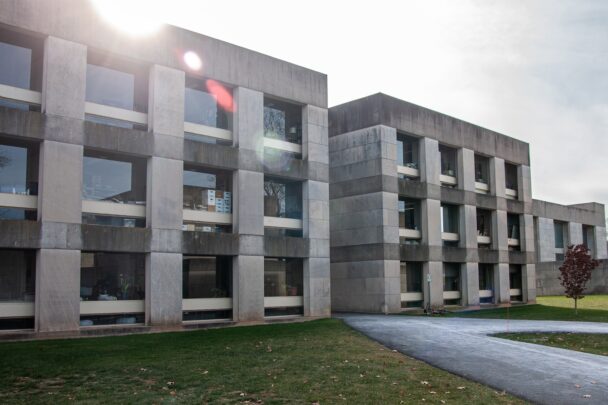
The CFA Theater gets booked a year in advance. Directly after Visiting Professor of Dance mayfield brooks’ residency in February, the Theater Department’s main stage production, “The Crucible,” moves into the CFA Theater to begin its set and lighting build in preparation for the show in May.
“Any time you’re building a show, you’re looking at a six to nine week build,” Gaston said. “The student theater groups are used to a much shorter turnaround time; they load in and perform. Our process is a lot longer because we are doing the best that we can to create a simulation of a professional environment to help students understand what they will encounter when they leave.”
Although it may seem that these performance buildings lie dormant, a lot goes on behind the scenes, and there is no additional time for another group to perform in these spaces.
The Theater Department, like student groups, does not control the CFA Theater.
“We don’t have any control. We are given time and spaces, and that’s all we have,” Gaston said.
The theater studio is one such space, located on the lower level of the Theater Department building. “[The studio] is our own semi-equipped ‘performance space’ which is why we have to reserve it for curricular projects: all directing class projects, all of their rehearsals, and performances for class,” Gaston said. “All of our acting classes happen there, [and] voice and movement too.”
Despite these thorough protocols, problems remain for both student groups and Department productions. Both the Theater Department and Spike Tape continue to face issues with the spaces they are permitted to use. Due to a lack of storage space and many classes needing to use performance facilities, both groups comment that the build process, or how props and sets are set in the space for a production, is overly difficult.
As Spike Tape only has ’92 Theater access for two weeks, they use other venues, such as WestCo Cafe, Ring Family Performing Arts Hall, and Russell House, to house the rest of their productions. However, only the ’92 Theater and WestCo Cafe can store equipment overnight.
“For all other spaces, we need to load in and load out everything every day of the tech and performance week,” Orthwein and Sheingold wrote. “This limits us in the complexity of the set, props, costumes, lighting, and sound that we can have outside of those two venues, as well as taking considerable time for the cast and crew during tech week.”
The Theater Department also faces this issue.
“[The set] had to be struck every day and put into a closet and then reset every day,” Gaston said, recalling the time when the Department put on a production in the College of the Environment building.
Additionally, the theater studio is used by many classes, further frustrating its users. “They have to strike all of their staging materials and put them aside so classes can set up and reset every night,” Gaston said. “This can be labor intensive and, because we have so many things happening at once, it becomes a conundrum.”
There are also some safety concerns in the ’92 Theater, which can explain why the space feels less professional. Currently, the theater is in a reverse-house orientation, where the tech and backstage areas are where the former stage used to be, and the current stage is the hardwood floor.
“The stage is unusable; it is condemned,” Gaston said. “The rigging system is outdated and dangerous. Nothing can be hung or flown above the stage until it’s updated. That’s partly why it’s set up that way, because you can’t hang lights up there. That’s a known issue on the update list for the University.”
“We are currently working with Facilities to repair the rigging on the proscenium stage,” Producing Director for the Arts Drew Gray said. “It is an old space, so this involves structural engineering studies to make sure we find the right solution. There are no safety concerns that I am aware of regarding the reverse house and flexible seating setups that groups are currently using.”
“The tech booth is not usable because it is above the performing space, not facing it,” Orthwein and Sheingold wrote. “The ’92 functions, but it could be so much more with the proper resources directed towards repairs. That being said, the reverse staging has created almost a black box style space, which allows for unique and creative staging.”
In addition to safety concerns, the theater is in this orientation to cut down the amount of labor and time students used to spend hanging lights.
“It’s designed now so [students don’t] have to spend half their time hanging lights,” Gaston said.
Although each theater space on campus presents certain issues, all parties are grateful to have many opportunities to engage with the arts in these venues.
“I’ve never seen this much student-led performance group activity on a campus before,” Gaston, who has experience in several collegiate theatrical settings, said. “That is unique to Wesleyan. The fact that there is an entire building, the ‘92 Theater, that is just student space, is remarkable.”
“It is so great being a part of such a vibrant performing arts campus, and the more spaces that are able to accommodate performances, the better,” Orthwein and Sheingold wrote.
After my conversations with theater groups, my perspective has changed. Everyone is in the fight together to produce quality theater and provide opportunities for all members of the University. Many more people are involved than are seen, and I have a newfound respect for those dedicated to coordinating these venues.
Jade Acker can be reached at jacker01@wesleyan.edu.

Leave a Reply