
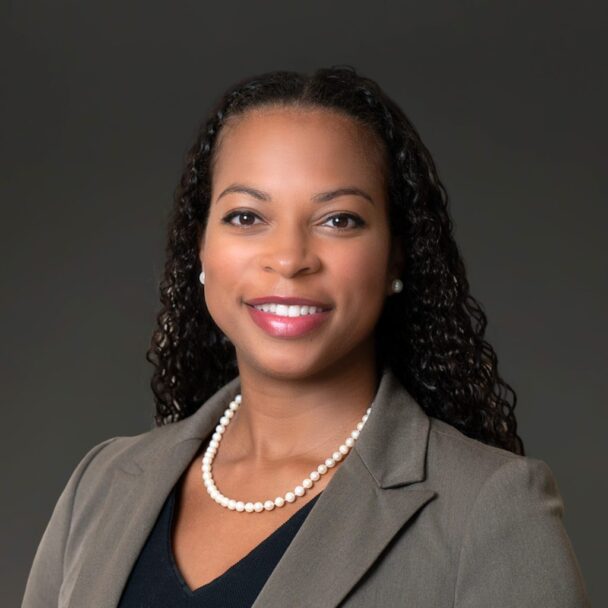
Ruth Fortune Discusses Immigrating to the United States, Functional Policymaking, and Running for Congress as an Underdog
In July, Hartford Board of Education mayoral appointee and Wiggin and Dana associate Ruth Fortune filed papers to run as a Democratic candidate for the 1st Congressional District of Connecticut in the 2026 midterm elections. That seat is currently held by U.S. Representative John B. Larson, who plans to run for re-election.
The city of Middletown, including the University, is split between the 1st and the 3rd Congressional Districts; the latter is represented by U.S. Representative Rosa DeLauro. Also running for Larson’s seat from the Democratic camp are former Hartford mayor Luke Bronin, U.S. Representative Jillian Gilchrest, and Southington councilman Jack Perry; Dr. Amy Fogelstrom Chai is running as a Republican.
The Argus sat down with Fortune to discuss her path to Congress, her policy goals, and her position as an underdog in a crowded race that has exposed internal Democratic divisions around age and experience.
In 2000, 12-year-old Fortune came to the U.S. as an undocumented immigrant from Haiti with her family, settling in Westbury, N.Y., and gaining American citizenship in 2017.
“Eight of us were in one bedroom at the time…[some of whom] had come in April of that year, just four months before us,” Fortune said. “It took me 17 years after I arrived in the U.S. to become a citizen, and even then, it was still luck. Had my husband not been a U.S. citizen…I would still have a temporary status right now.”
In the Westbury, N.Y. school system, Fortune found her academic footing, beginning with English as a Second Language program (ESL), and GEAR UP, a then–federally funded grant program assisting low-income high school students to access higher education. She received a Bachelor’s degree from Baruch College and a J.D. from the University of Connecticut School of Law.
“Having had the education I received in public schools in Westbury, where my family moved, I got to a college where, even as an undocumented person, I had in-state tuition,” Fortune said. “I just waited tables throughout college to pay for school and pay for my rent, and I lived paycheck to paycheck.”
Fortune also shared her frustrations with the U.S. public school system.
“I’ve been in this country for most of my life at this point, and the way we fund our public schools—the idea that the quality of education a child [receives] based on the zip code [they] live in—is wrong,” Fortune said. “We have the resources to educate all of our students well, we’re just not fully providing those resources in an equitable fashion.”
Should she be elected, Fortune hopes to implement a federal minimum wage that is tied to inflation.
“I work with families so they can plan their legacies and pass on intergenerational wealth so that they have enough to live off of for their lives,” Fortune said. “The amount of wealth that each one of us, if we die, could leave to our beneficiaries…is automatically adjusted for inflation year over year. Why don’t we do that for the living wage?”
Speaking to ongoing federal policy, Fortune spoke about imperiled Supplemental Nutritional Assistance Program (SNAP) benefits, also known as food stamps, a federally-funded program that supplements grocery budgets for low-income individuals. More than 400,000 Connecticut residents relied on the program this year. The One Big Beautiful Bill Act, which was passed by Congress and signed into law by President Donald Trump in July 2025, made significant structural changes to SNAP that both decreased the eligible recipient pool and increased states’ contributions to the fund. On Nov. 1, the cuts kicked in, and although Connecticut secured $9 million for funding food pantries in the biennium state budget earlier this year, benefits across the state have slowed between the reduced funding and the recent government shutdown.
Throughout the shutdown, which lasted from Oct. 1 to Nov. 12 and paused the funding of federal programs like SNAP, the Trump administration continuously refused to use an available reserve to supplement SNAP. Today, SNAP is once again being funded, but recipients have encountered significant delays.
“There’s about $6 billion now in funds there, but the Trump administration is choosing not to release those funds to feed people and the SNAP benefits,” Fortune said before Congress voted to end the shutdown. “People who are working cannot afford to buy food from their wages. I’m grateful that we have the food banks.”
Fortune also expressed her frustration with incremental changes that gridlock Congress, calling for the need for efficient decision making.
At 77, Larson has held his seat for 14 consecutive terms. While Larson, who suffered a seizure while speaking on the House floor on Feb. 10, has maintained that he remains able to serve effectively, the race has become a flashpoint in the Democratic Party’s internal battle around the age of the people who represent it. Including Larson, three of Connecticut’s five Representatives in the U.S House of Representatives are 72 or older.
When asked about Larson’s term in office so far, 37-year-old Fortune emphasized the necessity of term limits in Congress.
“We need term limits in Congress,” Fortune said, adding that the systemic barriers she faces entering politics as a first-time candidate are much harsher than the barriers she faced in the U.S. immigration system. “I personally would not want to serve more than five terms in the US Congress, if elected. 10 years is enough time to be able to fight towards things I really care about, [and] hopefully get a lot of those things done. And if in those 10 years, I [can’t], it is okay to pass the torch to someone else who can take on the fight,”
The first district of Connecticut has voted overwhelmingly Democratic in recent elections, meaning that Larson may only be substantively challenged in a primary.
“I did enter this race because I do feel like [Larson] is not speaking about the issues that I care most about, or prioritizing those issues as much as I would like him to,” Fortune said. “So I’ve chosen to enter the race myself. It took a lot of planning, a lot of hard work to get to the point where I can step away from full time practice of law to be able to campaign for Congress full time. Not everybody has that privilege. But I worked my tail off to get to this point.”
According to public filings disclosed to the Federal Election Commission as of Oct. 15, Fortune has a long way to go to catch up with the race’s frontrunners: Bronin leads fundraising with $1.2 million in contributions; Larson is following close behind at $1.1 million; and Fortune has raised approximately $41,000.
Nevertheless, Fortune argues that her background lends her unique capability over her opponents.
“The idea that you’re experienced because you’ve already served in elected office, or you’ve been in Congress for a long time…is the status quo presenting itself as a systemic barrier,” Fortune said. “The experience we really need in Congress is the experience of people who’ve navigated these failed systems more recently, and know how broken they are.”
U.S. midterm elections are scheduled for Nov. 3, 2026.
Janhavi Munde can be reached at jmunde@wesleyan.edu.





Leave a Reply