
Office Hours with Professor Roberto Saba: Emancipation, Imperialism, and Latinidad in Trump’s America
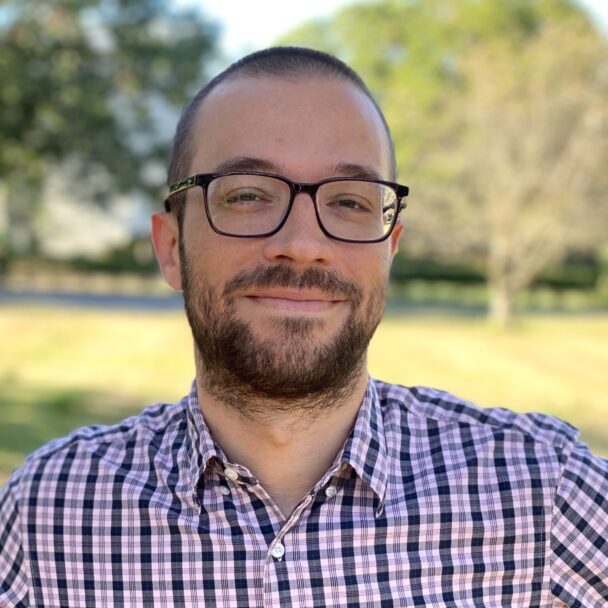
Roberto Saba is an Associate Professor of American Studies, History, and Latin American Studies at Wesleyan. He is also the author of the book “American Mirror: The United States and Brazil in the Age of Emancipation.”
The Argus: Your book “American Mirror” discusses the economic evolution of Brazil and the U.S. during the process of emancipation from slavery. How did this become a topic of interest for you?
Roberto Saba: Going to college in Brazil at the University of São Paulo, I took many classes that dealt with the question of slavery and emancipation in Brazil, and everyone kind of knew that the American Civil War had a major impact on slaveholding Brazil. The U.S. was the largest slave society in the 19th century, and Brazil was second. But the research on the archival sources [about the influence of the Civil War on Brazil] had never really been done. So I came to the U.S. to study at the University of Pennsylvania with this project. Initially, I thought my research would be about the relationship between the U.S. South and Brazil. This is indeed a very important part of my book. But during research in the archives, I realized that Northern capitalists [from New England, New York, and Pennsylvania] played a much more important role in helping the Brazilian elite, the slaveholders themselves, phase out slavery in a way that benefited capital, not labor. That’s my main argument: that these transnational anti-slavery reformers, most of whom were white, middle-class, and educated, worked together in order to make slave emancipation into something that advanced the interests of capital.
A: Over the course of your research, did you have any deeply impactful interactions or discoveries that stuck with you?
RS: I think the main surprise I had was to see how openly these white abolitionists, a lot of them progressive reformers, liberals from Brazil, and Republicans from the United States, were working to advance the interests of capital, and not labor. I was astonished to see them hijacking the process of emancipation, phasing out slavery in a way that would avoid major transformations and shifts in power and wealth within Brazilian society. They consciously searched for an alternative to what had happened in the U.S. South because they were afraid that a revolutionary transformation could potentially empower poor people in Brazil. These reformers worked together to ensure that the working class and people of color would be kept down after emancipation.
A: As a writer, what are some struggles that you encounter when putting together long and meticulously detailed bodies of work like your book or perhaps a thesis?
RS: One of the most challenging things that I encountered, and still encounter, and want to teach to my students, because it is a great skill we can acquire from studying and writing papers on history, is how to process a huge amount of sources and information. When you’re writing about 19th-century elites, like I do, you’re going to find tons of newspapers and letters and diaries and pamphlets and all sorts of visual documents. So how do you put all of this together into a coherent narrative, in a way that connects the dots? It’s super challenging and time-consuming, but I like to work through such challenges, and I love to teach my students to do this. I think this is a skill they can transfer to many other fields and professions. Another thing that is challenging is doing the kind of transnational history that we want to do today. That is, connecting and making sense of the history of at least two countries. In my book, “American Mirror,” I study two huge countries, the U.S. and Brazil. But then we should also add Great Britain, which is a player and is involved with these two countries in the 19th century. There’s also a French influence and other Latin American countries getting involved. U.S. citizens are looking at other parts of the world, like Asia, at the same time. What I try to do is to bring the local, national, and global structural transformations together through a case study of transnational interactions.
A: This semester, you’re teaching “High-Tech Imperialists: Technology and America’s Rise to World Power” (AMST226) and “Colonialism and Its Consequences [in the Americas]” (AMST200). How do you think these two courses interact with each other?
RS: One of the things I try to do when writing and teaching is to explore the intersections of capitalism and imperialism: how one reinforces the other, when one takes precedence in relation to the other, when one morphs into the other, and who the agents of these two systems are. In High-Tech Imperialists, we are focusing on U.S. capitalist enterprises at home, in the American West, and abroad, in Mexico, the Philippines, the Congo, etc. The period is the late 19th and early 20th centuries. We were reading primary and secondary sources that are very much about these decades and about Americans in these foreign contexts. In AMST200, we analyze more works of literature, art, and philosophy. We are looking at a much longer period of time, extending from the 15th century to the contemporary era. We are thinking historically and comparatively about the ideas and practices of colonialism. But in both of these courses, the intersections of capitalism and imperialism are central.
A: An American Studies course often involves the discussion of topics that make some people uncomfortable, but the general consensus is that your classes are anything but. How do you navigate teaching those topics? Do you think that discomfort is necessary sometimes?
RS: Yeah. I think the goal is to make people intellectually uncomfortable and to start questioning the things that we take for granted. But this should be done in an open-minded way with boundless curiosity, with joy of learning, looking at difficult questions from multiple perspectives. We should step outside of our own reality, our own values, our own views of the world and life, and try to understand why people acted the way they acted in the past and still act today. The goal is to go deep into how “the other” (colonizer or colonized) thought and acted in different situations. I think that’s what makes us uncomfortable—trying to understand the complexity of social relations—and it’s a good thing that we get uncomfortable.
A: How and when did you start teaching here at the University?
RS: I started at Wesleyan in the fall of 2020, during the pandemic. A lot of people were teaching remotely on Zoom. I taught my class in a hybrid format, with some students on Zoom, and some students masked in the classroom, which was actually at Crowell [Concert Hall]. It was very challenging, but it was amazing to see the huge effort that the students were making to keep learning and reading and engaging in that difficult moment. Before that, I had been three years out of grad school. I graduated from the University of Pennsylvania, History Department, in 2017. I had been a research postdoctoral fellow at the American Antiquarian Society for one year and for two years had been a visiting professor at St. Michael’s College in Vermont. Those experiences made the transition smoother; moving to New England, doing research, then teaching at a liberal arts college, and then coming to Wesleyan, I felt prepared.
A: As a professor here at Wesleyan and as a Latino in this political climate, do you feel secure enough to teach in the ways you see fit?
RS: To begin with, no immigrant, no matter where they’re from, feels safe now. But as an educated, white, male Brazilian, receiving full support from my employing institution, I know that my situation is far from being the most difficult that there is. I know I have the support of my colleagues, my friends, my family, that I can resort to lots of people. In terms of how I teach, I can’t really teach in any other way. And I would feel like I’m not doing my job if I changed my style. My job is to be critical and to help my students think critically. If I avoid doing that, if I avoid certain topics, if I don’t say some things in the classroom, because they feel too risky or too controversial, I’m just not being honest. I’m not educating anyone.
A: What are some of your current topics of interest?
RS: For a few weeks now, I’ve been working on a book chapter for an edited volume on a man named George Earl Church. He was a Massachusetts engineer, military officer (who fought for the Union in the Civil War), diplomat, and ethnographer who, between the 1860s and 1880s, traveled and worked in many Latin American countries, including Argentina, Mexico, Bolivia, Brazil, Ecuador, Chile, Costa Rica, and maybe a few more. This is a man who embraced the “civilizing mission” that portrayed the United States as [Lincoln said] “the last best hope of earth” and the most advanced society in the world. Also, he thought of Latin America as a backward place in need of help from U.S. expertise and capital. This man, George Earl Church, made many connections and knew a lot of people in Latin America and also had a lot of influence in the United States among the Secretary of State, investors, and others. He openly supported dictatorial rule in Latin America, that is, “enlightened dictators” who advanced the interests of capital, especially U.S. capital, in Latin America. There’s a huge body of documents produced by and about George Earl Church. Hopefully, this is going to be the first of a series of publications that I’m planning on U.S. influence in Latin America and beyond, including colonial contexts in Africa and Asia.
This interview has been edited for length and clarity.
Kealsy Rincón can be reached at krincon@wesleyan.edu.

Leave a Reply