
As Middletown Gathers for Third “No Kings” Protest, Democratic Divisions and Convictions on Full Display
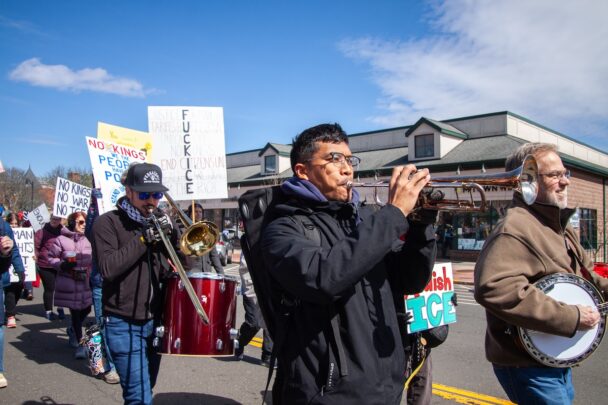
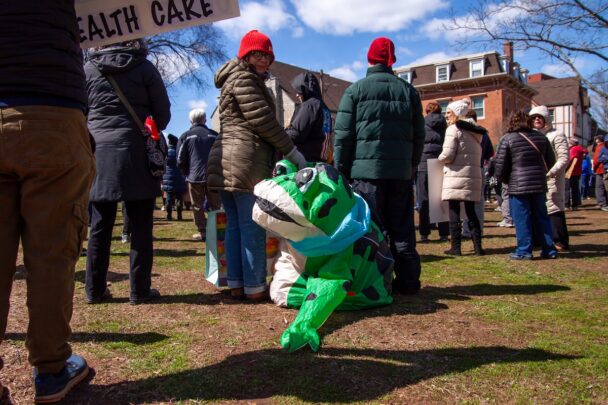
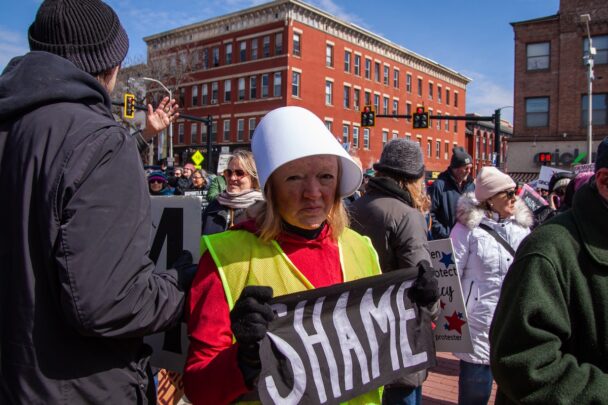
Hundreds of colorful posters, emblazoned with punchy slogans and sharp wordplay. A folky rendition of “Down by the Riverside.” And at least two inflatable frog costumes.
As the Trump administration faces the looming threat of the midterm elections, a political coalition divided on multiple fronts, and a rapidly spiraling war in the Middle East, the mood that permeated Middletown’s South Green on Saturday, March 28, was openly exuberant.
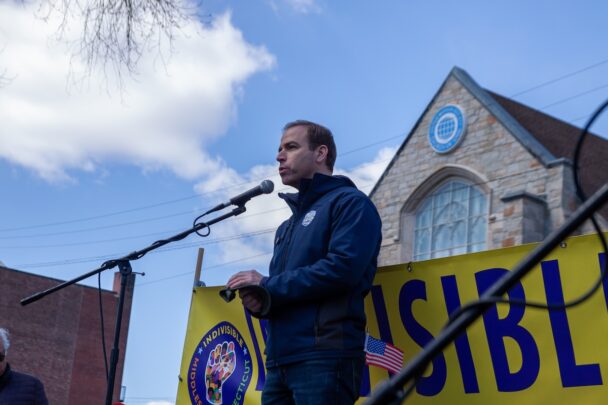
As part of the third nationwide “No Kings” protest of President Donald Trump’s second term, about a thousand people marched down Main Street, culminating in a rally that featured Connecticut legislators, University activists, and five progressive candidates looking to unseat Democratic incumbents.
The protest’s significant turnout was united in its fierce opposition to Trump, as attendees chanted “Lock Him Up”—a parody of the chant that galvanized his own supporters in 2016—and cheered as the event’s speakers, in turn, laid out their plans to combat the administration’s agenda.
But the event also put on display the forces dividing today’s Democratic Party: a growing push to unseat elderly politicians and open hostility toward members viewed as collaborating with the GOP. Four of the candidates who attended Middletown’s protest are challenging Democratic incumbents Rosa DeLauro, 83, who has drawn progressive ire for opposing calls to fully abolish U.S. Immigration and Customs Enforcement, and John Larson, 77. One candidate, Josh Elliott, is running against Governor Ned Lamont, 72, but spoke directly after Lamont’s own second-in-command, Middletown resident and Lieutenant Governor Susan Bysiewicz, 64.
The protest was primarily led by the Middlesex County chapter of Indivisible, a national progressive grassroots organization, but a number of local and University-based groups organized their members and supporters to attend. Nearly a dozen artists interspersed the speeches with musical performances ranging from acoustic anti-war melodies to gospel tones.
Ed McKeon, 73, is a founding member of Indivisible Middlesex and played an instrumental role in Saturday’s protest, promoting the rally through the group’s Facebook page and stepping in as emcee throughout the event. He is also a former member of Middletown’s Common Council, but said he stepped down after one term to make room for younger leaders.
“We need to turn the reins of power over to younger people,” McKeon said. “That’s why we invited the people we invited, because they are challenging incumbents…. [Larson] is older than me. It’s time for him to retire. He’s part of what’s wrong with the system.”
Despite the widespread sentiment, organizers and attendees agreed that youth was in short supply at the rally. Some members of University political organizations, including the Wesleyan Democrats, Sunrise Movement Wesleyan, and the University’s American Civil Liberties Union (WesACLU), attended, but didn’t have a formal presence. State Senator Matt Lesser ’10, who spoke at the rally, said that students could do better.
“If you’re upset about [Trump], show up,” Lesser said. “My sense is that a lot of students are very angry, but they don’t realize that they have this power. If they showed up, that would really be meaningful.”
Katherine LoCascio ’26 works as a liaison between the Connecticut American Civil Liberties Union (ACLU) and the University’s chapter, and serves on the state ACLU’s student board of directors. She represented WesACLU at the rally, but was disappointed by the student turnout.
“I get it, it’s a Saturday, it’s the weekend,” LoCascio said. “But it’s also beautiful out. I feel like Wesleyan students don’t always practice what they preach, and being here would be an easy way to support. I mean, we’re a five-minute walk away from campus.”
McKeon said that he sympathized with young people, who might be fearful of repercussions for their attendance at a protest.
“I think that part of it is that [older people] have the time and have a lack of attachments,” McKeon said. “I’m retired. I’m not threatened by someone saying, ‘We’ll take this contract away’ or ‘You’ll lose your job.’ I can assure you—because I saw it with Vietnam and in the Iraq War—if young people start dying on foreign shores, it’s gonna happen. They’ll have skin in the game.”
Like McKeon, many attendees said that the U.S.-Israel war with Iran was at the top of their mind on Saturday. Since the United States’ first strikes on Saturday, Feb. 28, almost 2,000 Iranians and 13 Americans have been killed in the conflict.
Sandra Olson, who drove to Middletown from Haddam, Conn., said that while the fear of a U.S. ground deployment in Iran has dominated her recent worries, it has been hard to keep track of what to pay attention to.
“Trump is hitting us hard, and fast, and trying to make our heads spin,” Olson said. “I can’t even go into the list. It’s endless. We get comments like, ‘You can’t decide what you’re against.’ I’m against it all!”
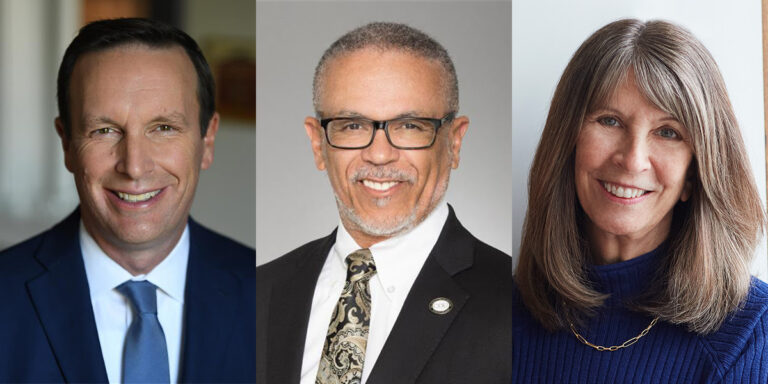
Luke Bronin, who was one of the three candidates in attendance running against Larson, served as an intelligence officer in Afghanistan. He said that while he wasn’t opposed to countering Iran’s influence in the Middle East, Trump’s methods were unnecessarily reckless. Bronin’s position reflected the delicate line that many Democratic leaders have walked in attempting to unite staunchly anti-war progressives and interventionist moderates against the conflict.
University President Michael Roth ’78, who marched with protesters down Main Street, said that he was staunchly opposed to what he viewed as a “war of choice.”
“It seems like it could become even more disastrous because of the lack of strategy and the anti-democratic approach to war-making,” Roth said.
While some attendees and speakers focused on the war, the conversation kept returning to the issue Democrats hope to leverage in 2026, one which both incumbents and insurgents can find common ground on: affordability.
Andrew Rice, who is a renter challenging DeLauro, said that the cost of living was his main priority.
“Part of running a campaign, like [New York City Mayor] Zohran Mamdani did, is focusing on the same message,” Rice said. “Part of the reason why there is fascism is because people cannot afford things.”
And despite the divisions underlying Saturday’s event, it was clear that many rally’s attendees were laser-focused on the upcoming midterm elections, where Democrats are favored to retake the U.S. House of Representatives and are eagerly eyeing a tight path to victory in the U.S. Senate.
“We will win elections,” Elliott said. “We will fix structures, so that if you’re working 40 hours, you can put food on the table; you can get out of school without debt; you can afford housing without having to sacrifice.”
The crowd’s favorite sign said it all: “Voting cures electile dysfunction.” Attendees erupted in raucous cheers when the woman holding it was recognized by McKeon for the best sign at the rally.
The protester’s prize: lemon pound cake from Tony’s Flour Shop.
Miles Pinsof-Berlowitz can be reached at mpinsofberlo@wesleyan.edu.
Leave a Reply