
Admissions addresses diversity recruitment
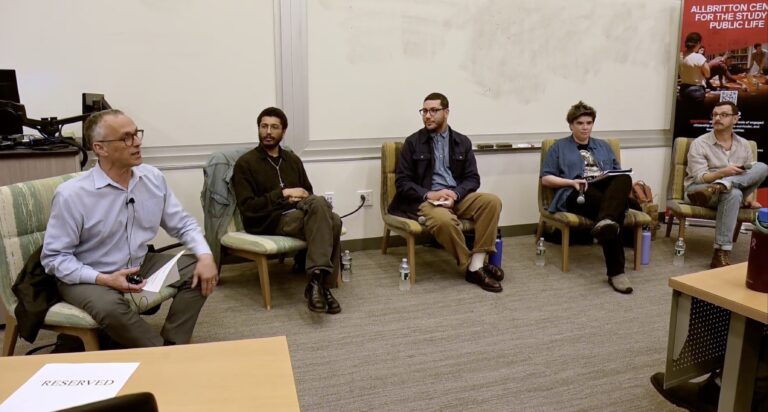
Last Thursday evening, a small crowd of students and administrators gathered in the lounge of 200 Church St. for the second annual Students of Color Recruitment Forum. Its goal was to discuss ways to impact the recruitment efforts for students of color in future classes.
This year, the number of students of color applications for the class of 2009 shot up to 2,175, an increase of three percent from last year’s numbers.
“[These are] some of the highest numbers Wesleyan has ever seen,” said Senior Associate Dean of Admissions Greg Pyke. “But, that doesn’t mean they couldn’t still get better. If recruitment efforts stop or slow down, the numbers could go down again.”
The Students of Color Recruitment Forum was created in response to student complaints about the lack of information shared about recruitment efforts and the feeling that the Admissions Office wasn’t doing enough to inform the community about their efforts.
“Students deserve to know what we are doing in regard to recruitment efforts, and we need students’ help during the year. One of the best ways to increase that help is to develop a good relationship between the students and the administration,” Pyke said.
According to admission records, the class of 2008 saw a dramatic decline in the number of applications from students of color, from 2,066 to 1,991. This statistic spurred action from the admissions committee, who set up a variety of different programs to help offset the decrease.
The Ambassador Program was developed to encourage certain students to spread information about Wesleyan during the vacations.
“We put Wes students in charge of recruiting when they go home for the holidays, and sometimes pay them to advertise if they are from an under-represented region,” said Director of the Ambassador Program Jason England.
Similarly, the Pre-Frosh Program recruits current students of color to advertise for the University by having them host potential enrollees in their dorms.
“We always need help in hosting,” said Cliff Thornton, director of the program. “It is by far the best recruitment, because it gives applicants an actual taste of life on campus.”
Another critical program that has helped boost the number of students of color applications is the Fly-In Program, which was created two years ago. This program pays for sixty interested students’ airfares so they are able to visit the University in Oct. and Nov.
Though expensive, the Fly-In Program often convinces those who are already admitted to matriculate.
Pyke tried to dispel the myth that most students of color are from New York City or expensive private schools. He first had the students in the room introduce themselves and say where they were from. He then said that of the 242 students of color in the class of 2009, only 54 were from New York City, and 27 other states and countries were represented. Pike said that 49 percent of students of color were from public schools, compared to 55 percent overall.
The forum lasted for nearly an hour and covered topics ranging from the admissions process to the breakdown of statistics of admitted students of color. Due to time constraints, the meeting prematurely ended student discussion. During the following discussion, students and faculty raised various concerns that continue to surround student-of-color admissions, including concern over the terminology used to identify different ethnicities.
“There wasn’t as much student discussion as I had hoped for,” Pyke said. “Frankly, there just wasn’t enough time. And while some of the faculty members made valid points, I feel like it took the discussion in a different direction than we intended.”
Some students agreed that they would have liked to debate the subject for a longer amount of time.
“[The admissions representatives] were well-intentioned, but I wish they would have spent less time talking and more time listening to students’ input and comments,” said Zach Strassburger ’06.
“I felt like admissions got shot down,” said Tameir Holder ’08. “But I guess it’s good that they are questioned on all levels, and that they are constantly checking themselves on what they are doing.”
Pyke assured that efforts to increase the number of student of color applications will continue.
“Students of Color applications need to rise because we need to look at the largest possible field of students in order to pick those that are best for Wesleyan,” Pyke said.

Leave a Reply