
From Wesleyan to SCOTUSblog: Zachary Shemtob ’06 on Working in Law and Covering the Supreme Court
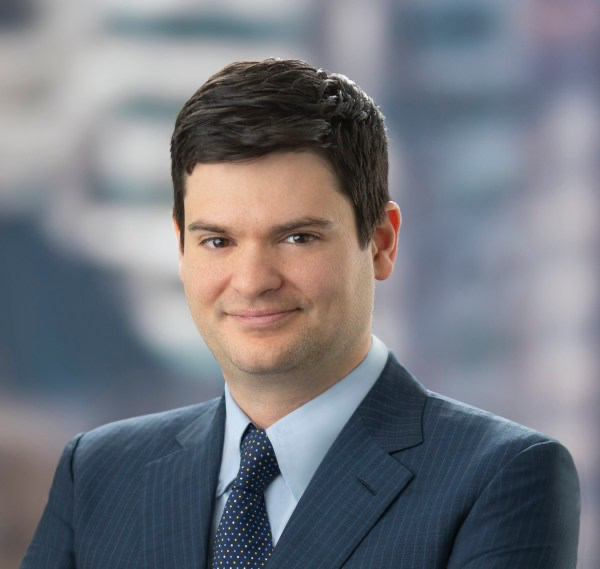
In the coming months, the Supreme Court will decide many of the biggest legal questions facing the nation, from the president’s unilateral use of tariffs to the terminations of members of independent agencies. SCOTUSblog, a publication widely regarded as the premier source for Supreme Court coverage, has navigated several tumultuous terms with scrupulous reporting and high-quality analysis. This week, The Argus spoke with SCOTUSblog Executive Editor Zachary Shemtob ’06 to discuss his time at Wesleyan and his thoughts on the Supreme Court.
A former criminology professor at Central Connecticut State University, he earned his law degree from Georgetown University Law Center, clerked for two respected federal judges, and practiced as an attorney at Lankler Siffert & Wohl before joining SCOTUSblog in May.
Shemtob majored in the College of Social Studies, a program he credits with shaping his worldview. “I had really influential professors who piqued my interest in everything from economics to history to philosophy,” he said, referencing Ezra and Cecile Zilkha Professor in the College of Social Studies Donald Moon and Professor of Government Giulio Gallarotti. “It really laid the foundation for what would later become my career in law and then in legal journalism.”
As a student at Wesleyan, Shemtob initially believed he would enter the world of academia. He earned his master’s from John Jay College of Criminal Justice and an M.Phil. and Ph.D. from The Graduate Center, City University of New York. Later, Shemtob discovered his calling was practicing law, and he applied to Georgetown University Law Center. He went on to serve as the editor-in-chief of the school’s law review.
After a stint in big law, Shemtob clerked for two federal judges: Senior Judge of the United States Court of Appeals for the Second Circuit Robert D. Sack and Judge of the United States District Court for the Southern District of New York Ronnie Abrams. He described the contrast between the two courts.
“The circuit courts are much more intellectual, much slower, and you can kind of chew over the issues,” he said. “Then the district courts are where you’re getting hit with one case after another, and they cater to very different personality types. Even though I had more of an academic background, I loved the district court.”
Following a handful of years at a boutique law firm, Shemtob joined SCOTUSblog in May just as the court was deciding a flurry of cases, many of which involved emergency appeals on the Court’s interim or “shadow docket“.
“In the old days of SCOTUSblog, summers were a little calm,” he said. “Now, in the days of the shadow docket and executive actions constantly coming before the courts brought by the Trump administration and, before that, the Biden administration, there are constantly things going on. The Court is constantly deciding cases, and so it’s really made things a lot more intense, but also a lot more interesting.”
Shemtob noted that while the Supreme Court interprets laws, it cannot be fully separated from politics. “The Supreme Court has always been political from day one,” Shemtob said. He cited examples ranging from Dred Scott to the Warren Court to Bush v. Gore. However, he noted, “there have been justices throughout the court’s history who have been less partisan or political. John Marshall Harlan II; Robert Jackson, to a certain extent; Anthony Kennedy is kind of complicated because he was all over the place, but he certainly was willing to be more independent than partisan at times. You also see that occasionally now with [Neil] Gorsuch—love him or hate him.”
Shemtob expressed skepticism of the court’s text, history, and tradition approach, which is closely tied to originalism, when interpreting the Constitution.
“My biggest issue is that it turns justices into historians,” he argued. “And I don’t think lawyers are particularly good historians. I think lawyers are very good at interpreting texts [and] dealing with language and grammar, but when it comes to the historical record and interpreting that record and putting together the best historical analysis, I am deeply skeptical that lawyers are qualified or well-positioned to do that.” Despite this, Shemtob noted that he does not think the Democrat-appointed members of the Supreme Court have articulated a compelling alternative.
We also spoke about the Supreme Court’s decision this summer in Trump v. CASA, which limited the ability of lower courts to issue universal injunctions. “I think it’s too soon to say what the ultimate effects of CASA will be, but in terms of putting the kibosh on conceptually nationwide interactions, I don’t think that’s going to be the case. You also have this bigger issue of class certifications. And if you can just essentially certify a class of people who are non-parties and entities involved in the class action itself, that can accomplish the same goals as the universal injunction.”
For Wesleyan students interested in pursuing a career in law, Shemtob suggested hearing and confronting differing viewpoints. “I think that even if one strongly disagrees with a position, and they should, they should understand it as well as possible and argue successfully against it. I think there’s a lot of kind of like reactionary views to this, where folks just say, okay, I don’t want to hear this. I don’t need to hear this. I already know it’s wrong, it’s problematic. That ultimately may feel like it makes sense in the short term, but in the long term, it’s not going to lead to any work.”
Blake Fox can be reached at bfox@wesleyan.edu.



Leave a Reply