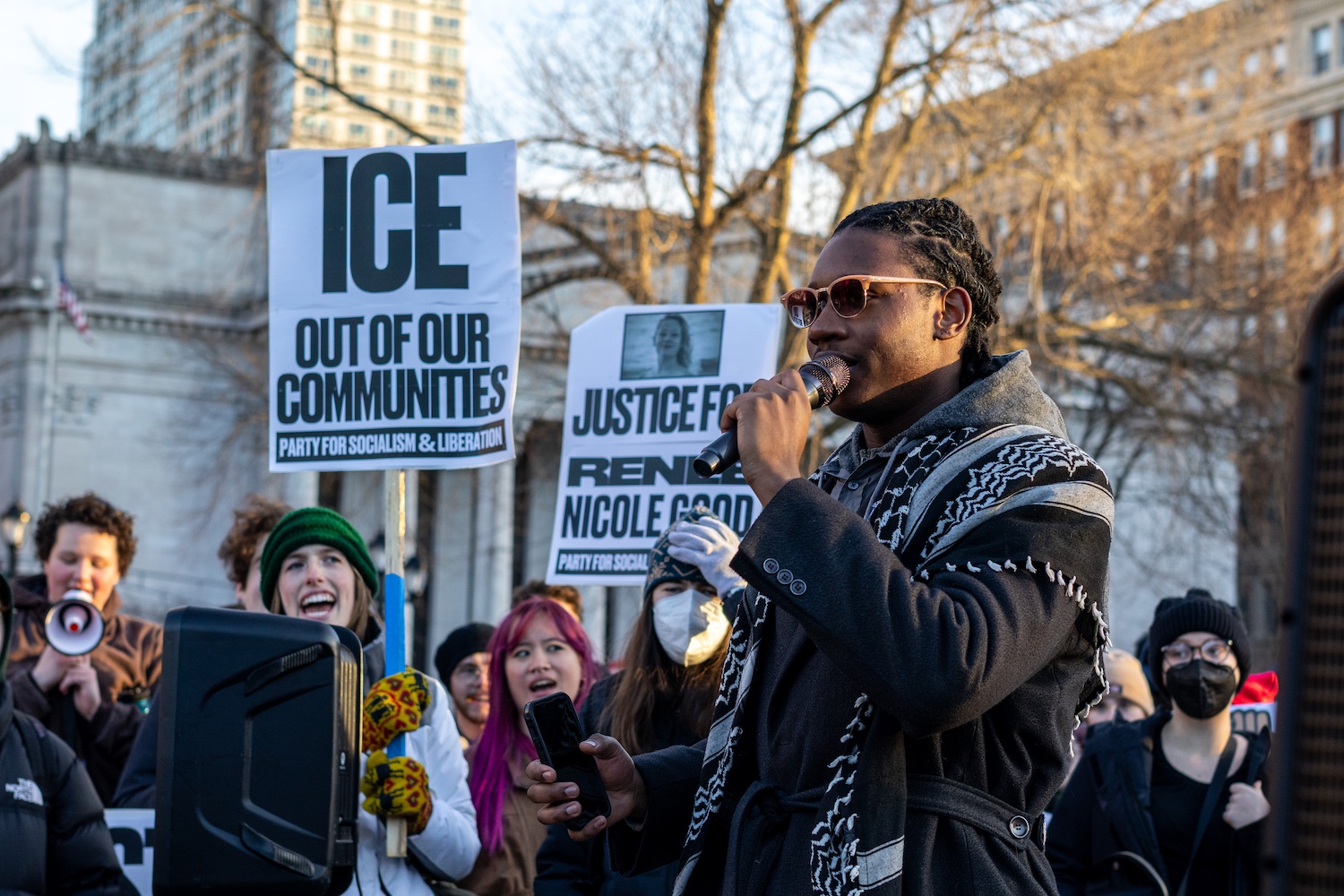
Some Wesleyan students stand behind Phil Campbell from Artist Against Apartheid as he chants into a mic; c/o Finn Feldman
How terrible are the actions of ICE agents in Minnesota! I plan to send my heartfelt condolences, or maybe sympathy cards, to reconcile the dystopic scene proliferating across the country. Even better, I could attend an anti-ICE protest on the New Haven Green and—amidst the whopping turnout of four members per organization—implore the city council to write a toothless resolution.
At Wesleyan, protests and rallies are just as prevalent as they were 40 years ago, partly thanks to a president who champions free speech. Only a year ago, protestors erected encampments in solidarity with the emancipation of Palestine. The coalition of groups demanded divestment from certain companies with financial ties to Israel, which mirrored similar demands from students at peer schools. The University administration respected their “right” to pitch tents, cosseting the advocates while fostering the fabulous environment Wesleyan is all about.
Like many on-campus demonstrations, the Wesleyan activist’s greatest moment of rebellion fell short, not only of the movement’s goals but of genuine rebelliousness (the Board of Trustees rejected their demands for divestment four months after negotiations settled for decampment). In the heyday of geopolitical crises, we are surrounded by circumstances that require unprecedented action, yet campus zeal ebbs and flows per usual.
Increasingly, student leadership’s clean-cut efforts struggle to be more than political gestures, and advocacy is seemingly unable to escape the narrow boundaries of civic engagement outlined by our administration. It is easy to fall into this trap, a trap exacerbated by the disposition of college students: On a national stage, we are quickly characterized as griping academic elites, and in the eyes of university administrators, we are seen as blossoming young adults, never quite mature enough to have a say in the future of our institution.
It may seem wrong that I take issue with lackluster calls for justice and futile attempts at organization, since Wesleyan should, of course, be a safe haven of education and growth. We are, after all, adorable little children taking our very first steps in the world of political participation. But what a pathetic excuse, considering our demographic is one of the largest catalysts of social upheaval. We make the perfect provocateurs—freshly eligible to vote, neurologically underdeveloped, and ardent pursuers of the truth.
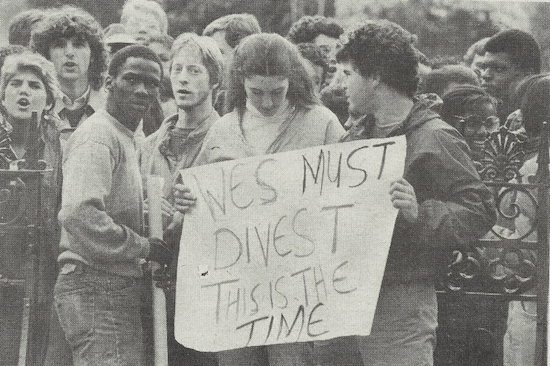
Student protestors outside Russell House on April 13, 1985. Originally published in The Argus on April 13, 1985. c/o Shane Sureck ’83
In 1985, Wesleyan recorded near record protest numbers in a clashing confrontation with the Board over the endowment’s financial ties to South Africa. More than 400 Wesleyan students stood proudly, entreating divestment from an apartheid-ridden nation. Ultimately, the University was pressured to enact more stringent requirements for companies in which it held shares that conducted business in the country. Additionally, the board provided supplemental funding for research on corporate conduct. Notably, then-University student Isaac Shongwe ’87 joined the protest knowing full well that the resulting press attention would bar his return to South Africa—a home he hadn’t seen in five years. I was taken aback by the act of courage. It seems so foreign that a student with so little to gain and so much to lose could soberly risk it all for his beliefs.
Forty years later and activism is not all but lost; another prod at radical protest took place in 2024. In another case of financial demands and campus solidarity, students staged a pro-Palestinian sit-in in the office of President Michael Roth ’78. The demonstration, while ultimately unsuccessful, did not come without repercussions. When push came to shove, police were called, outraging activists. Subsequently, a campaign to dismiss any punishment of the ten participating students ensued. The byproduct of “good trouble,” as John Lewis put it, was just on the horizon, until the students retracted. What a privilege it is to so quickly see the consequences of your actions unfold and, thanks to social media, suffer them so publicly. A fast-track to political change is on the table, but the buy-in is too expensive for most. Martyrdom is not necessary for successful political efforts, but personal sacrifice certainly is.
In a world of digital receipts and scrupulous documentation, mistakes are unforgiving—as they should be. This generation of activists is prone to preaching empty rhetoric because they live in an era written in ink. Unfortunately, many misconstrue this challenge as defeat.
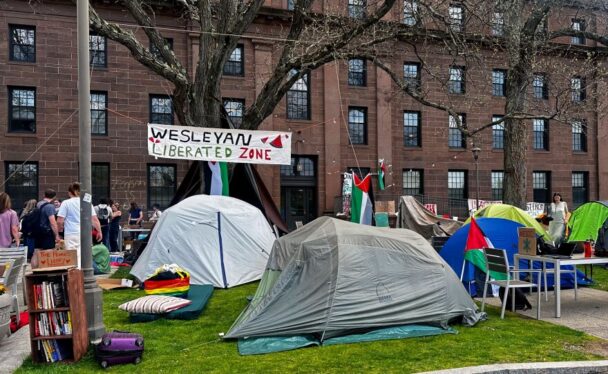
Students camp outside North College in April of 2024; c/o Ayannah Brown, Connecticut Public
Modernization is not the only dynamic that’s raising stakes. As the boundaries of acceptable protest expand, so too does the effort required to produce real change. Activists have little reason to cheer when the university they scrutinize so warmly approves of their protest, lest dissent becomes just another sanctioned learning experience. This reality sounds oddly familiar. In reference to the 2024 anti-Israel encampment, Roth said he was “proud” of the protesters, and where would the movement be without the professor-led educational experiences in the Wesleyan Liberated Zone?
Political change requires disruption, and disruption is fatefully self-jeopardizing. I see the trend beyond Wesleyan: Grassroots activism is becoming a cheap way to polish up a resume, or worse, a performance of hollow actions to comfort our guilt. A guilt—so readily displayed—that paradoxically absolves us simply by existing, turning self-reproach into a twisted form of self-aggrandizement.
Real action entails real risk, and students seem less willing than ever to swing for the fences. Perhaps radical idealists are eternally condemned to face masks, while the indifferent moderates bathe in participation trophies. Or is there honor in showing face in and of itself in an era of political cowardice and rising stakes? Time will tell, but it is clear that this is not your grandfather’s age of activism.
Beck Holtzman is a member of the class of 2029 and can be reached at bholtzman@wesleyan.edu.
You’ve seen “The Godfather” (1972). You’ve seen “Chinatown” (1974). But the ’70s were an extraordinarily fruitful decade for American cinema with tons of deeper cuts that are well worth exploring. Without further ado, here are some super underrated ’70s films that may have flown under your radar.
5. “The China Syndrome” (1979)
This is one of the most intense movies I’ve seen recently. Jack Lemmon knocks it out of the park as usual, but at its core, “The China Syndrome” (1979) is Jane Fonda’s movie. With the foreboding threat of nuclear apocalypse, the movie’s screenwriters craft a tantalizing narrative of Fonda’s journalist character, Kimberly Wells, and her journey to news stardom. She strives to prove to her misogynistic and oppressive crew that she’s intelligent, driven, and passionate enough to cover the latest mishaps at the local Ventana nuclear power plant.
The one flaw of the film, however, is Michael Douglas’ sloppily-written character, Richard Adams, who acts as Wells’ cameraman. His character takes up a lot of screen time, but his motivations aren’t explored as deeply as those of Wells or Lemmon’s character, the power plant operator the pair investigates. It’s a shame that his acting talents weren’t fully realized here, as a more fully-explored characterization could elevate this film to masterpiece status. That being said, “The China Syndrome” has gotta be up there with “All the President’s Men” (1976) as one of my favorite paranoid, post-Watergate thrillers of the ’70s. Definitely check this one out if you’re a fan of Fonda, new Hollywood thrillers, or if you have a profuse desire to increase your risk of cardiac arrest; yeah, this one gets nuts towards the end. Don’t say I didn’t warn you.
4. “The Yakuza” (1974)
Here’s a Sydney Pollack film wedged in between two of his most popular works, “Jeremiah Johnson” (1972) and “Three Days of the Condor” (1975). Pollack noted that all of his films are imbued with a certain melancholy, and “The Yakuza” (1974) is no exception. The story is somehow an epic and incendiary tale of vengeance and yet also a poignant story of a former American Marine stationed in Japan during the 1940s, rekindling his lost loves and past regrets as he journeys back to the country 30 years later.
3. “Night Moves” (1975)
When Arthur Penn’s “Night Moves” premiered in 1975, it was a massive flop, probably due to the fact that it came out around the same time as the blockbuster “Jaws” (1975), whose escapist narrative probably fared a lot better with doleful 1970s moviegoers post-Watergate than Penn’s downbeat, paranoid thriller. “Night Moves” follows former football player-turned-detective Harry Caul (played by a huffy, mustachioed Gene Hackman) as he tries to find a missing girl, Delly (played by Melanie Griffith in her first credited film appearance). Through his investigation, he ends up lost in a web of corruption, deceit, and unimaginable evil, uncovering more about himself than about the case he was assigned to.
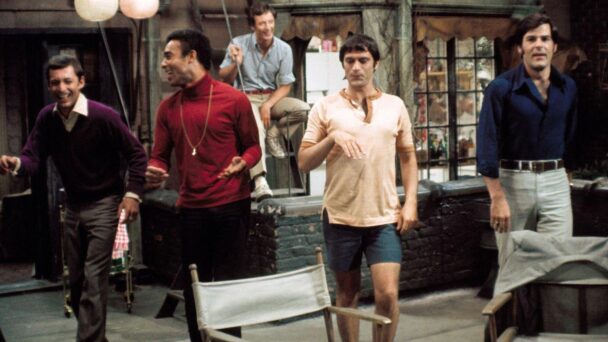
c/o The Boy in the Band
2. “The Boys in the Band” (1970)
William Friedkin is generally considered one of the great auteurs of 1970s cinema, so it’s surprising that his 1970 film, “The Boys in the Band” (1970), based on the 1968 play of the same name by Mart Crowley is not as well regarded and known as some of his other films of that decade. Not only does the film tackle the then-controversial issue of homosexuality with maturity and deftness, but it also carries some of the best camerawork and cinematography for a film based on a play that I have personally seen.
1. “Klute” (1971)
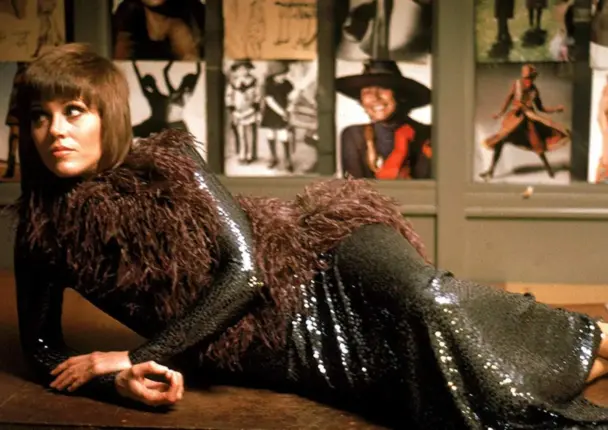
Alan J. Pakula is probably best known for his paranoid trilogy, which includes “Klute” (1971), “The Parallax View” (1974), and “All the President’s Men” (1976). I’ve seen all of these films, and “Klute” is my favorite of the three by a large margin. What makes “Klute” so interesting and entertaining is its two intertwined narratives. One follows John Klute (Donald Sutherland) trying to uncover the mysteries underlying the death of his friend in the grimy slums of early ’70s New York City—an evocative setting for the film and a huge culture shock for Sutherland’s country bumpkin everyman character. Through this investigation, Sutherland comes in contact with Bree Daniels (played by Jane Fonda in her first Oscar-winning performance), a call girl with connections to the alleged killer of Sutherland’s friend. The second narrative follows Bree’s personal life, including her struggles with autonomy and self-worth in this misogynistic, sleazy, exploitative world, as well as her emerging relationship with the Sutherland character, which represents her first foray into a romance in which she is viewed with more than an unadorned lacuna of lust.
It’s almost Valentine’s Day, which means the NBA trade deadline has come and gone. Some of the league’s biggest names were dealt this year, reshaping the league and giving us some interesting headlines as All-Star Weekend approaches and the playoffs get closer and closer.
At The Argus, Sports Editor Max Forstein and Contributing Writer Matthew Mish are here to break down some of the biggest trades and what it may indicate for the rest of the season and beyond.
James Harden to the Cavaliers
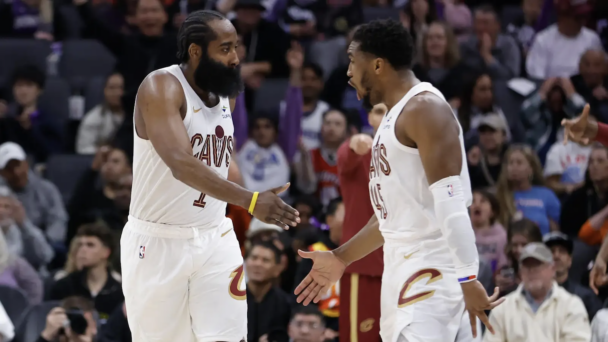
The most significant trade was the Los Angeles Clippers trading future Hall-of-Famer James Harden to the Cleveland Cavaliers for two-time All-Star Darius Garland and a 2026 second-round draft pick.
Harden, a generational shooter and 11-time All-Star, was on pace for one of his best seasons in Los Angeles, averaging 25.4 points and 8.1 assists, but the Clippers chose to move towards youth and potential rather than maintaining the same roster formation.
The Cavaliers are one of the more interesting teams in the league. Currently fourth in the Eastern Conference, they saw a perfect opportunity to seize a bona fide star that can bring synergistic playmaking to an impressive roster. In theory, adding a presence like Harden alongside Donovan Mitchell gives Cleveland a strong player who can take some of the offensive burden off their stars.
However, there is a risk here: If Harden doesn’t fit alongside Mitchell or his age begins to creep up on him when matchups tighten, the Cavaliers could end up right back where they started.
For Los Angeles, the trade is a clear long-term move. Garland brings youth and potential, with the draft picks adding a layer of flexibility as the Clippers reshape around Kawhi Leonard. On paper, the short-term edge goes to Cleveland’s title pursuit. As with all of the major deals from this year’s deadline, only time will tell who truly won this trade.
Jaren Jackson Jr. to the Jazz
In what was the largest player deal of the deadline, the Memphis Grizzlies continued to dismantle their playoff core by trading franchise cornerstone Jaren Jackson Jr. to the Utah Jazz for Walter Clayton Jr., Taylor Hendricks, Georges Niang, and three future first-round picks. Along with Jackson, the Jazz also received John Konchar, Vince Williams Jr., and Jock Landale, though Landale was moved to the Atlanta Hawks before even landing in Utah.
For the Jazz, this is finally a sign that they are willing to cash their chips in and compete. With a core of Lauri Markkanen, Keyonte George, and Walker Kessler, they have young pieces they’ve harvested over time to build around to go on a run, but they’ve highlighted the bottom of the Western Conference for multiple years now. With the addition of the former Defensive Player of the Year, the Jazz finally have the anchor that bolsters their lineup and solidifies them as a threat for years to come.
Will it happen this year?
No. The Jazz sit at 16–37, far behind the playoff picture. But for next year, rolling out a starting five of George, Ace Bailey, Markkanen, Jackson, and likely Kessler, gives them a formidable chance to make the playoffs in a conference that seems to reward homegrown teams with regular-season success.
For the Grizzlies, this unfortunately marks the end of the “Next Gen” era. Jackson, their fourth overall pick in the 2018 draft, was the base of Memphis’ core, pairing him with defensive wing Dillon Brooks and eventually Ja Morant and Desmond Bane. They earned the no. 2 seed in 2021–22 and made it to the Western Conference Semifinals before falling to the eventual champion Golden State Warriors. Since 2022, the Grizz haven’t been able to replicate that success, and dishing off Brooks and Bane in recent offseasons certainly indicated change. With all the trade buzz around Morant and his antics, it’s a bit of a surprise to see them move on from Jackson, but the picks they receive from the deal will hopefully yield valuable return as they begin their new era.
Anthony Davis to the Wizards
Yet another blockbuster on deadline day saw the Dallas Mavericks trade Anthony Davis to the Washington Wizards in a massive trade that involved eight players and several different picks. Davis, a 10-time All-Star and one of the greatest two-way big men in the NBA, will head to D.C., along with Jaden Hardy, D’Angelo Russell, and Danté Exum, while the Mavericks will receive Khris Middleton, AJ Johnson, Malaki Branham, Marvin Bagley III, two first-round draft picks, and three second rounders.
The Wizards have been particularly aggressive this season, as they also take on Trae Young, another multi-time All-Star who stalled out in his previous location. This deal brings major change in terms of trying to compete right now in the Eastern Conference. The duo of Davis and Young gives the Wizards a super-talented one-two punch. The hump, of course, is that they need to actually stay healthy, and likely for Davis to recover for the rest of the 2025–26 season.
Every potentially good move comes with its risks. Davis has struggled with injuries throughout the season (i.e., groin, hand, calf, adductor, etc.), knocking him out of a majority of his games in Dallas, so there’s no guarantee he’ll even play long enough to make this pay off. If he misses extended time again, or if the synergy next to Young doesn’t click, Washington will experience a serious loss for future draft assets.
As for the Mavericks, this deal feels like a reset move. Dallas essentially moves on from the big-name experiment and uses Davis’ value to restock assets and get younger, with clear aspirations to build around players like Cooper Flagg going forward. Basically, the short-term play goes to Washington’s bold push, but as discussed, we could easily look back at this deadline and see just how wisely Dallas played their hand.
Ivica Zubac to the Pacers
In one of the most underrated deals of the deadline, the Los Angeles Clippers dealt their all-defensive center Ivica Zubac and Kobe Brown to the Indiana Pacers for Bennedict Mathurin, Isaiah Jackson, two first-round picks, and a second-round pick.
The Pacers are one of the most fascinating teams in the league, and this deal represents a major risk-reward for the defending Eastern Conference champs. Indiana sits dead last in the East at 13–40, but this is much more a retooling year considering Tyrese Haliburton is still recovering from his Achilles tear in Game Seven last year. They lost then 10-year center Myles Turner in free agency last season, so Zubac fills a need. In theory, this puts them in an ideal spot, giving Haliburton a top center when he returns from injury, and the 2026 first round pick they sent to Los Angeles is top-four protected, which the Pacers are currently in. However, one run late in the season, a couple of unlucky bounces during the lottery, or Zubac not playing up to the potential James Harden got him to in Los Angeles, and the Pacers are back at square one. I see this as a necessary gamble to capitalize on the core they have now with Haliburton coming back next season, but it could also backfire quickly.
For Los Angeles, this is a net positive considering their firesale this deadline. Paired with the Harden trade, all that is left of their core is Kawhi Leonard, who continues to play well for a now depleted Clippers roster. Jackson will be a serviceable rotation piece, and a change of scenery for Mathurin should allow him to develop his all-world slashing ability. On paper, the short-term favors the Pacers heading into next season, but we could look back on this in a couple years and see just how masterfully the Clippers played this deadline because of a Mathurin breakout.
As we move past the deadline and All-Star Weekend, the NBA certainty looks different, and only time will tell as far as who won these trades and what it means for the future of the league.
This piece is part of Letters on Pragmatic Hope, an essay series in which Wesleyan professors and administrators reflect on a daunting question: How can students act with purpose and efficacy amid an increasingly authoritarian environment? The series aims to gather responses from a diverse group of Wesleyan faculty, offering a vision for how students can turn despair into pragmatism and action.
I am always humbled when student leaders ask for my opinion. It allows me to reflect upon my experiences and give voice to a potentially new perspective for consideration. I have labored over the invitation to reflect on how one turns despair into pragmatism and action in an increasingly authoritarian environment. For as long as I can remember, I have avoided the notion of feeling despair in moments of crisis. Why? It is an emotion my elders frowned upon. I was encouraged not to let despair become a condition that I was comfortable adorning.
When I sought comfort and answers to the “whys” that overwhelmed my Southern childhood upbringing, which often left me feeling conflicted and hopeless, I looked to my maternal grandmother, a minister’s wife, first grade teacher, and an amazing human being. Her answer never wavered. I can hear her say, “Despair is the enemy of hope and unchecked it kills the possibilities of your future.” I am sure she read the quote somewhere and heard it all her life and shared it with me as well. I give you this context as a backdrop for better understanding my reflection on the question that is posed.
Embracing the responsibility and risk required to act and own the outcomes of our future is daunting. It is safe and easy to blame the circumstances of the life we were born into, systems that have oppressed and repressed us, leaders that have failed us, moral decline, apathy, and any number of other reasons one can choose. Inaction and blame let us off the hook. Despair requires no discipline, and allows space for our rage, bitterness, suffering, scapegoating, and emotional withdrawal. It recuses us from the responsibility of outcomes that define our future.
The challenge facing all of us is our ability to identify the risks and turn our despair into responsible pragmatic action. I know we all know this, but it is important to be reminded. We all assess and take on risk differently. Likewise, we each decide how—or whether—to act based on our own sense of vulnerability. Turning despair into pragmatism and action begins with extending grace to one another and creating judgement-free spaces where individuals can make thoughtful choices within our shared communities, without fear of punishment or condemnation. We each must define and find the action that makes sense to us and commit to it without shame.
In moments of political and social uncertainty, despair feels deeply personal, and simultaneously, is collective and consequential. How do we manage our despair, and embrace it not just as a feeling but also understand it as something that affects how knowledge and hope are formed—shaping what we believe is possible, what risks feel survivable, and how we choose to act? These are the challenging questions we find ourselves facing. Rather than demanding uniform responses to questions that have no one answer, pragmatism requires honoring both the emotional weight individuals carry and the inequitable risks they face, while holding space for action and imagination.
When I think of today’s students, Wesleyan students, I do not minimize the challenge ahead of you, nor do I doubt your fortitude. I take comfort knowing that you are the future leaders of the world. I encourage you as my grandmother did, not to let despair derail your purpose and framing of the future. Treat despair with cautionary care. Allow your despair to interpret how you reason, discern fact from lies, interpret evidence, and judge the likelihood of change. Be independent, empathetic, conscientious, and scholars. Trust your instincts and know the strength you bring in collective and independent voices. Be collaborators and team builders. You will need each other to successfully navigate the unknown. The present and future require both vocal and silent leaders. Find your space, own the possibilities, and lead from wherever you are with integrity and compassion for all of humanity.
Willette S. Burnham-Williams is the Vice President for the Office of Equity and Inclusion. She can be reached at wburnhamwill@wesleyan.edu.
As you stretch your limbs and blink the sleep from your eyes, greet the sun with a scroll through the r/mensrights subreddit. Undress a strange woman online. Ask artificial intelligence (AI) what to have for breakfast. It’s a good day to be an incel.
Originating in the perceived failure to find a romantic or sexual partner, the term “incel” has evolved past its most basic definition of being involuntary celibate. Now, it characterizes a predominantly online community of straight men, whose hostile sexism includes sexual objectification, violence, and dehumanization of women. The philosophy lies fundamentally in male victimhood and oppression: Its followers believe that women are naturally inclined towards evil, manipulating wealthy and attractive men into relationships, while depriving those who don’t fit this model of a Chad from sex.
Under this belief system, and as a result of overlapping with alt-right hate groups, the ideology has adopted an ultra-aggressive bitterness towards women’s rights and acquired other extremist values and techniques. There exists significant overlap between incel and white supremacist groups—the stormcels faction draws inspiration from the KKK-affiliated Stormfront website—and throughout the 2010s, mass violence increasingly came from the hands of those affiliated with the movement. In 2015, Christopher Harper Mercer, a frequent poster on incel forums, killed ten people.
Over the past few years, the relentless march of conservatism into both power and mainstream popularity has crafted the conditions for incel culture to thrive. As those in power drag society to the right, the Reddit surfers and Twitch streamers, previously ridiculed for how they’ve crafted personas around an inability to attract women, find new company in their increasingly accepted views.
As the online communities promoting toxic masculinity and misogyny known as the manosphere have expanded, American politics now more than ever reflects them. If states are forcing women to carry children to the detriment of their health and well-being, is it really such a far cry to say that they owe men sex, a prevailing view among incels? If the country grants its highest office to a man accused of serial sexual violence, does this not amount to support for his actions?
More and more, a growing conservative culture is validating the rancor of this group, encouraging them to step out from the shadows of their parents’ basements to bring their beliefs—ones full of hatred towards any kind of female autonomy—out into public. As Nick Fuentes said on the night of the 2024 presidential election, “Your body, my choice. Forever.”
But beyond the far right, increased technology, especially generative artificial intelligence, is aiding the incel community. With the ever-increasing power of programs like ChatGPT, people can now simulate friends, girlfriends, or therapists willing to bow to any whim or desire. Individuals who built their belief systems around loneliness can now experience the companionship they crave from the comfort of a gaming chair.
The most disturbing example of this came earlier this year on X, Elon Musk’s rebranded form of Twitter. After the app introduced AI image generation via Grok’s AI tool, users began asking the chatbot to edit existing images of real people into adult content. Requests abounded for full nudity, explicit positions, and sexual situations of unknowing and unconsenting women and children. After about a week of unadulterated mayhem, Grok began to limit requests for AI images to premium users, essentially affording clemency to those willing to shell out $8 a month to Elon Musk. After two weeks, X took a step further, blocking the generation of such content in locations where it would be illegal. Notably, the restriction is not universal and does not seem to apply to the standalone Grok site.
It isn’t a surprise that advancing technology is aiding the incel movement; after all, it’s a community that was formed through computer screens, one whose existence depends on the power of the internet to create spaces for those feeling isolated and misunderstood in their real lives. But as we have recently seen, the abilities of AI have created unprecedented privileges for the self-described “black-pilled” members of society, a reference to the film “The Matrix” where a pill reveals the world as it truly is.
With the acceptance of far-right views into the cultural zeitgeist, the recent increased accessibility to deepfake porn, and the substitution of AI for interpersonal relationships and connections, it has never been better to be an incel. Combined, the threat of the growing power of conservatism and advanced internet technology is fueling the incel movement, attracting a younger audience that just keeps on multiplying. Manosphere creators target young boys and men struggling with isolation and seeking community. They seem to infect every space in the digital landscape, appearing across social media, gaming communities, and dating apps to teach men that masculinity comes from outward appearance, material wealth, and emotional and physical dominance over women. And with the algorithmic methods and echo chambers of social media, once you’re in, it’s hard to get out.
Alexandra Lee is a member of the class of 2029 and can be reached at ahlee@wesleyan.edu.
A group of 50 students and University faculty crowded into the Romance Languages department building on Tuesday, Feb. 3 to hear Juan Pablo Rivera, a Puerto Rico native and Professor of Language, Literature, and Culture at Clark University, speak about the current most listened to artist in the world: Bad Bunny.
“Ten years ago, a boy used to work as a shopping bagger in the town next to me,” Rivera said. “Now, he’s headlining the Super Bowl.”
Rivera has been teaching about Benito Antonio Martínez Ocasio, better known as Bad Bunny, in his advanced Spanish classes since online classes during the COVID-19 pandemic pushed him to introduce music videos into his curriculum. He guided attendees through the cultural history and impact of Bad Bunny’s music.
Rivera gave the audience a crash course of Bad Bunny’s career, pausing to provide context and to analyze lyrics and visual design. Introducing El Apagón, a song from Bad Bunny’s fifth studio album that critiques the impacts of colonialism and gentrification in Puerto Rico, Rivera told the audience that “this is the moment that we see that Benito is very openly, very publicly, becoming a political figure.”
Despite—or even because of—Bad Bunny’s Puerto Rican patriotism and politically outspoken behavior, Rivera expects streams of the Super Bowl LX to rise, given the international appeal of Bad Bunny’s music.
Rivera attributes Bad Bunny’s upcoming performance to the National Football League’s (NFL) efforts to expand the sport globally. Requirements state that all football teams must play at least one game abroad. Games have been played in London since 2007 as part of the NFL International Series, and more recently, games have taken place in Canada, Mexico, and Germany. In Latin America, where Bad Bunny’s music is popular but soccer reigns supreme, his performance could encourage viewers to tune into football. Rivera also noted that Bad Bunny has succeeded in finding international stardom while singing almost exclusively in Spanish, something other Latin American singers have failed to do.
Lani Glatter ’29 agreed with Rivera and pointed to the cultural significance that Bad Bunny’s performance could have.
“The Super Bowl is such an American, patriotic, white people kind of event,” she said. “I think it’s so cool that they asked him to do it, and that basically his whole set is probably going to be in Spanish.”
Bad Bunny is no stranger to being politically outspoken. While accepting the Grammy for Best Música Urbana Album on Feb. 1, he began his speech with a sharp declaration: “Before I say thanks to God, I’m gonna say: ICE out!” During his speech, which was primarily delivered in Spanish, he dedicated his success to “all the people who had to leave their homeland, their country to follow their dreams.”
Rivera spoke on Bad Bunny’s history of experimentation with gender and fashion through the lens of queer and feminist studies. He discussed Bad Bunny’s use of drag and feminine signifiers early in his career, and lauded the artist’s shift towards platforming queer performers.
The evolution of Bad Bunny’s self-expression, especially through clothing, has interested Rivera since he first noted a shift in his presentation to emphasize cultural heritage. In his talk, Rivera noted Bad Bunny’s fashion at the 2024 Met Gala, where he wore a flor de maga, the national flower of Puerto Rico. Bad Bunny has since donned other traditional signifiers, including the guayabera and pava straw hat. Patriotic signaling was also heavily present in Bad Bunny’s most recent album, DeBÍ TiRAR MáS FOToS.
“Symbols of masculinity, symbols of identity, symbols of El Campo, the countryside, express a kind of nostalgia for our ancestors, for our grandparents, for the people who are no longer with us,” Rivera said, pointing to the album cover, which depicts a pair of empty chairs and a bunch of bananas, which are omnipresent on the island. “But it’s also nostalgia for our migrants, for the Puerto Rican diaspora population.”
In an interview with the Argus, Rivera highlighted why Bad Bunny’s music has resonated with him academically and personally.
“I really enjoy how he’s really focused on the struggles that Puerto Ricans endure and other Latinos endure, but also without adopting this victim mentality, right?” Rivera said. “He also highlights that we are a strong people—resilient, creative. He has given me and other people I know a sense of pride in being Puerto Rican.”
Aarushi Bahadur can be reached at abahadur@wesleyan.edu.
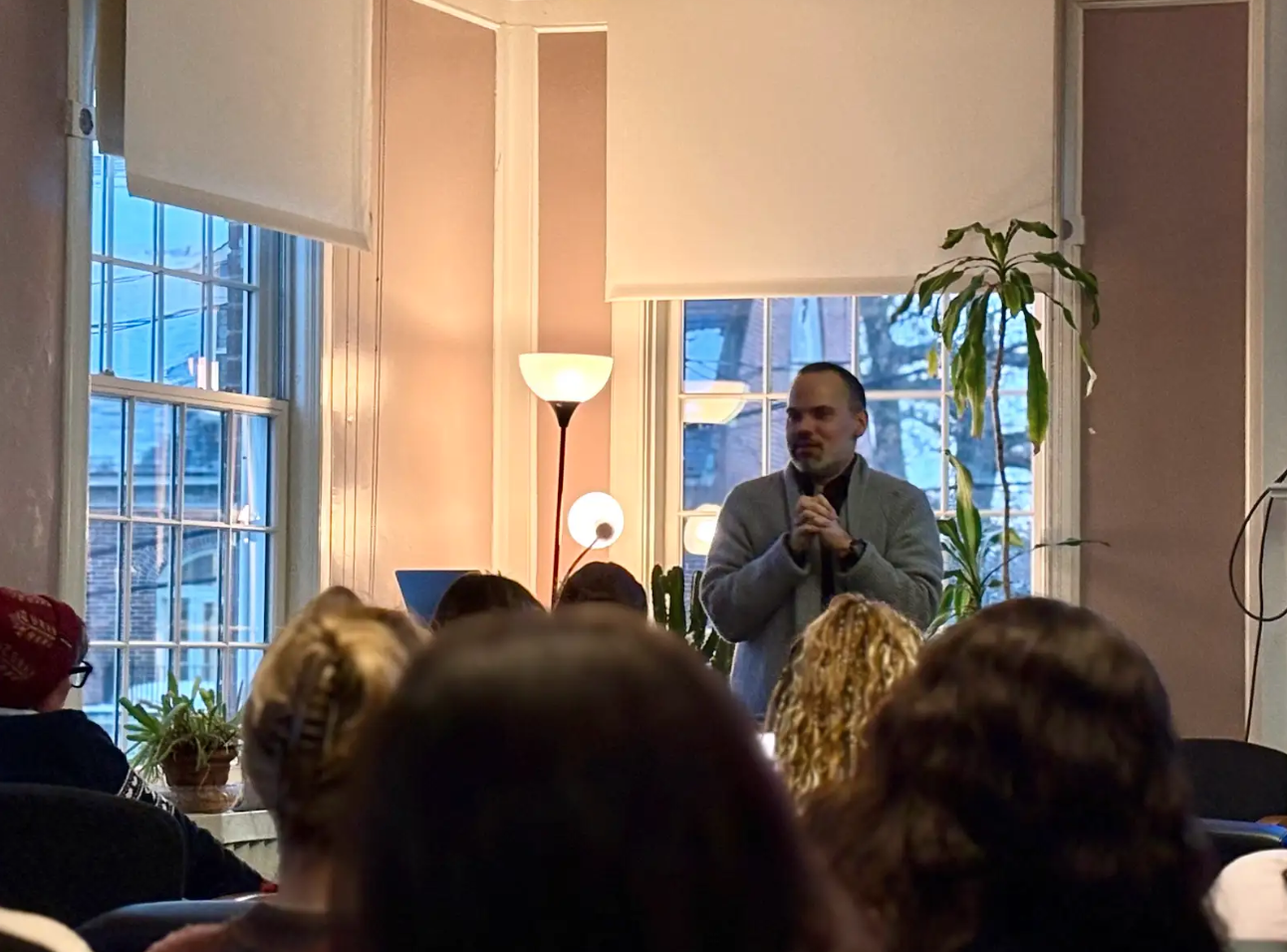
The most anticipated task on the Wesleyan Student Assembly’s (WSA) agenda at its held first General Assembly of the Spring semester this Sunday, Feb. 1, was the internal elections conducted among WSA senators, who vote for their peer senators.
This comes after the winter election in December when the general student body voted first-time senators Ayomide Alao ’29, Angelise Benimadho ’29, Zev Brown ’28, Lucia Mezey ’28, Gad Nkurunziza ’27 to the assembly. Re-elected senators to the WSA are Ashlynn Adams ’29, Melvin Carcamo ’28, Janessa Curden ’26, Casey Dunning-Sorey ’28, Saul Ferholt-Kahn ’27, Raiza Goel ’28, Montana Gura ’27, Andrea Herrera ’27, and Nicolás Millán Prieto ’27.
As per tradition, the meeting began with the University fight song. The senators of each committee introduced themselves and the chairs of the committees summarized their work from the Fall semester. Also per tradition, they discussed their plan for the upcoming semester.
“This election, much like most of our internal elections, is part of our procedures,” WSA President Paul Quach ’26 wrote in an email to The Argus. “Through this process, we elect who will serve on each committee, along with the chair/vice chair, as applicable.”
WSA Senator UsZee McKoy ’29 emphasized the importance of the internal election.
“It will set the stage for what type of new ideas, projects, and initiatives will take place, and by electing those who are ambitious and come with good inspirations and good ideas and goals and leadership, we can help advance the community and WSA,” McKoy said.
The election results now alter the committee makeup for the Spring ’26 as reflected below. Only those newly elected in December now start their terms on committees; Senators who have retained their terms since the Spring ’25 elections will continue their committee assignments.
The Academic Affairs Committee (AAC) now consists of Chair Andrea Herrera, Vice Chair William Cabral ’28, Santiago Galvan ’26, Nicolás Millán Prieto, Gad Nkurunziza, and Raiza Goel.
The Community Committee (CoCo) is led by Chair Saul Ferholt-Kahn, Vice Chair Elana Hartley ’28, David Tu ’26, Coco Rawley ’29, UsZee McKoy, and Ayomide Alao.
The Equity and Inclusion Committee (EIC) is now composed Chair Katie Williams ’28, Vice Chair Saakshi Challa ’27, Makayla Kidd ’29, Ashlynn Adams, and Angelise Benimadho.
The Student Budget Committee (SBC) is led by Chair Zain Punjwani ’26, Vice Chair Asper Cisse ’28, Amal Mallick ’27, Eric He ’28, Lucas Holman ’29, Mina Aldous ’29, and Melvin Carcamo.
The Student Life Committee (SLC) will be headed by Chair August Gardyne ’26, Vice Chair Casey Dunning-Sorey, Bela Bhushan ’29, Lucia Martinez-Pelaez ’29, Zerek Laghari ’29, Janessa Curden, Zev Brown, Lucy Mezey ’28, and Montana Gura.
Although the entire internal election procedure is closed for outsiders, Quach wrote that the “WSA always works towards having positive, fair, and open discussions.”
Additionally, Quach highlighted the atmosphere within the WSA community.
“The success of one committee is celebrated by the other committees, hence why we always share our committee reports to keep each other informed and answer any questions,” Quach wrote. “I’m excited for the momentum to carry through with our new chairs!”
Quach shared some of the committees’ upcoming tasks for the semester.
“AAC [is] engaged in conversations about AI and proposing the creation of a study abroad subcommittee of the WSA; CoCo has continued to improve the UOC space and gave life to the WSA Instagram; EIC is putting on TWO town halls this semester,” Quach wrote.
McKoy expressed his particular enthusiasm for CoCo’s work in the upcoming semester.
“We recently just elected Saul Ferholt-Khan to be our chairman, and I couldn’t be more thrilled to see him be our committee chair, as well as for Elana Hartley to be our vice chair,” McKoy said. “I think they are the dream team, and hopefully this committee can deliver the best results for [the University].”
Quach is looking forward to working with the WSA’s newly elected senators and chairmen throughout the semester.
“I believe in my senators,” Quach wrote. “Across our committees, we have really awesome projects in the works, and with the excitement of the new semester and new senators joining the team (or coming back from abroad), we can’t wait to see what they are able to do.”
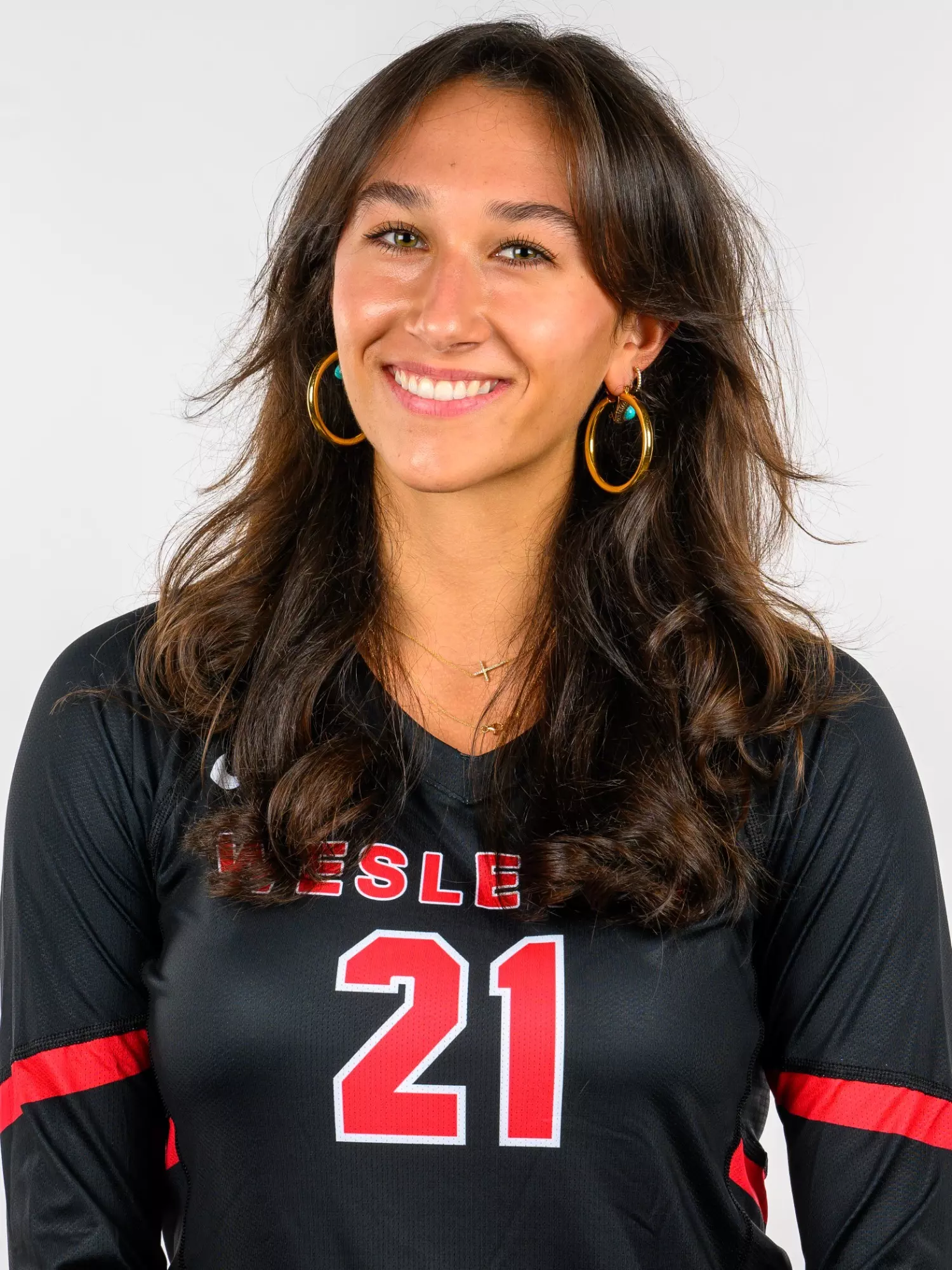
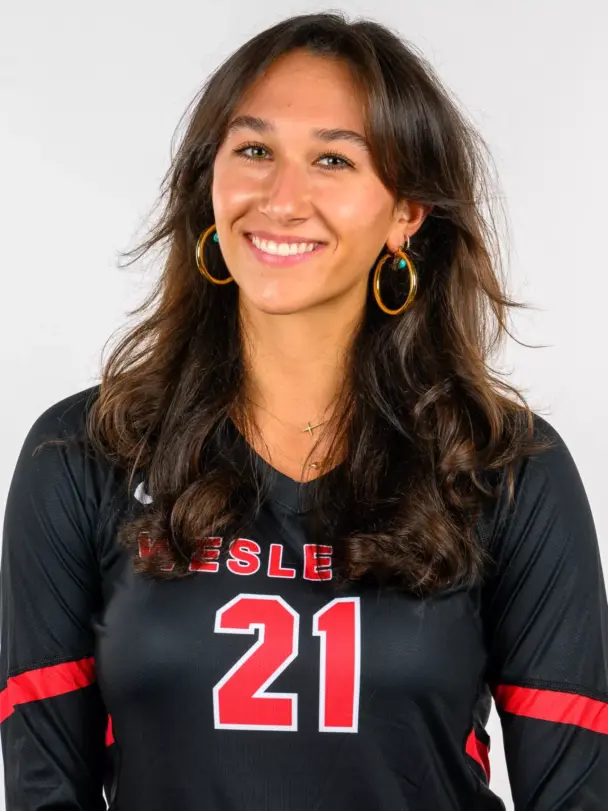
Bump, set, spike! This week, The Argus sat down with two-time All-American Athlete and women’s volleyball captain Sophia Lindus ’26. Beyond discussing a plethora of volleyball information, including what a “kill” is, Lindus chronicled her past Parisian adventure, future finance ambitions, and her present mental state: savoring the end of beginning.
The Argus: Why do you think you were nominated for WesCeleb?
Sophia Lindus: I feel volleyball has probably been the thing that a lot of people know me for on this campus, and I’m really grateful for the opportunity to have played with such amazing girls and [to have] experienced individual and group success. It’s really shaped the way I am today, and I feel I’ve matured so much over the past four years.
A: On that note, can you tell us about your relationship with volleyball?
SL: I’m from Los Angeles, Calif., so all the girls play either volleyball or basketball. I did volleyball with my elementary school, and I was like, wait, I really like this. I played intense club volleyball at Sunshine Volleyball Club since fourth or fifth grade, and then when I was in high school, I realized I wanted to continue and play in college. You get this competitive outlet by playing a sport. You get to work with your teammates and build that trauma bond, almost. Volleyball has taught me how to compromise with people, and how to put your self interest behind the team’s common goal. At the University specifically, it’s such a great balance of playing a sport because you’re also a student. When you’re not fully enveloped in the season, you can meet so many different people. I live with three film majors. I don’t live with any other athletes.
A: How did you meet your roommates?
SL: My first year, we got really close just by seeing each other in Usdan all the time and getting lunches. A lot of people think there’s this huge divide between athletes and non-athletes, and I think that some people like to perpetuate that divide a little bit more, just to make themselves feel a little cooler. I think that’s super silly, and I’ve always thought that there’s a lot that you can learn from people here. Everyone’s so passionate about their niche that it’s really nice to branch out and not just hang out with the same people you see every day.
A: Collegiate athletics are intense. What was your in-season day in the life?
SL: During the season, it would be Monday morning, 7 a.m., in the weight room with the rest of the team wearing all black, hitting our team lift. Then, I’d probably have one or two classes in the morning. I’m a government major and data analysis minor, so a lot of those classes are in the afternoon, unfortunately. On Mondays, we would have practice at 3:30 p.m….practice is an hour and a half to two hours, but it would end up being a four-hour ordeal. We get there an hour early, set up the nets, practice, and then shower, change, get post-practice treatment in the training room, and probably catch dinner by 6:30 p.m. or 7 p.m., which isn’t that bad. You really hit your homework that you didn’t do during the day at 8 or 9 p.m.
Game days are different. We’ll have games on Friday and Saturday, playing two teams each weekend. Sometimes we’ve done three. If it’s a home game, we’ll start warm-ups probably around 3 or 4 p.m. It’s really nice to get warmed up and in the mindset. On Fridays, since I didn’t have classes, I would get my coffee and New York Times crosswords and bang out some homework. Then we’ll have the game from 7 to 9 p.m. Saturdays are pretty much that same schedule, just expedited a little bit, because our games are at 3 p.m.
A: Now that you’re out of season, are you still training?
SL: I’m not going to be playing volleyball again…but the rest of the girls are doing 7 a.m. lifts on Tuesday and Thursday…something on Monday morning, practice at 6 a.m. on Wednesday mornings, and then lift at 5 a.m. on Fridays.
A: Why so early?
SL: Over the years we’ve realized that it’s so important to be disciplined. The off-season is when you’re building muscle, connecting as a team, both on and off the court. It’s time for the leaders to take charge and make their presence known, and for people to fit into new roles. The gym is a little bit emptier at seven in the morning, which is nice. But also, the act of getting up early and showing up for your other teammates is so important.
A: You’re an outside hitter—what is that like? Can you give readers a non-sports analogy?
SL: Covering the deep corners is a really interesting perspective of the court and a lot of ground to cover. Having an outside hitter in the back row was kind of a secret weapon because certain teams weren’t used to seeing that. A metaphor for an outside hitter is that we’re definitely the divas of the team. We’re the ones that get the most balls…our egos are huge, and we really like the spotlight.
A: Upon looking at your stats, I noticed you have a lot of “kills.” How would you explain a kill to someone who does not know?
SL: So a kill is something that I hit that scores a point automatically. I could hit the ball, and it just touches the ground—that’s our point, that’s a kill for me. That’s how we’re judged statistically as being a hitter. Not every hit is going to be a kill, or else you’d be a god. We’ll do scouting reports of really difficult teams a few days before the game and then work on these shots in practice. By game time, you don’t really think about it; you’re kind of in a flow state. Over the years, you just develop a little more confidence in shots, and you have your “toolbox” that you can utilize.
A: What are your go-to pre- and post-match meals?
SL: I think my pre-match meal from Usdan is a hamburger patty from the Grill Station with cabbage slaw that’s next to Vegan. I’ll also peruse what Classics or Vegan has and then get veggies and maybe some yogurt, cereal, or a piece of bread. Post-game, especially if it’s a really long match, the chicken penne from Mondo is the best thing ever with cheese pizza and caesar salad. Definitely carb loading, just get food in your system.
A: What has been your favorite part of being on the volleyball team?
SL: At the University, the people that I met through volleyball are my closest friends. It feels like your circle grows by six people each year because of the new classes that come in. We always joke that we’re Wesleyan Volleyball girls, like that means something to us. We just have this similar mindset: work hard, play hard. Shout-out to our coach for knowing what culture to build, but also shout-out to the girls for giving into it.
A: You got injured your sophomore year, and your first season back was this year. What was that adjustment like?
SL: My first year and sophomore seasons were really great seasons for me. Tearing my knee in the semifinals before our NESCAC championship game was really difficult. I helped us get to that point, and then to not be in the match on championship day was hard. But just because our starting outside hitter was gone didn’t mean that we were going to lose. We had so much depth on our team that anyone could have stepped into that role and crushed it, and they did.
In sophomore off season, I wasn’t really doing much with the team. I was doing my P.T., getting off crutches, and learning to run again. I think that showed me that I could face anything.
Then, not being able to play at all junior year was really, really difficult, because we had a big group of first years coming in, and it’s just nice to have one more upperclassman playing and showing them the ropes. Words only go so far. I couldn’t lead by my actions because I wasn’t playing, so I did everything that I could on the sidelines to keep a good spirit and focus on things that the team was doing poorly.
A: What’s something about volleyball you think most people either misunderstand or don’t know?
SL: I think the physicality of it is something that a lot of people don’t understand because we’re injured all the time, or we’re aching and we’re bruised. People say it’s not a contact sport. But it is contact with the ground! Diving takes a toll on you. The jumping movements, the jerking movements, the quick twitch reflexes that you need in the sport are really difficult to grow and maintain, but they’re also super prone to injury because your body’s not supposed to move like that.
A: What class was unexpectedly your favorite?
SL: Oh, that’s “Drawing I” [(ARST131)], for sure. It is so much work out of class and in class. It’s just drawing, drawing, drawing. But it was great because it was a creative outlet for me, which I really needed. I realized it was something that I was awful at, that I had to work really hard to get better at, and it was a great way to meet new people and to experience a different building on campus and a different part of University life. You’re also looking at the nude models from such an objective lens that it takes away any sex or pleasure out of what you’re looking at. It’s just like, this is a body, this is anatomy. I think that girls, especially athletes—I’m in my spandex all the time—put so much pressure on what we look like, and that was a really good class to take a lot of that expectation away.
A: You studied abroad last year in Paris. Can you describe your experience in five words or phrases?
SL: 1. Fight or flight, 2. super new, 3. resilience, 4. learning curve, 5. the literal best experience ever.
A: Tell us more about your experience.
SL: I was matched with a host family in Paris in the 20th District, which is the furthest east side of the city. I lived with this woman named Fabienne, who was a retired labor economist and current pilates teacher. She was literally perfect for me…I was taking classes at la Sorbonne and then at Reid Hall, which is Columbia’s campus in Paris.
A: What are your post-grad plans?
SL: Post-grad, I’ll be in New York working in finance, and I’m really excited. I have to prep for all these brokerage tests to get my license. That’s definitely nerve-wracking. I’m going to be working in Debt Capital Markets at J.P. Morgan.
I have training for a few weeks in the summer, and then it’s time to work 15-hour days for the rest of my life, and that’s gonna be a lot. Last summer, I had another internship in finance. Pretty much doing the same thing, and it gets kind of addicting. I really loved what I was learning about. Finance combines all my major areas of interest: geopolitical events, the macroeconomy, and its deep, analytical way of thinking.
A: What are you looking forward to in your final semester?
SL: I’m looking forward to just spending time with everyone. These past few weekends have been so fun, just hanging out and cherishing the last semester. Everyone’s in such a good mood because we know this is kind of the end of the beginning and the beginning of the end. I think that when you’re younger at the University, you think that there’s a lot more pressure on you to act a certain way, be friends with certain people, take certain classes, whatever it is. And I think once you’re a senior, you realize that no one cares that much about you. They’re just caring about themselves, which is super freeing.
A: Do you have any advice for your freshman self?
SL: I think advice for my freshman self would be that nothing is that serious. I say this to myself now: it’s not that deep, it’s not that serious. Just be true to yourself. If it doesn’t feel right, don’t do it. Another thing is to really think about how your actions are affecting other people. Don’t put on a show. You don’t need to be like Hannah Montana, living a double life.
A: Any parting reflections?
SL: Something I’ve been thinking about recently is to prioritize short-term pain if that means long-term satisfaction. I think a lot of us in our society are chasing short-term dopamine highs, and in the end, we’re just going to be a lot worse off in the future. Whether it’s not eating healthy, procrastinating your schoolwork, or with relationships, being in something toxic, all of that will affect you more in the long run if you don’t deal with it now. Recently, I’ve been able to prioritize myself and my health and wellness. I think that that’s really important for all of us to realize.
This interview has been edited for length and clarity.
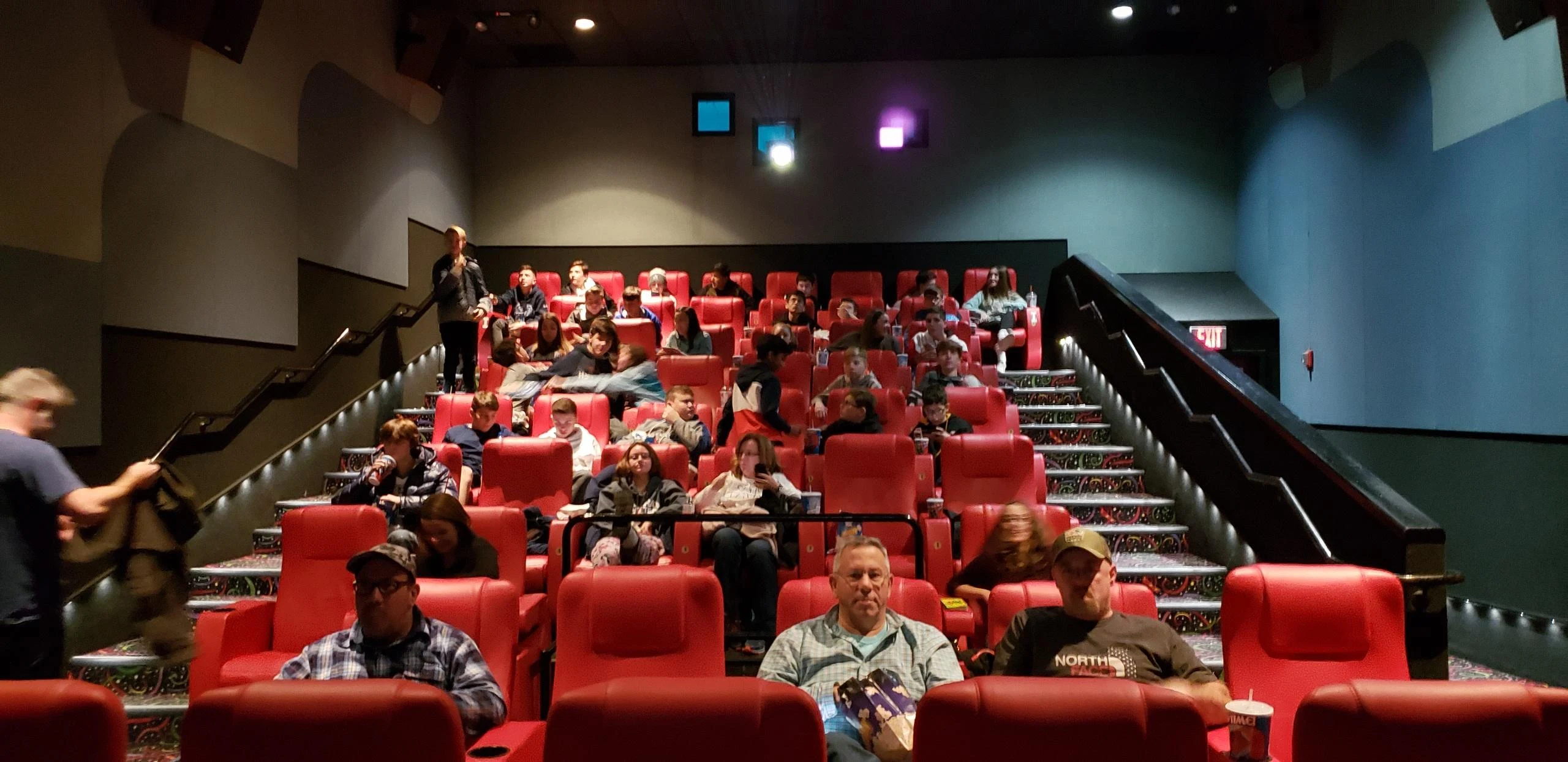
Middletown’s only movie theater, Metro Movies 12, closed last month after 27 years in business. Sadly, this is not a unique event, with thousands of movie theaters closing in the past decade. The decline of the movie theater is not just a sign of an industry in decline. It is also indicative of the increasingly divided nature of America.
In the pre-algorithmic age, we were united by common pieces of media. A total of 76 million Americans watched the finale of Seinfeld. “Jaws” introduced the phrase “you’re gonna need a bigger boat” into the national vocabulary. After “Rocky,” sprinting up flights of stairs and hoisting one’s fists into the air became symbols of athleticism and triumph.
But these forms of media and their roles in the national zeitgeist have been greatly deflated. It’s not that Americans are not watching media; they just consume an entirely different variety. TikTok and X algorithms reinforce our partisan views. Partisan political pundits push the notion that these views are part of our very identities. The result is a media landscape that looks more and more like our politics. Even streaming services are now divided by political ideology. One may subscribe to Netflix or Amazon, while others subscribe to partisan services like Daily Wire+ or Fox Nation, which now include their own fictional dramas and documentaries.
Rather than nearly every American gathering around the water cooler at work discussing the newest Steven Spielberg movie, individuals are now united by different stories and personalities. Nick Fuentes. Hasan Piker. Candace Owens. For many Americans, these individuals are their modern-day Spielbergs, who shape their cultural outlook. Yet a majority of Americans could pass these pundits on the street and have no clue who they are. Instead of a Spielberg or Martin Scorsese uniting society, each person seems to be united by a different individual or narrative.
Social media may seem to provide a source of commentary and connection for shows that stream. In some cases it might, such as when fans gather on X during the premiere of an episode to share their reactions with each other. However, social media often amplifies the loudest voices, which are often the most extreme, and this can present a distorted picture about how the average person is actually reacting to this media. Similarly, podcasts have skyrocketed recently, and with an abundance of options ranging from “The Joe Rogan Experience” to “Raging Moderates,” each American is absorbed into their own world.
There are still some signs of cultural lore uniting Americans, but they differ from years past. The NFL continues to post ratings that top the charts each year. Last season’s World Series posted monster ratings. All the while, the Oscars’ ratings are stagnating with just about 20 million people watching—down from more than 55 million in 1998.
When we lose movie theaters, we are not just losing another business like Blockbuster or Borders. Rather, we are losing a piece of our culture, which, no matter what other social or political differences may have existed, once united our nation.
Blake Fox is a member of the class of 2026 and can be reached at bfox@wesleyan.edu.
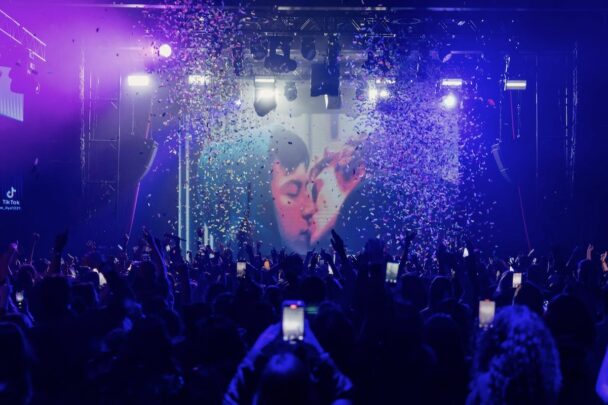
It’s an increasingly common scene: hundreds of partygoers in a club, dancing, singing, and most importantly, watching TikTok edits. The edits, projected as if at a movie theater, are multiplied by the sea of phones recording them. This is a “Heated Rivalry” club night.
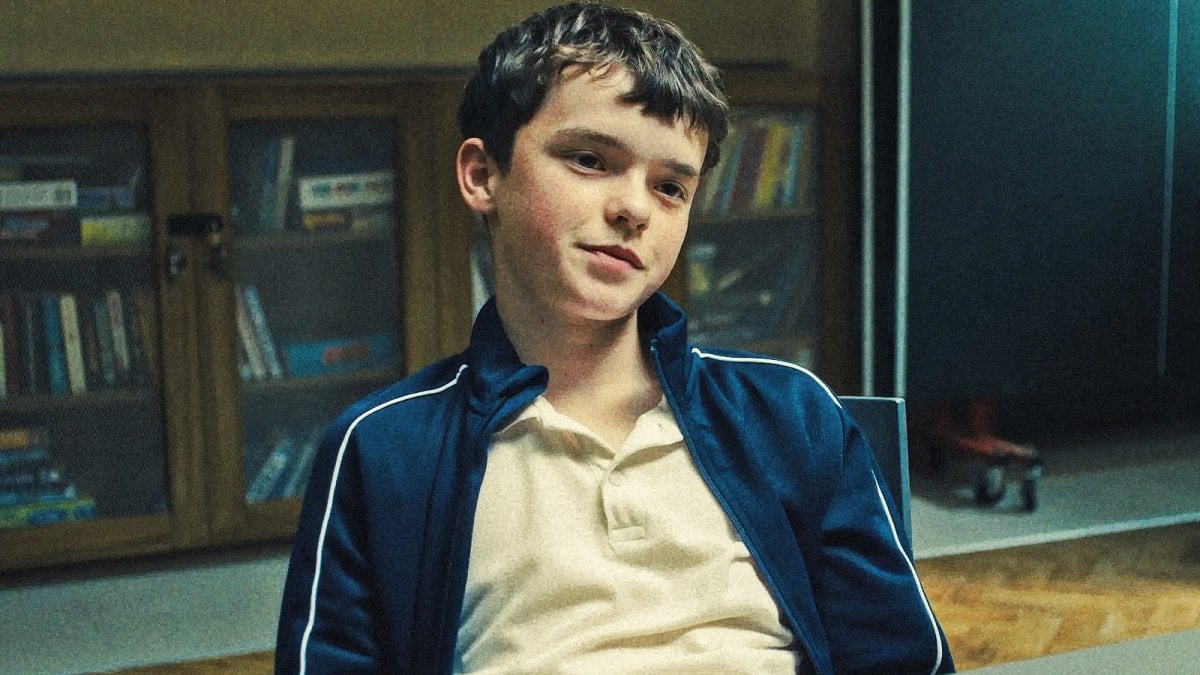
“Heated Rivalry” began as an underdog. The show, inspired by the book series “Game Changers” by Rachel Reid, centers the closeted professional hockey players Shane Hollander (Hudson Williams) and Ilya Rozanov (Connor Storrie). The adaptation began as a small production by the Canadian company Crave, before the American rights to the show were picked up by HBO Max, where the first couple of episodes were released to little fanfare.
Week after week, the show gained popularity thanks to word of mouth, social media, and its breakout stars. The first episode initially had a modest 30 million streaming minutes, while the series racked up more than 324 million the week the finale was released. The actors faced a similarly meteoric rise; both Storrie and Williams had been waiters before filming, presenting at the Golden Globes less than a year later.
Online fan culture, from longtime fans of the book series and newcomers alike, buoyed “Heated Rivalry” on its path to success. The weekly releases allowed online anticipation to build throughout the week, as fans made edits, tweets, and fan fiction from the week’s episode, expanding on the burgeoning collection of fan-made media until certain edits, jokes, and pictures had lives of their own.
This extra-textual language includes songs like “Rock Me” by One Direction (which has been used in popular edits of the show), a video of Storrie dancing to Madonna’s “Like a Prayer,” and many comparisons to the fellow homoerotic athletes of Luca Guadagnino’s “Challengers” (2024). While these examples of online culture are not unique to “Heated Rivalry,” what followed is.
On Friday, Jan. 2, the Los Angeles-based event company Club 90s threw a “Heated Rivalry” rave in Los Angeles, Calif., and videos from the party amassed millions of views. Fans screamed, cried, and sang as their favorite edits played. Those watching online demanded their chance to watch edits, such as an infamous one set to Megan Thee Stallion’s “Big Ole Freak” that was deemed too sexy for TikTok. Club 90s swept in, hosting “Heated Rivalry” club nights across the country. These events were instantly met with high demand, with tickets selling out quickly. Venues for upcoming shows are increasingly large. One event is being hosted at Washington, D.C.’s The Anthem, and 5,000 of 6,000 available tickets have already been sold.
Clubs are not the only place fans are flocking to. The NHL has seen a 20% jump in ticket sales since the show’s first episode aired, and searches for hockey tickets increased by over 75% on StubHub. This includes many first-timers, who then post their experience at what hockey romance enthusiasts call the boy aquarium, inspiring more fans to go. Viral mania has manifested in the physical world.
The phenomenon made it to the University on Friday, Jan. 23 when Psi Upsilon hosted Heated Xi-valry. The social chairs of Psi U, Hanyue Wang ’28, Ry De Guzman Jr. ’28, and Alex Khalil ’28, chose the theme because, as Wang explained: “Heated Rivalry is already widely recognizable and playful, which made it an easy way to bring different groups together.” That night, piles of thick winter jackets sat discarded on couches as hundreds danced for hours in the ballroom.
Though it did not feature the same explicit theming or screens that characterize a “Heated Rivalry” club night, the show’s presence was felt. Many attendees wore hockey jerseys, and songs both explicitly and implicitly part of the “Heated Rivalry” canon were played, from t.A.T.u.’s “All The Things She Said” to “Challengers: Matchpoint” by Trent Reznor and Atticus Ross from the “Challengers” score.
DJ Miguel Estrada ’27 went in a different direction with his set, choosing to focus on the mood of the series rather than explicit references. Estrada, who has not seen the show, said, “I tried to imitate a high-energy ambient from the few clips I watched. While at the same time, by layering provocative lyrics and culturally charged tracks into the high energy, I wanted the crowd to feel both radical hype and some discomfort. Some may call it ‘freakiness.’”
“Heated Rivalry” began as an individual experience. TV viewing has become an increasingly solitary activity with the rise of streaming, and the front lines of fan culture on X, TikTok, and Tumblr provide little in-person connection beyond the common inside jokes and theories that spread online. That Friday night, people yelled in unison for the DJ to play “Rock Me,” clutched hands as they danced, and felt the combined body heat of fans, casual viewers, and people who weren’t completely sure what “Heated Rivalry” was but wanted to party.
“‘Heated Rivalry’ is usually read as something very explicit and private, but when it’s brought into a public, social setting like a party, that contrast creates humor,” Wang said. “The inversion makes people more aware of the tropes and intensity of the original context, and exaggerating them in a collective space turns them into something very playful.”
Estrada said that “a theme that is raw and genuine is attractive,” and Heated Rivalry’s celebration of authenticity is just that. Much of the show’s tension is borne from Shane and Ilya’s need to stay closeted; their affection exists largely in hotel rooms, empty spaces, and a remote cottage. The touch of feet under a desk during a press conference or a kiss on the cheek under the guise of a post-goal celebration are the closest they come to a public declaration. However, in the dark, under pulsing lights, public declarations abound.