Are you looking for a fun new evening activity to do with your friends? Sick and tired of getting rejected at Mezzo or walking around campus in the cold? Why not host a dinner party! All you need is some good food, great company, and enough people willing to pitch in on groceries. Got that, and you’re good to go. Of course, it may be difficult trying to plan such a significant event, whether it be deciding what to cook or where to host it. Here are a few key tips for the students who aspire to culinary greatness and hosting finesse.
Plan, plan, plan.
Make sure that you choose your menu ahead of time so you will know exactly what groceries and ingredients you will need. I’d recommend keeping it relatively simple as well; a five-course meal might sound like fun, but in reality, a salad, main course, and dessert is plenty enough to impress your nutrient-deprived friends. Also, make sure you account for Wesleyan time. Expect every dish to take at least 30 minutes extra to prepare, and invite everyone at least half an hour before you actually want them to show up.
Procure cookware ahead of time.
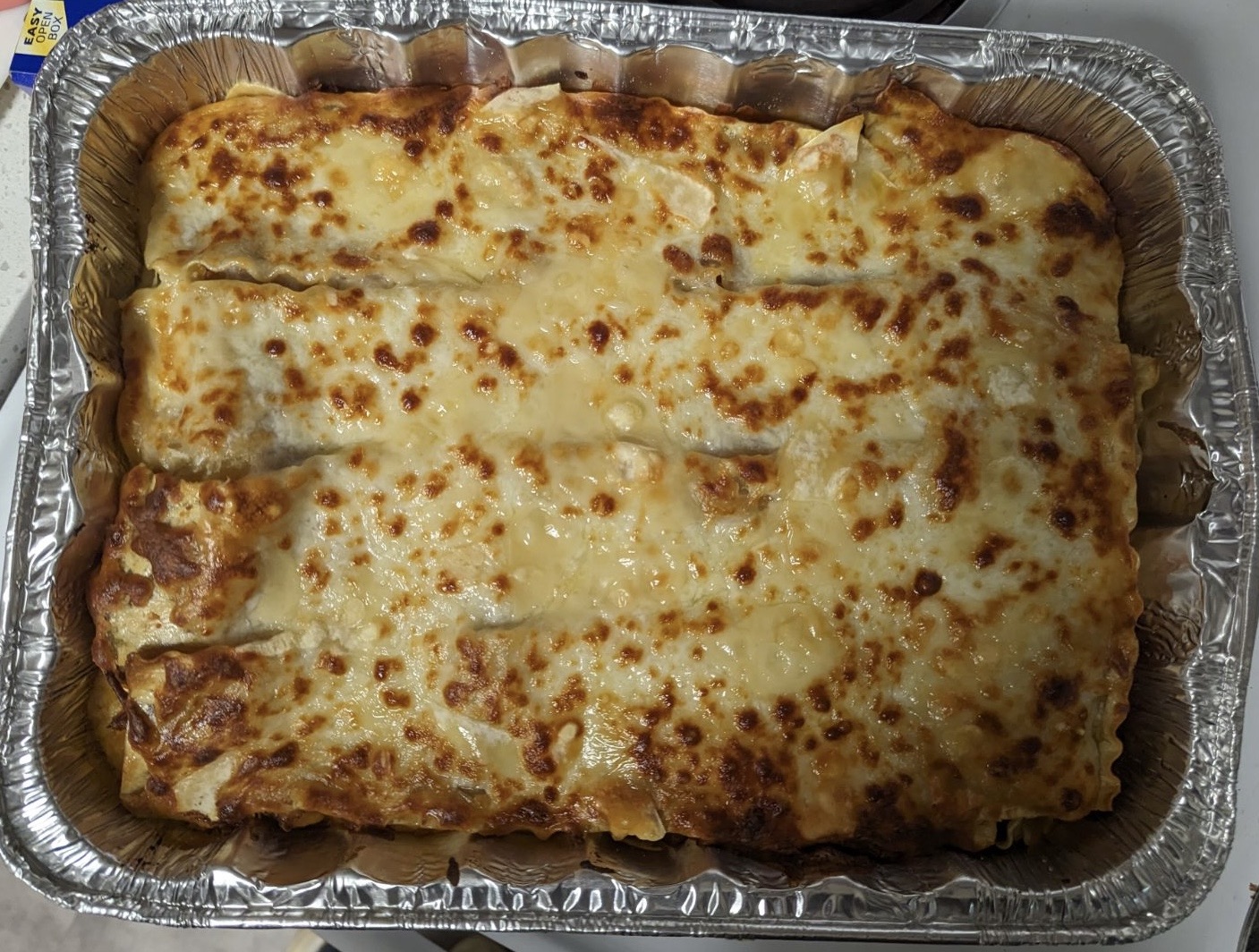
I made a lasagna at the last and only (thus far) dinner party I helped host. Lasagna, traditionally, requires boiling the pasta before you assemble the entire creation. As I started to boil the noodles, I quickly realized that the biggest pot in my friend’s kitchen was the size of a teacup. Given this unforeseen situation, I had to cook each noodle one at a time. What’s more? I had to deal with eight other people in the kitchen, all of us getting in each other’s way. Don’t make the mistake I made. Take inventory in whatever kitchen you are cooking in (I doubt the Butts C kitchen has many pots and pans) and get any extra cookware you need ahead of time.
Feeding the village.
While this may depend on how many people you plan on inviting, I would wholly recommend cooking dishes that can serve a large amount of people. This can range from lasagna to homemade pizzas (bonus points if the food is interactive and everyone can cook together). It’s also good to cook things that are easy and don’t need to be served immediately: You never know how long it may actually take for everyone to sit down. Don’t make homemade pasta, keep it simple and fun.
Beverages.
You will go through it all. Get that extra bottle of grape juice.
Just enjoy yourself.
No matter how stressful cooking for a large group of people may be, remember that you are doing this for fun. It’s ok if something is baked for an extra minute or anything goes wrong, your friends will likely be impressed with whatever you serve them at the end of the day. Take a deep breath, live in the moment, and just make some great memories with your friends.
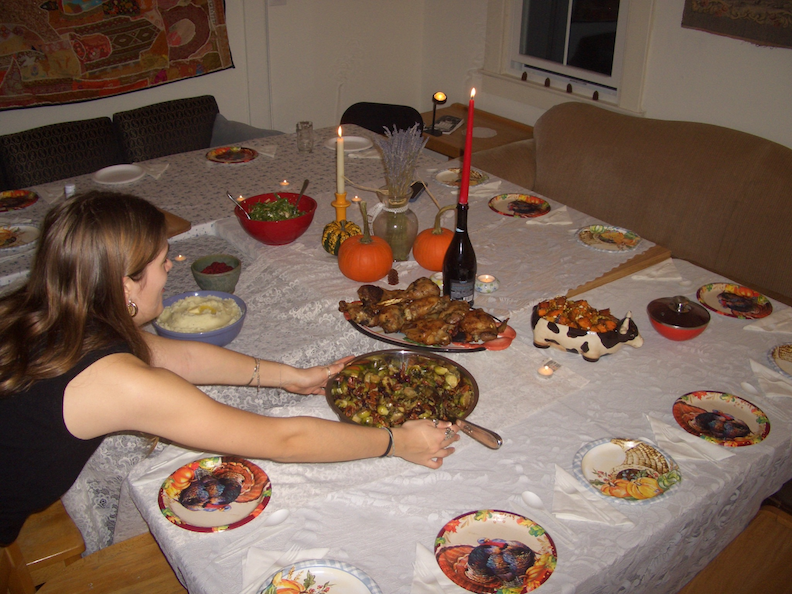
The Friday before Thanksgiving break, we, along with our wonderful housemate Emma Kendall ’24, hosted a Friendsgiving dinner. Celebrating Thanksgiving is one of our favorite parts of the year, yet we had never done so together. We invited our friends and encouraged them to bring either food or something to drink. There were key parts of the meal that we decided are integral to any kind of Thanksgiving celebration: stuffing, mashed potatoes, greens of some sort, and pie. You might be wondering why turkey is missing. We were intimidated by the idea of taking on the bird in its entirety, but Milly came up with a solution that worked perfectly (more on that later).
Jordan: I volunteered to take on the stuffing, since I think it is the superior turkey day dish. In my family, my mom had been the one to make stuffing, and I wanted to follow the tradition by making her recipe. Crusty sourdough, artichoke, parmesan, garlic, onion, celery, and mushrooms are the key ingredients, and assembly really only involves some chopping, sauteing, and mixing before popping it in the oven. Because mushrooms can be quite controversial, I wanted to make an alternative for those who are anti-fungi. So, I went with Alison Roman’s leek and celery stuffing that is also sourdough bread based. (I’m from San Francisco, what can I say!) Planning the oven times and temperatures between my two stuffings, the rest of the dishes, and everything else that people brought over that needed to be warmed up was quite a challenge. I’ll be honest, the mushroom and artichoke stuffing turned out way better than the other one since I took a risk on the temperature and it dried out (sad). However, I feel good about my solid attempt at doubling up and am very satisfied with one out of two of my stuffings being successful.
Milly: The truth is, there isn’t enough room in a Wesleyan fridge or oven for a whole turkey. This is a big problem if you’re planning an all-out Thanksgiving feast. There was some discussion of having chicken instead. I’m a vegetarian, so I wouldn’t eat it either way, but chicken at Thanksgiving is where I drew the line. My first move was to buy a bunch of turkey thighs and legs, as I knew that they would get less dry than turkey breasts would. I coated them in a dry brine first thing in the morning and left them for most of the day to soak up the flavor. Then I made an herby garlic butter and coated all the thighs and legs in it. I roasted them low and slow, adding a little bit of stock to the bottom of the pan every half hour to give it a sort of half-braise. When the turkey finished, I poured all that stock and drippings from the pan and made a gravy. I had made a last-minute run to Goodwill the day before and secured a matching set: a gravy boat and a serving dish, both shaped like cows. The gravy poured out of the cow’s mouth in a pretty disturbing way, but the dishes added the perfect touch of kitsch to our tablescape.
The second cow dish held sweet potatoes. I cubed the potatoes and tossed them in gochujang, honey, garlic, olive oil, and chili crisp. Then I roasted them alongside the stuffing until they got soft in the middle and golden brown on the outside. Once cooked, I tossed them in more honey, chopped pistachios, and crumbled feta. I knew it was good when one of our guests asked for the recipe. Then I knew it was really good when someone who wasn’t even at the dinner asked for the recipe. After the sweet potatoes, I threw together a quick cranberry sauce and we were ready to serve. We laid everything out on four folding tables we borrowed from friends and covered in lacy tablecloths. We lit a bunch of candles just as people started to trickle in. With the low lights, the amazing company, and the absolutely unbeatable menu, I must say it was the best Thanksgiving dinner I’ve ever had.
The Friendsgiving Menu:
Sour cream and chive Parker house rolls (Sabrina Seltzer ’24)
Arugula salad with goat cheese, apple pomegranate seeds, and a dijon-balsamic-shallot vinaigrette (Emma Kendall ’24)
Koginut and kabocha squash tart with sage and parmesan (Sabrina Seltzer ’24)
Roasted brussel sprouts with toasted pecans and dried cranberry (Anna Graziano ’24)
Mashed potatoes with butter and cream (Emma Kendall ’24)
Creamy, sturdy, and complex baked macaroni and cheese with sharp cheddar (Soren Tollis ’25)
Gochujang sweet potatoes with feta and pistachios (Milly Berman ’24)
Stuffing with sourdough, mushrooms, artichokes, garlic, onions, and celery (Jordan Scott-Weiner ’24)
Stuffing with sourdough, leeks, and celery (Jordan Scott-Weiner ’24)
The Zoom room radiated with tangible anticipation as we waited for our esteemed guest to enter the waiting room. As born and bred New Yorkers, Tables for Two aficionados, and The Wesleyan Argus’ Food editors, it goes without saying that to meet and speak to Hannah Goldfield, food critic at The New Yorker, was a dream come true.
We met Goldfield about a month ago during an event put on by the Shapiro Writing Center that was part of a series called The Critic & Her Publics. Shapiro-Silverberg University Professor of Creative Writing and Criticism Merve Emre (The Critic), a highly admired professor at the University, interviewed Goldfield about her life story, approach to criticism, and overall relationship with food. During the event’s second half, we saw Goldfield in action as she tried various students’ cookies, responding critically to the different flavors and textures.
While there was some time for Q&A after the cookie testing, we were eager to continue the food writing conversation with Goldfield, and, luckily enough, she graciously agreed to answer a few more of our many questions virtually.
Goldfield’s entrance into the world of food criticism was not as one might picture it. Goldfield graduated from Columbia University with a concentration in Biological Anthropology, which she said informed her interest in and outlook on the food world in many ways. Her interest in writing originated in her participation in the campus magazine and her voracious reading habits, which she still sustains today.
Among her inspirations are auteurs such as David Sedaris, from whom she gets her propensity for humor; Calvin Trillin, lauded critic for the New Yorker; and Ruth Reichl, whose food memoirs are canon for most aspiring critics.
Reading any of Goldfield’s articles, one can see how she artfully integrates the quippy humor and inventive description of her favorite authors. Some examples of such are: “tart barberries glistening like rubies,” “shiny blimp speckled with sesame seeds,” “sauceless white pies that let it sing,” or Merve Emre’s personal favorite: “wontons bobbing like jellyfish, their ruffled bellies stuffed tightly with shrimp, their slippery wrappers trailing like tentacles.” Her illustration of food is filled with alliteration and evocative verbiage; it’s no surprise that she took various poetry classes while at Columbia. These poetry studies inform her ability to avoid cliches, which lies in her specificity of description. After perusing her articles, it’s evident that Goldfield is never boring, always bringing her unique storytelling to her restaurant descriptions. She makes it look easy.
For the average writer describing food, achieving a Proustian level of finesse is hard. But how might one walk the line between cliche and over-abstraction?
“I find it really hard to write about food because there are so many ways to say certain things,” Goldfield said. “You run out of words really fast. I often hit a wall with how to describe that particular sensation more than once in the same piece.”
While Goldfield has had a passion for food all her life and quite a knack for writing about it, she didn’t anticipate a career in food writing. After college, Goldfield worked as a fact-checker at The New Yorker and grew an affinity for the food columns, constantly seizing opportunities to work on those pieces. As luck would have it, one of the staff writers for the food column stepped down, and Goldfield jumped at the chance to claim the spot.
Goldfield is now a seasoned savant of culinary conversation, but her methodology has changed quite a bit since she first began. Goldfield herself can trace a distinct shift in her approach to criticism.
“When I started writing about restaurants, I aimed to serve the reader,” Goldfield said. “So I was just going to be brutal about whether or not I like this restaurant. And that has shifted over time. There is a time and a place for negative reviews.”
It was amid the COVID-19 pandemic that she changed her outlook on criticism. With restaurants all over New York shuttering their businesses, the hardships of restaurant ownership became glaringly evident.
“The bottom line is that it’s really hard to run a restaurant,” Goldfield said. “It took me a while to realize there’s never a reason to punch down.”
She also extended this advice to our growing food section, explaining that we (and our writers) should write to serve our audience of other students, pointing them to places we love and explaining why one type of restaurant may be more fitting than another. Comparing and contrasting locales might be a better way to approach one’s writing than just trying to be a harsh critic.
In Goldfield’s opinion, harsh criticism should only be reserved for “big fussy” restaurants that spend gargantuan amounts of investor dollars on publicity. These restaurants tend to be pricier, and Goldfield believes that it is her job to alert the public whether or not these locales are living up to their proposed hype.
Aside from the COVID-19 pandemic, much has changed since Goldfield started writing Tables for Two. Food writing and journalism have ballooned as a career or interest for many young people, ourselves included. The industry has become increasingly digitized, relying on videos and short-form content instead of traditional food essays or articles. Goldfield acknowledges that for today’s aspiring critics, their career paths will not mimic her own, especially in an age where social media has transformed the food media landscape.
“I think it’s just where things happen now,” Goldfield said. “Social media is absolutely integral to my work. Instagram, to me, is a research tool. That is how people promote things in the restaurant world. It’s how I’ve made connections with people in the industry. It’s often how I reach out to a source.”
Food writing, as Goldfield herself acknowledges, is no longer defined simply by writing.
“Food is such a visual and tactile medium,” Goldfield said. “It really lends itself to photography and video. It does feel like you at least have to be aware and fluent in those things and be willing to participate with them.”
These other media haven’t always defined her work, but Goldfield has a positive attitude about how the food writing landscape is changing.
“Tables for Two is a thing that is very beloved for print readers,” Goldfield explained. “In terms of traffic on the website, it was not the most popular thing. People want different things when they are reading online.”
After reading one of her most recent articles, “My Favorite Restaurants in New York City,” it became clear that Goldfield has artfully adapted her voice and style to serve a new, faster-paced online environment. This specific angle of the food media was especially interesting to us regarding our section, since we recently had the idea to create a spreadsheet for students to fill with their opinions about local restaurants, almost like a Wesleyan Yelp. We’ll shamelessly plug ourselves and encourage our readership to fill it out.
After recently announcing she would step down from her position as the Tables for Two columnist, we were curious what was next for Goldfield. While a memoir is not off the table, Goldfield admits she doesn’t have much of an impulse to write one, at least not in the next 20 years. However, she would consider writing a book of reported essays not necessarily confined to the formalities of restaurant criticism.
Another pursuit Goldfield is currently engaged with is reviewing cookbooks, which she believes to be the emerging pearls of publication as they become increasingly grounded in narrative and rich biographical stories. To review a cookbook, Goldfield treats it like a hybridized book and restaurant critique, attempting to share how she engages with the text. The narrative portions are equally important to the actual experience of cooking the recipes, which she does for her friends and family whenever she has the time.
We look forward to seeing how Goldfield and her sharp prose continue to evolve in the next stages of her career. We are thankful for her help setting the table so our food section can continue to whip up worthwhile engagement and serve a dynamic array of ravishing recipes, saucy stories, and fond fables.
On Oct. 6, 2023, Danielle Garten ’24 and I didn’t expect to eat tofu-potato hash for dinner. I would imagine no one ever does. We had just arrived at Bowdoin for Fall Break to visit our respective high school friends, whose friendship we take credit for: Danielle and I met each other as first-years at Wesleyan, and upon making the connection, we implored them to hang out together.
At 6 p.m., our academically inclined friends were still at the library. We began preparing the tofu and potatoes only to discover that their apartment didn’t contain the most versatile cooking tool ever: a sheet pan. We made do with what we had, a pot and a frying pan, and decided to boil the potatoes and fry the tofu in oil.
We began by heating a pot of water. Soon, Danielle looked up from chopping ingredients and asked, “Is it supposed to be on fire?” I was about to cheerfully inform her that there was no need to light the electric stove, when I discovered that the burner was in fact on fire.
The building’s alarm immediately went off, and I could suddenly see little soot flakes drifting around like snow. Our friend’s patient roommate emerged from her room to turn on the exhaust fan, and we left with everyone else in the building. We were not students there, our hosts were nowhere in sight, and we had just caused an entire apartment complex to be evacuated. As six firefighters arrived in full gear to set up a fan in the hallway, we called our friends, profusely apologizing, and they showed up to give their names for the incident report, consoling us at this time of distress and embarrassment.
Playing right into the stereotype that college students cannot boil water, we reported that the water never made it past lightly steaming. We also theorized wildly to the campus safety coordinator about grease and debris under the heating element. He shrugged and told us not to use the burners until an electrician examined them.
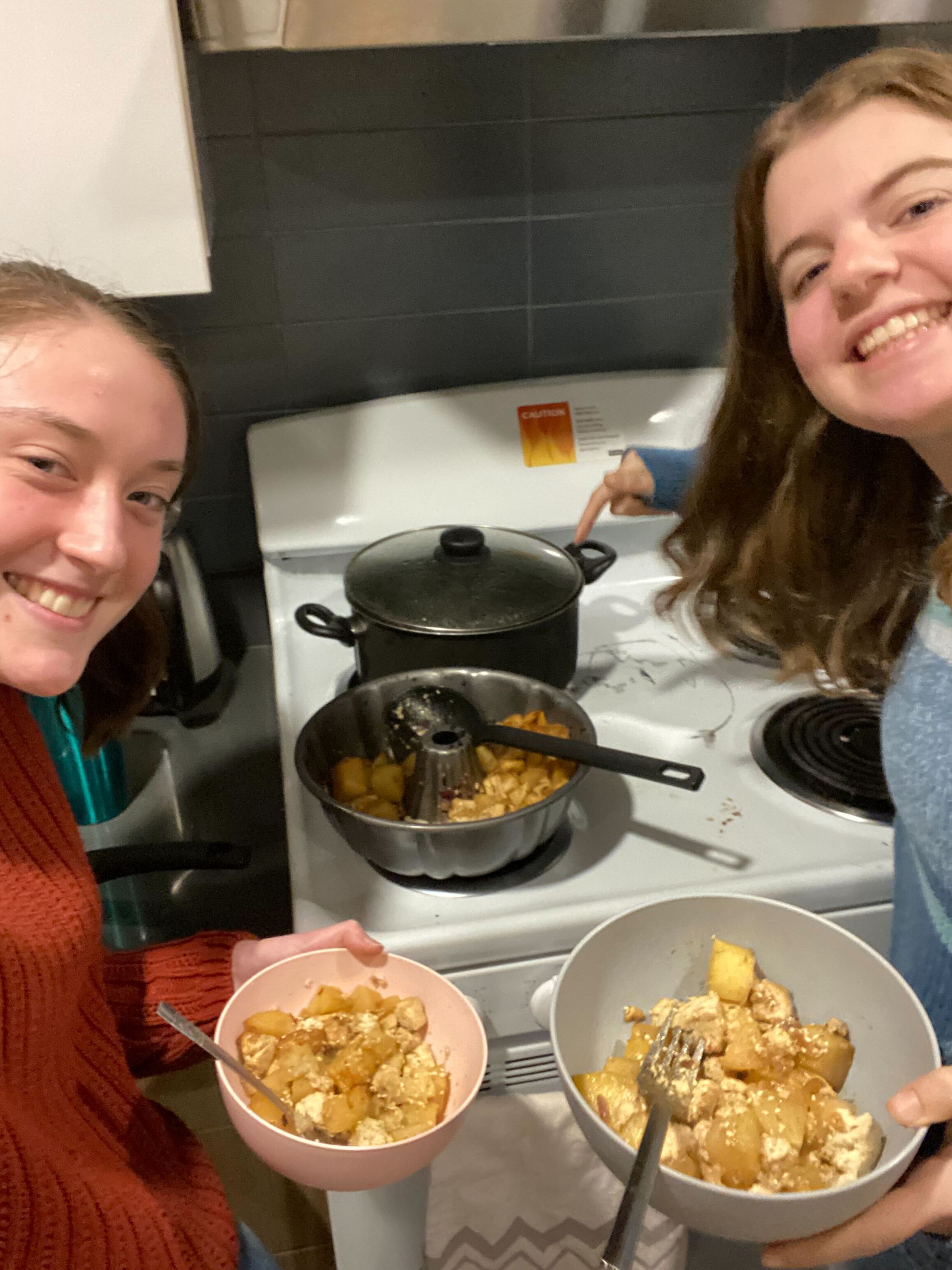
Our very smart friends returned to the library (I can hardly imagine the state of their social lives without us), leaving Danielle and me with a lot of chopped-up, raw food, a moratorium on stovetop use, and no sheet pans. We had come too far to order takeout, so we ransacked the kitchen and finally found one oven-safe receptacle: a bundt pan. Into this, we dumped all of our food.
It took about three times as long as I thought for the potatoes to cook through, but the dish tasted about four times as good as I expected. I highly recommend this recipe for the next time you face a bunch of tofu, potatoes, and dysfunctional electric burners. It is also appropriate for another scenario, where your stovetop isn’t a fire hazard, but you are missing pots and frying pans.
Ingredients:
1 pound firm or extra firm tofu
4 russet or Yukon Gold potatoes
3 tablespoons olive oil
1/2 red onion
3 cloves garlic
3 tablespoons lemon juice
1/4 cup soy sauce
Onion salt to taste
1 pinch red pepper flakes
Directions:
Make sure the stovetop is unusable by setting the burners on fire.
Heat oven to 350 degrees Fahrenheit.
Chop tofu into one-inch pieces, peel potatoes if desired, and then chop the potatoes into ¾-inch pieces.
Toss tofu and potatoes in a bundt pan with oil.
Finely chop onion and garlic.
Combine onion, garlic, and all remaining ingredients into a sauce in a small bowl.
Pour sauce over tofu and potatoes. Stir, if you can, without making everything fall out of the pan.
Bake until the potatoes are tender (probably about 90 minutes). Check the potatoes frequently after the first 45 minutes of baking.
When entering a new environment, one typically looks for areas of comfort, a place that makes one feel right at home. In college, it could be a dorm, a club, or a sports team. But for individuals like us, that place is Summerfields after 11 p.m. Upon discovery, we had little idea of the incredible treasure that the establishment promised. It was only on one humid September night that we found ourselves ravenous for some late-night victuals. We had heard through the grapevine that the late-night breakfast option was somewhat of a spectacle, and our curiosity got the better of us.
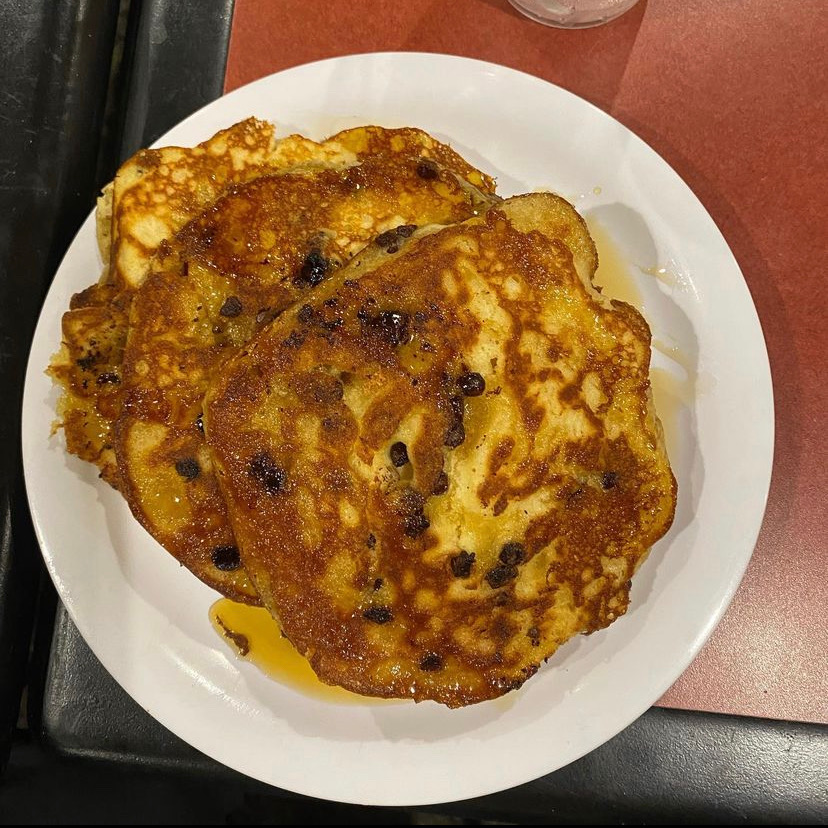
The next thing we knew, we had found ourselves with two other colleagues at the University delving into some of the finest chocolate chip pancakes known to man. We quickly discovered the process by which these pancakes amazed us. First, the tantalizing aroma of freshly cooked hotcakes wafts through the air, drawing you into the kitchen with an irresistible allure. And then, as you approach the source of this delightful scent, your eyes are greeted by a stack of golden-brown pancakes, each layer adorned with a generous sprinkling of decadent chocolate chips. Finally, there’s that first bite, unexplainable with just a single sentence, but possibly achievable with a few paragraphs.
The pancakes themselves are a masterpiece of culinary perfection: fluffy and light, with a slight golden crispiness around the edges that promises a satisfying contrast in texture. The batter, expertly mixed, yields a harmonious balance between moist tenderness and a subtle, wholesome chewiness. The chocolate chips, embedded like hidden treasures within the pancakes, are of the highest quality. They are not merely an afterthought but rather an integral part of the culinary experience. These chocolate morsels are rich, semi-sweet indulgences that melt seamlessly into the warm embrace of the pancake, creating pockets of gooey, molten chocolate that burst with flavor with every bite.
The pancakes are cooked to perfection, with a uniformity that speaks to the chef’s skill and attention to detail. Each one is a golden disc, slightly larger than the palm of your hand. As you cut into the stack, a miniature cascade of chocolate chips spills out, creating a visual masterpiece. The warm steam rises, carrying with it the sweet aroma of fresh flapjacks and the intoxicating scent of melting chocolate chippers. The sight and smell alone are enough to make your taste buds dance in anticipation. And then comes the moment of truth: the first forkful. The pancake, now decorated with a perfect combination of melted chocolate and a dollop of Summies’ finest Vermont maple syrup, is a revelation. The flavors mingle on your tongue in a symphony of sweetness, richness, and a hint of buttery warmth.
The chocolate chips, now transformed into luscious pools of velvety liquid, meld seamlessly with the pancake, creating a sensory experience that transcends the ordinary. At that moment, as you savor the delightful medley of textures and flavors, you realize that these chocolate chip pancakes are not just a breakfast indulgence; they are a late-night treat to revitalize your body before a lovely night’s rest. They are a dietary masterpiece, a testament to the artistry of the chef and the simple joy that a well-crafted Sumsters dish can bring.
“You can never go wrong with a ‘Breakfast Special-In,’” Adam Shatz ’27 said.
While many members of the athletic parliament have joined in on the typical 11:15 p.m. nightly Summies reservations with great excitement, from time to time there have been inconsistencies in the food, as Summies sometimes “freestyles” the orders rather than adhering to the requests of the students. However, these instances remain seldom. To account for this occasional varying quality in output, half of our pancake duo, Jex Frankel ’27, coined the official “Summies Scale,” rating orders on a scale of 1 to 5.
A 5, the highest rating on the scale and what most orders receive, is called a “C’mon Mane!” alluding to the phrase one typically says after biting into a perfectly cooked Breakfast Special-In flapjack. Falling just a step below is a 4, otherwise known as an “I’m Keen (They Got Me Proper).” Ratings of 4 leave connoisseurs feeling proper, well-fed, and keen to return to Summies the following night, hence the description.
Now, falling in the middle of the scale is a 3, accounting for the orders that get the job done but don’t exactly leave individuals enthusiastic about returning. The phrase “I Was Famished and Had to Force It Down” sums up the experience of receiving an order falling in the third category. On the lower end of the official scale, a 2—otherwise known as a “Chopped Cheese: Not the Ocky Way”—refers to orders equivalent to just that: chopped cheese, not the ocky way.
On the latter end of the scale lies the “They Freestyled My Order” otherwise known as a 1. The inspiration for this description came from SJ Schaeffer ’27, the other half of this duo, whose Breakfast Special-In order one night in late September left him puzzled, questioning what he had possibly asked for at the counter. Despite his desire for three chocolate pancakes and sweet potato fries, he was met with a plate of two plain flapjacks, regular fries, and a loaf of eggs. In utter disbelief, Schaeffer noted that the only possible thing that could have happened was that the staff had “freestyled his order.” This was an anomaly, as it remains the only order (to this day) to receive a 1 on the official scale.
Nonetheless, the first-year pancake council notes that each and every order is made with love and care, hence why no matter what, Summies will always remain their favorite dining hall on campus. Beyond the delicious food, the staff’s smiles and welcoming environment that they’ve cultivated is what keeps us, and the vast majority of students, coming back every single night for that delicious stack of chocolate chip flapjacks.
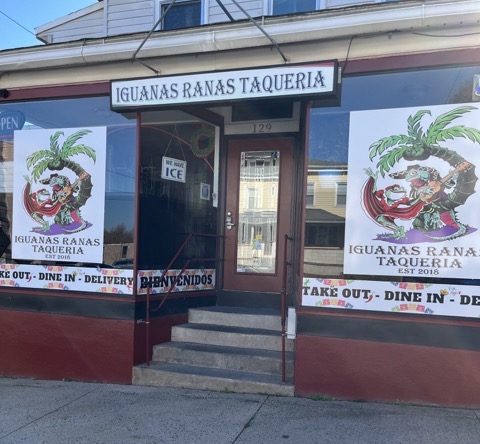
After moving into my new dorm on Church Street, I noticed a small Mexican restaurant right down the block. There are a few Mexican places in Middletown (La Boca and Salsas 3 come to mind), but I decided to check out Iguanas Ranas Taqueria, persuaded by its proximity. Needless to say, my first visit left me coming back for more. I’ve since become a regular patron of the establishment, even bringing my mother when she visited me on parent’s weekend.
Although Iguanas Ranas originally opened in 2008, it was closed during the pandemic and only recently re-opened. The restaurant is run by Julio Cesar Martinez, along with his wife and the rest of their family. Iguanas Ranas was started by Martinez’s parents, who are from different regions in Mexico and met in Mexico City before moving to the United States and opening the restaurant. They were initially located on Main Street but have since reopened a new location at 129 Church St., just a few blocks away from College Row.
Although Martinez spearheads the operation, the family works together to run the restaurant. While his parents still help, his wife and sister are instrumental in daily operations. The family strives to do everything themselves; they avoid large distributing companies and purchase local vegetables and foods. However, running the restaurant is also a huge commitment.
“On a good day, I will be here 14–15 hours,” Martinez said.
This enormous time commitment is part of Martinez’s mixed feelings toward his eight-year-old son’s love of cooking. Martinez’s son often comes into the restaurant to help clean tables for a few bucks. He’s also a little chef and enjoys making his own tacos and soup in the kitchen.
“It’s fun to see him start to love the business,” Martinez said. “I don’t know if I would be a big fan of him [running the business] since it is a lot of work, and you sacrifice a lot.”
The food at Iguanas Ranas is inspired by Martinez’s parents’ home states of Oaxaca and Guanajuato, as well as Mexico City. Martinez explained that Mexico City is a melting pot of different regional Mexican cultures, garnering influence from all over the country. The current menu culminates 15 years of practicing and perfecting their family recipes.
However, influences are certainly not limited to Mexico; Martinez will gladly include anything he enjoys eating in the menu, authentic Mexican cuisine or not. The Tex-Mex spin on some dishes was incorporated into the menu per a customer’s suggestion. Martinez remarked on how customer feedback and his personal culinary experiences help keep the menu fresh and updated.
“We tell them [customers], if you don’t like it, let us know,” Martinez said. “We want you to come here and be happy.”
The restaurant is also known for its large portions: The burritos, in particular, are enormous. Martinez told me that this mostly comes from his upbringing. He was always fed large meals when visiting any family member, so the big portions remind him of growing up. Plus, it’s great when customers take food with them. Eating is very important to the Martinez family, so leftovers let customers take the happiness they get at the restaurant and bring it home.
“If I’m going to feed you, I want to feed you good!” Martinez said.
In terms of popularity, customers frequently order the burritos. The different burritos available reflect the various influences Iguanas Ranas incorporates into its cooking. Brave customers can try the Suicide Burrito, a massive dish served with chipotle mayo, ranchera sauce, and other spicy sauces. There’s also the California Burrito, inspired by Martinez’s previous conversation with two customers in California. This burrito is served with chicken, cheese, fries, and spicy tomatillo sauce. If you’re not craving a burrito, you can order something more unorthodox like the Birriaramen, a soup dish served with birria and ramen noodles.
Another popular dish (and my personal favorite) is the Birria Tacos. These three tacos come topped with cheese, cilantro, onions, and a side of consommé. The meat melts in your mouth, and the entire dish is perfectly seasoned. Martinez told me how amid the Birria social media craze, he tried the dish at other restaurants but found it underwhelming. So, the next time he was in Mexico, he visited the state where it originated and brought back a recipe with him. At Iguanas Ranas, the meat simmers in a broth made with five different types of peppers and various spices for over eight hours, rendering it perfectly tender.
“It’s one of those things you have to have patience with,” Martinez said. “You can’t really rush it. [You] don’t want it too watery or too greasy.”
When I asked him whether he had a favorite menu item to either cook or eat, Martinez told me he had no major preferences. He likes making everything on the menu and doesn’t like preparing any dishes he personally doesn’t enjoy eating. As he puts it, he’s always delighted to take a bite of anything he serves his customers.
Since reopening, the restaurant has amassed a large clientele consisting of many regular customers from Middletown and frequently caters for Wesleyan events and for Middlesex Hospital. However, Martinez remarked that the restaurant has still been going through growing pains since reopening, primarily because of the rise of delivery apps during the pandemic. Many of their orders are takeout from Grubhub and Uber Eats, companies that the Martinez family had to learn to deal with: They sometimes have to accommodate five to six orders at a time to meet the demand.
“Everything is through the computers, through the apps,” Martinez said. “You don’t really get all that people-to-people anymore. It’s harder to get things right because you don’t talk to people anymore.”
As of right now, the Martinez family doesn’t have any major plans to expand geographically. They previously had another location in Hartford, yet ultimately closed it to focus 100% of their time and effort on the Middletown location. However, Martinez hopes to expand the current restaurant and work on outreach with the nearby community, namely more Wesleyan catering events and people from nearby towns. He is also considering opening up for breakfast to serve early-morning commuters on busy Church Street.
The biggest thing that struck me in my interview with Martinez was how meaningful personal connections from Iguanas Ranas are to him and the family. Food is incredibly important to the Martinez family, and the restaurant allows them to connect with others over a shared love of delicious cuisine. While it is now easier than ever to have tacos and burritos delivered right to your bedroom while working on that essay you procrastinated for weeks, there is something wonderful about sharing a meal with people you care about. Iguanas Ranas Taqueria and the Martinez Family provide just that: a homey atmosphere to enjoy each other’s company and an excuse to stuff your face with exquisitely made Mexican fare.
When I first caught a glimpse of the Southern Bell Soul Food Truck sitting a few spots behind our notorious Mamoun’s Falafel, I was struck with a wave of excitement. Was this truck new? Does Mamoun’s have some more competition? Turns out, Southern Bell has been around for a few years now, already making its mark on the Wesleyan campus with home-cooked Southern delights like fried chicken, yams and collard greens, and even some killer BBQ ribs.
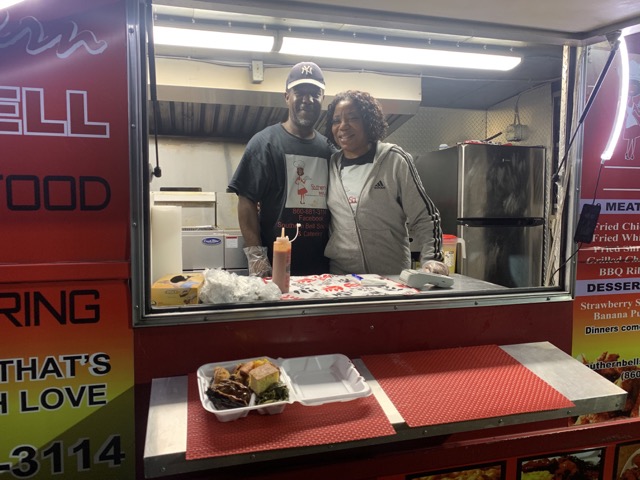
Owned and operated by the husband-wife team Fred and Tomorra Williams, this up-and-coming weekend dining option offers a personal, homestyle eating experience that will leave your belly full and your taste buds tingling. The truck’s offerings aren’t the most conventional college-campus late-night cravings, but the love, passion, and tradition that seeps into every bite of Southern Bell’s food makes it a noteworthy choice for any student looking for a hearty meal at any time of night.
On an unseasonably warm Saturday night a few weeks ago, I stood at the window of the Southern Bell Food Truck and chatted with Fred and Tomorra about the background of their food, their business model, and the reasons why they came to Wesleyan. The two of them have been in the catering business for eight years doing various gigs around Connecticut, and before Wesleyan their primary stomping grounds were at the stadium of the Hartford Yard Goats, a minor league baseball team.
They found out about the lucrative opportunity of parking their truck on the Wesleyan campus three years ago through executive assistant to the Vice President for Communications Evelyn Bozeman, and immediately set their sights on acquiring the necessary licensing to operate in Middletown. It was the perfect opportunity since baseball slows down in the fall, right when students start coming back to school.
“We did a catering, and then we tried it here one night [on the truck], and it was fabulous,” Tomorra said.
The food itself is what makes Southern Bell such an exciting experience, giving students a taste of genuine home cooking that might be harder to find at other campus dining options. To streamline the serving process on their truck, most sides are cooked at their certified kitchen in Hartford and kept warm on the truck, as is the case with their smoked ribs and grilled chicken. That way, Tomorra can get the food out faster to hungry students. But rest assured, there’s no loss of quality.
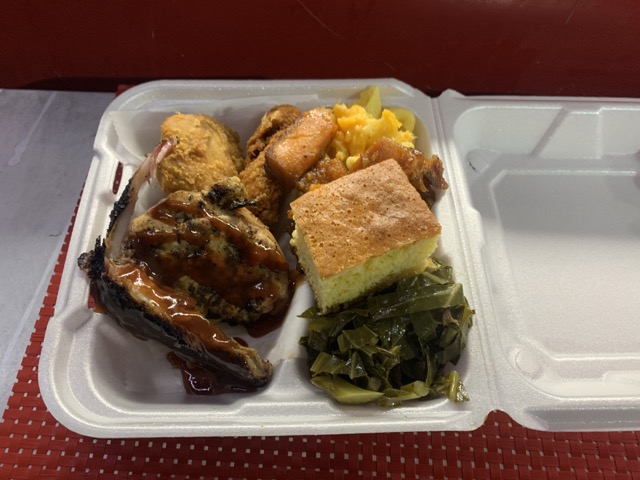
When I tried the soul food sampler that Fred and Tomorra graciously plated for me a few weeks ago, everything tasted like it had just come out of the oven. The fried chicken wings, fried on the truck, were crispy and seasoned to perfection, while the juicy pork rib I scarfed down left my mouth aching for more. Fred insisted that I combine, in one bite, a piece of fried chicken (topped with hot sauce, of course) with yam and some collard greens. I obliged and also created a few more combinations of my own. The cornbread was perfect with a tender piece of BBQ chicken, while the mac and cheese was taken to the next level after being mixed with some collard greens (broth included).
Many recipes come from Tomorra’s grandmother, including their famous yams. It turns out my use of the collard green juice is right on par with the eating expectations of the owners; they explained to me how sometimes people order mac and cheese with a side of yam juice! The lovely sweet potatoes have even been known to engulf and mystify taste buds.
“One of the owners of the Yard Goats told me ‘I hate when those [yams] come on my plate at Thanksgiving, but yours, I have to give you kudos…. I actually love yours,’” Tomorra said.
Fred and Tomorra have their personal favorites. Fred, in line with his suggestion of combining the different items, likes the combination of mac and cheese, yams, and fried fish. Tomorra’s favorite, on the other hand, are the ribs, which she was eager to tell me are “jerked,” or smoked with jerk seasoning.
c/o Lewis Woloch
“There’s so many different cultures,” she said. “I use Jamaican seasoning for the jerk, I have so much Goya. For seasoning, you can pull from every different culture.”
To appeal to the vegans and vegetarians of Wesleyan, Tomorra has recently tried to incorporate some new dishes like a vegan eggplant lasagna onto the menu, and she claims that it is helping in an overall push to cook healthier. However, there are only so many changes that they can make without upsetting their most loyal customers.
“Every time I change [the menu], and they come here, people are like, ‘Well we’re not looking for that, we’re looking for soul food,’” Tomorra said.
It’s obviously a task that requires striking a balance, but Fred and Tomorra are both here for it. They were keen to reiterate throughout our conversation how grateful they are for the position they now find themselves in on Wesleyan’s campus. They love all of the interactions they’re able to have with students.
“The love is here too,” Fred said. “The students, they tell us all the time, ‘Thank you for being here.’”
It’s clear that the two of them adore what they do for a living, which infuses their food with a special type of love that brings it to the next level. The couple has been together for 25 years, and the truck is just another segment of their journey together.
“We relax, we watch football on Sundays,” Tomorra said. “This is our life.”
Unfortunately, there have been times for the two food truck owners when things haven’t been as seamless or easygoing. Fred explained how, in the past, they’ve found it harder to establish themselves, whether it be in catering scenarios, at events, or just going with the truck.
“We’re a small Black-owned business, so a lot of times, people will try to criticize you for anything…but being [at Wesleyan] was the best thing that happened for us,” Fred said.
The graciousness that Fred and Tomorra have for their current situation manifests itself in their desire to give back to the community. They want to help out disadvantaged students at Wesleyan, whether that be by providing someone with a job on the truck or simply finding a way to give out the leftover food they have every night. The latter goal extends to Middletown residents too.
They are also looking for someone to create a website for them; Tomorra has already jumpstarted social media accounts on Instagram and Facebook but knows that she could use a second pair of eyes (or fingers!) when it comes to curating the type of media presence Southern Bell wants to have online. Fred also stressed the power of social media for their brand.
“It’s definitely a chain reaction,” he said. “One person posts the food, and a person will get it and share it 17 times.”
With regard to Southern Bell’s goals for the future, the truck itself will be sticking around for a while more.
“I’m not sure if I’m ready to handle the monster of a restaurant,” Tomorra said. “So, this pretty much is my gig.”
Ultimately, what the husband-wife team hopes to achieve is creating their own line of frozen food one day. This reflects their charitable goals, since one of the draws of having their own products in grocery stores is that people on snap benefits or food stamps would be able access to their delicious food. As Fred put it in a text message to me a few days after our interview, a frozen food line would make it so anyone could enjoy Southern Bell Soul Food in the comfort of their own home.
As we finished the interview and I was getting ready to walk home with a container of chicken wings in hand, one of the cooks from Dope Fried Chicken came over to chat with Fred and Tomorra. They cracked a joke or two about the “man in front” (the falafel truck) and then chatted about how business had been of late. When I introduced myself as a reporter for the student newspaper, the cook was quick to endorse Southern Bell’s food, saying how he loved the mac and cheese. He also reaffirmed that Fred and Tomorra are wonderful people, which was just another example of the amazing culture that reverberates around the Southern Bell Soul Food truck. When the competition from down the street is pouring on praise, you know they must be doing something right.
It’s our job as food editors to guide the general public at Wesleyan toward the best dining opportunities, and so without further ado, here are our two favorite picks for a sit-down meal outside of Middletown.
c/o Willow Saxon
Otto Pizza:
In the warm, cozy town of Chester, Conn., lies a pizza restaurant, too far off the beaten path to be well-known by Wesleyan students, but delicious enough to warrant at least a little attention by the more ambitious foodies of our campus. Otto Pizza is a must try, and not just because of taste alone, even though the fennel salad and margherita pizza lie forever embedded in the memory of my taste buds. The charming brick-oven style restaurant offers the full package: a prime location in Chester’s downtown area; a sleek, modern dining concept with an open kitchen; a seasonal, upscale yet homey menu; and the perfect beer and wine pairings. And if all this wasn’t enough, when spring comes along, Otto opens up an outdoor tent with specialty offerings like barbecue and lobster rolls.
The town of Chester itself is worth a visit regardless of your pizza yearnings. For those with access to a car, it’s a quick 20-minute drive away on the highway (free parking included in a lot that’s a five-minute walk away) and can offer a much-needed break from the trek down to the regular Main Street spots in Middletown. In the fall and early winter especially, the town is the perfect autumnal getaway, complete with tree-lined streets, lovely little shops, and a strong sense of holiday spirit. Otto Pizza is the pinnacle of these strong sentiments, with a dining experience perfectly adaptable to a romantic date night, dinner with your parents, or a group pizza outing.
Regardless of your party size, the best bet is to share a salad or two while carefully perusing the pizza selection. The menu is carefully curated and culinarily impeccable; it’s small and straightforward enough that you won’t get overwhelmed by a million different iterations of pizzas, but can still experience a multitude of flavor combinations. The aforementioned fennel salad is to die for with a mouth-watering combination of a bright lemony vinaigrette, earthy walnuts and mushrooms, and salty parmesan all sitting atop a bed of thinly shaved fennel. For those averse to greens, there’s often a rotating burrata dish as well.
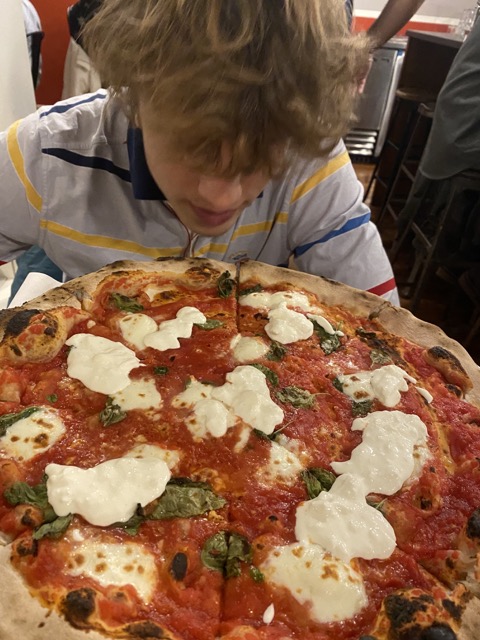
The pizza at Otto, which stands up to even the most coveted of NYC brick-oven pizzerias, is split between red and white sections. And before you question the validity of a whole section dedicated to pizzas without tomato sauce, you need to taste their mushroom and parmesan cream concoction. They even have a bacon, fried egg, and potato rendition that’ll put any breakfast to shame. On the red side, the classic margherita, done up with dollops of stracciatella, hits the spot with its perfectly sweet and savory tomato sauce, while options like eggplant with scamorza (a cousin of mozzarella) or a bacon and fried egg topped white pizza up the ante even further.
The ambience inside the comfy-yet-done-up interior of the restaurant almost mirrors that of the town: the servers are beyond friendly and very receptive to recommendations or wine pairing requests, and their open kitchen allows you to watch your pizza enter into the depths of Otto’s massive brick oven from your seat. Your lovely server will often try to offer you dessert, usually a gorgeous square of soft, luscious tiramisu…if the pizza hasn’t made too much of a dent in your stomach, then full steam ahead. And once all of this is done, and the check is paid, arguably the best part of the whole Otto experience comes around. You get to slowly amble out the door and back through the twinkling lights of Chester to the parking lot, with a happy, delirious smile plastered on your face and a stomach stuffed to the brim, yet still craving one more slice of margherita. You can find the menu here.
Atmosphere: Casual with an elegant vibe
Noise Level: Low during weekdays, lively chatter on weekends
Recommended Dishes: Fennel salad, Caesar salad, Margherita pizza, pepperoni pizza, bacon and egg white pizza, four cheese pizza
Drinks and Wine: Craft beer, wine, cocktails
Price $$$ ($25–30 per person)
Open: Dinner every night, lunch on Saturday and Sunday
Reservations: Not accepted
c/o Willow Saxon
Pho & Grill:
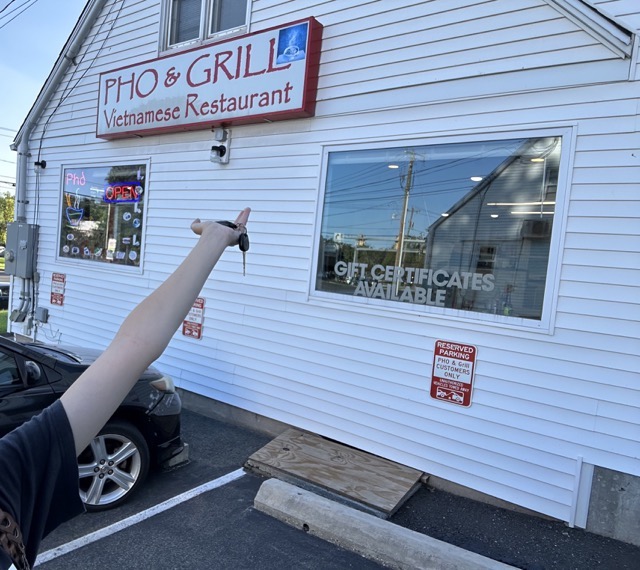
It’s with great reluctance that I divulge the existence of Pho & Grill to the general public, for its seats are few and its food phenomenal. Only an eight-minute drive from campus, Pho & Grill is the best restaurant you will find in the five-mile radius around Wesleyan. Nestled unassumingly between fast food chains and beauty parlors, it’s surprisingly some of the best Vietnamese food around.
“I go to Pho & Grill on a biweekly basis,” Willow Saxon ’25, a longtime Pho & Grill patron, said. Most times it’s with my friend, who has a peanut allergy, despite the kitchen being full of peanuts. We both agree that it’s worth the risk to his life…It’s just that good.”
As you enter the locale, you can expect to be greeted by the owners and seated at one of the long wooden tables, each equipped with their own rotating rack of accoutrements. The spices include sriracha, hoisin, fish sauce, and white pepper, to name a few.
Scents from the kitchen waft coyly into the dining room, and from certain seats you can see the origin of the smell: large cauldrons steaming in the kitchen, dispersing that unmistakable smell of a pho broth that includes star anise, clove, and cardamom rendered doubly potent by their mingling with beef fat.
Quell your anticipation with one of their appetizers. I suggest the Gha Gio Tom (shrimp & pork egg rolls) or the Goi Cuon Tom (shrimp fresh spring rolls), depending on your entree preference. (The egg rolls are found on several of the vermicelli dishes.)
c/o Willow Saxon
The plethora of mouth-watering options always makes choosing an entree impossibly challenging. If it’s cold and rainy, Pho is the soundest option, whether it be the classic Pho Dac Biet (Combo Pho), topped with a combination of rare flank steak, well-done brisket, tendon, and beef balls, or the Mí Gá (chicken with egg noodles), a Vietnamese chicken noodle soup that comes in a glistening chicken and pork bone broth and filled with springy egg noodles, lettuce, and impossibly indulgent fried onions, and pork rinds. But whether you choose to get the more classic beef option or the sickness-curing chicken soup, all Pho comes with an accompanying mound of bean sprouts, basil, limes, and jalapeños.
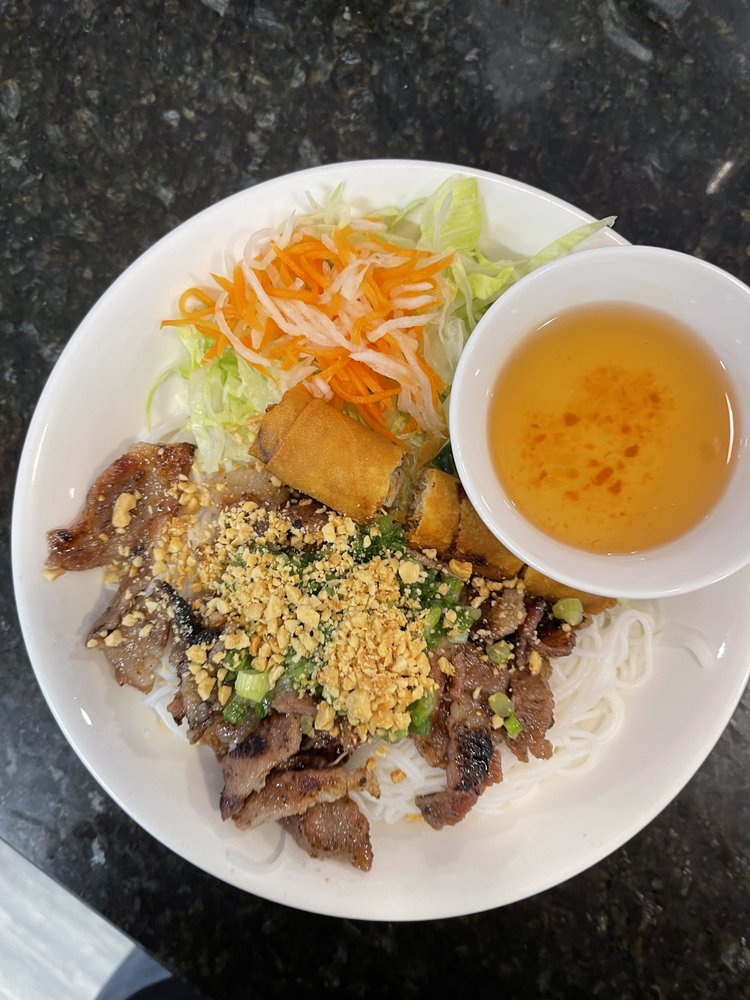
The crown jewel of this establishment, however, is with no doubt the Bún Thjt Heo Nuong Cha Gio (number 21 for the regulars), which is a vermicelli dish topped with lemongrass grilled pork and aforementioned egg rolls. It’s a dish that appears often in my daydreams, noodles glistening with homemade fish sauce and topped with lettuce, cucumbers, carrots, and a non-negotiable portion of roasted peanuts. It combines all the strong suits of the restaurant into one divinely constructed bowl. You can find the menu here.
Before you call it quits, make sure you glance at the glass display case next to the register. If you’re lucky, it will be filled with sesame balls, plushly fried dough with a mochi-like texture, that are often sold out. Paired with a pot of jasmine tea, these rotund revelations will give you the strength needed to leave the comfort of the dining room and brave the winter chill that awaits you outside its doors.
Atmosphere: Comfortable and casual, with no need to dress up
Noise Level: Low during weekdays, lively chatter on weekends
Recommended Dishes: Bún Thjt Heo Nuong Cha Gio, Pho Dac Biet (Combo Pho), Mí Gá (chicken with egg noodles), Com Ga Nuong (grilled chicken with rice), Gha Gio Tom (shrimp & pork egg rolls)
Drinks and Wine: Thai iced tea, taro milk tea, pot of jasmine tea (no alcohol served)
My first year at the University in 2020 was infamously bad. I shouldn’t have to explain that, but I was living in Butterfield C and surviving off of the one and only dining option we had: Usdan, but with an exciting twist: The food placed in a soggy to-go box or wrapped in plastic. I missed my kitchen at home, where I had been baking every week for ten years, and I missed the sweet yeasty smell that would waft upstairs from the oven.
I outright refused to cook in the Butterfield C kitchen after two traumatic incidents. First, I got three points and a hearing with the dean for cooking there with three people, more than the COVID-19 capacity of two. The second was much worse than the first: I saw a neighbor rolling out meatballs right on the counter without wiping it down afterwards. As a vegetarian and a sane person, it was not an option to use that countertop anymore.
The worst part of the first-year food experience was the breakfast, or lack thereof. I would usually wake up for my 8:50 a.m. class on Zoom at 8:45 a.m. and eat a granola bar under the table in the miserable morning light. It was on one of those cold, tasteless mornings that I came up with the dorm room cinnamon babka.
The beauty of this recipe is that you can make it all in your dorm room and then walk down to the dorm kitchen with your little loaf pan and pop it right in the oven with no fuss. When you have no kitchen, the world opens up. You begin to see that the surface area of your standard Wesleyan dresser is the perfect amount of space to roll out your dough into a 9-by-13 inch rectangle. Just push your deodorant and shampoo to the side like I did. It’s simple; if you know how to knead, you can make this recipe.
Ingredients (which, in 2020, must have been purchased at Weshop, because I didn’t have a car and wasn’t allowed to leave campus anyway):
Dough:
3/4 cup milk
1 packet active dry yeast
4 tablespoons sugar, divided
3 and 3/4 cups all purpose flour
1 teaspoon salt
2 eggs
7 tablespoons butter (room temperature)
Filling:
1/2 cup butter (room temperature)
1/2 cup brown sugar
2 teaspoons cinnamon
1/2 teaspoon salt
c/o Milly Berman
Method:
Heat the milk until slightly warm, but not too hot to stick your finger in. Stir in the yeast and two tablespoons of sugar and let stand for 10 minutes.
Mix together the flour, salt, and two tablespoons of sugar. Then add the yeast mixture and eggs.
Knead the dough for 10 full minutes. To knead, use your weight to fold the dough over itself, press it down, and fold it again. It should become elastic and start to bounce back when pressed.
Add the butter to the dough one tablespoon at a time, kneading in between each addition. Don’t worry if this takes a long time; just make sure all the butter is incorporated into the dough. Cover with a damp towel and prove in a warm corner of your room for one hour.
Make the filling by mixing together the butter, brown sugar, cinnamon, and salt into a smooth paste.
Clean off your Wesleyan-provided dresser thoroughly. Lightly flour the surface and place your dough on top. Use anything round you have in your room (I used a balsamic vinegar bottle, but you could use a wine bottle or an actual rolling pin) to roll out the dough into a 9-by-13 inch rectangle.
Use a butter knife to spread your filling out on the dough, reaching every corner. Then, starting at the long edge, roll the dough up into a swirl (like a cinnamon roll). Using a sharp knife, cut the roll lengthwise, making two long logs. Place them next to each other with the filling side up.
Make an X shape by placing one of the logs on top of the other. Continue twisting by alternatively placing one log on top of the other until they form something like a twist. Place the twist in a greased, nine-inch loaf pan. Cover and prove for one hour.
Halfway through the proving time, go downstairs and preheat the dorm kitchen to 350 degrees Fahrenheit. Then turn right around and LEAVE. (This is the best part of this recipe.)
Bake for 45 minutes or until you can smell the cinnamon all the way from your room. Let cool to room temperature before eating.
Last Monday, my friends and I visited a secondhand store in Middletown: the Estate Treasures and Moving Services’ “Amazing Everything Store!” I intended to buy a dress shirt, but then I saw an 18-inch charcoal grill that cost $15 while perusing the aisles of used gizmos and gadgets. Naturally, I bought it and declared that the coming Friday night would be “Grill Night.” I spread the word and ended up inviting about 15 people to the backyard of the Community Engagement House, a program house that two of my friends live in. Grill Night was on, and I would quickly see if I was in over my head.
The first step was procuring the food. After class on Thursday, I went to Price Chopper and bought an enormous amount of ground beef (I’m a burger purist, so I decided to make my own patties), hot dogs, chicken sausage, peppers, onions, corn, and buns. I had no clue how much food would be enough, but I figured that someone could run to Weshop in the worst case scenario.
Next was the grill supplies. My first stop was Home Depot, but they only sold charcoal in bulk, so I tried Target instead. There, I found a clearance treasure trove. Not only did they have charcoal, lighter fluid, a metal grilling tool set, and a lighter for incredibly low prices, but they also had a Weber Smokey Joe 14-inch grill originally for $60 that was on sale for $20! I bought the grill. Grill night was all good to go, now with two grills instead of just one.
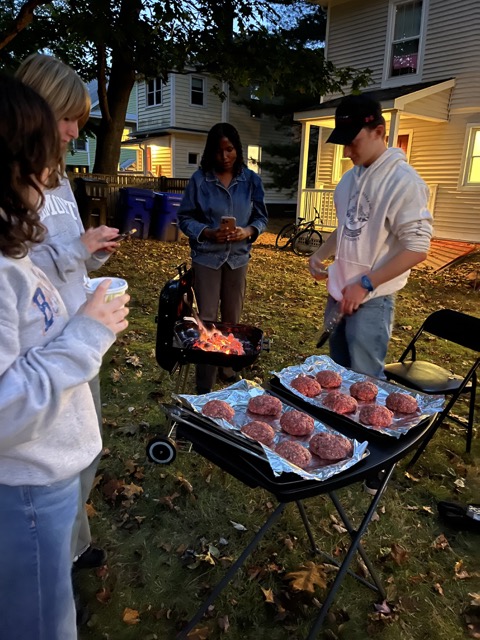
Finally, Friday came. Immediately after class, I picked up my friend Zach Liu ’26 to move everything from my dorm to the Community Engagement House and start prepping the food. We mixed beef with eggs, salt, pepper, and garlic powder, formed patties from the conglomeration, and let them sit in the fridge. People soon begin to show up, and I quickly put them to work slicing peppers, seasoning asparagus with olive oil, garlic powder, and salt, and laying out cutlery. Meanwhile, I attempted to light the bag of match light charcoal. Although I didn’t need to add any lighter fluid to the bag, I was afraid of messing up (I called my dad earlier in the day to get his advice). Five minutes after lighting the bag, the fire roared to life. Grill Night had truly begun.
Everyone had arrived and the food was all ready to go by 6:30 p.m., yet I still could not begin cooking. When using a charcoal grill, it’s essential to wait for the actual flame to die down and the charcoal to turn grey. I didn’t anticipate how long this process would take, or that the sun would set so early. I began getting nervous that Grill Night would be an abject failure. But my wonderful friends, most of whom would have otherwise eaten hours earlier in Usdan, waited patiently for the grill to be ready. We sat near the grill together, telling jokes and stories. Eventually, the fire died and I started grilling.
First up were the burger patties, which took a while to cook. I’m a fan of a rare burger, although some people were less adventurous and insisted that their burgers stay on the grill until they were insultingly well done. Since there was still a lot of food to make, I set about lighting the other grill. The grate did not fit properly and kept falling into the fire (remember: this was a $20 Target clearance purchase), and the charcoal didn’t want to light. But eventually it roared to life. The vegetables and hot dogs cooked quickly, and soon I had food ready for everyone. The burgers were a big hit; the garlic powder was key to making them flavorful and delicious. I wasn’t as concerned about the hot dogs and chicken sausage since they were already pre-made, but they also had some excellent grill marks and tasted delicious.
As everyone sat down to eat, they swapped tales, complained about their workloads, and talked about their weekend plans, as befits a proper college cookout. Meanwhile, I was in full-on grill mode, taking the occasional respite to yell at people when they took something directly off the grill, interrupting my system of grill-to-serving table transfers. But I wouldn’t change anything about how the night went.
Overall, Grill Night was a smashing success. There is nothing better than hanging out with your friends, enjoying each other’s company, and cooking for people you care about, even if they start getting hungry and yelling at you. All I can say is, if you find a grill for a super low price, I insist you host your own Grill Night (and invite me). Just remember to light the charcoal early.