Tag: James Cameron

  • Yes, There Is Barbecue in Buffalo, New York

    Yes, There Is Barbecue in Buffalo, New York

    c/o Blake Klein, Assistant Food Editor
    c/o Blake Klein, Assistant Food Editor

    This past weekend, I was in Buffalo, N.Y. for a mock trial tournament. Buffalo is known for a few (and only a few) things: the Bills, its proximity to Niagara Falls, and Buffalo wings. Naturally, I was ecstatic to venture around the city and try as many wings places as possible, regardless of the havoc it would wreak on my stomach. And while the wings were delicious, it somehow, unexpectedly, ended up being the barbecue that would justify my six-hour drive to the city.

    I BBQ 4U is located in an unassuming strip mall on the outskirts of the city proper. In front of the restaurant is an enormous smoker, which enticed me with its smell every time I drove past it. Despite my friends’ misgivings about visiting a place that “seemed shady,” I decided to look it up on Google. Amazingly, I BBQ 4U held a perfect five-star rating on Google with over 100 reviews. There was nothing but admiration and love for this tiny barbecue shack.

    “I just had a brisket sandwich so good I feel like I should need a cigarette, shower, and confession,” said Daniel S., a local guide who raved about I BBQ 4U’s food. 

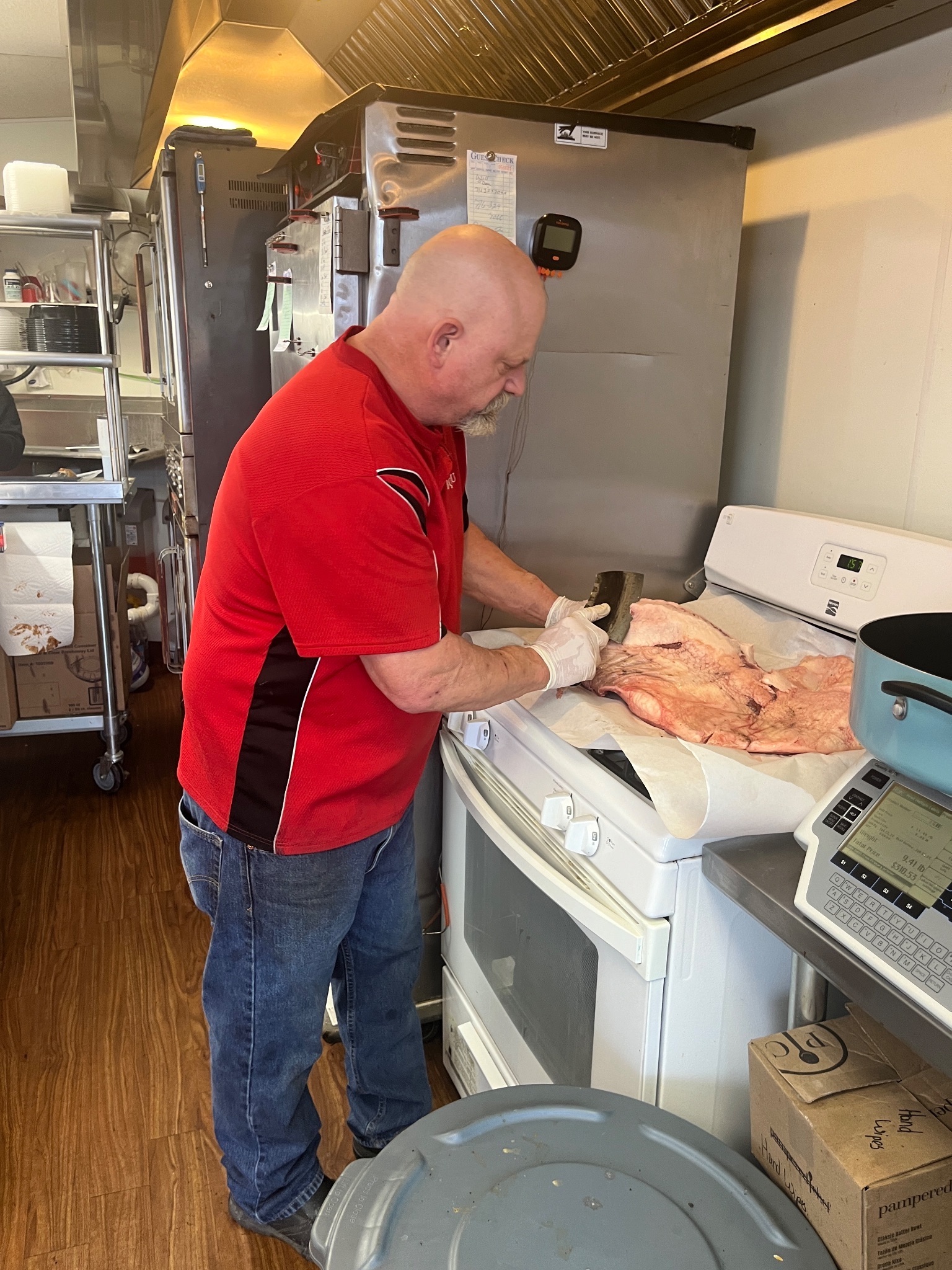
    With enough badgering, I convinced four of my teammates to adventure with me down the road. Walking inside, we were immediately hit by the wondrous smell of smoked barbecue, just as strong as it was outside. A large man wearing a bright red shirt, who was busy trimming the fat from a massive piece of brisket, introduced himself as Chuck (an apt name) and offered us a sample of anything we wanted to try. Amazed by this outstanding customer service (imagine a restaurant letting you try any dish for free before you even pay), we requested beef ribs, brisket, and pulled pork. It was incredible.

    The brisket was wonderfully tender and flavorful, and the homemade barbecue sauce was the perfect balance of tangy and sweet. The beef rib I tried, which was available only as a special, was dressed in a dry rub and tasted terrific. The meat fell right off the bone and had a subtle spicy kick. Everything we tried blew all my experiences with Buffalo wings out of the water. 

    “I only tell people it’s the best barbecue in Buffalo because I know it’s the best barbecue in Buffalo,” Chuck told us as we feasted.

    When we were done sampling everything, we ordered some combo dishes to bring back to the Airbnb. I got the Brisket Sandwich with mac and cheese and beans. After receiving our meals and showering Chuck with our praise, we returned to the Airbnb. There, the rest of our team looked on with jealousy as we devoured the barbecue. The brisket sandwich had the perfect amount of sauce: not too much to overpower the yummy brisket, yet just enough to add a delicious, sweet flavor. The mac and cheese was tasty, a perfect complement to the sandwich. And the beans…they were just sensational. This perfect side dish (who would have thought that beans could be so delicious!) resembled a Brunswick Stew, a tomato-based concoction consisting of beans, vegetables, and small bits of meat. The rich flavor and soaked meat and vegetables satisfied all my taste buds.

    While the renowned Buffalo wing places I tried, such as the famous Anchor Bar, were delicious, they pale in comparison to I BBQ 4U. The restaurant had some of the best and warmest customer service I’ve ever experienced, and the food was absolutely delectable. Chuck was an incredible person to talk to, albeit briefly, and I will dream about his barbecue forever. I implore you all to go to Buffalo, not to eat chicken wings or see Niagara Falls, but to visit I BBQ 4U. It is well worth the drive.

    Blake Klein can be reached at bklein@wesleyan.edu.

  • You Thought I Was Feeling You? Nah, I’m Eating at Krust

    Classically and completely booked during parents weekends, Krust has proved time and time again to be one of the most creative artisanal pizza spots near campus (check out the dive into Otto pizza in Chester in an article by Food Editor Lewis Woloch ’24). Serving as a more casual and less expensive option than its sister restaurant, OSA, Krust offers a similarly dynamic and ambitious menu at an accessible price point.

    Collaborating with local Middletown interior designers, their philosophy of refined minimalism shines throughout the space. With considerate design choices like the two-hundred-year-old tobacco wood foundation, original tin ceiling, and touches of southern yellow pine, the space effortlessly conveys a warm, contemporary, and rustic environment that pays homage to its town. If you’re fortunate, you will be whisked away to be seated in the comforting, futuristic wooden cubes in the back corner.

    Krust owners Rich Garcia and Kevin Wirtes present their vision for the restaurant in their 10-minute “Our Story” video on their website

    “We like the ever-changing challenge of fire,” the founders said. “There is a very intense, beautiful heat to cook the pizza.” 

    Taking the classical Neapolitan-style pie, Krust’s philosophy is built upon the simple idea of considering pizza as a sandwich: a refreshing and dynamic platform to showcase ingredients that people wouldn’t normally get on a pizza. Aside from its masterful brick-oven creations, Krust also prides itself on its identity as a bourbon bar. With an amazing whiskey selection, 12 rotating taps, and a handcrafted cocktail menu, no aspect of the dining experience is overlooked. Eating at Krust feels like a nostalgic experience, calling back to accumulated memories of special occasions, sharing food, and conversations amongst close friends and family.

    Their pizza selection is expansive, to say the least. Separated into white and red pies, the menu offers timeless classic pies such as Margherita, Red, White, Classic Cheese, and Veg, but fulfills the promise of its modern twist in their more ambitious pies, all decorated with locally sourced seasonal ingredients.

    If you go there, start with a light arugula salad and the burrata for the table. Lemon-coated baby arugula, pickled onions, and walnuts all combine to create a refreshing preview as the pies are tossed and blazed in the fire of a trillion suns, contrasting with the sunless winter in Middletown. Wood-fired cauliflower and luscious burrata-style mozzarella coat the forks as your housemates laugh over some deranged shared memory.

    You kick back not one, but two Connecticut Cocktails—a Krust classic concoction of moonshine, ripe agave punch, agave mojito bar juice, lemon, and thyme. Suddenly, six beautifully crafted pies touch down. Personally, my table would order a healthy balance of traditional pies and new classics: Sweet and Spicy Roni, Dill Bacon and Ranch, Brussels, Shroom, Margherita, and White. While every newcomer is (understandably) terrified of the chaotic amalgamation of the ingredients in the Dill Bacon and Ranch, with a little bit of trust, your mind and palate may thank you for a new favorite.

    As you feast, any notions of your stomach’s capacity disintegrate alongside the endless slices of pie. There are no leftovers at Krust Pizza and Bourbon Bar, but in the unlikely event that you crave more, the Nutella pizza is the perfect hazelnutty conclusion to put you into a warm food coma.

    Atmosphere: Warm and minimal, mix of nostalgic and contemporary

    Noise Level: Lively but not uncomfortably loud

    Recommended Dishes: 

    Small Plates: Burrata, Arugula Salad, Wood Fired Cauliflower 

    Pies: Sweet and Spicy Roni, Dill Bacon and Ranch, Brussels, Shroom

    Drinks: Anything with Bourbon (the staff is passionate and extremely knowledgeable), CT Cocktail. Kentucky Mule, Smoke on the Water, Whiskey Flight, or any of the local beers on draft (Thimble Island Triple Ghost IPA, Fire Hollow Local Bud, Bell’s Two Hearted)

    Price: $$ ($20 per person)

    Open: Wednesday to Saturday, 4 p.m.–10 p.m.

    Reservations: Yes, essential on the weekends

    Mikail Haroon can be reached at mharoon@wesleyan.edu.

  • Weshop Wednesday: Tofu and Bok Choy Dumplings

    Weshop Wednesday: Tofu and Bok Choy Dumplings

    c/o Milly Berman
    c/o Milly Berman

    This is another recipe in a series I am developing called “Recipes You Can Make With Ingredients Only From Weshop (and Not Just on Restock Day).” Sure, anyone can make a delicious dinner on a Friday or Saturday when the shelves are all full. But it’s truly a challenge to be inspired when there’s just one sad, wilted, baby bok choy in the vegetable section and nothing at all in the meat fridge. In this case, it’s important to have some flexible recipes into which you can dump limp vegetables and a good old brick of tofu to get through the week.

    Substitute the tofu for any kind of ground meat if you can find it, and throw in any other vegetables you have. Scallions or spinach would work great. Disclaimer: these dumplings are in no way authentic to any cuisine whatsoever, but neither are the ones at Usdan, and these are much better.

    Because they don’t sell dumpling wrappers at Weshop, we are going to have to make our own. It’s going to be okay. Dumpling wrappers are actually one of the simplest things in the world to make because they only require one ingredient (flour) and some time. The key is using part boiling water and part room temperature water—the boiling water denatures the gluten in the flour, making the dough soft and easy to roll out rather than stretchy or bouncy. When you first mix together the dough, it will be a dry, crusty mess. But the flour works its magic during an hour-long waiting period and actually absorbs the water in a process similar to autolyse, a stage of the resting period for bread dough when it hydrates and develops gluten. Then the dough can easily be rolled into 3-inch rounds and stuffed full of delicious filling.

    Ingredients

    Serves 2–4 

    Dumpling wrappers:

    • 2 cups flour
    • 1/4 cup (+ 2 tablespoons) boiling water
    • 1/4 cup room temperature water
    • Oil

    Tofu filling:

    • 3 teaspoons oil
    • 1 large carrot
    • 1/4 onion
    • 3 cloves garlic
    • 1/2 inch ginger
    • 1 baby bok choy
    • 1/3 cup soy sauce
    • 1 tablespoon sesame oil
    • 3 tablespoons sriracha (or more, according to your spice preference)
    • 2 tablespoons ketchup
    • 3 tablespoons Japanese BBQ sauce (One of my Weshop staples. If you can’t find it, add 2 extra tablespoons of soy sauce and 1 tablespoon of honey.)
    • 1 block firm tofu 
    • Salt and pepper, to taste

    Instructions

    1. Mix together the flour and two types of water to form a shaggy, crusty, ugly dough. Add 2 extra tablespoons of boiling water if it’s really not coming together at all. Set aside to rest for 15 minutes.
    2. Wrap the tofu in paper towels and place it in a bowl. Place anything heavy, like a can of tomatoes or a textbook, on top to weigh it down and press out any excess water.
    3. Once 15 minutes have passed, knead the dough a couple of times. It should come together into something less ugly and more smooth. Rub the outside with oil, cover, and set aside for 45 minutes to an hour for the gluten to relax.
    4. While the dough rests, make the filling. Chop your carrot and onion as finely as you possibly can and sauté them in 1 teaspoon of oil on medium heat until soft and translucent. While they heat, mince the garlic, ginger, and baby bok choy. Add them to the pan and stir to combine.
    5. Season the vegetables with the soy sauce, sesame oil, sriracha, ketchup, and Japanese BBQ sauce. Continue cooking until the sauce has been mostly absorbed by the vegetables, about 5 minutes. Then remove from the heat and crumble in the pressed tofu.
    6. When the dumpling dough has rested, roll the dough into a log and cut it into 16 evenly-sized pieces. Roll each piece into a ball in the palms of your hands. Use a rolling pin or any kind of clean, empty bottle to roll out each ball as thin as you possibly can. They should end up between 3 and 4 inches in diameter. The size is less important than the thinness. If they are too thick, they won’t cook all the way through.
    7. Fill each dumpling wrapper with filling and seal them up. I could try to explain how to do this, but YouTube will serve you better.
    8. Heat 2 teaspoons of oil in a pan on medium-high heat. Once it is super hot, place all the dumplings in the pan. They should start to brown instantly. Once they are lightly browned, add 1/3 cup of water and cover the pan with a lid. 
    9. Cook for 6 to 9 minutes, or until the dumplings have started to turn shiny and a little translucent. At this point, remove the lid and let all the water evaporate so that the dumplings can get crispy again. The good thing is that you can’t really overcook them at this point. Once they are crispy, you are ready to serve! I like to dip the dumplings in a little extra Japanese BBQ sauce.

    Milly Berman can be reached at mgberman@wesleyan.edu.

  • Cantina Café Ristorante: A Glorious Review

    Cantina Café Ristorante: A Glorious Review

    c/o Cantina Cafe
    c/o Cantina Cafe

    Hidden underneath the Italian Society of Middletown’s principal building, an inconspicuous entryway denoted by a small “Open” sign lies hidden in the night. An unknowing passerby might mistake it as an entrance to just another dilapidated convenience store, or even a certain fraternal organization’s operational headquarters. However, even with its awkward separation from the rest of the Main Street dining establishments, Cantina Café Ristorante rewards the curiosity of the intrepid.

    Upon entering, you follow a staircase down a tunnel of Italian-American memorabilia, Peroni and Coors Light neon signs, and framed newspaper clippings of the restaurant’s numerous accolades from decades past, telling you all you need to know about the status of this establishment. Walking into the cozy main dining area, with its warm lights, lush greenery on the walls, and those iconic checkerboard tablecloths, makes you believe just for a second that you’re in the pleasant homeliness of an old nonna’s kitchen. 

    As for the meal itself, my party of six ordered only three dishes. You read that right. These portion sizes are probably enough to feed a small Tuscan village, but in the case of Cantina, high quantity and high quality are surprisingly correlated. 

    Before our entrées even arrived, the server placed a basket of complimentary bread on the table, the steam rising from it in a subtle tease. Soft crumbs stuck to the roof of my mouth as I tried to exhale the steam away. Unfortunately, I burned my mouth regardless, as the garlic-infused olive oil led me to tempt fate. I managed to escape with only minimal damage to my taste receptors, which still had a long night of stimulation ahead of them.

    The shrimp scampi was next to arrive. Waves of angel hair pasta were carelessly enveloped in a heap of blushing prawns, conjuring up the image of a golden Adriatic Sea. Acidic notes first hit my palate, but a counterbalance of buttery weight promptly quelled any dregs of sour discomfort, both physical and emotional. Each crispy shrimp had a tail that even the slightest pressure from my molars could pulverize, and each angel hair was a perfect al dente. Maybe Ceres herself harvested the grains from which they were made. My heart wanted to remain sailing on this maiden voyage forever, but my mind knew that landfall was inevitable.

    The incoming chicken caprese signaled the end of my maritime adventure, but the soft breading on its surface prompted a new journey through the rolling hills of the Val d’Orcia. Underneath the peaks and valleys of the uneven surface was a plush and savory treasure. Tomato sauce, melted mozzarella, and unmelted mozzarella, Madonna! Such an amalgamation of toppings almost brought me to tears. It was only with the addition of the side penne vodka that I slowly began to be dragged back to the real world. Not that it tasted bad. Nothing tasted bad from this place. I was eating the courses of gods but was served the penne vodka of a king (the sauce was a tad watery). That and that alone is the extent of my criticism against this fine establishment.

    It is not often that a restaurant moves me to write for such a distinguished publication as The Argus, but when I do, you can imagine it’s quite the meal and quite the deal. The total damage done to my wallet was about $127.20. Divide by 6 and that’s about 21 smackeroos a person, including tax and tip. In this economy, it is an offer you can’t refuse. I don’t know when I’ll go back to Cantina Café Ristorante. Maybe it’ll be in a week, maybe in a year. I am honestly unsure when I will be emotionally ready to travel back into that magnificent world. But I do promise that one day, sooner or later, I will return to the heavenly realm where I was sequestered upon that very first bite.

    Santiago Galvan can be reached at sgalvan@wesleyan.edu.

  • The Lunar New Year: Food and Family

    The Lunar New Year: Food and Family

    c/o Chantal Dunn
    c/o Chantal Dunn

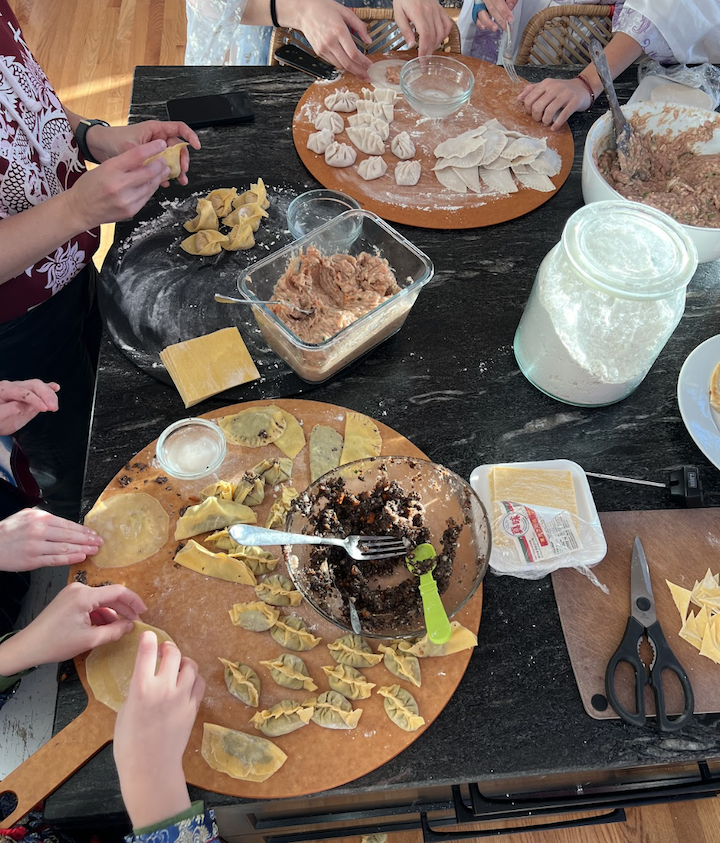
    Kung Hei Fat Choi—Happy New Year! While the Asian side of my family is from the Philippines, the years that my mom spent living in Hong Kong infused the Lunar New Year into our family’s annual traditions. However, as a broke college student, I look for affordable ways to celebrate the holiday on campus. This year, my friends and I spent a lovely night hand-making dumplings with my family in West Hartford, then brought the celebration back to Wesleyan in a much less authentic (but equally enjoyable) form. Here are some of the non-traditional college-friendly Lunar New Year’s dishes we indulged in!

    Rice Cake Stir-Fry:

    These small, circular rice cakes, which vaguely resemble coins, are said to bring wealth and prosperity in the new year. Most commonly, they are cooked in soups or stir-fried. Given the constraint of a High Rise kitchen, my friends and I opted for a simple veggie stir-fry!

    Ingredients:

    • 1 bag frozen rice cakes (16 oz)
    • 1 eggplant
    • 1 red pepper
    • 1/2 onion
    • 2 tablespoons neutral oil (vegetable, canola, or safflower)
    • 1 tablespoon water
    • 1/2 bag spinach

    Stir-fry sauce:

    • 4 tablespoons soy sauce
    • 2 tablespoons oyster sauce
    • 2 teaspoons sesame oil
    • 1 teaspoon gochujang paste
    • 1 teaspoon minced garlic

    Instructions:

    1. Soak frozen rice cakes in water to defrost for 20 minutes. (Alternatively: boil rice cakes in water for 4 minutes, then drain.)
    2. Slice onion and red pepper into thin slivers, and chop eggplant into mid-sized pieces (1 inch by 3 inches).
    3. Heat oil in a pan on medium heat.
    4. Sauté onions until soft.
    5. Add eggplant and red pepper to the pan.
    6. Mix together stir-fry sauce ingredients in a bowl, adjusting to taste.
    7. Add the water and 1/2 of the stir-fry sauce.
    8. Cover pan and steam vegetables for 5 minutes.
    9. Uncover pan and turn heat up to medium-high.
    10. Add rice cakes, remainder of stir-fry sauce, and spinach.
    11. Stir-fry in pan until sauce is cooked down, eggplant is soft, and rice cakes are browned and have a chewy texture.


    Pan-Seared Baby Bok Choy:

    Leafy greens are meant to bring in growth and good fortune. While bok choy has certainly taken the limelight amongst Chinese vegetables in America, choy sum is a similar (and more flavorful) leafy green that is also enjoyed on the Lunar New Year. So while this is technically a bok choy recipe, feel free to substitute choy sum! 

    Ingredients:

    • 1 pound baby bok choy
    • 1 tablespoon sesame oil
    • Hoisin sauce

    Instructions:

    • Wash baby bok choy thoroughly with cold water, cut off any small roots at the base of the plant, and slice heads in half.
    • Add sesame oil to the pan and turn the burner to medium heat. 
    • Sear bok choy cut-side down for 2 minutes.
    • Add 2 tablespoons water and cover pan. Cook for 3 minutes.
    • Uncover and let water cook off, removing bok choy from pan when slightly soft and vibrant green.
    • Drizzle hoisin sauce on top and enjoy!


    Non-DIY Dumplings:

    Dumplings, the pouches of delicious goodness they are, supposedly evoke the image of money pouches and symbolize wealth. For the sake of time, our Wesleyan Lunar New Year’s celebration involved cooking pre-made dumplings, in lieu of hand-wrapping filling made from scratch.

    Ingredients:

    Dipping Sauce:

    • Chili oil
    • Vinegar
    • Soy sauce
    • Hoisin sauce
    • Sesame oil
    • Gochujang

    Instructions:

    • Bring pan to medium heat and add oil.
    • Pan-fry dumplings until bottoms are slightly golden.
    • Add water, cover pan.
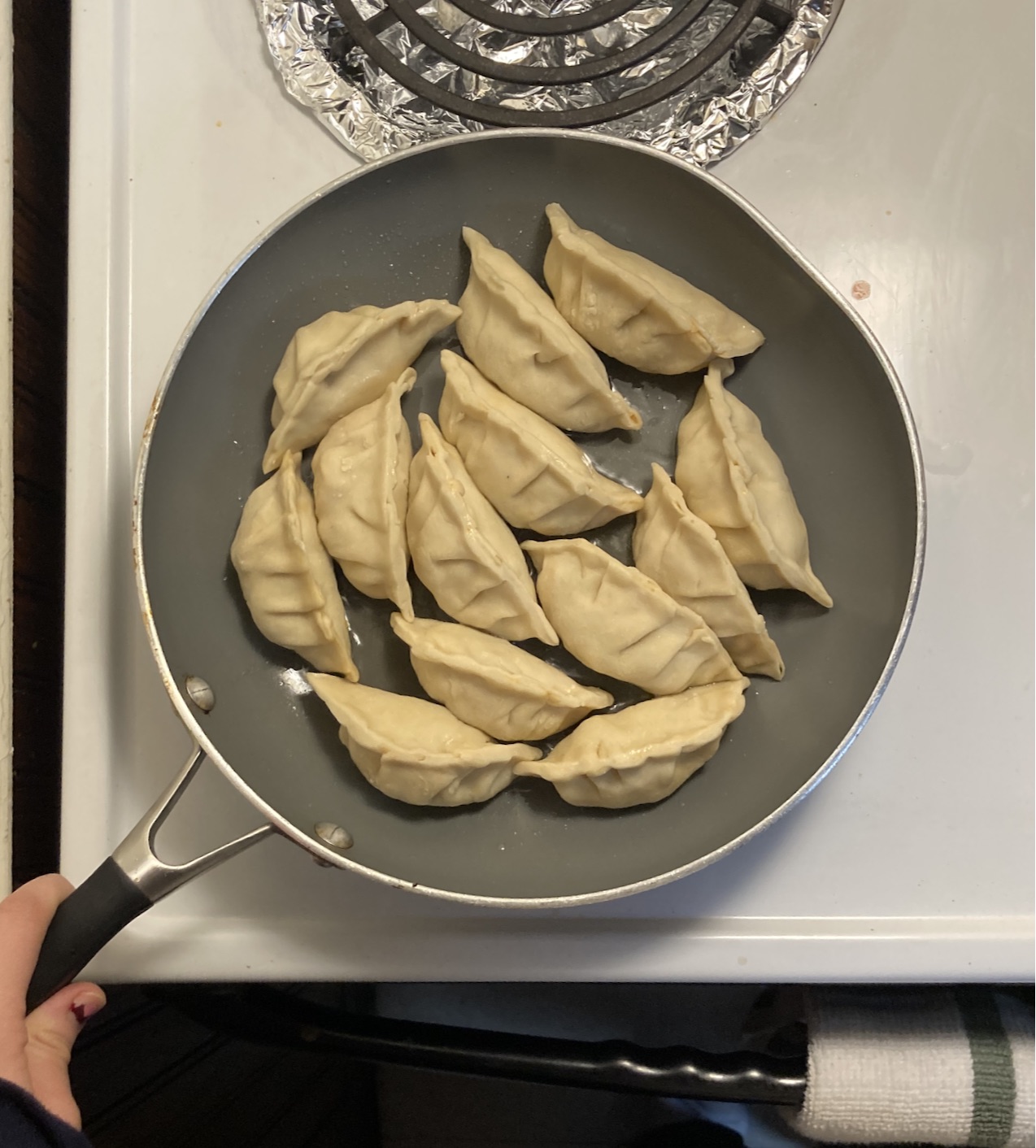
    • Cook until the sides are soft, then enjoy your dumplings!
    • For the sauce, select ratios and combinations to taste. Chili oil is a great topping on its own. You can combine vinegar and soy sauce for a classic dipping sauce, or combine sesame oil, gochujang, soy sauce, and hoisin for a sweet and spicy sauce.

    Chantal Dunn can be reached at cadunn@wesleyan.edu.

  • Magnolia Bakery’s Banana Pudding

    Magnolia Bakery’s Banana Pudding

    c/o Magnolia Bakery
    c/o Magnolia Bakery

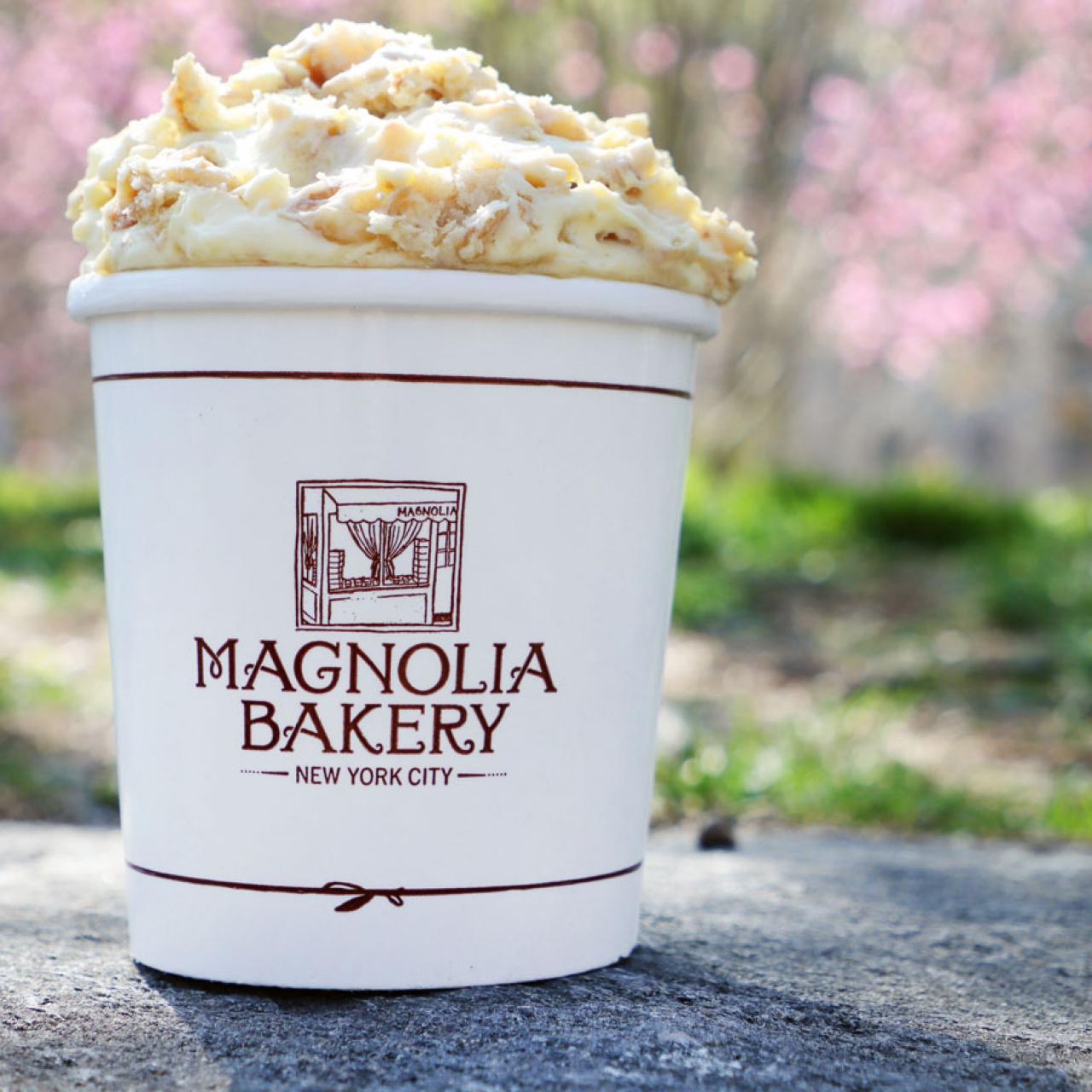
    I grew up outside New York City, and I fondly remember my parents taking me on trips into Manhattan. Our visits often included stopping at Magnolia Bakery, a popular chain located throughout the city. While the store is known for its wide variety of cupcakes and different types of pudding, its most famous dessert (and my personal favorite) is the banana pudding. Magnolia Bakery’s recipe is quite easy to make and very delicious. The pudding is made with JELL-O vanilla instant pudding mix, which simplifies the recipe and adds to its nostalgia factor. I’ve made this pudding a few times, most recently for my friend’s birthday.

    Ingredients 

    • 1 14-ounce can condensed milk
    • 1 and 1/2 cups ice cold water
    • 1 package instant french vanilla pudding mix (You can also use regular vanilla or banana flavored)
    • 3 cups heavy cream. You may want a hand/stand mixer to beat the heavy cream, although you can also do it by hand with a whisk. Just make sure you have a fun playlist going, since it may take a very long time. 
    • 5–6 ripe bananas
    • 1 11-ounce box Nilla Wafers

    Instructions

    1. Beat condensed milk with water in a large bowl. Stir in pudding mix and beat well until combined. Place mixture into the refrigerator for at least 1 hour or overnight (Note: It’s best to let the pudding sit for longer so it can settle).
    2. Whip heavy cream until it forms stiff peaks. The consistency will thicken, and the whisk will leave marks in the cream.
    3. Fold the whipped cream into the pudding mixture. Stir until combined. 
    4. Slice the bananas into small discs.
    5. Get a 4–5 quart trifle bowl or other glass bowl. Spread a small amount of pudding on the bottom. Layer enough cookies to cover, then layer enough bananas to cover the cookies. Spread 1/3 of the remaining pudding over the bananas. Repeat layering cookies, bananas, and pudding twice more, ending with a final layer of pudding. Crumble the remaining cookies and sprinkle them on top of the pudding.
    6. Cover with plastic wrap and let sit in the fridge for at least 4 hours. This dessert is best served within 12 hours, before the bananas turn brown, although it can still be eaten for a few days if kept in the refrigerator.

    Blake Klein can be reached at bklein@wesleyan.edu.
  • West Hartford’s Arugula Bistro: Stick to Your Strengths

    West Hartford’s Arugula Bistro: Stick to Your Strengths

    Arugula Bistro c_o Isabel Kapner (2)
    c/o Isabel Kapner

    Dining is an experience that should celebrate delicious flavors while promoting human connection. Arugula Bistro’s mission to bring “friends and family together over glorious food, easy-drinking wines, a comfortable dining experience, and a lot of love” attempts to do just that. The dim lighting, jazz music, nine-seat bar, and gold-washed walls littered with pictures in this West Hartford restaurant immediately make the diner feel at ease. Over its 27 years in business, Arugula Bistro has cultivated an intimate dining experience through minimizing expansion. Christiane Gehami and Michael Kask opened Arugula Bistro, originally an eight-seat restaurant, intending to serve fusion cuisine with a focus on traditional Middle Eastern dishes, as well as plates inspired by Indian and Asian flavors. 

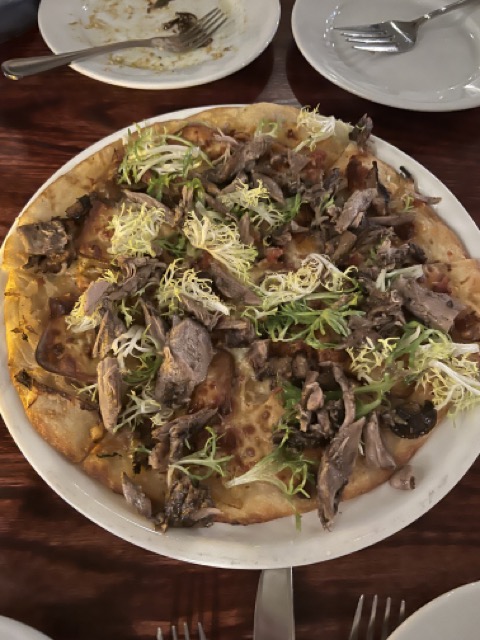
    The menu has 13 mezze, 4 salads, 5 entrées, and 11 flatbreads. This menu tries to straddle the worlds of fine dining and casual eateries, ultimately to a fault. Onion rings ($7) and escargot ($16) are both offered as mezze. They also offer a cup-and-char pepperoni flatbread ($22), essentially just a pepperoni pizza with hot honey, and a wild mushroom flatbread ($20) with this elaborate description: “Onion Marmalade/Asiago Base… duxelles, mushrooms, blue cheese, finished with arugula that has been dressed in a truffle vinaigrette.” I understand that the intention is to make the menu more accessible to those who may be pickier eaters. Still, there is strength in cohesion, and increased cohesion would undoubtedly make the Arugula Bistro menu stronger. I also think that the addition of truffle vinaigrette and escargot was to the detriment of the overall menu. Their website states, “our dining room is your dining room,” but adding stereotypically fancier items to the menu detracts from the restaurant’s purpose and its strength. The dishes unique to Arugula Bistro were fantastic; this restaurant should focus on celebrating its delicious flavors instead of incorporating less impressive, more standard menu items.

    Since the stark contrasts in flavor profiles made it difficult to pick items that fit well together, my friend and I decided to share three entirely unrelated dishes: the warm roasted eggplant and wonton napoleon ($16), the fried brussels sprouts ($11), and the duck confit and chorizo sausage flatbread ($25). The first dish aligned most with what I was expecting from a Mediterranean restaurant, the fried brussels sprouts were picked as a traditional bistro dish, and the flatbread was recommended by the waiter. 

    c/o Isabel Kapner
    c/o Isabel Kapner

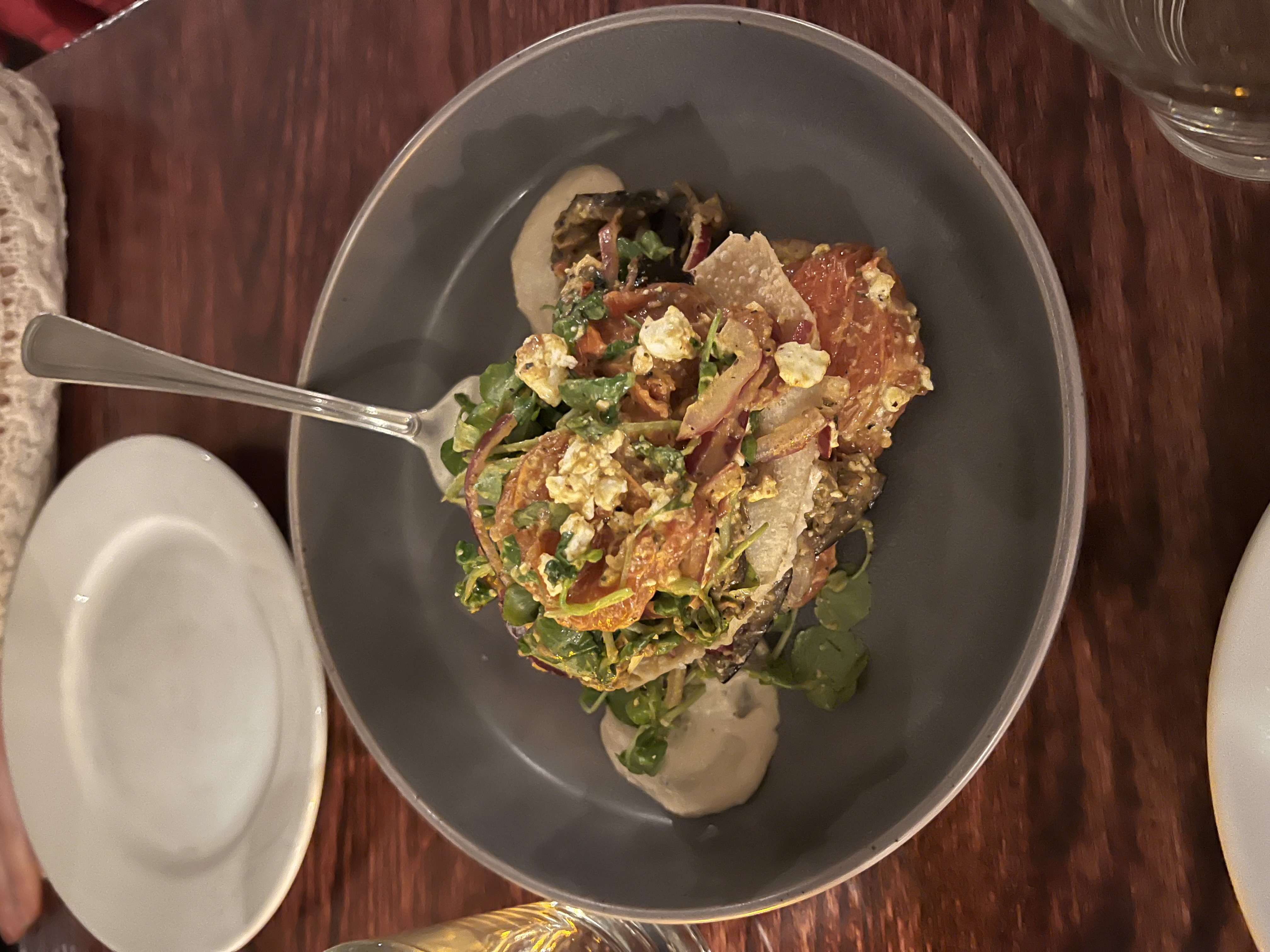
    I cannot stop thinking about the eggplant dish. It had everything I could ever ask for from an appetizer. It truly felt like eating a warm embrace. Roasted eggplant and tomatoes were lightly bathed in a curry vinaigrette and stacked with watercress, pickled red onions, and fried wontons sprinkled with feta on top of a bed of hummus. The warmth from the curry vinaigrette paired perfectly with the soft eggplant and tomatoes. By roasting the thick tomato slices, you could really taste their sweetness and depth coming through. Every bite delivered a wonderful synthesis of flavoring, none overpowering the other, collaborating to provide comfort. The red onion and fried wonton brought a crunch to this otherwise very soft appetizer, adding another sense of dimension. There was even a slight kick from the curry vinaigrette that balanced out the subtler hummus. The dim lights and jazz music in Arugula Bistro acted as good accompaniments to the warmth I found in this appetizer. I would highly recommend this dish, and I will be attempting my own version of it soon. 10/10. 

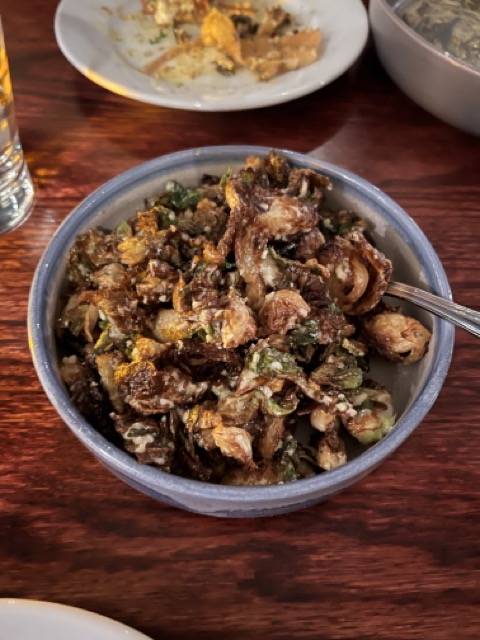
    The fried brussels sprouts left more to be desired. Because this is such a popular dish for restaurants like this to have on their menu, I had relatively high expectations. I was hoping that Arugula Bistro would produce a replication of the classic dish: fried sprouts coated in a cheesy, garlicky sauce, with crisp exterior leaves and a soft interior in each sprout. Alternatively, I hoped that they would add some sort of new excitement to the dish, maybe in the form of some unexpected spice or star ingredient. These brussels sprouts had the cheesy, garlicky goodness I expected, but they were suffocated in oily aioli. Though they appeared crisp, they had gone soggy by the time they reached our table. There was no edge to this dish. These brussels sprouts lacked dimension in texture. I love garlicky brussels sprouts as a main dish accompaniment, but this did not hold up to my standards. 4/10.

    c/o Isabel Kapner
    c/o Isabel Kapner

    Our entrée consisted of duck confit generously piled on top of a crumbled chorizo, mushroom, and mozzarella flatbread with a handful of truffle-vinaigrette-dressed lettuce sprinkled on top. It was delicious. The duck was incredibly tender, cooked in a way that allowed the flavoring to really come out. The smokiness from the mozzarella and the chorizo combined well with the sweetness of the onion marmalade base. Though I appreciate the addition of the fresh lettuce to add texture, I am always suspicious of restaurants incorporating truffles into their dishes. It’s almost always not enough to have any impact and is only done as a cop-out—a cheapened elevation. As expected, I could not taste the truffle vinaigrette on the lettuce, but I did enjoy the lightly dressed lettuce as an addition to this smoky, sweet, tender flatbread. To add even more dimension to this dish and bring out its flavors further, I would have incorporated some sort of spice, but the flatbread was still delicious without it. 9/10.

    Arugula Bistro provided a wonderful environment for dinner: intimate and cozy. Admittedly, I have high expectations for every restaurant I choose to go out to eat at. As a college student, my budget for eating anywhere that doesn’t take Wesleyan dining points is minimal, and I want to spend my money on really good food—food that provides a wonderful combination of flavors and textures, that brings out the best in each ingredient. Arugula Bistro succeeded in delivering great flavor profiles in its innovative dishes and should continue to base its menu around its strengths, instead of overcomplicating things for the sake of trend. 

    Isabel Kapner can be reached at ikapner@wesleyan.edu.

  • Steak Frites Soirée: Cooking with Chef G

    Steak Frites Soirée: Cooking with Chef G

    c/o Gemmarosa Ryan, Food Editor
    c/o Gemmarosa Ryan, Food Editor

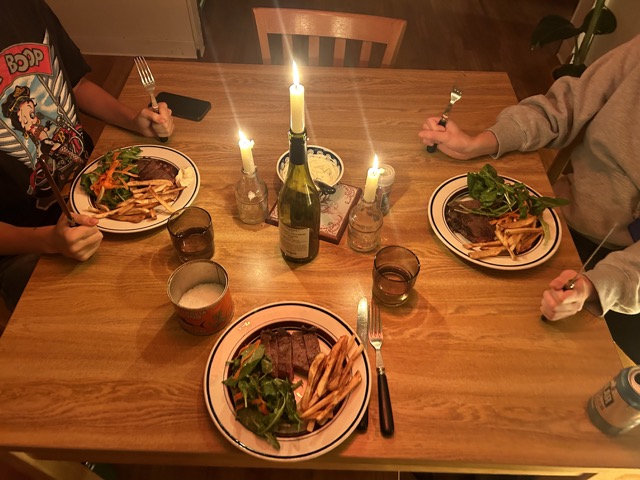
    Nothing livens up a Friday night like a themed dinner. When the days drag on and the bitter gray of Connecticut winter gets to me, I find reprieve in Parisian daydreams: chalkboard bistro menus and chain-smoking retirees sitting at comically small round tables. Escargots are few and far between in these parts (and I’m not equipped to cook them quite yet), but as a new cast-iron owner, a steak frites moment seems feasible. I sent a text out to my anemic friends and got to work. 

    Steak Frites with Garlic Aioli

    Ingredients

    Serves 4–5

    • 3–4 New York strip steaks
    • 5 Yukon gold or Russet potatoes 
    • 1 cup mayonnaise 
    • 2 cloves garlic 
    • 1 tbsp lemon juice
    • Kosher salt
    • Black pepper
    • 3 tbsp butter 
    • Canola oil (a frying amount)
    c/o Gemmarosa Ryan, Food Editor
    c/o Gemmarosa Ryan, Food Editor

    Instructions

    1. Grate garlic cloves into mayonnaise, as well as a squeeze (1 tbsp) of lemon juice, a pinch of salt, and a healthy amount of black pepper. Set aside.
    2. Peel and cut potatoes into matchsticks.
    3. Place potatoes in a bowl of warm salted water.
    4. Salt and pepper both sides of the steaks (1 tsp kosher salt per pound) 
    5. Heat a large pot over high, and add canola oil. It should be about 2 inches worth of oil, (enough for a deep-ish fry of the potatoes).
    6. Once the oil is glistening, and you can smell it intensely (about 5-6 minutes), drop in 1 fry. If it sizzles immediately on contact, add in the rest of the fries. Work in batches to not overcrowd the oil. 
    7. Take the fries out when they turn golden brown and place them on a paper-towel-lined plate. Salt them while they are still hot.
    8. If you can multitask while the fries are frying (or have 2 cooks in the kitchen), heat up a cast iron skillet over high heat to get it ripping hot. 
    9. Add in the butter and the steaks, lower the heat to medium. Don’t fuss with the steaks for at least 3 minutes, flipping only when the first side is nice and seared. 
    10. Flip the steaks and cook for another 3 minutes on the other side. 
    11. Tilt the cast iron so that the butter accumulates in a pool, and, using a spoon, baste the steaks for another minute. 
    12. Take the steaks out and season with flaky salt (if you have it). Let them rest for a 3–4 minutes. 
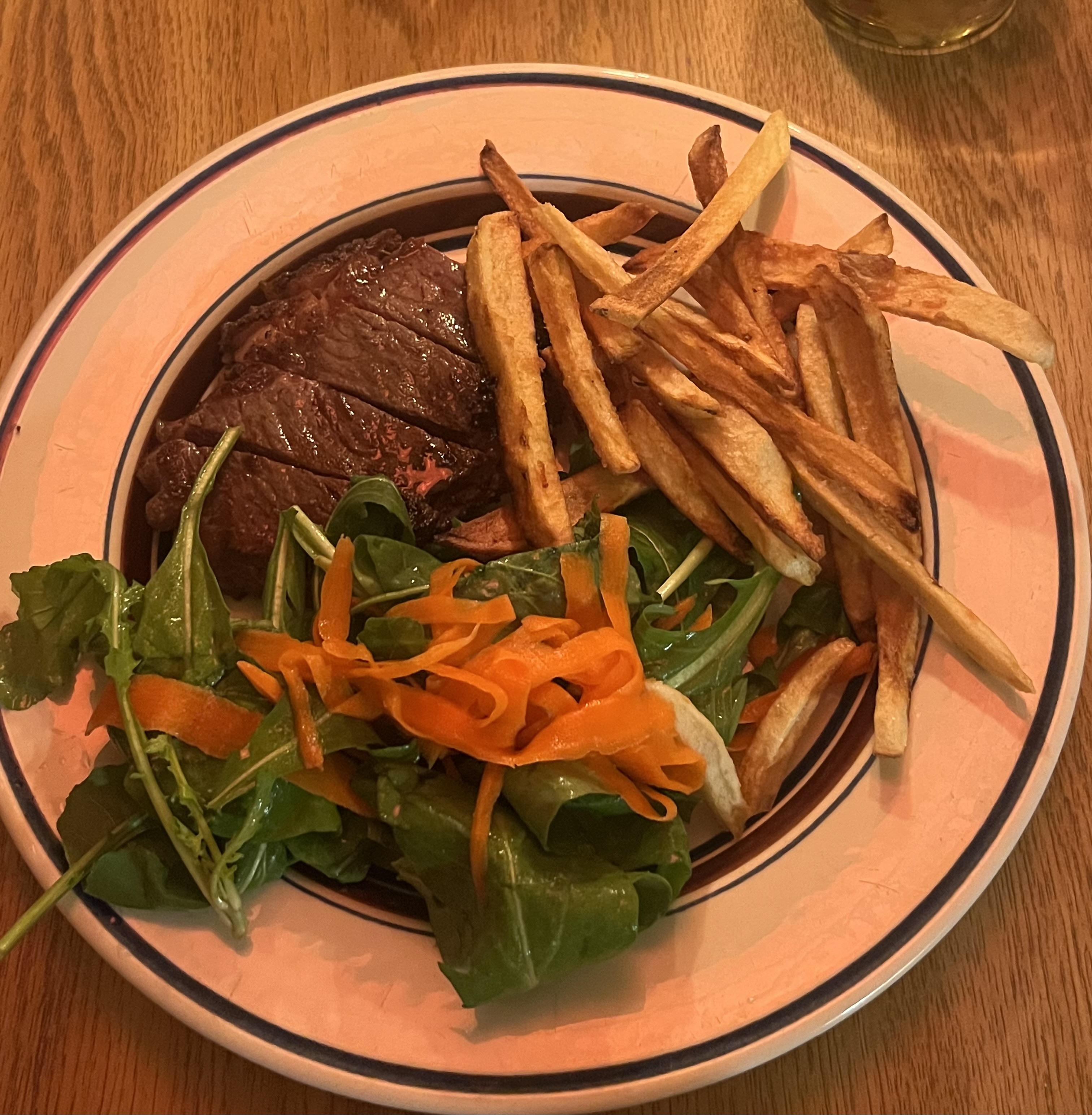
    13. Cutting against the meat grain, slice the steaks. Add a handful of fries and a healthy dollop of the aioli you made earlier.

    I would recommend serving with a peppery and lemony salad of sorts on the side, nothing fancy. I made a simple one with arugula, lemon mustard dressing and some pickled carrots I had on hand.

    Gemmarosa Ryan can be reached at gryan@wesleyan.edu

  • Ragù Relay: A Conversation Between Co-Editors

    Ragù Relay: A Conversation Between Co-Editors

    c/o Gemmarosa Ryan, Food Editor
    c/o Gemmarosa Ryan, Food Editor

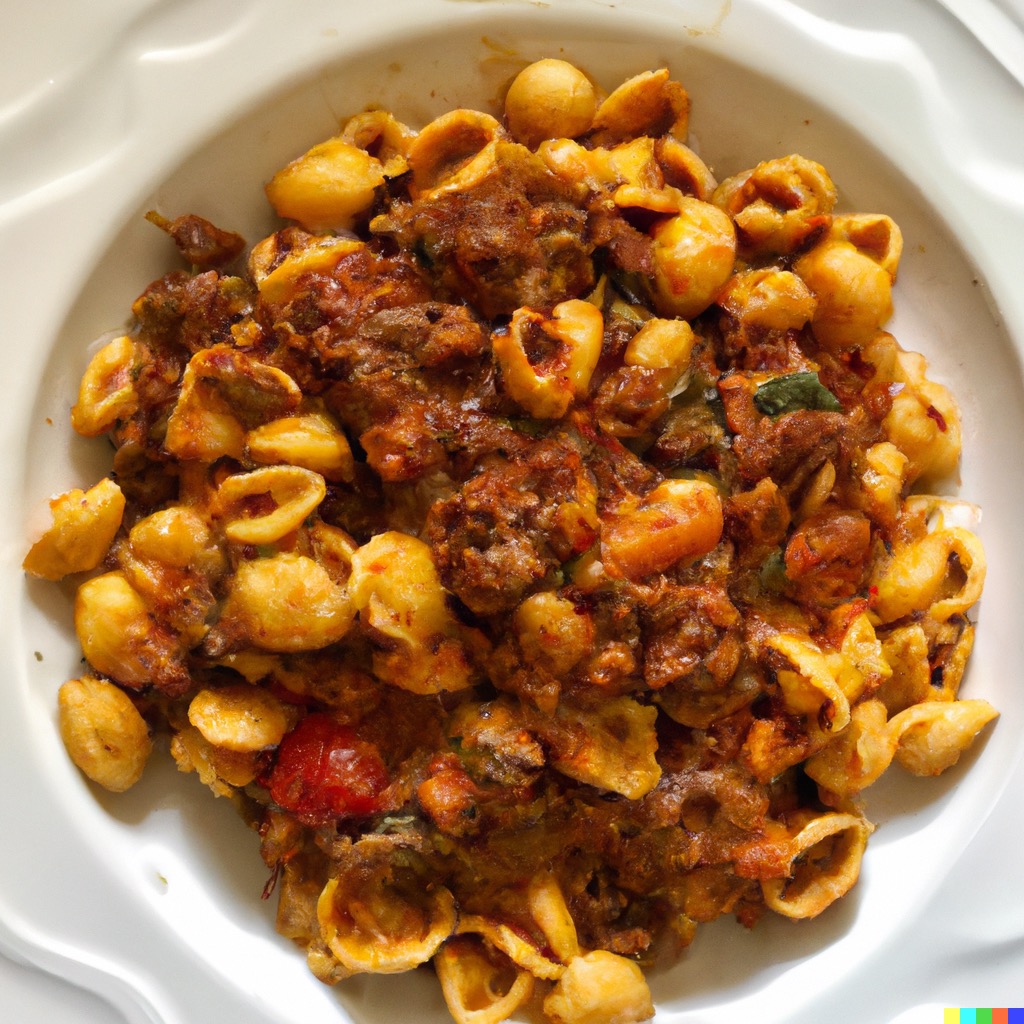
    I get to campus a week early. My thesis demands my attention. It’s 20 degrees Fahrenheit and there’s not a soul around. Weshop is closed, so I must make do with my haphazard Trader Joe’s run and the contents of my freezer. There are two pounds of lamb stew from last semester’s meat co-op, two large bulbs of fennel, and a bag of parsnips. I start to piece together what I could make, slowly arriving at the soundest conclusion: ragù. I’ll throw it together in the morning, and when I return from my solitary Olin excursion, I’ll just have to get the pasta water to a boil. Nothing is more comforting after a long day of academic toil.

    Chef G’s Lamb Ragù With Parsnips, Fennel, and Dill

    Ingredients

    Serves 6–8

    • 1 and 1/2–2 pounds lamb (stew meat)
    • Kosher salt
    • Black pepper
    • Olive oil
    • 1 bulb of fennel
    • 1 large parsnip
    • 1 white onion
    • 1/2 bunch dill
    • 1 cup white wine
    • 3–5 cups chicken broth
    • Pasta of choice

    Instructions

    1. Season your lamb with salt and pepper (roughly 1 teaspoon kosher salt per pound of lamb). This is preferably done the night before, or a few hours before cooking.
    2. Preheat oven to 275 degrees Fahrenheit.
    3. In a large Dutch oven over medium-high heat, add olive oil. When hot, sear the lamb in batches, taking care not to overcrowd the pot. 
    4. Once browned on one side (3–4 minutes), remove the lamb from the pot and set aside. 
    5. Chop the fennel, parsnip, onion, and dill.
    6. Add another tablespoon or two of olive oil to the pot. 
    7. Add the chopped vegetables, excluding the dill, and season with salt. 
    8. Sweat the vegetables until translucent and fragrant (3–4 minutes). 
    9. Add dill and cook for another minute. 
    10. Using an immersion blender or food processor, blitz the vegetables until smooth. The mixture should be a pale green with flecks of dill. 
    11. Add the mixture back to the pot over medium heat. 
    12. Add in the white wine, scraping the bottom of the pot with a spatula to release the brown bits at the bottom.
    13. Once the wine has evaporated (roughly 2–3 minutes), add the lamb back in with an accompanying 3 cups of broth. 
    14. Close the Dutch oven with a lid and place in the oven. 
    15. Cook the lamb for roughly 3 hours, or until the meat is tender and falling apart.
    16. Check the pot every hour to make sure it is liquid enough, adding broth if the mixture looks too dense.
    17. When finished, serve over pasta.

    Lewis’ Lamb and Beef Ragù With Fusilli

    This recipe was adapted from both Gemma’s initial lamb ragù project and a recipe from Food & Wine, proving the point that recipes, concoctions, and all attempts at creating food are always at the whim of the chef. A recipe, especially one found online, should only be seen as a loose guideline, and the more adept you become at cooking, the more you can experiment. I didn’t have enough lamb stew meat, so I cubed up a strip steak, which I seared along with the lamb. I also had a bunch of half-dried basil that had been in the fridge for a while, so I tied it all up with a rubber band and let it steep in the sauce, taking it out after a few hours. 

    Ingredients

    • 1 pound lamb (stew meat)
    • 1 pound beef, cut into similar-sized pieces
    • Kosher salt
    • Black pepper
    • Olive oil
    • Red pepper flakes
    • 5 cloves garlic, chopped
    • 2 large shallots, chopped
    • 1 red bell pepper, diced
    • 2 stalks celery, diced
    • 2 tablespoon tomato paste
    • 1/2 cup dry red wine
    • 1 can diced tomatoes in juice
    • 2 cups chicken broth
    • 1/2 bunch basil

    Instructions

    • Season the lamb and beef with salt and pepper (roughly 1 teaspoon kosher salt per pound of lamb). This is preferably done the night before, or a few hours before cooking. 
    • In a large Dutch oven over medium-high heat, add olive oil. When hot, sear the meat in batches, taking care to not overcrowd the pot. 
    • Once browned on one side (3–4 minutes) remove the meat from the pot and set aside. 
    • Add another tablespoon or two of olive oil to the pot. 
    • Add the chopped vegetables and season with salt, pepper, and red pepper flakes. 
    • Sweat the vegetables until translucent and fragrant (3–4 minutes).
    • Add in tomato paste and cook for another minute. 
    • Add in the red wine, scraping the bottom of the pot with a spatula to release the brown bits at the bottom, and then pour in the tomatoes, crushing up the larger pieces.
    • Once the wine has evaporated (roughly 2–3 minutes) add the meat back in with an accompanying 3 cups of broth and the basil package. 
    • Stir vigorously, pop a lid on the Dutch oven, and reduce to a medium-low simmer. 
    • Cook the meat for roughly 4 hours, or until the meat is tender and falling apart.
    • Check the pot every hour to make sure it is liquid enough, adding broth if the mixture looks too dense.

    Recipe writing is an act of resilience, confronting a list of ingredients and making do with what you have, your skills, your resources, and your time. No recipe can be replicated perfectly. Recipes demand to be personalized and adapted. Reconfiguration is integral to their reproduction. A cook who strives for imitative perfection is a cook who will never be satisfied, a person who will not know how to weather storms both in and out of the kitchen. Recipes are harbingers of change: they warp and craft time through visible production. To contain a recipe is to try to stunt the flow of time. The sooner we stop deceiving ourselves about that possibility, the sooner we can integrate resilience into our broader approach to life. 


    Lewis Woloch can be reached at lwoloch@wesleyan.edu.

    Gemmarosa Ryan can be reached at gryan@wesleyan.edu.

  • Haven Hot Chicken’s Newest Location

    Haven Hot Chicken’s Newest Location

    C/o Haven Hot Chicken
    C/o Haven Hot Chicken

    I will admit, I was surprised to receive an email inviting me and a guest to a media event for a Haven Hot Chicken opening in Middletown with samples of free food. It was the kind of thing that seemed too good to be true…or maybe it was just because that kind of thing hadn’t happened to the Food Section of The Argus so far in its one-year resurgence.

    To top it all off, the cuisine in question was Nashville hot chicken! In the origin story for this dish, a cheating husband returned home one night to a deviously seasoned, ultra-spicy batch of chicken prepared by his wife, who was seeking revenge. To her dismay, the husband loved the chicken, reveling in the extremely high spice content mixed with the hot oil.

    I quickly texted my lovely co-editor Gemmarosa Ryan ’24, and when the day rolled around, we found ourselves strolling up to a small, brightly lit restaurant on Main Street, just off of Washington Street. The staff for the event, which included the manager of this new restaurant (their sixth!), the PR rep, one of the owners of the franchise, and a professional photographer, were all incredibly attentive and kind. Even though the event was sparsely populated, a sense of excitement and fervor hung in the air, mingling with the scents of spicy Nashville rub and the wafting oil cooking the chicken and fries.

    Co-founder Jason Sobocinski explained to Gemma and me the origin story of this upscale chain restaurant. It revolves around the founders’ love for Nashville hot chicken and their desire to share the classic sandwich, as well as other specialties like loaded fries and a limited-edition kale salad, across Connecticut. Now that the chicken spot has had so much success, they are placing more of an emphasis on philanthropy around Connecticut, especially in the towns where their restaurants are located.

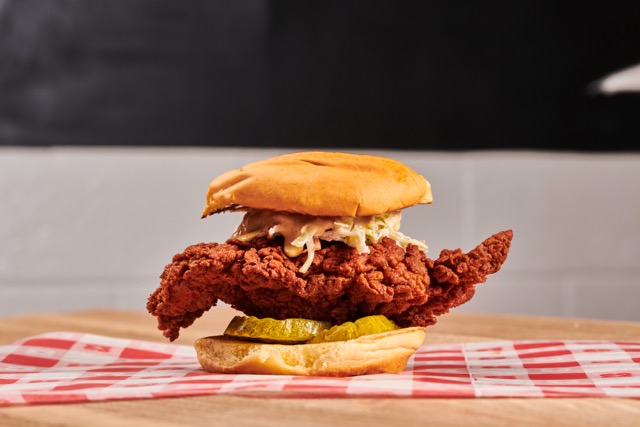
    Gemma and I lingered around the establishment, chatting with various members of the team and, more importantly, waiting patiently with watering mouths for our humongous order of food to be ready. When we finally dove in, it was a fried-chicken lover’s paradise: bite-size pieces of chicken coated in ranch and their special “Rob” sauce atop fries; fat, juicy tenders; and the king of it all, a massive Nashville hot chicken sandwich. Seconds after I bit in, I felt like I could breathe fire, yet somehow I couldn’t stop eating.

    I didn’t stop until my mouth was literally burnt to a crisp, feeling like the main character from the origin story of Nashville’s famous chicken told to us by Sobocinski. Though I never thought that I would thank a cheater, I am genuinely grateful for this adulterer and the wonderfully aggressive chicken he inspired.

    Lewis Woloch can be reached at lwoloch@wesleyan.edu.