
Gibson ruminates on love and gender
Andrea Gibson is hot.
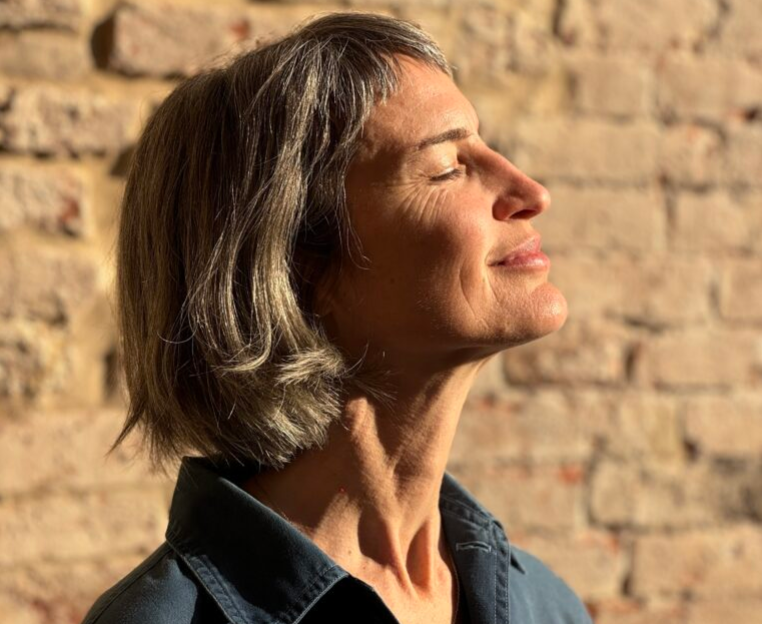
That was my first impression when she walked onstage. She had short brown hair like a pixie and was wearing torn jeans with a T-shirt over long sleeves. In other words, she looked like a cute boy, the kind of butch any femme would go for. After listening to more than an hour of her slam-poetry last Saturday, Nov. 1, in Crowell Concert Hall, I formed a more well-thought-out view: Andrea Gibson is really, really hot.
I don’t just mean “hot” as in physical attractiveness or even attitude. Andrea Gibson’s sexiness, in my mind, comes from the fact that her poetry is so freaking good. Not only are her poems delivered with incredibly honed diction, emotional buildup, rhythm and speed, but her work also has a large scope. In her performance, she meditates on topics ranging from sexuality, gender and the War in Iraq, to friendship, love, depression and teaching pre-school. Just when I was starting to get tired of her talking about gay marriage, for example, she would throw in an amazing or heartbreaking line about how “life isn’t math, it’s poetry” or “the hardest thing about having nothing / is having nothing to give.” Every poem she performed took the audience on a roller coaster ride. She would start out slow, skillfully adding intensity throughout until, by the last line, I found myself in some strange, terrifying and beautiful place that I never expected to experience.
Gibson’s most funny, self-reflective and poignant moments, however, came in her discussions of gender. In “Swingset,” for example, she spoke about teaching pre-school and having to deal with a four year old who asked, “Are you a boy or a girl?” every time they met on the playground. This anecdote expanded into a broader discussion of gender fluidity and the constraints of the gender binary.
In a particularly funny moment, Gibson quipped: “Then of course there’s always the not-quite-bright-enough / fluorescent light of the public restroom, / ’Sir! Sir! Do you realize this is the ladies’ room?!’ / ’Yes, ma’am, I do. / It’s just I didn’t feel comfortable/ sticking this tampon up my penis / in the men’s room.’”
Gender and sexuality were common themes in her poems, but even the most explicitly queer subject matter was nuanced with tender reflections on love and human connection. “I Do” opened with Gibson closing her eyes and singing a cappella (and loudly!) a rendition of “Blue Moon,” repeating the lyrics “I do, I do, I do” into the microphone. Then she stopped, opened her eyes, and looked squarely at the audience. She adopted a harsher tone as she confronted the societal limitations placed on her and partner.
“But the motherfuckers say we can’t / Because you’re a girl and I’m a girl / Or at least something close / so the most we can hope for is an uncivil union in Vermont / and I want church bells,” Gibson said.
Quickly, though, the poem turned into a tender and passionate description of her love for her partner.
“You were my favorite poem,” Gibson said, “And I’d read you every night knowing I might not understand every word, but that was okay / cause the lines of you were the closest thing to holy I’d ever heard.”
When the poem was finished, Gibson explained, “Some people call this the ’gay marriage’ poem. But I think it’s just a love poem.”
Gibson closed with the inspirational and timely poem “Say Yes.” After listening to Obama’s acceptance speech this past Tuesday, I was struck by how similar his “Yes We Can” slogan is to Gibson’s message. “Say Yes” is, ultimately, about rising above cynicism and apathy to arrive at a place of hope, connection and positivity.
“Spare those intent on proving God is dead,” she almost yelled. “For you when your fingers are red / from clutching your heart / so it will beat faster.”
This, maybe, is why I loved Gibson so much—because she was explicit about how love is a choice and not a passive, helpless state.
“This is about the time you went through hell so someone else wouldn’t have to… for saying I love you to people who will never say it to us,” Gibson said.
“Say Yes” (and arguably all of Gibson’s work) is about choosing kindness and wonder, despite what the world offers up to us.
“This is for saying yes,” Gibson ended breathlessly. “This is for saying yes.”

I have to agree whole-heartedly that “Say Yes” is a wonderful work of art! It left me wanting to be a better person and wanting to make a difference. I’m a woman and not attracted to women usually, but I would have to say Andrea Gibson is so hot!=D
I’m hoping to hear more of her work soon.