Tag: Marianne Weems

  • Iñárritu’s “Birdman” Is a Surrealist Masterpiece

    “Am I the only one who cares about the truth?”

    Shouted by Edward Norton’s Mike Shiner, these words feel simultaneously like a battle cry and a biting satire for Alejandro Gonzalez Iñárritu’s “Birdman or (The Unexpected Virtue of Ignorance).” It is obsessed with finding a truth and yet realizes that a universal one may not exist. It pulls reality out from under us and yet grounds us in some of the most relatable, human characters in years. “Birdman” is a film full of dichotomy and ambiguity. It is also a masterpiece.

    The basic plot of “Birdman” is rather straightforward: Riggan Thomson (Michael Keaton), a washed-up actor famous for the “Birdman” superhero franchise, is attempting to bring his own adaptation of Raymond Carver’s “What We Talk About When We Talk About Love” to Broadway. Starring in the production with Lesley (Naomi Watts), an actress new to Broadway, and his girlfriend, Laura (Andrea Riseborough), Riggan is forced to deal with an almost perennial set of problems. Down one of their lead actors, Thomson and his producer (Zach Galifianakis) eventually find Norton’s Mike, a critically lauded actor who is also Lesley’s boyfriend. As the production nears previews and then opening night, Riggan deals with contemptuous critics like Tabitha (Lindsay Duncan) and attempts to salvage his relationship with his daughter, Sam (Emma Stone), who is working as an assistant on the show.

    But within this story lies a profoundly real and at times surreal darkness. Shiner, a vain, pretentious egotist, is only able to be sexually stimulated on stage. Lesley struggles with her own insecurities, both with and without Shiner, still unsure of her place on the stage. Sam, a recovering addict, relapses, using substances to distance herself from the world around her. Most importantly, Riggan’s sanity throughout the film is tentative at best, as a gruff “Birdman” voice threatens to dominate him and his creative process, continually convincing him to go back to those soulless sequels. And as this voice grows louder and louder, the film grows increasingly surreal and bizarre. It loads up on the fantastic and the impossible, from Riggan’s continuous display of super-powers (flight, most notably) to the eventual collapse of reality.

    “Birdman” is strange. But this very strangeness makes Iñárritu’s characters infinitely more human. “Birdman” opens with Raymond Carver’s “Late Fragment,” which asks, “And what did you want?” and then answers, “To call myself beloved, to feel myself beloved on the earth.” This declaration, written as Carver’s epitaph, is essential to understanding these characters’ existences. All of them, whether knowingly or unknowingly, rage against the impersonality of the modern world. They want to feel themselves exist, even if just for a brief moment.

    Each of the odd character moments in this film echo Carver’s final words. Shiner’s attempt to have sex onstage and his offstage pretension (ranging from a rage-filled speech when his drink is filled with water to an underwear-clad fight with Riggan) speak to his vain search for the “truth”; he only feels like a person when inhabiting another’s skin. Sam masks her own fears with substance and judgment, sitting over the roof of the theater, looking out at the people under her.

    But this is Riggan’s film, and his search for meaning is the one that we latch on to. When the film throws an action sequence into his reality and our plane of sight, we do not feel exhilarated. This thrill is empty. Riggan wants to be beloved, but he wants to be beloved for the right reasons. He does not want to be a brief thrill. He wants to leave a mark.

    All of this works because of the strength of the writing. The script, written by Iñárritu, along with Nicolás Giacobone, Alexander Dinelaris, Jr., and Armando Bo, is clearly critical of the modern blockbuster, but that is hardly the film’s main concern. Riggan and the world around him make comments on the superhero film, but they are always grounded in a real, philosophical world. The film rages against modern existence. Each of these characters wants to matter. The superhero film is not necessarily the cause of Riggans’s irrelevance; being a critic is not necessarily the cause of Tabitha’s ego. Instead, they are the symptoms.

    Ultimately, it is the mystery of this film that makes it so worthwhile. It is a film that never loses itself. In the midst of this real/surreal dichotomy, it never loses sight of its characters or of its world. Indeed, “Birdman” forces us to contend with our own answers to life’s big questions: What makes “truth?” What does it mean to matter? How do we matter? What does it mean to even exist? To create a film that attempts to answer those questions is bold. But to acknowledge that there might not even be an inherent answer is something else entirely.

    To praise only the writing, however, would be to diminish the strength of the performances. Michael Keaton, perhaps delivering a loosely autobiographical performance, gives Riggan a humanity and a pain that is instantly engaging. Even in his most humorous moments, such as when Riggin rushes through Times Square in nothing but his underwear, Keaton portrays him with an intense, beautiful ennui. Edward Norton also seems to be in self-parody mode, his clever, witty self-righteousness dominating the frame. Emma Stone gives Sam a sense of distance while never feeling like a cliché. It is not distance for distance’s sake: it is a distance built like a fortress around a character for whom the world has presented nothing but abandonment.

    The visuals echo the film’s ambiguity and fluidity. Iñárritu constructs the film in what seems to be one long take, the camera never cutting but rather tracking and panning across Riggin’s New York. A scene can take place in the theater’s dressing room, track and tilt away from the characters, and end up onstage hours later. Iñárritu’s camerawork presents a world constantly in flux, moving around these characters rather than necessarily with them. There are moments in which the camera movement is motivated by the character’s movement, but there are just as many times that it moves on its own.

    There are few films as fascinating as “Birdman.” It is big, it is bold, and it is mysterious, but it is human at its very core. Gorgeous and dark, Iñárritu’s world forces us to delve with into the very essences of our existences. Carver got what he wanted from this life. Riggan may get that, but at a terrible cost. And thus is life in “Birdman”: cruel, perplexing, and beautiful.
  • “Dear White People” Challenges Post-Racial Notions

    “Dear White People” is a movie with a lot to say. On the one hand, it’s an ensemble dramedy depicting college life; on the other, it’s a highly effective satire of the notion of a post-racial society.

    The film follows a quadrant of black students who attend the esteemed Winchester University. Each character offers a different perspective on the issue of being a black student in a predominantly white institution. There’s Reggie (Marque Richardson), the Dean’s overachieving son who begins to resist his father’s demands. Lionel (Tyler Williams) is the confused nerd who abhors labels but deep down seems to want to find one. Coco (Teyonah Parris of “Mad Men”) is of the jealous, popular breed, who wants more than anything to get a reality TV deal.

    And then there’s Samantha White, played by Tessa Thompson. She begins the film as the potent voice of resistance against the detached Winchester academy and its student body, leading the radio show from which the film gets its name. But as her movement gains unexpected success, winning her an election she believed she would lose and inspiring mass protest, Samantha’s own world begins to unravel. Thompson is the film’s greatest asset. She has a keen sense of voice and presence necessary to the character.

    These multiple perspectives are vital for “Dear White People” to work. The film does not preach about race or campus life, but allows its diverse personalities to give their own conflicting voices. The film gives more screen time to some of those voices than others (Samantha’s is the loudest while Lionel’s arc is most integral to the film), but it never gives us grounds to say that one of the four is right and the others are entirely wrong.

    The movie is not about racism… at least not directly. It’s more about identity. Each member of the cast struggles with his or her own identity as the plot progresses and the characters’ self-perception evolves, and in the world of Winchester University, identity and race are inseparable. Even Lionel, who does not want to be identified by any one label, cannot escape it.

    The film is written and directed by Justin Simien, who crowdfunded the project, and it’s quite clear that he drew from his own experiences as a gay black student. As horrible as some of the racist remarks  from the ensemble of  “Dear White People” are, one gets the sense that it’s all been heard hundreds of times before. In fact, the ending credits are interspersed with real headlines of college frats hosting offensively themed parties with blackface and insensitivity galore, paralleling what happens in the plot of “Dear White People.”

    The script is clever and earnest, but more than anything, it’s really funny. It takes what could be heavy, uncomfortable subject matter and allows its audience to laugh at it, but not enough to entirely prevent them from squirming.

    “Racism is over in America,” Winchester’s president spouts. “The only people thinking about it are, I don’t know, Mexicans, probably.”

    That line, like so many others, is delivered with equal hilarity and tragedy, making it perfect for a satire.

    Simien also knows how to frame a shot. Many of the film’s sequences are gorgeous to watch. The film keeps a distinctive style (more often than not including slow motion) that melds well with the satirical tone. The film’s soundtrack alternates between a classical setlist befitting Winchester and a more traditional score. The classical fare is often more effective, as it mocks the school’s pompous atmosphere.

    The very setting of Winchester is another key to the film’s success. It’s an Ivy League-esque school that looks like it’s in southern California, creating the illusion that it could exist anywhere. And in reality, there’s a little of Winchester in every university in America; it’s a place relevant to any institution that boasts its diversity levels.

    In the end, the film is not entirely condemning of white people or college administrations. It has choice words for racists and insensitive idiots, certainly, but the movie works just as much as a conversation starter as anything else. It is directed toward black students as much as it is Caucasian presidents. We all have something to learn from “Dear White People,” and the film wishes to teach, not to chastise.

    “Dear White People” is powerfully funny and insightful. It contains a strong collection of talent, and it never loses momentum from beginning to end amongst its twists and turns. For his first feature film, Simien has delivered quite an impressive project, and I intend to keep a close eye on his future career.

  • “Whiplash” Needs No Drumroll For Jazz Drama

    c/o wikimedia.com

    When I was 10 years old, I began my first summer as a saxophonist in the Renbrook Summer Adventure Jazz Band. The sax player who sat next to me was at least six years my senior and taunted me mercilessly every day. “You’re not gonna play a solo today? You’re not? Come on! That’s weak.” To prove him wrong, I spent days working on a short solo that I can still play today. Now, I am no great musician, but that doesn’t change the fact that this early torment was quite formative for me. Which is why I was floored by Damien Chazelle’s “Whiplash.”

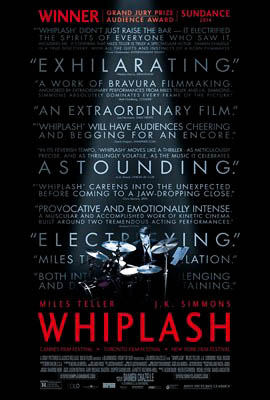
    In “Whiplash,” drummer Andrew Neyman (Miles Teller) finds himself in the premier jazz ensemble at the best music school in the country. The band’s conductor, Terence Fletcher (J.K. Simmons), is a perfectionist (verging on psychopath) who will do whatever it takes to get the exact sound he wants out of his band. Neyman pushes himself beyond his limits to be the drummer Fletcher wants.

    It seems like a textbook inspirational teacher story à la “Dead Poet’s Society” and “Stand and Deliver,” but “Whiplash” does so much more. Chazelle’s film isn’t inspirational; it is pulverizing, from start to finish.

    The film won the Grand Jury Prize at Sundance this year, a decidedly earned accolade. The first scene alone is a masterpiece. The screen is black, and a slow snare beat fills in the space. The tempo picks up, faster, faster, faster, and the black gives way to a hallway shot of Teller playing the drums. Everything but Teller and the drum kit are pitch black. Suddenly he stops, and Simmons appears. His black shirt, pants, and blazer render only his expressive face visible. What follows is a brutal session that is as enthralling as it is intense. And the film only ramps up from there.

    Critics have praised Simmons’s Fletcher as a force of nature, a monster that the film refuses to condemn. But he is so much more than that. Fletcher is disgusting, disturbing, magnetic, torturous. In his rehearsal room, Simmons hurls racist, homophobic, and generally repugnant insults like they are ammunition. Yet at the drop of a hat, he becomes a friendly jazz fan, the kind of person who ends all of his sentences with “man” and cries when hearing the music of a talented, deceased former student. When Fletcher plays piano in a jazz quartet, his sensitivity and joy counterbalance the horrible and horrifying things he says and does. In 2014, cinema has not given us a monster more fascinating.

    There’s not enough that can be said about Simmons’s performance, but Teller, who was excellent in last year’s “The Spectacular Now,” is just as incredible. Neyman’s obsessive need to push himself to become “one of the greats,” as he puts it, is all-consuming. There’s an earnestness and authenticity to the early moments that Neyman shares with his father (Paul Reiser) and to his brief love interest (Melissa Benoist), making the toxicity and intensity of what happens later much more powerful. The charm of Teller’s character belies barely contained rage. Just as the film won’t condemn its antagonist, neither will it praise its protagonist.

    “Whiplash” is a fast-paced thriller masquerading as a music-drama. It’s a small-scale story told with huge stakes, knockout punches, and two of the year’s best performances. Watching it, I couldn’t help feeling like I was 10 years old again, sitting in my house, trying to show that older musician what I was capable of doing. Perhaps beauty requires brutality.

  • Dracula’s Story Should Remain Untold

    c/o comingsoon.net

    In his newest incarnation, “Dracula Untold,” Dracula returns to haunt mankind with the worst plague of all: mediocrity.

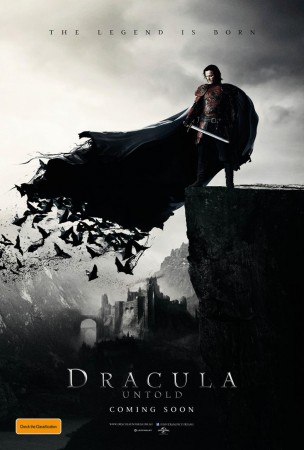
    But this time, our dear vampire isn’t evil. He’s just misunderstood. The movie focuses more on the “untold” story of historical figure Vlad the Impaler rather than that of Bram Stoker’s original novel. It tries to give a more accurate historical perspective and to align the audience with a figure who killed thousands and was known for enjoying torture. But here, he did it for peace, so that’s okay.

    This movie clearly comes from a set of filmmakers who absolutely love “Game of Thrones” and Peter Jackson’s Tolkien adaptations. This is apparent in the script, the casting, the set design, and the music. But it is just as clear that these filmmakers do not understand what made the previous franchises successful. “Dracula Untold” is a soulless recreation rather than an acceptable addition to the gritty fantasy canon. It cannot tell an epic in 90 minutes, and so, in the first act, it hurls scene after scene of exposition to the audience. We are given a lackluster mythology and a couple doses of promising political diplomacy (soon cast aside in favor of battle sequences) and no character to actually care about. We are told everything, never shown, and so we have no reason to be invested in any of these characters. We have no motivation to align with poor Vlad or to care when any of his indistinguishable friends die.

    Not that the script helps. The dialogue is atrocious and filled with one-liners and jokes that movies like “Lord of the Rings” could only sparingly earn after hours with their characters. Here, the lines are undeserved and overused. Dracula, even as he becomes the inhuman monster, is the only character to act even remotely like a real person.

    This is Gary Shore’s directorial debut, and it shows. His pacing is uneven, the performances he draws from a stellar cast are deeply disappointing, and many of the more important dialogue sequences are strangely constructed But he clearly cares, and he certainly has fun with the epic scale of the special effects. Who wouldn’t enjoy an army of bats forming a fist and collectively punching the ground?

    But he’s caught by the limitations of the story. Shore relies on typical fantasy clichés (but refreshingly, few vampire ones), and there’s hardly an original element in the film. The major exceptions are the action sequences, which aren’t consistent, but at least they offer something different. There’s one shot where we can only see Vlad’s wrath through a sword’s reflection, and there may be more inspiration in that one moment than anything else in the film. It’s one of the rare instances in which the film successfully balances camp and cool.

    Luke Evans, who is fresh off the set of the “Hobbit” trilogy, offers a unique take on Dracula. He isn’t Christopher Lee, or Gary Oldman, or any other Dracula, really. He plays a monster overcome by pain, a tragic figure who will do whatever it takes to save his family. He’s another Walter White clone. And, somehow, that’s astoundingly boring. “Dracula Untold” is the spiritual sibling to “Maleficent” (another soulless reexamination of a villain from this year), except Evans isn’t deliciously sinister like Angelina Jolie was. That isn’t entirely his fault. Evans surely tries, but there is little his role allows him to do.

    The same is true of the ensemble. Sarah Gadon does her best in the “I’m the important love interest” role, but she has even less to work with than Evans. Charles Dance (Tywin Lannister of “Game of Thrones”) plays Caligula (yes, that Caligula) in a role that should be perfect for him to play the ham but winds up mostly disappointing.

    Dominic Cooper has more fun as Mehmed II, the film’s true antagonist. The script tries to foster a Moses/Ramses angle between him and Dracula, but then the script over exerts itself and gives up. The talented Samantha Barks (from “Les Mis,” of all places) plays a character with no lines. She summarizes everything about this film: everything with potential is wasted.

    Ramin Djawadi, famous for his “Game of Thrones” score, was somehow roped in to compose the score of “Dracula Untold.” I’m usually a big fan of Djawadi, but this sounded more like a weak imitation of the composer than the man himself. I blame the lack of inspiration. Djwadi does little more than go into “brooding mode” here, and he is at his best when he can play with several motifs and emotions at once.

    This is a “Dracula” that doesn’t get the appeal of Dracula. No one is ever scary in this movie. It’s so stuck on getting us to sympathize with its protagonist that it’s afraid to make Dracula evil. We’re promised a monster and instead we get a man who consistently exacts rightful vengeance. And that isn’t as engaging as watching a “good” man consumed by darkness.

    “Dracula Untold” takes itself too seriously to be much fun. It’s too decent and cares too much to be entertainingly awful as “Maleficent” was. It tries to balance camp and gritty and ultimately fails at both. It’s not great, it’s not terrible, it’s just there. That’s the true tragedy of “Dracula Untold.”

  • New Laika Film Thinks Outside the Box(trolls)

    c/o listal.com

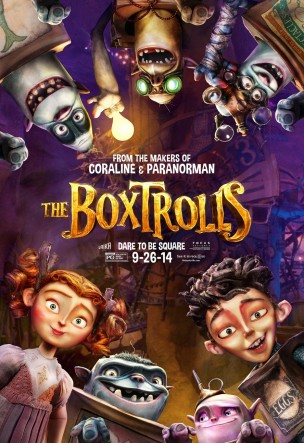
    Based on the novel “Here Be Monsters!” by Alan Snow, “The Boxtrolls” is the latest 3D stop motion film from Laika Entertainment, the company behind “Coraline” and “Paranorman.” It is set in the fictional Victorian town of Cheesebridge, England, where humans hide in their houses at night in fear of the titular Boxtrolls, creatures that they believe to be dangerous.

    The Boxtrolls come out of their underground hiding place at night in order to scavenge through trashcans for things they can potentially use in their inventions, all while being chased relentlessly by the Snatcher (voiced by Ben Kingsley) and his stooges. The protagonist, Eggs (voiced by Isaac Hempstead-Wright, who plays Bran Stark in “Game of Thrones”), is a young human boy named after the type of box he wears. Eggs is being raised by these creatures and, as a result, believes himself to be a Boxtroll. After he encounters a girl in the human world named Winnie (voiced by Elle Fanning), and the Snatcher captures his Boxtroll parent, Eggs goes on a journey to free the Boxtrolls and uncover his own true origin and identity.

    Thankfully, “The Boxtrolls” is not made for kids alone. Although children can enjoy its quirky black humor and highly likable characters, the story will make you think about power, society, and their effects on people both as individuals and as a group. It’s about those who live in their boxes, excluded from their society feared and degraded, yet making no attempt to earn their rightful place alongside the humans. “The Boxtrolls” contains a message for all to stand up, reclaim their rights, and to leave their boxes.

    The writers did a great job with the main villain, the Snatcher, by making him a truly unlikeable yet multidimensional character. That said, I wouldn’t be surprised if he became a favorite for some viewers. Notably, his allergy to cheese, a vital element the film’s plot, helps to create some truly comical scenes.

    With its 19th-century English setting, “The Boxtrolls:” takes full advantage of great music pieces composed by Dario Marianelli, who won a Golden Globe and an Oscar for his score of “Atonement.” “Quattro Sabatino,” for instance, is still playing repeatedly in my head.

    Though “The Boxtrolls” has not received as much promotion as Disney, Pixar, or DreamWorks films, this does not mean that it’s bad by any means. The 3D effects are not gimmicky at all, fortunately, but are instead a pleasing addition to the film. From its earth-toned world to its black humor, “The Boxtrolls” is a unique, enjoyable film. It’s a dark horse for those who’ve had enough of princesses and fairytales and are looking for something fresh and different. If you still remember the glory days of “Chicken Run” or “Coraline,” you won’t want to miss the magic of “The Boxtrolls.”

    This article was updated on Oct. 3 to comply with the Argus style guide.