Tag: JDV+

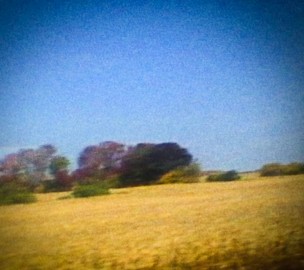
  • Sun Kil Moon Gets Personal On Benji

    c/o wikipedia.org

    I have a lot of strong, positive opinions about a lot of things, music most chief among them. Have a conversation with me, and you will get half a dozen album recommendations gift-wrapped with glowing hyperbole and praise. But even I, with my immediate attachment to pieces of music and art that I like on first listen, try to be very careful with what I call “best.” It’s very easy to make grand statements about something being better than everything else, but it’s just too hard to back up a claim like that. Such categories are reserved for a critic who has truly approached a genre from every angle and can’t find a piece of work better.

    Well, I have listened, I have felt, I have done the research, and I only have this to say: Sun Kil Moon’s Benji is the best damn album of the year, maybe the decade.

    This is a bold claim, but I believe it with every fiber of my being. I didn’t care much for Mark Kozelek’s long-running folk project until this album came out. Over its 11 songs, Benji sweeps, swoons, begs, laughs, and crawls under the skin.

    There are familiar elements, sure. Nylon guitar strings are plucked and strummed and buzz with a warmth that is almost tangible. Everyone has heard drum patterns like the ones played on this album. Everyone has heard a saxophone. The music throughout is very pretty. But being pretty does not make a great album. It’s the words that matter.

    Songs have always been stories. It’s what engages the listener. But on this album, Kozelek doesn’t really tell stories. He narrates life itself, dropping all metaphor and artifice and just telling people’s stories in details so intimate they have to be true. Take the first line of the album. On the amazing “Carrissa,” Kozelek practically whispers in his warm-whiskey voice, “Oh, Carissa, when I first saw you, you were a lovely child/ And the last time I saw you, you were 15 and pregnant and running wild.” There is no flourish here, just beautiful detail.

    Kozelek has developed a singular voice as a songwriter. The singer is always a character in his own stories, the guy in the middle trying to make sense of this world, like in “Carissa,” when he is coming to terms with the sudden death of his distant relative. Making his voice the only one the listener truly hears gives Kozelek the ability to deal with the intense complexities of his stories in the most personal, powerful way possible.

    There’s an immediacy to these songs, as if he’s writing about these events while they’re happening, like in the lovely, brutal “Jim Wise,” in which Kozelek and his father visit an old friend while he awaits trial for manslaughter, or the absolutely astounding “I Watched the Film The Song Remains The Same,” a 10-minute long personal epiphany that devastates me every time I listen. Every detail (“Kentucky Fried Chicken was served,” to name one) adds to this effect. As listeners, we are directly wired to the brainwaves of one sad, smart, observant, empathetic, and beautiful storyteller.

    I could certainly say more about this album, but I will just le aave you with this: Benji makes my skin hum and vibrate, alive with the beauty, the energy, and the empathy of Sun Kil Moon.

  • Memorial Chapel Welcomes Dutch Pianist Reinier van Houdt

    c/o Lex Spirtes

    Upon walking up the steps to the celebrated and oh-so-intimidating Memorial Chapel, I was greeted with its usual historic furnishings and grandeur, the only divergence an ebony grand piano spotlit on the stage. Adjacent to the piano was a typical Apple laptop, which seemed almost anachronistic given its surroundings but proved to be indicative of the coming performance: an exciting and innovative musical hybrid that, though rooted in classical piano, seductively mingled with technology.

    On Thursday, Sept. 4, the Center for the Arts (CFA) welcomed internationally acclaimed pianist Reinier van Houdt. Trained in Budapest and the Netherlands and currently based in Amsterdam, van Houdt traveled to Connecticut as part of a year-long United States tour. Although he was initially trained as a classical pianist, van Houdt’s practice also includes elements of collaboration and multimedia work.

    A heterogeneous audience of students and Connecticut residents formed in the chapel. Within minutes, van Houdt himself entered, made a beeline for the piano, and placed his hands on the keyboard, in a way that was somewhat awkward but eager enough to showcase his passion for the instrument. After just a minute, it was clear this was not a classical performance, as van Houdt donned bells on his wrists, repeatedly kicked a drum, and clashed a few cymbals, all while pushing the piano keys.

    Pola Fialkoff, a Cromwell resident, noted and appreciated the dialogue between different musical instruments.

    “The first piece reminded me very much that the piano is a percussive instrument,” Fialkoff said. “I enjoyed the interplay between the percussion and the piano.”

    Van Houdt recognizes his divergence from classical music and defines his own style as rather alternative.

    “I think that what I’m doing isn’t classical at all,” van Houdt said. “It is related to alternative pop music or electronic, improvised music. It’s not necessarily related to classical music just because I’m a pianist. People seem to think in those terms. For me it’s about free research in things, whether as a pianist or magician. It doesn’t matter what I play, whether a piano or a tree.”

    The concert comprised six pieces, all of which experimented with innovative, and sometimes uncomfortable, sound combinations. In the first piece, “Chimanzii [Latticce]; Double” (1988) by composer Jerry Hunt, a diverse set of sounds mingled with volume shifts to create a rich sound and drama. Despite these multiple compositional components, van Houdt brought rawness and authenticity to the performance, experimenting with the identity of various objects without manipulating their identity. Rather, he isolated and highlighted one variable: their sound.

    Van Houdt disassociates his music from the instrument or object he plays and instead has a more conceptual approach to musical tools.

    “Most of the music I do is not about the instruments,” van Houdt said. “It’s about the concepts and always about the sound.”

    Van Houdt’s performance embraced the abstract and conceptual even further in subsequent pieces. In Michael Pisaro’s “Fields Have Ears #1” (2008), a quadrophonic piece, four stereo speakers were arranged in each corner of the cathedral, broadcasting nature recordings. Each recording began at a different time, creating a layered, though not muddled, audio backdrop.

    The placement of the stereos, van Houdt said, worked as a tool to provide an interactive experience for the seated audience.

    “The idea of Michael Pisaro’s piece is that everyone has an individual experience depending on where he is in the space,” van Houdt said. “Though seated, it is as though the audience is walking around.”

    While the nature recordings rolled, Pisaro’s piece required playing sound bites from the computer and contributing very sporadic piano lines. This process was somewhat improvisational, as van Houdt had to listen and pick up on different audio signals.

    “I scan the frequencies of the field recording to determine what notes I play,” van Houdt said. “Sometimes the audience will hear a piano tone going near the tone suggested in the field recording. In this piece, that is my role.”

    Caroline Moyer Laurin ’17, who attended the concert for her class MUSC 109: Introduction to Experimental Music, was interested in the piano’s contribution to the piece and the role that chance played in the composition.

    “I was trying to figure out if [the piano notes] were about chance,” Laurin said. “That’s one thing we’ve been studying in my class: what musical sounds are determined by chance and what aren’t.”

    Today’s music industry is in a constant state of transition, and the once-obvious stratifications between musical styles have become delineated. In collaboration with composers, van Houdt pushes the boundaries of music with obscure noises and uncommon instruments. He also encourages the listener to think beyond the preconceived notion of a beautiful and refined melody.

    “People might not enjoy all of the sounds,” van Houdt said. “The sounds are also about some ugly stuff. So it might be hard to listen to. But life is not always pleasurable and neither is music.”

    Raw, confusing, and at points undeniably beautiful, this performance activated our imaginations and, using music as a didactic tool, forced meditation on life’s undesirable grit and quiet beauty.