If you’re looking for some inebriation, celebrating a 21st birthday, or just longing for a good drink, you have to decide among the many Middletown establishments available to you. Fortunately, this handy guide will bring you to the best, or better-than-average, local establishments that I find worthy places for one to imbibe.
Bergen House
Recently, I had the pleasure of visiting Bergen House, a brewery that makes its own mead in-house. I had no idea what mead was before my friends suggested going, but the owner, Talon Bergen, explained to us that it is a fermented honey wine that can take on different flavors and infusions. Mr. Bergen’s flavors include ginger, citrus, cardamom, and even coffee, the result of a collaboration with Perkatory, which is just next door. The mead is tasty, with a flavor similar to sparkling wine, except it’s a tad more viscous. If you like kombucha or other fizzy fermented drinks, I would recommend it.
The space itself is a large, high-ceilinged building, and all the production equipment is visible from the bar. In addition to the bar and distillery, there is also a spacious foyer with beanbags, some desks, plenty of board games, and fantasy novels. Unfortunately, customers cannot order food and the only drink available is mead. It is a brewery, as opposed to a bar. However, you do have the satisfaction of knowing exactly where this mead comes from and who makes it. If you go, I recommend starting with the sampler. It’s a good deal, and you can find which flavor suits you best.
Eli Cannon’s
Eli’s is a classic Middletown establishment, a lively space with good food and well-priced beer. While you won’t be able to find Bud Light on tap, they offer a wide variety of local beers, and frequently rotate them. Craft beer is their main selling point, and a pint will only set you back $6-$8. The “Eli’s Mule” cocktail is also a refreshing way to wash down a meal. The menu mostly consists of classic bar food, but the fried green tomatoes and the veggie burger are standouts. Additionally, the nachos are a great way to get some carbs in before a night out, and there’s enough to please a hungry crowd.
More importantly, the ambiance is fantastic, and it’s a good place to get a pint with friends.
Harrie’s Jailhouse
Located in the basement of a historic jail, Harrie’s probably offers customers the highest quality food of all the places on this list. The menu mostly features salad and sandwiches, but the taste is superior to your average bar food. Their eggplant cutlet sliders are also a great vegetarian option. I may be biased because I have a soft spot for Southern cuisine, but their pimento cheese, pulled pork, and fried chicken are authentic and delicious. It would be worth the trip just to grab one of these yummy plates.
Along with their food, their drink menu gets the job done. Their cocktails are tasty and unique. “El Warden” mixes sour and spice, and the hibiscus gin sour is another refreshing option. I will say that both food and drinks are a little pricey for what they are. However, as it gets warmer, there is a great patio area to enjoy your drinks and escape the basement.
Celtic Cavern
Celtic is yet another basement location. It’s always packed with people and has incredibly charming servers. It’s a lively spot to share a meal with a friend, with some of the best cocktails I’ve had in Middletown. The classics are perfect (especially the bloody mary and the gin and tonic) and I would strongly recommend the lavender elixir. The food is great. There are weekly and daily specials that are very solid, especially the fish and chips. The burrata is not traditionally Italian but is nonetheless to die for, especially after a couple of drinks. I will say, my friends often mention that the food, especially the burger, can get greasy. So be prepared. It’s a great place for a quiet dinner or for a rowdy time out with friends. This spot has range.
Kiran Kowalski can be reached at kkowalski@wesleyan.edu.
On Wednesday, March 29, The College of the Environment hosted “An Evening With Bryant Terry,” inviting members of the community to a cooking demo, dinner, fireside talk, and book signing with Terry, a vegan chef, activist, author, and community-builder. Last week, our food team attended the event, tried the food, and conversed with Terry, learning more about his life and his relationship to food.
The Event: An Evening With Bryant Terry
Large round tables laden with rows of polished silverware and pristine white tablecloths filled the room. At the front was a stage and a counter covered with a cornucopia of seasonal vegetables and fruits. A makeshift kitchen consisting of a hot plate and a few assorted utensils sat behind. This was the scene for Bryant Terry’s dining event hosted by The College of the Environment and executed by Bon Appétit last Wednesday in Beckham Hall.
Director of the College of the Environment Barry Chernoff began the proceedings by introducing Terry to those who had managed to secure tickets to the coveted event. As an author, artist, food justice and sustainability advocate, publisher, and more, Terry is far from just a vegan chef. Over the course of the event, Terry debuted several recipes from his new book “Black Food: Stories, Art & Recipes from Across the African Diaspora” (2021), pairing each dish with a song he associated with the food.
c/o Lia Franklin, Features Editor and Assistant Food Editor
After a short bout of technical difficulties, Terry started his cooking demonstration with a dish of curried tofu and mustard greens. From the moment he began, it became clear that for Terry, cooking is not just a practice but an act of radical protest and cultural remembrance. He sang songs he heard in his grandmother’s kitchen growing up, reflecting on the sights and smells of her Southern farmhouse.
Between cooking tips—never forget to press your tofu—he explained the importance of cooking with fresh and local produce as well as the barriers that low income and people of color in the United States often face when trying to access these resources. As the delightful odor of fried garlic and mustard seeds graced our nostrils, he explained what originally brought him to cooking: the Black Panther Movement. He was inspired by their free breakfast and lunch programs and notably, their critiques of the American food system.
Now down to the meal. First up was the curried tofu, infused with mustard seeds and mixed with stewed greens. With a sharp, bitter, spicy, and creamy flavor profile, this vegan concoction was delectable and was one of best bites I’ve had on campus this year. It didn’t take me long to empty my plate and wipe it clean with the pretzel bread with which we were provided.
c/o Lia Franklin, Features Editor and Assistant Food Editor
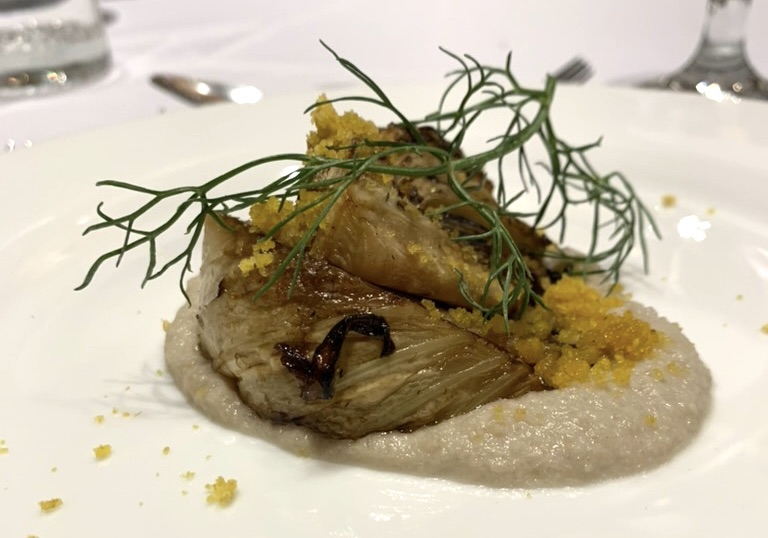
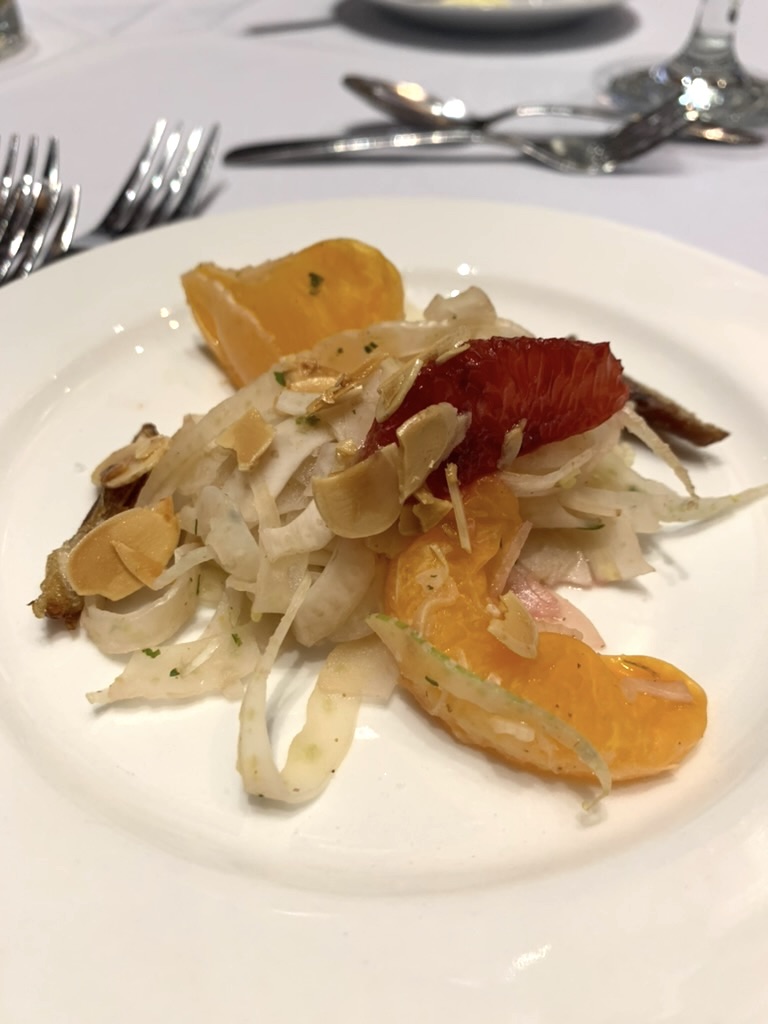
As we waited for the next course, I sipped on the hibiscus and ginger infused beverage. Perfectly sweet and biting, it was akin to the kombucha I often purchase from Weshop. Before I could finish my glass, plates of fennel and citrus salad were placed on the table in front of me. Complete with dates and a citrus vinaigrette, the dish was crisp and refreshing. This was followed by a second appetizer of citrus and garlic-herb braised fennel. With two perfectly charred quadrants, this dish offered a completely new take on fennel and was unrecognizable from the previous course. Beneath the fennel was an intensely flavored sunchoke cream that had been mixed with plantain powder and had the consistency of grits.
By the time the main course arrived, we were positively stuffed but ready for another delicious bite. Diners like me were treated to a bean bean burger made of whole royal corona beans, mixed with tomatoes and broccoli rabe, and topped with a parsley persillade. While the combination of flavors proved to be somewhat bitter, I appreciated the heartiness of the plant-based burger as well as its garlicky herbaceous spread. Let’s just say, I ate every bite.
As we all know, there is always room for dessert, especially when it comes in the form of an oatmeal lace cookie and vanilla bean ice cream. Creamy, crunchy, and cinnamon-y: the dessert was the perfect sweet treat to complete the lengthy meal. Five sets of cutlery later, the meal had finally come to a close.
With that, my stomach was full and my mind was abuzz with Terry’s radical ideas on food culture in America. Students, faculty, Middletown residents, and guests alike sat together talking about the meal they had just shared and the knowledge they had just learned. The whole experience was a practice in community, and food was what had brought us together.
Earlier this week, I had the pleasure of getting to know Bryant Terry, the renowned chef and food justice activist. Besides being a successful cookbook author and inspirational figure within the culinary world, Terry possesses a wealth of knowledge and passion when it comes to unpacking the relationship between cooking, food, race, and class. Despite all of his many accomplishments, Terry remains incredibly humble, giving credit to his mentors, like Alice Waters, and acknowledging his place in history.
“People have been doing this work for decades well before I did, and I think it’s always important for me to, you know, recognize that I’m standing on the shoulders of so many who’ve come before me,” Terry said.
Terry, a Memphis native, described many of the formative experiences he had while visiting relatives on their farms throughout the South. It was there that he learned to love the land he was raised on and value his connections to agriculture.
“I’d say my paternal grandfather spending time in his garden was one of the main things that helped me feel connected,” Terry said. “I used to hate being in the hot sun and weeding, you know, his garden and shelling corn peas and shucking corn and all that…but I understand now, especially as a parent, that my grandfather was imparting skills that would be life changing. And so I do credit my grandparents for so much of the work that I’m doing.”
Sadly, his family doesn’t own this land anymore, which is reflective of the decreasing numbers of Black farm-owners in recent years. From predatory action by the USDA to rapid urbanization, farmers of color are quickly disappearing from the American South. Terry highlighted that by 1997 there were fewer than 20,000 Black farmers, a sharp decline from the one million Black farmers cultivating land during the 1920s. He stressed the importance of putting the power back in the hands of the people, a process that begins with controlling the production of the food we consume.
While his style of cooking is vegetable-based and many of his cookbooks intertwine veganism with food justice and sustainability, Terry rejects the label of “vegan chef.” His work amounts to much more than just a vegan or vegetarian diet; he seeks to emphasize healthy diets that are based around community organizing and farming in a way that connects people back to their land. Terry ultimately wants to connect complex justice initiatives back to a simple pleasure that we can all share: eating.
“I felt like the conversations often started with the very heavy intellectual ideas around food or public policy,” Terry said. “I always argued that we needed to start where we can meet everyone, which is something that’s more practical, more sensual, you know, everybody loves to eat.”
Looking at the bigger picture, Terry aims to focus on systemic issues. Although he noted that community action is vital, federal regulation is key to shaping the way our small farms can get traction in a corporation dominated market.
“For these larger political goals that I have around improving our food system, ensuring that everyone has access to healthy, fresh, affordable food, ensuring that the subsidies aren’t just going to the big multinational corporations, but are actually going to the small midsize farmers who actually need it,” said Terry.
To achieve this, Terry emphasized the need for unconventional thinking and working outside of our current capitalist structure. That said, he made a point of stressing that we must first work to meet the basic needs of people.
“How can we help support people who just need their basic survival needs,” asked Terry. “You know, I think about the Black Panther Party for self-defense, who’s a big inspiration for my work. They were clear that until you meet the basic needs of people living on the margins, who cares about revolution? Who cares about changing the system when I can’t even feed my baby, when I don’t have a vehicle to go to the doctor?”
Talking to Terry was inspirational because of his ability to make a meal about so much more than food. Still, at a base level, his food conveyed how it all ultimately comes back to what’s on people’s plates. His intersectional discussion of food justice is intertwined with his variety of interests outside of cooking. Terry’s new project revolves around his new art studio and desire to create art that reflects and visualizes sustainability issues and solutions. And while he may step away from the publishing world to focus on his new passion for art, that isn’t to say that more cookbooks aren’t on the way, so stay tuned for the next vegan-cooking masterpiece by Chef Bryant Terry.
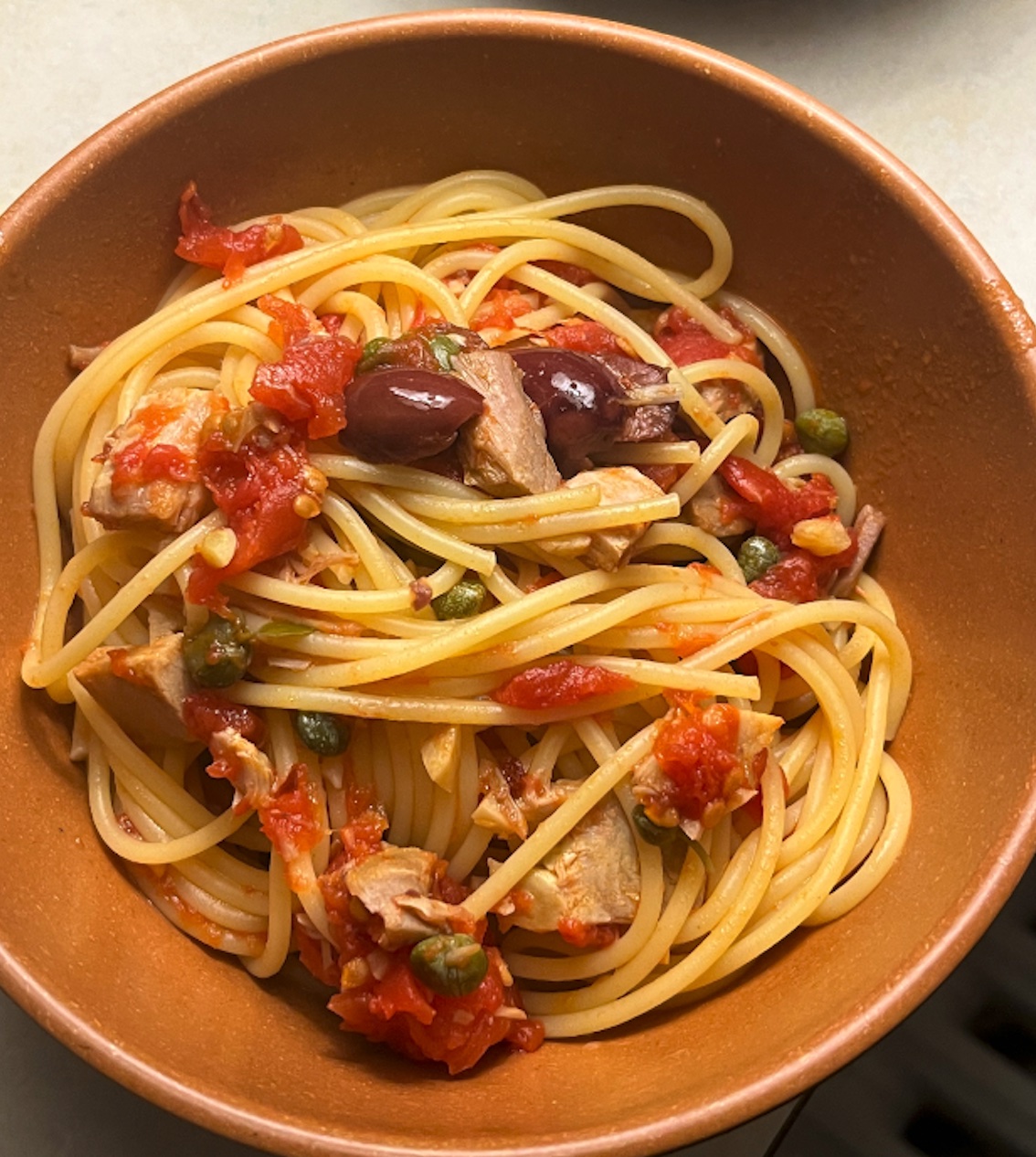
As my friends are well aware, the blood coursing through my veins is composed mainly of crushed San Marzanos, a healthy dose of chopped garlic, and a sprinkle of parsley. This week, I take to my roots, putting a twist on the humble Puttanesca by adding some canned tuna (oil packed, never EVER water packed). This recipe comes together faster than you can write your half-conceived Moodle post, and will give you much needed comfort
Serves 3-6
Ingredients
3 tbs olive oil
3-4 anchovy fillets
3 cloves garlic
1 can tinned tuna
1 28-ounce can whole plum tomatoes
2 tbs capers
4 tbs black olives
1 lb pasta
Crushed red pepper flakes (1tbs for those who like it hot)
Freshly chopped parsley, black pepper, and Parmesan to finish
Instructions
Mince garlic and boil your pasta water. Make it salty, like last weekend’s date you ghosted. Begin cooking your pasta.
Heat olive oil on medium low in the pan until glistening and hot. Throw in your anchovies and let them dissolve into the oil. (If you have the time, throw in some capers and fry until golden brown and crispy. Remove and set onto a paper towel lined plate.)
Next add crushed red pepper flakes and garlic, cook until lightly golden brown.
Drain your tomatoes and crush them by hand into the pan (watch for splattering oil).
Raise heat to medium high and cook tomatoes until they take on a saucy and thickened consistency, about 10 minutes. Salt and pepper to taste.
Stir in tuna, olives, and capers.
Add in your pasta, one minute shy of done, and let it finish cooking in the sauce.
It’s quite easy for me to pinpoint why I wanted to start a food section in The Argus (besides the fact that I needed to bolster my slightly lacking resume): it was because I love food. Specifically, I love eating food. A friend recently remarked to me that she’s never seen someone eat the way that I do, and I took it as not just a compliment but as an affirmation that my life is on the right path. Food is my simplest pleasure. Yes, I do like to cook, but whether the food I eat comes from my own cast-iron pan, from the wok at a Thai restaurant, or from an “asado” in Argentina holds less importance than the literal process of deciding what I want to eat, engaging with the scenario in which I am eating, and then taking the utmost pleasure from every bite I take until my plate is wiped clean. Not eating until you’ve cleaned your plate is sacrilegious in my eyes.
The women in my life have predominately influenced and guided me on my journey to becoming an intense lover of food—most importantly my mom and grandma. Between the two of them, I can’t begin to count the number of meals I’ve eaten out to the point where I’ve left the restaurant with an oversized stomach and a huge smile on my face. I’m incredibly lucky and privileged to have had these experiences, making it all the more important to me that I actively pursue this love of food which has been cultivated both for and by me. Ultimately, I ended up cooking with my mom the most when I was younger, but I really share my massive appetite and explorative approach to eating with my grandma.
As the matriarch of a Jewish family made up of three children and seven grandchildren, my grandma was always head honcho when it came to cooking on the Jewish holidays. Roast chicken, matzo ball soup, gefilte fish, and Thanksgiving stuffing were among her specialities. But she wasn’t authoritarian in her rule of the kitchen. My mom would often take care of the vegetable dishes, alongside my uncle helping with the brisket on Passover and my grandpa handling the latke frying duties during Hanukkah. When my grandpa passed away ten years ago, I immediately stepped up and took on latke responsibilities, which delighted my grandma beyond comparison. It was the first of many notable food collaborations we would have in the future, both inside and out of the kitchen.
As I’ve gotten older, my grandma and I have developed a certain repertoire in the way we eat together. I’ll shoot her a text asking to get a meal, and she’ll respond in seconds with a place and time already picked out. We cover a variety of cuisines across Manhattan and sometimes even Brooklyn, but arguably my favorite outing with her is sushi. Around the corner from her apartment on the Upper West Side lies her favorite spot, Sushi Yasaka, a beautiful, traditional Japanese restaurant where I tried “uni” for the first time in my life. For those unfamiliar, “uni” is the reproductive organ of the sea urchin, mainly seen in the U.S. as a Japanese delicacy served over rice but also found in many other coastal regions of the world. For two prolifically ravenous eaters like myself and my grandma, “uni” represents a departure from our usual mountains of food. It’s more of an experience than a food, where you have to savor your bites, talk about the flavors of the sea creature, and moan about how delicious it is. We would always get other types of sushi, but the “uni,” which my mom is a huge fan of as well, usually stole the show.
During my travels around South America after my semester abroad in Argentina, I encountered the best seafood I’ve ever had in my life on an island in Chile. It wasn’t necessarily that the crabs and mussels and salmon were of the highest quality, or paired with the finest ingredients, but that they had been harvested from the island itself. Prepared in traditional Chilean styles, they were served to me by Chileans who clearly took pride in their seafood and the dishes created from what they had caught that day. I tried an innovative salmon and potato hash from a gastropub, a local restaurant’s traditional crab “chupe” (a dip-like stew), and my friend’s host mother’s homemade salmon ceviche. But the crowning dish of my three days on the island was the sea urchin, similar in every sense to the “uni” my grandma and I would share at that sushi place, besides the name. In Chile, it was called “erizo.”
One afternoon, I was walking around near the harbor, killing time before a boat tour, when I stumbled upon a series of ceviche stands, seemingly operating to serve a light, accessible lunch to people working near the harbor. It wasn’t the kind of place for a wandering American, yet my advanced level of Spanish and obvious knowledge and interest in their seafood prompted a conversation with the woman working at one of the stands. I asked her if she had any “erizo,” knowing that this ocean delicacy was popular in Chile. And while this woman didn’t have any on hand, she talked to a guy who talked to a guy, and the next thing I knew a full purple sea urchin was being harvested in front of me.
What was then given to me for only eight U.S. dollars was a pint container filled with the succulent, creamy morsels of sea urchin, nestled in their own juice, topped with chopped fresh chiles, a squeeze of lime, and a handful of red onion and cilantro. It could be called a ceviche, but was really just piles on piles of “erizo” with a few accompaniments. The size was a tad bit smaller than that of Sushi Yasaka, but it was still packed with flavor. In the past, I had only ever eaten one piece at a time of this sea urchin, setting my grandma back about 10 dollars a pop. Now I had upwards of 30 little guys swimming around in my container, and my taste buds were doing wet somersaults in my mouth as I sat down on the dock. I ate the “erizo” slowly at first, savoring each piece, and then ate faster, and then had to slow down as my stomach gurgled incessantly. The blend of pure sea urchin flavor (buttery, saltwater-infused goodness), acid, and crunchy onions and peppers was incomparable. I even risked potential food poisoning the next morning when I saved the dregs of the pint container to eat on a 12-hour bus ride. Those sea urchins couldn’t be wasted.
When I recounted this story to my Grandma, she was not only overjoyed in that typical grandmother kind of way about me calling her, but she could also tell how significant my story was for our relationship. My experience had linked our own respective food identities together while also exemplifying how influential it had been for me to travel around a new continent on my own. I had tears in my eyes when I hung up the call, tears which returned after we finished the greatest (and only) “omakase”meal of my life. “Omakase,” a Japanese word which means “I’ll leave it up to you,” is basically a chef-created tasting menu, one which my grandma decided would be the perfect dinner date for us after I returned to New York. After my Chilean “erizo” experience and years of Sushi Yasaka, it was time for us to level up.
Now, “uni” and “erizo” have become one and the same for me, connected by both their journeys through my intestinal organs as well as the way I shared my consumption of them with my Grandma. The “omakase” we ate together was one of the best meals we had ever shared, and I even allowed her to embarrass me in only the way a Jewish grandma can by bragging to the Mexican sushi chef that I went to Argentina, and then making me speak Spanish with him. When the “uni” dish came, plated simply with rice and yuzu, my Grandma and I didn’t waste time marveling. We dug right in, and in a matter of seconds the “uni” had vanished. Only now was the conversation allowed to begin.
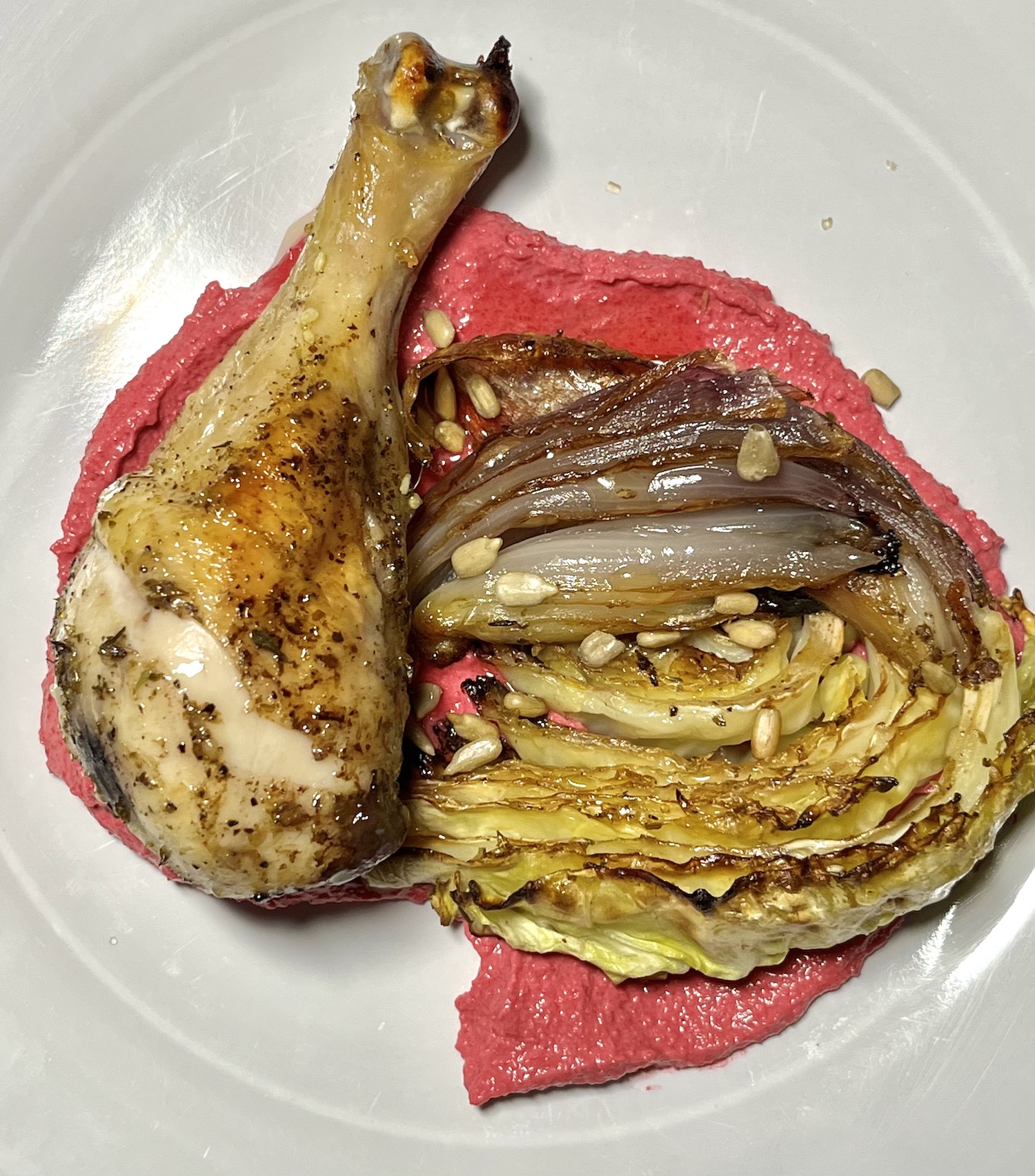
Beets and cabbage, I’d argue, are two of the vegetables that get the worst reputation. What to do with such bad-mouthed produce? How to transform a humble tuber and discount cauliflower into something magical you ask? Look no further. A versatile and punchy whipped feta spread is the answer to all your seasonal blues. Want it vegetarian? No problem, ditch the chicken and roast some white beans instead.
Roasted Chicken and Cabbage with Beet Whipped Feta
Ingredients:
Beet Feta Dip
Versatile little concoction you will be happy to have plenty of leftovers with. Dip some carrots, put on some toast or a warm sweet potato, or make into a creamy pasta, dare I say!
1 block feta
2 x 5 ounces container of cottage cheese, full fat
2 small roasted beets
3 tablespoons olive oil
3 cloves garlic
Water (to thin/get your blender goin)
Juice of half a lemon
Roasted Cabbage and Chicken
(Serves 2-3)
1 pound chicken thighs and drumsticks
1/2 medium sized green cabbage
1 red onion
3 tablespoons olive oil
3 tablespoons Za’atar seasoning (or a mixture of garlic powder, cumin, and oregano)
Salt & Pepper
Honey
Sunflower/Pumpkin Seeds (optional)
Instructions
Heat oven to 425 degrees.
Make the Beet Feta Dip. Combine all ingredients in a food processor or blender and add water if it needs help getting started (not too much or it will get too thin).
Cut and core the cabbage into four 1 1/2 inch slices.
Cut red onion into similar quarter-like slices.
Coat your veggies liberally in olive oil, za’atar, salt, and black pepper. The more oil the better (the cabbage needs that extra bit of fat if you want it extra crispy).
Season the chicken in the same way, and place on a separate sheet pan.
Cook your cabbage and chicken for about 40 minutes, until the chicken is cooked through and the cabbage and onions are charred, crispy, and smell like the trip to Greece you want to take.
And if you are feeling fancy, drizzle on some honey and toasted sunflower seeds.
Hi, I’m Gemma, your kitchen confidant, sautéing savant, and wannabe chef. I’m pairing up with The Argus to share some recipes I’ve been devising in my humble Low Rise kitchen. These recipes are designed to use minimal cookware and Weshop or Food Co-op ingredients, while also being fairly hands-off.
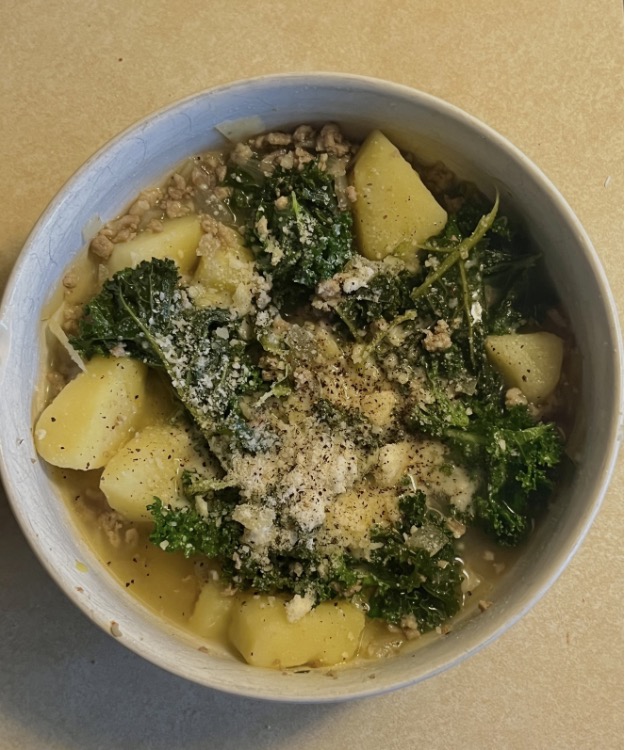
My first recipe was inspired by our current February produce bounty (boring), as well as the ground pork I haphazardly selected from this week’s co-op offerings. This soup is somewhat hard to make vegetarian, although you could hypothetically double the amount of oil and spices used and crumble in some tofu.
Pork, Potato, and Kale Soup
Serving: 4-5
Ingredients
1 large white onion
1/2 bunch curly kale (or a green of choice, preferably a sturdier one)
3 potatoes
1 lb ground pork
2 tbsp olive oil
4 cups stock (chicken, veg, whatever your heart desires)
Crushed red pepper flakes
Fennel seeds (optional)
1 tbsp miso paste (optional)
Parmesan (freshly grated if you can…it’s 100x better)
Salt and pepper
A good loaf of (hopefully co-op!) bread
Instructions
Finely dice the onion, cube the potatoes, and tear the kale into small pieces.
Heat two tbsp olive oil in a large pot over medium-high heat.
Add in the ground pork once the oil is hot. Cook until entirely golden brown, stirring infrequently to maximize browning.
Season with salt, pepper, fennel seeds (if using), and red pepper flakes (if you like it hot).
Once browned, remove the pork from the pot, but try to keep as much of the rendered fat in the pot as possible.
Add the diced onions into the pot and cook in the pork fat until translucent and fragrant (five mins).
Add the potatoes and toss them in with the onions. Let them sauté for two minutes, just enough to get them coated in all that meaty goodness.
Add in the stock and miso paste, if using, bringing it up to a boil and then reducing to a simmer.
Cook for 15–20 minutes, or until the potatoes are tender.
Add in the kale and stir until wilted.
Add your cooked pork and give it one last good mix.
Serve with a healthy amount of grated parm, some crusty bread, and some extra black pepper.
Gemmarosa Ryan can be reached at gryan@wesleyan.edu.
As I spend more time at Wesleyan, and as my college career unfolds, I’ve found myself reflecting on the considerable amount of time that I have spent exploring Middletown and neighboring towns in Connecticut. There are stark differences between my day-to-day life back home in New York City and here on campus—the constant noise, the variety of smells, and the daily commotion of city life—all of which has made coming to Wesleyan quite the adjustment.
That being said, I have grown to really enjoy Middletown and the ability I now have to interact with a more close-knit community. I truly value the acquaintances that I have made with restaurant owners and waiters and feel strongly about supporting local businesses. As a food enthusiast, I love trying new dishes. Since joining Wesleyan in the fall of 2021, I have eaten at many different restaurants and cafés, all locally-owned and authentic in their own way. Last year, my go-to restaurant was Thai Gardens, so much so that I used their menu prices for an Economics 101 project which compared the varying prices of goods, week by week, to measure inflation.
When my friends and I discovered Pho 170, our minds were blown. My roommate had been there before and raved about it, so I thought, “Why not give it a try?” I had eaten Vietnamese and Thai food before, but I was not a frequent consumer of pho, a traditional Vietnamese noodle soup dish and the restaurant’s namesake. Ever since my first bite, I’ve been hooked.
My regular order is Tom Yum soup with tofu, which is prepared with vegetables and tofu in a flavorful hot and sour broth. I love to add a torrent of spices, which makes it absolutely mouthwatering. These spices come in a little dish that is placed on every table in the small restaurant. I use curry paste, red pepper flakes, and hot sauce to dress up my soup, while the jalapeños, bean sprouts, and lime that come in a bag on the side of the meal are dumped into every bowl.
If I am dining with friends, we occasionally start with an appetizer. The crispy and flavorful fried crab rangoons and the fragrant steamed dumplings make for a delicious bite before the pho comes out.
The owner of the restaurant is warm, welcoming, and accommodating. She is always happy to see my friends and I each time we go, overjoyed that we have returned yet again. Sometimes my friends and I arrive during the week to an empty room, with only the owner and us sharing a meal. However, on weekends, every seat in the house is filled with customers primed for a hot bowl of pho. I appreciate both environments and especially love how diverse the restaurant’s clients tend to be. Local couples, Wesleyan students, and Middletown residents can all be seen slurping down noodles side by side.
My friend Emily Goulding ’25 usually accompanies me on my trips to the restaurant. I asked her what her go-to order is, to which she replied: Banh Mi. For those of you who haven’t tried this, you totally should. Banh Mi is a Vietnamese sandwich on a baguette packed with a choice of seasoned meat, carrots, cilantro and other vegetables and spices. Emily likes to pair her Banh Mi with a Vietnamese coffee, which she said has hints of chocolate. I then asked Emily what her favorite part of the restaurant was.
“I love the memories I have of spending time with you and friends at the restaurant,” Goulding replied. “I also love the decor, specifically the plants.”
I agree with Emily that the restaurant’s decor and design is inherently unique and makes dining at Pho 170 a thoroughly enjoyable experience.
Pho 170 remains my comfort restaurant when I crave flavors that are simply unavailable at Wesleyan, and I’m more than up for the trek downtown to go there. That said, as much as I love Pho 170, I am incredibly excited to explore more restaurants and possibly outdo my current review of Pho 170. I want to explore all that Middletown has to offer, learn more about local business owners in the area, and try as much delicious food as I can!
Thomas Bartolotta, better known by his moniker “Pasta Tom,” has left the sauce stove and taken a temporary position at Weshop through his employment with Bon Appétit. Most students know Bartolotta from his classic “Hey!” resounding through the Usdan kitchen to call out inattentive students in the pasta line. When ordering, there is a sequence students must attend to: sauce, protein/vegetables, pasta.
“The shape of the pasta is secondary, tertiary even,” Bartolotta said. “The sauce is the star of the show.”
Bartolotta estimates he’s cooked over 60,000 pounds of pasta over his 11 years working at Pastabilities in Usdan Marketplace. On average, he produced 40 pounds a night and 200 pounds a week for his five day shift. These weights aren’t metaphorical for the cook, who said he doesn’t enjoy eating pasta anymore.
A lifelong Middletown resident, Bartolotta never imagined his love of cooking would end up becoming part of his profession. In fact, after high school, Bartolotta began working in the construction industry.
“I liked getting dirty,” he said of his time working in a brickyard. “I remember the smell of the diesel trucks in the morning.”
Needing money, he took a job at the University in 1999 doing deli prep in the old student center. A few years later, he began cooking at Summerfields. When a job opened up as a chef in Usdan, he entered the land of Pastabilities and pioneered the now renowned toss technique at the University.
“Every sauce I serve is made from scratch,” Bartolotta said.
Some sauces, such as the marinara many students consume on a daily basis, can take up to three hours to cook. However, Bartolotta was ready for a new pace in his work life.
“When I left, I missed pasta for about five minutes,” Bartolotta said. “It was time for a change. But I had a blast as a fill-in [at Pastabilities] last week.”
Unprepared kids with incoherent orders tended to aggravate the cook, although Bartolotta expressed self-awareness about some of the tougher shifts he worked.
“Some nights I was a prick, I’ll be the first to admit it,” Bartolotta said.
Bartolotta voiced pride in the sauces and pasta he served, explaining that he likes putting out a good product.
His nights at the pasta station took on a predictable rhythm. Often the cross-country team arrived first, followed by the football team, then a host of 350 other students, he estimated.
Whenever he’s mixing sauces and serving pasta, Bartolotta has a ritual to get him through the public and intense shifts. By 4 p.m., he’s finished making his sauces and takes a brief hiatus in his truck to relax before his shift starts at 5 p.m.. Over the course of the following three hours, he says he regularly consumes four cups of coffee.
“I have no regrets,” Tom said. “It was fun. I had a good time here.”
His current position at Weshop is temporary, but if a permanent job opens up, Bartolotta said he would take it.
“I could imagine retiring working at Weshop,” Bartolotta said. “I don’t want to keep working at pasta until the day I retire.”
Known to his childhood friends as “Butch,” Tom grew up in a Middletown full of local restaurants and department stores. It was a place where his father could support his family of four kids with one job, and a time where Bartolotta started smoking at age 13 and received his parent’s permission to smoke in the house at 14. The department stores have left and the tobacco laws have changed, but Bartolotta is still here. Amazingly, he has only left Connecticut once, to go to Washington state for a week-long trade school program.
Yet, there are parts of Middletown he has yet to explore, and he said the money is good here. Bartolotta also explained that he plans to work until the age of 70, and in retirement perhaps he’ll fish, or maybe he’ll get back into golf.
When asked what he cooks at home, Bartolotta responded “takeout.” Returning home around 9 p.m. from his weeknight shifts, the golden arches of McDonald’s often call his name.
Students will continue to see Tom over the next few years in Weshop, and maybe every now and then back behind the stove, but his full-time pasta days, measured in 60,000 pounds, are over.
“I’ve never understood my popularity,” Bartolotta said, as he pulled out a second cigarette. “I will never get used to that. It’s so funny…. I can’t wait to walk down the street in total anonymity.”
So from all the students of Wesleyan University, thank you Pasta Tom. We hope you have a splendid night.
Back in the day, Lia and I would spend every Super Bowl together, when my family would walk two blocks down Clinton Avenue to her family’s brownstone. Given that one of Lia’s moms, her brother, my dad and I were all into football, the Big Game was heavily spectated. However, the real star of the show was always the food that Lia’s moms served. I don’t think I ever left a Franklin-Chinn family Super Bowl party without a glorious stomach ache reminding me of all the deliciousness I had just consumed.
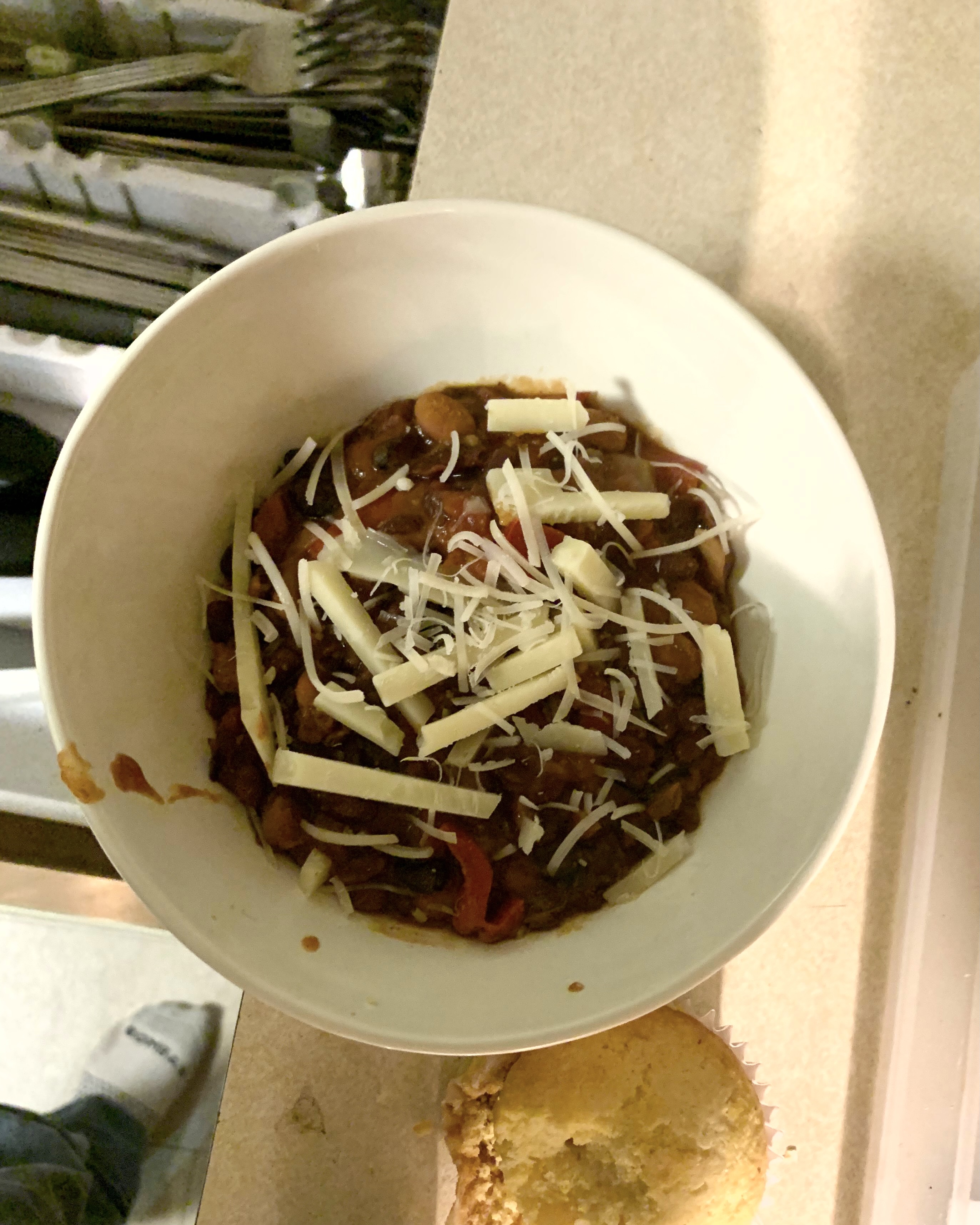
A typical Super Bowl experience went like this: as the first quarter began, and the conversation became animated, we all feverishly devoured the guacamole, only to find ourselves hungrier than we were before. Near the end of the first quarter, or maybe at the beginning of the second, the main course was finally ready. This always happened right around when my mouth had almost watered itself dry due to the stimulating, titillating, and comforting smells of chili that were coming from the kitchen. As Lia is a vegetarian, there were always two types of chili: Mum’s Vegetarian Chili and the Franklin-Chinn Family Texas Steak Chili. The vegetarian chili would always make up at least a quarter of the first plate I piled together for myself. The other three quarters would be dominated by the Texas Steak chili—flavorful and nuanced in its use of various chilies, and lacking even a single bean. We ate this over rice and topped it with scallions, sour cream, and a heavy dose of lime juice. By the time I went back for my second portion (right around when the halftime show was starting), I would already have a pit in my stomach, and once Shakira, Katy Perry, or Lady Gaga had finished their amazing set, I would be nearly comatose.
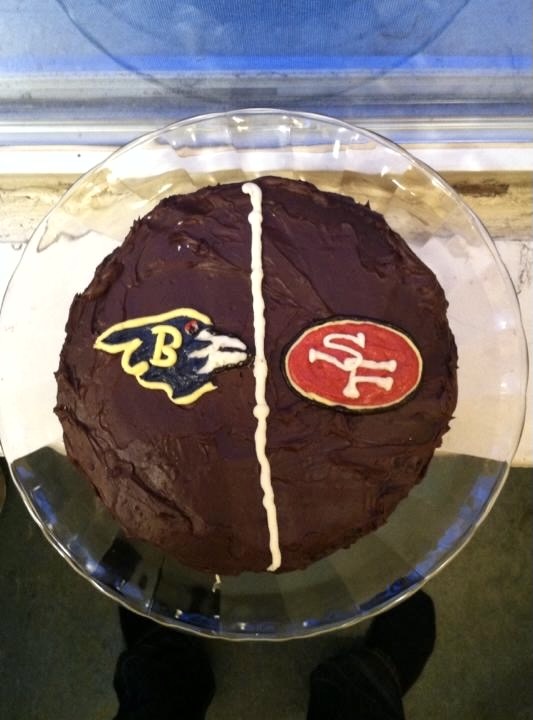
Fortunately, by the third quarter, Tom Brady (or insert other good quarterback) would usually make some amazing plays and snap me out of my daze. Then it was time for the best cake I’ve ever eaten in my life: The German Chocolate. Shaped like a football or decorated for the team of preference, this monstrosity of a dessert was so irresistible in flavor and size that if I ate any fewer than two pieces, my body would be shivering from withdrawal. I made it my mission to stuff as much of the pecan-caramel-gooey-chocolatey cake down my gullet as I could before the game ended. As I stumbled home, I thought more about my German chocolate love than the actual outcome of the game.
c/o Lia Franklin, Features Editor
Super Bowl Recipes from the Franklin-Chinn Household (by Lia Franklin)
Franklin-Chinn Family Texas Steak Chili:
The recipe for this chili is a family secret. However, this is a recipefrom the kitchen that my mother says “is the gist” of her Texas Chili.
Mum’s Vegetarian Chili:
2 medium onions, chopped
4 cloves garlic, sliced or crushed
1 red bell pepper, sliced
2 or 3 carrots, cut into rounds
2 dried chipotle peppers
3 cans of any pink bean (ex. kidney or pinto)
3 cans black beans
2 large cans crushed tomatoes
1 small can tomato paste (optional)
1 cup wine or dark beer
2 bay leaves
1 teaspoon oregano
2 teaspoons cumin
Chili powder to taste (spice level)
Pinch of salt and pepper
Instructions:
Drain and rinse beans. If using dried beans, wash and soak overnight. Cook until soft.
Heat a large Dutch oven over medium-high heat and put enough olive oil to cover the bottom of the pot. When the oil begins to shimmer, add the onions and a pinch of salt. Sauté, stirring with a wooden spoon, until the onion starts to brown. Add the garlic. Sauté until the garlic is fragrant but not browned. Then, add the peppers and cook until soft. Add the carrots and sauté until they start to soften and brown.
Add the beans and sauté until they begin to stick to the pan.
Pour in the tomatoes, the tomato paste (if using), the chipotle peppers, and the bay leaves. Stir until it comes to a magma-like boil.
Add the oregano, cumin, chili powder, salt, and pepper and turn down to simmer. Partially cover and let it cook for thirty minutes, stirring every so often so that it doesn’t stick. Continue tasting and adding more spices as needed.
Add the wine/beer. Let cook for at least another 15 minutes.
Ideally, let sit for half an hour with the heat off before serving, so that the flavors can combine.
Super Bowl/Birthday German Chocolate Cake
Cooking spray or butter to grease pans
4 oz semi-sweet baking chocolate
½ cup water
2 1/4 cups all-purpose flour
1 teaspoon baking soda
1 teaspoon salt
2 cups granulated sugar
1 cup (2 sticks) butter, room temperature
4 large eggs, separated
1 teaspoon vanilla
1 cup buttermilk
Coconut-Pecan Filling and Topping
4 egg yolks
1 1/3 cup granulated sugar or packed brown sugar
2/3 cup butter (1 stick)
1 ⅓ cup evaporated milk (from 12-oz can)
1 teaspoon vanilla
1 ⅔ cups flaked coconut
1 ⅓ cup chopped pecans
Ganache
4.5 oz bittersweet chocolate, roughly chopped
½ cup heavy cream
Instructions:
Heat the oven to 350 °F. Spray the bottoms and sides of three eight-inch or two nine-inch round cake pans with the cooking spray. Cut three rounds of parchment paper. Line bottoms of pans with the paper.
Coarsely chop the chocolate. In a one-quart saucepan, heat the chocolate and water over low heat, stirring frequently, until chocolate is completely melted. Remove from heat and let cool.
Meanwhile, in a medium bowl, stir the flour, baking soda and salt until mixed; set aside. In another medium bowl, beat two cups sugar and one cup butter with an electric mixer on medium speed until light and fluffy; set aside.
On medium speed, beat one egg yolk at a time into the sugar mixture until mixed. On low speed, beat in the melted chocolate and one teaspoon vanilla. On low speed, beat in half of the mixture just until smooth, then beat in half of the buttermilk just until smooth. Repeat beating in our mixture alternately with the buttermilk, just until smooth.
With clean beaters in a small bowl, beat the egg whites on high speed until they form stiff peaks when the beaters are lifted. Add egg whites to the batter. Fold in with a rubber spatula to cut down vertically through the batter, then slide the spatula across the bottom of the bowl and up the side, turning batter over. Rotate the bowl a quarter turn, and repeat this down-across-up motion. Continue folding until batter and egg whites are blended.
Pour batter into pans; use a rubber spatula to scrape batter from bowl, spread batter evenly in pans and smooth top of batter. (If batter is not divided evenly, spoon batter from one pan to another.) Refrigerate batter in third pan if not all pans will fit in the oven at one time; bake the third pan separately.
Bake eight-inch pans for 35–40 minutes, nine-inch pans 30–35 minutes, or until a toothpick inserted in the center comes out clean.
Cool cakes in pans for 10 minutes. To remove cake from pan, invert onto cooling rack, then invert right side up on second cooling rack. Cool completely, about one hour.
In a two-quart sauce pan, stir the three egg yolks, one cup sugar, one half cup butter, the evaporated milk and one teaspoon vanilla until well mixed. Cook over medium heat for about 12 minutes, stirring frequently, until thick and bubbly. Stir in the coconut and pecans. Cool for about 30 minutes, beating occasionally with a spoon, until mixture is spreadable.
Make the ganache by heating cream until just before it boils. Pour hot cream over the chopped chocolate and stir until smooth. Allow mixture to cool until spreadable consistency.
Place one cake layer, rounded side down, on a cake plate. Using a metal spatula, spread half of the filling over the layer. Add a second layer, rounded side down; spread with ganache. Add a third layer, rounded side up, and spread with remaining filling. Store cake covered in the refrigerator.
If you want to decorate (as seen in the picture) I would recommend just buying some frosting and food coloring and decorating as desired.
To all my fellow food critics and lovers, I’m going to let you in on some of Middletown’s best kept food secrets. From wacky diners, traditional Vietnamese restaurants, and deliciously authentic Mexican food, this list offers a comprehensive opinion of our town’s surprisingly expansive food scene. For those of you who have differing opinions or think that I am a fool for my choices, you are more than welcome to come and write for the food section! In fact, we encourage it. I pride myself on having a fairly refined palate thanks to an adequate amount of dining experience across many different restaurants. That said, I will admit that I can be a little too opinionated when it comes to matters like these, but I am always open to discourse. And without further ado, I now present what will hopefully be the first of many features in the Food Section’s restaurant review column.
1) Lan Chi’s Vietnamese Restaurant and Bar (4.5 stars)
This family-owned Vietnamese spot right near the corner of Washington and Main Street has been my go-to for romantic, family, and friend dinners for the past year. I first discovered it whilst trying to impress my parents with a Brooklyn-esque restaurant sophomore year, and since then I have been hooked. Their pho more than equals that of their counterpart, Pho 170, but the few rice/stir-fry dishes that they boast, as well as their salads and vermicelli bowls, are what makes the restaurant so fantastic. It’s the kind of place where I always leave full but still craving the flavors I just devoured. The lemongrass chicken stir-fry is a standout for me, with its soothingly rich flavor, piles of onions, and scrumptious salad served on the side. The papaya and chicken salads also holds its weight, and the grilled pork vermicelli is a near perfect take on a classic Vietnamese dish. The dressing in which you drench the crispy, sweet pork and noodles is just tangy deliciousness. During one visit, an employee who I often see (who I am pretty sure is the wife in a husband-wife team that owns the restaurant, cooks the food, and serves drinks) boasted to me that she had made all of the cocktails from scratch, in addition to the papaya salad. I had no reason not to believe her, especially as her whiskey-lime cocktail fuzzed up my brain and warmed belly.
2) Salsa’s 3 Mexican Grill (4.5 stars)
This beloved haven for Wesleyan students and staff alike—I once saw our very own President Michael S. Roth ’78 popping in for takeout—has an enormous menu. I myself desire to try every single thing their kitchen produces by the time I graduate. While I’ve mainly focused on sampling their tacos (which are perfectly sized, flavored, and sauced), they also have amazing burritos, an exciting birria menu, and at least 40 specials on any given day (I am not at all kidding). The staff is incredibly kind, and they are always willing to give you free chips, salsa, and tap water (important note: we should all be tipping them!). The best thing I had there was the chicken flauta plate, which came with a yummy portion of rice and beans. This stuffed me so full to the brim that I considered asking if I could take a nap in one of those red, uber-comfortable booths. I guess the only knock on the place is that some of my friends have complained about having an upset stomach after dining there, whilst others have cited the menu’s lack of vegetarian options. But then again, Wesleyan is home to quite a large number of students with very suspect and barely believable food allergies—not that I have anything against vegetarians, of course.
3) Sarah’s on Main (4 stars)
This pick might catch me a little flak because it isn’t actually in Middletown—it actually lies just across the bridge in Portland. However, its food is so delicious and the quality of its dishes are so much better than the average brunch place that I had to include it in this list. Sarah’s stands out to me for its use of homemade ingredients. For instance, the other day, I treated myself to a weekday breakfast, and the maple whipped cream they put on top of their scrumptious banana-chocolate waffles was entirely homemade. I mean, no one would complain if they served Reddi-whip, but this just shows how much they care about their food. All of their breakfast plates, sandwiches, and omelets are made with love and fresh, high-quality ingredients, and while the portions may be a little small, the flavors are a level up from anywhere else serving breakfast in a nearby radius. My favorite dish might be the tomato-basil eggs Benedict, which is served simply with creamy hollandaise, sliced fresh tomato, and basil leaves. However, I also love their breakfast sandwiches, which vary from pastrami and egg, to black bean and egg. Honestly, Sarah’s could make a shoe leather and egg sandwich, and I’d still eat it. And my god, their home fries are the best I’ve ever eaten. I will end with that.
4) Thai Gardens (4 stars…and R.I.P)
So here’s the thing. I am pretty sure that Thai Gardens is closed for the foreseeable future. This might have something to do with the long family saga that has plagued Typhoon and Thai Gardens, but I won’t speculate. However, I still want to include this culinary gem on my list. I apologize to any first years who may salivate while they read this and will never be able to try the pad thai or fried rice that I describe. My favorite Thai place (oopsie) definitely has some interesting decor, but once the food arrives at the table, you don’t really find yourself looking up from your plate. The restaurant is big enough for huge parties, and it has a lot of dishes that are perfect for sharing. Their pad Thai is a classic and comes with a delicious sweet and savory sauce. However, my favorite dishes on the menu are—were?—the salads. Even Lan Chi’s could learn a thing or two from the cooks at Thai Gardens. The dressings that come with all of the salads (fish, papaya, duck, mango) are fairly similar but differ in amount of spice, fish sauce, and other flavorings. I have been known to drink the entire bowl even after the last tomato has been plucked out. I experience such a strong sense of umami every time I eat one of their salads that it nearly knocks me out. I often black out upon the first bite, wake up, and realize I’ve eaten the whole salad in under a minute and that the friend that I am with now wants to murder me.
5) O’Rourke’s Diner (3.5 to 5 stars…this place is so crazy I can’t even rate it)
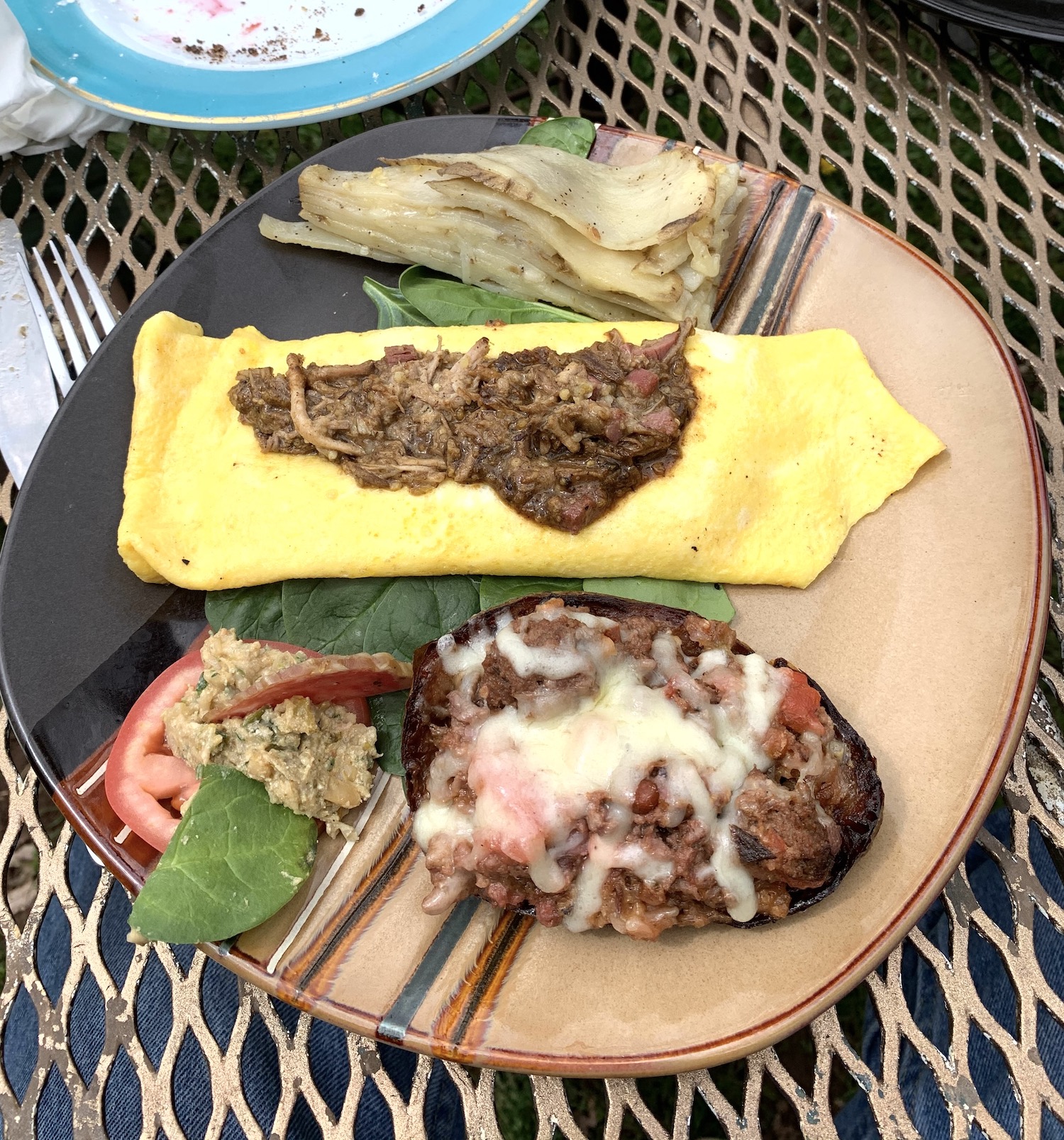
Finally, the wackiest restaurant I’ve been to in my life. I placed it in fifth place just so that I could write about it. I walked in for the first time with my parents on a chilly Saturday morning in March. The owner/chef/everyman, Brian O’Rourke, greeted us, introduced himself, and directed us to the menu on our phones while simultaneously informing us of his specials, relaying other orders to his staff, and handing us a plate of complementary homemade pastries. I wouldn’t have been surprised if he had also been butchering a chicken at the same time. The one item that I caught from O’Rourke’s menu—and most important one—was “Brian’s Breakfast,” a dish where he’ll cook whatever he wants for you. I have many questions about this. Is it the same for every customer on a given day? Is it completely random? Will you know what you are eating? The latter question can be answered with a firm “no,” but as a food-lover, I loved the idea of ordering such a chef’s special. It came with an assortment of items, most of which were American or maybe Irish-inspired and possessed flavors that were savory, salty, and crunchy. These came together in an incredibly funky way that made me rethink the way I cooked food. As you can see from the picture, the plate defied conventional food logic. There was a perfectly cooked omelet that just happened to be covered in smoked meat. There was potato gratin. There was a singular tomato slice, topped with a mystery, albeit absolutely delicious, mush, and then there was a chili baked potato topped with cheese. I felt unhinged as I ate it and slightly ill once I had finished. But, I have never been more enthralled by a food experience. My hat goes off to Mr. O’Rourke: he has created not just a restaurant, but an institution.