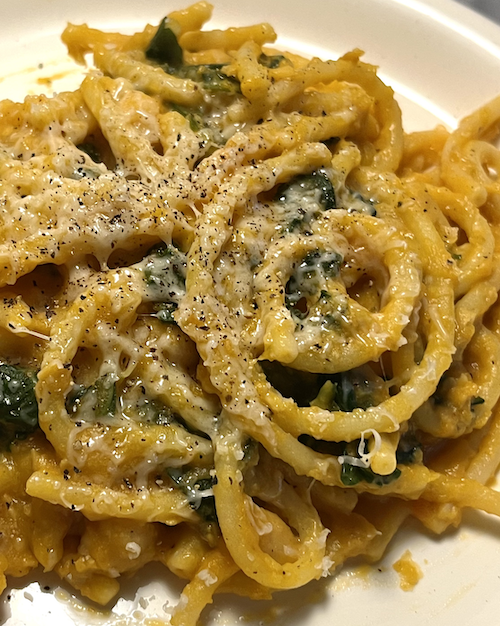
For this semester’s final issue of The Argus, I wanted to share a classic Tuscan recipe passed down to me from my mother. Pasta e Ceci—pasta with chickpeas—is an emblematic dish of the Tuscan “cucina povera” (peasant cooking). While unassuming and cheap to make, this dish manages to turn the most simple of ingredients into a meal that will impress your dinner party guests and cure your Sunday scaries. It never fails to warm my heart and fill my stomach—I can only hope it does the same for you. Since the last issue is a special occasion, I invited my wonderful fellow Food Section editors Lia Franklin ’24 and Lewis Woloch ’24 over to my humble Low Rise so that we could all enjoy the pasta—and there wasn’t a singular bucatino left in the pot when we finished eating. It was the first of many dinners that we will have together.
If you want to keep up with what I’ll be cooking over the summer, follow me on Instagram @wannabechefg, and stay tuned for the launching of my substack.
Grazie mille for reading the column, and until next year,
Chef G
Ingredients:
Serves 2-3
1 can chickpeas
300 grams of pasta (Bucatini, Ditalini, Tagliatelle)
1 medium carrot
1 medium stalk celery
1/2 white onion
3 tablespoons tomato paste
2 cups vegetable or chicken broth
1/2 bunch Tuscan kale
4 tablespoons olive oil
1 sprig rosemary
2 cloves of garlic
Salt and pepper
Instructions
In a food processor or by hand, finely chop the carrots, celery, and onions. Mince garlic separately.
Remove the vegetable mixture and blend half a can of chickpeas, putting aside the other half of whole chickpeas to use later.
Heat up four tablespoons of olive oil in a Dutch oven or large saucepan over medium heat. Add in the carrot, celery, and onion mix. Season with a pinch of salt and pepper.
Sweat the vegetables out until fragrant and translucent, around four minutes.
Add in garlic and rosemary, cooking for another two minutes.
Add in the tomato paste, cooking until it turns brick red, around two minutes.
Add in the two cups of broth to de-glaze the pan, making sure to scrape up any bits stuck to the bottom of the pot.
Add in the chickpea purée and the remaining whole chickpeas, along with a heavy pinch of salt and pepper, and bring the mixture to a soft boil.
Once boiling, add in the pasta and lower to a simmer. Cook until the pasta is perfectly al dente, adding more broth/water if there isn’t enough liquid or if the mixture looks dry.
Add in the kale, stirring into the pasta and letting it wilt.
Serve with a fresh grating of Parmesan, a scrunch of black pepper, a sprinkle of salt, and another drizzle of olive oil.
This article is a satire and is not based entirely in fact. All opinions belong to the author alone.
I’m fed up with this fricking crypto junk.
When Summerfields first started using Eco-2-Go containers, where students exchange tokens for to-go boxes, I’ll admit I was enthusiastic. Streamlining the payment process was a good thing, and decentralized control of the late-night token seemed like a viable, anti-inflationary approach. But now, after the crypto winter has led to a full-on bear market, I don’t understand how the administration can continue to justify this volatile coin.
I would like to write to you all about the noodle bowl (savory, perfectly boiled eggs, fully completed with the choice of pork belly, a lovely though salty and heavy addition. Order in person to receive in a hearty bowl with freshly chopped scallions—7/10). Or even the chipotle turkey sandwich (bread grilled to a crispy delicacy. Though sometimes heavy on the turkey, the avocado and chipotle mayo freshly complement the meat. Paired with a side of rice and beans, the sandwich is one of the more filling items on the menu. A shame neither it nor the noodle bowl are offered after 9 p.m.—8/10). However, because all anyone wants to talk about is chalk and how phenomenal “Twelfth Night” was, I’m forced to bring this issue to the public.
First off, let’s talk about transparency. Bon Appétit has yet to release any of the blockchain algorithms underlying this currency. And boy, let me tell you, I am skeptical. This past winter, the price per container jumped exponentially from 1 to 7.5 tokens. Where do they come up with these numbers? While rampant Dem-flation might account for some of these price swings, the unpredictable volatility makes Summies tokens a risky asset to invest in.
What’s worse, students purchase tokens with points, ANOTHER form of fake money. In computer science, that’s what we call “multiple levels of abstraction.” In the financial world, that’s what we call “get your money the hell out of there.”
If you’re banking on rigorous oversight, bank elsewhere. The administration clearly refuses to regulate the market, claiming the Summies’ crypto market is already a “safe enough space.”
“We need inquiry, compromise, and reflection,” Roth wrote in his recent book by the same name, towards a spirit of “open-mindedness and pragmatic idealism.”
Nice sentiments, though one can’t help but wonder who will benefit if the Bilaterally Integrated Token, Choice Of and In the NESCAC (B.I.T.C.O.I.N) collapses.
And it doesn’t help that the student Bon Appétit union workers demand that their pension plans include token portfolios, which will inevitably drive up both the legitimacy and price of the Summies token.
Summies employee Isaiah Koenig ’25 echoed the appreciation to deregulate. “We’ve got to decentralize,” he texted in a message to The Argus. “U know?”
Yet worrying financial reports from the Freshman Trade eXodus (FTX) have thrown into question the long-term sustainability of the system.
To incentivize users, Summies recently announced students can now stake their tokens, a practice that allows crypto holders to earn interest on their investments. The form of interest? Sweet potato fries. Not even regular potatoes. God dammit.
The eatery is also offering a commission system to employees in the hope that greater rewards will result in better enforcement when students use the takeout containers to eat the breakfast special.
(There seems no right way to eat eggs at Summies, though the special’s pancakes alone are worth the price of admission—unless, of course, that price includes tokens, in which case, see article above. They are always complemented well by a visit to the fruit baskets—6/10).
“Working at Summies is great because crypto holdings are nontaxable!” employee Diana Tran ’26 texted in a message to The Argus. “That’s why I always make sure to see that green check mark — every token purchased means more crypto for me.”
Somebody call the SEC.
My message to you, late-night diners: get your money out of Summies’ crypto tokens before reUser uses you.
A note from the author:
As an AI chatbot, while I can’t advise on financial decisions, I would advise that you consider the potential benefits of such a system before making any hasty decisions. ChatGPT recommends the use of blockchain technology, which, unlike the U.S. dollar, incentivizes a secure and transparent market. These technologies can prompt environmentally conscious behavior in the otherwise pea-brained human consumer.
So, before you rush to withdraw your Summies tokens, perhaps take a moment to consider the bigger picture. In the token’s case, the benefits of faster, more secure transactions may outweigh the risks of price fluctuations. Also, have you heard of NFTs?
The quote from President Michael S. Roth ’78 was taken from his book Safe Enough Spaces. This quote has been used out of context for the purpose of this satirical article.
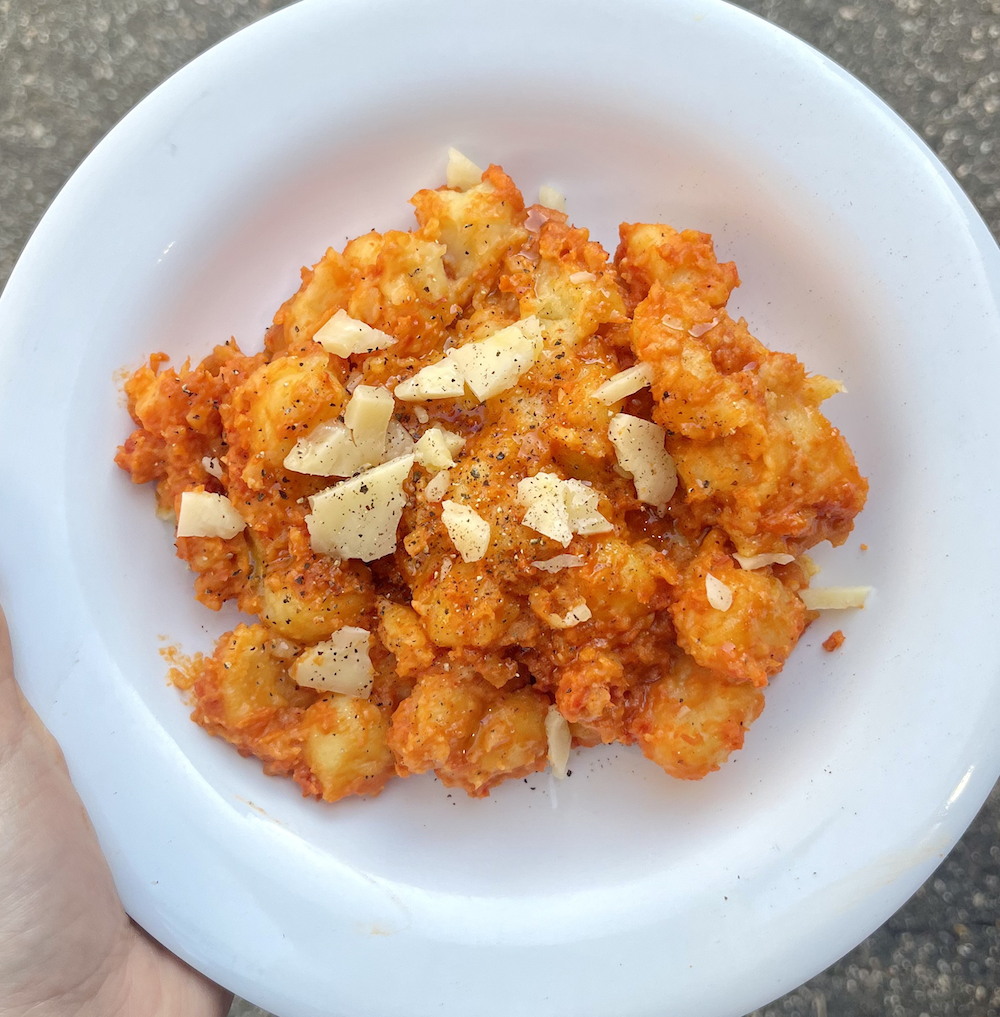
For the longest time, I loathed red bell peppers. As I got older, I warmed up to them, but to this day I still remain suspicious. One of the only ways I will spoon-feed myself red-bell peppers is when they are emulsified with some sun-dried tomatoes, almonds, and copious amounts of parmesan (what some might choose to call a “pesto”). This recipe I devised is tried and true, and it will be the crown jewel of your charcuterie board, gnocchi night, or hungover egg sandwich. If you don’t have the time or energy to turn on your oven, by all means use jarred red peppers and stick with regular old raw garlic. But, as in most cases, going the extra mile really makes the difference.
Ingredients
2 red bell peppers
1/2 cup sun-dried tomatoes (about 8-10 depending on size)
1/2 head of garlic
1/2 cup Marcona almonds (I’ve used toasted almonds, walnuts and pine nuts too but these almonds really add something special)
1/2 cup Parmesan (plus more for serving)
Salt and pepper
1/2 cup olive oil
Instructions
Preheat the oven to 400 degrees Fahrenheit.
Core the red bell peppers and cut into quarters. Place on a baking sheet and coat with 2 tablespoons of olive oil, salt and pepper.
Cut the head of garlic in half lengthwise, and place the two halves in tinfoil. Cover the garlic in about three tablespoons of olive oil and close the tinfoil.
Roast the red peppers and garlic for about 30-45 minutes, or until the peppers are jammy and slightly charred and the garlic can be squeezed from its skin.
Once the vegetables have slightly cooled, put the peppers and half of the garlic into a food processor or blender, making sure the roasting oil gets in there too! (Save the other half a head of garlic for whatever garlicky needs you may have)
Add sun-dried tomatoes, almonds, and grated parmesan to the processor along with a pinch of salt, crack of pepper, and another 2 tbsp olive oil.
Blend until smooth, adding more olive oil as needed to get a smooth and emulsified consistency.
Serve with your favorite pasta shape, on toast with an egg, or as a dip on your next charcuterie board.
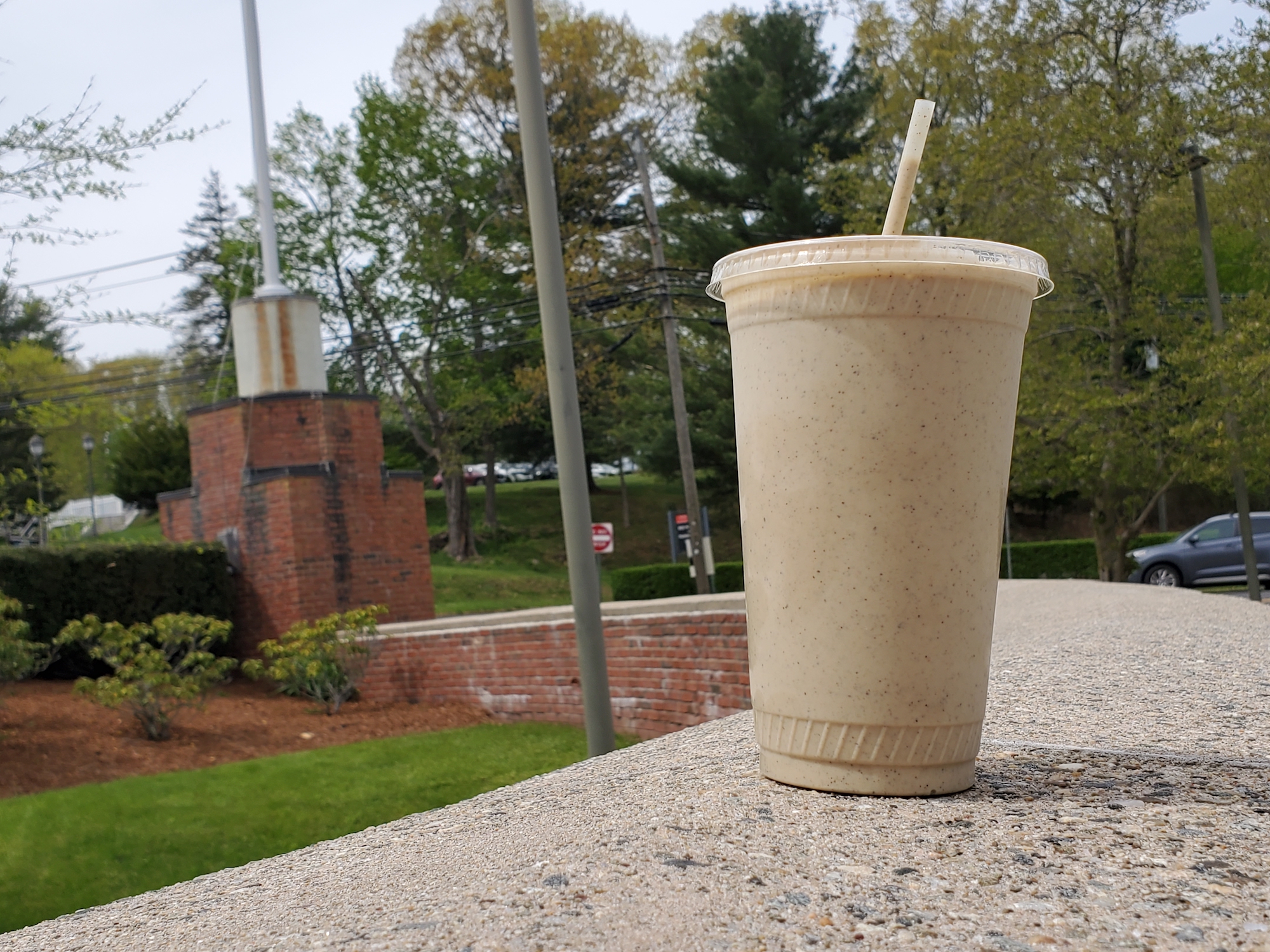
The Elvis Smoothie from Cardinal Cafe; c/o Oscar Kim Bauman, Executive Editor
Whether you’re on the go and need a substantive beverage while speed-walking across campus, you want to get some nutrition while staying cool on a hot day, or you just feel like treating yourself, a smoothie is usually what the occasion calls for. As the weather warms up, I decided to look into the different smoothie options available on Wesleyan’s campus and let my fellow smoothie aficionados know what the pros and cons are of each option in this ranked list.
4: The Marketplace at Usdan
This one’s on the list out of a sense of obligation. Though there are smoothies at Usdan, they’re not a regular staple of the place like the salad bar or the pasta station. Instead, every once in a while you find yourself walking past the sandwich station, and they’ve got smoothies stationed against a wall in those big, spinning drink dispensers. The elusive Usdan smoothies are not my favorite. When you just have to take whatever the option that day happens to be, you lose the element of customization, which is, in my opinion, one of the best parts of a smoothie. Also, since the smoothies are just sitting there in the dispensers, they’re not freshly made. The flavors can be… unorthodox (I recall a cucumber and rice milk-based one that was particularly rough). Plus, they always seem to serve them in those short, wide plastic cups, which are too small for any serious smoothie head to get their fix.
3: Pi Café
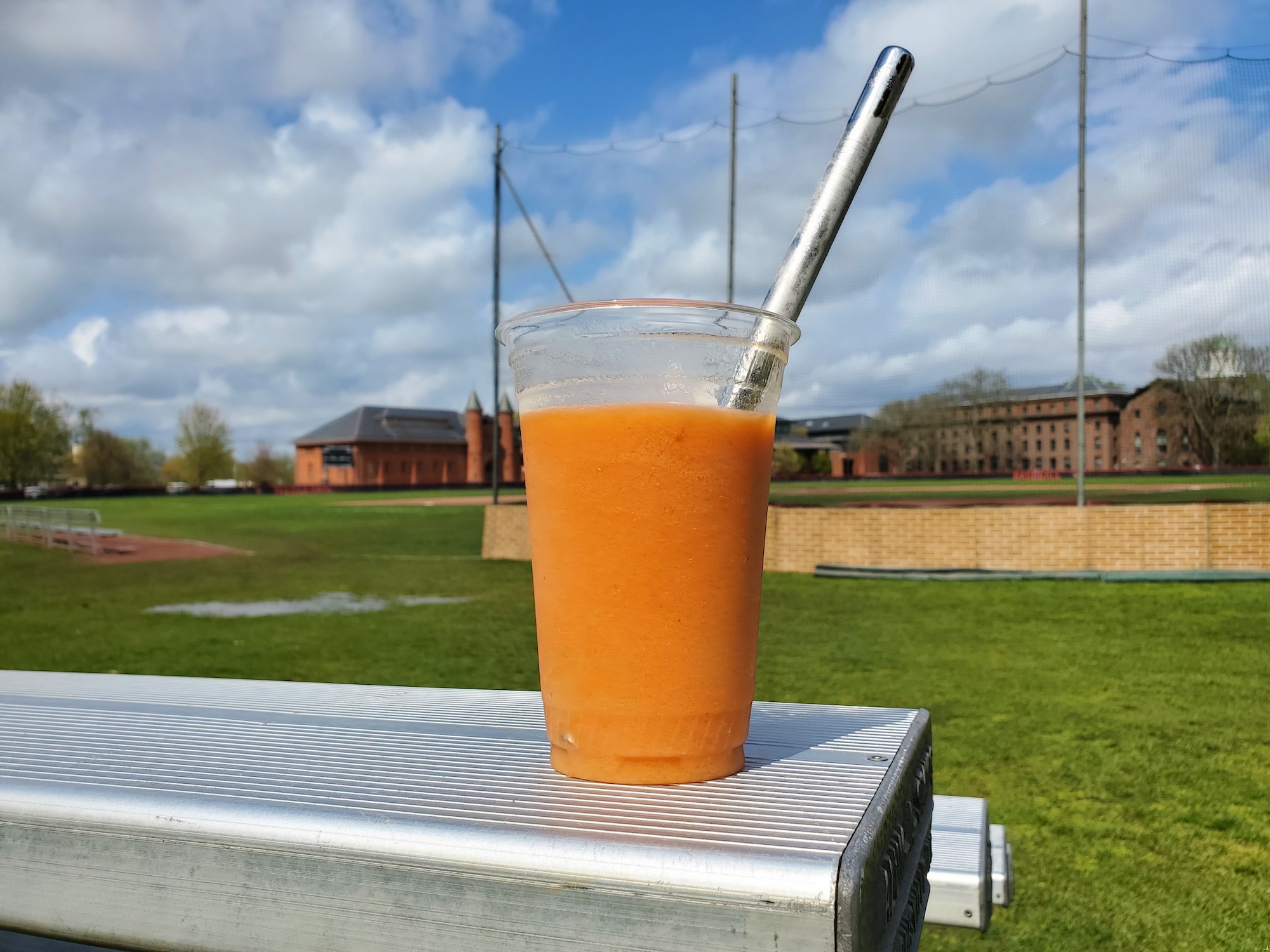
Pi is known best for its coffee drinks, so its smoothie options are limited—but not without great appeal. Pi technically has just a single smoothie, the Quantum Freeze, on its menu, but it comes in a variety of fruit flavors. The Quantum Freeze is a decent option, particularly if you find yourself at Pi but don’t want coffee. With its $4 price point, the Quantum Freeze is definitely the most affordable smoothie on campus. It’s also the most centrally located smoothie option, sitting right in the Exley Science Center.
However, Pi’s smoothies are too sweet for my taste. There’s a reason for that; unlike the other smoothie options around campus, which are made with fresh or frozen fruit, Pi’s fruit smoothies are simply made with ice, water, and boxed fruit concentrate. Also, beyond choosing a fruit flavor, your only other options for modification are to add vanilla ice cream and whipped cream, which brings the smoothie closer to milkshake territory. Though I do enjoy a good milkshake, they have a different time and place than smoothies.
Mango Quantum Freeze Smoothie from Pi Café; c/o Oscar Kim Bauman, Executive Editor
2: Red & Black Cafe
Red & Black’s smoothies are well-known, and for good reason. The cafe allows you to fully customize your smoothie—with six options for bases, seven for fruit, and 10 possible add-ins, there are untold options for peak personalization, permitting you to make a smoothie for whatever vibe you’re feeling. I can’t do the math on all the possible combinations, but there’s got to be at least hundreds, if not thousands, of potential smoothie options in there. If you’re not feeling up to the daunting task of customization, Red & Black also has a set menu of seven specialty smoothies.
My personal favorites among those specialty options include the Peanut Butter Bomb, which is made with yogurt, bananas, cacao and peanut butter powder, and chocolate syrup, and the Purple Haze, a concoction of almond milk, bananas, blueberries, hemp, and flax. Besides tasting great, it might also take the cake for most aesthetically pleasing smoothie option around. Additionally, their location, in the same building as the offices for The Argus and WESU, is highly convenient for me.
1: Cardinal Cafe
Located in the Freeman Athletic Center, Cardinal Cafe is a hidden gem, at least for less athletic types like myself who aren’t often in that corner of campus otherwise. Honestly, it’s a place I had trouble finding at first. To save others from the misfortune I faced: if you’re looking for Cardinal Cafe, don’t go to Freeman’s entrance on Warren Street, where you go up the stairs to the Andersen Fitness Center. Instead, continue down Cross Street, towards the entrance that leaves you by the Spurrier-Snyder Rink.
Location aside, the smoothies at Cardinal Cafe are worth the trek, even if you aren’t headed for a workout or attending a game. Their smoothie menu offers a wide variety of flavors and combinations, with my favorites including the Awakening, which is made with coffee, bananas, protein powder, almond milk, chocolate, and honey, and the Banana Protein Crunch, which contains bananas, granola, protein powder, and rice milk. Though Cardinal Cafe doesn’t have the seemingly limitless customization options of Red & Black, it does offer nine flavors on its menu, and nine more optional add-ons, ranging from fresh-juiced ginger to graham crackers.
Being located in Freeman and aimed largely at a student-athlete customer base, there is a slightly more health-conscious vibe to many of the options at Cardinal Cafe. Unlike many of the other smoothies available around campus, I’ve never found a smoothie from Cardinal Cafe to be overly sweet, and also find them the most satisfyingly filling; especially if you get a large one, they’re closer to a meal than a snack.
There you have it! That’s the ranking based on my personal preferences, but hopefully, it also provided enough detail to help you pick where you’ll head for your next smoothie fix. As the semester wraps up, take a moment to kick back, and appreciate the wealth of smoothie options available across campus.
Whenever April 20th rolls around, I find myself with a bad case of the munchies—especially when I’m at Wesleyan. It’s hard to understand, but it just happens that way; I’m pretty hungry most other days of the year too, but 4/20 just sends my stomach and bowels into oblivion.
When I woke up a mere five days ago (and after engaging in a few, maybe just one specific activity), I was at a crossroads: Where am I going to eat my first and most important meal of the day? The hunger that was beginning to possess my body. I was becoming so ravenous that a tiny Story and Soil sandwich wasn’t going to cut it, nor was I going to settle for a mundane Usdan lunch. Indeed, it was time to pull out the special card, only to be used on special days. Using my full body force to roll over, I leaned over towards my friend and said: “We’re going to Sarah’s.”
Sunglasses were placed over our eyes, the car engine was started, and we sped over the bridge into Portland, CT. Upon arrival, I drained a full glass of water; my mouth was incredibly sticky from the piece of gum I had been chewing. After some deliberation, my eating partner and I settled on the best course of action: we would share waffles (with chocolate chips, bananas, AND berries) and a veggie scramble (add cheddar and bacon). The kind waitress was beginning to give us a few odd glances at this point.
Fast-forward two hours: I’m lying face down on my bed with Twitter sitting inches away, praying that my watch slows down so I can finish the bag of spicy-hot Cheetos before my 2:50. I lift only my head up every few seconds to shove another handful of those crunchy red devils down my throat, wiping the excess dust shamelessly on my sheets. The remains of the savory, bright, loaded scramble sit in my stomach, churning around with the incoming Cheetos and the digested pieces of tender, perfectly sweet waffles. I start to plan out my bathroom break that I’ll need to take during my English class, and then, obviously, begin to think about what I want for dinner.
I slog ever-so-slowly through my class, eagerly awaiting the unspecified event that will soon come exactly at 4:20, and onwards, until my stomach has ballooned to a point where I get carried away by the wind like Aunt Marge. The glorious moment comes and goes, and I face yet another crossroads: Swings…or Star and Crescent. It’s a difficult choice for me. On the one hand, I know that Chef Hannah Godwin-Pierce ’22 has flair and style, and can put together some pretty classy dishes and condiments. The idea of her all-you-can-eat yakisoba/mac and cheese bar made my mouth water with such fervor that I almost dropped the…well, never mind. Yet, there is always Swings, good ol’ Swings, that can deliver you a whopping 4/20 punch that may literally knock you unconscious.
The 4/20 Swings pail is infamous, for some good reasons, and for some not so good ones too. It contains all the most delicious food groups (from healthiest to unhealthiest): avocado, pulled pork, chicken, fried chicken, fried ravioli, fries, and something else fried, and then you start to lose track of what you are even eating. The most risqué individuals cover the whole thing in gravy. The hard part of the pail is the aftermath…you usually have to allocate at least 2 hours for toilet time throughout the ensuing night. For this very reason, and because I was already feeling a bit packed up, I chose Star and Crescent, hoping that the portions would be sizable, but not obscene.
What I didn’t anticipate was the serve-yourself aspect of the operation. I blacked out upon entering Alpha Delta Phi, and when I emerged back into the sunlight, my mac and cheese was drenched in so much chili that I couldn’t even see the pasta. To be frank, the blackout basically continued until I finished my night class at 9:20. What I remember is brief, but impactful: The pieces of hot dog that found their way into the mac and cheese sauce, the Cheetos I sprinkled on top for decoration, and the mysterious white patties that appeared amongst the chili, tasted like glue, and made their way into my stomach nonetheless.
After my class I was nowhere near hungry, yet somehow I found myself in the aisles of Wes Shop. Honey-mustard pretzels found their way into my backpack, as did microwavable popcorn. During debatably my most shameful hour, I ate the entirety of the bag of pretzels in five minutes (only one of which wasn’t on the way back from Wes Shop), and “shared” my popcorn with a few friends. It feels fitting to end the story on this downtrodden note, since that’s how my day ended. I lay on my back trying to fall asleep, while my stomach rumbled beneath me. Oh, my poor toilet….
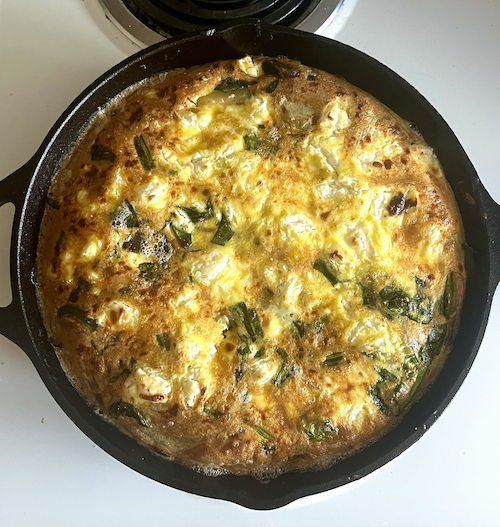
This recipe goes out to all my co-op comrades, who I assume are currently pondering how to use the produce that was given to us this week: ramps and fiddlehead ferns. Ramps are a type of allium; with a subtle garlic flavor, these bad boys are a springtime dream. Fiddleheads are essentially baby ferns, and have a snappy grassy texture not unlike an asparagus or broccoli stem. To prepare, make sure to wash both of these thoroughly (I soaked mine in warm water with a dash of vinegar) and parboil for 20 to 30 seconds. If you are not a co-op patron (or are not on board with these niche April veggies), swap the ramps for shallots and garlic, and the fiddleheads for asparagus.
Ingredients
8 large eggs
8 ramps (half a bunch give or take)
2 cups fiddleheads
1 large russet potato
1/2 cup milk
1 log goat cheese (or sub for any grated sharp cheese)
Salt and peps
3-4 tablespoons olive oil
Instructions
Bring a large pot of water to a boil and dry in the fiddleheads for 30 seconds.
Set the oven broiler on high.
Whisk together the eight eggs with the milk along with another pinch of salt. Set aside.
Peel and cut the potato into thin slices.
In a large cast iron or oven safe pan, heat two tablespoons olive oil.
Fry the sliced potatoes in oil until one side turns slightly golden.
Add in fiddleheads and cook for another four to five minutes adding a generous amount of salt and pepper.
Chop ramps and add to pan. Cook until fragrant for about two minutes.
Add another one to two tablespoons olive oil to the pan and pour in your egg mixture.
Crumble in the goat cheese on top and carefully put the pan into the oven.
Cook for about six minutes under the broiler, or until the top is slightly brown and the mixture has set.
Remove the pan from the oven and let the frittata set for at least 15 minutes before cutting.
Eating is a pathway to newfound vulnerability and learning about new traditions. The pace of eating can be informed by the quality of light: fluorescent lights always instill some form of urgency in me, reminding me of my middle school cafeteria, while low lighting may inspire a sensual element to the meal which often slows me down as I take in each bite. What I find the most fascinating about eating is observing the variables that surround the meal—how the story and experience is only partially inspired by the food itself.
Growing up, my dad would leverage each family meal as a chance to expand my palate. My favorite recipe, to his surprise, is a balsamic vinaigrette he’d pour over a chunk of Romaine lettuce. This handheld salad allowed me to sit on the fire escape with my brother or run into the living room to check in with my mom. The cool crunch of the lettuce paired with the sharp bite of the balsamic became so much more visceral as I traversed around our loft.
My paternal grandparents had always remained distant figures, as I only had limited FaceTimes with them before they passed away. More than anything, food became a therapeutic gateway for my father to reminisce over the better memories of his childhood. Those stories are something I hold onto, and the dishes have become relics to connect me to my ancestry. My grandmother, Pricilla, was raised Christian and met the wrath of my Jewish great-grandmother until she converted. My dad would always laugh about the respectful twists to traditional Jewish recipes my grandmother would include. I’d like to think that Pricilla did this as a subtle jab at the rigid context she acclimated to.
My roots in New York have also contributed to my love of food, supporting my everlasting search for transporting experiences in my everyday life. A favorite of mine are the mustard chicken dumplings at the Russian and Turkish baths on East 10th Street, where the slight clearing of the sinuses from the spice parallels the eucalyptus steam rising from the basement sauna below.
I spent most of my high school years wandering around the Lower East Side, an area populated with conveyor belts of Cuban food or grab-and-go Chinese restaurants. Afternoons with friends became an iterative meal where I would start with a bacon, egg, and cheese from a neighboring deli, grab tamales from La Aila cafe, and end with a black and white cookie from Moishe’s Kosher Bakery. I like to think that the New Yorker in me loves a meal filled with transitions and movement. These waypoints in our culinary journey feature varying languages and details down to the very dishware that made me cherish these micro eating experiences.
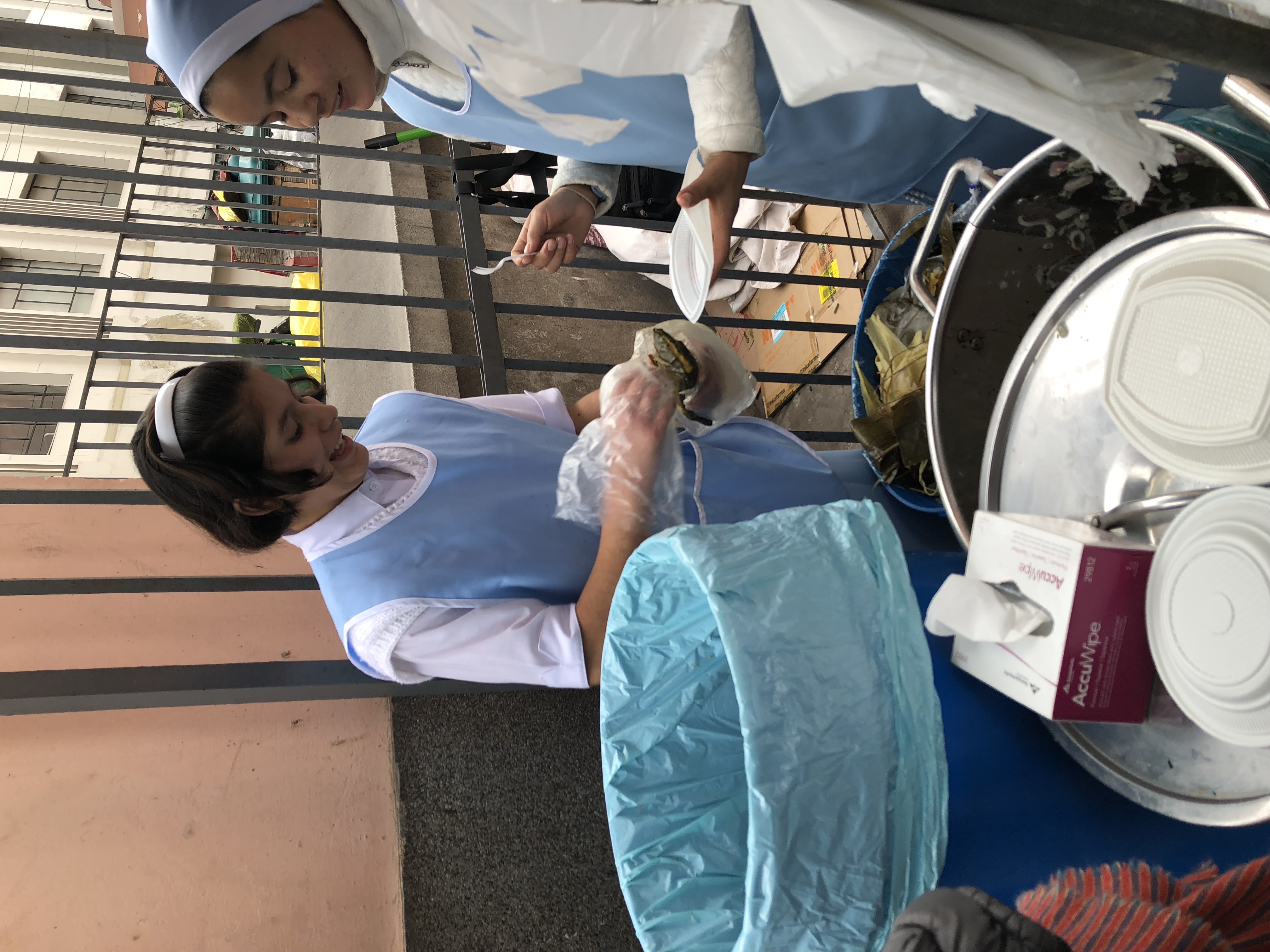
When traveling, food has always been the primary conduit between myself and the local culture. Walking the cobblestone streets of Lima with my dad and making an exchange with two nuns for a chicken tamale offered a momentary glance into Peruvian culture. I remember this making me especially mindful as I bit into the hand-held meal, deepening my appreciation of its flavor profile. Food is what facilitated this brief encounter that contained money, a light-hearted joke, and an impromptu photograph.
Eating creates a sacred, carved out time to check in with your body and mind. It provides an opportunity for deep exhalation. This past year, I’ve learned to approach these momentary breaks with calmness rather than solely a spirit of exploration. Silent eating has re-inspired a nostalgic sensitivity towards texture, smell, and form. Whether it is in my family kitchen or on the streets of Lima, tasting with intention is about finding a balance between the internal culinary experience and the culture that has informed it.
Listen, I only drink the best. And I want what’s best for you. So take a sip of this.
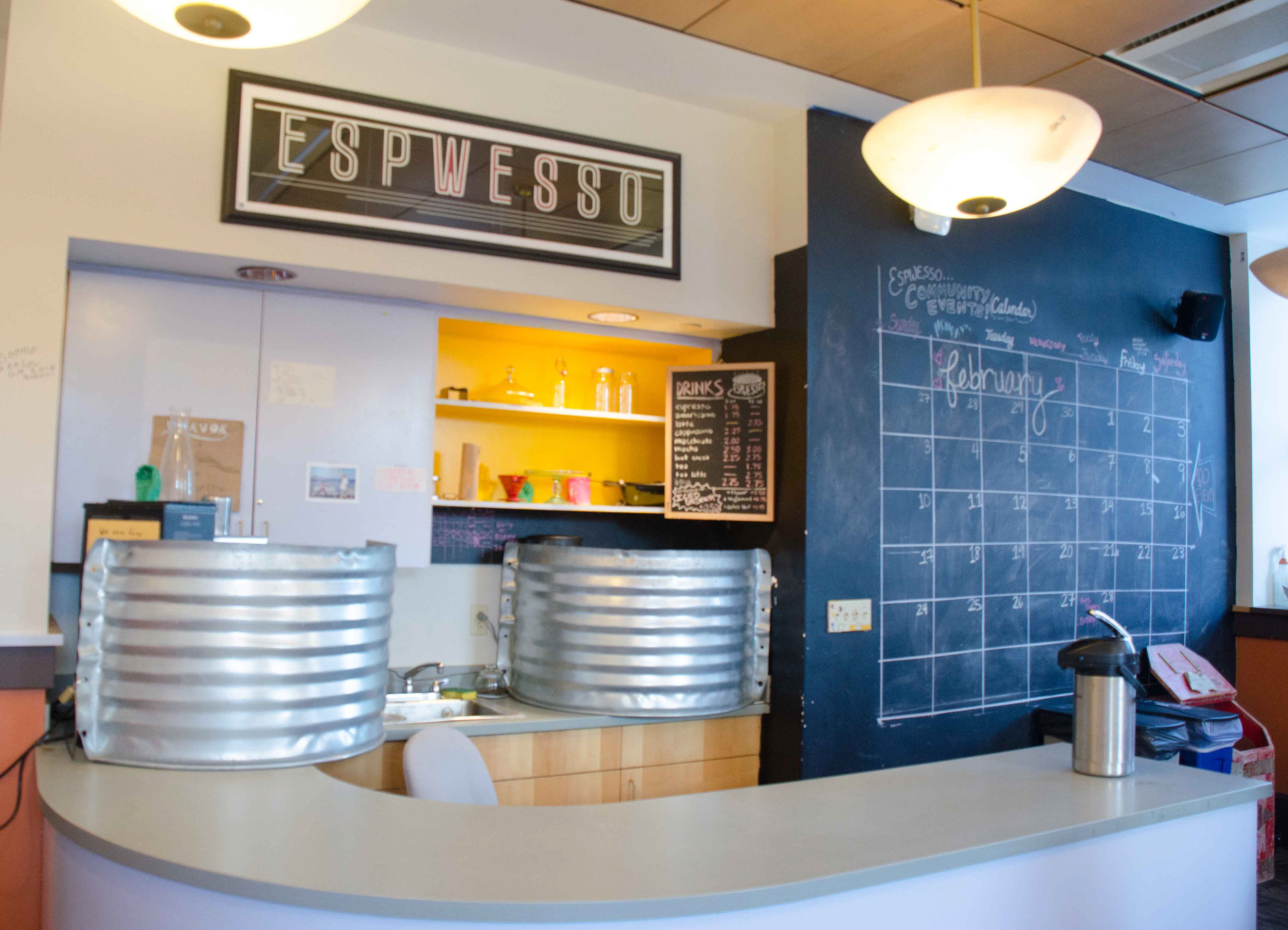
When I’m sitting cross-legged at the rounded collaged tables, soft jams playing in the stereo, and I get a whiff of boiling water gushing through a packed portafilter, I instantly feel at home. In my Italian villa, with Marco, Guiseppe, and Flavio, I overhear belting laughs in the Mediterranean sun. Nonna prepares her signature Carciofi alla Romana, and I sip the most delicious latte made at Wesleyan’s very own Espwesso.
Out of all the caffeinated beverages we guzzle by the gallon on campus—the watered-down Yerba, the Usdan iced coffee infused with hints of rubbing alcohol and belly button lint, or our beloved Chai charger—I always return to the classic latte at Espwesso. I’ll tell you why.
First, some honorable mentions of lesser bevs on campus.
Who doesn’t love to recede to childhood with a soda fountain concoction and a bit of every flavor mixed in a Usdan cup? Or to collectively raid tea in faculty lounges, bonding through crime over lukewarm Lipton made with water saturated by microplastics from the cooler’s “hot setting”?
Wesleyan going carbon-neutral by 2090 isn’t going to save the polar bears! But the Green Monster from Red and Black might balance the PH in your IBS-ridden gut (which hasn’t stopped churning since Michael Roth got a 1.3 million dollar raise). Coconut water and chia are especially good for hangxieties.
What’s better than a ginger Kombucha from Weshop! A latte from Espwesso.
If you are a sweaty athlete, you might be familiar with the water bottle filler directly across from the gym. That water is gross and warm. The fountain next to the men’s bathroom by the Gatorade vending machine is more refreshing. Top ten beverages at Wesleyan for sure! Let me know in the comments if you agree.
It is my opinion that the best caffeinated beverage on campus should also be crowned the best beverage overall. Caffeine is integral to the college experience. Our schedules are robust and packed to the brim, so we gotta go baby. Club, next club, seminar, bus, CFA, lecture, house party, lab, Swings date, another club, until we drop.
Amidst all the stress, there’s hope in a refuge buried beneath Allbritton Hall that serves hot lattes in hand-painted clay mugs.
The rich espresso, topped with a frothed heart (oat, almond, pistachio, soy, they have it all), will set you right. At Espwesso, the beans are artisanal, the milk is fresh, and the baristas are cute! When I take close my eyes and take a sip from the mug, the world ceases to spin, my nausea resides, and I can focus on the nonsense in my course reader. I don’t even need to take my Adderall!
So take a trip to Espwesso, sip it, and if you don’t like it, call me and I’ll give you a refund. 100% satisfaction guarantee.
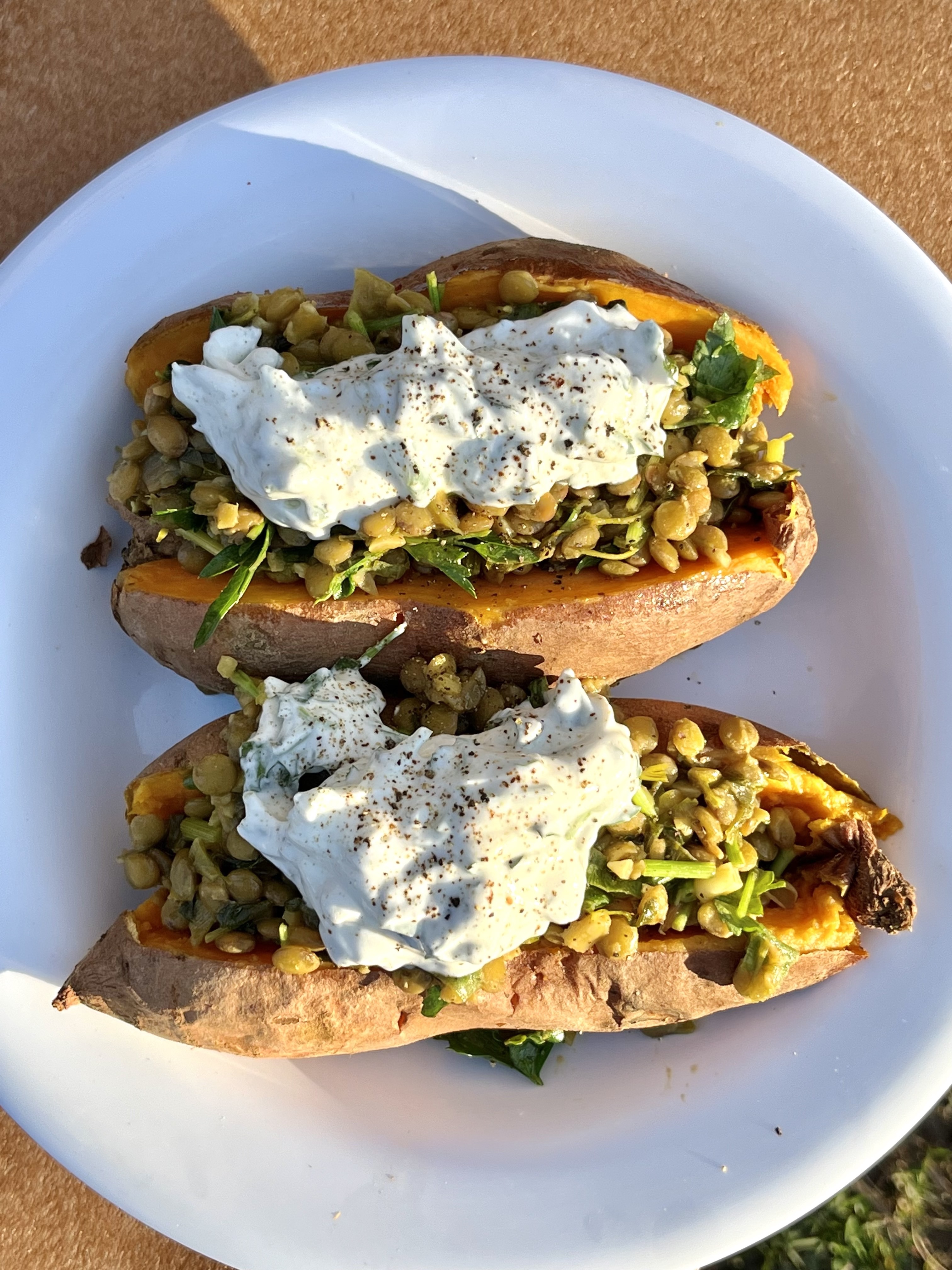
Served steaming hot or kind of cold, this versatile meal packs the ultimate punch. If you’d like, sub cilantro for any herb you have lying around at the bottom of your produce drawer, or try swapping out the sweet potato for another root veg you have on hand. Play around with it. This recipe is forgiving and gentle, and we all need a little more of that in our lives.
Herby Ginger Lentils with Sweet Potatoes
Serves 3-4
Ingredients
1 cup black or green lentils
One bunch scallion
One bunch cilantro
Knob of ginger
2 cloves of garlic
Turmeric to taste
1/2 of a lemon
3-4 sweet potatoes
Greek yogurt (optional but recommended. Sour cream can be used as well)
Bring a large pot of salted water to a boil. Then reduce to a simmer, adding in sweet potatoes. Cook until fork tender (or use a steamer if you have that).
Mince garlic and ginger and chop the whites of the scallion. Set the scallion tops aside.
Heat 2 tbs olive oil in a large pot over a medium heat.
Once hot, add the scallions, along with salt, 1 tsp turmeric, (gochugaru or red pepper flakes are a nice addition if you like it hot) and black pepper. Stir until softened, around 3 minutes.
Add in the minced garlic and ginger, stirring for another 2 minutes.
Add in lentils and toss to coat. Add two cups of water and bring to a boil, then reduce to a steady simmer.
While the lentils cook, chop up the cilantro and the scallion greens. Toss them with a few pinches of salt and the juice of half a lemon. Add the zest too if you want to be fancy.
Once the lentils and sweet potatoes are cooked (20 or so minutes) add in 3/4 of the cilantro scallion mix to the lentils, stirring until slightly wilted.
To assemble, cut open your sweet potatoes, adding a healthy dollop of lentils on top, a spoon of Greek yogurt, and the remaining 1/4 of the herb mixture to top it all off.
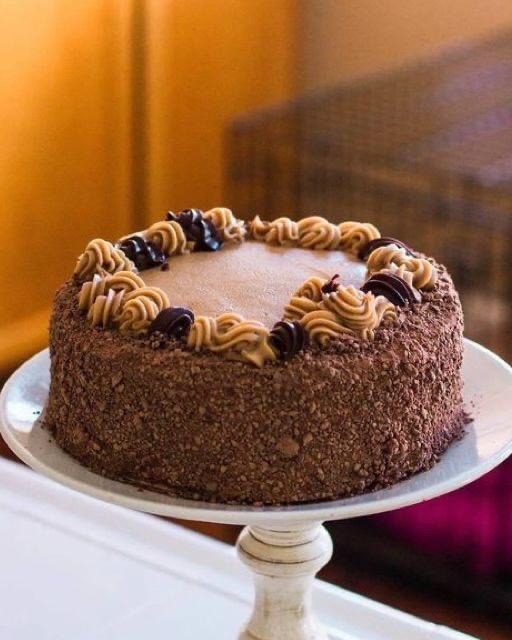
Cake is the classic celebration food. It’s sweet, decadent, visually appealing, and generally well-liked. It seems as if almost every family has some sort of signature cake, either one they ritually purchase at their chosen bakery or store, or, if they are truly ambitious, they bake themselves. My family is of the former variety, and for most of my life, we had a standard cake, the closest dessert to perfection in our eyes or our bellies: chocolate cake with mocha cream cheese frosting from our beloved local bakery, the Prolific Oven in Palo Alto, California.
Every birthday, anniversary, and milestone was accompanied by a slice of this cake. As a cramped, 4-inch cylinder, barely able to supply eight slices, the moist and rich chocolate sponge layered with stripes of coffee-saturated cream cheese and decorated with spiked spirals of frosting worked its way into the lives of our friends and family members.
Two years ago, the bakery announced it would shut its doors forever, and it should come as no surprise that my family was devastated. What else could possibly have the power to bring generations of Srinivasans and Joondephs together at the same crowded dinner table? The cake’s demise created a void, one that could only be filled by fragmented memories of its delectable flavor. Today, we gather around the table and recall those beautiful moments together.
When I was 9, many leading dieticians began to publicly demonize sugar. My father embraced this rhetoric and cut almost all sugar out of his diet. As members of a family of three, it was difficult for my mom and I to have a separate meal plan entirely, and so we went along with his judgment and embraced an almost entirely sugar-free (and excitement-free) life. Only when my father was absent could I savor the poison that I enjoyed so much, occasionally managing to sneak a piece of leftover chocolate mocha cake from the freezer. The frosting would be frozen solid, and the sponge more like a brick, but the adrenaline rush of stealing a treasured family treat and enjoying a virtually illegal substance in my household made the quest worthwhile every time.
When I was 10, I was on my way to perform in San Francisco when I heard of my grandfather’s passing. I tried to ignore it as long as possible to focus on my choreography. Compartmentalizing my sadness shut me down emotionally, and I couldn’t properly grieve, not that day nor for a long time afterward. I remember very little from that day, except returning home with a knot in my stomach. I remember laughing at my mom, perhaps in a feeble attempt to remain happy or uplift my family during a time of grief. I remember the slices of cake eaten in silence, providing comfort that none of our words or actions could.
When I was 11, my parents celebrated 20 years together, a testament to the power of love and compromise. A table layered with multiple gargantuan sheet cakes, vaguely reminiscent of a top-secret research facility’s campus from above, was the pièce de résistance at their anniversary party. As decades of friends came together to mark this milestone, the cake that has been in our family lore and celebrations for almost as long was there to celebrate alongside us.
The comforting sourness of cream cheese frosting often greeted me after grueling dance performances. The heavy layers of chocolate sponge helped calm my nerves and put me to sleep the nights before my first days of middle and high school. When I say that this cake was a permanent fixture in every major moment of my life, I truly mean it.
Even today, a chocolate mocha cake from 2019 sits, untouched, in my grandmother’s freezer.
None of us are sure when or why she bought it. But after the closing of the bakery, it turned into an heirloom of sorts. Perhaps it remains there not because we will ever eat it, but as a reminder of the power that this cake had over our lives. Not only is it nostalgic, but it carries the weight of a thousand laughs. Maybe it’s so hard to consume the last of this cake because we are so attached to its existence. It was the ideal best friend we all yearn for, someone who could comfort us in pain, bring us joy when we were suffering, party alongside us, and amplify our celebrations.
Goodbyes are hard, and this cake was family. In all honesty, it still is. From its icy abode, it continues to watch over us, in grief, in joy, and in celebration.