
Author: Hannah Reale

  • New Multi-Faith Center Opens to Wesleyan Student Body

    New Multi-Faith Center Opens to Wesleyan Student Body

    Dani Smotrich-Barr, Photo Editor
    Dani Smotrich-Barr, Photo Editor

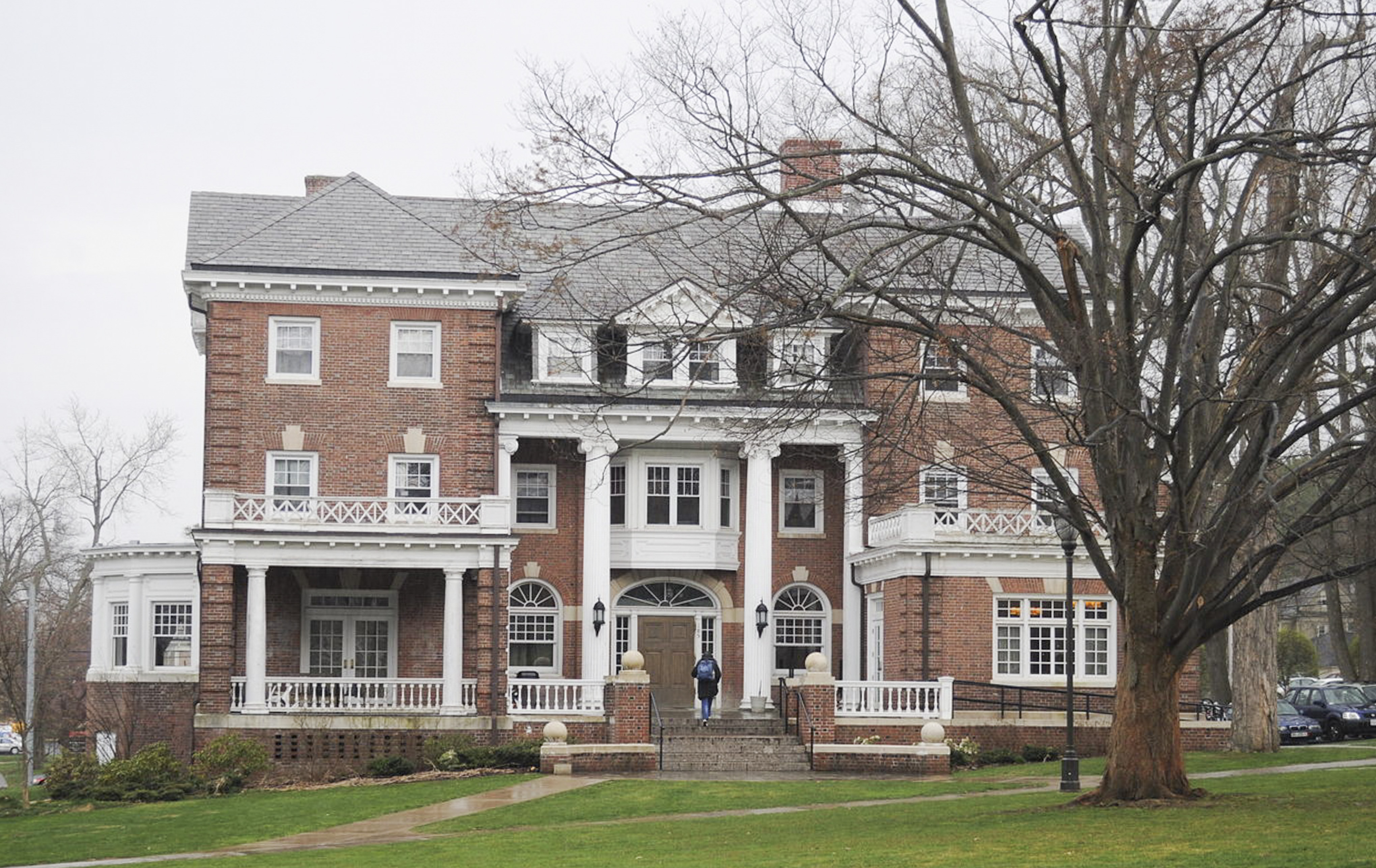
    The Office of Religious and Spiritual Life (ORSL) has opened a new multi-faith center on the second floor of their building at 169 High Street. The space is intended for students of all faiths, and has religion-specific customizations, such as a shoe-free zone for Muslim students, so that everyone can feel welcome.

    “The seed was planted a couple of years ago when our former Imam, Sami Aziz, had asked me to come over to take a look at what was then the Muslim prayer space,” Vice President for Student Affairs Mike Whaley said. “It was very awkwardly configured and really was subpar…. That issue was really the driving force, to come up with something that worked better for Muslim students.”

    At that point, the search began for another space on campus that might fit the Muslim community, especially as the group grew. Over the past couple of years, the prayers moved from space to space, booking various rooms around campus to accommodate their needs.

    “Because the community has grown so much over the past few years, which is fantastic, what it meant is people were cramming themselves into this tiny space, especially for the Jumu’ah prayers on Fridays, and it wasn’t working for anybody,” Inter-Faith Council co-leader Yael Krifcher ’19 said. “One of the things that the inter-faith community on campus was trying to address was this particular problem. And as we got together, and as we discussed it, consulted with different communities on campus, it became clear that very few, if any, faith communities on campus were satisfied with the space that they had been given.”

    A group of students met with Whaley, University President Michael Roth ’78, and Provost Joyce Jacobsen on March 26, 2018, to deliver a presentation for a multi-faith building. The building, as initially proposed, would have included a multifunctional room for prayer and services, another multifunctional room for prayer and social events, a smaller silent room for meditation or private prayer, a library/meeting room, and a Kosher/Halal kitchen for student use. However, any currently available spaces will not be available permanently, given the planned renovations to the Film Center, Exley Science Center, and Public Affairs Center. These renovations will have radiating effects on temporary relocation of various faculty members who will need to use various currently available spaces around campus.

    “Given what’s on the renovation horizon right now, at the institution, I knew that that wasn’t going to happen any time soon,” Whaley said. “So this is kind of like an intermediate solution that we hope will last for a while.”

    After the completion of those construction projects, which is expected in 2024, the University expects to revisit the concept of a multipurpose, multi-faith building. For now, this new multi-faith space will serve as a place for members of different faiths to gather independently, or perhaps to gather together and discuss or observe shared traits of their faiths.

    “I don’t walk in [Allbritton 311 and Usdan] and have a sense of awe, and reverence, and transcendence,” ORSL Director David Teva said, referring to the various rooms that Muslim students have booked for their prayers. “What we want this space to be is, when you walk in here, with time you’re going to say, ‘Wow. There’s a certain vibe here….’ You can’t stay fit and you can’t support athletic teams if you don’t have a gym. You need space, you need equipment. The space is, I think, the end of a lot of efforts to get the space that will support these communities so they can really thrive.”

    Renovations to the space began and ended over winter break. Students from various faiths met with Physical Plant Associate Director Roseann Sillasen and Senior Project Planner Brandi Hood to design the space, down to paint swatches and furniture. Features of the final space include a nearby foot-washing station, a rack for shoes, a curtain that can be extended through the middle of the room, and a rug with particular lines on the shoe-free half of the room to indicate the direction towards Mecca.

    The negotiations over the particulars of the space were not always without contention. Religious and Spiritual Diversity Intern and Muslim Student Association member Melisa Olgun ’20 spoke to the complications that arose with trying to form a compromise among various faiths, including the Jewish community, Christian community, Muslim community, Hindu community, Buddhist community, and students who go to ORSL’s Vespers.

    “It’s the politics of what students already have space, and what students don’t,” Olgun said. “Being a student of faith on this campus is constantly compromising with your religious identity, with trying to find spaces on campus where you can be religious. As a Muslim student, I’ve always had to compromise…. I’ve spent my entire life trying to find accommodations for myself, and now that we’re starting to get some traction, that other groups are needing to compromise. It’s a difficult thing, and completely valid.”

    Different religious groups hope to accomplish greater goals specific to their own religion’s specifications, such as food accommodations, and the IFC will continue to pursue greater visibility and accommodation of basic religious needs for the many populations of faith on campus.

    ORSL will be hosting an open house in the new multi-faith space on Tuesday, Feb. 12, at 3:30 p.m. Reverend Tracy Mehr-Muska expressed the hope that students of different faiths may come to pray together, or at least join in conversation about their various religious and spiritual associations.

    “The most important thing, that all of us think, is just for people to have a sense of belonging here,” Mehr-Muska said.


    Hannah Reale can be reached at hreale@wesleyan.edu and on Twitter @HannahEReale. 

  • Winter Weather Strikes Wesleyan, Damages Buildings
    Winter Weather Strikes Wesleyan, Damages Buildings

    c/o wikimedia.com
    c/o wikimedia.com

    Another winter in Middletown, Conn. has brought the usual weather-induced problems that often pop up around the University’s campus. A snowstorm blew through the area in the days before students returned to campus, and a rainstorm followed on Thursday, Jan. 24.

    The rainstorm caused a few issues with runoff and flooding, with leaks occurring at 34 Fountain, Bacon Field House, the Silloway Gymnasium, a lab in Exley Science Center, 200 High St., and the Alpha Delt basement.

    “We had that freeze, [so] water’s not going anywhere, the ground is still frozen, [and] everything is running into basements and people’s yards,” Assistant Director of Building Trades Tom Policki explained on Thursday. “It’s kind of a mess and that’s what we expect; this isn’t our first rodeo.”

    “Some of the rain that got into attics knocked out power, briefly, to properties,” added Associate Vice President for Facilities Joyce Topshe.

    Topshe also noted that several trees were felled and damaged during the preceding snowstorm, but some of the damage that typically occurs to buildings over winter breaks was prevented due to the installation of new smart thermostats in many residential buildings.

    “We have these new Nest thermostats in a lot of our houses, so while we did lose heat in a lot of cases, we were alerted to the issue by the thermostats and we were able to proactively go to the houses and prevent the damage,” Topshe said.

    Preventative measures helped in at least two cases where damage was repaired soon after it occurred. In previous years, Topshe explained, damage to heating systems wouldn’t be discovered until students returned from break, and in those cases, the lack of heat could cause more problems, like pipes bursting.

    The new Nest thermostats are smart thermostats, and Physical Plant can remotely monitor and control the temperatures of buildings with them installed.

    “In mid-January the outside temperature dropped below zero on campus,” Topshe wrote in an email to The Argus. “To prevent pipes from freezing in vacant buildings, physical plant was able to remotely raise the temperature of the heat by using our smart thermostats across campus.”

    Similar issues may persist in the coming days and weeks, as Wednesday’s temperature is expected to drop as low as one degree.


    Hannah Reale can be reached at hreale@wesleyan.edu or on Twitter @HannahEReale. 

  • Applications Open for Wesleyan Summer Grants

    Applications Open for Wesleyan Summer Grants

    Applications for the 2019 Wesleyan Summer Grants opened Jan. 28 and will remain open until midnight on Thursday, Feb. 28. The grants will provide funding for students to pursue summer opportunities that would otherwise not be funded or would have insufficient funds to meet a student’s needs.

    As the grants’ page explains, Wesleyan Summer Grants are awarded through the Gordon Career Center and are funded by both individual donors and University organizations. Grants can be applicable to a variety of programs—including internships, volunteer work, research, and language study—allowing students to pursue opportunities that are either low- or no-pay. Awards generally total between $4,000 and $5,000. Each grant has specific requirements and eligibility, and some grants are linked to specific internships.

    “I really had no idea what I was getting myself into, but it ended up being an awesome internship and I really enjoyed it,” said Camilla Lopez ’19, who was awarded a grant from the University last summer.

    According to Associate Director of Internships and Campus Recruiting Sarah MacNamara, of the 300 students who applied for Wesleyan Summer Grants in 2018, 145 received funding for various summer positions. She also noted that the program has existed in some form since the 1980s.

    “The program has grown in recent years with more student interest and different experiential summer learning opportunities,” MacNamara explained in an email to The Argus. “A committee comprised of Wesleyan staff and faculty review all applications and make funding decisions. The career center’s role is to advise students and administer the application process.”

    Although the program initially existed as a challenge grant in which students were awarded money upon completion of their internship, students are now provided their particular amount of awarded money at the beginning of the summer, which Lopez noted was a positive aspect of the program as it allowed her to budget her own funds.

    Opportunities funded by grants can take on a diverse range of forms. Lopez had a low-paying internship for a documentary series produced through PBS called POV, working with the Community Engagement and Education departments. As a government major and film minor, her internship combined both of these interests.

    “I’m from San Antonio, Texas, and there’s not much in the film industry or huge resources in the city, so I was thinking New York,” she recalled.

    The grants program prioritizes low-income students, as well as rising juniors and seniors, who might benefit the most from the extra funds. Lopez noted that because she is low-income, the grant she received was pivotal for her being able to intern over the summer.

    “Being low-income, first-gen, I used a lot of that background in my essays,” she explained. “This is a resource that I can take advantage of and it would broaden my horizons to get an internship, especially in New York or big cities because they’re so inaccessible because [positions] are low-paid, or unpaid entirely, and if you don’t live there, it’s so hard to do that.”

    Quinn O’Leary ’19 also applied for, and received, a summer grant funding her study of Spanish in Argentina, in the summer after her sophomore year. O’Leary noted that to her knowledge grants typically do not fund summer language study opportunities; however, Spanish was integral to O’Leary’s future career, which she emphasized in her application.

    “I didn’t know exactly what I wanted to do, [but] I knew I was going to be working with people in some healthcare capacity,” O’Leary explained. “Now that I speak Spanish, I’m able to work as a Doula for the Wesleyan Doula Project, and I’m able to speak Spanish with patients at the abortion clinics throughout Hartford, and that’s really useful, because sometimes I’m the only person who can speak Spanish.”

    O’Leary emphasized the necessity of having received this grant in order for her to go to Argentina. She explained that as a low-income student, she found that receiving a grant was especially important for her, and she emphasized that she’d recommend other low-income Wesleyan students take advantage of summer grant options.

    “I would not have been able to go without the grant,” she said. “I think that funding is really important for Wesleyan students and really adds to experiences that we have at Wesleyan.”

    To apply, students must submit a résumé approved by the Gordon Career Center, an application form, a budget form, writing statements, and an essay. Each student must explain their position for the upcoming summer as part of the statements. Students are typically applying for a grant before securing an internship, which creates the possibility that students have secured funding for an internship they do not obtain. This gap is accounted for by the Wesleyan Summer Grant system, so that if a student is awarded a grant and ends up not securing the internship, the student can still use the grant to apply to a different internship. A student can submit a revision form indicating why the funds are still necessary for the alternate position.

    “We hope that the Wesleyan Summer Grants Program gives students the opportunity for career exploration and allows them to have real world experiences that will impact both their Wesleyan and post-Wesleyan careers,” MacNamara noted.


    Emmy Hughes can be reached at ebhughes@wesleyan.edu or on Twitter @spacelover20.

    Hannah Reale can be reached at hreale@wesleyan.edu or on Twitter @HannahEReale. 

  • Middletown Moves Forward with St. Vincent de Paul’s Proposal for Green Street Building
    Middletown Moves Forward with St. Vincent de Paul’s Proposal for Green Street Building

    c/o homelessshelterdirectory.org
    c/o homelessshelterdirectory.org

    On Jan. 9, Middletown Mayor Dan Drew announced his support for St. Vincent de Paul’s bid for 51 Green Street, the former home of Green Street Teaching and Learning Center. St. Vincent, while primarily known as a soup kitchen, has offered a wide range of of services including housing and community assistance programs since 1980. As noted in a Facebook post, the city now has a non-binding agreement with St. Vincent’s to move the organization to Green Street, pending approval by the Common Council.

    “You never know what happens,” St. Vincent’s Executive Director Ethel Higgins said. “Yes, Mayor Drew made the announcement that they awarded us the bid, but there are still steps to go…. [The Common Council is] the last step and, after that, then I can say, ‘Phew.’”

    Since St. Vincent’s opened in 1980, it has occupied 617 Main Street, which Higgins plans to sell if operations move to Green Street. In addition to its role as a soup kitchen, St. Vincent’s hosts the Amazing Grace Food Pantry, which works out of 16 Stack Street, as well as community assistance programs, and a supportive housing program that directly supports 39 people. St. Vincent’s also offers more specialized assistance, like substance abuse counseling.

    Ron Krom served as St. Vincent de Paul’s executive director for 12 years and wrote the proposal that Drew recently selected. Krom presented the proposal at an Economic Development Commission meeting on Nov. 13, along with the two other proposals for the building, given by the Community Health Center (CHC) and the Middletown Green Community Center (MGCC) respectively.

    “We’ve outgrown our facility,” Krom said to the commission. “The space is inadequate to do what we do, and we have so many ideas of what we would like to do better.”

    Higgins echoed Krom’s sentiments.

    “It really was about space,” Higgins said. “And with space comes expansion, and with expansion comes new ideas and creativity.”

    Beyond its current programming, St. Vincent’s also plans to expand the services they offer, including the addition of showers, lockers for belongings and valuables, and phone and computer access for their visitors. Higgins and Krom also affirmed their desire to create a general-purpose meeting space that could be used for meetings. Several other partnerships with local organizations are also in the works, including a potentially shared space with the local branch of the Community Access Network (CAN), so that the organization can offer private therapy sessions.

    “Something works well, you don’t touch it,” Higgins said when asked about potential changes in the new space. “A lot of the focus will be on the new programs, if we are blessed enough to get this. To go ahead to expand the proposal…to work the community, the other agencies. It’s really just the next step, like the springboard.”

    c/o commons.wikimedia.org
    c/o commons.wikimedia.org

    The building at 51 Green Street was formerly the Green Street Teaching and Learning Center, which was run through the University for 12 years and was primarily known for its after-school programs. The center was closed in June, with the University citing the costs of maintaining the center from year to year as the reason for its suspension of the program. As the space used to function as a community center, major renovations will need to take place prior to St. Vincent’s occupancy of the space, primarily to the building’s kitchen. Krom cited the organization’s $2.2 million budget in reference to the high cost that those renovations are likely to incur.

    St. Vincent’s originally planned to move their soup kitchen and administrative offices, including 17 members of their 23-person staff, to the new building by June if they won the bid. As the vote was pushed back from November, Higgins says she now expects that those components of their organization would open in the new space in the fall at the earliest, with another phase of renovations and services opening in the coming months.

    The Economic Development Committee recommended both St. Vincent’s and CHC’s proposals to Drew for his consideration, and from there Drew selected St. Vincent’s proposal. In his original letter, he explained how he made his decision.

    “CHC rents or owns significant office space now,” Drew wrote. “While the availability of this building would help it as an organization, the building itself is not essential for the CHC’s growth.”

    The vote confirming the building’s occupant has not yet been added to any upcoming Common Council agendas, according to a spokesperson for the council.

    “This is a hard population, and people don’t want to deal with this population,” Higgins said, citing those that St. Vincent’s serves. “The fact that we’ve been doing it very well all these years speaks highly.”


    Sasha Linden-Cohen contributed to this reporting.

    Hannah Reale can be reached at hreale@wesleyan.edu and on Twitter @HannahEReale.

  • Investigating Cause of Death: Serial Killer True Crime Reflects an Author’s Deadly Obsession

    Investigating Cause of Death: Serial Killer True Crime Reflects an Author’s Deadly Obsession

    c/o amazon.com
    c/o amazon.com

    Content warning: This article includes themes of sexual abuse and gender-based violence.

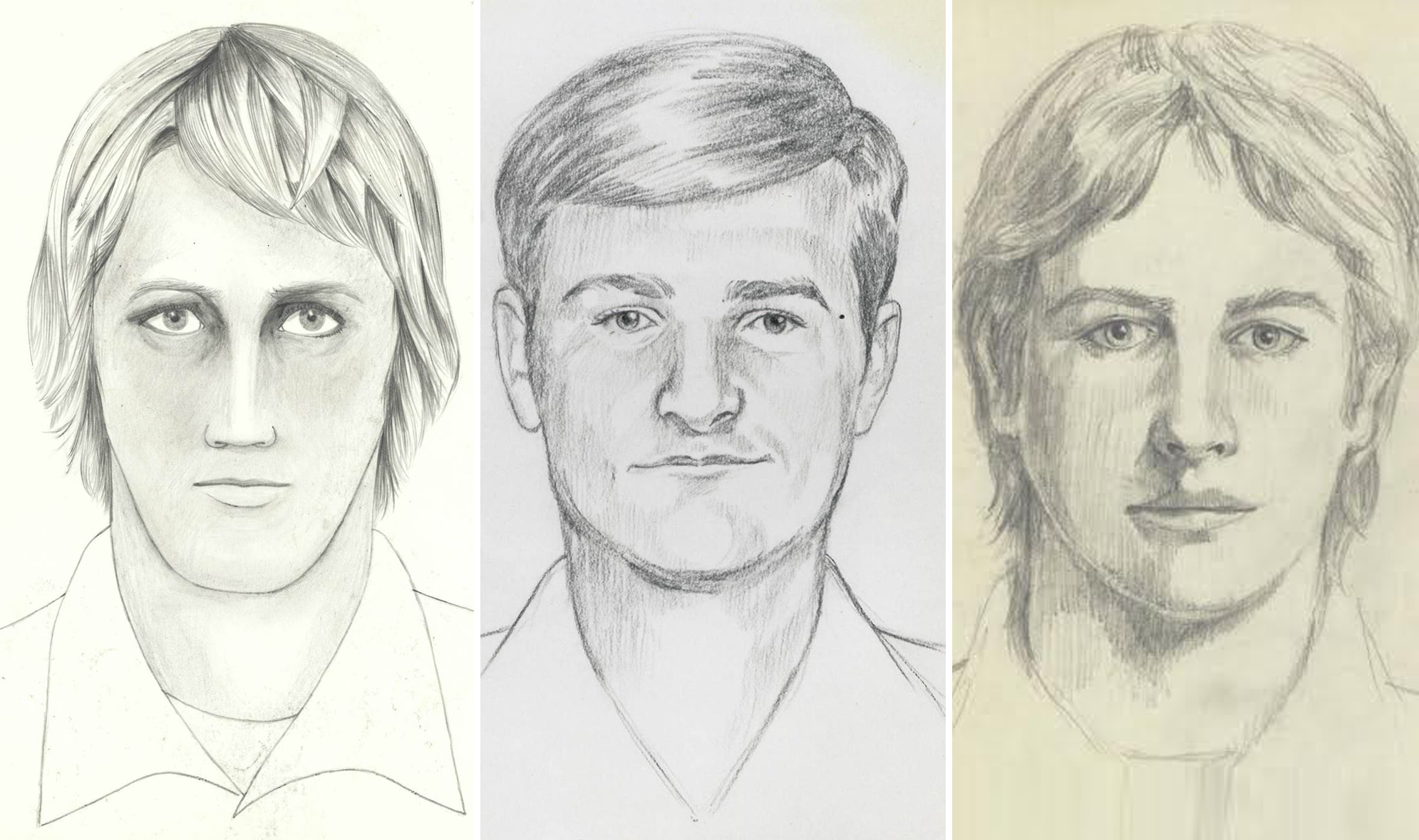
    On April 21, 2016, true crime writer Michelle McNamara, age 46, was found dead by husband of 11 years Patton Oswalt. Although it would take another year for a coroner to reveal her killer to be an undiagnosed heart condition combined with the effects of several drugs, Oswalt, a famous comedian, immediately suspected that it was an accidental drug overdose: she had taken a Xanax the night before to try and get some rest, as her obsessive investigation into a nightmarish cold case often kept her up at night.

    Reading the posthumously published “I’ll Be Gone in the Dark” now, it is impossible to forget two pieces of context that author McNamara could not have known about her own work: first, that her investigation, which serves as the foundation of the book, had indirectly killed her; second, that its subject, a sadistic rapist and killer, would be caught mere months after its publication. Reading “Dark” has then become an all-the-more fascinating and heartache-inducing endeavor: you are devouring a work that is simultaneously an outdated artifact and a cause of death.

    “Dark” is a nonfiction narrative that combines interviews, crime scene evidence, contradicting theories, and so much more that all center on one man who terrorized California in the 1970s and ’80s. The book’s subject is known by many names: the East Area Rapist. The Original Night Stalker. It’s a sad irony that, though McNamara would never know that the man she was tracking was named Joseph James DeAngelo, she was the one who christened him with the moniker that holds most popular today. The Golden State Killer.

    The case ensnared her for several years for immediately apparent reasons: even without these added layers of intrigue, the Golden State Killer is an irresistibly disturbing mystery. He is now suspected of 50 rapes and 13 murders. He is known for staking out his victims’ houses beforehand, binding the hands of his targets, and speaking through clenched teeth. And those are among his less disturbing behaviors: he also entered and left the house naked from the waist down, forced women to masturbate him with their tied hands, and killed with weapons that he found inside the house. And then there were the cruel mind games that he played.

    “The blindfolded victim tied up in the dark develops the feral senses of a savannah animal,” McNamara writes, describing a typical account compiled from several victims. “The sliding glass door quietly shutting registers as a loud, mechanical click…. The dread sense of being watched, of being pinned down by a possessing gaze she can’t see, is gone. Thirty minutes. Forty-five. She allows her body to slacken almost imperceptibly. Her shoulders fall. It’s then, at the precipice of an exhale, that the nightmare snaps into action again—the knife grazes the skin, and the labored breathing resumes, grows closer, until she feels him settling in next to her, an animal waiting patiently for its half-dying quarry to still.”

    “Dark” itself is astounding, at first. McNamara’s meticulous writing talent is lauded in the fawning introduction by “Gone Girl” writer Gillian Flynn and is demonstrated throughout Part One (of Three), which was mostly completed by the time of her death. The first chapter alone slowly and carefully untangles a single crime scene: the murders of David and Manuela Witthuhn and the latter’s rape, as told in the free indirect style from brother-in-law Drew Witthuhn’s perspective.

    McNamara paints a devastatingly clear picture of not only the crime scene but also the complex relationships among the Witthuhns. With her evident compassion, candor, and levelheadedness, McNamara gains the reader’s trust effortlessly by depicting them in a sympathetic but exposing light, describing their personal flaws without judgment and introducing soft compliments when appropriate. One of her many talents as a writer is, as Flynn describes in her introduction, her humanity.

    She also offers help to the reader in the ebbs and flows of her prose: McNamara can introduce information in a burst, like ripping off the proverbial Band-Aid, or over the course of paragraphs, allowing for a slow digestion of particularly intense details. All of this is to say that she is an undeniably masterful writer, with a clear and careful vision for the book.

    It is because of her talents, however, that the reader is set up to be let down. The chapter “Ventura, 1980” ends jaggedly with a note from editors Billy Jensen and Paul Haynes, who put together and published the book after McNamara’s death. They explain that she had planned to explore that particular case in much more detail but had yet to draft exactly what she wanted to say.

    It is at this moment that the reader’s focus begins to shift from the identity of the Golden State Killer to the aching distortion of what would have been an undoubtedly meticulous and compelling work. The following chapters are reconstructed from various drafts of McNamara’s works. Where readers felt as though they were narrowing in on him, they now feel pulled in a million partially-explored-and-then-abandoned directions. The shift could be seen as an induced experience that helps readers empathize with the many fraught and frustrated investigators and detectives, but that would be reading too much into a book that was left tragically and tangibly unfinished.

    The rest of the book becomes both overly technical and too human: Jensen and Haynes struggle to integrate the former detectives’ raw personal struggles with the various conflicting theories about the Golden State Killer’s profession, motives, and altering physical description. Much of the prose mirrors that of McNamara’s pieces in the Los Angeles Magazine, as the chapters are based on drafts of such articles in which she offered brief updates on the Golden State Killer’s case in “The Five Most Popular Myths About the Golden State Killer Case” and “UPDATE: Investigators Have a New Lead on the Golden State Killer.” “Dark’s” methodical, ever-deepening exploration of the Golden State Killer is gone, replaced with scattered snapshots that resemble hundreds of pieces of evidence hung on a maddened detective’s cork board, yet to be connected by any telltale red string.

    A moment of haunting redemption comes in McNamara’s epilogue, which she fortunately finished before her death. Despite the faults of the middling sections, and despite the reader’s knowledge that the killer has been captured, it cannot lose its tantalizing and bone-chilling effect. McNamara speaks directly to the killer, taunting him, precisely cutting him down to the pathetic man that he is. Her hunger to see him unmasked is at its most naked at the final hypothetical scenario that she plays out: his capture.

    “One day soon, you’ll hear a car pull up to your curb, an engine cut out,” McNamara writes. “You’ll hear footsteps coming up your front walk…. The doorbell rings. No side gates are left open. You’re long past leaping over a fence. Take one of your hyper, gulping breaths. Clench your teeth. Inch timidly toward the insistent bell. This is how it ends for you. ‘You’ll be silent forever, and I’ll be gone in the dark,’ you threatened a victim once. Open the door. Show us your face. Walk into the light.”

    On April 24, 2018, two years and three days after McNamara’s death, DeAngelo was charged with the Golden State Killer’s crimes. He will be tried for all of the murders—the statutes of limitation on all of the rapes have been exceeded—though the trial is not expected to take place for a few years. “Dark,” which had been released two months earlier, was not directly related to his capture: a DNA hit off of a relative eventually led detectives to the killer’s door, though investigators recognized the #1 New York Times Bestseller for keeping public interest unusually high in the case’s outcome.

    After DeAngelo’s capture, Jensen told The New York Times that he and Haynes plan to add a chapter to “Dark” that delves into the former police officer’s past. So the book itself lives on, growing and stretching as details are uncovered one by one.

    McNamara herself lives on in another way, primarily through her widower. Oswalt has continued to perform stand-up comedy since McNamara’s death, often directly discussing themes of grief, recovery, and his changing relationship with their young daughter. He pens an afterword in “Dark” that reads as a love letter in the style of his stand-up, complete with funny anecdotes about her brilliance and simple, kind descriptions of his late wife as the crime fighter that he clearly saw—and sees—her as. His words, alongside hers, only extend readers’ yearning to understand McNamara and her obsessions.

    She is undeniably a subject in her own piece. “Dark” transcends its true crime genre to become something even more fascinating with its smattering of autobiographical anecdotes that its author had chosen before her death. An early chapter is entirely devoted to a cold case from McNamara’s childhood that sparked her true crime fascination, and other details about how consuming and personally devastating her obsessive investigation had been emerge over the narrative. Flynn expresses uninhibited admiration for McNamara and laments not becoming closer with her; she recalls taking a drive through McNamara’s childhood neighborhood, confused as to why she was there, and reflects, “I was in my own search, hunting this remarkable hunter of darkness.”

    As readers, we are much like Flynn, seeking to understand a person who is already gone, but who ensnares us much like the Golden State Killer ensnared McNamara. “Dark” is fundamentally imbued with the grief of the loss of its author, and we are fascinated, and we are left to glean as much as we can about her from the clues she’s left behind.


    Hannah Reale can be reached at hreale@wesleyan.edu.

  • “Big Mouth” Balances Vulgar Humor and Emotional Honesty
    “Big Mouth” Balances Vulgar Humor and Emotional Honesty

    c/o comingsoon.net
    c/o comingsoon.net

    Although the parents on review website CommonSenseMedia.org are highly divided about how age-appropriate the cartoon is for their children, college students should have no trouble taking pleasure in the second season of “Big Mouth,” which premiered on Netflix on Oct. 5. Taking a walk down memory lane to the depraved caves of puberty may reopen some still-too-fresh wounds at this age, but the rewards of the journey far outweigh the risks.

    The Netflix cartoon’s cast is so star-studded it verges on bedazzled. Creators Nick Kroll, Andrew Goldberg, Mark Levin, and Jennifer Flackett concocted a winning combination with successful stand-up comic and failed sitcom actor John Mulaney, Jordan Peele of “Key & Peele” fame, “SNL” icons Maya Rudolph and Fred Armisen, hilarious actress (who stole the show in every “Parks & Recreation” episode that she was in, in addition to playing the lead in perhaps the finest rom-com of all time, “Obvious Child,”) Jenny Slate, “Jane the Virgin’s” effervescent Gina Rodriguez, “Brooklyn Nine-Nine’s” deeply unsettling Jason Mantzoukas, guest star Kenneth from “30 Rock” Jack McBrayer, and youngest sibling Kroll. Together, the group takes on roles that range from a weakly mustached boy to a single pube.

    The second season has far less to introduce its audience to, so although it may feel less jaw-droppingly innovative than the first 10 episodes, it can delve more significantly into a range of themes. This time around, everybody knows about the Hormone Monsters/Monstresses (hairy and impulsive bipeds who personify puberty, visible only by those going through it) and that genitals are likely to talk at any given time, although it’s impossible to pretend that the first season gave viewers much time to adjust to the premise either.

    On Oct. 5, Netflix delivered the gift of 10 more episodes in which the show’s familiar characters continue their haphazard journeys through the seventh grade. Nick (Kroll) struggles with his comparatively slow physical development and relishes in his budding relationship. Andrew (Mulaney) confronts humiliation, mortification, and not his father. Jay (Mantzoukas) navigates his potential bisexuality and an upsetting family dynamic. Jessi (Klein) acts out in response to her parents’ divorce and the internal turmoil that already comes with coming of age. Missy (Slate) wrestles with accepting her own body as she explores her sensuality. The audience also has the genuine pleasure of meeting Gina (Rodriguez), whose body may be developed beyond many of her peers’ but whose spirit is just as insecure about the changes as the rest of her classmates.

    Gina’s character may cause some early concerns for viewers who have seen schoolgirls hypersexualized a few too many times onscreen, particularly when her initial purpose seems to be only to serve as a love interest for Nick. Although the introduction to her character—during which the show’s male protagonists chant “boobs” as this presumably 13-year-old girl unzips her jacket on the soccer field—leaves much to be desired, the audience is soon shown the scene from Gina’s perspective to remind many viewers that harmful perversion done in a funny way is still perversion—a lesson that the show itself sometimes forgets.

    Gina’s embarrassment about her body comes along with the most important development of this season, just barely edging out (spoiler alert) Nick’s newfound ability to masturbate: the introduction of the Shame Wizard.

    Voiced by Remus Lupin—sorry, British actor David Thewlis—the goth, daddy issues-having, and overall intimidating floating ghost is, at his core, an infectiously self-hating softboy who invokes pity with a clichéd and late-revealed tragic backstory. The Shame Wizard is perhaps a less creative personification than the wildly horny Hormone Monsters, but the lurking creature still encapsulates an eerily familiar feeling that, for most of us, emerged somewhere around the early teenage years and then never really left.

    Also, through its personification, shame can finally be addressed head-on by the show instead of serving as an abstract concept that main Hormone Monster Maury (Kroll) fights against through every shameless instinct that he urges his protégée Andrew to indulge in. Now, the audience sees the gloomy figure for what he is: attention-seeking and persistent.

    The season’s final episode subtly introduces an uncharacteristically dark theme: shame never leaves. After the seventh graders realize that they’ve all been seeing the same Shame Wizard, and he’s been making each of them miserable, they band together to banish him from the school sleepover in the gym. (The ensuing shenanigans play out over Earth, Wind, and Fire’s “September,” quickly followed by a melancholy indie cover of the same track, as the show shifts from reveling in a shameless world to sinking into its less potentially pleasant reality. It’s a work of art.) Andrew, however, quickly rediscovers the Wizard hovering like the world’s most unpleasant helicopter parent, as if to say: “You can send shame away, you can think it’s gone, but it always lurks like a weird, lonely magician.”

    With the introduction of Shame Incarnate comes its rejection, which returns to the show’s fundamental lesson of self-acceptance. In the penultimate episode, Lola (Kroll) comforts Gina, who has been slut-shamed by the school.

    “Touching boobs and rubbing fronts doesn’t make you feel shitty, mean jerks make you feel shitty,” she says. “If there weren’t any mean jerks, it would be fine.”

    The sweet moment manages not to be overshadowed by its follow-up punchline (about feeding said mean jerks into a wood chipper and spreading their body chunks out on the playground), exemplifying the fine line that “Big Mouth” walks in each of its episodes, and mostly succeeds in keeping its balance on.

    The cartoon’s chief problem emerges when the show falls off of that line and into a weird safety net of uncontrolled hormones littered with stray pubes. Particularly in both season finales, the challenging mix of the fundamentally ridiculous personified hormone monsters with the unparalleled realism of the teenagers’ evolving selves deteriorates past the point of believability. However, as Albert Camus—or Neil Gaiman, depending on who you ask—said, “Fiction is the lie through which we tell the truth,” and suspension of disbelief is a small price to pay for “Big Mouth’s” affirming messages.

    For the show’s presumably adult audience, it seems that the show could have delved further into the question of exactly how perverted everyone’s “allowed” to be. But here, audience members get to see the message that is distinctly meant for those going through puberty, and those who have not yet recovered from its scars. The cartoon does not attempt to instruct its viewers about exactly how they—or their pubescent selves—are or were meant to feel about shame. Instead, it finds itself as an oddly optimistic voice for a “warts and all” mentality and preaches about co-existence without being too preachy.

    While the horny characters’ sense of shame is genuinely investigated, many other topics, like gender, experimenting with drugs, mental health, and sexuality, are introduced and only lightly brushed up against. Hopefully, topics like Jessi’s depression will continue to be explored in depth in the coming season rather than being brushed off like a stray pube (there are a lot of pubes in this season). So far, there’s no reason to believe that the show’s creators won’t be able to gracefully handle everything they’ve introduced.

    If there’s one big takeaway from the thoroughly enjoyable Season 2, which can appeal to the pubescent and post-pubescent alike: Stop being so hard on yourself. You’re probably fine. Go masturbate.


    Hannah Reale can be reached at hreale@wesleyan.edu.

  • CSS Sophomores, COL Juniors Tackle Comps Weeks

    CSS Sophomores, COL Juniors Tackle Comps Weeks

    c/o Henrik Palmer
    c/o Henrik Palmer

    Sophomores in the College of Social Studies (CSS) are currently in the midst of their comprehensive examination period, managing the challenges and excitement of the week. The intensive sophomore year for CSS majors, built around three tutorials and a colloquium, culminates with this weeklong examination period, known as comps, which pushes students to reflect on all the information that they have learned over the course of the year. The examination week is structured around 24-hour blocks of time over the course of a week, during which students are tasked with writing two essays per block of time in either economics, history, social theory, or government. A writing period is followed by a 24-hour break, and then students begin the next set of two essays. Comps are finished when all eight essays are completed.

    “Comps is not really that big of a deal, but it’s not like a final that you just take it home and do it,” said CSS major Jamie Herman ’18. “It’s a whole experience where you have it all week and have the intense 24 hours on and 24 hours off, but it definitely connects the class.”

    For some, the week is an exhilarating opportunity to test knowledge and consolidate the scattered stressful work completed during the year. For others, the week more closely resembles a kind of hell. Many students say they experience something in between.

    “The whole build-up of the year and having the ability to synthesize thousands and thousands of pages of material from the arguments we’ve had for the entire year is really significant to me on a personal level,” said CSS major Finn Collom ’20. “It’s really cool to say that in the beginning of the year there would be no way that I could have been able to do two five-page papers in 24 hours. The ability to do that and see the change in my ability to write and argue has really been impressive.”

    Other sophomores have had different experiences.

    “I woke up in the morning and thought it was Tuesday,” said Caleb Zakarin ’20 late Thursday night. “It’s just more overall made me more conscious of how time is demarcated and how we break it up in general with days and such. Comps kind of breaks that up briefly and makes you think more about what you can get done in an hour.”

    Despite the isolated 24-hour essay writing, the chunks of time in between allow students to commiserate with one another and discuss their essays. Comps serves as a bonding period for the class as they tackle a common challenge.

    “During this week there is this anticipation where everyone is super excited to get the papers, and we bond over that waiting experience,” said Herman. “And then you have comps cafe into the night, but besides that, it’s a very lonely experience. So those few moments are really meaningful.” 

    The experience of CSS sophomores can be similar to those of College of Letters (COL) majors, who undergo a similar comprehensive examination process. Although different in structure and content, as the major combines literature, philosophy, history, and language, the COL comps are similarly intensive. COL students’ comps are taken at the end of their junior year and cover all the material that majors have learned since the beginning of their sophomore year, after declaring the major at the end of their first year. Comps are taken from 9 a.m. to midnight three days back to back, during which each student writes two essays on each day, ending with 36 pages of writing after 72 hours.

    College of Letters (COL) major Emily Furnival ’18 shared her own experience with comprehensive exams during her junior year. 

    “Is it necessary to have trial by fire to bond people?” said Furnival. “Probably not. But I do think that, for a certain type of people who apply to COL and are invested in it, it is a really fulfilling, rigorous, and interesting experience.”

    Beyond the bonding quality inherent in the exams’ intense academic pressures, Sonya Bessalel ’18 emphasized that taking comps—and the COL colloquia in general—develops individual and peer-to-peer textual interpretation rather than professor-led thought.

    “Knowing that you’re going to revisit them changes the way you read texts,” Bessalel said.

    COL majors foster their analytical skills during their twice-weekly colloquia, in addition to out-of-class discussion in the COL library with professors and their peers.

    “Everyday discussion in colloquium is the best assessment of students,” said COL major Ben Sarraille ’19. “COL is very much about breaking down grades, and about focusing on critique and focusing on actual, substantial comments, but at some point you do have to have some manner of grading…. [Comps] is, in some ways, a way of showing to outside professors that we take this seriously here.”

    The two majors create a camaraderie among their suffering students, and comps provide an opportunity for students to share the writing abilities that they have nurtured and to reflect on what they’ve learned.

    “It’s weirdly, at times, almost, very nearly fun,” Saraille said. “It’s not a Rocky montage. At the end of the run, you’re not on top of the steps. Your arms are not over your head. You’re just there.”


    Luke Goldstein can be reached at lwgoldstein@wesleyan.edu.

    Hannah Reale can be reached at hreale@wesleyan.edu and on Twitter @HannahEReale.

  • Roth ’78 Proposes New Admissions Policies After “Ban the Box” Protest

    Roth ’78 Proposes New Admissions Policies After “Ban the Box” Protest

    In recent weeks, Wesleyan Students for Ending Mass Incarceration (SEMI) has been collaborating with University President Michael Roth ’78 to discuss potential ways to “Ban the Box.”

    Representatives from the University administration and organizers from the student group aim to end discrimination against applicants that have been convicted of a crime, who may be discouraged from applying by having to disclose their convictions on their applications.

    As The Argus has previously reported, SEMI has been taking action to remove the box from applications to Wesleyan—namely, a sit-in and rally during WesFest that ended with Roth agreeing to meet with the group to talk through ways to move forward. SEMI then met with Roth on Monday, April 23.

    During the meeting, Roth presented two options that would be considered alternatives to the current box.

    As one option, applicants would be asked if they had been convicted of a felony and told, during the application process, that their conviction record would not be visible to the admissions officers until after an admissions decision had been made. Therefore, the conviction would not factor into the decision through any implicit bias.

    The other, which Roth said was based on the New York University (NYU) model, would include a message from the University administration in which they explained that felony convictions would not necessarily work against a student’s chance of admissions and instead aimed to understand if the applicant’s presence on campus might have a bearing on campus safety.

    SEMI and Roth also discussed a third potential option, which would more broadly ask applicants to explain any gaps in their transcript and educational history, presumably covering a wide range of reasons and causes.

    “I see the point because it doesn’t signal an investment of confidence in the criminal justice system or this criminal system, but it still gets at interruptions for one reason or another—which may have to do with getting expelled or suspended, or just having been sick,” Roth said during the meeting.

    In a follow-up email, Roth sent SEMI a version of the NYU model and wrote that the Office of Admission was looking to replace the box with this alternative. Whatever an applicant had indicated about their conviction history will not be visible to admissions officers until an admissions decision has been made. 

    “I have been following up on our conversation with Admissions, and the idea of just asking about whether someone’s education was ‘interrupted’ ran into several difficulties,” Roth wrote in an email obtained by The Argus. “We don’t think it makes sense to, say, treat gap years and expulsions or convictions in the same way.”

    SEMI member Vera Benkoil ’18 responded to Roth’s email with a statement co-written by several members of SEMI.

    “After speaking with the rest of the group during our meeting this evening, we have come to the consensus that the alternative you have proposed does not sufficiently address the concerns we have raised and that our campus community has demonstrated are a priority,” the group wrote. “Banning the box does not mean simply rephrasing the already existing questions about criminal and disciplinary history.”

    No final decision has yet been made about admissions procedures as conversations continue.


    Hannah Reale can be reached at hreale@wesleyan.edu and on Twitter @HannahEReale. 

  • Andrew W. White Takes on Role as Caleb T. Winchester Librarian

    Andrew W. White Takes on Role as Caleb T. Winchester Librarian

    c/o Andrew White
    c/o Andrew White

    On April 19, Academic Provost Joyce Jacobsen announced in an all-campus email that Andrew W. White will be the University’s next Caleb T. Winchester Librarian.

    In her email, Jacobsen detailed White’s experience with information and library services at peer institutions, such as Bates College, where he is currently employed as the Director of Academic and Client Services. Jacobsen added that she and the search committee tasked with filling the position admired both his level of expertise and his emphasis on collaborative work.

    “We wanted to make sure we got somebody able to talk to a variety of audiences, so who would feel comfortable around students, would feel comfortable around faculty, would feel comfortable working with the academic administration,” said Associate University Librarian for Research and Access Services Diane Klare, who served on the search committee. “Essentially a spokesperson, not just for the library but for the institution.”

    Klare has twice served as the interim Caleb T. Winchester Librarian during the past several (relatively chaotic) years. She took over when the last person to occupy the role, Dan Cherubin, died suddenly in early September.

    The Caleb T. Winchester Librarian has a wide range of responsibilities, from monitoring the library’s budget to considering how to improve or reorganize the physical space, all the while keeping in mind how to best serve the University and surrounding communities. She thought back on one project that former librarian Pat Tully had tackled, which involved moving the Art Library into Olin in the early 2010s. She also reminisced about her own role in the library’s evolution, in which she spearheaded the study of library services as a first-time interim librarian.

    “Having been the interim twice really made me appreciate the fact that whoever we ended up offering the role to had a very big-picture mentality, so that they could see how all the dots connect,” Klare said. “There’s a tremendous amount of moving parts that go on behind the scenes that people on the outside might not even know about, but we’re busy doing it.”

    During an interview with The Argus, White conveyed both his excitement about the job and his enjoyment of the search process.

    “When the offer came, I basically had to check with my husband, and 20 minutes later, I said yes,” White laughed. “[The interviews] seemed like to me less like a job interview and more like a series of really interesting conversations, which to me said that the way I was thinking and the way folks at Wes were thinking—we were meeting each other in the middle.”

    Wesleyan Student Assembly Academic Affairs Chair Justin Ratkovic ’20, who served on the search committee as the student representative, remembered being impressed by White. Ratkovic recalled one moment in which White commented on the current spaces in the University’s libraries.

    “[He] mentioned that, looking at the walls of [Olin] library and seeing all the paintings that we have, and he was one of the only people that I’ve even heard say that, so blatantly, ‘If you look around, this is not exactly a welcoming and open space to a lot of people, especially students of color and people of color,’” Ratkovic said. “‘Look at the walls: every single one of them is this old white guy that’s glorified in a painting.’”

    White spoke about the room for improvement that he could see within the University’s existing library system.

    “Operationally, [the libraries] are in great shape,” he said. “Service-wise, they’re in great shape. But there’s a lot more that can be done.”

    Still, White was quick to clarify that he is not coming in with any preconceptions about specific actions that should be taken.

    “Ultimately, it’s your library and the faculty’s library, and the way we do things should reflect what the faculty and the students do,” he said. “What I can bring to the work is collaboration, opening conversations, and helping folks figure out how your needs and wishes can be enacted…. My door is always open, whether it’s the physical door to the office or the virtual door by email or social media.”

    His enthusiasm to start the job on July 2 was clear in his intentions as the future Caleb T. Winchester Librarian and the animated tone with which he spoke.

    “Wesleyan is one of the top institutions in the country, so the opportunity to do the next part of my career at a place like Wesleyan, at the Olin Library and the Science Library, with the really talented staff who work there,” White trailed off. “These opportunities don’t come along that often, so I jumped at it.”

    “I think he’s going to be a great fit,” Klare said, smiling.


    Hannah Reale can be reached at hreale@wesleyan.edu and @HannahEReale.

  • Wes Meets World: WWOOFing Takes Students Around the Globe

    In the past few years, the term WWOOF has inserted itself into the University vernacular and frequently appears in campus conversations—especially during the spring semester as students begin formulating their summer plans.

    WWOOF (World Wide Opportunities on Organic Farms) is an online service that connects people with organic farmers around the world as part of a cultural non-monetary exchange and education program about sustainable farming practices. In return for travelers’ labor, host families provide food and living accommodations, thus offering an alternative experience that has helped make the program a burgeoning phenomenon on college campuses. Along with offering a cheap way for students to travel around the world, a growing number of University students are opting to WWOOF to practice foreign languages and engage with a rural way of life.

    “I was mostly intrigued by WWOOFing for the ability to farm and be in nature…but also because I was going alone and I was thinking about money,” said Carson Horky ’20, who WWOOFed in Wales the summer before her first year at the University.

    In addition to cost efficiency, other Wesleyan students who have WWOOFed shared passions for the outdoor spirit while at the same time not having any future plans to work in the agricultural industry.

    “It’s not like I want to do anything with farming professionally, let’s say, but I really love nature and don’t get to be in at as much as I would like or have the opportunity to start with my day by doing something active, which is not what I do with the rest of my life, so that was really nice and made me feel healthier, calm and not as stressed,” Horky continued.

    In signing up for the WWOOFing experience, students forgo the comforts and conveniences of standard tourist traveling in favor of manual labor and more simple lifestyles on the farms—another key motivating factor.

    “I’ve never really been into the idea of staying in hotels and doing that whole curated experience,” said Bella Convertino ’20, who WWOOFed in Norway and Italy. “I liked the idea of when you’re going somewhere of it not being leisure, of transporting your life or aspects of our work into a vacation, because I think you see more of what it would genuinely be like if you lived there. Vacation isn’t a real experience in that sense.”

    “Staying in a farming family also just connects you to a longer tradition than a city family,” she added. “Farming families have normally been there for centuries, so there’s a specific culture and identity there that’s directly linked to the area.”

    The farming training that students receive encompasses other values that can be translated into various fields.

    “Along with being very interested with nature in general, I feel like it’s just a really intimate experience working with the earth,” said Jolene Leuchten ’21, who WWOOFed in Hawaii as part of her gap year before Wesleyan. “Also, I think it’s super important to know the source of your food, especially these days. And I’m also passionate in general about food justice issues.”

    While the challenges of the WWOOFing experience can vary drastically based on the family, many students work full days of intensive farm labor in the summer heat. Even the experience of Jesse Marley ’21, who grew up in a farming community in Oregon and was accustomed to manual labor, shows that the conditions into which students throw themselves can be trying.

    “It was very isolating, it was a shock to leave everything and be around adults mostly,” said Marley, who went to Australia during his gap year. “I went to this lime farm in the middle of Australia which I didn’t quite realize was similar to Texas in weather conditions. Dry and also politically conservative as far as Australia goes. I found myself on this farm picking limes for eight hours a day, living in a separate very not fancy house, and sunburnt every day.”

    As Marley’s experience also demonstrates, however, that the challenges faced while WWOOFing can offer a fresh perspective when returning to his everyday life.

    “It instilled a desire to do intellectual labor, to be really excited for it, because manual labor is so brutal, so it motivated me for college,” Marley said. “I breezed through college apps during that period.”

    In many ways, Wesleyan students use WWOOFing to offset certain flaws that they perceive in the on-campus academic and social life.

    “Being at Wesleyan is kind of like being at a playground—it’s this weirdly fake world and everyone’s the same age and there’s this kind of fantasy nature to it,” Convertino said. “And I find that, aside from academic work, people can be neglectful in living in this fantasy world—but it’s not real, it’s not rooted in anything and it can dissolve once you leave campus, so I think WWOOFing can help you realize other experiences and counteract that fantasy feeling.”

    At the heart of the WWOOFing phenomenon on Wesleyan’s campus, however, lies a strange contradiction. For the most part, students dedicate themselves to farming for a chunk of their summers, despite having no future plans of actually going into the agricultural industry. While not universally true, there is often a socioeconomic dynamic to WWOOF, as many of the farms that host college students from elite schools struggle economically and only use the WWOOF system because they can’t pay full-time workers.

    “It’s really interesting because I think it’s tied into the paradox of the Wesleyan existence where there’s a lot of pressure to not identify oneself with the fiscal elite,” Marley considered. “We’re not supposed to go to Wall Street after here, and so I guess that that’s where the motivation comes from for Wesleyan kids to live like the ‘poor folks,’ to play the game.”

    On reflecting on the way in which WWOOF has become a University trend or fad, Marley worried that it has merged into the realm of organizations like Habitat for Humanity, or social justice-oriented experiences that are seen as purely self-serving, resume-building projects without actually aiding the communities in question. 

    “While manual labor is humbling and the closest you can get to having real empathy for the hosts that you’re staying [with] and what their life is like, I’m skeptical about the concept of sympathy as a virtue in itself if it doesn’t translate into any action,” said Marley. “So the question remains if it’s okay to spend a few weeks on a farm pretending to be poor and then go back and join the upper professional class, and re-enter the financial elite.”

    However, others take a more optimistic approach and see a middle ground in how the WWOOF experience can be used by University students in a socially beneficial way.

    “I think it’s about feeling like you’re contributing to something while simultaneously having your own experience,” Leuchten said. “The fact that free travel can be paired with something that feels like you’re doing good is why I’ve also heard people critique WWOOFing—because you’re trying to engage with something that other people have no option but to do, which I could see being a valid judgement. I think it does have potential to be a valuable experience that’s not simply checking off a box and is mutually beneficial. I also think it’s an important experience because a lot of people are really out of touch with physical labor and that’s a reality for a lot of the country. Having that opportunity is beneficial.”


    Luke Goldstein can be reached at lwgoldstein@wesleyan.edu.